
News
Regional Bodies, Integration Key to Deepening Democracy in Africa – President Tinubu

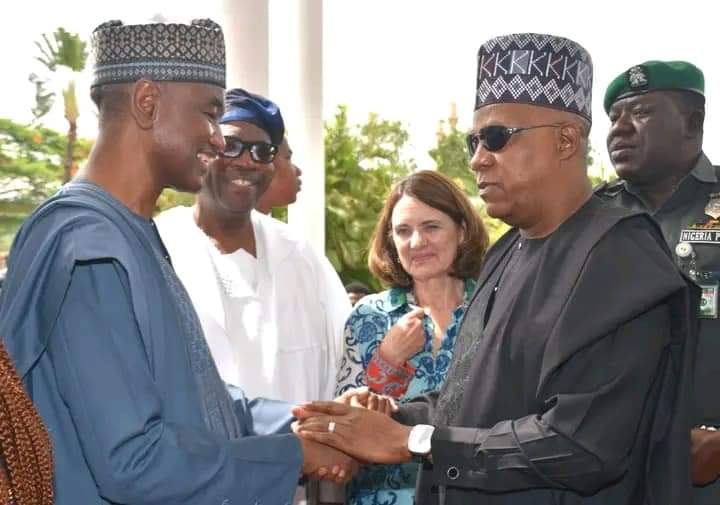
Regional Bodies, Integration Key to Deepening Democracy in Africa – President Tinubu
*Demands sub-regional action to boost intra-African trade
By: Our Reporter
President Bola Ahmed Tinubu has called for the strengthening of regional economic communities to drive integration and trade ties among African nations in order to deepen democracy and accelerate development across the continent.
He said through bitter experience, Nigeria has learned that the solution to poor democratic governance is to have more democracy.
President Tinubu who made the call during the Summit on the State of Democracy in Africa on Wednesday in Abuja called for revitalization of sub-regional blocs like the Economic Community of West African States (ECOWAS), East African Community (EAC) and Southern African Development Community (SADC) as vehicles to usher in an era of robust intra-African commerce, economic growth and job creation.
The President who was represented at the vent by Vice President Kashim Shettima said, “The immense potential of the African Continental Free Trade Area (AfCFTA) can only be maximally realized when there is concrete economic integration and collaboration at the different sub-regional levels,”
Delivering the keynote address, President Tinubu urged the regional bodies to prioritize minimizing trade barriers, promoting sustainable and inclusive economic growth, human capital development as well as value addition in agriculture and agro-allied sectors.
“We must deliberate on ways through which African sub-regional organizations can help foster better intra-African trade, achieve better food and energy security, promote higher rates of youth employment, alleviate poverty and realize greater prosperity for our people,” the President said.
President Tinubu noted that a reinvigorated sub-regional cooperation is critical for the successful implementation of the path-breaking AfCFTA by harmonising rules and regulations to facilitate the free movement of goods, services and people.
While acknowledging the “despair about democratic reversals” due to recent military coups, he expressed optimism about polls held successfully in nations like Liberia, Kenya, Ghana and Nigeria.
He said, “The tragedies of our nations and histories inspire our concern about the reversals of democratic governments, particularly in West Africa. That’s why we are alarmed by the military coups in Mali, Guinea Conakry, Burkina Faso, Niger Republic, and Gabon.”
The president however advocated discussions on empowering regional blocs to establish well-funded standby military forces “to help contain military adventurers and the rampaging waves of terrorism and religious extremism.”
President Tinubu urged African leaders to respect constitutional tenets like term limits, and ensure credible elections and autonomous institutions through the African Peer Review Mechanism (APRM) to achieve democratic consolidation.
“This Summit must discuss ways of making the APRM contribute to achieving good governance and democratic consolidation on the continent,” he stated.
Declaring that Africa can no longer be the “doormat of the world with street beggar economies”, President Tinubu called for concrete measures through reinvented regional bodies to boost trade, enhance security and entrench constitutional democracy for development and prosperity.
Earlier in his keynote remarks, former President of Nigeria, Chief Olusegun Obasanjo, said the answer to the myriad of challenges confronting democracy in Africa is in re-examining the model of democracy passed on to countries in the continent by their colonial masters.
He said leaders across the continent must come together to devise a form of contextual democracy that takes into account past experiences, addresses contemporary challenges and emphasises good leadership, strong institutions, and a stable middle class, all reflecting Africa’s rich cultural heritage.
The former President who expressed concern about the growing discontent for democracy in the continent opined that the model that will work for Africa is one that takes into account the typical and predominant political system, and is “suitably and appropriately placed to serve the objectives of the African people”.
In her goodwill message, the UN Deputy Secretary-General and Chair of the SDGs, Dr Amina Mohammed, said the active participation of women and young people in politics, and other decision-making processes will strengthen democracy in the continent.
She drew the attention of authorities in the continent to the effective implementation of laws, adherence to the tenets of accountability, and improved investment in democratic institutions, noting that they are critical to the sustenance of democracy in Africa and beyond.
On his part, the former President of the Nigerian Bar Association and member of the Board of Directors, Shehu Musa Yar’adua Foundation, Abubakar Mahmoud (SAN), said the focus of the summit, which is “the state of democracy in Africa”, aligns to the cornerstone of the Foundation’s mission and vision.
He said participants at the summit are expected to thoroughly interrogate the model of democracy practiced in Africa vis a vis current challenges experienced in the continent, to resolve the lingering issues and reshape democracy in the continent.
Also present at the event were the President of the Ford Foundation, Mr. Darren Walker; Executive Director of Trust Africa, Dr. Ebrima Sall, and Co-Founder of Afrobarometer, Prof. Gyimah Boadi, among others.
Regional Bodies, Integration Key to Deepening Democracy in Africa – President Tinubu


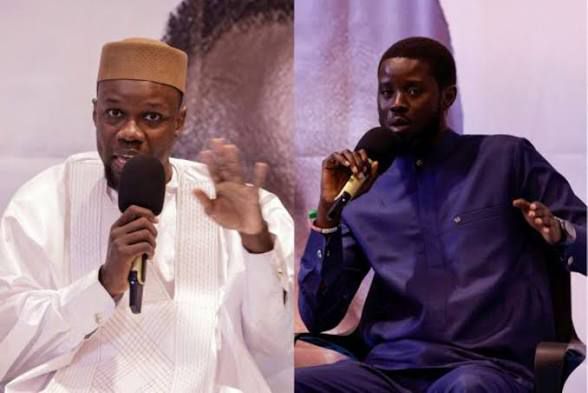
Senegal President sacks Prime Minister Sonko, dissolves government amid growing tensions
By: Zagazola Makama
Senegalese President Bassirou Diomaye Faye has dismissed Prime Minister Ousmane Sonko and dissolved the country’s government following months of growing political tensions between the two leaders.
The decision was announced late Friday through a presidential decree broadcast on state television.
According to the decree read by a presidential aide, President Faye “ended the duties of Ousmane Sonko and consequently those of the ministers and secretaries of state who are members of the government.”
No immediate replacement for Sonko was announced as of the time of filing this report.
The dismissal followed a parliamentary session earlier in the week during which Sonko openly criticised President Faye, further exposing divisions within the ruling political establishment.
Political observers said relations between the two leaders had deteriorated in recent months over issues relating to party leadership, governance direction and the management of state affairs.
Analysts noted that the development could introduce fresh political uncertainty in Senegal at a time the country is facing mounting economic pressures, including rising public debt and broader fiscal challenges.
The dissolution of the government is expected to trigger consultations within the ruling coalition ahead of the appointment of a new prime minister and cabinet.
Senegal has long been regarded as one of West Africa’s more stable democracies, but recent political tensions have continued to attract regional and international attention.
Senegal President sacks Prime Minister Sonko, dissolves government amid growing tensions
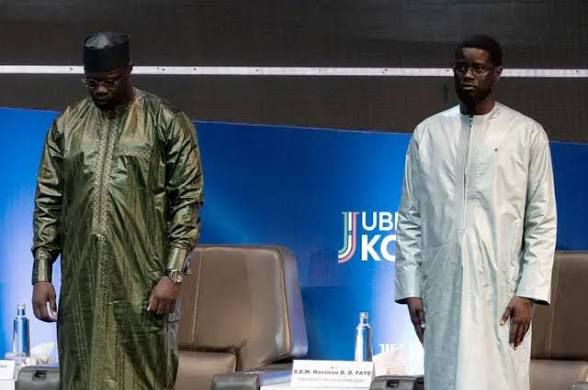
Why the Diomaye–Sonko Split Became Almost Inevitable Amid Senegal’s Power Struggle
By: Zagazola Makama
The dismissal of Senegalese Prime Minister Ousmane Sonko by President Bassirou Diomaye Faye marks the culmination of a political rupture that many observers had long considered unavoidable.
What once appeared to be one of the strongest political alliances in contemporary Senegalese politics gradually evolved into a tense rivalry shaped less by ideology than by competing ambitions, institutional contradictions and the struggle for control of executive authority.
For months, tensions within the ruling camp had become increasingly visible. Though both men emerged from the same political movement and jointly embodied the rise of the PASTEF coalition against former President Macky Sall, the coexistence between a highly charismatic political mentor and a constitutionally empowered head of state proved difficult to sustain.
The crisis is anchored in a fundamental institutional reality:Senegal’s constitutional system ultimately concentrates executive legitimacy in the presidency.
While the Prime Minister exercises substantial governmental authority, the President remains the central pillar of executive power, deriving legitimacy directly from universal suffrage and serving as the supreme authority of the state.
Sources say that the conflict emerged because Sonko increasingly projected himself not merely as head of government, but as an alternative center of political gravity within the state apparatus.
Public speeches, political positioning and repeated demonstrations of personal influence created the perception that two competing executives were operating simultaneously within the same administration.
In highly presidential systems, such arrangements rarely survive for long.
Political theorists have often observed that leaders who attain supreme office tend to resist the emergence of rival figures whose popularity, influence or visibility may overshadow their own authority. The situation in Senegal increasingly reflected that classic tension between institutional legitimacy and political charisma.
Sonko’s political trajectory has long been built around a populist and confrontational style that resonated strongly with segments of Senegalese youth and anti-establishment voters. His appeal stemmed from a mixture of direct rhetoric, anti-system positioning, nationalist discourse and his ability to embody political resistance during years of confrontation with the former administration.
However, the same qualities that fueled his rise may also have contributed to his political isolation. Sourcds note that charismatic populist figures often struggle to adapt from opposition politics to the discipline and compromise required in governance. A political strategy built around constant confrontation can become difficult to reconcile with the institutional restraints of executive power-sharing.
Over time, Sonko appeared increasingly convinced that he remained the true engine behind the ruling coalition’s legitimacy and electoral success. That perception may have encouraged attempts to expand his political influence beyond the traditional boundaries of the prime ministerial office.
For President Diomaye Faye, allowing such an imbalance to persist carried political risks.
The removal of Sonko ultimately reaffirmed a basic constitutional principle, regardless of personal popularity, a Prime Minister remains subordinate to presidential authority in Senegal’s current institutional framework.
By dismissing his Prime Minister, Diomaye signaled that he intended to fully exercise the powers attached to the presidency rather than govern under the shadow of a more dominant political personality.
The decision may also represent an attempt to consolidate state authority, reassure institutional actors and prevent the emergence of dual centers of power capable of paralysing governance. Yet the move is not without danger.
Sonko still commands significant grassroots support and retains strong influence within sections of PASTEF and among politically mobilized youth constituencies. His removal could deepen divisions inside the ruling coalition and potentially reshape Senegal’s political landscape ahead of future elections.
One of the major questions now facing Senegalese politics is whether PASTEF can survive the split without suffering a major internal fracture. Political history across Africa shows that when alliances forged in opposition reach power, tensions often emerge over authority, succession and control of state institutions.
Some party officials and elected representatives may rally behind the President, who controls the state apparatus and constitutional legitimacy. Others may remain loyal to Sonko due to his personal popularity and historical role in the movement’s rise.
The outcome of that struggle could determine whether Senegal experiences a relatively stable political recomposition or enters a prolonged period of institutional tension.
Another key factor will be public sentiment. During years of opposition politics, confrontation and political mobilisation energized large sections of the electorate. However, governing presents different expectations. Many Senegalese citizens now appear increasingly concerned with economic management, institutional stability, governance reforms and social calm rather than perpetual political conflict.
That shift may strengthen Diomaye’s position if he succeeds in presenting himself as a stabilizing statesman capable of governing above partisan rivalries. At the same time, any perception that Sonko has been politically sidelined or unfairly neutralized could trigger renewed political mobilisation among his supporters.
The crisis illustrates a recurring lesson in political systems across the world. Conquering power together is often easier than sharing it afterward. The Diomaye–Sonko alliance was extraordinarily effective as an opposition force united against a common adversary. But once in office, the unresolved question of who truly embodied executive authority became increasingly difficult to avoid.
What began as political complementarity gradually transformed into institutional competition.
The final outcome remains uncertain. Diomaye may emerge stronger by consolidating presidential authority, or Sonko could retain enough political capital to remain a major force capable of reshaping Senegal’s future political balance.
Either way, the rupture marks a turning point in Senegalese politics and may redefine the future trajectory of one of West Africa’s most closely watched democracies.
Why the Diomaye–Sonko Split Became Almost Inevitable Amid Senegal’s Power Struggle
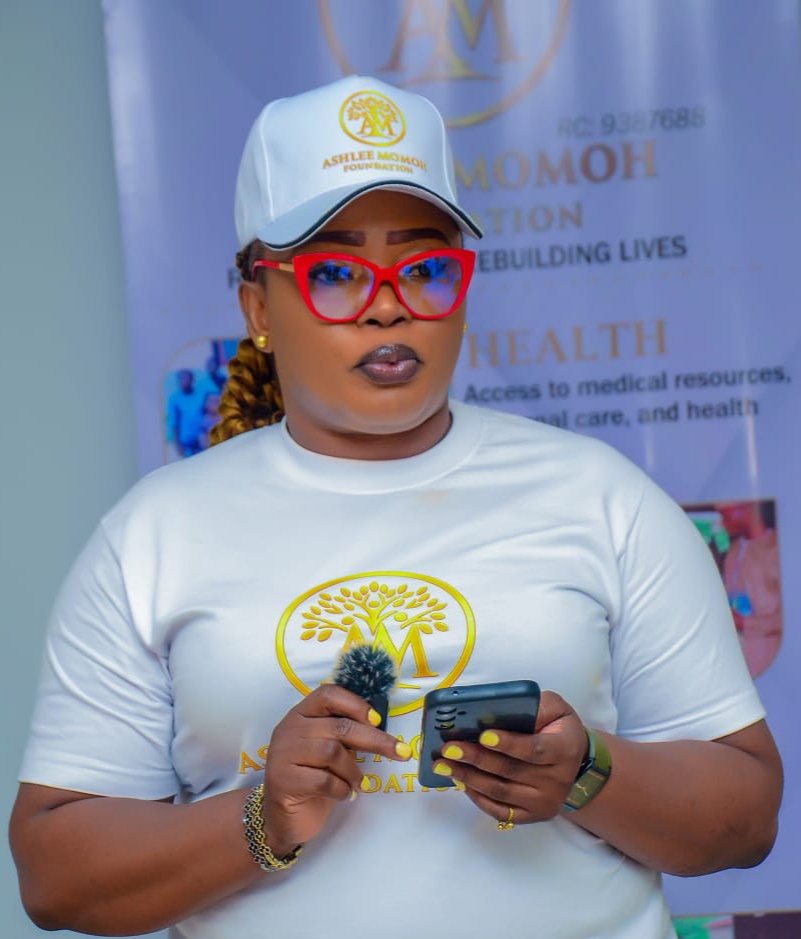
Beyond the Frontline: Ashlee Momoh Foundation Restores Hope to Widows of Fallen Heroes
By Comrade Philip Ikodor
KADUNA – When a soldier falls in the line of duty, the echoes of the final salute eventually fade, but for the families left behind, a silent and grueling battle begins. While these brave men defended the nation’s sovereignty with courage, their widows are often left to navigate a minefield of poverty, trauma, and social isolation.
In a decisive move to address these challenges, the Ashlee Momoh Foundation (AMF) held a special outreach event at the Golden Orange Gate Hotel in Kaduna State on Thursday, May 21, 2026. The initiative sought to provide a lifeline to the families of departed heroes, framed not as charity, but as a profound national debt of gratitude.
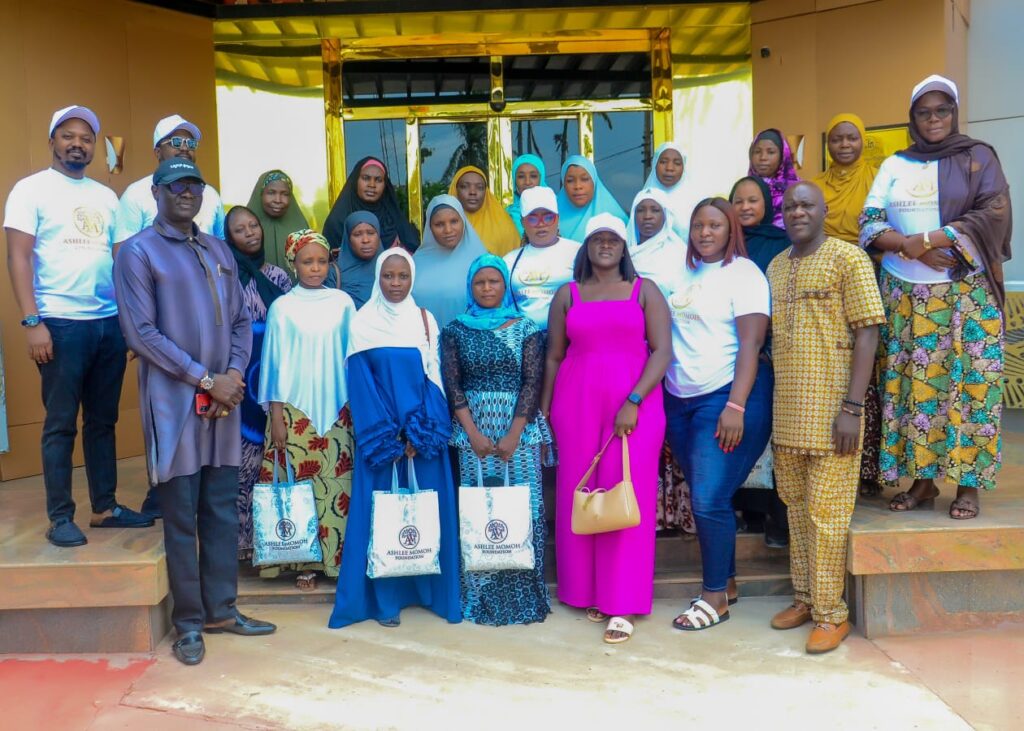
The Chairperson and CEO of the Foundation, Princess Ashlee Momoh, emphasized that the AMF remains committed to ensuring no widow walks alone. She noted that the sacrifice of a soldier continues in the quiet hallways of homes where wives suddenly become sole providers.
“Many military widows face a daunting reality: sudden loss of income, housing insecurity, and a lack of access to specialized mental health support,” Princess Momoh stated. “Unless intentional interventions are made, these families remain trapped in a cycle of hardship that dishonors the legacy of the departed. Your story does not end in sorrow; it continues in purpose.”
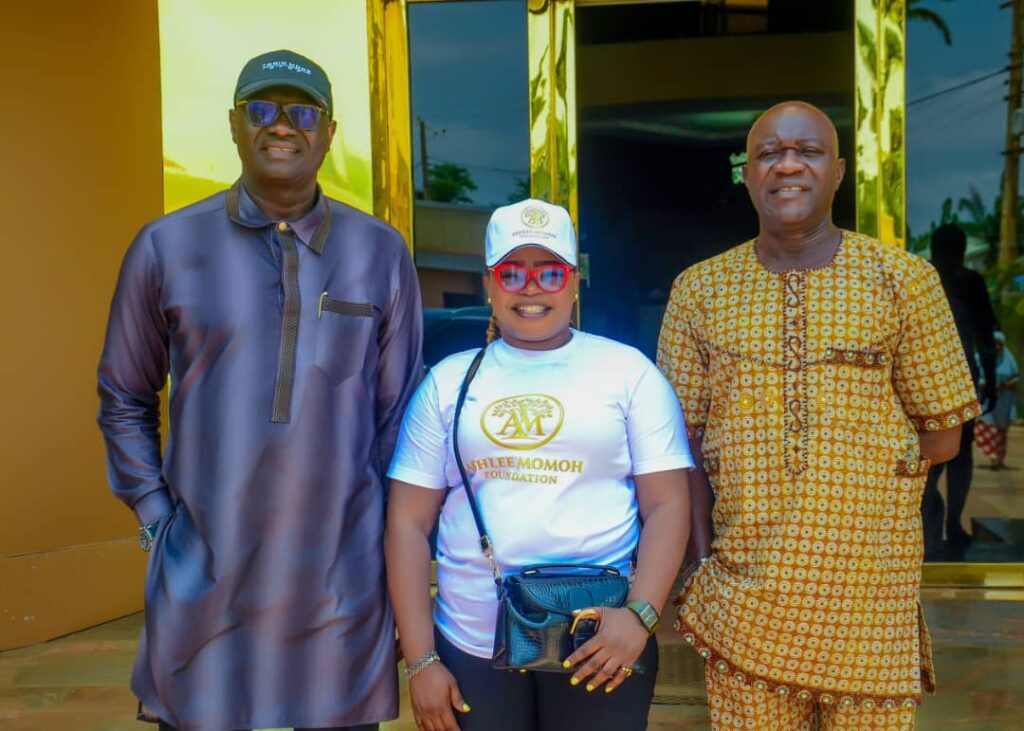
Princess Momoh outlined the Foundation’s three strategic pillars designed to bridge the gap between loss and self-sufficiency:
Economic Independence: Providing small business grants, financial literacy, and vocational skills to restore dignity and autonomy.
Securing the Future: Offering scholarships and tuition assistance so that children do not pay for their fathers’ patriotism with their education. Emotional Fortitude: Establishing counseling and wellness groups to ensure widows are seen, heard, and sustained.
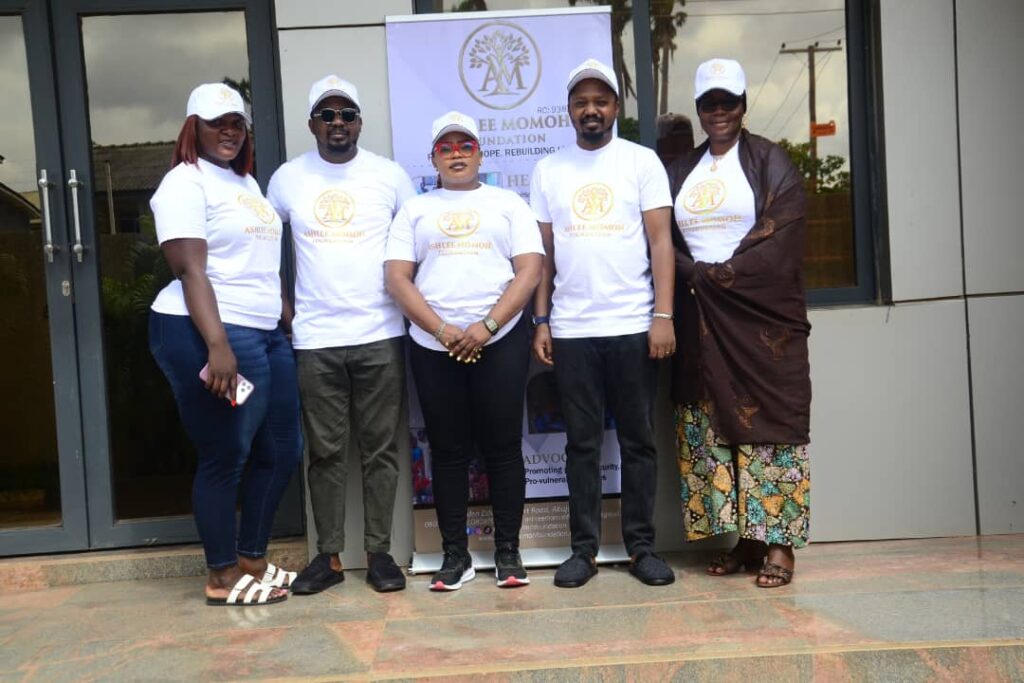
The Chairperson called for a “whole-of-society” approach, urging the government, private sector, and philanthropic organizations to join in collective action. While government intervention is pivotal, she noted that partnerships are essential to scaling the impact of these programs.
The event featured the distribution of empowerment gift items and the announcement of new scholarship awards. Prominent guests, partners and volunteers in attendance included Special Guests of Honor, Air Commodore Chris Dola (Rtd), PhD, and General Brown Yakubu (Rtd), CEO of Golden Orange Gate Hotel, both of whom delivered goodwill messages and also contributed immensely in support of the Foundation’s mission.
Beyond the Frontline: Ashlee Momoh Foundation Restores Hope to Widows of Fallen Heroes

Senegal President sacks Prime Minister Sonko, dissolves government amid growing tensions

Why the Diomaye–Sonko Split Became Almost Inevitable Amid Senegal’s Power Struggle

ADC Moves to Break APC Grip on Borno as Durkwa, Bulama Fugu Lead 2027 Political Battle

Roger Federer’s Shock as DNA Results Reveal Myla and Charlene Are Not His Biological Children

THE PLIGHT OF FARIDA

FAILED COUP IN BURKINA FASO: HOW TRAORÉ NARROWLY ESCAPED ASSASSINATION PLOT AMID FOREIGN INTERFERENCE CLAIMS
-
 News2 years ago
Roger Federer’s Shock as DNA Results Reveal Myla and Charlene Are Not His Biological Children
-
Opinions4 years ago
THE PLIGHT OF FARIDA
-
 News1 year ago
FAILED COUP IN BURKINA FASO: HOW TRAORÉ NARROWLY ESCAPED ASSASSINATION PLOT AMID FOREIGN INTERFERENCE CLAIMS
-

 News2 years ago
EYN: Rev. Billi, Distortion of History, and The Living Tamarind Tree
-
 Opinions4 years ago
POLICE CHARGE ROOMS, A MINTING PRESS
-

 ACADEMICS2 years ago
A History of Biu” (2015) and The Lingering Bura-Pabir Question (1)
-

 Columns2 years ago
Army University Biu: There is certain interest, but certainly not from Borno.
-

 Politics12 months ago
2027: Why Hon. Midala Balami Must Go, as Youths in Hawul and Asikira/Uba Federal Constituency Reject ₦500,000 as Sallah Gift
