
Military
Remembering a soldier’s soldier: The life and legacy of Lt. Gen. Taoreed Abiodun Lagbaja

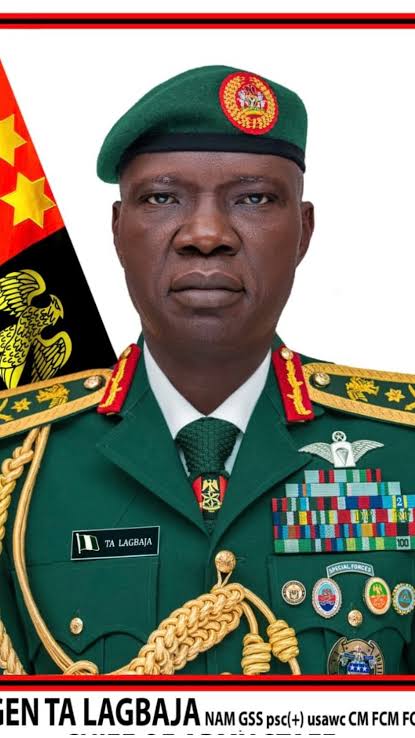
Remembering a soldier’s soldier: The life and legacy of Lt. Gen. Taoreed Abiodun Lagbaja
By: Zagazola Makama
The Nigerian Army on Monday paid tribute to the life, service, and enduring legacy of the late Chief of Army Staff, Lieutenant General Tariq Abdul Abiodun Lagbaja, describing him as a soldier whose courage, dedication, and leadership left an indelible mark on the nation. The homage coincided with the unveiling of his biography, A Life of Service, at the 2025 Chief of Army Staff Annual Conference held in Lagos.
The biography, meticulously compiled by Major General H.G. Wesley (retd.), former Chief of Special Services and Programs, Army, chronicles the extraordinary life of Lt. Gen. Lagbaja, capturing not just his professional achievements, but also the personal values that guided his service.
The project was championed by Professor C.B.N. Ogbogbo, President of the Association of African Historians and Vice-Chancellor of Admiralty University, Delta State, alongside 21 other historians and elder scholars from the Nigerian Army.
The publication was complemented by a documentary produced by the Nigerian Television Authority, providing a visual narration of the former Army Chief’s life.
President Bola Ahmed-Tinubu, described Lt. Gen. Lagbaja as “one of my best appointments.” The President recalled the impact of Lagbaja’s leadership on the Army and the nation, stating, “This nation, our armed forces, the army, and everyone acquainted with him are better for that choice. He embodied courage, dedication, and unyielding loyalty to the nation.”
Born in 1968 in Ilobu, Oshun State, and raised in nearby Oshobo, Lt. Gen. Lagbaja’s discipline and commitment were evident from an early age. He joined the Nigerian Defence Academy, Kaduna, as part of the 39th Regular Course, graduating in 1992 with a Bachelor of Science degree in Geography before commissioning into the Infantry Corps. His first posting as a platoon commander in the 93rd Battalion, Borno State, revealed a leader who was never behind the lines but always at the front, sharing in the hardships and risks faced by his soldiers.
Rising through the ranks, Lagbaja commanded brigades in Lagos and Oyo States, where he tackled urban insecurity and oil bunkering. He later led as General Officer Commanding 82 Division in the South East and 1 Division in the North West, earning the respect and loyalty of his troops for leading by example and demonstrating unwavering commitment to operational success.
In 2022, as Chief of Operations, he consolidated decades of battlefield experience to guide strategy across multiple theatres of operation. His appointment as the 23rd Chief of Army Staff in June 2023 marked the pinnacle of a career defined by integrity, vision, and a leadership philosophy he called the “Six Cs,” emphasizing training, innovation, civil-military engagement, and strategic foresight. Under his guidance, the Nigerian Army strengthened its operational readiness, improved civil-military relations, and projected Nigeria’s stature internationally.
Lt. Gen. Lagbaja received numerous national and international honors, including the Forces Service Star, Meritorious Service Star, Field Command Star, and Grand Service Star. Internationally, he was posthumously inducted into the United States Army War College International Hall of Fame in 2025.
General Christopher Musa, who paid tribute to the late Chief, described him as a courageous, exemplary leader whose significant contributions against terrorism and banditry left a lasting void in the military and nation, urging troops to honor Lagbaja’s sacrifice by defeating state enemies.
Muhammed Badaru, described Lagbaja as a “gallant hardworking officer” and a “warrior” who had served commendably in all theaters of war. He hailed the late general’s courage, leadership, and unwavering dedication to the service of the nation.
The COAS, Lieutenant General Waidi Shuaibu, described the late Army Chief as “a soldier who never asked his men to face danger he would not face himself. He was a commander in the truest sense, walking alongside his soldiers in the theatre of operations, sharing their risks and their burdens.” Shuaibu further praised Lagbaja’s dedication to the welfare of personnel and the strengthening of institutional frameworks, noting that his leadership style blended courage with compassion.
“His legacy is firmly rooted in selfless service and exemplary leadership,”he said.
The biography, A Life of Service, captures the personal values that defined Lt. Gen. Lagbaja unpretentious simplicity, moral courage, empathy for soldiers and their families, loyalty, and patriotism.
The project, General Wesley noted, aimed to ensure that the lessons of his life and leadership could inspire both serving and retired military officers, as well as inform future policy and operational strategies.
Professor Christopher Ogbobo, one of the historians involved, stressed the importance of documenting military experiences for posterity. “Given the quality of training and the diverse experiences of our warriors, it has become imperative to document their lives,” he said. “Those who can, both retired and serving, owe Nigeria that duty. Their experiences are rich and instructive for future generations and policymakers alike.”
The ceremony also highlighted the human dimension of Lt. Gen. Lagbaja’s life. Beyond the battlefield, he was a devoted husband and father, often playing with his children at dawn and supporting his family after long hours in uniform.
His favorite Christian hymn, Only Remembered by What We Have Done, encapsulated the guiding philosophy of his life, emphasizing legacy, service, and tangible contributions.
His story, from the streets of Ilobu to the highest ranks of the Nigerian Army, exemplifies courage, discipline, and visionary leadership, ensuring that his memory will inspire generations to come.
“Before the medals, before the rank, before the history books, there was this man, Lieutenant General Toareed Abiodun Lagbaja. A leader forged in the dust and fire of service,” a speaker remarked. “Nigeria will remember his heart; history will remember his duty.”said the speaker.
The speech ended with an unveiling of a Book on the life and legacy of Lt. Gen. Toareed Abiodun Lagbaja
Remembering a soldier’s soldier: The life and legacy of Lt. Gen. Taoreed Abiodun Lagbaja


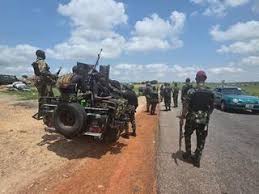
Troops Safely Dispose of Unexploded Ordnance Discovered on Farm in Borno
By: Zagazola Makama
Troops of the 25 Brigade, Sector 2, have safely disposed of an unexploded ordnance (UXO) discovered by a farmer on the outskirts of Damboa town in Borno State.
Security sources told Zagazola Makama that the suspected explosive device was discovered at about 3:30 p.m. on Nov. 13, 2026, while the farmer was working on his farmland.
The farmer immediately alerted troops of the 25 Brigade, who were conducting a farm patrol in the area.
Following the report, an Explosive Ordnance Disposal (EOD) team was deployed to the scene and confirmed the item to be an unexploded ordnance.
The team subsequently carried out a safe disposal operation at about 7:45 a.m. on Nov. 14, 2026.
No casualty was recorded during the operation.
The military urged residents, particularly farmers, to remain vigilant and promptly report suspicious objects or suspected explosive devices to security agencies rather than attempting to handle or move them.
Troops Safely Dispose of Unexploded Ordnance Discovered on Farm in Borno
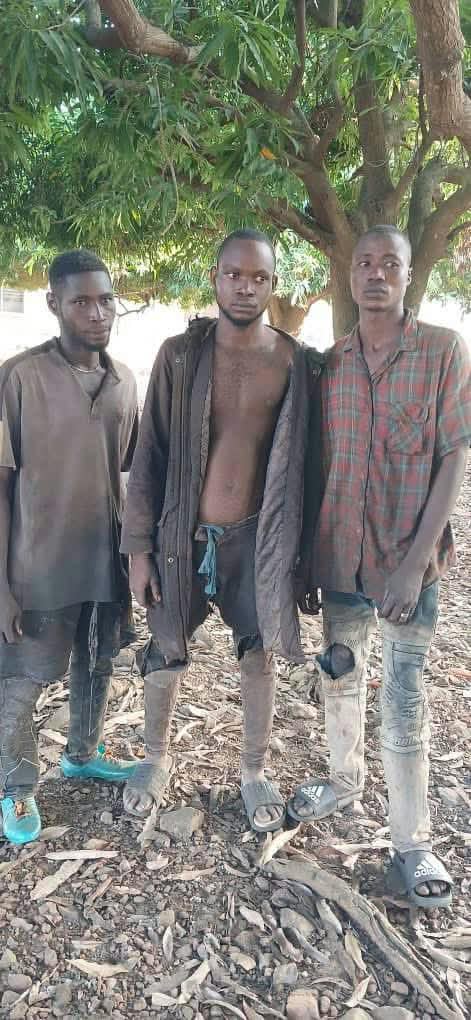
Army, Vigilantes Rescue Four Kidnap Victims in Kogi
By: Zagazola Makama
Troops of the Nigerian Army, in collaboration with the Kogi State Vigilante Service and local vigilantes, have rescued four kidnapped persons following a swift security operation in Ejiba community, Yagba West Local Government Area of Kogi State.
The victims, comprising three residents of the community and one Hausa man, were reportedly abducted by gunmen while working on their farm on Thursday, November 12, 2026.
A security source confirmed that the abduction was promptly reported to security operatives, who mobilised alongside local vigilante groups and launched a rescue operation.
The coordinated response reportedly led to the successful rescue of all four victims shortly after the incident.
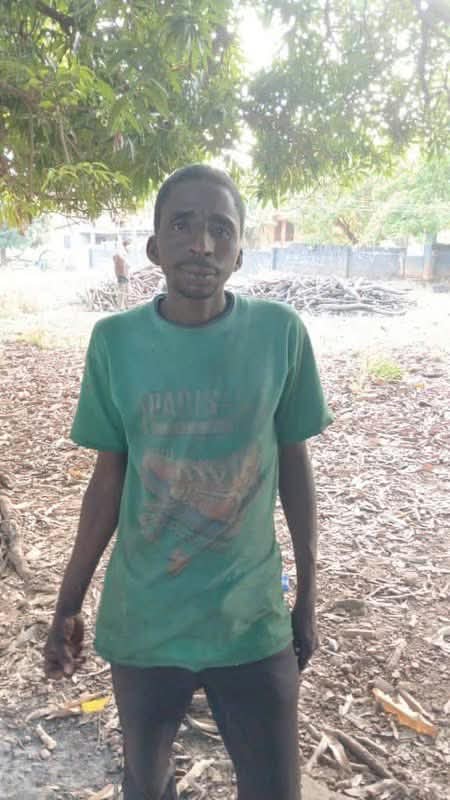
The source said the operation demonstrated the importance of timely intelligence sharing and collaboration between conventional security forces and community-based security structures in tackling kidnapping and other criminal activities.
The rescue is expected to reassure residents of Ejiba and neighbouring communities, particularly farmers who have continued to face security concerns while accessing their farmlands.
Troops said they will sustain patrols and surveillance across Yagba West to prevent further attacks and ensure the safety of residents.
Army, Vigilantes Rescue Four Kidnap Victims in Kogi
Why Would the Military Ignore a Soldier Celebrating Convicted Terrorist Nnamdi Kanu?
By: Zagazola Makama
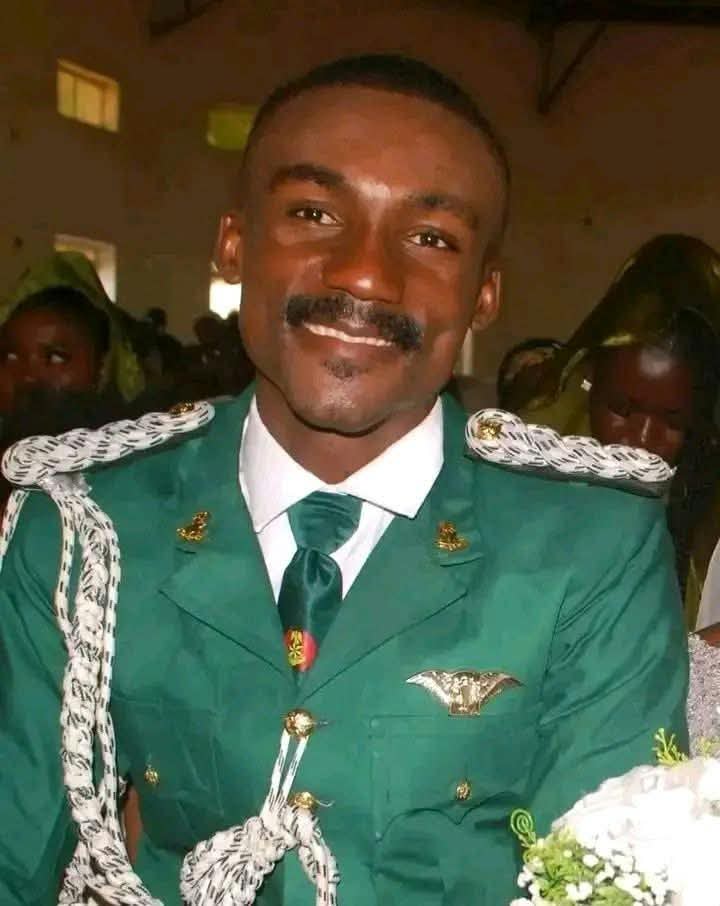
There is something profoundly disturbing about the argument being advanced by those demanding the intervention of Tarok military generals over the detention of Gabriel Lamdip, popularly known as the “Push Up King.”
The attempt to turn this matter into an ethnic solidarity campaign, while conveniently ignoring the gravity of the alleged conduct, is both misplaced and deeply troubling. The question is not whether Lamdip is Tarok, whether he enjoys the support of influential military officers or whether his family deserves compassion.
The real question is simple: Can a serving soldier publicly demonstrate solidarity with a separatist figure associated with violence against Nigerian security personnel and expect the military to look the other way?
Absolutely not!
Let us stop hiding behind sentiment and confront the issue squarely. A serving soldier is not an ordinary civilian. He wears the uniform of the Nigerian Armed Forces, carries the responsibility of defending the Constitution and has sworn allegiance to the Federal Republic of Nigeria. His conduct, particularly on matters touching national security, separatist agitation and threats to national unity, must reflect the discipline and loyalty expected of a member of the military.
If the video in question shows Lamdip performing push-ups in apparent solidarity with Nnamdi Kanu, the leader of the proscribed Indigenous People of Biafra (IPOB), then the matter deserves serious institutional attention. The explanation that Kanu shares a birthday with the soldier’s son does not automatically erase the implications of such an act.
Since when did a child’s birthday become a convenient excuse for a serving soldier to publicly associate himself with a figure whose movement has been linked by the Nigerian government to deadly attacks against members of the nation’s security forces?
This is not about denying anyone the right to hold personal opinions. It is about the special obligations that come with wearing a military uniform. The Armed Forces are not a social club where personnel can freely blur the line between personal admiration, political activism and institutional loyalty.
And those rushing to condemn the Army for investigating this matter should first remember the blood of Nigerian security personnel shed in the violence associated with IPOB and its armed wing, the Eastern Security Network (ESN).
The record is grim.
On May 3, 2022, Master Warrant Officer Audu Linus and Private Gloria Mathew were abducted while travelling in Imo State. They were brutally murdered and beheaded. In a statement issued the following day, the Presidency attributed the killings to IPOB and condemned the gruesome crime.
On July 13, 2021, an attack on troops at the Iggah/Asaba checkpoint in Uzo-Uwani Local Government Area of Enugu State reportedly left two soldiers dead. The Nigerian Army attributed the attack to IPOB and its Eastern Security Network.
In November 2021, two police inspectors, identified as Akubo and Adamu, were abducted and murdered. Their bodies were reportedly decapitated, while footage of the killings was circulated. The Federal Government attributed the operation to IPOB members.
On May 30, 2024, armed men attacked a military checkpoint in Abia State. The Nigerian Army blamed IPOB for the attack, which reportedly killed five soldiers. Six civilians also died in the violence, according to an account cited in the UK government’s country report.
The figures announced by the Federal Government are equally alarming. In October 2021, the then Attorney-General of the Federation, Abubakar Malami, disclosed that a government committee had attributed 175 security personnel deaths between October 2020 and June 2021 to IPOB and ESN. The figure comprised 128 police officers, 37 military personnel and 10 other security operatives.
The committee also attributed 164 attacks on police stations and security formations to the group.
These were official government figures, and they paint a disturbing picture of the scale of violence confronting security institutions during that period.
Beyond attacks on security personnel, communities in the South-East have also endured killings, abductions, intimidation, attacks on public infrastructure and the violent enforcement of sit-at-home orders. Ordinary citizens, traders, transport operators, civil servants and other residents have paid a heavy price for the activities of armed groups operating under separatist banners. So, what exactly are the critics asking the Nigerian Army to do? Look away? Pretend that nothing happened.
The Army is not a private association belonging to any ethnic group. It is a national institution. Its loyalty is to Nigeria, not to ethnic pressure groups, political sympathisers or individuals who believe that connections and influence should place someone beyond scrutiny.
If Lamdip has done nothing wrong, he should have nothing to fear from a fair and transparent investigation. But if the evidence establishes a breach of military regulations, he must face the appropriate consequences under the law.
Why Would the Military Ignore a Soldier Celebrating Convicted Terrorist Nnamdi Kanu?

CONVOCATION LECTURER URGES BINGHAM GRADUANDS TO TURN FAITH, EXCELLENCE, INTO NATION BUILDING

ECOWAS, World Bank Intensify Drive to Bridge West Africa’s Electricity Gap, Target 1,800 Communities

Fani-Kayode Meets South African DIRCO DG, Raises Alarm Over Killings, Mistreatment of Nigerians

Roger Federer’s Shock as DNA Results Reveal Myla and Charlene Are Not His Biological Children

THE PLIGHT OF FARIDA

FAILED COUP IN BURKINA FASO: HOW TRAORÉ NARROWLY ESCAPED ASSASSINATION PLOT AMID FOREIGN INTERFERENCE CLAIMS
-
 News3 years ago
Roger Federer’s Shock as DNA Results Reveal Myla and Charlene Are Not His Biological Children
-
Opinions5 years ago
THE PLIGHT OF FARIDA
-
 News2 years ago
FAILED COUP IN BURKINA FASO: HOW TRAORÉ NARROWLY ESCAPED ASSASSINATION PLOT AMID FOREIGN INTERFERENCE CLAIMS
-
 Opinions5 years ago
POLICE CHARGE ROOMS, A MINTING PRESS
-

 News3 years ago
EYN: Rev. Billi, Distortion of History, and The Living Tamarind Tree
-

 ACADEMICS3 years ago
A History of Biu” (2015) and The Lingering Bura-Pabir Question (1)
-

 Columns3 years ago
Army University Biu: There is certain interest, but certainly not from Borno.
-

 Politics1 year ago
2027: Why Hon. Midala Balami Must Go, as Youths in Hawul and Asikira/Uba Federal Constituency Reject ₦500,000 as Sallah Gift
