
National News
Rep Member empowers 4,200 IDPs, Supports 900 students with scholarship in Borno

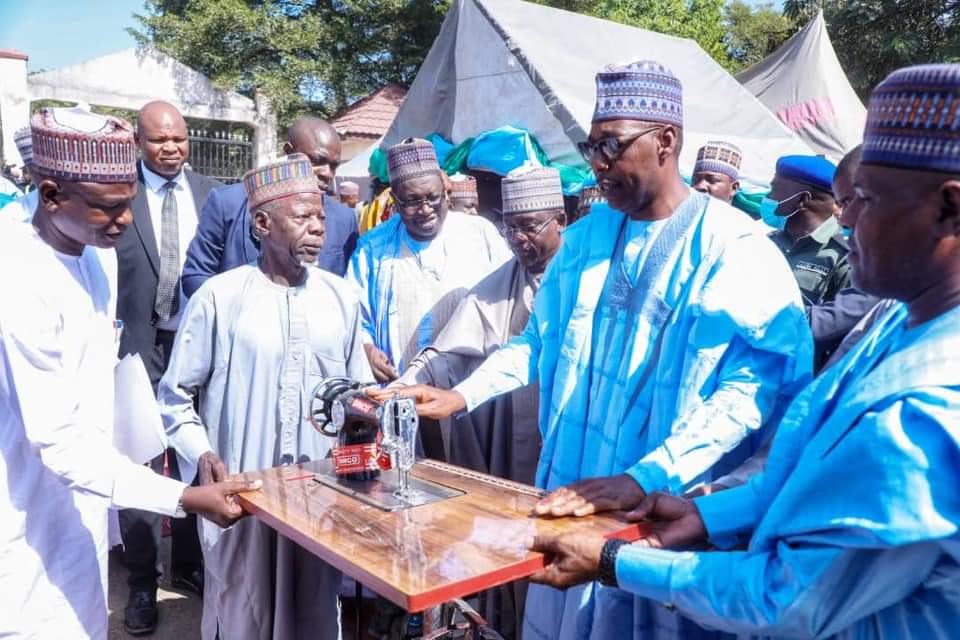
Rep Member empowers 4,200 IDPs, Supports 900 students with scholarship in Borno
By: Our Reporter
At least 4,200 people mostly Internally displaced persons (IDPs) from Dikwa, Mafa and Konduga local government areas of Borno state have recently been empowered with water pumps, sewing and milling machines as well as cash grants by a member of the Federal House Of Representatives, Hon Ibrahim Mohammed.
This is even as the Lawmaker had earned the accolades of Governor Babagana Zulum, for spending about N200 million to empower the neediest members of his constituency.
Flagging off the distribution ceremony in Konduga town, governor Zulum commended the lawmaker for giving out such an “unprecedented” quantity of livelihood to a people that are in dire need of support.
In an interview with journalists, the Lawmaker said that the gesture to his people was fuelled by the need to help them regain their balance after many years of displacement and destruction of their means of livelihood by the Boko Haram insurgency.
“Before the insurgency erupted many years ago, our people were known for their high sense of industry especially in all-season farming, animal husbandry and commerce. But they lost all that to the years of insurgency,” he said.
“As a lawmaker who represents them, I usually found it heartbreaking each time I woke up to a day that I cannot freely go to my constituents who have been displaced or held up somewhere due to insecurity. But with the improving security especially in the three local government areas that formed my federal constituency, I feel it is time we gave support to our people as they finally get resettled in their homes.
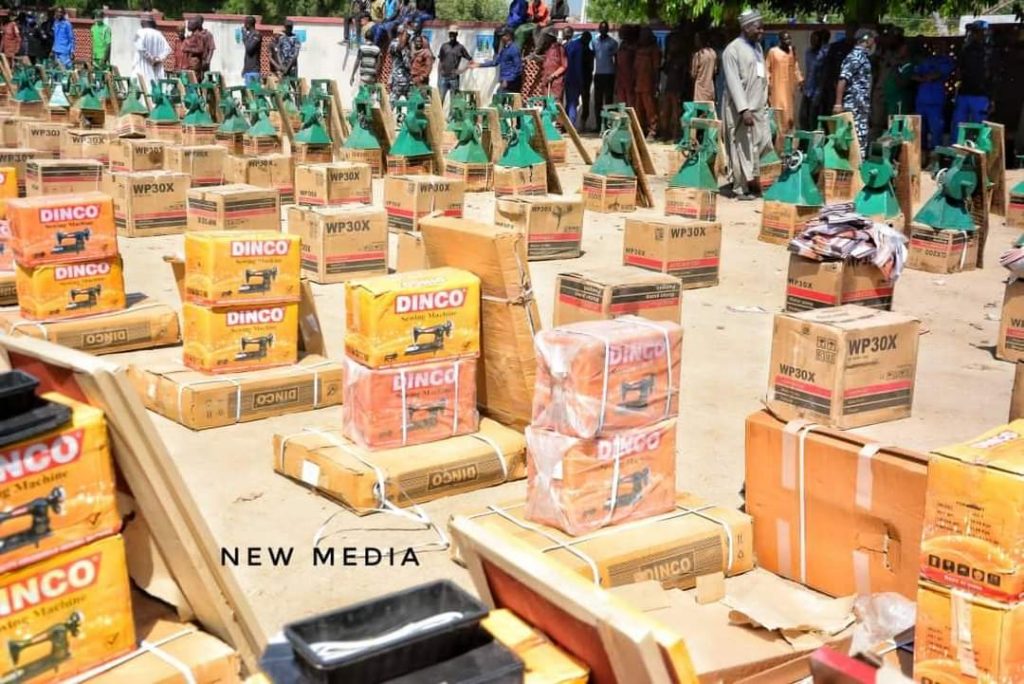
“Aside from the routine palliatives and support that we have given to our constituents in the past years, I decided to provide holistic support that will not only alleviate their sufferings but give them a sustainable means of livelihood so that they would not continue to depend on government or NGOs to take care of basic needs.
Also Read: 79 PHCs get N418m as Zulum launches Borno’s Basic…
“It is on that note that I decided to provide 300 units of pumping machines for irrigation farming to a selected 100 persons from each of the three local government areas. We gave out 300 sewing machines to another set of 300 beneficiaries selected in the three local government areas; as well as 300 millings (grinding) machines to another set of 300 persons across the three local government areas under my constituency.
“Apart from direct distribution of economic empowerment kits, we have also identified others who have expressed willingness to go into other forms of petty businesses and we have selected 300 of them (a hundred from each local government) that were given N50, 000 each as startup grants.
“In the area of educational support for children and young persons in my constituency, we have been able to identify another 600 students who are currently in tertiary institutions and awarded them small scholarship support of N20, 000 each which amounted to N12 million in scholarship to our young ones in school. We have earlier enrolled 300 students in my constituency for a diploma in Computer Studies, of which they are about to graduate this December.”
The lawmaker further said that children in primary school too were not left out in the package as a total of 10,000 exercise books; ten thousand pens and pencils which were shared among the schools in the three local government areas of Dikwa/Mafa/Konduga federal constituency.
“Each local government got 3,333 units of exercise books, pen and pencils for onward free distribution to pupils in primary school,”
“During the disbursement exercise, we have also distributed food items like rice and maize to over 3000 IDPs who also went home with a token of N5, 000 each,” he said.
He commended the state governor for all the efforts he is putting in place in ensuring peace and harmony returns to Borno state.
“We have to do everything within our means to support our governor, Professor Babagana Zulum, because the state government alone cannot do everything. It is my utmost wish and hope that in the next few years our people are not only settled in their local government but fully resettled in their original localities.
“My dream every day for Borno is to see that we have sustainable security, that our people are fully returned home, and peacefully enthroned in all parts of the state.” Mohammed stated.
Rep Member empowers 4,200 IDPs, Supports 900 students with scholarship in Borno


National News
Breaking: NSCDC launches probe as 30 suspected illegal miners die in Commands custody in Niger

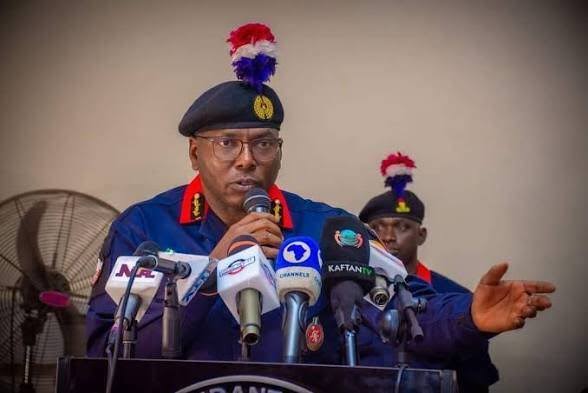
Breaking: NSCDC launches probe as 30 suspected illegal miners die in Commands custody in Niger
By Zagazola Makama
The Nigeria Security and Civil Defence Corps (NSCDC) has ordered an investigation into the deaths of several suspected illegal miners arrested during an enforcement operation in Niger State.
The suspects were apprehended on Sept. 15 and 16, 2026, during a joint operation targeting illegal mining activities around the M.I. Wushishi/Lukoto axis of the state.
The NSCDC Niger State Command initially reported that scores of detainees were found dead in the early hours of Sept. 17 following what was described as a suspected disease outbreak.
The remains have since been evacuated to the General Hospital, Minna, where medical examinations are expected to determine the actual cause of death.
The development has generated concern among relatives of some of the detainees, with family members alleging that more than 30 people died while in custody.
However, the NSCDC has cautioned against attributing the deaths to any particular disease before medical and laboratory examinations are concluded.
In a statement issued by the Corps’ National Public Relations Officer, Assistant Commandant of Corps Babawale Afolabi, the Commandant General, Prof. Ahmed Abubakar Audi, directed the immediate constitution of a high-powered investigative team.
The team, headed by the Deputy Commandant General responsible for Intelligence and Investigation, is expected to establish what happened before and after the suspects were taken into custody.
Investigators are to examine the physical condition of the detainees at the point of arrest, the duration of their detention, conditions inside the facility, medical care provided to them and other circumstances that could have contributed to the deaths.
The Corps said it was also working with health authorities and other security agencies to implement appropriate medical and public-health measures.
It further directed that the health and welfare of suspects still in custody be given immediate priority, while personnel who may have come into contact with the affected detainees are also protected.
The NSCDC said the incident would be addressed strictly on the basis of verified medical and investigative findings.
The Corps also reiterated that its campaign against illegal mining would continue, stressing that the enforcement of the law must be carried out alongside respect for the dignity and fundamental rights of persons in custody.
The Commandant General expressed condolences to the families of those who died and assured them that the circumstances surrounding the incident would be thoroughly investigated.
The Corps appealed to the public to remain calm while the medical and investigative processes are concluded, promising to release further information as verified facts become available.
The incident has meanwhile raised questions about the health status and detention conditions of the arrested miners, with the pending medical examination expected to provide critical answers on what caused the deaths.
Breaking: NSCDC launches probe as 30 suspected illegal miners die in Commands custody in Niger

VP SHETTIMA CLARIFIES REMARKS ON NORTHERN GOVERNORS’ SUPPORT FOR PRESIDENT TINUBU
By: Our Reporter
The Office of the Vice President wishes to clarify remarks by Vice President Kashim Shettima concerning the support President Bola Ahmed Tinubu received from northern governors in the build-up to his emergence as the presidential candidate of the All Progressives Congress (APC).
The Vice President’s reference to six northern governors who believed in and supported President Tinubu was specifically about political consultations and alignments preceding the APC presidential primary in June 2022.
It was not a comment on the position of northern APC governors following President Tinubu’s emergence as the party’s candidate, nor was it intended to question their support during the 2023 presidential election.
Following the presidential primary, APC governors in the North rallied around the party’s candidate and played important roles in the campaign and electoral efforts that culminated in President Tinubu’s victory in the 2023 general election. Indeed, it is worthy of note that it was after the declaration of President Tinubu as winner of the 2023 presidential primaries that all other governors across the country rallied round and followed suit. That declaration by the northern governors hence became the aligning moment across all political divides in the quest for power shift.
VP Shettima holds the northern governors and other leaders of the APC in high regard and recognises their individual and collective contributions to the success of the party and the emergence of President Tinubu.
The Vice President regrets any interpretation of his remarks that may have suggested otherwise and hopes this clarification places the comments in their proper context.
VP Shettima also appreciates the Nigerian media for its longstanding professionalism and constructive engagement with his office and urges continued accuracy and context in the reporting of public remarks as the country approaches another political season.
VP SHETTIMA CLARIFIES REMARKS ON NORTHERN GOVERNORS’ SUPPORT FOR PRESIDENT TINUBU
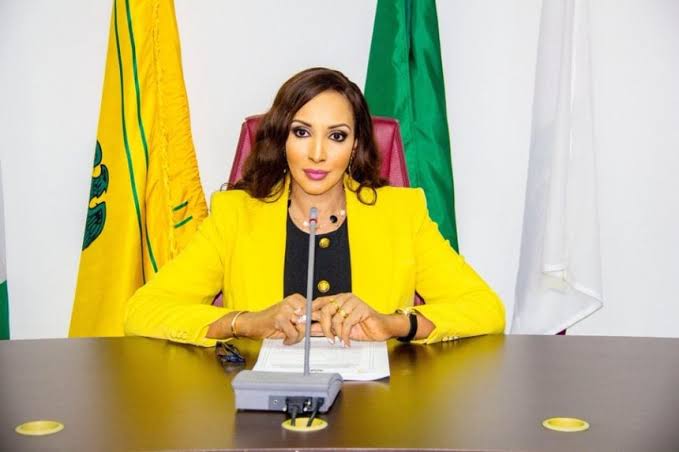
Foreign Minister Warns Diplomats: Route All Official Business Through My Ministry
By: Michael Mike
Minister of Foreign Affairs, Ambassador Bianca Odumegwu-Ojukwu, on Wednesday warned foreign missions to stop bypassing her ministry to deal directly with the Presidency and other arms of government, declaring that the Ministry of Foreign Affairs remains the only official channel to the Nigerian government.
Odumegwu-Ojukwu issued the warning on Thursday at her first formal briefing with the Diplomatic Corps since assuming office as substantive Foreign Minister.
“This Ministry is your diplomatic home. My doors remain open,” she told ambassadors, high commissioners and international organisations, but added that official requests must be routed through the ministry to ensure coordination and institutional memory.
“Bypassing established channels risks conflicting information, duplication and avoidable misunderstandings. We are not an obstacle. We are your bridge to the Nigerian Government,” she said.
The Minister said Nigeria will pursue strategic autonomy under President Bola Ahmed Tinubu — choosing its friends and positions strictly on national interest, mutual respect and reciprocity.
“Strategic autonomy does not mean isolation. It means preserving Nigeria’s sovereign right to determine relationships that best serve our people,” she declared.
She said Tinubu’s foreign policy is anchored on Four Ds — Demography, Development, Democracy and Diaspora — and described Nigeria’s posture as Nigeria-centered, Africa-conscious and globally engaged.
Odumegwu-Ojukwu announced a push to revive dormant Joint Commissions and Bi-National Commissions, insisting that diplomatic warmth must produce tangible results in trade, investment, security, education and technology.
She thanked foreign capitals for prompt Agrément for Nigeria’s ambassadorial nominees and pledged faster presentation of Letters of Credence for envoys in Abuja.
On consular frictions, she hit at prolonged visa delays for Nigerians.
“We respect every country’s sovereign right to determine its visa policy, but excessively long waiting periods create considerable difficulties for legitimate travellers, students, businesspersons and families,” she said, urging efficiency and transparency.
She reaffirmed Nigeria’s commitment under the Vienna Conventions to protect diplomatic personnel and premises and urged missions to report security concerns promptly.
Odumegwu-Ojukwu said Nigeria remains open for trade, investment and technology partnership but insisted on sovereign equality and reciprocity, warning that no country can tackle terrorism, climate change, cyber insecurity and irregular migration alone.
She said Nigeria will stay active in ECOWAS, AU, UN and Commonwealth and continue to demand a stronger African voice in global decisions.
Foreign Minister Warns Diplomats: Route All Official Business Through My Ministry

Farmer injured in alleged attack by herders in Bokkos

Army committee inspects sites for new 237 Tank Battalion in Bauchi

DSS re-arraigns five suspected Ansaru members over Oyo school kidnapping

Roger Federer’s Shock as DNA Results Reveal Myla and Charlene Are Not His Biological Children

THE PLIGHT OF FARIDA

FAILED COUP IN BURKINA FASO: HOW TRAORÉ NARROWLY ESCAPED ASSASSINATION PLOT AMID FOREIGN INTERFERENCE CLAIMS
-
 News3 years ago
Roger Federer’s Shock as DNA Results Reveal Myla and Charlene Are Not His Biological Children
-
Opinions5 years ago
THE PLIGHT OF FARIDA
-
 News1 year ago
FAILED COUP IN BURKINA FASO: HOW TRAORÉ NARROWLY ESCAPED ASSASSINATION PLOT AMID FOREIGN INTERFERENCE CLAIMS
-

 News3 years ago
EYN: Rev. Billi, Distortion of History, and The Living Tamarind Tree
-
 Opinions5 years ago
POLICE CHARGE ROOMS, A MINTING PRESS
-

 ACADEMICS3 years ago
A History of Biu” (2015) and The Lingering Bura-Pabir Question (1)
-

 Columns3 years ago
Army University Biu: There is certain interest, but certainly not from Borno.
-

 Politics1 year ago
2027: Why Hon. Midala Balami Must Go, as Youths in Hawul and Asikira/Uba Federal Constituency Reject ₦500,000 as Sallah Gift
