
National News
Residents to pay N100,000 for burial posters in Anambra


Residents to pay N100,000 for burial posters in Anambra
By: Michael Mike
Anambra Governor Chukwuma Soludo has slammed a levy of N100,000 on residents for burial posters in the State.
The Governor said those willing to paste burial and other events posters in any part of the State would pay an N5, 000 tax which would last for only two weeks.
The tax rates were contained in a letter addressed to the National President, Anambra State Association of Town Unions,ASATU by the Managing Director and Chief Executive, Anambra State Signage and Advertising Agency ANSAA, Mr Tony ujubuonu
The letter itled: “Regulation of ceremonial adverts” explained that the agency would work in partnership with ASATU to recover the taxes as sources of internally generated revenue IGR and to curb menace of ‘non-commercial adverts’ in the state.
According to the letter, obtained by The Nation: “The tariff below serves as a guide to what is payable; sixes, description, amount and duration of the taxes are: 4 X 6FT N5,000 for 2 weeks; 8 X 10FT N20,000 for 2 weeks; above 10FT square are N100,000 monthly; and N5000 for posters for 2 weeks.
“Note that directional signs leading to the venue which can come in 1x 2ft size will not be charged.
” It is also important to bear in mind that after the duration of this period, any such board that is left standing will attract a penalty in the sum of the amount initially paid. This penalty is paid weekly.
Also Read: https://dailypost.ng/2022/10/12/19-iswap-terrorists-killed-as-troops-repel-boko-haram-attack-in-gamboru/
“The Agency, in fulfillment of its statutory obligation, is not unmindful of the menace associated with non-commercial adverts that have literally occupied our out-of-home space.
” These adverts come in the form of obituary, religious, wedding and sundry flex, banners and posters.
“These materials tend to deface the environment and pose a threat to the aesthetics of our communities.
“In line with Mr. Governor’s avowed aim of building a prosperous, livable and smart city state in Anambra, the Agency sees the need to regulate the use of these materials in manners that are decent and orderly.
“Because this is a phenomenon that is associated with all the communities and villages in Anambra State, we hope to administer this process in partnership with the Town Unions.
“It is our wish that the Town Union will take up the responsibility of informing the villages and hamlets.
“Others to be informed are kindreds, churches and any such bodies within their towns that from the 1st of November, 2022, the Agency will begin the enforcement and collection of levies on all such posters and flex used for any of such ceremonies.
“We have written to you because we have always regarded you as progress partners in the development of Anambra State.”
Residents to pay N100,000 for burial posters in Anambra


National News
ECOWAS, World Bank Intensify Drive to Bridge West Africa’s Electricity Gap, Target 1,800 Communities

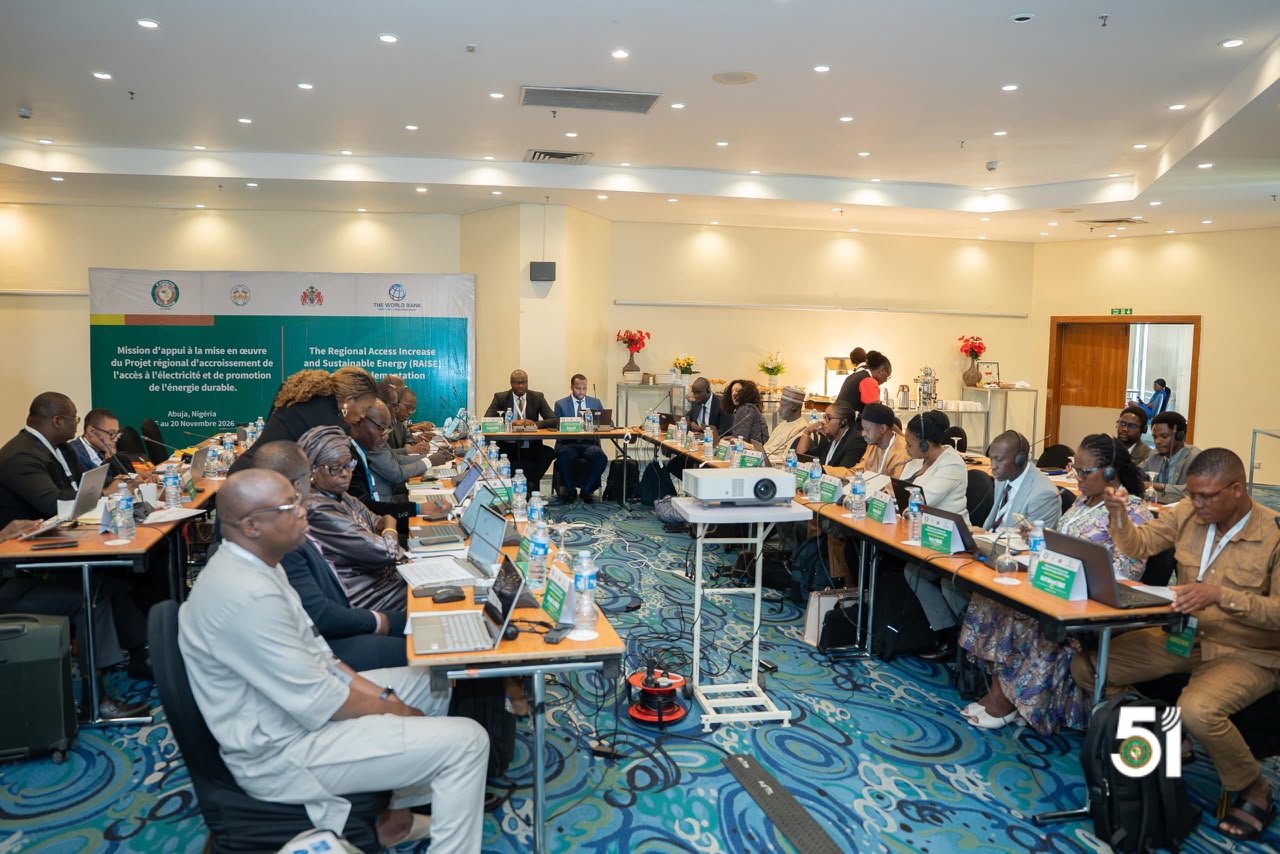
ECOWAS, World Bank Intensify Drive to Bridge West Africa’s Electricity Gap, Target 1,800 Communities
By: Michael Mike
The Economic Community of West African States (ECOWAS) Commission and the World Bank have intensified efforts to address persistent electricity access deficits in West Africa, launching a five-day implementation support mission for a US$160 million regional energy project targeting underserved communities in Togo and The Gambia.
The mission, which commenced on 16 November and will run until 20 November 2026 in Abuja, Nigeria, is designed to assess implementation progress, address operational challenges and strengthen coordination among institutions responsible for delivering the Regional Access Increase and Sustainable Energy (RAISE) Project.
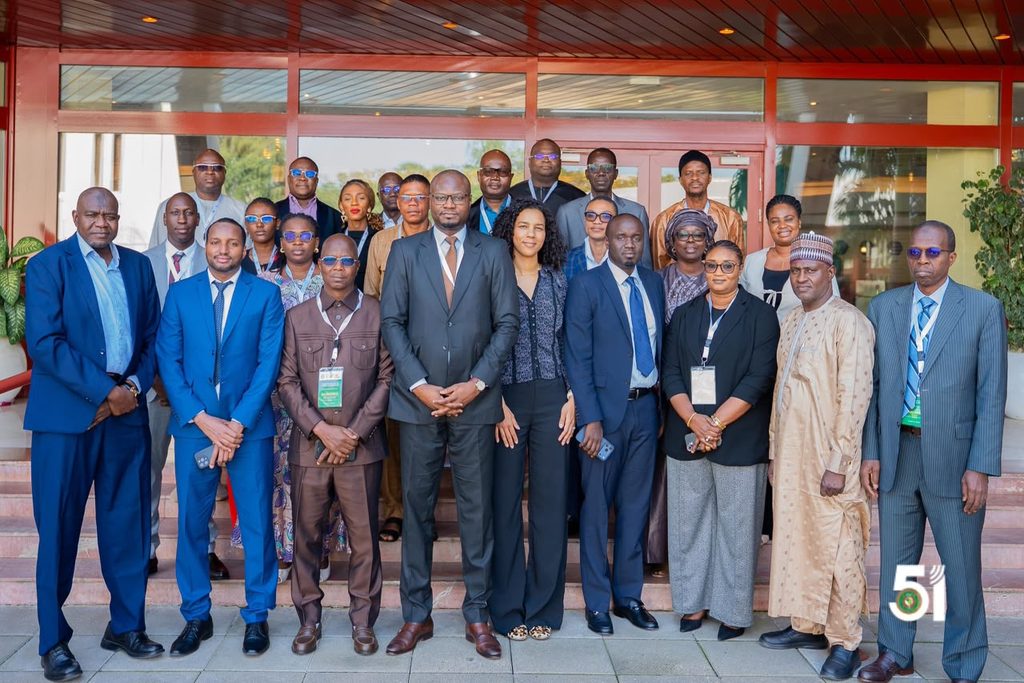
The initiative targets the electrification of 1,800 localities, the provision of 202,000 household electricity connections and the facilitation of 242 megawatts (MW) of renewable energy generation capacity.
The project is expected to expand access to reliable and sustainable electricity, particularly in rural and underserved communities where inadequate power infrastructure continues to constrain economic activities, education, healthcare delivery and other essential services.
During the five-day engagement, the ECOWAS Commission and World Bank teams will review implementation arrangements, examine progress against project objectives, identify operational bottlenecks and agree on measures to accelerate delivery.
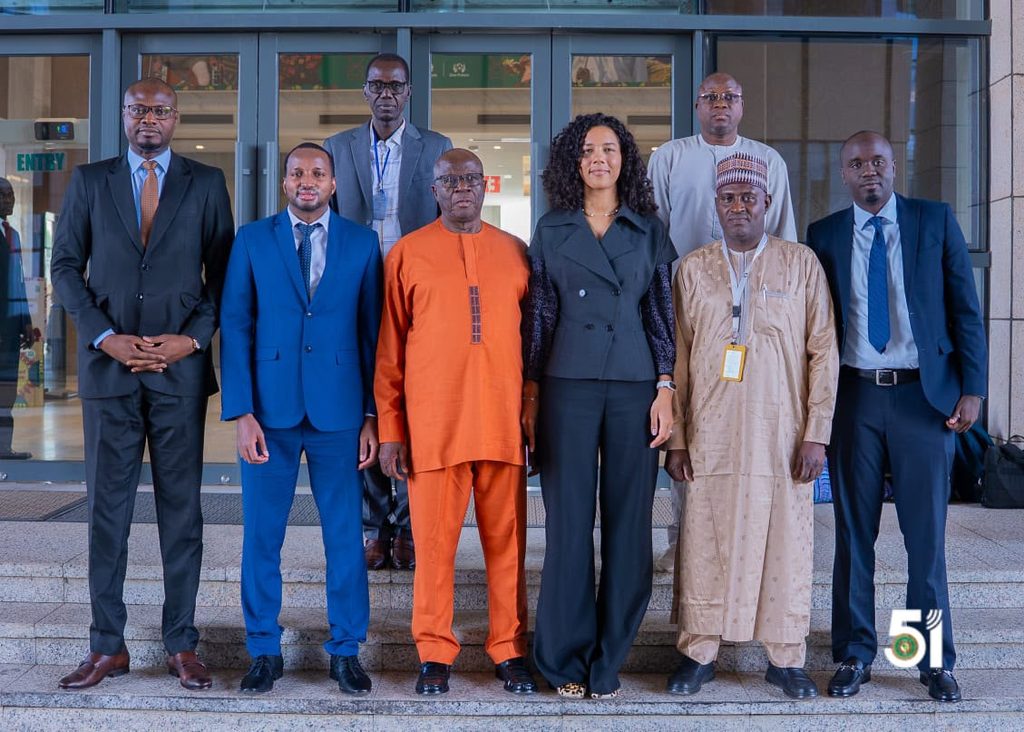
The mission commenced with a meeting between the World Bank delegation and the ECOWAS Commissioner for Infrastructure, Energy and Digitalisation, Amin Amidu, during which the Directorate of Energy and Mines briefed the Commissioner on the project’s objectives, implementation arrangements and ongoing collaboration with the World Bank.
Amidu, who assumed office on 1 September 2026, reaffirmed his commitment to monitoring the Directorate’s activities, acknowledging that inadequate electricity access remains one of the major development challenges confronting West Africa.
He noted that limited financial resources continue to constrain efforts to close the regional electricity gap, stressing the importance of sustained partnerships and strategic investments in the energy sector.
The Director of the ECOWAS Directorate of Energy and Mines, Arkadius Koumoin, underscored the importance of electricity as a fundamental driver of socioeconomic development.
He observed that the continued absence of electricity in many rural communities across West Africa remains a significant obstacle to improved livelihoods, economic opportunities and inclusive growth.
Koumoin reaffirmed ECOWAS’s commitment to coordinated regional interventions, noting that access to reliable and sustainable energy remains central to the organisation’s Vision 2050 aspiration of building a more integrated, prosperous and people-centred West Africa.
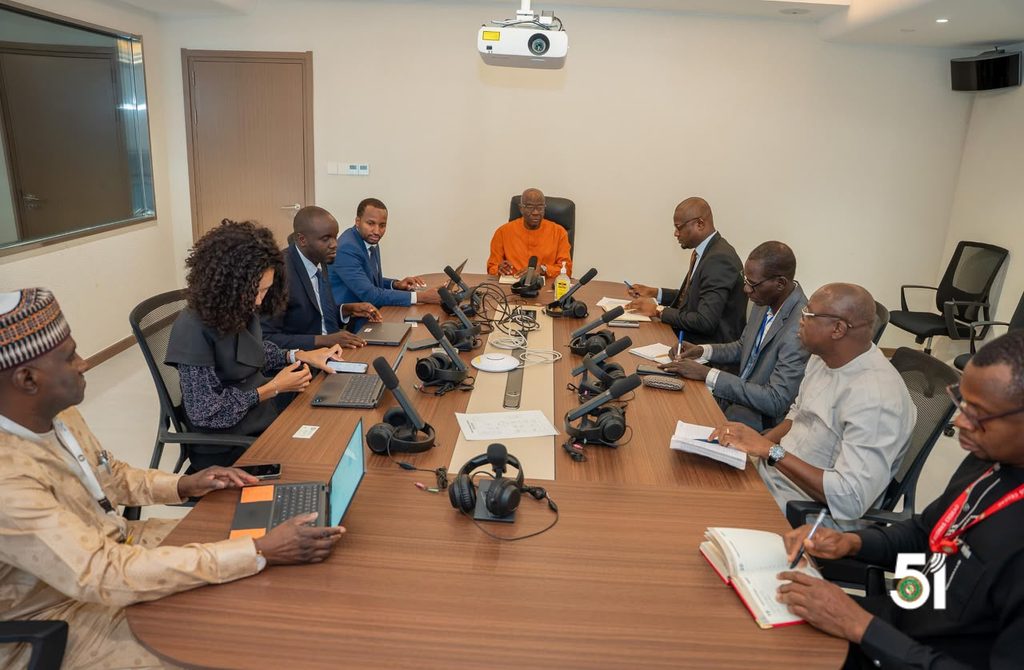
The World Bank’s Task Team Leader for the RAISE Project, Ebrima Bah, described the initiative as an important regional development intervention and commended the progress recorded so far.
He noted that the project had benefited from lessons and experiences gained from previous initiatives, providing a favourable foundation for implementation. He expressed optimism that the project could be completed within three to four years.
The mission will also examine critical implementation components, including the preparation of the 2027 Annual Work Plan and Budget, environmental and social safeguards, regional procurement activities, financial management arrangements and national procurement processes in Togo and The Gambia.
The RAISE Project became effective on 29 October 2026, following a US$10 million grant agreement signed between ECOWAS and the World Bank in July 2026 to facilitate regional coordination and implementation.
The RAISE Project comes against the backdrop of persistent electricity access challenges across West Africa, where inadequate infrastructure, high generation costs, unreliable supply and affordability constraints continue to undermine economic development.
Despite progress in expanding electricity infrastructure, significant disparities remain between urban and rural communities, with many households and businesses still lacking access to reliable power.
The electricity deficit has particularly affected rural economies, limiting opportunities for small businesses, agricultural processing, digital services and other productive activities that depend on dependable electricity.
The World Bank has identified infrastructure constraints, high electricity generation costs, affordability challenges and weaknesses in power sector institutions as major obstacles to expanding electricity access across the region.
In Togo and The Gambia, the RAISE Project is designed to address these challenges through expanded electricity distribution networks, household connections and renewable energy development.
The World Bank estimates that the initiative could generate labour income gains equivalent to approximately 11,700 jobs annually through direct and indirect economic effects, including about 9,200 in Togo and 2,500 in The Gambia.
Beyond its immediate targets in Togo and The Gambia, RAISE forms part of broader efforts to strengthen regional electricity infrastructure, improve cross-border power trade and accelerate access to affordable and sustainable energy across West Africa.
The initiative complements the West Africa Regional Electricity Market Programme (WA-REMP), a regional framework supported by the World Bank to strengthen electricity trade, improve energy security and expand access to power across the sub-region.
The programme, approved by the World Bank in January 2025 with an initial financing framework of US$1.6 billion, builds on the work of the West African Power Pool (WAPP), which is developing an interconnected electricity market to enable countries to exchange power and make more efficient use of available generation resources.
The regional integration programme builds on more than 4,000 kilometres of high-voltage transmission lines constructed to connect electricity networks across 15 West African countries, facilitating cross-border electricity trade.
The wider regional electricity agenda has also contributed to improved electricity services for more than three million people across six West African countries between 2019 and 2025.
RAISE complements these interventions by focusing on the last-mile challenge of connecting underserved communities and households to electricity while encouraging renewable energy development.
The project also aligns with the World Bank’s Mission 300 ambition to provide electricity access to 300 million people across sub-Saharan Africa by 2030.
Through these complementary initiatives, ECOWAS and the World Bank are pursuing a coordinated approach that combines regional electricity integration with investments in local distribution networks, renewable energy and household connections.
The successful implementation of RAISE is therefore expected to contribute not only to improved electricity access in Togo and The Gambia but also to ECOWAS’s broader objectives of regional integration, economic transformation and sustainable development.
ECOWAS, World Bank Intensify Drive to Bridge West Africa’s Electricity Gap, Target 1,800 Communities
ECOWAS deploys observers across nine islands for Cabo Verde presidential election
…Says no major threat to peaceful polls as UN, AU, other international missions coordinate monitoring
By: Michael Mike
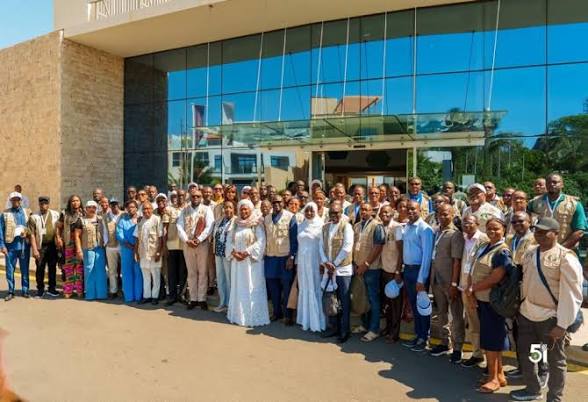
The Economic Community of West African States (ECOWAS) has deployed election observers across all nine inhabited islands of Cabo Verde to monitor the country’s presidential election held on Saturday, expressing confidence in the peaceful conduct of the electoral process.
The regional bloc said its pre-election assessment had identified no significant threat to the peaceful conduct of the poll, describing the island nation as a strong democratic example in a West African region grappling with political instability and unconstitutional changes of government.
The ECOWAS Election Observation Mission, led by former Gambian Vice-President, H.E. Fatoumatta Jallow-Tambajang, completed its pre-election engagements in Praia, the country’s capital, with activities including the deployment of observers, consultations with international partners and meetings with presidential candidates.
The deployment on November 13 was accompanied by an engagement with the United Nations Special Representative for West Africa and the Sahel, Leonardo Santos Simão, who underscored ECOWAS’s leadership in addressing political and security challenges in the region.
“No one is more important than ECOWAS in this region,” Simão said, reaffirming the importance of regional cooperation in safeguarding democratic processes and political stability.
On November 14, Jallow-Tambajang met with presidential candidate José Maria Neves and convened a meeting of heads of international election observation missions at the ECOWAS Situation Room in Praia.
The meeting brought together representatives of the African Union (AU), the Community of Portuguese Language Countries (CPLP), the ECOWAS Network of Electoral Commissions (ECONEC), the Network of Jurisdictional and Electoral Administration Bodies of the CPLP (ROJAE-CPLP) and the International Organisation of La Francophonie (OIF).
The ECOWAS Head of Mission was supported by the Commissioner for Political Affairs, Peace and Security, Francess Piagie Alghali, who is leading the technical team of the observation mission.
Presenting the mission’s pre-election assessment, Alghali said the organisation had not identified any major security concern that could undermine the peaceful conduct of the election.
“At this stage, ECOWAS sees no significant threat to the peaceful conduct of the presidential election. Cabo Verde remains a strong democratic example within the West African region,” she said.
The coordinated engagement among the international observation missions was aimed at strengthening cooperation, information-sharing and a common understanding of developments surrounding the electoral process.
During Saturday’s election, Jallow-Tambajang was scheduled to observe the opening of polls in Palmarejo, Praia, visit polling stations in Tira Chapéu, Várzea and Achadinha, and return to Palmarejo to observe the closing and counting of votes, while other ECOWAS observers monitored proceedings across the country’s nine inhabited islands.
The mission is expected to issue its preliminary statement on the electoral process on November 17.
The election is significant against the background of Cabo Verde’s reputation for political stability and peaceful democratic transitions in a region that has experienced military coups, political instability and contested transfers of power.
Cabo Verde transitioned from a one-party system to multiparty democracy in 1991, when the opposition Movement for Democracy (MpD) defeated the long-ruling African Party for the Independence of Cabo Verde (PAICV) in the country’s first multiparty elections. Since then, the two major political parties have alternated in power through elections.
The November 15 presidential election is the country’s sixth presidential contest since the introduction of multiparty democracy and features six candidates, including incumbent Neves, who is seeking a second five-year term, and former Justice Minister Joana Rosa, the country’s first female presidential candidate.
Neves won the October 2021 presidential election with approximately 51.7 per cent of the votes, defeating his main challenger, Carlos Veiga, who secured about 42.4 per cent.
Under Cabo Verde’s semi-presidential system, the president is directly elected and exercises constitutional responsibilities that include signing or vetoing legislation, while the prime minister exercises most executive powers. The presidential contest therefore also has implications for the country’s institutional balance and political relations between the presidency and government.
The ECOWAS deployment forms part of the organisation’s broader mandate to promote democratic governance, credible elections and political stability among its member states.
Through its nationwide observation, engagement with political stakeholders and coordination with other international missions, ECOWAS is supporting efforts to ensure a transparent and peaceful electoral process, with its preliminary assessment expected to provide further insights into the conduct of the vote.
ECOWAS deploys observers across nine islands for Cabo Verde presidential election
NSCDC Raises Alarm Over Fake Promotion Notice, Warns Personnel Against Scammers
…Disowns WhatsApp message seeking officers’ names, service numbers and ranks
By: Michael Mike
The Nigeria Security and Civil Defence Corps (NSCDC) has alerted its personnel to a fraudulent notice circulating on WhatsApp, warning that scammers are attempting to harvest officers’ personal and service details under the guise of the 2026 senior promotion exercise.
The Corps, in an official disclaimer on Monday, disowned the notice, which directs personnel to submit their full names, service numbers and present ranks to a designated WhatsApp number, 08031306693.
It described the purported directive as fake, stressing that neither the NSCDC management nor its National Public Relations Office issued the instruction.
The warning comes amid concerns over the growing use of unofficial communication channels by fraudsters to exploit personnel seeking career advancement, particularly during promotion exercises.
In the disclaimer, signed by the National Public Relations Officer, Assistant Commandant of Corps Babawale Afolabi, the Corps urged officers and men to disregard the message and avoid disclosing sensitive service information to unverified individuals or platforms.
It cautioned that the fraudulent request could expose personnel to identity theft, impersonation and other forms of financial or administrative fraud.
The NSCDC clarified that all official matters relating to promotions fall within the jurisdiction of the Secretary to the Civil Defence, Correctional, Fire and Immigration Services Board (CDCFIB).
It added that legitimate promotion-related information is communicated through established administrative channels of the Ministry of Interior and the Corps, rather than through unsolicited WhatsApp messages or personal telephone numbers.
The Corps, therefore, advised personnel to verify all promotion-related information through their appropriate command structures and official administrative channels before acting on any purported directive.
The disclaimer urged officers and men to remain vigilant and ensure that the warning receives wide publicity to prevent unsuspecting personnel from falling victim to the scheme.
The development highlights the vulnerability of internal administrative processes to impersonation and fraud, particularly where career progression and promotion opportunities are involved.
For security personnel, the Corps stressed, the safest approach is to treat unsolicited requests for service records and personal information with suspicion and rely exclusively on officially authorised communication channels.
NSCDC Raises Alarm Over Fake Promotion Notice, Warns Personnel Against Scammers

Russia, Nigeria Target Stronger Economic Ties as Bilateral Trade Hits $1.4bn

JBS $2.5bn Nigeria investment raises alarm over land loss, pollution, smallholder farmers’ survival

Kogi Group Rejects 16-Year Power Retention Agenda, Demands Rotation, EFCC Probe of Ex-LG Chairmen

Roger Federer’s Shock as DNA Results Reveal Myla and Charlene Are Not His Biological Children

THE PLIGHT OF FARIDA

FAILED COUP IN BURKINA FASO: HOW TRAORÉ NARROWLY ESCAPED ASSASSINATION PLOT AMID FOREIGN INTERFERENCE CLAIMS
-
 News3 years ago
Roger Federer’s Shock as DNA Results Reveal Myla and Charlene Are Not His Biological Children
-
Opinions5 years ago
THE PLIGHT OF FARIDA
-
 News2 years ago
FAILED COUP IN BURKINA FASO: HOW TRAORÉ NARROWLY ESCAPED ASSASSINATION PLOT AMID FOREIGN INTERFERENCE CLAIMS
-
 Opinions5 years ago
POLICE CHARGE ROOMS, A MINTING PRESS
-

 News3 years ago
EYN: Rev. Billi, Distortion of History, and The Living Tamarind Tree
-

 ACADEMICS3 years ago
A History of Biu” (2015) and The Lingering Bura-Pabir Question (1)
-

 Columns3 years ago
Army University Biu: There is certain interest, but certainly not from Borno.
-

 Politics1 year ago
2027: Why Hon. Midala Balami Must Go, as Youths in Hawul and Asikira/Uba Federal Constituency Reject ₦500,000 as Sallah Gift
