
Crime
Rivalry: Dogo Gide Eliminates 20 Sadiku Boko Haram terrorists in North West


Rivalry: Dogo Gide Eliminates 20 Sadiku Boko Haram terrorists in North West
By Zagazola Makama
In a complex and evolving battle for supremacy in Nigeria’s North-West, notorious bandit leader Dogo Gide has reportedly killed 20 Boko Haram fighters from the Sadiku faction and seized a cache of weapons.
A recently surfaced video shows Dogo Gide addressing his rivals, claiming victory after an ambush attempt by the Sadiku faction. In the video, Gide displayed seized items, including ten AK-47 rifles, RPGs, mobile phones, and an identity card allegedly linked to members of the faction.
“Sadiku and his group ambushed us, but we prevailed. Only one of our men was injured, while at-least 20 their men were killed,” Gide stated. He further accused the Sadiku faction of hypocrisy, condemning them for killing women, children, and innocent people under the guise of jihad.
This development spotlight the shifting dynamics of extremist activities in the region, where alliances and rivalries among criminal and terrorist groups continue to complicate security efforts. The rivalry between Dogo Gide and Boko Haram factions, particularly the Sadiku-led group, appears to stem from deeply personal and strategic reasons.
Credible intelligence suggests that Gide, once an ally of Boko Haram, turned against the group after his brother Sani was killed in 2023. Since then, Gide has vowed to avenge his brother’s death and has worked to expel Boko Haram elements from his area of influence.
Gide’s recent operations have focused on the Shiroro Local Government Area (LGA) in Niger State, where he reportedly dismantled Boko Haram roadblocks along the Kuruba-Uduwa highway. Addressing local communities, Gide pleaded for forgiveness and pledged to restore normalcy, encouraging displaced villagers to return home.
Observers believe Gide’s actions are driven by a combination of personal vendettas and a desire to consolidate control over lucrative criminal enterprises, such as cattle rustling and kidnapping, in the region.
The dynamics in Nigeria’s North-West are increasingly influenced by the infiltration of Boko Haram and its splinter groups, such as Jama’atu Ahlis Sunna Lidda’awati Wal-Jihad (JAS) and Ansaru. These groups operate alongside local bandit kingpins, forming temporary alliances and engaging in fierce competition for dominance.
JAS factions, led by figures like Sadiku and Umar Taraba, maintain headquarters in Niger and Zamfara states and are reportedly proficient in manufacturing improvised explosive devices (IEDs). These factions have expanded their operations into the North-West and North-Central regions, employing brutal tactics to enforce compliance and raise revenue through taxes on local populations.
Ansaru, on the other hand, has established a stronghold in Niger, Kogi, and Kaduna states, focusing on ideological propaganda and recruitment. The group has maintained links with al-Qaeda affiliated groups in the Sahel, raising concerns about the potential for regional spillover of extremist activities.
The rivalry between Dogo Gide and Boko Haram factions presents both opportunities and challenges for Nigeria’s security forces. On one hand, internal conflicts among extremist groups could weaken their overall operational capacity. On the other hand, the fluid alliances and shifting loyalties complicate intelligence gathering and counterterrorism operations.
In conclusion, the ongoing conflict in Nigeria’s Northwest is a multifaceted crisis that requires a nuanced understanding of the local dynamics at play.
Dogo Gide’s rise as a key player in the fight against Boko Haram signifies the complexities of power, revenge, and the quest for control in a region plagued by violence.
As the situation continues to unfold, the need for comprehensive strategies to address the root causes of extremism and foster peace remains paramount.
Rivalry: Dogo Gide Eliminates 20 Sadiku Boko Haram terrorists in North West


Crime
Troops Intercept Abandoned Toyota Camry Loaded with 315 Sachets of Suspected Indian Hemp in Kaduna
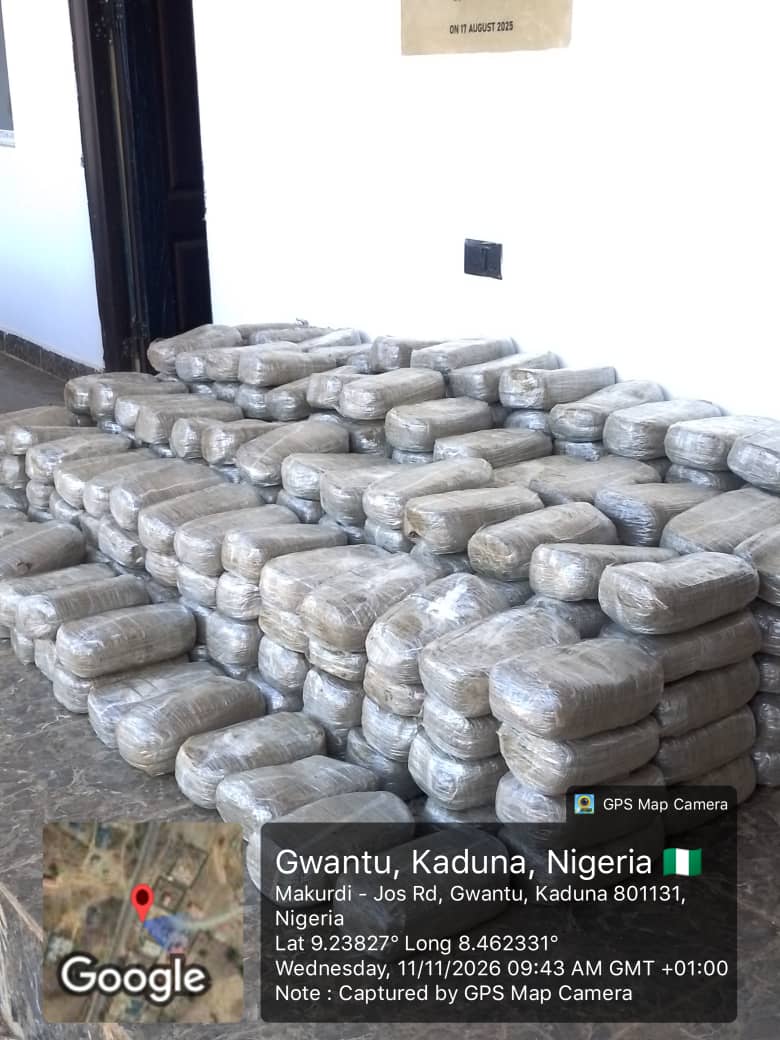
Troops Intercept Abandoned Toyota Camry Loaded with 315 Sachets of Suspected Indian Hemp in Kaduna
By: Zagazola Makama
Troops of Operation ENDURING PEACE (OPEP) have intercepted an abandoned Toyota Camry conveying 315 sealed sachets of substances suspected to be Cannabis sativa, popularly known as Indian hemp, in Sanga Local Government Area of Kaduna State.
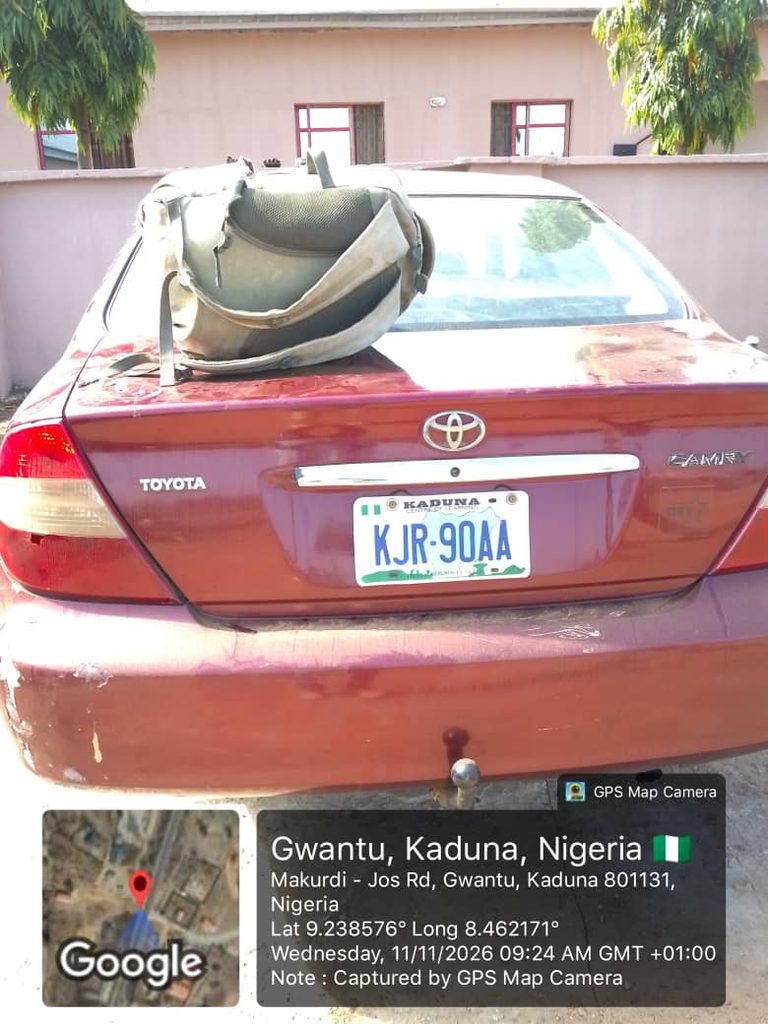
The interception occurred at about 8:30 a.m. on November 11, 2026, following a report of an abandoned vehicle at Numbu community.
Security sources said troops of Sector 7, Sub-Sector 71, responded to the report and discovered a Toyota Camry with registration number KJR 90 AA KD, parked without occupants.

A search of the vehicle led to the discovery of 315 sealed sachets of substances suspected to be Indian hemp.
The vehicle and recovered exhibits were subsequently towed to the headquarters of Sub-Sector 7 in Sanga for further necessary action.
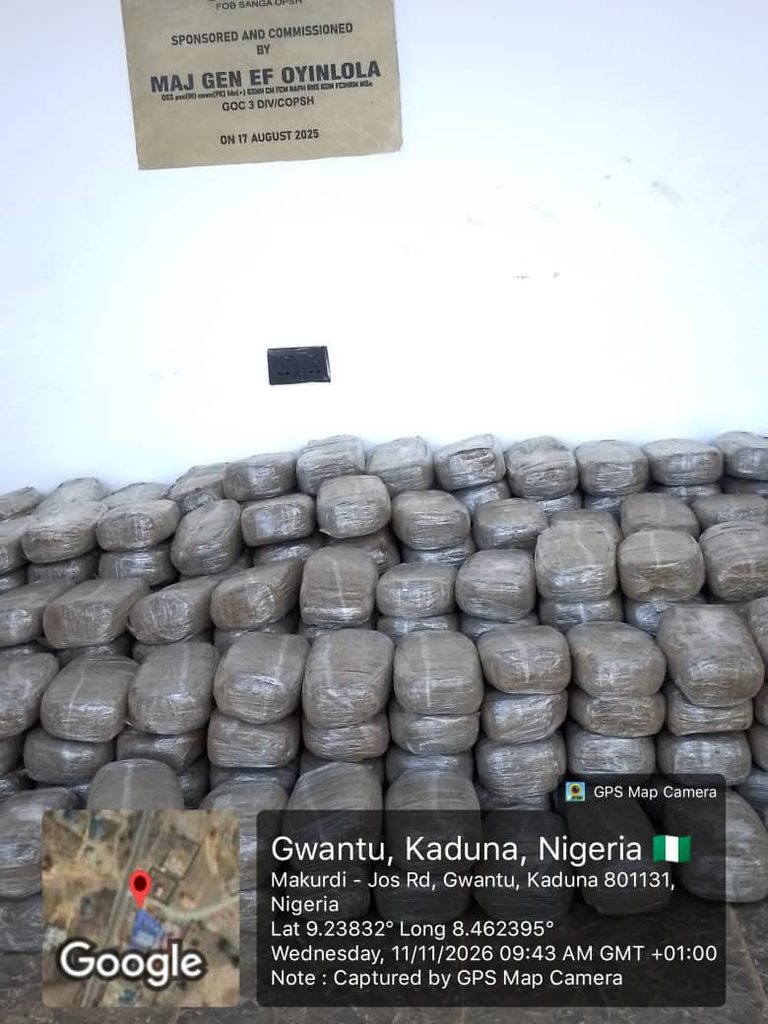
The interception highlights ongoing security efforts to disrupt the transportation and distribution of illicit drugs, which can fuel criminal activities and undermine community safety.
Troops Intercept Abandoned Toyota Camry Loaded with 315 Sachets of Suspected Indian Hemp in Kaduna
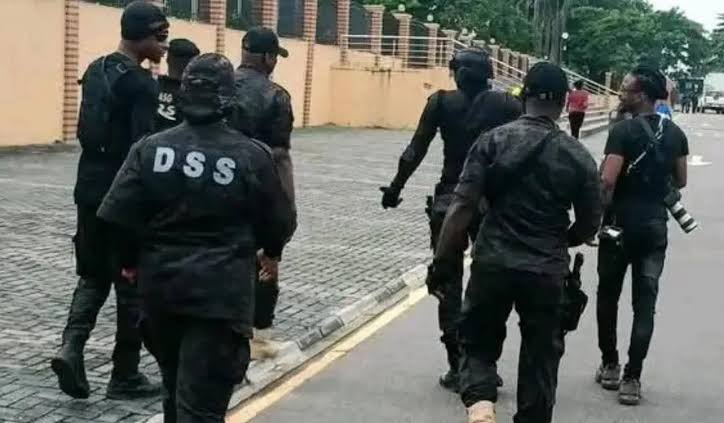
How we arrested 4 suspected IPOB members who kidnapped, killed our operative –DSS witness
By; Zagazola Makama
A Department of State Services (DSS)’ witness on Wednesday told the Federal High Court in Abuja how four suspected members of the outlawed Indigenous People of Biafra (IPOB), who allegedly kidnapped and killed their officer, Ekpenyong Owoh, were tracked and arrested by the secret police.
The witness and a DSS investigator told Justice Joyce Abdulmalik while testifying as the 1st prosecution witness (PW-1) in the ongoing trial of the four defendants.
The defendants are Michael Okafor, a.k.a Onyechimeleze; Chinedu Chukwudozie, alias Kante; Chibunna Olisa; and Chigozie Olisa a.k.a Ability.
They were arraigned before Justice Abdulmalik on September 28 on a six-count charge bordering on terrorism and kidnapping.
The prosecution alleged that the defendants conspired to commit acts of terrorism and were involved in the abduction of the Late Owoh, while he was travelling from Port Harcourt in Rivers to Awka.
They were further accused of taking the operative hostage and killing him.
The suspects were also accused of belonging to the proscribed IPOB and its armed wing, the Eastern Security Network (ESN), as well as involvement in activities allegedly linked to terrorism.
In addition, the prosecution alleged that the suspects were involved in the unlawful possession of firearms, including an AK-47 rifle, and pump-action gun, in connection with the alleged offences.
The defendants, however, pleaded not guilty to the charge.
Led in evidence by the prosecution lawyer, Munirat Oladunjoye, the witness, who was codenamed “AAA” for security reasons, said he has worked with the DSS for about 17 years.
He said he investigated the matter with his team.
“Sometime in February 2022, the wife of our personnel made a complaint to us in Anambra Command that her husband, who was travelling from Port Harcourt to Awka in Anambra State, was missing.
“We sprung into action and did a technical analysis of the officer’ movement indicated that he was last seen alive in Osomogu, Ihiala Local Government Area of Anambra State,” he said.
The witness said the late Owoh’s Toyota Pontiac car in which he was travelling, was also found to be in the town.
According to the witness, since the area where Owoh was last seen was a stronghold of the IPOB and Eastern Security Network (ESN), the DSS liaised with the military to get to work, leading to the arrest of one Chinyere Okabue, on June 20, 2026.
Okabue’s arrest, said the witness, led to the arrest of Okafor and the co-defendants.
He said while Okafor, the prime suspect, was arrested on September 14, the three other defendants were arrested on September 20.
Recounting what transpired on the date Owoh was murdered, the witness said the late officer had, on February 23, 2022, called his wife on the telephone that he would be coming home to see his newly-born baby.
“When they intercepted Owoh, Okafor, who was a sub-commander of ESN, and his co-defendants, seized him, and took him into their camp.
The witness told the court that, Chibunna Olisa drove Owoh’s vehicle into their camp and he was kept there until one sub commander called Double Lion gave Okafor the directive to kill him.
“He was shot several times and buried in a shallow grave,” the witness told the court adding that the four defendants had ESN marks 1414 n their bodies.
Thereafter, Justice Abdulmalik ordered the defendants, who were in the dock, to come forward and pull off their wears one after the other to confirm the witness’ allegation.
The witness and the defendants’ lawyers, K.C. Ekwe and G.U. Oputa, confirmed the mark on their bodies.
According to AAA, they gave them that mark as a sign of protection.
He said after Owoh was killed, Okafaor converted his Toyota Pontiac vehicle to his own personal use.
He alleged that Okafor also gave Owoh’s phone to his girl friend, Chinyere, as a gift.
“When we found out that the lady did not know anything about our personnel’s abduction, we granted her administrative bail,” he told the court.
He maintained that all the defendants were involved in the abduction, kidnapping and killing of their personnel.
The witness said Okafor travelled to Cote d’Ivoire and later to India, but he was involved in criminal activities in India and was deported around 2024.
When the lawyer asked how they were arrested, the witness said: “Okafor was arrested on September 14, 2026 through an intelligence-driven operation.”
He added that after Okafor’s deportation, he returned and decided to lie low and worked as a bricklayer at Azia in Ihiala LGA.
He said his co-defendants were later arrested on September 20.
The PW-1 said they voluntarily gave their statements which were equally recorded.
He said their confessional statements were gotten in a relaxed atmosphere with air-conditioning and in the presence of a lawyer from Legal Aid Council.
All the statements of the defendants were admitted in evidence and marked as exhibits after the defence lawyers did not object.
.
“The law says you must be talking in the presence of a lawyer,” he added, mentioning the name of the lawyer from the Legal Aid Council.
The interviewer also told them that they had the right not to say anything but that whatever they said would be used against them in the law court.
The defendants, however, responded that they were ready to make the statements, and it was admitted as evidence against them by the judge and marked as Exhibit TWT-5 Series.
Justice Abdulmalik adjourned the matter until November 16 for cross examination of AAA in the trial-within-trial and for continuation of trial-within-trial.
The judge warned that if the defence lawyers failed to appear on the next adjourned date, their cross examination would be foreclosed.
How we arrested 4 suspected IPOB members who kidnapped, killed our operative –DSS witness
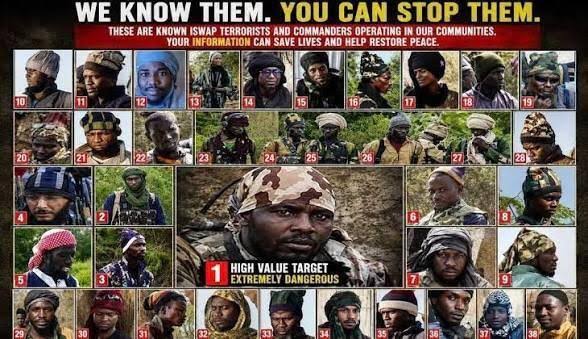
Troops Kill ISWAP Commander, Mallam Ali, Two Terrorists in Fierce Battle at Adamawa Outpost
By: Zagazola Makama
Troops of the Nigerian Army have dealt a significant blow to the Islamic State West Africa Province (ISWAP) terrorist network, neutralising two insurgents, including Mallam Ali, identified as the Amirul Fiya (commander in charge of fighting forces) of the notorious Timbuktu Triangle enclave in Borno State.
The terrorist commander was killed during a failed midnight assault on troops of 226 Battalion at their Forward Operating Base (FOB) in Zangula Kilba Junction, Gombi Local Government Area of Adamawa State.
The attack occurred at about 12:05 a.m. on November 10, 2026, when ISWAP fighters launched an assault on the military position, apparently seeking to overrun the base.
However, the troops, supported by local hunters and Rangers, mounted a determined resistance, repelling the attackers and inflicting casualties on the terrorist group.
Military sources said two terrorists were neutralised during the encounter, including Mallam Ali, whose position as Amirul Fiya of the Timbuktu Triangle makes his elimination a significant operational development against ISWAP’s command and fighting structure.
The Timbuktu Triangle, located within the Lake Chad operational theatre, has remained one of the strategic areas associated with ISWAP’s activities, including the movement and deployment of fighters.
Following the successful defence of the base, troops recovered two AK-47 rifles, four magazines and a substantial quantity of ammunition.
The recovered ammunition included 125 rounds of 7.62mm x 54, 77 rounds of 7.62mm x 51 and 20 rounds of 7.62mm x 39, alongside two belted links of 7.62mm x 54 ammunition.
Other items recovered were a mobile telephone, wristwatch, camel bag and ₦15,000 cash.
The killing of Mallam Ali is expected to deal a blow to ISWAP’s fighting hierarchy, particularly if his operational responsibilities and communication networks are further exploited through intelligence gathered from the recovered items.
Troops Kill ISWAP Commander, Mallam Ali, Two Terrorists in Fierce Battle at Adamawa Outpost

Faces Behind the Figures: Nigerians Lost in Russia’s War

EFCC PETITIONED OVER N2.5M GTBANK FRAUD, UNAUTHORISED N138,000 LOAN

Why Borno Will Vote For APC At All Levels Of The Pending General Election……Ayuba

Roger Federer’s Shock as DNA Results Reveal Myla and Charlene Are Not His Biological Children

THE PLIGHT OF FARIDA

FAILED COUP IN BURKINA FASO: HOW TRAORÉ NARROWLY ESCAPED ASSASSINATION PLOT AMID FOREIGN INTERFERENCE CLAIMS
-
 News3 years ago
Roger Federer’s Shock as DNA Results Reveal Myla and Charlene Are Not His Biological Children
-
Opinions5 years ago
THE PLIGHT OF FARIDA
-
 News2 years ago
FAILED COUP IN BURKINA FASO: HOW TRAORÉ NARROWLY ESCAPED ASSASSINATION PLOT AMID FOREIGN INTERFERENCE CLAIMS
-
 Opinions5 years ago
POLICE CHARGE ROOMS, A MINTING PRESS
-

 News3 years ago
EYN: Rev. Billi, Distortion of History, and The Living Tamarind Tree
-

 ACADEMICS3 years ago
A History of Biu” (2015) and The Lingering Bura-Pabir Question (1)
-

 Columns3 years ago
Army University Biu: There is certain interest, but certainly not from Borno.
-

 Politics1 year ago
2027: Why Hon. Midala Balami Must Go, as Youths in Hawul and Asikira/Uba Federal Constituency Reject ₦500,000 as Sallah Gift
