
News
Sanusi, Peterside, Adesina, Tijani, Oteh: Nigeria Must Move Beyond 4% Growth to Tackle Poverty

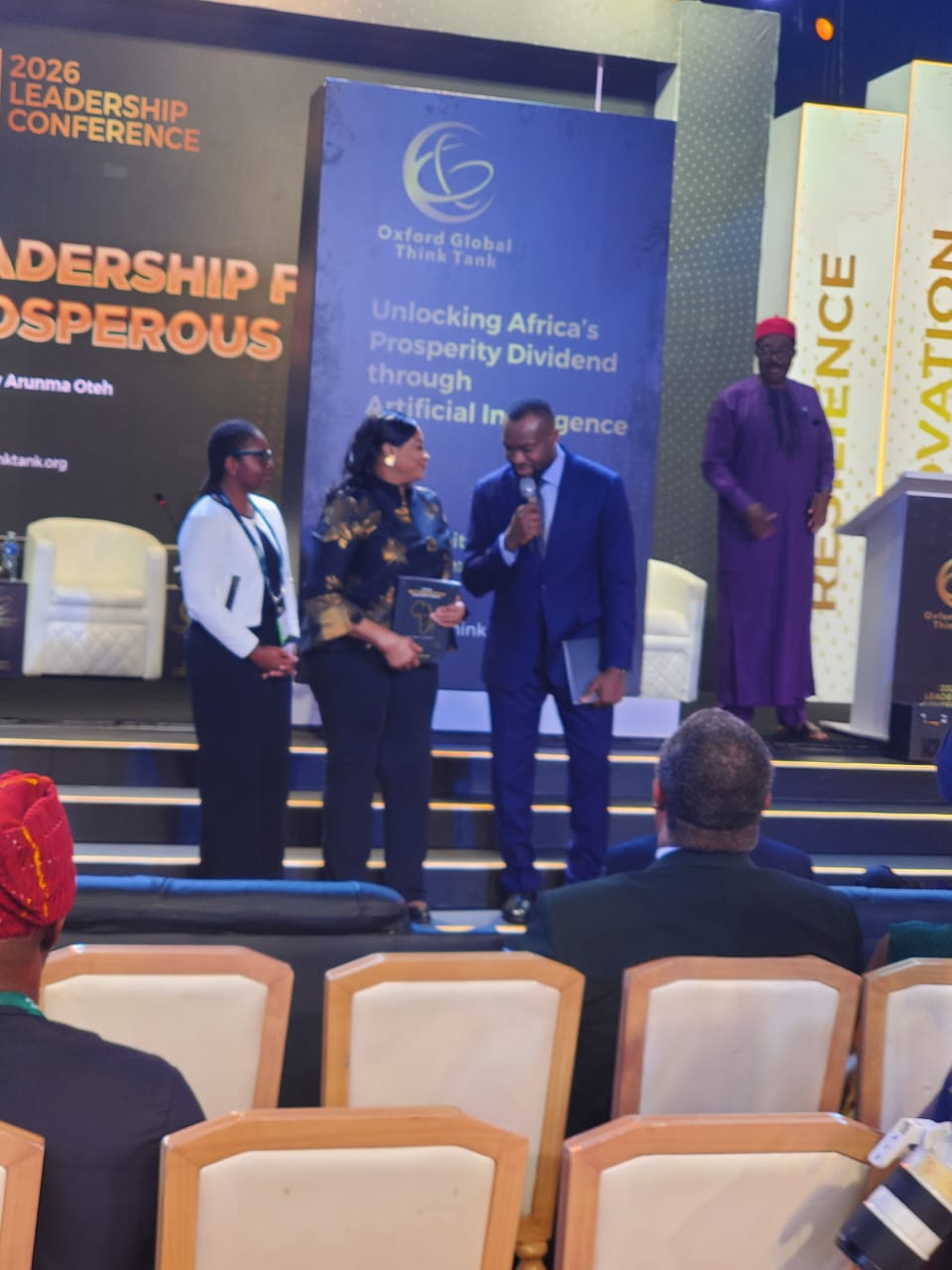
Sanusi, Peterside, Adesina, Tijani, Oteh: Nigeria Must Move Beyond 4% Growth to Tackle Poverty
By: Michael Mike
Emir of Kano warns that GDP growth means little without improved living standards; Peterside blames corruption, political patronage for weak investment; Adesina urges investment in young people; Tijani identifies AI as key to productivity; Oteh calls for inclusive capital markets
Nigeria must move beyond celebrating modest economic growth and pursue a more ambitious growth target of 10 per cent, while ensuring that economic reforms translate into better living conditions for citizens, prominent Nigerian leaders and economic experts have said.
They spoke on Tuesday at the Oxford Global Think Tank Leadership Conference, with theme: “Leadership for a Prosperous Future,” where they examined Nigeria’s economic challenges, the need for stronger institutions, investment mobilisation, technological innovation and the development of its human capital.
The Emir of Kano, Muhammadu Sanusi II, cautioned that improvements in headline economic indicators should not be mistaken for improved welfare, insisting that the ultimate test of economic policy must be its impact on households.
Sanusi acknowledged that some macroeconomic indicators had improved and that the economy was recording growth of about 4.5 per cent. However, he argued that aggregate GDP figures did not adequately reflect the economic realities facing ordinary Nigerians.
He said the decline in GDP per capita since 2023, influenced by economic growth and currency depreciation, raised questions about whether the benefits of reform were reaching the wider population.
According to him, economic performance should be assessed not only through GDP growth, foreign reserves and other macroeconomic indicators, but also through improvements in education, healthcare, nutrition, employment, household incomes and poverty reduction.
The former Central Bank of Nigeria governor also cautioned against excessive reliance on portfolio inflows, which he said could be volatile and influenced by high interest rates and attractive short-term returns.
He stressed that sustainable economic progress required structural reforms that went beyond the removal of subsidies and changes to foreign exchange policy.
Sanusi called for investment in infrastructure, stronger accountability, transparency, reliable economic data and policies capable of expanding productive opportunities across the country.
He also warned that perceived regional imbalances in appointments, particularly in sensitive areas of national security, could undermine national cohesion, urging the government to pay greater attention to fairness and inclusion.
While acknowledging that the country’s economic situation was not entirely bleak, he maintained that reforms would have limited meaning if citizens continued to experience worsening living conditions.
Similarly, businessman and former Chairman of Stanbic IBTC Holdings, Atedo Peterside, said Nigeria should not be satisfied with economic growth of about four per cent when the country needed to grow at 10 per cent to create sufficient jobs, expand businesses and improve living standards.
Peterside identified weak investment as one of the major constraints to Nigeria’s economic expansion, arguing that the country could not achieve the required growth without a significant increase in investment as a proportion of GDP.
He blamed political patronage, corruption, regulatory harassment and the absence of a level playing field for discouraging investors and weakening the private sector.
According to him, businesses, particularly small and medium-scale enterprises, are often subjected to arbitrary demands and harassment by government regulators, making it difficult for them to operate, expand and create jobs.
He warned that public procurement had become a major avenue for the diversion of public resources, with inflated contract costs undermining the value of government expenditure.
Peterside described the abuse of procurement processes as a form of legalised theft, arguing that money meant for infrastructure and public services was being lost through inflated contracts and corrupt practices.
He said Nigeria needed to confront corruption and state capture if it hoped to attract the scale of domestic and foreign investment required to transform the economy.
The businessman also called for economic reforms to be implemented fairly, warning that citizens should not be made to bear the entire burden of adjustment while those benefiting from political connections and public resources remained insulated from its consequences.
He urged the government to strengthen institutions, protect businesses from arbitrary interference and ensure that public appointments and the allocation of national resources were guided by merit and national interest.
Former President of the African Development Bank, Dr Akinwumi Adesina, focused on the continent’s demographic advantage, arguing that Africa’s growing young population should be treated as an economic asset rather than a burden.
Adesina said population growth alone could not guarantee prosperity, stressing that the real advantage lay in building the capabilities of young people and connecting them to productive opportunities.
He noted that Africa’s population was projected to account for about a quarter of the world’s population by 2050, with young people making up a substantial proportion of the continent’s population.
He said the demographic trend presented an enormous opportunity, but warned that it could become a source of economic and social pressure if governments failed to invest adequately in education, healthcare, nutrition, technical skills and access to finance.
According to him, young Africans must be equipped not only to seek employment but also to create businesses, develop technologies and provide solutions to the continent’s challenges.
Adesina emphasised the need to expand digital and artificial intelligence capabilities, insisting that Africa should not remain merely a consumer of technologies developed elsewhere.
He called for stronger investment in human capital, affordable financing and infrastructure that would enable young people to turn their ideas into viable enterprises and productive ventures.
Minister of Communications, Innovation and Digital Economy, Dr Bosun Tijani, said Nigeria’s ability to convert knowledge and technology into productive economic activity would determine its future prosperity.
Tijani argued that natural resources alone could not guarantee national wealth, explaining that prosperity depended on how effectively a country applied knowledge, technology and technical expertise to the resources available to it.
Using the parable of the talents, he said countries that developed the capacity to improve and multiply the value of their resources would achieve greater prosperity than those that merely possessed them.
He cited the liberalisation of Nigeria’s telecommunications sector and the introduction of GSM services in 2001 as an example of how deliberate government policy, private investment and competition could transform an industry and create wider economic opportunities.
According to him, artificial intelligence represents another major productivity frontier, but Nigeria must first develop the capacity to absorb emerging technologies and apply them to its own economic needs.
He identified connectivity, computing and data infrastructure, skills and research, innovation capacity, and effective policies and institutions as the foundations required to build that capacity.
The minister disclosed that the Federal Government was pursuing an approximately 90,000-kilometre open-access fibre-optic network, backed by an estimated $2bn investment, to expand broadband connectivity across the country.
He also highlighted plans to strengthen shared computing infrastructure and develop a Nigerian large language model capable of supporting local languages, including Yoruba, Hausa and Igbo, as well as Nigerian-accented English.
Tijani said the government’s 3 Million Technical Talent programme was designed to build a pool of skilled Nigerians capable of participating in the global digital economy, while the National Artificial Intelligence Strategy would provide a framework for the responsible adoption and development of AI.
He also referred to the establishment of an AI community of practice, with initial support of $150,000, to encourage collaboration and practical application of the technology.
To illustrate the economic consequences of failing to adopt technology, Tijani compared agricultural productivity in Nigeria with that of countries such as Brazil and Argentina.
He said Nigerian maize yields were generally between 1.5 and 2.5 tonnes per hectare, compared with yields of about 10 tonnes per hectare in the South American countries, attributing part of the difference to the application of precision technologies and improved farming practices.
He urged businesses to take advantage of the digital infrastructure and other foundations being developed by government, stressing that the private sector must translate those investments into products, services, jobs and economic value.
Convener of the Oxford Global Think Tank Leadership Conference, Arunma Oteh, called for an ecosystem approach to economic development, arguing that sustainable growth required governments, businesses, investors, financial institutions and citizens to work together.
Oteh, a former Director-General of the Securities and Exchange Commission, said domestic capital markets had an important role to play in mobilising the resources needed to finance development and expand economic opportunities.
She emphasised the importance of increasing retail participation in capital markets, noting that broader participation would allow more Nigerians to invest in productive enterprises and share in the country’s economic growth.
She also highlighted the potential of pension funds to support long-term investment and democratise wealth creation, provided appropriate safeguards and investment frameworks were in place.
Oteh said Africa’s youthful population made investment in education, skills and employment particularly urgent, noting that about 70 per cent of the continent’s population was under the age of 30.
She argued that development efforts should not be excessively centralised, stressing that decentralisation could improve service delivery and allow communities to respond more effectively to local needs.
Using electricity supply in Aba, Abia State, as an example, she pointed to the possibilities offered by decentralised approaches to managing infrastructure and delivering essential services.
Oteh also stressed the importance of creating an enabling environment for businesses through reliable infrastructure, access to finance, regulatory certainty and a skilled workforce.
She cited the reported broad international participation in the Dangote Refinery’s proposed public offering as an indication of the potential of capital markets to attract investors beyond Nigeria’s borders.
The interventions converged on a central message: Nigeria’s economic challenge is not simply to record higher growth figures, but to build an economy in which investment, technology, human capital and accountable institutions combine to generate jobs, raise productivity and improve the welfare of citizens.
The speakers maintained that achieving such an outcome would require more than isolated policy announcements. It would depend on sustained reforms, a stronger private sector, effective public institutions and deliberate investment in the capabilities of Nigerians.
Sanusi, Peterside, Adesina, Tijani, Oteh: Nigeria Must Move Beyond 4% Growth to Tackle Poverty





Nigerian military precision strikes neutralise 19 terrorists in Ngala, Borno
By: Zagazola Makama
The Nigerian military has neutralised at least 15 suspected terrorists in a series of precision airstrikes targeting insurgent positions around Bulabulutube in Ngala Local Government Area of Borno State.
Security sources said the strikes were conducted at about 7:56 p.m. on Nov. 8, following aerial surveillance that identified approximately 30 terrorist fighters gathered under a tree in the area.
The military aircraft subsequently carried out a precision strike on the identified target.
Battle Damage Assessment (BDA) indicated that about 15 terrorists were neutralised, while parts of a nearby building were destroyed.
The aircraft subsequently tracked another group of five fleeing terrorists who had taken cover under a tree and conducted a second precision strike.
The assessment revealed that about four additional terrorists were neutralised, while a secondary explosion was observed, suggesting the possible destruction of explosive materials or other military supplies.
In a related operation, the aircraft proceeded towards the Lake Chad area following intelligence on a suspected terrorist logistics structure located at a crossing point.
A further precision strike was conducted on the structure, which was assessed to have been completely destroyed, with no subsequent movement observed around the location.
The successive strikes represent another significant blow to terrorist formations and logistics networks operating within the Lake Chad axis.
The military continues to sustain intelligence-led aerial surveillance and precision operations aimed at degrading terrorist capabilities, disrupting their supply networks and denying insurgents safe havens across the North-East.
Nigerian military precision strikes neutralise 19 terrorists in Ngala, Borno
News
Nigeria, India Sign Landmark Human Rights Pact, Fagbemi Backs Stronger Institutional Independence
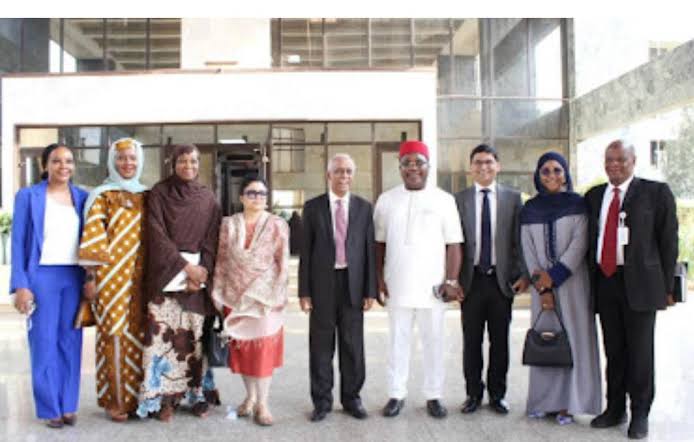
Nigeria, India Sign Landmark Human Rights Pact, Fagbemi Backs Stronger Institutional Independence
…AGF pledges justice ministry’s support for implementation, demands practical safeguards for citizens in AI era
By: Michael Mike
Nigeria and India have signed a bilateral agreement to strengthen human rights protection, institutional capacity and access to justice, with the Attorney-General of the Federation and Minister of Justice, Prince Lateef Fagbemi, SAN, pledging the Federal Government’s support for its implementation.
Fagbemi, who described the agreement as a strategic partnership between the two countries, said its success would ultimately be measured by its impact on ordinary citizens, particularly vulnerable and marginalised groups seeking justice.
The agreement, executed between the National Human Rights Commission (NHRC) of Nigeria and its Indian counterpart, is designed to deepen institutional cooperation, facilitate knowledge transfer, promote technical exchanges and strengthen operational capacity in addressing human rights violations.
The Attorney-General gave the government’s position on Tuesday in Abuja when he received a joint delegation of the two commissions at the Federal Ministry of Justice, describing the partnership as timely, particularly in an increasingly interconnected world where effective human rights protection requires stronger legal frameworks, institutional collaboration and respect for the rule of law.
The development followed a high-level engagement between the two commissions and the Chief Justice of Nigeria (CJN), at the Supreme Court Complex, Abuja, on Monday, as part of a two-day working visit by the Indian delegation.
The Nigerian delegation was led by the Executive Secretary of NHRC, Chief Tony Ojukwu, SAN, OFR, while the Indian delegation was headed by the Chairperson of India’s NHRC, Justice V. Ramasubramanian, accompanied by the Commission’s Joint Secretary, Mr. Samir Kumar.
Fagbemi said the partnership brought together two major democracies with shared common-law traditions, diverse populations and dynamic constitutional frameworks, expressing satisfaction with the thematic areas identified for cooperation under the agreement.
He specifically highlighted access to justice and the protection of digital rights as critical areas requiring urgent attention, particularly as emerging technologies, including Artificial Intelligence, continue to reshape society and create new human rights concerns.
According to him, both countries must develop legal safeguards to protect data privacy, prevent algorithmic bias and safeguard civic space, while ensuring that technological advancement does not undermine fundamental freedoms.
He said the Ministry of Justice expected the two commissions to produce actionable research and policy recommendations capable of addressing these emerging challenges.
Beyond emerging technologies, the Attorney-General stressed that Nigeria’s commitment to human rights must be reflected in the practical implementation of constitutional guarantees and international obligations, rather than merely in the existence of legal provisions.
He cited the African Charter on Human and Peoples’ Rights, which Nigeria domesticated through the African Charter on Human and Peoples’ Rights (Ratification and Enforcement) Act, Cap. A9, Laws of the Federation of Nigeria 2004, as a major instrument underpinning the country’s human rights jurisprudence.
The Charter provides important protections relating to non-discrimination, human dignity, fair trial and personal liberty, reinforcing the fundamental rights guaranteed under Nigeria’s Constitution.
Fagbemi maintained that the true measure of a country’s commitment to human rights was its ability to translate constitutional provisions into accessible institutions, accountable public authorities and an independent judiciary.
He assured the Indian delegation that the Federal Ministry of Justice fully supported the bilateral initiative and was prepared to facilitate technical engagements, joint legal reviews and policy consultations aimed at improving the efficiency of the justice sector.
The Attorney-General also used the engagement to reaffirm the institutional independence of Nigeria’s National Human Rights Commission, stressing that its autonomy was essential to its credibility and effectiveness.
He specifically drew attention to Section 6(3) of the National Human Rights Commission (Amendment) Act, 2010, which provides that the Commission, in exercising its statutory functions, shall not be subject to the direction or control of any other authority or person.
According to him, the administration has continued to respect and protect the Commission’s statutory independence, describing it as fundamental to institutional integrity.
He further noted that the relationship between the NHRC and the Federal Ministry of Justice had been characterised by constructive institutional synergy, mutual respect and a shared commitment to advancing human rights.
The Attorney-General commended Ojukwu and the Nigerian commission for spearheading the bilateral initiative, while expressing appreciation to the Indian delegation for bringing its expertise and institutional experience to the partnership.
Earlier, during Monday’s engagement with the Chief Justice of Nigeria, the Executive Secretary of NHRC Nigeria had emphasised the complementary responsibilities of the judiciary and national human rights institutions in protecting fundamental freedoms, upholding the rule of law and ensuring access to justice.
Ojukwu identified complaint management, Alternative Dispute Resolution, security sector accountability, comparative legal research, digital rights, Artificial Intelligence ethics and environmental justice as priority areas for cooperation between both countries.
The Chief Justice reaffirmed the commitment of the Nigerian Judiciary to human rights protection and encouraged both commissions to exchange experiences and adopt best practices, particularly in strengthening safeguards for vulnerable groups, including women, children and persons with disabilities.
The Indian delegation described the engagement as significant to relations between the two countries, noting that the MoU represented a first-of-its-kind institutional partnership for India’s National Human Rights Commission.
The agreement is expected to promote sustained institutional exchanges, strengthen complaint-handling mechanisms, improve professional capacity and encourage comparative research into legal and policy approaches to human rights protection.
The partnership also comes at a time when national human rights institutions face increasing demands to address abuses linked to security operations, discrimination, environmental degradation, digital surveillance and the misuse of emerging technologies.
For Nigeria, the collaboration offers an opportunity to strengthen its human rights enforcement architecture through international knowledge-sharing while reinforcing the independence and operational effectiveness of its national commission.
Fagbemi, however, cautioned that the ultimate benchmark of the agreement must go beyond official engagements and institutional exchanges to deliver tangible improvements in the lives of citizens, especially those most vulnerable to violations and denied access to justice.
He wished the Indian delegation a productive stay in Nigeria and expressed confidence that the partnership would advance the shared commitment of both countries to human dignity, justice and the protection of fundamental rights.
Nigeria, India Sign Landmark Human Rights Pact, Fagbemi Backs Stronger Institutional Independence
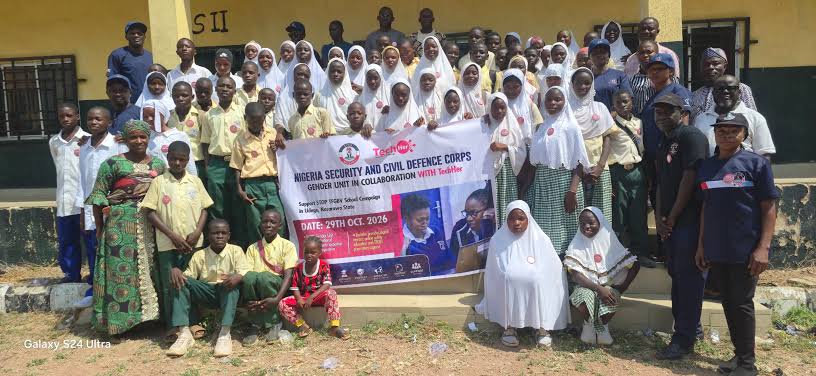
NSCDC Strengthens Gender Policy Implementation, Trains Officers on SGBV, Digital Safety
By: Michael Mike
Corps partners SPRING, FCDO, TechHer to promote women’s participation in peacebuilding, tackle technology-facilitated violence
The Nigeria Security and Civil Defence Corps (NSCDC) has intensified efforts to combat sexual and gender-based violence (SGBV), strengthen women’s participation in security decision-making and promote digital safety among young people through the implementation of its Gender Policy II.
The Commandant-General of the Corps, Prof. Ahmed Audi, stated this at a two-day Gender, Women, Peace and Security capacity-building training organised at the NSCDC College and Support Staff Service, Udege, Nasarawa State.
The training was organised in collaboration with Strengthening Peace and Resilience in Nigeria (SPRING), with support from the United Kingdom’s Foreign, Commonwealth and Development Office (FCDO).
Audi, who delivered his keynote address through a representative, said the policy provided a framework for mainstreaming gender considerations into the Corps’ operations, personnel management, leadership structure and community engagement.
He stressed the need for effective prevention and response to sexual and gender-based violence, including conflict-related abuses and technology-facilitated violence.
The Commandant-General also called for increased participation of women in peacebuilding and security decision-making, equal opportunities within the Corps and stronger partnerships with traditional institutions, government agencies, civil society organisations and development partners.
He urged commands and personnel, particularly Gender Desk Officers, to ensure effective coordination, timely reporting, appropriate referrals, monitoring and accountability in handling gender-related cases.
Audi described the implementation of the policy as a collective responsibility requiring sustained commitment across all levels of the Corps.
In a goodwill message, the Osu Ajiri of Edege Chiefdom, Alhaji Suleiman Ahmed Eko IV, commended the NSCDC for its presence in the community, saying its operations had strengthened the sense of security among residents, particularly farmers.
The traditional ruler pledged the support of his council in addressing gender-based violence, describing the protection of the community as a priority.
Earlier, the Commander of the College, ACG Jamilu Indabawa, said collaboration among relevant stakeholders was critical to achieving effective implementation of the gender policy.
The Gender Equality, Diversity and Social Inclusion Lead of SPRING, Mrs Amina Akano-Bello, said the training was designed to promote peaceful and resilient communities through early identification and response to gender-based violence, as well as the inclusion of women and young people in leadership.
Also, the NSCDC National Headquarters Gender Unit Adviser, DCC Ajet Kemi, provided participants with insights into the different forms of sexual and gender-based violence, their societal implications and preventive measures.
A retired Assistant Commandant-General, Ahmed Abodurin, who facilitated a session on institutional ethics in gender policy implementation, emphasised professionalism, accountability, gender sensitivity and adherence to institutional standards.
Beyond the capacity-building exercise, the Corps partnered TechHer, an organisation promoting women’s advancement through technology, to extend digital safety awareness to schools in Udege.
The outreach, themed “Stop Technology-Facilitated Gender-Based Violence”, educated students on the dangers of digital abuse, responsible online behaviour and measures for staying safe in digital spaces.
Representatives of the Federal Ministry of Interior, Nasarawa State Ministry of Women Affairs and Social Development, Nasarawa State Ministry of Justice and Gammuo International also delivered goodwill messages, reaffirming the importance of collective action in advancing gender equality, peace and security.
NSCDC Strengthens Gender Policy Implementation, Trains Officers on SGBV, Digital Safety

Nigerian military precision strikes neutralise 19 terrorists in Ngala, Borno

Troops, hunters neutralise ISWAP terrorist in ambush operation in Yobe

LET PLATEAU BREATHE AGAIN

Roger Federer’s Shock as DNA Results Reveal Myla and Charlene Are Not His Biological Children

THE PLIGHT OF FARIDA

FAILED COUP IN BURKINA FASO: HOW TRAORÉ NARROWLY ESCAPED ASSASSINATION PLOT AMID FOREIGN INTERFERENCE CLAIMS
-
 News3 years ago
Roger Federer’s Shock as DNA Results Reveal Myla and Charlene Are Not His Biological Children
-
Opinions5 years ago
THE PLIGHT OF FARIDA
-
 News2 years ago
FAILED COUP IN BURKINA FASO: HOW TRAORÉ NARROWLY ESCAPED ASSASSINATION PLOT AMID FOREIGN INTERFERENCE CLAIMS
-
 Opinions5 years ago
POLICE CHARGE ROOMS, A MINTING PRESS
-

 News3 years ago
EYN: Rev. Billi, Distortion of History, and The Living Tamarind Tree
-

 ACADEMICS3 years ago
A History of Biu” (2015) and The Lingering Bura-Pabir Question (1)
-

 Columns3 years ago
Army University Biu: There is certain interest, but certainly not from Borno.
-

 Politics1 year ago
2027: Why Hon. Midala Balami Must Go, as Youths in Hawul and Asikira/Uba Federal Constituency Reject ₦500,000 as Sallah Gift
