
Crime
Scores killed in Anti-government protest in Sierra Leone

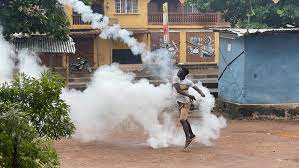
Scores killed in Anti-government protest in Sierra Leone
By Bodunrin Kayode
Violent anti-government protests has erupted in some parts of the West African state of Sierra Leone leading to a high level of casualties.
The violence which started on Wednesday this reporter learnt was as a result of what some of the residents regard as very harsh policies of President Julius Mada-Bio who has been midwifing the nation since 2028.
Since the country came out of the covid 19 scourge which ravaged Freetown and all the provinces, they alleged that the government did not insert enough palliatives to enable young people get out of the economic crisis the scourge brought on them.
” As a matter of fact, it’s been one problem or the other since President Mada-Bio took charge as commander in Chief but he has been trying his best to insert stability onto the polity because he is in charge of the armed forces and not the chair of the police who were the main target of these demonstrators” said a source who wished to remain anonymous in the Sierra Leone High CommissionA it in Nigeria
Vice President Mohammed Jalloh confirmed in a nation wide broadcast today that there were gruesome casualties on both sides but was unable to be specific while announcing the curfew which started 3pm Freetown time yesterday.
Eye witnesses however told this reporter through phone that the anti-government protesters and police clash started mostly in the Eastern part of the capital and resulted in the death of at least two policemen who were
murdered by the opposition mob as at Wednesday evening.
” The rioters clashed with police in the streets of the East end of the capital due to tensions over the rising cost of living especially food and fuel. It was when the vice president who is the chair of the police gave the directive for the curfew to be effective that the tension heightened.
“But the West end area up to st John and beyond were mostly peaceful as most residents were seen gathered outside their homes discussing the unfolding development before the Government slammed the curfew starting from 3pm to stop the rioters who had started destroying Government properties worth millions of Leones including buses, cars and police stations in the provincial areas.
In his national broadcast on Wednesday, Vice President Mohamed Jalloh confirmed that lives have been lost on both sides of the fracas and that it was the business of Government to keep the peace of the state.
No comment was heard from President Julius Mada-Bio even as most of the protesters on Wednesday were calling for his resignation even before the anticipated general election in ten months time.
Incidentally, Mada Bio was elected President in 2018 and has about 10 months for his first term to end.
He however has already said that registration of new voters will commence on the 3rd of September so that the program for the next general elections can be rolled out accordingly.
Eye witnesses said that the demonstrators chanted “Bio must go” as they made their way from the hinterlands through the capital, Freetown.
The people of Sierra Leone have gone through a litany of lingering woes which includes a decade long war caused mostly by tribalism, outbreak of Ebola which engulfed the entire country resulting in very high casualties and the recent outbreak of corona which resulted in the death of hundreds in the war torn country still rising from the ruins of a civil war that ended in 2002.
Scores killed in Anti-government protest in Sierra Leone


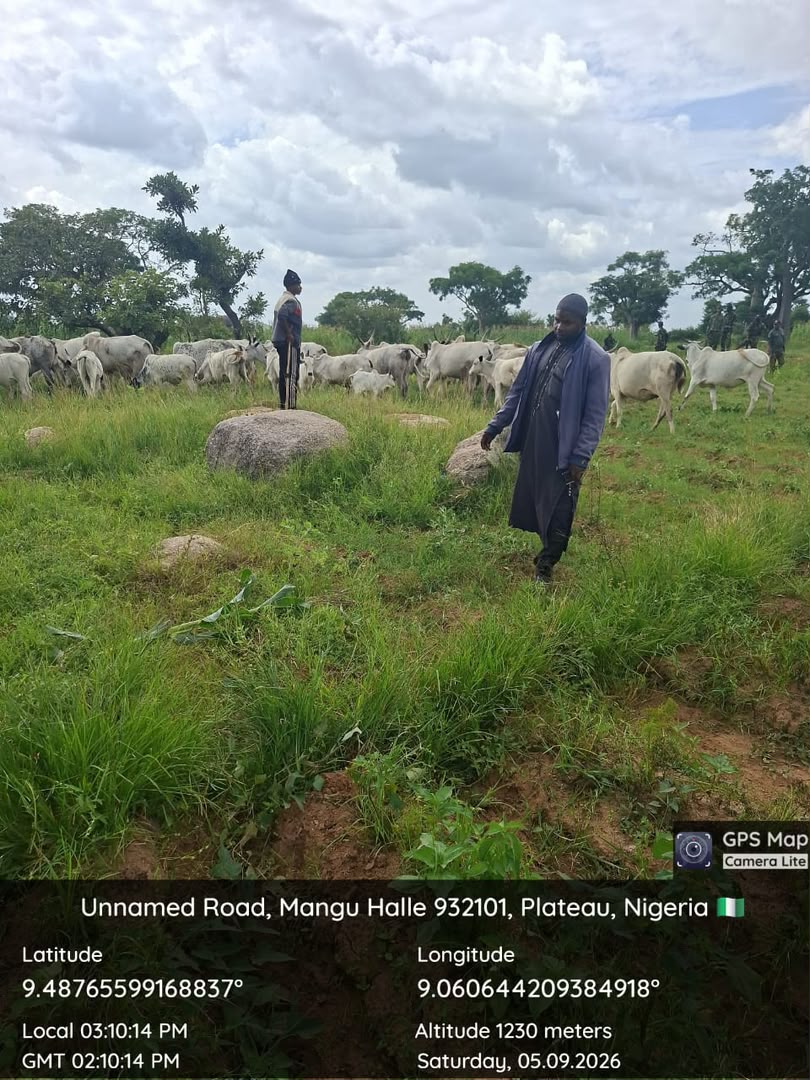
Troops recover 42 rustled cattle, return them to owner in Plateau
By Zagazola Makama
Troops of Sector 8, Operation Enduring Peace (OPEP), have recovered 42 cattle rustled by suspected criminals in the Jwak Maitumbi-Sarbot general area of Mangu Local Government Area of Plateau State.
Security sources told Zagazola Makama that troops responded at about 1:32 p.m. on Sept. 5, 2026, following reports of sporadic shootings by suspected cattle rustlers in the area.
The troops launched a pursuit on two fronts along the suspected escape routes of the criminals.
Faced with pressure from the troops, the rustlers abandoned the cattle and fled towards the Sabon Gari general area.
The troops subsequently recovered all 42 cattle.
Further investigation established that the cattle belonged to Alhaji Hussaini Sale of Dorowa Babuje. The troops contacted him and formally handed over the 42 cattle to him.
The successful recovery underscores the troops’ continued efforts to protect rural communities and prevent cattle rustling in the area.
Troops recover 42 rustled cattle, return them to owner in Plateau
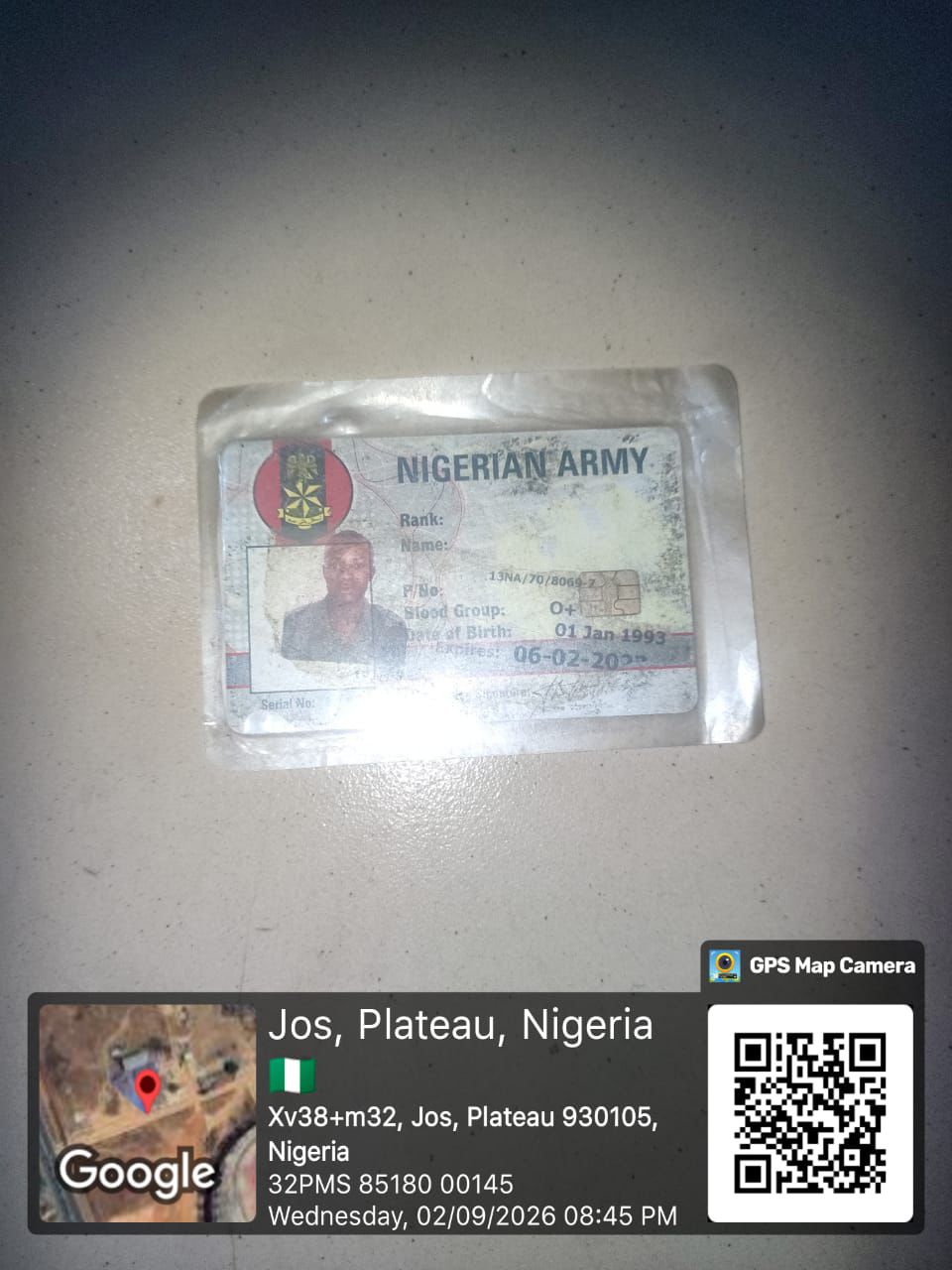
Troops arrest soldier, recover 69 rounds of ammunition in Plateau
By Zagazola Makama
Troops of Sector 1, Operation ENDURING PEACE, have arrested a serving soldier and recovered ammunition and other military items during a stop-and-search operation at Babale Checkpoint in Jos North Local Government Area of Plateau State.
The soldier, identified as 13NA/70/8069 Corporal Legedu Denebari, is serving with 109 Special Forces Battalion, Magumeri, Borno State, under Operation HADIN KAI.
He was arrested at about 8:15 p.m. on Sept. 2, 2026, during routine security checks at the checkpoint.

Items recovered from the soldier included one magazine, 69 rounds of 7.62 x 39mm Special ammunition, two Strike Force ballistic plates, two jack knives, one mobile phone, one power bank, one helmet, a Nigerian Army identity card and two pairs of camouflage uniforms.
Preliminary investigation revealed that the soldier was on pass from his unit to Rivers State with effect from Sept. 2, 2026.
The soldier and the recovered items have been taken into custody for further investigation to establish the circumstances surrounding the movement and possession of the ammunition and other military equipment.

The development underscores the importance of ongoing stop-and-search operations by security forces to prevent the unauthorised movement of arms, ammunition and military equipment across the Joint Operations Area.
Troops arrest soldier, recover 69 rounds of ammunition in Plateau
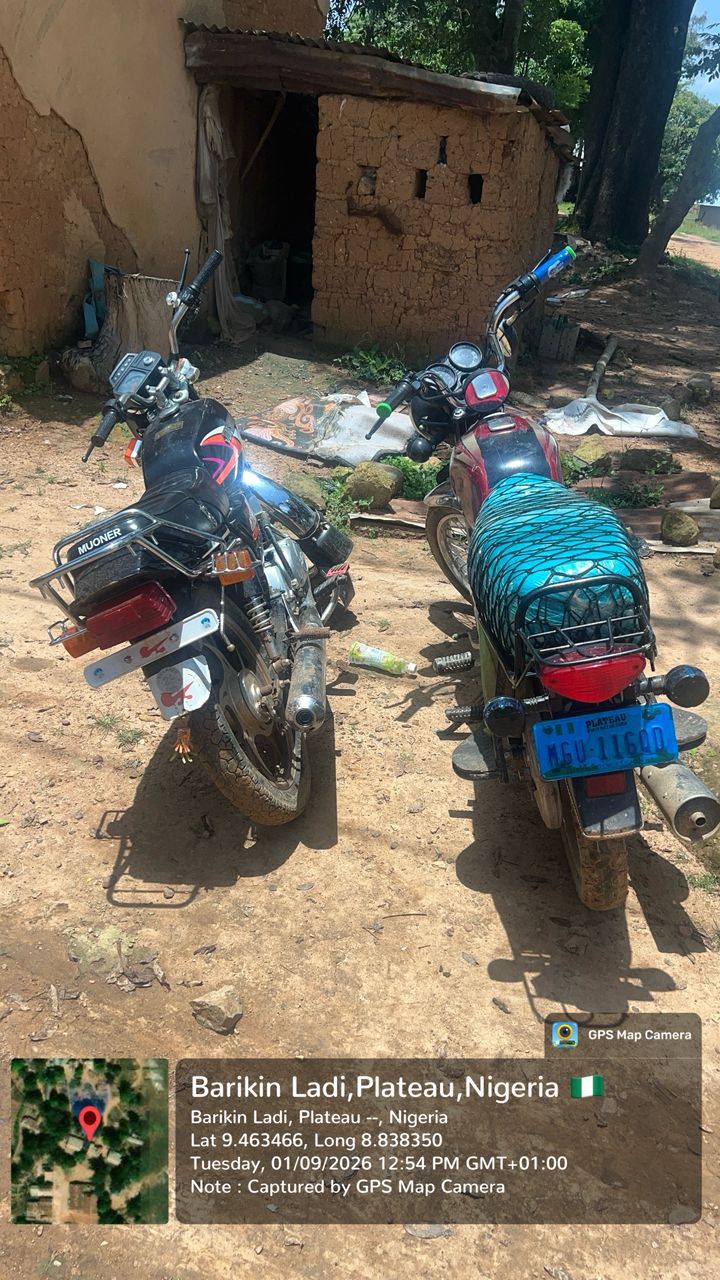
Troops arrest four suspected motorcycle thieves, recover weapons in Plateau
By: Zagazola Makama
Troops of Sector 4, Operation ENDURING PEACE (OPEP), have arrested four suspected motorcycle thieves and recovered three motorcycles and weapons during an operation in Exland Village, Barkin Ladi Local Government Area of Plateau State.

The operation was conducted at about 10:30 a.m. on Sept. 1, following a report on the activities of suspected motorcycle snatchers operating in the area.
Sources said that the troops of Sub-Sector 41 deployed in Exland responded to the report and arrested four suspects at the location.
The suspects were identified as Yusuf Tahiru, 25; Ayuba Aliyu, 23; Anas Usman, 20, also known as “Kurra Berom”; and Ibrahim Muhammad, 20.

Following the arrests, troops conducted a cordon-and-search operation within the suspected area of activity and recovered three motorcycles believed to be connected to the suspects.
The troops also recovered one locally fabricated firearm, one cutlass and one knife during the operation.
The suspects and recovered exhibits have been taken into custody for further investigation and necessary legal action.
The operation forms part of ongoing efforts by Operation ENDURING PEACE to tackle criminal activities, including motorcycle theft and armed crime, and strengthen security across communities in Plateau State.
Troops arrest four suspected motorcycle thieves, recover weapons in Plateau

Operation Hadin Kai intensifies campaign against ISWAP, Boko Haram, records major gains in August

Niger: Fresh attacks in Tillabéri follow mutiny in Niamey

Troops dislodge terrorists, recover PKT machine gun, rifles, motorcycles in Sokoto

Roger Federer’s Shock as DNA Results Reveal Myla and Charlene Are Not His Biological Children

THE PLIGHT OF FARIDA

FAILED COUP IN BURKINA FASO: HOW TRAORÉ NARROWLY ESCAPED ASSASSINATION PLOT AMID FOREIGN INTERFERENCE CLAIMS
-
 News2 years ago
Roger Federer’s Shock as DNA Results Reveal Myla and Charlene Are Not His Biological Children
-
Opinions5 years ago
THE PLIGHT OF FARIDA
-
 News1 year ago
FAILED COUP IN BURKINA FASO: HOW TRAORÉ NARROWLY ESCAPED ASSASSINATION PLOT AMID FOREIGN INTERFERENCE CLAIMS
-

 News2 years ago
EYN: Rev. Billi, Distortion of History, and The Living Tamarind Tree
-
 Opinions5 years ago
POLICE CHARGE ROOMS, A MINTING PRESS
-

 ACADEMICS3 years ago
A History of Biu” (2015) and The Lingering Bura-Pabir Question (1)
-

 Columns3 years ago
Army University Biu: There is certain interest, but certainly not from Borno.
-

 Politics1 year ago
2027: Why Hon. Midala Balami Must Go, as Youths in Hawul and Asikira/Uba Federal Constituency Reject ₦500,000 as Sallah Gift
