
Uncategorized
Separating facts from propaganda on alleged civilian casualties in Yankuzo, Zamfara

Separating facts from propaganda on alleged civilian casualties in Yankuzo, Zamfara
By: Zagazola Makama
In the aftermath of the 4 August precision airstrike in Yankuzo Ward, Tsafe LGA, a familiar and tired script began circulating, claims that Nigerian Air Force (NAF) jets “bombed a civilian wedding” and killed innocents. It is a narrative so recklessly peddled, one wonders if the authors even bothered to look at what happened next.
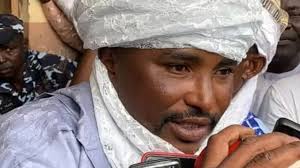
Within hours of the strike, surviving members of Ado Allero’s gang the same men supposedly attending this “civilian” gathering, stormed Yankuzo and abducted its traditional ruler, Alhaji Babangida Kogo. Their reason? They suspected he provided intelligence for the strike that killed more than 30 armed terrorists and injured many more. The monarch was later released when they confirmed he had nothing to do with the strike, but the message was clear: the people at that “wedding” were not farmers and traders, they were bandits preparing for war.
If the gathering had truly been a harmless wedding of non-combatants, why would the immediate retaliation be the abduction of a monarch over alleged military collaboration? The logic collapses under its own weight.
Even more telling is what followed: Ado Allero deployed fighters to lay an ambush against troops moving to exploit the success of the strike. That encounter left one soldier dead and another wounded. Again, the so-called “wedding guests” if we follow the propagandists’ claims turned out to be well-armed, battle-ready militants on more than 10 motorcycles, mounting deliberate attacks on security forces. That is not the profile of civilians caught in crossfire; it is the textbook behaviour of a routed but still dangerous insurgent cell.
The strike hit exactly what it was intended to hit: armed combatants. No credible source not local residents, not field operatives, not even the so-called “eye witnesses” whispered about by detractors has produced verifiable evidence of civilian casualties. On the contrary, those closest to the scene confirm that the targets were militants.
So, where exactly are these supposed civilian casualties? Not one credible community source, medical facility, or independent observer has produced evidence of dead or injured non-combatants. On the contrary, residents of Yankuzo and surrounding areas have openly expressed relief at the neutralisation of the fighters who had been terrorising them. If the “civilian casualties” story had any substance, we would expect to see mourning families, burial records, or at the very least photographic evidence flooding the same channels pushing the accusation. The absence of any genuine civilian victim list, contrasted with the very visible armed reprisals by the terrorists, should embarrass anyone still pushing this hollow propaganda.
Those pushing the civilian casualty line must now answer the only question that matters: where are these so-called victims? Names? Families? Graves? Or are we meant to accept yet another recycled propaganda trope from those who have made a cottage industry out of dressing up armed terrorists as misunderstood locals?
Zagazola Makama is a Counter Insurgency Expert and Security Analyst in the Lake Chad
Separating facts from propaganda on alleged civilian casualties in Yankuzo, Zamfara


Uncategorized
Zulum Named 2026 Quintessence Award, First Northern Governor to Win Pan-Africa’s Top Leadership Award
Zulum Named 2026 Quintessence Award, First Northern Governor to Win Pan-Africa’s Top Leadership Award
By: Our Reporter
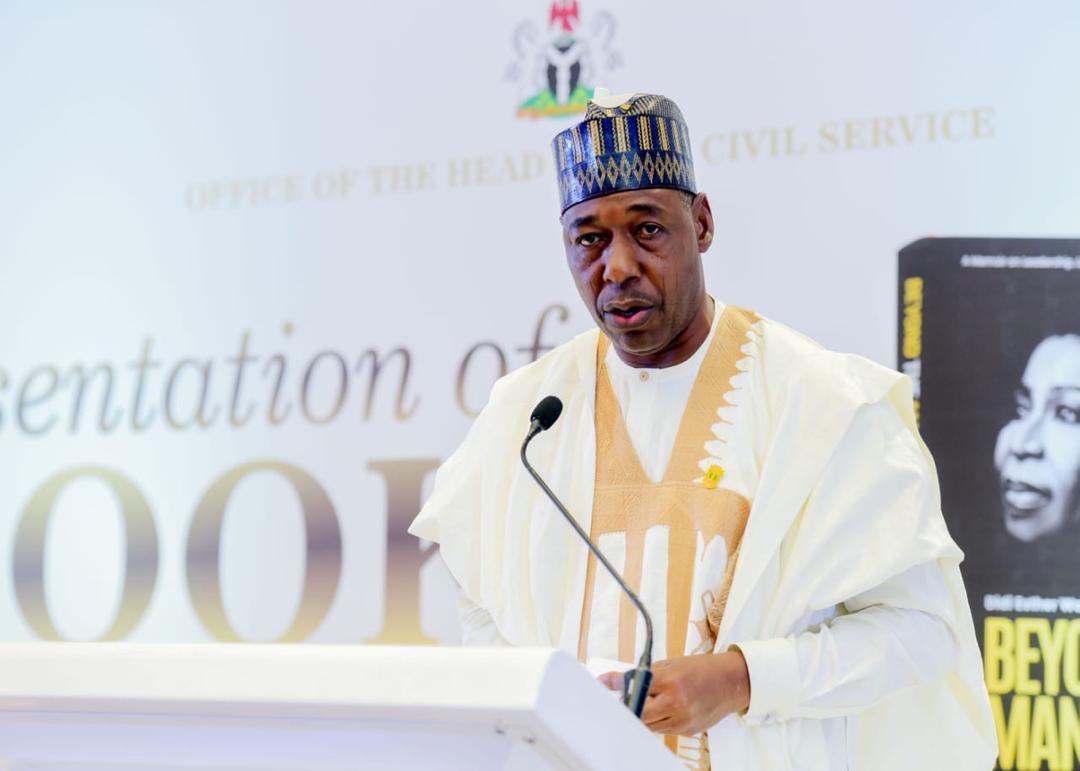
Borno State Governor, Professor Babagana Umara Zulum, has been named the 2026 recipient of the Quintessence Award, the preeminent Pan-African Leadership Award in North America, becoming the first governor from Northern Nigeria to receive this honour.
Zulum, who is currently in New York for the 81st Session of the United Nations General Assembly (UNGA 81), is part of the Nigerian delegation to accompany the Vice President, Senator Kashim Shettima, who is leading the Federal Government team to deliver Nigeria’s national statement at the General Debate and will also participate in several sideline engagements, including the Nigeria Investment Forum.
Before proceeding to the United States, the Governor held a series of high-level strategic engagements in Canada, where he signed a Memorandum of Understanding on behalf of Borno State Government with the Northern Alberta Institute of Technology (NAIT) on technical education, workforce development and skills transfer among other areas designed to strengthen the human capital base driving Borno’s post-insurgency recovery.
The Governor’s nomination was conveyed in a letter from the Executive Director of the African Writers Endowment (AWE), the New Jersey-based non-profit organisation, Dr Ugorji O. Ugorji, who said Zulum was selected in recognition of his “remarkable accomplishments as an academic, scholar and educational administrator,” alongside his distinguished tenure as Governor of Borno State, particularly for stemming the tide of insecurity and significantly reshaping the infrastructural landscape of the state.
The award will be presented at the “Quintessence Ball: A Celebration of African People in World History,” which brings together African people from Africa, North America, and the Caribbean. This year’s ceremony will be held on Friday, September 25, 2026, at the DoubleTree by Hilton Hotel, New Jersey, United States of America.
According to Dr Ugorji, the Quintessence Award is presented each year to at least one continental African leader and one African American leader, “for distinguished accomplishments in the person’s field of endeavour, and for outstanding contributions to the history and heritage of African people.”
This year’s edition of the Quintessence Conference and Awards will be chaired by Professor Ibrahim Gambari, CFR, former Chief of Staff to the late President Muhammadu Buhari and one-time Under-Secretary-General of the United Nations, who was himself the maiden recipient of the award in 1998.
A major highlight of the conference will be a special symposium titled “Investment Opportunities in Borno State: Doorway to the Chad Region.” The interactive session will spotlight the vast economic, agricultural, and cross-border trade opportunities opening up in Borno State, as well as the Governor’s development record in rebuilding communities, restoring livelihoods, and repositioning the state as a strategic gateway to the Lake Chad Basin.
With this recognition, Governor Zulum joins a distinguished roll of past laureates that includes Professor Chinua Achebe, Professor Ngugi wa Thiong’o, Professor Ibrahim Gambari, the late Chief Gani Fawehinmi, SAN, Congressman Donald Payne, Professor Toyin Falola, Professor Molefi Kete Asante, and former Governors Chibuike Rotimi Amaechi and Kayode Fayemi, among other eminent Africans and African Americans.
The organisers disclosed that the Quintessence Award is traditionally accompanied by a proclamation from the Governor of New Jersey and a joint resolution of the New Jersey Senate and General Assembly in honour of the recipients.
Governor Babagana Zulum is a multiple award-winning governor who received the Forbes Magazine African Leadership Award in 2024.
Zulum Named 2026 Quintessence Award, First Northern Governor to Win Pan-Africa’s Top Leadership Award

Troops arrest three Fulani men in Plateau after farmer’s killing
By: Zagazola Makama
Troops of Sector 6, Operation ENDURING PEACE (OPEP), have arrested three persons during a raid on two Fulani settlements in Bachi community, Riyom Local Government Area of Plateau State.
The operation, conducted on Sept. 13, 2026, followed a manhunt for criminal elements responsible for the killing of a farmer at Fang community in Riyom LGA on Sept. 12.
During the raid at Baggat and Shong 2 Fulani hamlets, troops arrested three residents identified as Anas Usman, Nuhu Mohammad and Haruna Ahmed.
Security sources said the three suspects are not necessarily the perpetrators of the killing, but their arrest is part of efforts to mount pressure on local Fulani leaders to assist security agencies in identifying and producing those responsible for the crime.
The suspects are currently in custody for further investigation and intelligence exploitation.
Troops arrest three Fulani men in Plateau after farmer’s killing
Uncategorized
Talata Mafara Attack: ISN Demands Intelligence Overhaul, Special Courts to Crush Banditry

Talata Mafara Attack: ISN Demands Intelligence Overhaul, Special Courts to Crush Banditry
The Institute of Security, Nigeria (ISN) has called for a fundamental overhaul of Nigeria’s approach to terrorism, banditry and kidnapping, warning that criminal groups are becoming increasingly organised and capable of challenging the authority of the state.
The institute made the call while reacting to the reported invasion of Talata Mafara market in Zamfara State, where non-state actors allegedly imposed a ₦50 million levy and demanded 100 livestock, giving residents a seven-day ultimatum.
The ISN said the development exposed the need for security agencies to move beyond reactive operations and adopt stronger intelligence-led strategies capable of identifying and dismantling criminal networks before they launch attacks.
In a statement signed by its Deputy President and Chief Executive Officer, Barr. Adebayo Akinade, the institute said the activities of terrorists and bandits were no longer limited to isolated attacks but increasingly involved the control of economic activities, collection of illegal levies and disruption of legitimate livelihoods.
It warned that such activities could gradually establish a parallel system of criminal authority in affected communities if left unchecked.
The institute consequently urged the Federal and state governments to establish a coordinated security framework bringing together federal security agencies, state security outfits and vetted community guards.
It also called for the creation of a National Security Fusion Centre, supported by state-level fusion desks, to facilitate real-time intelligence sharing and faster responses to emerging threats.
According to the ISN, security agencies should penetrate criminal networks operating around markets, cattle-rustling routes and illicit livestock value chains while targeting the logistics and financial structures sustaining banditry.
It recommended regulated livestock markets and improved tracking systems to prevent stolen cattle from being absorbed into legitimate commercial channels.
The institute further proposed special courts for terrorism, kidnapping and banditry cases, arguing that a faster judicial process would strengthen the fight against organised criminal groups.
It urged the government to deploy modern technologies, including forest geo-fencing, livestock tracking, drones and citizen-reporting platforms, alongside improved tactical mobility and air surveillance.
The ISN also called for a two-hour rapid-response mechanism in vulnerable areas and increased investment in night-vision equipment and other specialised capabilities.
Beyond security operations, the institute advocated stronger community-based early-warning systems and local peace and security forums involving traditional rulers, farmers, market unions, faith organisations and civil society groups.
It urged citizens to report threats rather than surrendering to ransom and illegal levy demands, while encouraging communities to document attacks and preserve evidence for investigations and prosecution.
The institute said professional training in terrorism studies, intelligence management and counter-banditry operations should be strengthened as part of efforts to build a more effective national security architecture.
The ISN reaffirmed its readiness to support government and security agencies through research, training, policy advisory services and professional certification, saying a coordinated response was essential to restoring public confidence and protecting national development.
Talata Mafara Attack: ISN Demands Intelligence Overhaul, Special Courts to Crush Banditry

2027 and UNGA: Leadership, Merit, and the Tinubu–Shettima Partnership

Works Commissioner calls on APC stakeholder in Nangere to unite and work for party victory in Yobe

Nigerian Army arrested hand over drug dealer and other criminals to NDLEA in Yobe

Roger Federer’s Shock as DNA Results Reveal Myla and Charlene Are Not His Biological Children

THE PLIGHT OF FARIDA

FAILED COUP IN BURKINA FASO: HOW TRAORÉ NARROWLY ESCAPED ASSASSINATION PLOT AMID FOREIGN INTERFERENCE CLAIMS
-
 News3 years ago
Roger Federer’s Shock as DNA Results Reveal Myla and Charlene Are Not His Biological Children
-
Opinions5 years ago
THE PLIGHT OF FARIDA
-
 News1 year ago
FAILED COUP IN BURKINA FASO: HOW TRAORÉ NARROWLY ESCAPED ASSASSINATION PLOT AMID FOREIGN INTERFERENCE CLAIMS
-

 News3 years ago
EYN: Rev. Billi, Distortion of History, and The Living Tamarind Tree
-
 Opinions5 years ago
POLICE CHARGE ROOMS, A MINTING PRESS
-

 ACADEMICS3 years ago
A History of Biu” (2015) and The Lingering Bura-Pabir Question (1)
-

 Columns3 years ago
Army University Biu: There is certain interest, but certainly not from Borno.
-

 Politics1 year ago
2027: Why Hon. Midala Balami Must Go, as Youths in Hawul and Asikira/Uba Federal Constituency Reject ₦500,000 as Sallah Gift
