
News
Shettima Calls on Nigerians in Diaspora to Invest in Nigeria’s Infrastructure

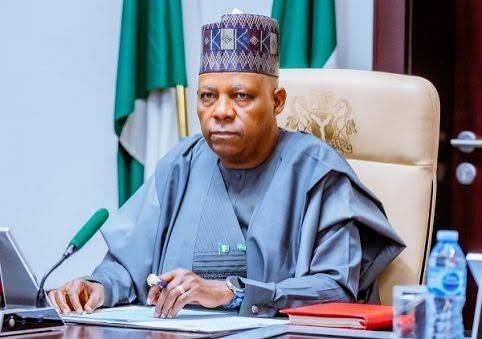
Shettima Calls on Nigerians in Diaspora to Invest in Nigeria’s Infrastructure
By: Michael Mike
Vice President Kashim Shettima has appealed to Nigerians in the Diaspora to invest in the nation’s infrastructure, small businesses, and human capital development.
The Vice President, who was represented by the Permanent Secretary, Ministry of Foreign Affairs, Ambassador Dunoma Ahmed, made the appeal during the opening of the 8th Nigeria Diaspora Investment Summit (NDIS) in Abuja.
Shettima said the Tinubu administration was creating a business environment that would enable diaspora investments to thrive under the Renewed Hope Agenda.
The three-day summit, themed, “Fast-Tracking Regional and National Development by Mobilising Diaspora Investment”, gathered an assemblage of government officials, investors, and entrepreneurs with the aim of mobilising diaspora capital for national growth.
Shettima added that the platform of the Nigeria Diaspora Investment Summit aligns perfectly with Tinubu’s administration’s objectives of attracting investment, creating jobs, and building human capital.
He said: “To our brothers and sisters in the diaspora, I extend a heartfelt call: come home, not only physically but economically. Invest in our roads, our startups, and our people.”
He stressed that the administration’s focus on transparency, accountability, and policy consistency was meant to restore investor confidence, stating that: “We understand that investors, especially those in the diaspora, need assurance of stability, safety, and returns. This government is resolute in providing all three.”
Shettima added that the government’s reforms in the financial sector, particularly the unification of foreign exchange rates and the removal of fuel subsidies, were already yielding results that would, in time, strengthen the investment climate. “Difficult decisions are being made for sustainable growth. We are laying a foundation for a Nigeria that works — not just for today, but for generations to come,” he said.
The Vice President also disclosed that the administration was prioritising youth entrepreneurship through initiatives like the Expanded National MSME Clinics and Digital Innovation Hubs, aimed at supporting startups and fostering technology-driven growth, stating that: “We are building an economy where innovation thrives, where young Nigerians at home and abroad can transform ideas into industries,” he noted.
He also assured that security challenges were being addressed through intelligence-driven operations and regional collaboration, stating that “a secure nation is a prosperous nation, and every investment thrives best in peace.”
Speaking earlier, the Minister of Solid Minerals Development, Dr. Dele Alake, said the diversification policy of the Tinubu administration had brought in over $1.3 billion in mining investments within a year.
He said over 3,000 inactive licenses had been revoked to clean up the sector and encourage credible investors, adding that new applicants must now show plans for local mineral processing before getting approvals.
The Minister explained that Nigeria’s vast mineral resources, including lithium, gold, and nickel, were now being repositioned for export and industrial use. “Our aim is to ensure that value addition happens within Nigeria, so that we export finished products, not raw materials,” Alake said.
He said the government was finalising a Solid Minerals Development Roadmap, which would create an end-to-end system for exploration, mining, and processing. He said partnerships with diaspora professionals and investors were welcome in building refineries, training institutions, and logistics infrastructure for the mining sector.
“Mining is the new oil,” Alake declared. “And we are determined to ensure it becomes a sustainable pillar of the Nigerian economy.”
In his part, the Minister of Information and National Orientation, Alhaji Mohammed Idris, urged Nigerians to promote a positive image of their country, noting that “no dollar will come into a country people speak ill of.”
He said Nigeria’s recent removal from the Financial Action Task Force’s (FATF) grey list was proof of the administration’s credibility and the growing confidence of the international community. “It shows that reforms are working, and that Nigeria is now seen as a responsible, transparent partner in global trade,” he added.
Idris noted that image-building was not just the responsibility of government but a collective duty of all citizens, including those abroad. “Every Nigerian is an ambassador. The way we talk about our country affects how investors perceive us,” he said.
He also reaffirmed the government’s resolve to strengthen communication channels with the diaspora through structured public diplomacy and digital engagement. “We will continue to tell Nigeria’s success stories — not propaganda, but the real progress being achieved across sectors,” he assured.
On her part, the NiDCOM Chairman, Hon. Abike Dabiri-Erewa, said Nigerians abroad remained one of the country’s greatest assets, contributing $25 billion in remittances in 2024, the highest in Africa.
She revealed that: “Our goal is to look beyond remittances and channel this capital, expertise, and goodwill into sustainable investments that create jobs and drive inclusive growth.”
Dabiri-Erewa explained that the Diaspora Investment Summit had become a catalyst for partnership between state governments, private investors, and the Nigerian diaspora.
She said: “Through this platform, several projects — from real estate to agriculture, renewable energy, and ICT — have received direct diaspora fundings,,” stressing that the Commission was developing a Diaspora Investment Trust Fund to pool resources for large-scale ventures, while also working with the Ministry of Foreign Affairs and the Central Bank of Nigeria to streamline remittance channels and protect investors.
She said: “We are committed to making every Nigerian abroad feel safe and proud to invest back home.”
She praised the resilience of Nigerians in the diaspora, describing them as “ambassadors of excellence” who continue to make global impact “from healthcare to technology and academia, Nigerians abroad have distinguished themselves, and we must harness that energy for national transformation.”
Shettima Calls on Nigerians in Diaspora to Invest in Nigeria’s Infrastructure


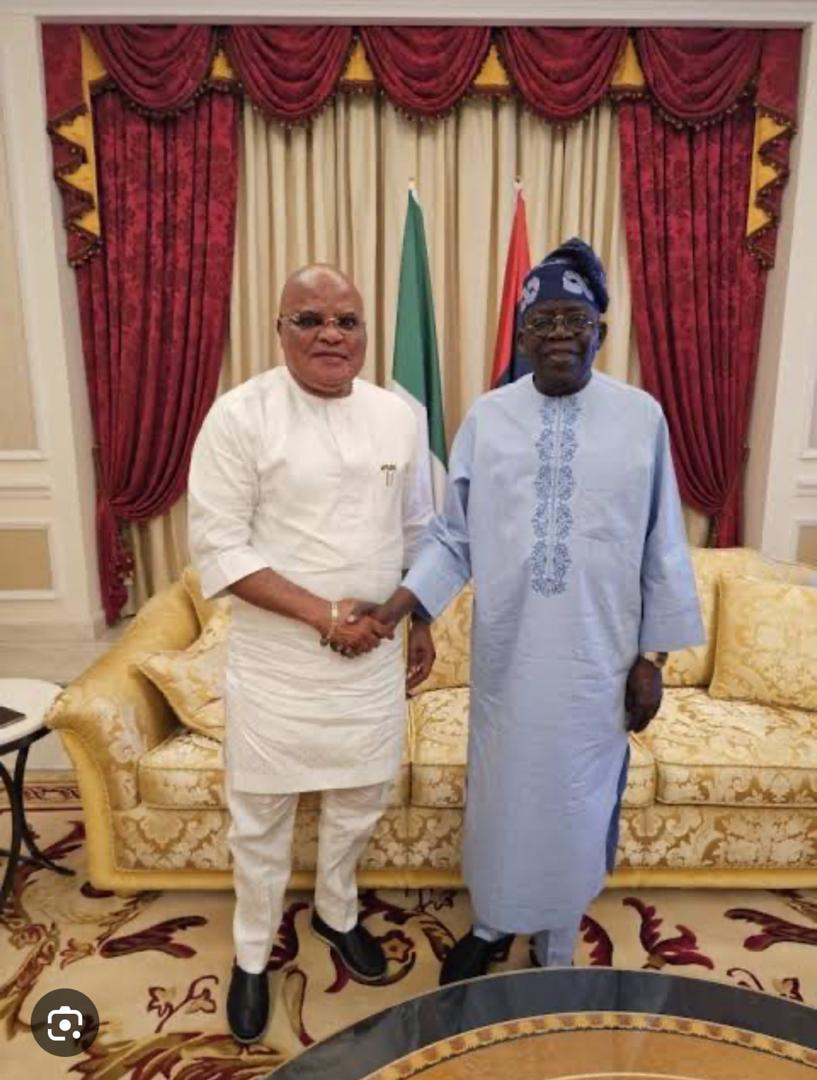
Easter: Araraume Urges Nigerians to Embrace Sacrifice, Hope, Prays for Tinubu
By: Michael Mike
Senator Ifeanyi Araraume has called on Nigerians to embrace sacrifice, forgiveness, and renewed hope as Christians across the country celebrate Easter.
In a message to mark the occasion, Araraume described Easter as a powerful reminder that adversity is temporary and that brighter days lie ahead. He said the resurrection of Jesus Christ symbolises victory over hardship and offers a message of hope for Nigeria’s future.
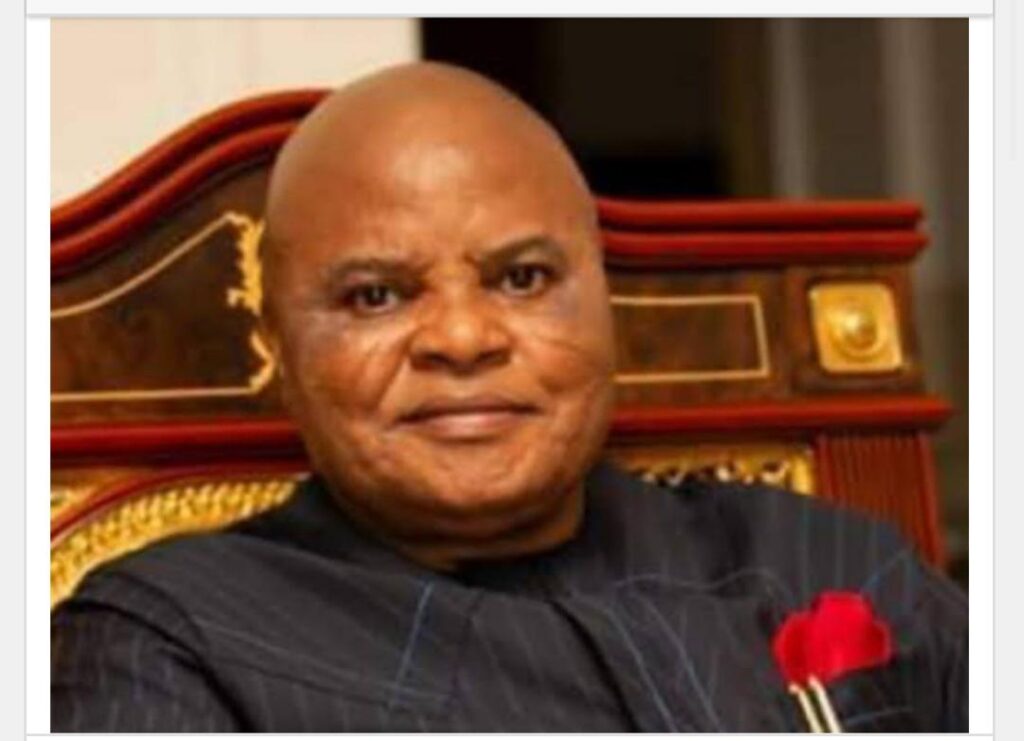
According to him, “Easter is not merely a festival; it is a spiritual declaration that darkness does not have the final word. As Christ rose triumphantly on the third day, I believe Nigeria, too, is rising from every challenge to meet her God-ordained destiny.”
The chieftain of the All Progressives Congress also offered prayers for President Bola Ahmed Tinubu, describing him as a courageous leader navigating the country through difficult but necessary reforms.
Araraume prayed for divine wisdom, strength, and protection for the President, expressing hope that his efforts would yield lasting benefits for future generations.
He further commended Tinubu’s reform agenda, noting that although current policies may require sacrifices from citizens, they are essential for achieving long-term peace, stability, and shared prosperity.
“These are not easy times, but great nations are forged in the furnace of difficult decisions. I urge all Nigerians, irrespective of political or religious differences, to support the administration with patience and prayers,” he said.
The former Imo governorship candidate also encouraged citizens to demonstrate love and compassion, particularly towards the less privileged, grieving, and displaced persons. He stressed that the true essence of Easter lies in selfless giving and unity.
Araraume wished Christians a peaceful, joyful, and spiritually fulfilling Easter celebration.
Easter: Araraume Urges Nigerians to Embrace Sacrifice, Hope, Prays for Tinubu
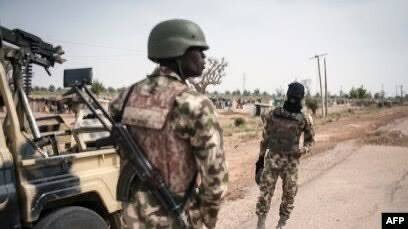
Troops arrest suspected terrorist, recover rifle in Zamfara
By: Zagazola Makama
Troops of Operation FANSAN YAMMA have arrested a suspected terrorist and recovered an AK-47 rifle during a routine patrol in Gusau Local Government Area of Zamfara State.
Security sources said the arrest was made on April 3 at about 11:30 a.m. by troops of 1 Brigade Combat Team deployed at Forward Operating Base (FOB) Kurya.
The suspect was apprehended at Tungan Haki village and found in possession of one AK-47 rifle mounted with a magazine containing 13 rounds of 7.62mm special ammunition.
The sources disclosed that the suspect and the recovered weapon are currently in custody for further investigation and necessary action.
They added that troops have continued to intensify patrols and surveillance operations across the area to curb criminal activities.
Troops arrest suspected terrorist, recover rifle in Zamfara
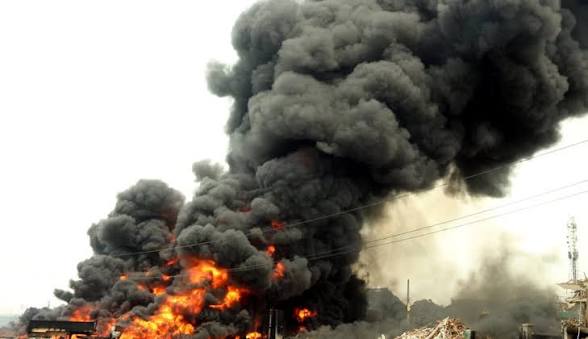
IED explosion injures two security personnel during patrol in Anambra
By: Zagazola Makama
Two security personnel have been injured following the detonation of an improvised explosive device (IED) during a fighting patrol in Ihiala Local Government Area of Anambra State.
Security sources said the incident occurred on April 3 at about 12:30 p.m. when troops of Sector 5, Operation UDO KA, deployed at Forward Operating Base (FOB) Lilu, conducted a patrol alongside Nigeria Police personnel.
It was gathered that the team sighted the IED within the Lilu general area and attempted to destroy it.
However, the explosive device detonated during the process, injuring an Explosive Ordnance Disposal (EOD) personnel and a police officer.
The injured personnel were immediately administered first aid at the scene before being referred to a medical facility for further treatment.
Authorities said the situation has been brought under control, while operations continue in the area to ensure safety and prevent further incidents.
IED explosion injures two security personnel during patrol in Anambra

Easter: Araraume Urges Nigerians to Embrace Sacrifice, Hope, Prays for Tinubu

Troops arrest suspected terrorist, recover rifle in Zamfara

Troops recover suspected rustled cattle in Plateau

Roger Federer’s Shock as DNA Results Reveal Myla and Charlene Are Not His Biological Children

THE PLIGHT OF FARIDA

FAILED COUP IN BURKINA FASO: HOW TRAORÉ NARROWLY ESCAPED ASSASSINATION PLOT AMID FOREIGN INTERFERENCE CLAIMS
-
 News2 years ago
Roger Federer’s Shock as DNA Results Reveal Myla and Charlene Are Not His Biological Children
-
Opinions4 years ago
THE PLIGHT OF FARIDA
-
 News12 months ago
FAILED COUP IN BURKINA FASO: HOW TRAORÉ NARROWLY ESCAPED ASSASSINATION PLOT AMID FOREIGN INTERFERENCE CLAIMS
-

 News2 years ago
EYN: Rev. Billi, Distortion of History, and The Living Tamarind Tree
-
 Opinions4 years ago
POLICE CHARGE ROOMS, A MINTING PRESS
-

 ACADEMICS2 years ago
A History of Biu” (2015) and The Lingering Bura-Pabir Question (1)
-

 Columns2 years ago
Army University Biu: There is certain interest, but certainly not from Borno.
-

 Opinions2 years ago
Tinubu,Shettima: The epidemic of economic, insecurity in Nigeria
