
News
Shettima Calls on Nigerians in Diaspora to Invest in Nigeria’s Infrastructure

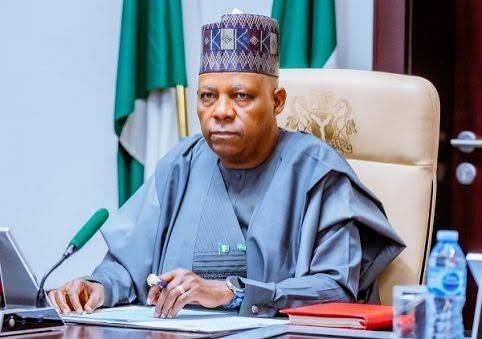
Shettima Calls on Nigerians in Diaspora to Invest in Nigeria’s Infrastructure
By: Michael Mike
Vice President Kashim Shettima has appealed to Nigerians in the Diaspora to invest in the nation’s infrastructure, small businesses, and human capital development.
The Vice President, who was represented by the Permanent Secretary, Ministry of Foreign Affairs, Ambassador Dunoma Ahmed, made the appeal during the opening of the 8th Nigeria Diaspora Investment Summit (NDIS) in Abuja.
Shettima said the Tinubu administration was creating a business environment that would enable diaspora investments to thrive under the Renewed Hope Agenda.
The three-day summit, themed, “Fast-Tracking Regional and National Development by Mobilising Diaspora Investment”, gathered an assemblage of government officials, investors, and entrepreneurs with the aim of mobilising diaspora capital for national growth.
Shettima added that the platform of the Nigeria Diaspora Investment Summit aligns perfectly with Tinubu’s administration’s objectives of attracting investment, creating jobs, and building human capital.
He said: “To our brothers and sisters in the diaspora, I extend a heartfelt call: come home, not only physically but economically. Invest in our roads, our startups, and our people.”
He stressed that the administration’s focus on transparency, accountability, and policy consistency was meant to restore investor confidence, stating that: “We understand that investors, especially those in the diaspora, need assurance of stability, safety, and returns. This government is resolute in providing all three.”
Shettima added that the government’s reforms in the financial sector, particularly the unification of foreign exchange rates and the removal of fuel subsidies, were already yielding results that would, in time, strengthen the investment climate. “Difficult decisions are being made for sustainable growth. We are laying a foundation for a Nigeria that works — not just for today, but for generations to come,” he said.
The Vice President also disclosed that the administration was prioritising youth entrepreneurship through initiatives like the Expanded National MSME Clinics and Digital Innovation Hubs, aimed at supporting startups and fostering technology-driven growth, stating that: “We are building an economy where innovation thrives, where young Nigerians at home and abroad can transform ideas into industries,” he noted.
He also assured that security challenges were being addressed through intelligence-driven operations and regional collaboration, stating that “a secure nation is a prosperous nation, and every investment thrives best in peace.”
Speaking earlier, the Minister of Solid Minerals Development, Dr. Dele Alake, said the diversification policy of the Tinubu administration had brought in over $1.3 billion in mining investments within a year.
He said over 3,000 inactive licenses had been revoked to clean up the sector and encourage credible investors, adding that new applicants must now show plans for local mineral processing before getting approvals.
The Minister explained that Nigeria’s vast mineral resources, including lithium, gold, and nickel, were now being repositioned for export and industrial use. “Our aim is to ensure that value addition happens within Nigeria, so that we export finished products, not raw materials,” Alake said.
He said the government was finalising a Solid Minerals Development Roadmap, which would create an end-to-end system for exploration, mining, and processing. He said partnerships with diaspora professionals and investors were welcome in building refineries, training institutions, and logistics infrastructure for the mining sector.
“Mining is the new oil,” Alake declared. “And we are determined to ensure it becomes a sustainable pillar of the Nigerian economy.”
In his part, the Minister of Information and National Orientation, Alhaji Mohammed Idris, urged Nigerians to promote a positive image of their country, noting that “no dollar will come into a country people speak ill of.”
He said Nigeria’s recent removal from the Financial Action Task Force’s (FATF) grey list was proof of the administration’s credibility and the growing confidence of the international community. “It shows that reforms are working, and that Nigeria is now seen as a responsible, transparent partner in global trade,” he added.
Idris noted that image-building was not just the responsibility of government but a collective duty of all citizens, including those abroad. “Every Nigerian is an ambassador. The way we talk about our country affects how investors perceive us,” he said.
He also reaffirmed the government’s resolve to strengthen communication channels with the diaspora through structured public diplomacy and digital engagement. “We will continue to tell Nigeria’s success stories — not propaganda, but the real progress being achieved across sectors,” he assured.
On her part, the NiDCOM Chairman, Hon. Abike Dabiri-Erewa, said Nigerians abroad remained one of the country’s greatest assets, contributing $25 billion in remittances in 2024, the highest in Africa.
She revealed that: “Our goal is to look beyond remittances and channel this capital, expertise, and goodwill into sustainable investments that create jobs and drive inclusive growth.”
Dabiri-Erewa explained that the Diaspora Investment Summit had become a catalyst for partnership between state governments, private investors, and the Nigerian diaspora.
She said: “Through this platform, several projects — from real estate to agriculture, renewable energy, and ICT — have received direct diaspora fundings,,” stressing that the Commission was developing a Diaspora Investment Trust Fund to pool resources for large-scale ventures, while also working with the Ministry of Foreign Affairs and the Central Bank of Nigeria to streamline remittance channels and protect investors.
She said: “We are committed to making every Nigerian abroad feel safe and proud to invest back home.”
She praised the resilience of Nigerians in the diaspora, describing them as “ambassadors of excellence” who continue to make global impact “from healthcare to technology and academia, Nigerians abroad have distinguished themselves, and we must harness that energy for national transformation.”
Shettima Calls on Nigerians in Diaspora to Invest in Nigeria’s Infrastructure


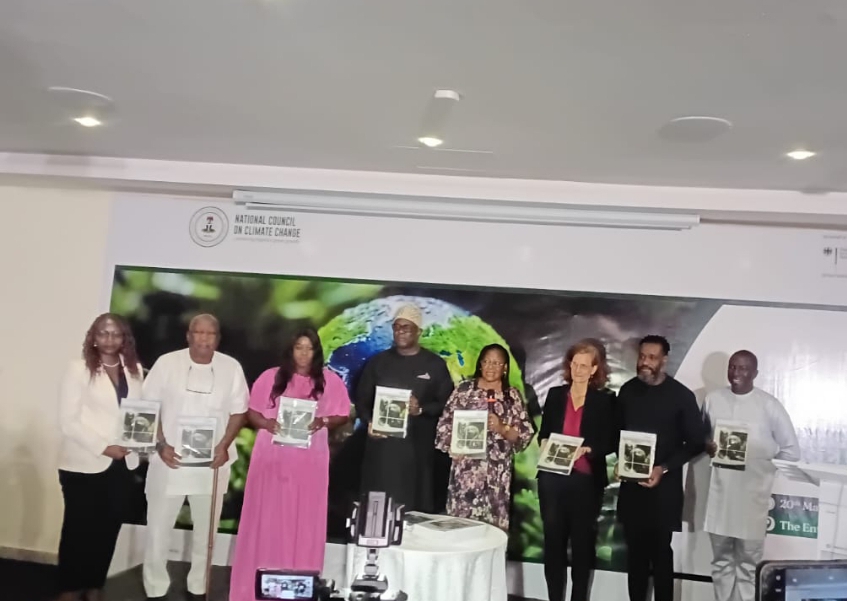
Nigeria Unveils Net Zero Investment Plan to Unlock Climate Finance, Drive Green Growth
By: Michael Mike
The Federal Government of Nigeria has launched an ambitious Net Zero Investment Plan (NZIP), a major policy framework designed to mobilise climate finance, accelerate sustainable economic growth, and strengthen the country’s pathway to net zero emissions by 2060.
The plan, unveiled in Abuja by the National Council on Climate Change, represents a significant step in Nigeria’s efforts to translate its climate commitments into concrete investment opportunities capable of attracting both domestic and international financing.
Developed under the NDC Partnership’s “Global Call for NDCs 3.0 and LT-LEDS,” the framework received technical support from Deutsche Gesellschaft für Internationale Zusammenarbeit (GIZ) GmbH and funding from the German Federal Ministry for the Environment, Climate Action, Nature Conservation and Nuclear Safety through the International Climate Initiative.
The NZIP is expected to serve as a strategic roadmap for implementing Nigeria’s long-term climate agenda by identifying priority sectors for investment, outlining financing needs, and proposing mechanisms to bridge existing climate finance gaps.
Government officials said the initiative aligns with Nigeria’s broader economic transformation agenda and reinforces the country’s aspiration to emerge as a leading climate-responsive economy in Africa in line with the African Union Agenda 2063.
The investment framework builds on key national policies, including the Nigeria Agenda 2050, the Nationally Determined Contributions (NDCs), and the Long-Term Low-Emission Development Strategy (LT-LEDS), all of which provide the policy backbone for Nigeria’s transition toward sustainable and climate-resilient growth.
Under the LT-LEDS framework, Nigeria targets net zero greenhouse gas emissions by 2060, while the NDCs outline short- and medium-term actions under the Paris Agreement.
Speaking at the launch, Country Director of GIZ, Markus Wagner, described the NZIP as a critical instrument for transforming climate goals into bankable projects capable of attracting large-scale investment.
According to him, the framework goes beyond policy declarations by providing a structured mechanism for mobilising public and private capital toward climate resilience, low-carbon industrialisation, and sustainable economic development.
Wagner noted that achieving net zero emissions would require strong collaboration among government institutions, development partners, financial organisations, and the private sector.
He said the plan demonstrates Nigeria’s determination to align climate action with economic development priorities while creating opportunities for innovation, green jobs, and long-term sustainable growth across strategic sectors of the economy.
Analysts say the launch of the NZIP could improve investor confidence in Nigeria’s green economy ambitions and position the country to access increasing pools of global climate finance targeted at low-carbon and climate-resilient development initiatives.
Nigeria Unveils Net Zero Investment Plan to Unlock Climate Finance, Drive Green Growth
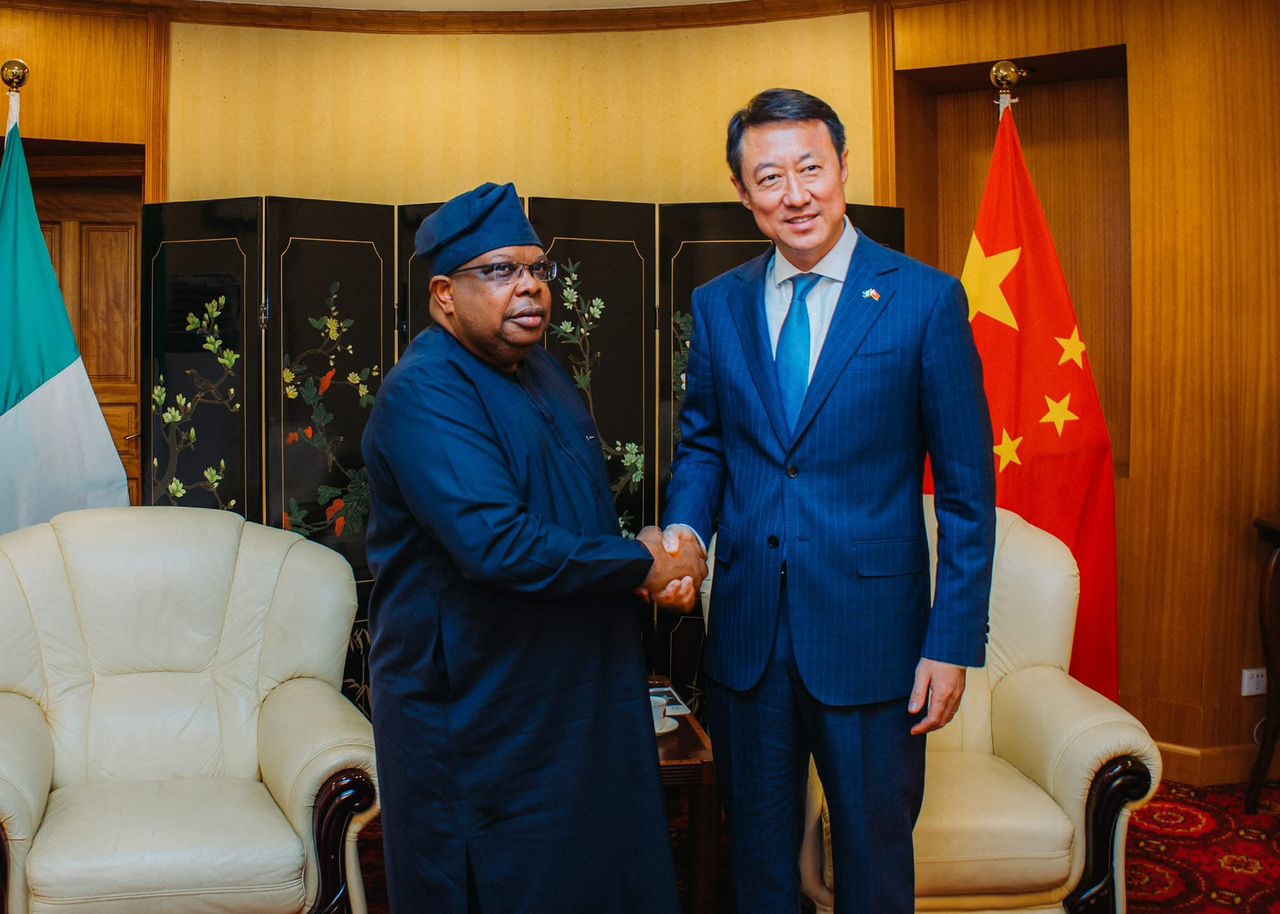
Nigeria Reaffirms One-China Policy, Seeks Deeper Economic Partnership With Beijing
By: Michael Mike
The Nigeria-China Strategic Partnership (NCSP) has reaffirmed Nigeria’s unwavering commitment to the One-China Principle, describing the country’s position on Taiwan as settled, consistent and non-negotiable.
The reaffirmation comes amid renewed global attention on China’s insistence that the People’s Republic of China remains the sole legitimate government representing China, with Taiwan regarded by Beijing as an inseparable part of its territory.
According to the NCSP, Nigeria’s adherence to the One-China policy dates back more than five decades to the establishment of diplomatic relations with China in 1971, and has remained a cornerstone of bilateral relations between both countries.
The agency noted that Nigeria again demonstrated its commitment during President Bola Ahmed Tinubu’s meeting with President Xi Jinping in Beijing in 2024, where both nations issued a joint statement reaffirming Nigeria’s recognition of the People’s Republic of China as the only legal government representing the whole of China.
The NCSP said Nigeria also expressed support for China’s pursuit of national reunification during the high-level engagement.
The statement followed heightened diplomatic conversations surrounding the Taiwan issue after a recent visit to Beijing by a United States delegation reportedly led by President Donald Trump alongside leading American business executives.
Director-General of the NCSP, Joseph Tegbe, said Nigeria intends to build on its longstanding diplomatic ties with China to unlock broader economic opportunities in manufacturing, technology transfer, industrialisation and export-driven production.
Tegbe observed that China has played a major role in supporting Nigeria’s infrastructure development through investments in railway projects, ports, energy facilities, telecommunications and industrial expansion.
He stressed that the partnership should now evolve into deeper collaboration in Nigeria’s digital economy, solid minerals development, agro-processing and consumer markets in order to create a more balanced and productive economic relationship.
The NCSP reiterated its commitment to expanding bilateral cooperation between Nigeria and China across trade, infrastructure, investment, technology transfer and capacity building, with the ultimate objective of delivering measurable economic benefits to Nigerians.
Nigeria Reaffirms One-China Policy, Seeks Deeper Economic Partnership With Beijing
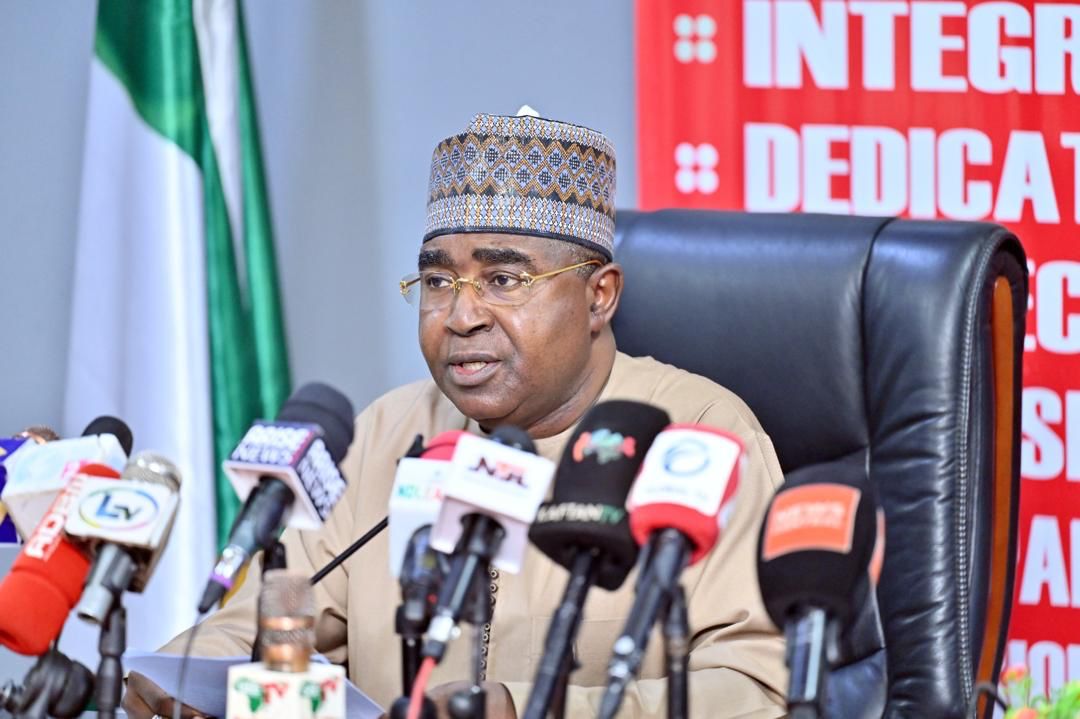
NDLEA Busts Mega Nigerian-Mexican Meth Syndicate, Seizes N480bn Drugs in Largest Lab Raid Ever
By: Michael Mike
The National Drug Law Enforcement Agency has dismantled what officials described as one of the most sophisticated transnational drug syndicates ever uncovered in Nigeria, arresting a notorious drug baron, three Mexican methamphetamine experts, and six Nigerian collaborators in a sweeping operation spanning Ogun and Lagos states.
The operation also led to the discovery and destruction of what the agency called the largest clandestine methamphetamine laboratory ever found in the country, hidden deep inside a forest in Ijebu area of Ogun State.
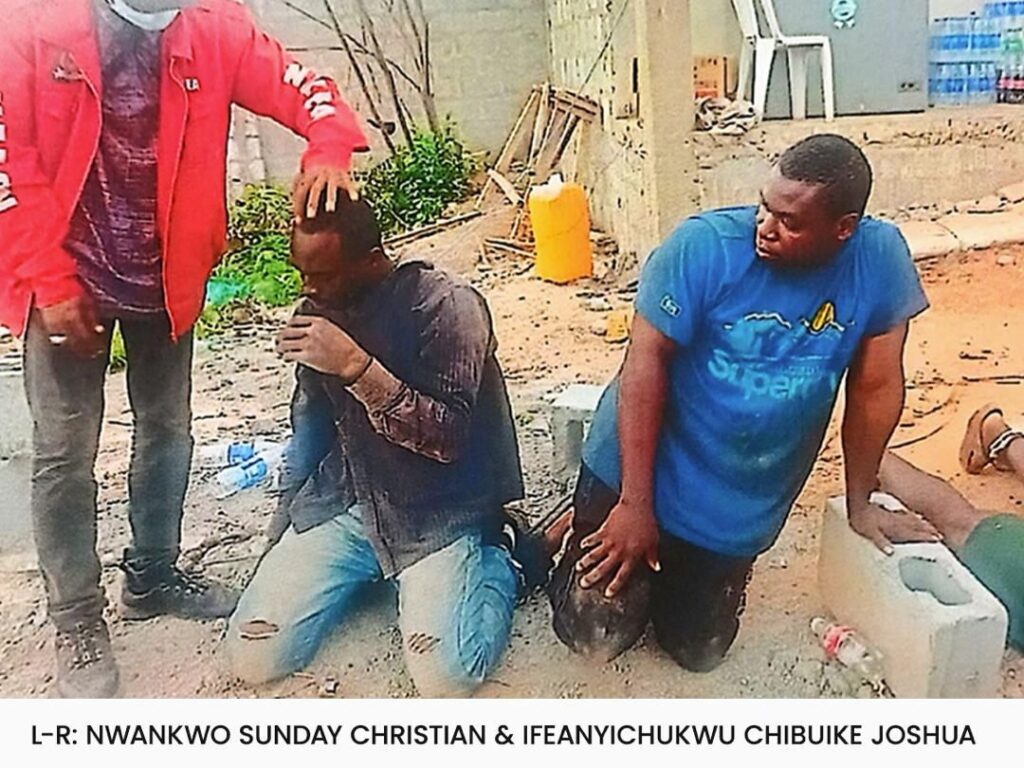
Chairman and Chief Executive Officer of the NDLEA, Mohamed Buba Marwa, disclosed the details on Wednesday during a media briefing at the agency’s headquarters in Abuja, describing the raid as a major blow against transnational organised crime and illicit drug manufacturing networks operating in Nigeria.
According to Marwa, elite operatives from the agency’s Special Operations Unit executed coordinated strikes across Ogun and Lagos within 48 hours after months of intelligence gathering and surveillance.
He said the primary target was a remote property located inside Abidagba forest in Ijebu East Local Government Area of Ogun State, allegedly operated by a drug trafficking organisation headed by suspected kingpin, Anochili Innocent.
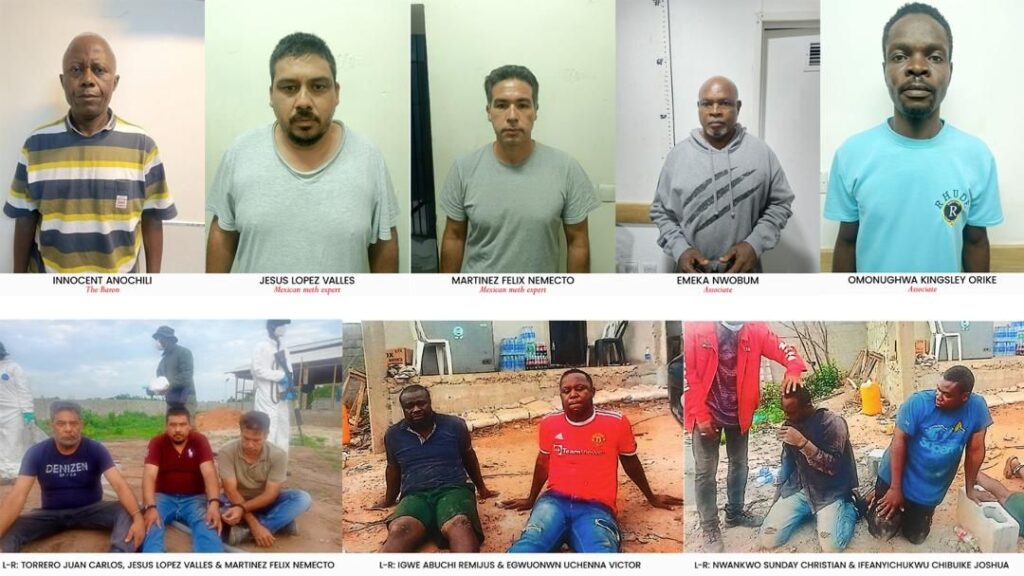
Marwa revealed that operatives stormed the forest laboratory on May 16, catching members of the cartel while processing illicit substances.
Among those arrested were three Mexican nationals identified as methamphetamine production specialists allegedly brought into Nigeria to run the operation. They were named as Martinez Felix Nemecto, Jesus López Valles, and Torrero Juan Carlos.
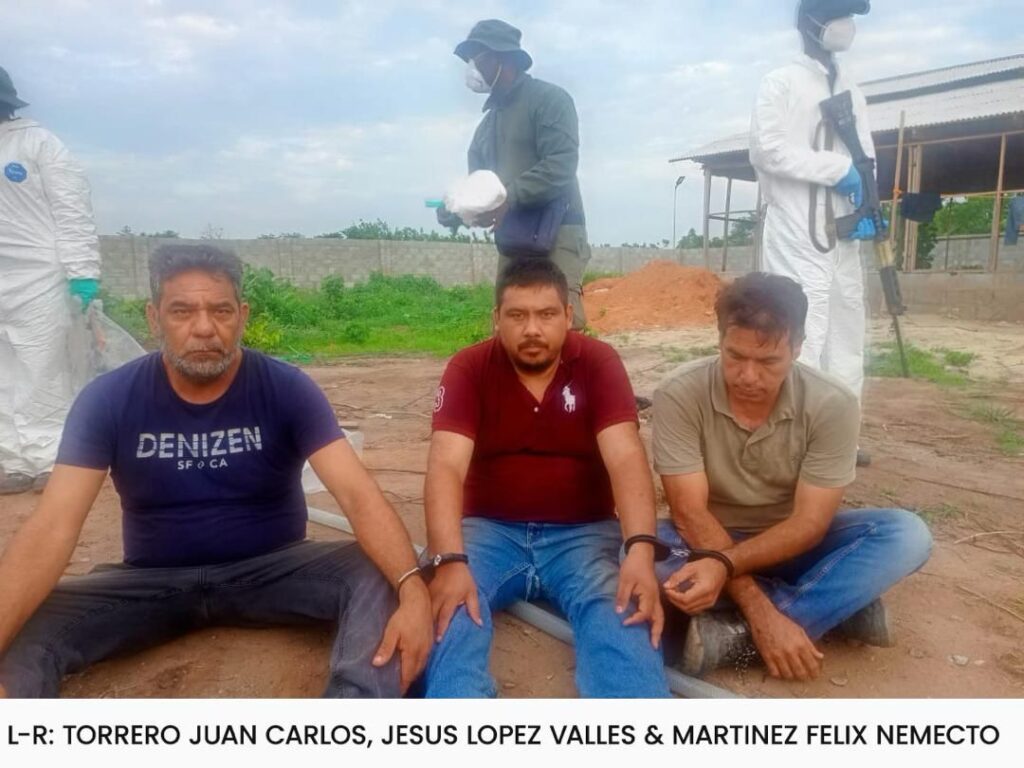
Four Nigerian collaborators arrested at the laboratory were identified as Nwankwo Sunday Christian, Igwe Abuchi Remijus, Ifeanyichukwu Chibuike Joshua, and Egwuonwu Uchenna Victor.
Simultaneously, another tactical team raided the Lekki residence of the alleged cartel leader at Golf Estate, Lakowe, Lagos, where Anochili was arrested.
Marwa said a search of the property uncovered the passports and mobile phones of the three Mexican suspects, linking the alleged drug baron directly to the importation and coordination of foreign methamphetamine specialists.
The NDLEA boss disclosed that follow-up operations on May 18 led operatives to another property linked to the suspect at Mayfair Estate, Lakowe, where another alleged syndicate member, Kingsley Orike Omonughwa, was arrested.
Investigators also stormed the residence of another suspected collaborator, Emeka Nwobum, said to have operated a strategic stash house for the cartel.
The arrests brought the total number of suspects in custody to 10, including the kingpin, the Mexican specialists, and six Nigerian collaborators.
Marwa said the operation yielded an unprecedented 2,419.48 kilograms of chemical substances, including crystallised and liquid methamphetamine as well as dangerous precursor chemicals and industrial solvents.
He estimated the international street value of the seized narcotics at 362.9 million dollars, equivalent to over N480 billion.
According to him, the volume of drugs recovered represented millions of potential street doses capable of fueling addiction, violence, and organised crime across local and international markets.
The agency also recovered operational vehicles including a Toyota Tacoma allegedly used at the forest laboratory and a Toyota Highlander seized from the cartel leader’s residence.
Marwa warned that Nigeria would remain hostile territory for drug cartels and foreign criminal networks attempting to establish manufacturing bases in the country.
“We are fully aware of the shifting tactics of these cartels, including the disturbing trend of hiring South American cartel specialists to set up production factories in our rural communities,” he said.
“No matter how deep into the bush you hide, no matter how secure your gated estate is, the NDLEA will hunt you down, dismantle your network, and seize your illicit wealth.”
The NDLEA chairman also linked the latest operation to the recent takedown of another international drug trafficking network allegedly headed by Simon Amadi, saying the agency was intensifying cooperation with global law enforcement partners to combat organised narcotics operations.
He commended operatives of the Special Operations Unit and the agency’s chemical and forensic teams for what he described as exceptional professionalism and bravery during the operation.
Marwa also urged Nigerians to remain vigilant and report suspicious activities, warning that the Ogun forest laboratory had operated under the guise of a legitimate farm.
NDLEA Busts Mega Nigerian-Mexican Meth Syndicate, Seizes N480bn Drugs in Largest Lab Raid Ever

Nigeria Unveils Net Zero Investment Plan to Unlock Climate Finance, Drive Green Growth

Nigeria Reaffirms One-China Policy, Seeks Deeper Economic Partnership With Beijing

NDLEA Busts Mega Nigerian-Mexican Meth Syndicate, Seizes N480bn Drugs in Largest Lab Raid Ever

Roger Federer’s Shock as DNA Results Reveal Myla and Charlene Are Not His Biological Children

THE PLIGHT OF FARIDA

FAILED COUP IN BURKINA FASO: HOW TRAORÉ NARROWLY ESCAPED ASSASSINATION PLOT AMID FOREIGN INTERFERENCE CLAIMS
-
 News2 years ago
Roger Federer’s Shock as DNA Results Reveal Myla and Charlene Are Not His Biological Children
-
Opinions4 years ago
THE PLIGHT OF FARIDA
-
 News1 year ago
FAILED COUP IN BURKINA FASO: HOW TRAORÉ NARROWLY ESCAPED ASSASSINATION PLOT AMID FOREIGN INTERFERENCE CLAIMS
-

 News2 years ago
EYN: Rev. Billi, Distortion of History, and The Living Tamarind Tree
-
 Opinions4 years ago
POLICE CHARGE ROOMS, A MINTING PRESS
-

 ACADEMICS2 years ago
A History of Biu” (2015) and The Lingering Bura-Pabir Question (1)
-

 Columns2 years ago
Army University Biu: There is certain interest, but certainly not from Borno.
-

 Opinions2 years ago
Tinubu,Shettima: The epidemic of economic, insecurity in Nigeria
