
Northeast
Shettima Says Unity of all Stakeholders Needed to Address Challenges Facing Northeast


Shettima Says Unity of all Stakeholders Needed to Address Challenges Facing Northeast
By: Michael Mike
The Vice President, Sen. Kashim Shettima has called for unity between diverse leaders and other stakeholders across the northeast in order to address challenges facing the geo-political zone.
The VP made the call on Saturday in Maiduguri while declaring open the 8th meeting of the North East Governors Forum (NEGF).
Shettima, who was in Borno State on a two-day official trip to inaugurate projects executed by the state governor, Prof. Babagana Zulum, also used the opportunity of his visit to flag off the distribution of palliatives by the Northeast Development Commission (NEDC) and open the Northeast Governors Forum meeting.
The VP said unity between diverse leaders and other stakeholders across the northeast would go a long way in addressing the many challenges facing the geo-political zone.
Shettima commended the northeast governors for deliberately forging unity amongst themselves despite their differences in political ideologies.
The host, Governor of Borno state and Governors of Adamawa, Bauchi and Yobe states, Ahmadu Umaru Fintiri, Bala Mohammed, and Mai Mala Buni were in attendance, while those of Gombe and Taraba were represented by their deputies.
Deputy Governor of Borno, Umar Usman Kadadur, senators and members of the House of Representatives, state lawmakers, Secretaries to the State Governments from the northeast States, traditional rulers led by the Shehu of Borno, Alhaji Abubakar Elkanemi and senior government officials from the six states of the northeast attended the opening session of the meeting.
READ ALSO: https://newsng.ng/borno-residents-raised-concern-over-plans-to-return-idps-after-iswap-attacked-governor-zulum-convoy-in-malam-fatori/
Chairman of the North-East Governors Forum and Governor of Borno State, Babagana Umara Zulum, advocated for a partnership that can give birth to an independent power station and railway network across the northeast.
He said: “Let me draw our attention to the recent amendment to the 1999 Constitution of the Federal Republic of Nigeria which saw the removal of Power Generation and Railway Transportation from the exclusive legislative list to the concurrent list. It is therefore important for us in the North East to partner towards the provision of independent power supply and rail transportation in the sub-region.”
Zulum also called for proactive measures towards curtailing the activities of illegal miners while at the same time maximizing the benefits of those minerals towards the overall development of the people in the northeast region.
He charged his colleagues from the region to give priority to the issues of youth unemployment and poverty in the region.
He said: “As we are set to deliberate on matters of common interest and shared responsibilities, we should, in addition to the issues of insecurity, floods, illicit mining and North East Development Commission projects in the sub-region, also focus specifically on youth unemployment, the deep-rooted poverty among the majority of our people due to the removal of oil subsidy by the Federal Government.”
Zulum commended the Nigerian military for their efforts in curbing the security situation in the northeast, which has brought relative peace.
“Let me use this occasion to commend our brave military in the fight against the insurgency, which remains unquestionable, while their determination to succeed is very glaring. No doubt, they have considered and acted upon a wide range of options in the fight against terrorism,” Zulum said.
The Governors later went into a closed-door meeting to deliberate, after which they are expected to issue a communique.
Shettima Says Unity of all Stakeholders Needed to Address Challenges Facing Northeast



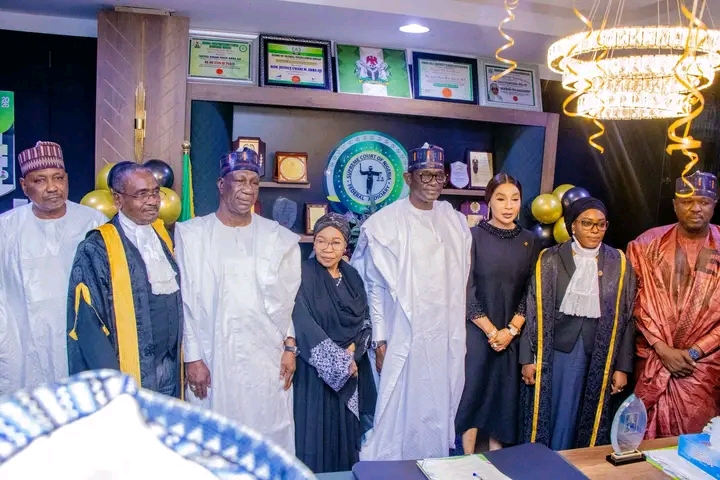
Governor Buni urges citizens to emulate Justice Uwani
By: Yahaya Wakili
Yobe State governor, Hon. Mai Mala Buni CON, COMN, has called on the people of the state to emulate the former supreme court judge, Justice Uwani Abba Aji CFR, as good ambassadors of the state.
Governor Buni stated this today while attending the valedictory session in honour of the retirement of supreme court judge and distinguished daughter of the state, Justice Uwani Abba Aji CFR.
The governor was accompanied by the Yobe state APC gubernatorial candidate, Alhaji Baba Malam Wali mni, his running mate, Barr. Saleh Samanja, and Senator Mohammed Ibrahim Bomai, Yobe South Senatorial District.
Others dignitaries accompanied the governor include the State Commissioner for Justice, Prof. Abubakar Kagu; the Chief of Staff to the Governor, Buni; Alhaji Abdullahi Gashu’a, Special Adviser on Religious Affairs; and some permanent secretaries.
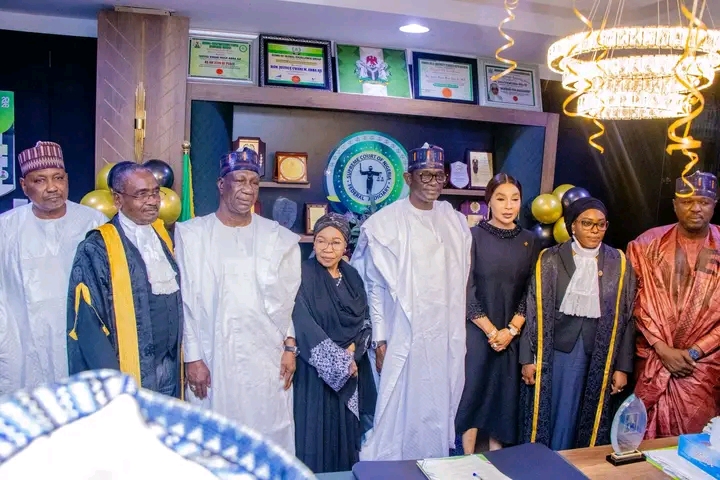
Similarly, Alhaji Saleh Abubakar DG Great Green Wall, Alhaji Muhammadu Wali Nguru, Barr. Bala Haladu, Engr. Ahmed Amshi and other prominent sons and daughters of the state were at the supreme court to celebrate the glorious exit of the legal luminary from the service.
The Chief Judge of Nigeria, Hon. Justice Kudirat Kekere-Ekun GCON, alongside His Excellency Governor Mai Mala Buni, the Minister of Justice, the Nigeria Bar Association and others, applauded Justice Uwani for her commitment and humility.
Governor Buni prayed to Almighty Allah to grant her a long life and a happy and peaceful life in retirement, Ameen.
Governor Buni urges citizens to emulate Justice Uwani

Coalition Urges Lagos Assembly to Ban GMOs, Cites Health, Environmental Risks
By: Michael Mike
A coalition of more than 70 organisations has called on the Lagos State House of Assembly to ban genetically modified organisms (GMOs), revoke existing approvals and investigate their long-term health and environmental implications.
The coalition, comprising scientists, farmers, food sovereignty advocates, environmentalists, nutritionists, women and youth groups, made the demand in a joint position paper submitted during an awareness rally in Lagos on Thursday.
The rally was organised by the Health of Mother Earth Foundation (HOMEF), Environmental Rights Action (FoEN/ERA), Corporate Accountability and Public Participation Africa (CAPPA), Kebetcache Women Development and Resource Centre, and the GMO-Free Nigeria Alliance.
The groups argued that the cultivation and use of GMOs could threaten Nigeria’s biodiversity, undermine farmers’ control over seeds and expose consumers and the environment to potential risks.
They expressed concern that cross-pollination from genetically engineered crops could contaminate indigenous plant varieties, while the transfer of toxins from crops such as Bt cowpea and Bt cotton could affect soil health and ecological balance.
The coalition also warned that patent restrictions on genetically modified seeds could force farmers to purchase seeds repeatedly, weakening the traditional practice of saving, reusing and sharing seeds and increasing dependence on multinational corporations.
HOMEF’s Director of Programmes, Joyce Brown, said opposition to GMOs was not peculiar to Nigeria, noting that several countries had adopted restrictions or bans on genetically modified crops.
She cited concerns about biodiversity as one of the reasons some countries had imposed restrictions, urging Nigerian authorities to examine the potential implications of GMOs for the country’s food system and environment.
Brown said the coalition wanted the Lagos Assembly to push for a ban, including the reversal of existing permits, and an extensive investigation into the long-term effects of GMOs.
She added that such a move would build on a 2024 motion by the House of Representatives seeking the suspension of GMOs and an investigation into approvals already granted.
According to her, action by Lagos could encourage other states to consider measures aimed at protecting local food systems, indigenous seeds and the environment.
Also speaking, molecular biologist and public health policy analyst, Dr Ifeanyi Casmir, urged Nigeria to adopt a precautionary, transparent and people-centred biotechnology policy.
Casmir cited what he described as potential allergenic, toxicological, reproductive and ecological risks, arguing that the country’s existing food system, biodiversity and public health challenges made it necessary to exercise caution.
He claimed that research had detected Cry toxins, used in genetically engineered crops to control insect pests, in the blood of pregnant women and umbilical cord blood, raising questions about possible fetal exposure.
An Associate Director at CAPPA, Olamide Martins, questioned the adequacy of Nigeria’s biosafety regulatory framework, saying more than 20 products had reportedly received approval since 2016 for purposes including commercial cultivation, food, animal feed and processing.
He argued that the absence of demonstrable long-term, independent risk assessments was a major concern, given the potential implications for public health, environmental safety and food sovereignty.
HOMEF Project Officer, Esele Ojeanelo, said the patent requirements associated with some genetically modified seeds could restrict farmers’ ability to retain and reuse seeds, undermining their independence and threatening indigenous crop varieties.
“A nation cannot secure its food future by surrendering control of its seeds, its biodiversity and its farming system to corporate control,” Ojeanelo said.
She called for policies that would protect farmers’ rights to preserve indigenous varieties and support locally rooted, sustainable agricultural practices.
Beyond the proposed GMO ban, the coalition urged the Lagos State Government to address insecurity that prevents farmers from accessing their farms and strengthen support for smallholder farmers through extension services, infrastructure and improved access to land and markets, particularly for women and young people.
The groups also called for increased investment in agroecology, which they said could strengthen local economies while promoting food security, biodiversity and farmers’ control over food production.
The position paper was endorsed by the GMO-Free Nigeria Alliance, which the organisers said comprises more than 70 organisations.
Coalition Urges Lagos Assembly to Ban GMOs, Cites Health, Environmental Risks
Coalition Urges Lagos Assembly to Ban GMOs, Cites Health, Environmental Risks
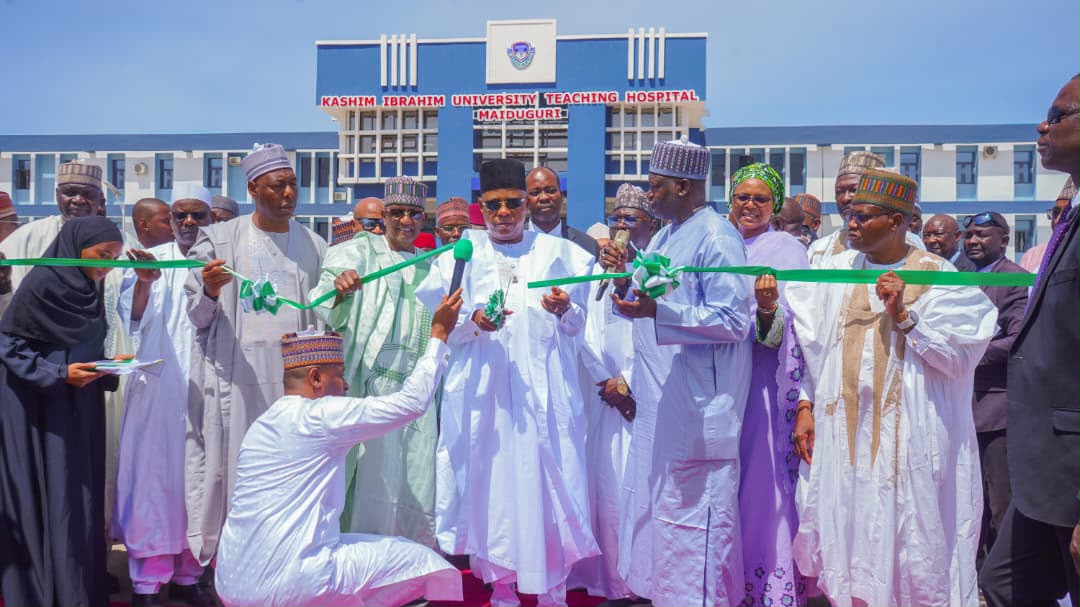
Zulum Targets End to Medical Tourism as Shettima Commissions 400-Bed Teaching Hospital
By: Michael Mike
Borno State Governor, Babagana Zulum, has intensified efforts to curb medical tourism with the establishment of a 400-bed teaching hospital equipped with advanced diagnostic technology and specialist healthcare facilities in Maiduguri.
Vice-President Kashim Shettima on Friday commissioned the Kashim Ibrahim University Teaching Hospital alongside other key projects delivered by the Zulum administration, in a move aimed at expanding access to quality healthcare and strengthening medical training in the North-east.
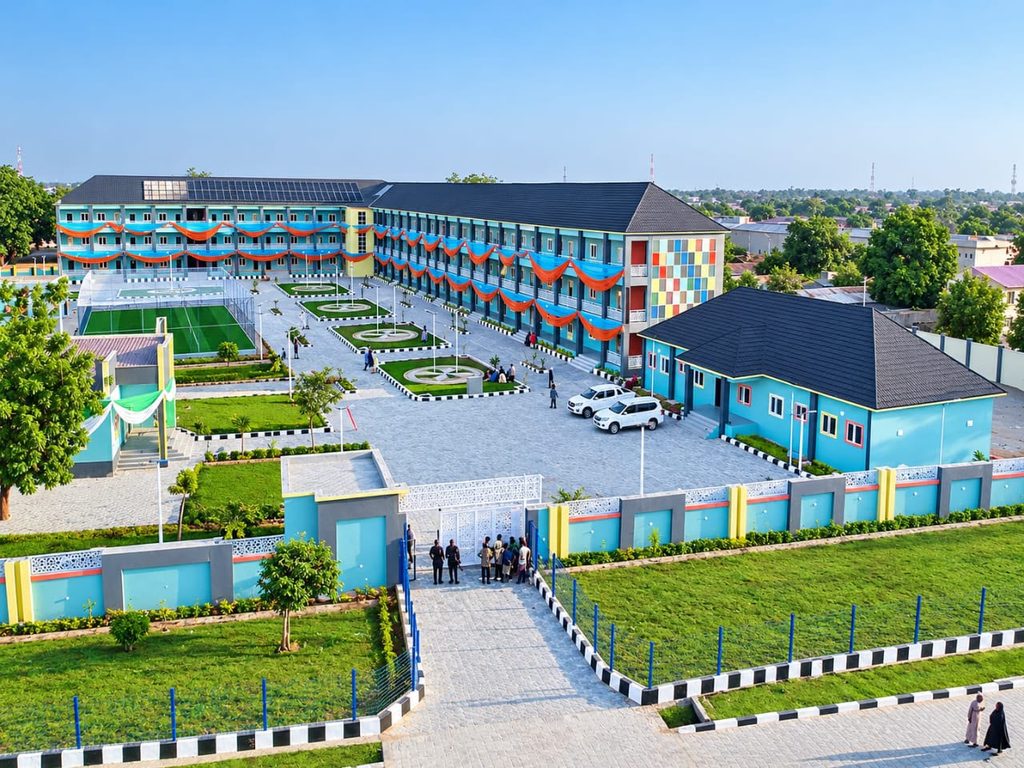
The hospital, which combines specialist medical services with the training of healthcare professionals, is expected to reduce the need for patients in Borno and neighbouring communities to travel elsewhere for advanced diagnosis and treatment.
Equipped with a 1.5-tesla magnetic resonance imaging (MRI) scanner, a 160-slice computed tomography (CT) scanner, three conventional and two mobile X-ray machines, three 4D ultrasound machines, a fluoroscopy system and digital mammography equipment, the facility is designed to expand access to specialised medical services.
Its infrastructure also includes 13 specialist departments covering diagnostic, medical, surgical, emergency, paediatric, internal medicine and physiotherapy services, among others.
The project comprises a medical college complex, a students’ hostel, a 200-unit staff estate and an oxygen plant complex, providing supporting infrastructure for patient care, medical education and healthcare delivery.
Beyond reducing the burden of seeking treatment outside the state, the hospital is expected to serve residents of neighbouring communities and people across the Lake Chad region, while improving access to specialist care for underserved populations.
It is also expected to strengthen healthcare manpower development by providing training opportunities for doctors, nurses and allied health professionals, helping to address shortages that have constrained healthcare delivery in Borno and the wider North-east.
Speaking at the commissioning, Shettima commended Zulum for investing in institutions capable of delivering lasting benefits to the state, particularly in healthcare and education.
He said the value of public office should ultimately be measured by the institutions established, infrastructure delivered and lives improved, rather than the privileges associated with political positions.
“We shall be judged by what survives our time in office, the offices we held, the aides who surrounded us, and the length of our convoys will have surrendered their importance. What will endure are the institutions we built, the roads we built and the lives we improved through service. That is the meaning of our gathering here in Maiduguri. That is why this occasion brings me such joy,” the Vice-President said.
Shettima said the hospital and the schools established by the state government reflected Zulum’s commitment to rebuilding Borno through investments that directly affect people’s lives.
“According to Carl Sagan’s law of insignificance, 100 years from now, everyone you know or who knows you will be out of this world. This is why I do not doubt the vision of His Excellency Professor Babagana Umara Zulum; his passion for healthcare and education is expressed in the institution before us,” he said.
He added that the teaching hospital and schools being established across Maiduguri and other parts of the state demonstrated the governor’s conviction that recovery must translate into tangible improvements in healthcare and access to education.
“The ultra-modern Kashim Ibrahim University Teaching Hospital and the school that dotted our landscape in Maiduguri and across the state give substance to his belief that Borno recovery must reach the patient awaiting treatment and the child sitting in a place in the classroom,” Shettima said.
In the education sector, the Vice-President also commissioned Yerwa Practice Mega Primary School, built by the Zulum administration, and another mega primary school delivered under the Kashim Shettima Free Education Programme.
The programme, regarded as one of the Vice-President’s key education initiatives, provides free education for orphans and vulnerable children.
The projects underscore the Borno government’s strategy of linking post-conflict recovery with investments in essential public services, particularly healthcare and education.
For a state grappling with the long-term effects of insurgency, expanding access to specialist medical services and strengthening the institutions responsible for training health workers remain critical to improving living conditions and rebuilding public infrastructure.
The new teaching hospital is expected to provide a major boost to those efforts by bringing advanced diagnostic services, specialist treatment and medical training together in one institution.
Zulum Targets End to Medical Tourism as Shettima Commissions 400-Bed Teaching Hospital

Gallant Troops Overrun Terrorist Camps in Dajin Madam Forest, Neutralise Two Bandits in Plateau

Troops Recover AK-47 Rifle, Discover Suspected Bandit’s Corpse in Old Oyo National Park

ECOWAS Inspection Team Assesses Readiness of Nigerian Standby Force in Ondo

Roger Federer’s Shock as DNA Results Reveal Myla and Charlene Are Not His Biological Children

THE PLIGHT OF FARIDA

FAILED COUP IN BURKINA FASO: HOW TRAORÉ NARROWLY ESCAPED ASSASSINATION PLOT AMID FOREIGN INTERFERENCE CLAIMS
-
 News3 years ago
Roger Federer’s Shock as DNA Results Reveal Myla and Charlene Are Not His Biological Children
-
Opinions5 years ago
THE PLIGHT OF FARIDA
-
 News2 years ago
FAILED COUP IN BURKINA FASO: HOW TRAORÉ NARROWLY ESCAPED ASSASSINATION PLOT AMID FOREIGN INTERFERENCE CLAIMS
-
 Opinions5 years ago
POLICE CHARGE ROOMS, A MINTING PRESS
-

 News3 years ago
EYN: Rev. Billi, Distortion of History, and The Living Tamarind Tree
-

 ACADEMICS3 years ago
A History of Biu” (2015) and The Lingering Bura-Pabir Question (1)
-

 Columns3 years ago
Army University Biu: There is certain interest, but certainly not from Borno.
-

 Politics1 year ago
2027: Why Hon. Midala Balami Must Go, as Youths in Hawul and Asikira/Uba Federal Constituency Reject ₦500,000 as Sallah Gift
