
News
Shettima To NEC: Burden Of Nigerians Is On Our Shoulders

Shettima To NEC: Burden Of Nigerians Is On Our Shoulders
*Council sets up committees on Economic Affairs, Crude Oil Theft & Management
By: Our Reporter
Vice President Kashim Shettima has charged members of the National Economic Council (NEC) to shelve the idea of vacation in the yuletide and carry on with issues of governance to ease the burden of Nigerians hanging on their shoulders.
He charged the Council members to be alive to the demands of Nigerians noting that , “as the year draws to a close, none of us in this chamber should anticipate a vacation. I tend to think so because upon our shoulders rests the weight of responsibilities from which we cannot escape. We are returning to be judged by the promises we made to be here.”
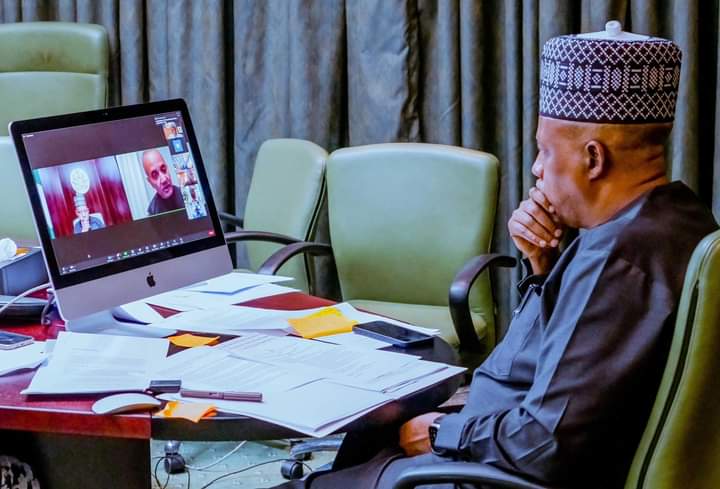
Speaking on Thursday during the 138th meeting of NEC which held virtually, the VP said his principal, President Ahmed Bola Tinubu, GCFR, has shown that the challenges inherited by his administration are surmountable, and has offered visionary leadership and presented a coherent development plan to assist in the country’s pursuit of order, abundance, and stability.
“Each of us owes their constituents the scorecard of their stewardship in these few months of translating ideas into tangible actions. That’s why we can’t afford to fail, and the new year must be, for us, a timeout to reflect on how we have fared so far and what we must do differently to keep the hope of the nation alive,” the Vice President stated.
Apparently keen about getting results of the government’s ongoing reforms in good time, the VP stressed the need for the citizens to feel the positive impact of fuel subsidy removal and forex unification, noting that high inflation and cost of living are global challenges that have affected the economies of all countries.
Shettima said they should be considered as enough “inspiration for us to come together and tackle ours through realistic interventions”.
Meanwhile, following deliberations on critical economic matters and assessments of potential short-term, medium and long-term strategies for addressing pressing economic issues, NEC set up the committees on Economic Affairs, as well as the committee on Crude Oil Theft And Management.
Both committees are to be headed by Kwara State Governor, Alh AbdulRahman AbdulRazak, and his Imo State counterpart, Senator Hope Uzodimma, respectively.
The Economic Matters committee to be chaired by Kwara State Governor, AbdulRazaq AbdulRahman, is saddled with the task of preparing a clear roadmap for dealing with petroleum subsidy, including a framework for defending wage negotiations, exchange rate management and fiscal consolidation sustainability, liquidity management and inflation, medium term investment and growth, fiscal transparency and accountability, as well as state of emergency on food production for 2024.
Members of the committee include the Gombe State Governor, representing North East; Governor of Lagos (South West); the Governor of Akwa Ibom (South-South); the Governor of Anambra (South East); the Governor of Niger (North Central), and Governor of Kaduna (North West).
Rukaiya El-Rufai, Special Adviser to the President on NEC and Climate Change is to serve as Secretary.
The second committee on Crude Oil Theft and Management, an existing NEC committee, has been reconstituted with Governor Hope Uzodimma of Imo State as the chairman.
Other members are the Governor of Ogun State representing South West; the Governor of Plateau State (North Central); the Governor of Rivers (South-South) Governor of Borno (North East); Governor of Jigawa State (North West); the Governor of Abia State (South East); Minister of Budget and Economic Planning; Minister of Finance and Coordinating Minister of the Economy; CBN Governor; GCEO of NNPCL, NDDC Chairman, and Service Chiefs.
The Secretariat will be domiciled at the Ministry of Budget and Economic Planning and the Special Adviser to the President on Economic Matters, Dr Tope Fasua will serve on the committee.
Council also received an update on account balances as at 31st October 2023. The Excess Crude Account as at 31st October, 2023 stood at $473,754.57, while the Stabilization Account was N32,063,186,474.96 during the same period. Development Of Natural Resources Account as at 31st October 2023 stood at N156,770,745,529.74.
Shettima To NEC: Burden Of Nigerians Is On Our Shoulders


Gombe, UNICEF move to end child poverty
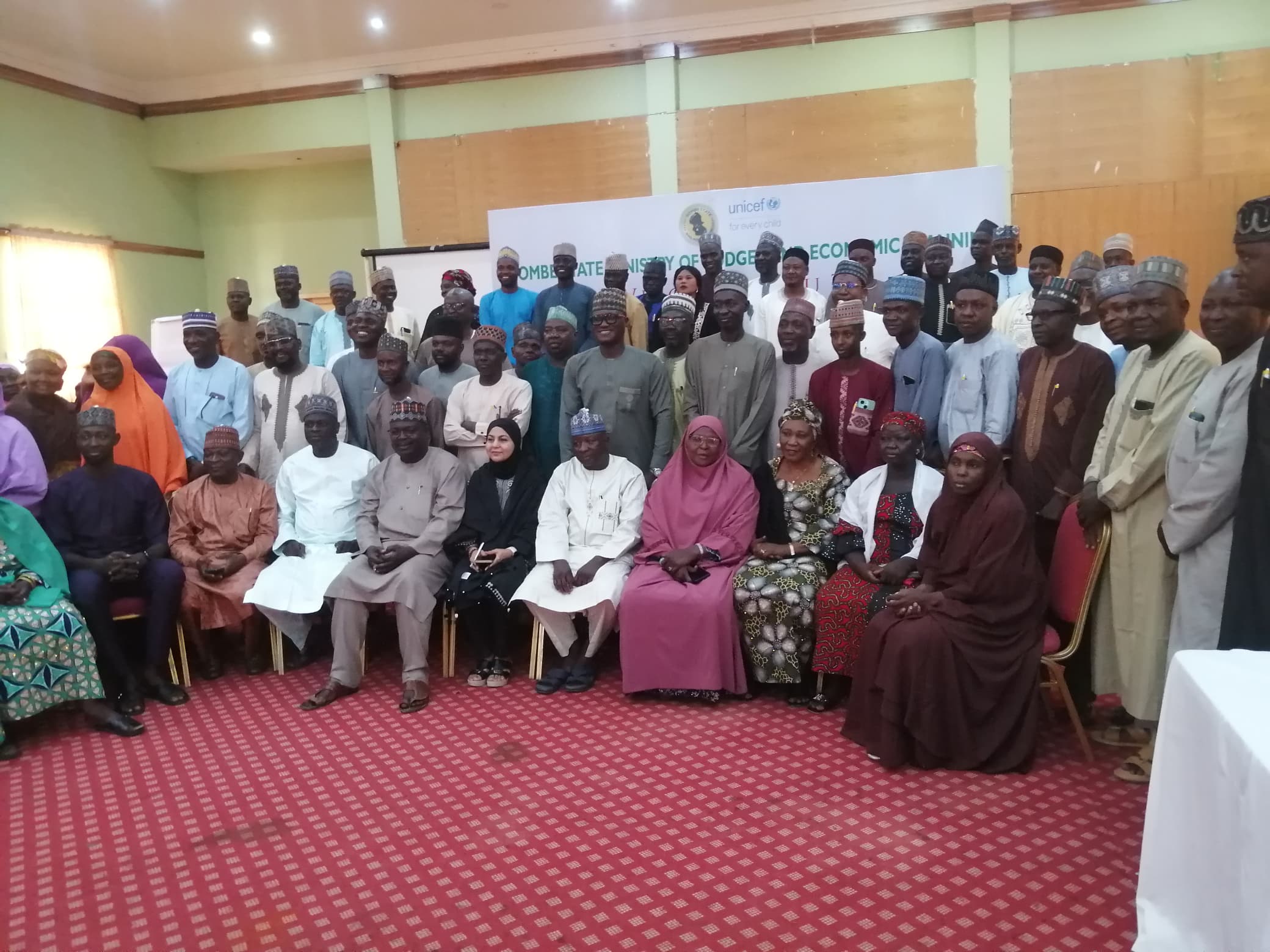
The Gombe State government through its Ministry of Budget and Economic Planning in collaboration with the United Nations Children’s Fund (UNICEF) has begun a three-day training for council officials in the state.
The training is geared towards combating the multidimensional poverty amongst children in the 11 Local Government Areas of the state.
Speaking during the workshop in Gombe on Tuesday, Dr Nuzhat Rafique, the Chief of Field Office at UNICEF’s Bauchi Field Office expressed concern over the high level of child poverty in the state.
Rafique said that the 2024/2025 Multiple Indicator Cluster Survey (MICS) conducted in the state showed that seven out of 10 children in Gombe State experience multidimensional poverty.
She stated that in view of the challenge, many children in the state were being deprived of basic life necessities.
The chief said that the progress of Gombe State and Nigeria at large depended on how well multidimensional poverty amongst children was tackled.
She said that tackling child poverty remained key to ensuring that children in the state were better protected to grow well and contribute to the development of the state and country.
According to her, it is in that regard, that UNICEF is supporting the state to expand social protection programmes, improve healthcare access, and tackle severe child food poverty.
She further stated that UNICEF through the training would support the planning and budgeting exercise at the LGA levels towards tackling child poverty in the state.
“According to the data collected by the household survey, there are 7 out of 10 children suffering from some forms of multidimensional poverty.
” This is a high level of multidimensional poverty that we see in Gombe and other states as well.
“We don’t want any child to suffer any form of multidimensional poverty but 70 per cent of children are involved which is why UNICEF is involved.
“Some of the LGAs with high levels of deprivation are Dukku, Balanga, Nafada.
“We want to concentrate on the most deprived LGAs but also within LGAs, the most deprived areas where children are suffering the most, reaching the poorest of the poor,” she said
On his part, Mr Jalo Ali, the Permanent Secretary, Gombe State Ministry of Finance who is also overseeing the Ministry of Budget and Economic Planning urged participants to leverage the training to enhance their capacity.
Represented by Mr Musa Babaji, Director, Administration and Finance, Ministry of Finance, Ali tasked participants to have cross-sector thinking about the theme of the workshop, stating that poverty facing children in the state was multidimensional.
“It (child poverty) involves so many things reason it is called multidimensional therefore there is need for cross sector thinking.
“Such thinking that is focused on solutions that are measurable, practicable and people oriented to achieve the purpose of this workshop,” he said
The Statistician General of Gombe State, Alhaji Ibrahim Dule who was represented by Musa Umar, the overseeing Director, Economic and Social Statistics, Gombe State Bureau of Statistics gave the outcome of the survey conducted in the state with the support of UNICEF.
Dule said that the Gombe State General Household Survey conducted for 2024/2025 showed that 65 per cent of households in the state have access to drinking water.
He further said that 51.5 per cent of household in the state have access to improved sanitation with urban centres having 64.9 per cent while rural areas 43 per cent.
According to him, 50.5 per cent of household have access to electricity with urban having 74.3 per cent and rural 35.4 per cent.
“10 LGAs have severe food security issues which is a great cause of concern and should be looked into critically,” he said.
The News Agency of Nigeria (NAN) reports that no fewer than 66 officials drawn from the 11 LGAs in the state are participating in the workshop.
Gombe, UNICEF move to end child poverty
Truth Has No Ethnic Colour — A Response to BYM’s Mischaracterisation of Zagazola Media Network
The attention of Zagazola Media Network has been drawn to a statement issued by the Berom Youth Moulders Association (BYM), in which our platform was unfairly and inaccurately portrayed as a “mouthpiece” of the Miyetti Allah Cattle Breeders Association of Nigeria (MACBAN) over reports relating to the recent killing of two herders in Jos South Local Government Area of Plateau State.
Ordinarily, we would not dignify such allegations with a response. However, given the sensitivity of the Plateau conflict and the importance of maintaining public trust in independent journalism, it has become necessary to set the record straight.
First, Zagazola Media Network is neither affiliated with MACBAN, nor with any ethnic, religious, political or sectional interest group in Nigeria or the Sahel. We are a network of journalists, researchers and security analysts committed to factual reporting, conflict documentation and the promotion of peace and stability across Nigeria.
Our record speaks for itself.
For years, we have consistently documented and reported security developments across Plateau State and other conflict-prone areas without fear or favour. We have published hundreds of reports on attacks affecting all communities, irrespective of the identity of the victims or perpetrators. Our archives contain hundreds of extensive coverage of killings in Berom communities, attacks on Fulani settlements, reprisals, kidnappings, cattle rustling, communal violence and terrorist activities across the state.
When Fulani Bandits attacked communities in Bokkos on Monday and 18 of innocent residents were killed, Zagazola Media Network was among the first platforms to report the tragedy.
https://zagazola.org/index.php/breaking-news/fulani-bandits-kill-18-in-fresh-attack-on-plateau-communities
We did not hesitate because the victims were Berom. We reported the facts as they emerged. Indeed, many of those reports were subsequently cited and amplified by national and international media organizations. Likewise, when Fulani communities have come under attack, we have reported those incidents with the same level of professionalism and attention.
Our principle is simple, All victims deserve to be heard, regardless of ethnicity, religion or social status. Facts deserve to be reported, regardless of whose narrative they support.
It is therefore disappointing that an organization claiming to advocate peace and justice would resort to attacking the credibility of journalists simply because a report did not conform to its preferred narrative.
The essence of journalism is not to validate the positions of interest groups. Journalism exists to establish facts and place them before the public. Sometimes those facts may align with the position of one group. At other times, they may not. That does not make the journalist an ally or an enemy of any side.
The attempt to associate Zagazola Media Network with MACBAN is both false and irresponsible. Equally troubling is the suggestion that our reports should be judged based on whether they support the narratives of any ethnic organization. The Plateau crisis is too serious for such distractions.
For decades, communities across Plateau State have suffered devastating losses. Berom families have lost loved ones. Fulani families have lost loved ones. Other ethnic groups have also paid a terrible price. The challenge before all stakeholders should be how to stop the cycle of violence not how to silence or intimidate independent reporting.
What should concern everyone is whether journalists are acting in good faith and striving for accuracy. On that score, Zagazola Media Network’s record remains open for public scrutiny.
We therefore reject, in its entirety, the attempt to portray our platform as aligned with MACBAN or any other interest group. Even the MACBAN are accusing Zagazola of stereo typing the Fulani as Bandits in our stories. But for the purpose of clarity the names of attackers must be clearly mentioned.
We therefore reject the dangerous trend of branding journalists based on whose actions are reported at any given moment. Our loyalty remains where it has always been: with the truth.
We will continue to report attacks against Berom communities when they occur. We will continue to report attacks against Fulani communities when they occur. We will continue to report criminality, terrorism and violence wherever they emerge.
The pursuit of peace requires honesty. It requires courage. Above all, it requires a willingness to confront facts, even when they are uncomfortable.
Zagazola Media Network will remain committed to those principles.
Truth has no ethnic colour. Facts have no tribe. Journalism has no side except the truth.
— Zagazola Media Network
Truth Has No Ethnic Colour — A Response to BYM’s Mischaracterisation of Zagazola Media Network
News
Nigeria Moves to Tighten Response to Intimate Image Abuse as UN Warns of Rising Cyber-Interpersonal Violence
Nigeria Moves to Tighten Response to Intimate Image Abuse as UN Warns of Rising Cyber-Interpersonal Violence
By: Michael Mike
Nigeria is stepping up efforts to confront the growing threat of cyber-interpersonal violence, particularly the non-consensual sharing of intimate images and sextortion, as global and national stakeholders push for stronger legal and survivor-centred responses to online abuse.
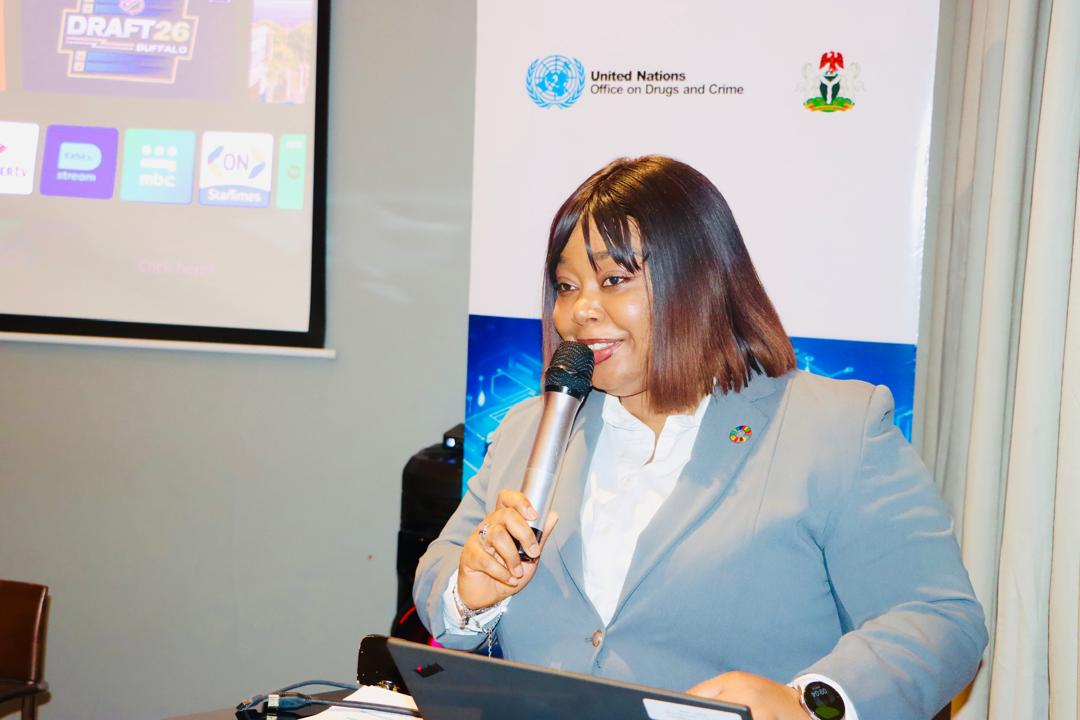
The renewed push came during a high-level workshop in Lagos supported by the United Nations Office on Drugs and Crime (UNODC), where experts and policymakers examined how Nigeria can better prevent and respond to intimate image abuse—one of the fastest-growing forms of digital exploitation.
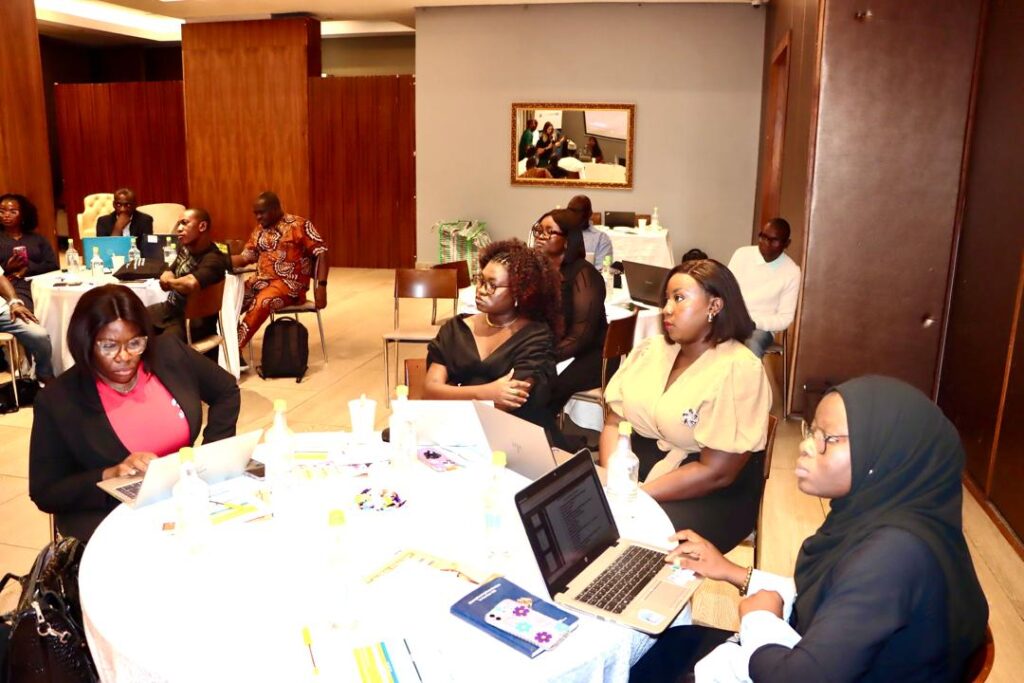
The discussions were anchored in a broader global shift following the adoption of the United Nations Convention against Cybercrime on 24 December 2024, which formally recognizes cyber-enabled harms such as intimate image exploitation, online harassment, and sextortion as serious transnational crimes requiring coordinated international action.
Participants warned that cyber-interpersonal violence has become one of the most personal and devastating forms of online harm, often leaving lasting psychological, social, and economic consequences for victims. While women and girls remain disproportionately affected, experts stressed that victims cut across gender, age, and social boundaries.
Non-consensual sharing of intimate images—commonly referred to as “revenge porn”—and sextortion were identified as particularly pervasive, with perpetrators exploiting digital platforms to blackmail, shame, and control victims.
Stakeholders noted that beyond legal violations, these acts strip victims of privacy, dignity, autonomy, and security, often pushing them into isolation, mental distress, and in some cases, withdrawal from education or employment.
The workshop emphasized the need for Nigeria to strengthen its legal frameworks, improve institutional coordination, and build capacity among law enforcement, prosecutors, educators, and counsellors.
Through its ongoing technical support, the United Nations Office on Drugs and Crime has been assisting countries to develop national standards, improve cross-border cooperation, and establish survivor-centred response systems that prioritize safety, dignity, and access to justice.
Experts at the meeting stressed that effective responses must go beyond criminalization. They called for integrated systems that combine law enforcement with psychosocial support, digital literacy, prevention campaigns, and victim protection mechanisms.
A key message from the discussions was the need to place survivors at the centre of all interventions. Participants argued that many victims of intimate image abuse face stigma and institutional neglect, making reporting and recovery difficult.
They called for reforms that ensure survivors are believed, protected from further harm, and supported through accessible justice systems and emotional care services.
The workshop also formally acknowledged contributions from Nigerian stakeholders, including Shuaib Afolabi Salisu, commending his participation in ongoing discussions on cybercrime response frameworks and victim support mechanisms.
Analysts said the renewed attention reflects a broader global concern over the speed at which digital platforms are enabling new forms of exploitation, outpacing existing legal and institutional safeguards in many countries.
With Nigeria increasingly integrated into global digital networks, experts warn that failure to act decisively could deepen vulnerabilities, particularly among young people and women who are most exposed to online abuse.
As discussions continue, stakeholders insist that the future of cybercrime response in Nigeria must balance enforcement with empathy—ensuring that justice systems not only punish offenders but also restore dignity to survivors.
Nigeria Moves to Tighten Response to Intimate Image Abuse as UN Warns of Rising Cyber-Interpersonal Violence

Gombe, UNICEF move to end child poverty

Truth Has No Ethnic Colour — A Response to BYM’s Mischaracterisation of Zagazola Media Network

Nigeria Moves to Tighten Response to Intimate Image Abuse as UN Warns of Rising Cyber-Interpersonal Violence

Roger Federer’s Shock as DNA Results Reveal Myla and Charlene Are Not His Biological Children

THE PLIGHT OF FARIDA

FAILED COUP IN BURKINA FASO: HOW TRAORÉ NARROWLY ESCAPED ASSASSINATION PLOT AMID FOREIGN INTERFERENCE CLAIMS
-
 News2 years ago
Roger Federer’s Shock as DNA Results Reveal Myla and Charlene Are Not His Biological Children
-
Opinions4 years ago
THE PLIGHT OF FARIDA
-
 News1 year ago
FAILED COUP IN BURKINA FASO: HOW TRAORÉ NARROWLY ESCAPED ASSASSINATION PLOT AMID FOREIGN INTERFERENCE CLAIMS
-

 News2 years ago
EYN: Rev. Billi, Distortion of History, and The Living Tamarind Tree
-
 Opinions5 years ago
POLICE CHARGE ROOMS, A MINTING PRESS
-

 ACADEMICS2 years ago
A History of Biu” (2015) and The Lingering Bura-Pabir Question (1)
-

 Columns2 years ago
Army University Biu: There is certain interest, but certainly not from Borno.
-

 Politics1 year ago
2027: Why Hon. Midala Balami Must Go, as Youths in Hawul and Asikira/Uba Federal Constituency Reject ₦500,000 as Sallah Gift
