News
Speaker Calls on State Houses of Assembly to Ensure Law Against GBV is Passed Across Nigeria
By: Michael Mike
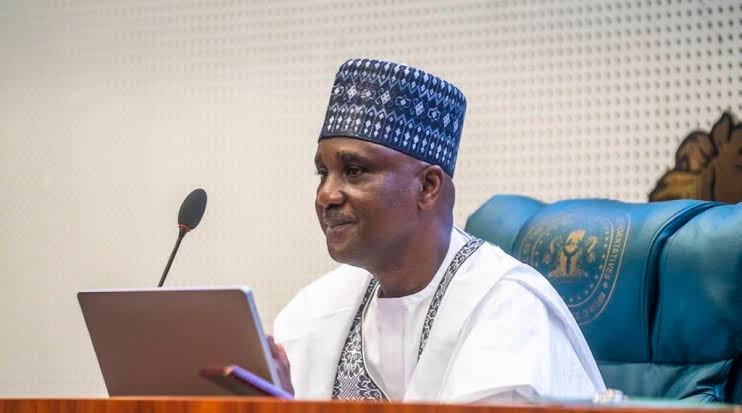
The Speaker of House of Representatives, Rt. Hon. Tajudeen Abbas has promoted the ending Gender Based Violence (GBV) in Nigeria, calling on Speakers of State Houses of Assembly to ensure that the law is passed in all there states.
He made this call on Monday in Abuja at the convergence of Speakers of State Houses of Assembly to commemorate the conclusion of the 16 days of activism against Gender-based Violence. An event hosted by UN Women in conjunction with the House of Representatives.
The Speaker while stating that the UN bent was part of activities lined up to commemorate 16 Days of Activism against GBV, noted that the campaign began on November 25th, with the People’s House taking a prominent role in supporting the push to end the crime that should not just be seen as against women but humanity.
Abbas, who also stated that the involvement of the House signified its resolve to combat violence against Nigerian women and to reinforce our collective commitment to creating a safer and more equitable society, said: “As we mark the conclusion of this critical campaign today, we also celebrate International Human Rights Day. These 16 days have served as a rallying point, uniting diverse stakeholders in a shared mission to protect and empower women and girls across Nigeria.
“The National Assembly has long been at the forefront of the fight against GBV and the advocacy for greater women’s representation. Since 1999, we have championed transformative legislative reforms, including the enactment of the Violence Against Persons (Prohibition) Act (VAPP), the Child Rights Act, and the Trafficking in Persons (Prohibition) Enforcement and Administration Act. These laws have laid a solid foundation for addressing GBV and advancing gender equity.
“The 10th Assembly has amplified these efforts through its Legislative Agenda, which prioritises constitutional reforms to promote women’s political participation and representation.
This agenda reflects our recognition of the indispensable role women play in governance and the broader societal fabric. Women are the cornerstone of our families and communities, yet their political representation remains unacceptably low. This imbalance must change—not for improved statistics but for the transformative value women bring to governance, leadership, and policymaking.”
He said that the importance of eradicating GBV and promoting women’s representation cannot be overstated, noting that: “A society that protects its women and leverages their potential is one that secures its future. Women are the glue that holds our families and communities together. Despite this, systemic barriers, including cultural norms, economic inequality, and inadequate legal protections, have hindered their full participation in political and public life.”
The Speaker while revealing that the 10th Assembly has taken proactive steps to address the barriers, said: “Recognising past pitfalls, we have commenced the constitutional amendment process early to allow for extensive consultation and consensus-building. The House Committee on Constitution Amendment has embarked on robust sensitisation and advocacy efforts, engaging stakeholders to build support for provisions that will constitutionalise greater women’s representation.
“These efforts go beyond tokenism. Affirmative action for women is not undemocratic; it is a necessary corrective measure to address historical inequities and unlock our nation’s full potential. Many African countries, such as Rwanda and South Africa, have successfully enshrined affirmative action in their constitutions.
“The 2003 Constitution of Rwanda mandates that at least 30% of positions in decision-making organs be reserved for women, a policy that has propelled women to hold 61.3% of parliamentary seats. Similarly, recent reforms to the Indian Constitution allocate 33% of seats for women in the Lok Sabha and State Legislative Assemblies. Nepal’s Constitution requires that women make up at least one-third of the total members of the federal parliament. In Uganda, the Constitution ensures one woman representative for every district in Parliament. Meanwhile, Tanzania’s Constitution reserves special seats for women, comprising no less than 30% of parliamentary seats. Zimbabwe’s Constitution also guarantees 60 additional seats for women in the National Assembly during its first two parliaments after enactment. Nigeria must embrace this progressive trend – not only to align with global advancements in gender inclusion but also to set a leading example for others”
The Speaker pointed out that state Houses of Assembly are pivotal to achieving meaningful constitutional reforms and that the active participation and support of State Speakers are crucial in ensuring that gender-focused amendments and legislation are adopted at the subnational level.
He said: “I commend the Speakers here today for their progressive stance and for being the most forward-thinking group of Speakers since 1999. Your support for gender-based bills and proposals currently before the National Assembly is a testament to your commitment to building a more inclusive Nigeria.
“I understand the challenges you face and urge you to engage in constructive dialogue to refine these proposals. Let us work together to integrate your perspectives into the final legislation, ensuring that no valid concerns are left unaddressed.”
The Speaker said that the House of Representatives remains resolute in its commitment to advancing gender equity, adding that the time has come to challenge stereotypes and misconceptions that have long hindered women’s progress.
Earlier, in her welcome speech, the Chairman of the House Committee on Women, Hon. Kafilat Ogbara called for the support of the Speakers of states House of Assembly to ensure that women are given the deserved respect in the country, noting that it is imperative that women are made to feel there was no grand design against them.
Speaker Calls on State Houses of Assembly to Ensure Law Against GBV is Passed Across Nigeria
News
Lafarge Africa rakes in N97.95bn profit in Q1 2026
By Hajara Usman
Lafarge Africa Plc says it has reported a big profit for the first three months of 2026. The company made N97.95 billion after tax. This is much higher than the N48.64 billion it made in the same period in 2025.
The company also earned more money from sales. Its net sales increased to N334.88 billion. This is a 35 percent rise from N248.35 billion last year.
The Chief Executive Officer, Lolu Alade-Akinyemi, said the good result came from higher sales and careful spending. He said better factory work, more production, and improved delivery helped the company grow.
He also said operating profit rose by 97 percent to N141 billion. Profit after tax increased by 101 percent. According to him, this was made possible by strong demand, good cost control, and better supply.
The company said it will keep working with its partner, Huaxin Building Materials Ltd, to improve its operations.
Lafarge Africa added that demand for cement is growing in Nigeria, especially in building and construction. The company plans to continue controlling costs and growing its business.
It also thanked its customers and partners for their support and promised to keep delivering good results in the future.
Lafarge Africa rakes in N97.95bn profit in Q1 2026
News
2027: Don’t Pull Down the Roof
By Senator Kashim Shettima, GCON
The political season is upon us again, and with it comes the familiar fever of democracy. Across our wards and local governments, across party offices and private homes, consultations have begun. Aspirants are making calls, elders are receiving visits, supporters are counting delegates, and the marketplace of ambition is alive once more.
This is proof that our democracy still breathes. It is evidence that power in our republic is still something to be negotiated, contested, persuaded, and earned. But every season of politics also comes with its temptations. It comes with the temptation to mistake disagreement for betrayal, competition for enmity, preference for exclusion, and media interpretation for truth.
This is why, at this delicate hour, we must speak to ourselves with candour, but also with restraint. We must remind ourselves that a political party is not a battlefield. It is a family. And even in the most spirited family, the roof must never be pulled down because one room appears warmer than another.
We are members of one political household. We may have different aspirations, different loyalists, different zones of influence, different calculations, and different preferred outcomes. That is normal. Democracy was never designed to abolish ambition. It was designed to civilise it. It was designed to teach us that we can compete without destroying one another, disagree without demonising one another, and lose without setting fire to the very platform that gave us a voice.
We must therefore refuse the temptation to be manipulated by the media, by mischief-makers, by vested interests, or by those who profit from division. There will always be those who whisper that one leader has been slighted, that one bloc has been excluded, or that one interest has been buried. These are familiar tricks in the theatre of politics. They are meant to provoke suspicion, inflame supporters, and turn comrades into adversaries before the real contest even begins.
But leadership demands that we rise above provocation. Leadership demands that we ask: who benefits when brothers fight? Who gains when a party weakens itself before facing the opposition? Who profits when those who should be building bridges begin to dig trenches?
The truth is simple. The real challenge before us does not end with the primaries. In fact, it begins after the primaries. The primaries will produce candidates, but the general election will test the strength of our unity. A fractured party may produce a candidate, but only a united party can produce victory. A ticket may be won in a hall, but an election is won in the streets, in the villages, in the markets, in the polling units, and in the hearts of the people.
This is why every party chieftain, every aspirant, every stakeholder, every delegate, and every supporter matters. Each of us is a raindrop, and each raindrop matters in the making of a flood. No raindrop is too small to be ignored. No stakeholder is too insignificant to be respected. No supporter is too ordinary to be heard. The strength of a party is not only in its most visible leaders; it is in the quiet loyalty of the people who stand by it when the applause has faded.
For this reason, moderation must be our watchword. Moderation is not weakness. It is wisdom in public conduct. It is the discipline to speak without poisoning the well. It is the maturity to pursue an interest without injuring the family. It is the grace to understand that today’s disappointment may become tomorrow’s opportunity, and that the bridge we burn in anger may be the road we need in another season.
We cannot all win at the same time. This is the first hard lesson of politics. For every ticket, only one candidate will emerge. Many will consult. Many will spend. Many will hope. Many will be encouraged by supporters, friends, and elders. But at the end of the process, only one name will be submitted. That outcome, however painful to others, is not always an injustice. It is often the unavoidable arithmetic of democracy.
The true test of a politician is not how loudly he campaigns when the wind is behind him. The true test is how he behaves when the wind turns against him. Anyone can celebrate victory. It takes character to manage disappointment. It takes statesmanship to congratulate a rival. It takes patriotism to remain loyal to the house even when the room assigned to you is not the one you desired.
We must also be honest with ourselves. Endorsements are not strange to politics. Preferences are not crimes. Leaders, elders, and stakeholders will naturally have opinions about those they believe can consolidate achievements, protect party interests, and advance the public good. But preference must never become provocation. Influence must never become intimidation. Persuasion must never become exclusion. The credibility of our process is the foundation of our legitimacy.
Party leaders must therefore act with fairness. Aspirants must be treated with dignity. Delegates must be allowed to act without fear. Processes must be transparent enough to command respect, even from those who lose. Where there are grievances, they must be addressed with patience and justice. Where there are rumours, they must be answered with clarity. Where there are wounds, they must be healed before they become infections.
But aspirants and their supporters also owe the party a duty of restraint. No ambition is worth the destruction of the platform that nurtured it. No grievance is worth the collapse of the house we all helped to build. No ticket is worth turning comrades into enemies. No loss is final enough to justify permanent bitterness.
Politics is a long road. Those who understand this do not burn their vehicles because of one rough turn. They do not abandon the journey because one gate did not open. Our history is filled with men and women who lost today and won tomorrow, who were overlooked in one season and became indispensable in another, who endured the pain of temporary defeat and later found the door of destiny opened wider than they imagined.
That is the beauty of patience. That is the wisdom of loyalty. That is the reward of staying useful.
We must also remember that the people are watching us. Nigerians are not merely listening to our speeches; they are studying our temperament. They are watching how we manage disagreement. They are watching whether we place service above ego. They are watching whether we can subordinate personal ambition to collective survival. A leader who cannot manage disappointment cannot be trusted to manage power. A politician who destroys his party because he lost a ticket may destroy a state because he lost an argument.
Our great party must not become a victim of its own strength. We are a large family, and large families must learn the art of accommodation. We are a party of many tendencies, many histories, many interests, and many sacrifices. That diversity is not a curse. It is our capital. But it must be managed with humility, fairness, and discipline.
We must not allow outsiders to narrate us into conflict. We must not allow headlines to dictate our emotions. We must not allow commentators, who will not stand with us in the rain, to push us into quarrels that will weaken us in the sun. The media has its place, and public scrutiny is part of democracy. But we must have the wisdom to separate honest analysis from engineered mischief.
At this moment, what our party needs is not noise but steadiness. Not suspicion but conversation. Not bitterness but maturity. Not factional triumphalism but collective responsibility. Every leader must lower the temperature. Every aspirant must discipline his camp. Every supporter must remember that today’s opponent in a primary may be tomorrow’s ally in a general election.
We have a larger duty to our nation. Politics is not an end in itself. It is a vehicle for service. It is the means through which we deliver security, education, jobs, infrastructure, prosperity, justice, and dignity to our people. If we reduce politics to personal entitlement, we betray the people whose mandate we seek. If we turn primaries into wars of ego, we abandon the very citizens who expect governance from us.
His Excellency, President Bola Ahmed Tinubu, GCFR, has shown, through a long political journey, that democracy thrives on accommodation, persuasion, resilience, and coalition-building. That example must guide us. The strength of a party is not in the absence of disagreements, but in its capacity to resolve them without losing its soul.
So, I appeal to our leaders: let us be fair. I appeal to our aspirants: let us be patient. I appeal to our supporters: let us be disciplined. I appeal to our party faithful: let us be united. The roof over this house shelters all of us. If we pull it down in anger, nobody will be spared by the storm.
Contest, but do not destroy. Disagree, but do not defame. Aspire, but do not divide. Lose, if it happens, with dignity. Win, if it happens, with humility. And after the primaries, let us close ranks, because the real battle will not be among ourselves. The real task will be to go before Nigerians with one voice, one purpose, and one renewed covenant of service.
Each of us is a raindrop. Alone, we may appear small. Together, we can become the flood that carries our party to victory and our country towards greater hope.
Let us therefore protect the house. Let us preserve the family. Let us choose moderation over mischief, unity over suspicion, and service over ego.
We will all have our season, but only if the house still stands.
By Senator Kashim Shettima, GCON.
Vice President, Federal Republic of Nigeria.
2027: Don’t Pull Down the Roof
News
Outrage in Kogi as ‘Unarmed’ Student Killed by School Guards, Raising Fresh Questions on Extrajudicial Violence
By: Michael Mike
The killing of a final-year student, Andrew Amehson Aziko, allegedly by security guards at Nana College of Health in Okpo, Olamaboro Local Government Area of Kogi State, is drawing mounting scrutiny, with legal experts and rights advocates warning that the circumstances point to a possible extrajudicial execution and a broader failure of accountability.
The incident, captured in widely circulated video footage, has triggered calls for an independent investigation by the National Human Rights Commission (NHRC), amid growing concern over what residents describe as a troubling pattern of unlawful killings by local security actors in the area.
In the footage, the victim—reportedly unarmed and visibly distressed—is seen being beaten repeatedly with batons before he is shot at close range. He is heard pleading in Igala, asking the guards to “touch his hand,” while calling some of them by name, suggesting they were familiar with him. Community sources say Andrew had been undergoing treatment for mental health challenges and had wandered into the school premises after leaving a rehabilitation facility.

Under Nigerian law, the right to life is protected by Section 33 of the Constitution of the Federal Republic of Nigeria 1999, which permits the use of lethal force only in strictly defined circumstances, such as self-defence or the prevention of escape from lawful detention. Legal analysts say the conditions visible in the footage do not appear to meet that threshold.
“Even where there is suspicion of wrongdoing, force must be necessary and proportionate,” Abuja-based human rights lawyer Sadiq Bello said. “From what is publicly available, this raises serious questions of unlawful killing.”
Although the individuals involved are reportedly private security guards, rather than police officers, legal responsibility may still arise under the Criminal Code Act, which criminalises homicide, assault and excessive use of force. Experts note that private guards are not empowered to administer punishment and are expected, at most, to restrain suspects and hand them over to law enforcement authorities.
The case has also amplified concerns about the regulation and oversight of private security personnel operating in schools and other institutions, particularly in rural communities where formal law enforcement presence may be limited.
Rights advocates are now urging the National Human Rights Commission to step in, arguing that an independent, federal-level probe is necessary to ensure credibility and public trust. Under its statutory mandate, the Commission can investigate human rights violations, summon witnesses, conduct public inquiries and recommend prosecution or compensation.
A senior official familiar with NHRC processes said the Commission’s intervention could help ensure that evidence is preserved and that accountability mechanisms are not compromised at the local level. “This is precisely the kind of case that demands independent oversight,” the official said.
The killing is the second reported incident of its kind in Olamaboro within two months. In the earlier case, a young man reportedly died after being beaten by members of a vigilante group following a domestic dispute. That incident sparked protests and led to the arrest of several youths after clashes with security personnel, with some detainees said to remain in custody.
Residents say the recurrence of such incidents is deepening fear and eroding confidence in local security structures. “There is a pattern emerging—people taking the law into their own hands and facing no consequences,” a community member said.
Beyond the immediate act, questions are also being raised about the apparent absence of standard policing procedure in the handling of the situation. Established protocols require that suspects be apprehended using minimal force, that injured individuals receive immediate medical attention, and that incidents involving violence be promptly reported to the police, with scenes preserved for forensic investigation. None of these steps appear evident from available accounts.
The victim’s mental health condition has further intensified concern, with advocates stressing that individuals in distress require de-escalation and medical support, not force. “This reflects both a legal and humanitarian failure,” a Lokoja-based mental health advocate said. “A vulnerable person was treated as a threat rather than someone in need of help.”
Amid reports of planned protests, the Chairman of Olamaboro Local Government Area, Hon. Williams Ameh, has called for restraint, urging residents not to take the law into their own hands and to allow due process to run its course. However, skepticism remains high among residents who point to previous incidents where, they say, justice was neither transparent nor swift.
As of press time, the Kogi State Police Command had yet to issue an official statement or confirm whether any arrests had been made, a silence that has only intensified public concern.
Stakeholders are now calling for immediate steps, including the suspension of the implicated guards, the securing of the crime scene, and a transparent investigation involving independent oversight. For many in Okpo, the case has become more than an isolated tragedy—it is a test of whether the rule of law can still prevail.
“If this goes unpunished,” one resident said, “it tells everyone that a life can be taken without consequence.”
Outrage in Kogi as ‘Unarmed’ Student Killed by School Guards, Raising Fresh Questions on Extrajudicial Violence
-
News2 years agoRoger Federer’s Shock as DNA Results Reveal Myla and Charlene Are Not His Biological Children

-
Opinions4 years agoTHE PLIGHT OF FARIDA
-
News1 year agoFAILED COUP IN BURKINA FASO: HOW TRAORÉ NARROWLY ESCAPED ASSASSINATION PLOT AMID FOREIGN INTERFERENCE CLAIMS
-

News2 years agoEYN: Rev. Billi, Distortion of History, and The Living Tamarind Tree
-

Opinions4 years agoPOLICE CHARGE ROOMS, A MINTING PRESS
-

ACADEMICS2 years agoA History of Biu” (2015) and The Lingering Bura-Pabir Question (1)
-

Columns2 years agoArmy University Biu: There is certain interest, but certainly not from Borno.
-

Opinions2 years agoTinubu,Shettima: The epidemic of economic, insecurity in Nigeria