
News
Special Seat Is Democratic: NASS Urged to Pass Bill

Special Seat Is Democratic: NASS Urged to Pass Bill
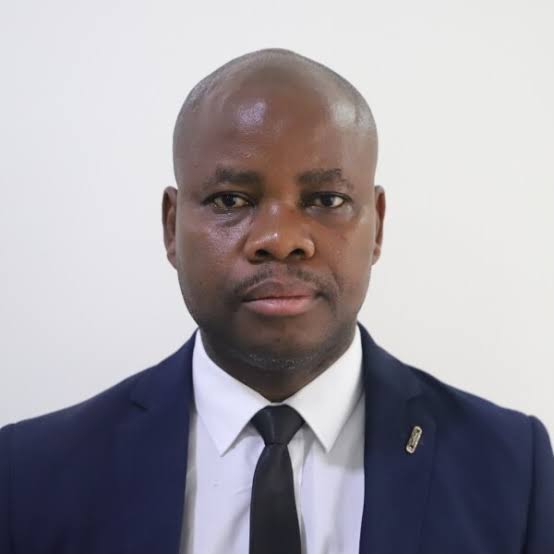
Austin Aigbe FSM
Gender Rights Advocate
In the aftermath of Nigeria’s 2019 general elections, I sat with a heavy heart and a clear conclusion: affirmative action legislation is essential to address the stark underrepresentation of women in Nigeria’s political leadership. Despite women making up nearly half of Nigeria’s population, they occupy less than 5 per cent of seats in the National Assembly, underscoring a civic duty to effect change.
As the then Secretary of the National Coalition of Affirmative Action (NCAA) in my state, I worked alongside visionary women such as the late Oby Nwankwo, who helped lead the national gender equality architecture, as well as Hajia Saudatu Mandi and Dr Abiola Akiyode-Afolabi, among others. Together, we pushed for the full domestication of the Convention on the Elimination of All Forms of Discrimination Against Women (CEDAW), culminating in the proposed Gender and Equal Opportunity (GEO) Bill. Yet, since 2007, that bill has languished in the National Assembly, stalled by political resistance and cultural pushback.
Now, the Special Seats Bill offers a breakthrough. It is not a compromise—it is a resolution. It responds to criticisms of the GEO Bill by focusing on representation rather than just rights. It proposes additional seats in the Senate, House of Representatives, and State Houses of Assembly, to be contested exclusively by women, without reducing existing seats or threatening incumbents. It is a democratic innovation, not a disruption.
Why Special Seats Matter
The argument is simple: democracy must reflect the people. If half of the population is excluded from decision-making, democracy remains incomplete. Special seats are not about tokenism; they are about correcting structural imbalances. Sierra Leone, for example, passed the Gender Equality and Women’s Empowerment (GEWE) Act in 2022, addressing gender gaps by increasing women’s representation in decision-making, improving access to finance and employment, and promoting equal opportunities in education and training. Other countries, including Rwanda, Senegal, and South Africa, have used constitutional and legislative measures to advance gender parity. Nigeria should no longer lag.
The Special Seats Bill also directly addresses the barriers women face when contesting elections:
Violence and intimidation, particularly during party primaries.
The monetisation of politics disadvantages women with fewer financial resources.
Patriarchal party structures that sideline women during candidate selection.
By creating a guaranteed pathway, the bill enables women to enter the political space, build experience, and eventually compete for general seats on a more equal footing.
The Human Cost of Delay
Every election cycle without reform is a missed opportunity. In 2023, only 3.6 per cent of those elected to the National Assembly were women; it is not merely a statistic; it represents hundreds of capable women denied a voice. It reflects the silencing of perspectives on maternal health, education, gender-based violence, and economic inclusion.
I have previously supported interventions aimed at strengthening the capacity of women candidates—many of whom were more qualified than their male opponents but were pushed aside by party gatekeepers. I have seen communities rally behind women leaders, only to be told they are “not electable.” The Special Seats Bill is a lifeline for these women—and for the communities they seek to represent.
A Call to the National Assembly
The National Assembly has a patriotic duty to pass this bill now, as it directly impacts Nigeria’s democratic future and inclusivity.
Nigeria’s lawmakers must rise above partisan interests and act in the national interest. The bill has reached its final stage of legislative consideration. The time to act is now—before the 2027 elections are upon us.
Conclusion: Democracy Is Representation
The Special Seats Bill is a vital democratic correction that ensures equal participation and opportunity, enabling meaningful change.
Let us not wait another decade. Let us not mourn another election cycle defined by exclusion. Let us pass the Special Seats Bill—and finally make democracy whole.
Special Seat Is Democratic: NASS Urged to Pass Bill


Troops Arrest Suspected Military Impostor in Katsina
By Zagazola Makama
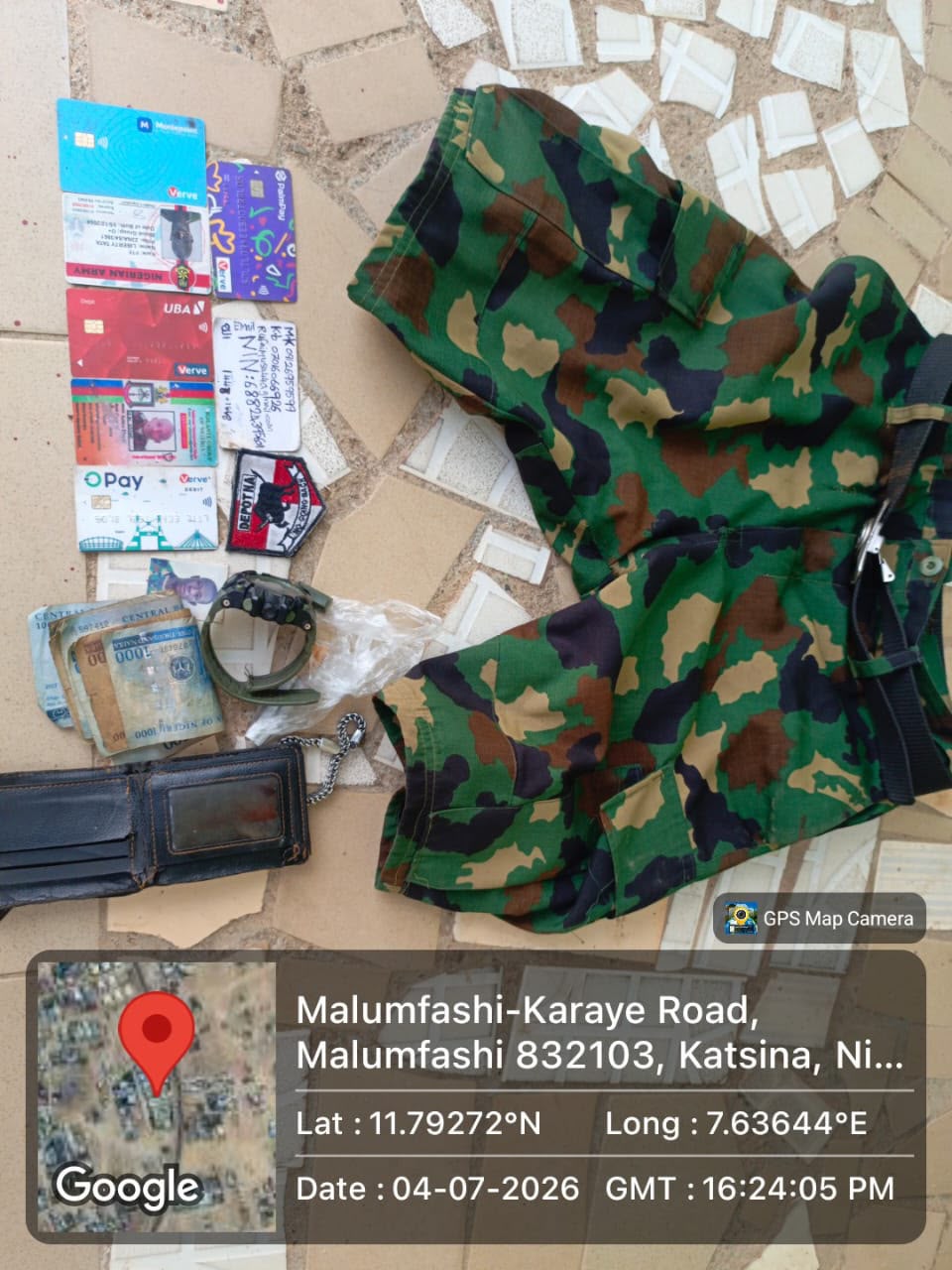
Troops of 17 Brigade have arrested a suspected military impostor during a fighting patrol in Malumfashi Local Government Area.
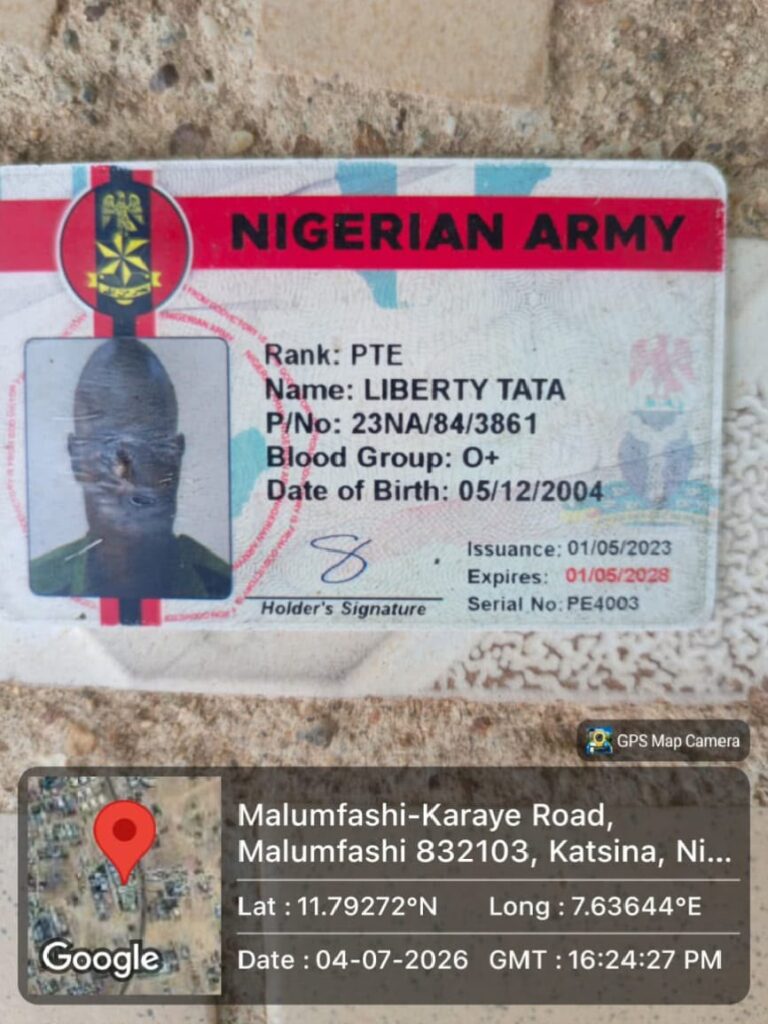
Security sources told Zagazola Makama that the suspect was apprehended at about 1:30 p.m. on July 4 by troops deployed at the Forward Operating Base (FOB) Malumfashi while conducting routine patrols within Malumfashi town.
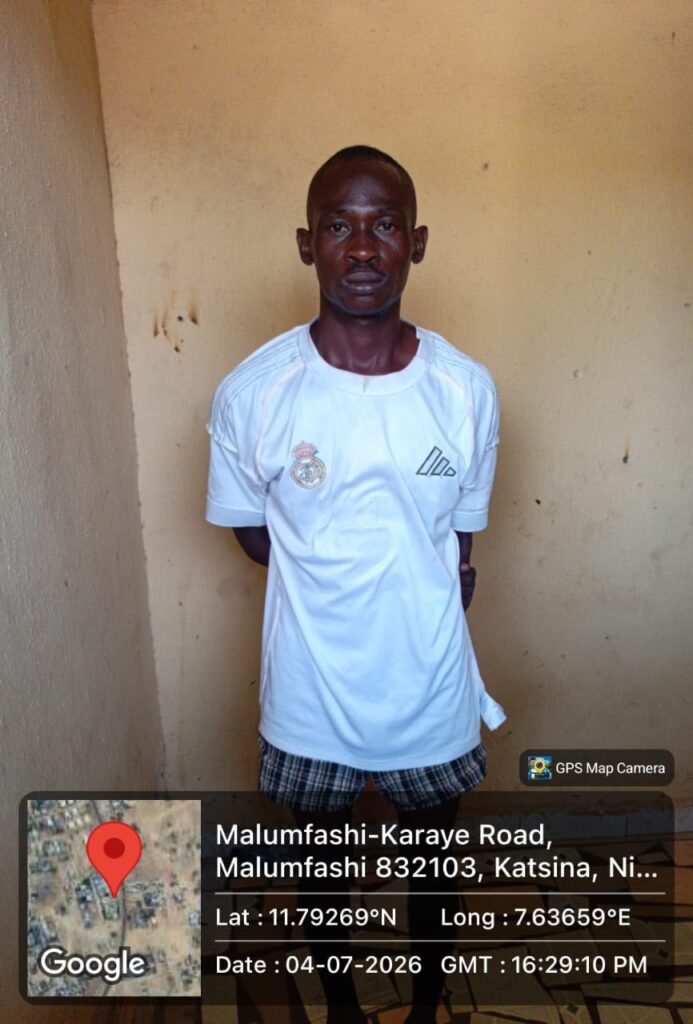
According to the sources, the suspect was intercepted while wearing a woodland camouflage three-quarter short, raising suspicion among the troops.
A search conducted on the suspect led to the recovery of a fake Nigerian Army identity card, four Automated Teller Machine (ATM) cards, one woodland camouflage three-quarter short, a wristwatch and the sum of ₦17,000.
The suspect and the recovered exhibits are currently in military custody pending further investigation.
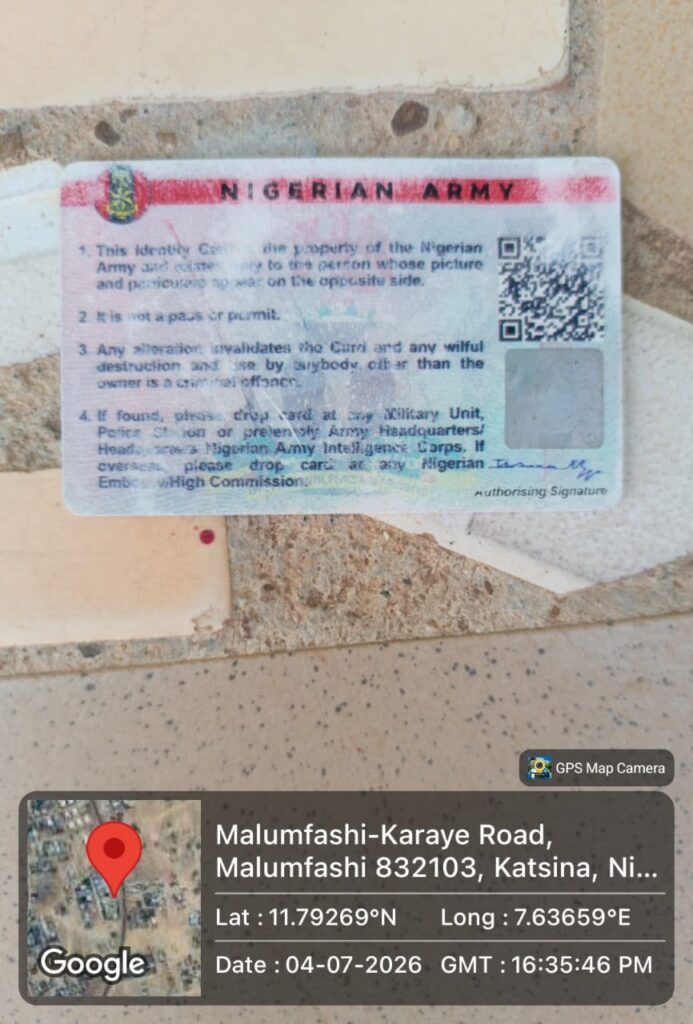
Military sources said the arrest forms part of ongoing efforts to curb impersonation of security personnel and other criminal activities within the area.
Troops Arrest Suspected Military Impostor in Katsina
Troops Recover 50 Rustled Cattle, Repel Suspected Rustlers in Kaduna
By Zagazola Makama
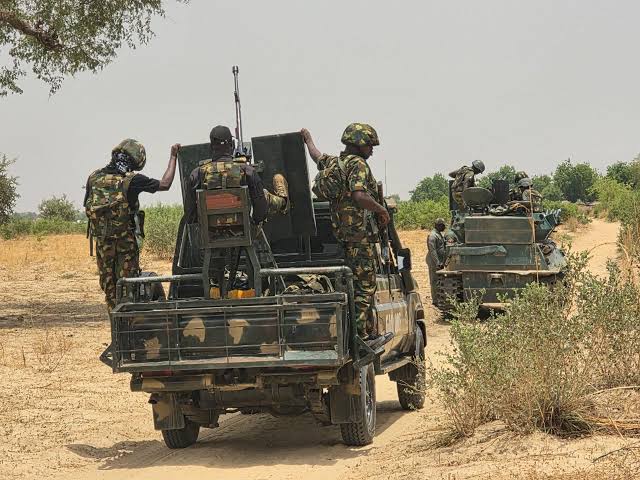
Troops deployed at the Forward Operating Base (FOB) Kankomi have recovered 50 rustled cattle after repelling suspected cattle rustlers during an ambush operation in Chikun Local Government Area.
Security sources told Zagazola Makama that the troops responded to a distress call at about 9:55 a.m. on July 4 over the activities of suspected rustlers at Ungwan Gontu community.
According to the sources, the troops swiftly laid an ambush and made contact with the fleeing suspects, forcing them to abandon the stolen livestock and escape into the surrounding area.
During the operation, the troops recovered 50 rustled cattle, which were subsequently identified and handed over to their rightful owner.
Military sources said efforts are ongoing to track down the fleeing suspects as security operations continue to combat cattle rustling and other criminal activities across Kaduna State.
Troops Recover 50 Rustled Cattle, Repel Suspected Rustlers in Kaduna
Troops Arrest Suspected Terrorist in Kogi, Suspect Confesses to Group Membership
By Zagazola Makama
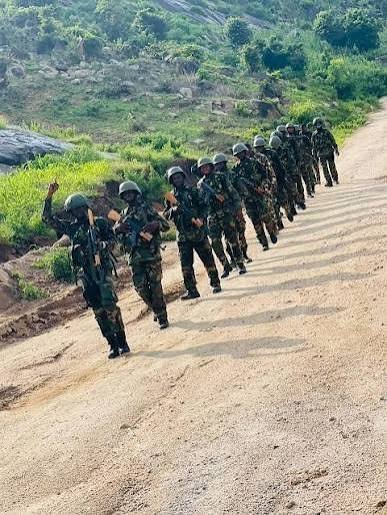
Troops of 12 Brigade, in collaboration with Office of the National Security Adviser (ONSA) Hybrid Forces, have arrested a suspected terrorist during an operation in Lokoja Local Government Area.
Security sources told Zagazola Makama that the troops responded at about 1:00 p.m. on July 4 to reports of a confrontation between local residents and a suspected terrorist at a Ruga settlement behind Obajana community.
According to the sources, the troops swiftly intervened and arrested one suspect at the scene.
During preliminary interrogation, the suspect reportedly confessed to being a member of a terrorist group led by an individual identified as Haruna, which allegedly operates within the Okene general area.
The suspect is currently in military custody and is undergoing further investigation to establish the extent of his involvement and identify other members of the group.
Military sources said the arrest forms part of ongoing security operations aimed at dismantling terrorist and criminal networks across Kogi State.
Troops Arrest Suspected Terrorist in Kogi, Suspect Confesses to Group Membership

Troops Arrest Suspected Military Impostor in Katsina

Troops Recover 50 Rustled Cattle, Repel Suspected Rustlers in Kaduna

Troops Arrest Suspected Terrorist in Kogi, Suspect Confesses to Group Membership

Roger Federer’s Shock as DNA Results Reveal Myla and Charlene Are Not His Biological Children

THE PLIGHT OF FARIDA

FAILED COUP IN BURKINA FASO: HOW TRAORÉ NARROWLY ESCAPED ASSASSINATION PLOT AMID FOREIGN INTERFERENCE CLAIMS
-
 News2 years ago
Roger Federer’s Shock as DNA Results Reveal Myla and Charlene Are Not His Biological Children
-
Opinions4 years ago
THE PLIGHT OF FARIDA
-
 News1 year ago
FAILED COUP IN BURKINA FASO: HOW TRAORÉ NARROWLY ESCAPED ASSASSINATION PLOT AMID FOREIGN INTERFERENCE CLAIMS
-

 News2 years ago
EYN: Rev. Billi, Distortion of History, and The Living Tamarind Tree
-
 Opinions5 years ago
POLICE CHARGE ROOMS, A MINTING PRESS
-

 ACADEMICS2 years ago
A History of Biu” (2015) and The Lingering Bura-Pabir Question (1)
-

 Columns2 years ago
Army University Biu: There is certain interest, but certainly not from Borno.
-

 Politics1 year ago
2027: Why Hon. Midala Balami Must Go, as Youths in Hawul and Asikira/Uba Federal Constituency Reject ₦500,000 as Sallah Gift
