
News
SPIRITANS SOUND OUTREACH HOSTS “NIGHT TO SHINE”

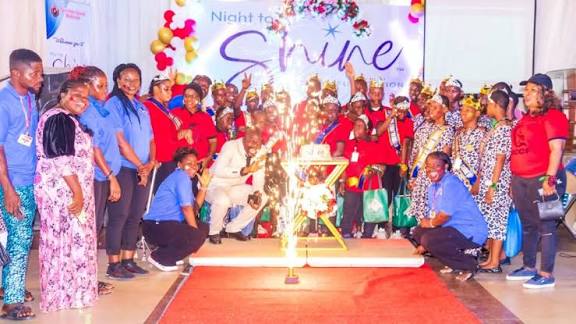
SPIRITANS SOUND OUTREACH HOSTS “NIGHT TO SHINE”
By Fidelis ENWEMEKA
The Spiritans Sound Outreach, in partnership with the Tim Tebow Foundation, a non-denominational Christian foundation based in Georgia, USA, organised a special programme tagged Night to Shine on Friday, February 13, 2026.
The memorable event was held at St. Francis Catholic Parish Hall, 2 Oremeji Street, Oregun, Ikeja.
The programme was designed to celebrate and honour persons with special needs through a variety of engaging activities.
Highlights of the evening included a limousine ride, crowning ceremony, barbing and makeup sessions, free medical check-ups, face painting, and shoe shining—each carefully arranged to create a joyful and dignified experience for the participants.
Some of the honoured guests showcased their talents during the event which was quite spectacular.
One of them, Adebayo Arioluwa delighted the audience with a musical rendition; Akabueze Prosper delivered an inspiring speech; while Adesola Akinbusola took part in a modelling presentation.
The Graceful Groovers Dance Troupe also entertained guests with an energetic dance performance which thrilled the audience.
A major highlight of the evening was a musical performance by DString, a blind guitarist who attended as a guest artiste. Rev. Fr. Oluwafemi Victor Orilua, CSSp, also presented a drama and performed his song titled “Home is the Best,” extending a heartfelt call to those who may have drifted away from God to return to Him.
In his opening address, Rev. Fr. Oluwafemi Victor Orilua, founder and director of the Spiritans Sound Outreach and Chaplain of St. Aidan High School, Scotland, United Kingdom reiterated the mission of the organisation.
He stated that from its inception, the outreach has remained committed to proclaiming the Gospel of God’s grace to the poor, the marginalized, and those on the fringes of society.
He acknowledged the generous support of the Tim Tebow Foundation, noting that their collaboration made it possible to begin, last year, with the vision of creating an unforgettable experience for persons with special needs.
Describing the celebrants as “our kings and queens,” he emphasised that their royalty is not defined by disability, but by their inherent dignity, worth, and need for special care and love.
He expressed profound gratitude to all partner organisations and supporters who contributed to the success of the event.
Dignitaries present at the occasion included Barrister Mofolowasho Liasu, Founder of the Super Parent Foundation, who collaborated with the outreach to mobilise participants; Rev. Fr. Modestus Uzoekwe, CSSp, Parish Priest of St. Joseph Catholic Church, Ketu-Ijanikin; Fr. Boniface Ugwo, CSSp, Parish Priest of St. Francis; Fr. Godfrey Igboka, CSSp; Fr. Onyinlo, CSSp; Barrister Boluwaji Ajayi; Engr. Toba Ogunleye; Mrs. Awe Folorunso; and Mrs. Titilayo Asikpata.
Brother Fidelis wrote in from Ogun state.
SPIRITANS SOUND OUTREACH HOSTS “NIGHT TO SHINE”


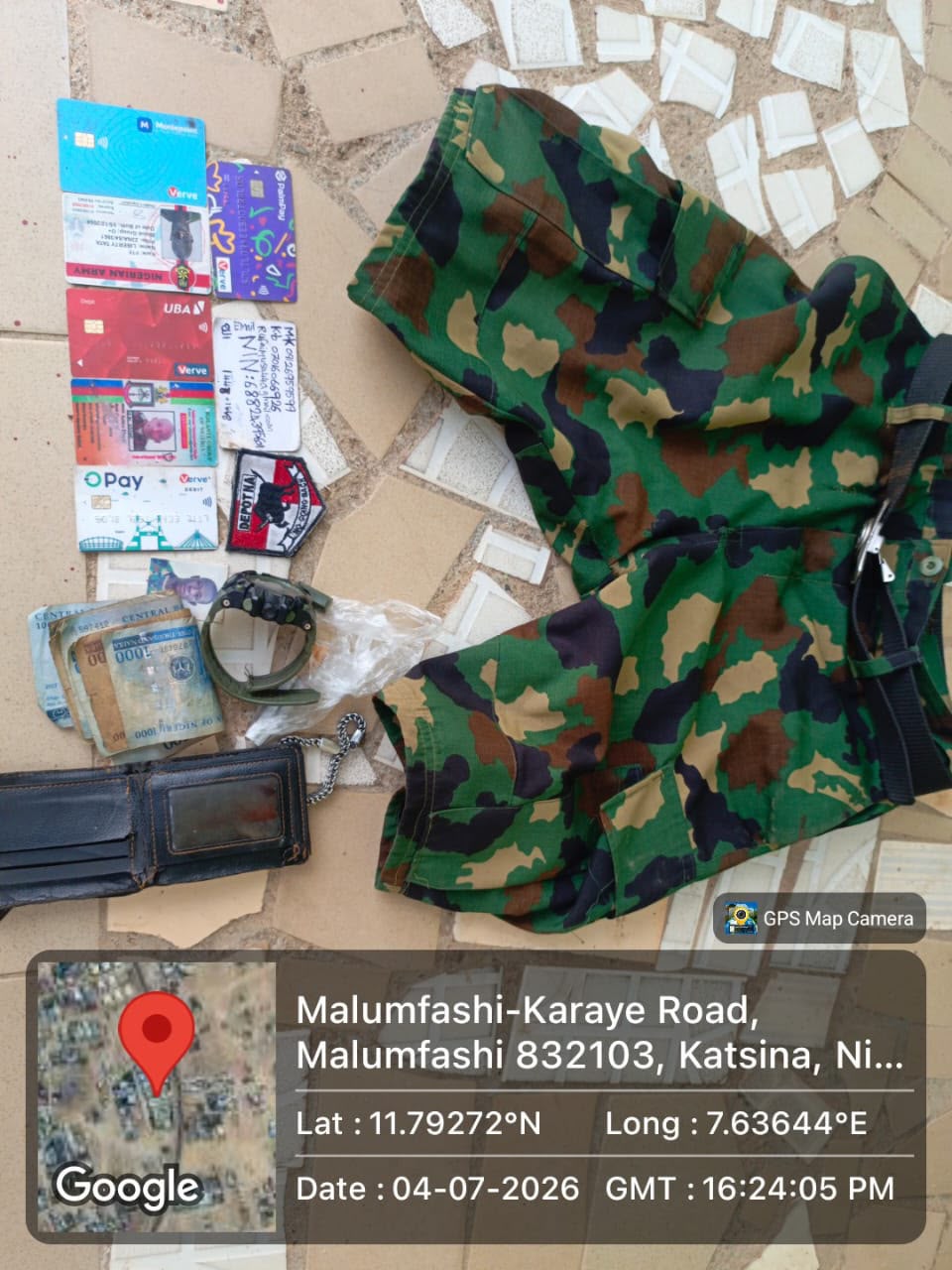
Troops Arrest Suspected Military Impostor in Katsina
By Zagazola Makama
Troops of 17 Brigade have arrested a suspected military impostor during a fighting patrol in Malumfashi Local Government Area.
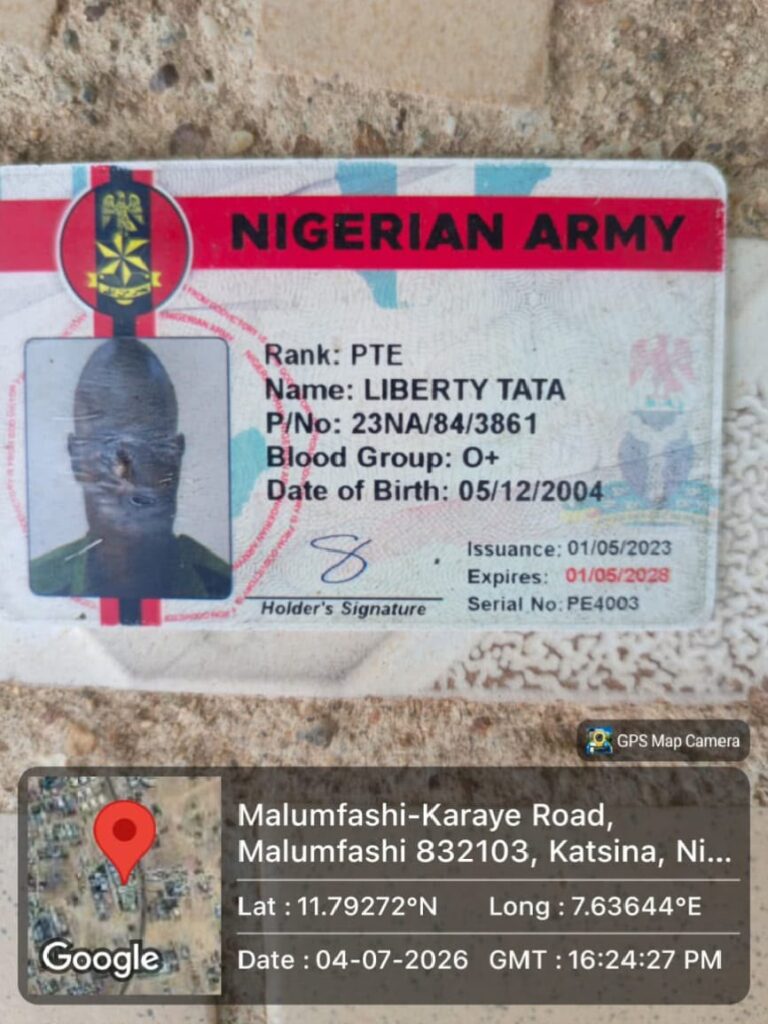
Security sources told Zagazola Makama that the suspect was apprehended at about 1:30 p.m. on July 4 by troops deployed at the Forward Operating Base (FOB) Malumfashi while conducting routine patrols within Malumfashi town.

According to the sources, the suspect was intercepted while wearing a woodland camouflage three-quarter short, raising suspicion among the troops.
A search conducted on the suspect led to the recovery of a fake Nigerian Army identity card, four Automated Teller Machine (ATM) cards, one woodland camouflage three-quarter short, a wristwatch and the sum of ₦17,000.
The suspect and the recovered exhibits are currently in military custody pending further investigation.
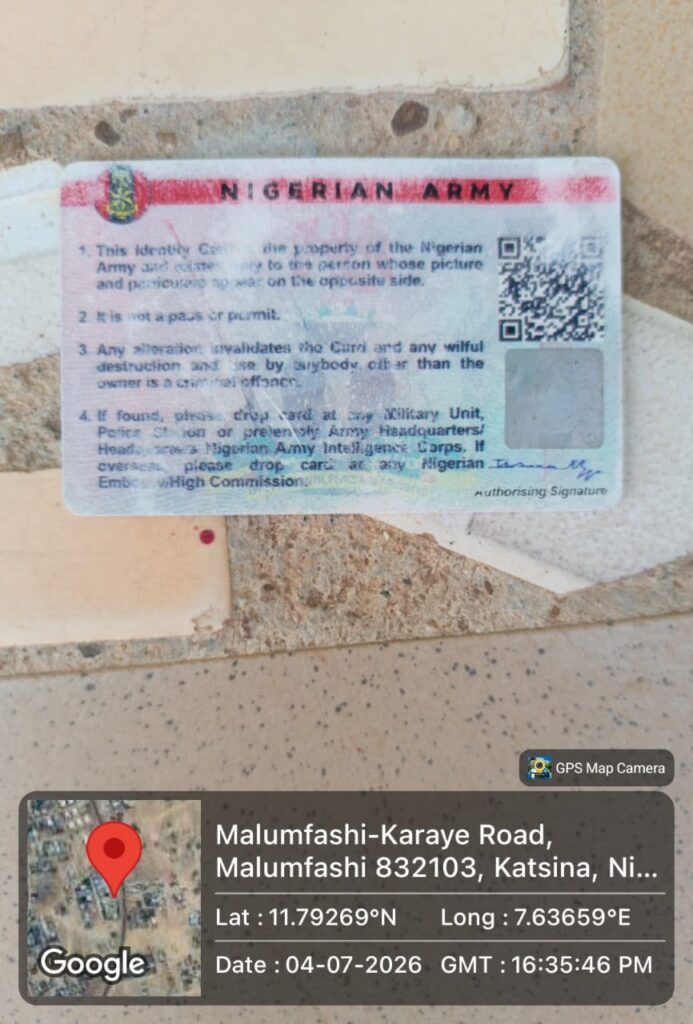
Military sources said the arrest forms part of ongoing efforts to curb impersonation of security personnel and other criminal activities within the area.
Troops Arrest Suspected Military Impostor in Katsina
Troops Recover 50 Rustled Cattle, Repel Suspected Rustlers in Kaduna
By Zagazola Makama
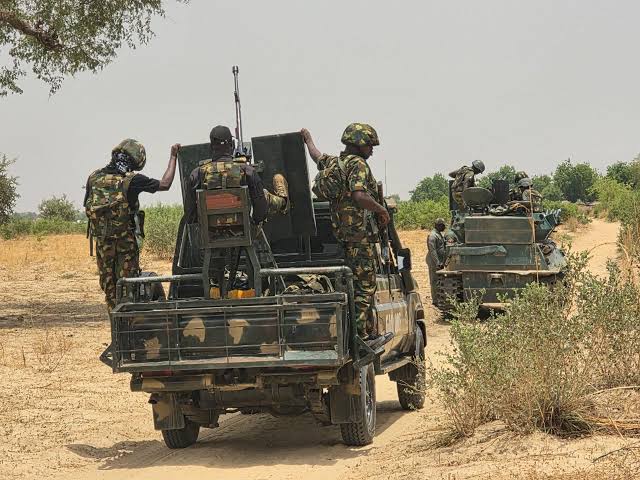
Troops deployed at the Forward Operating Base (FOB) Kankomi have recovered 50 rustled cattle after repelling suspected cattle rustlers during an ambush operation in Chikun Local Government Area.
Security sources told Zagazola Makama that the troops responded to a distress call at about 9:55 a.m. on July 4 over the activities of suspected rustlers at Ungwan Gontu community.
According to the sources, the troops swiftly laid an ambush and made contact with the fleeing suspects, forcing them to abandon the stolen livestock and escape into the surrounding area.
During the operation, the troops recovered 50 rustled cattle, which were subsequently identified and handed over to their rightful owner.
Military sources said efforts are ongoing to track down the fleeing suspects as security operations continue to combat cattle rustling and other criminal activities across Kaduna State.
Troops Recover 50 Rustled Cattle, Repel Suspected Rustlers in Kaduna
Troops Arrest Suspected Terrorist in Kogi, Suspect Confesses to Group Membership
By Zagazola Makama
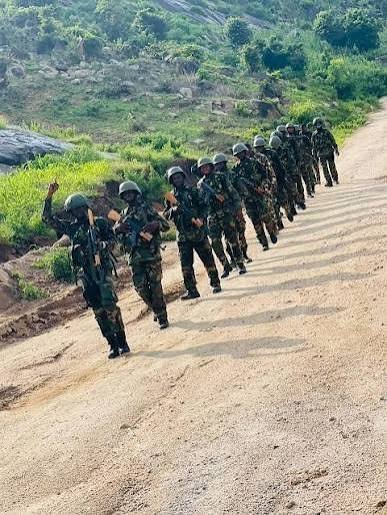
Troops of 12 Brigade, in collaboration with Office of the National Security Adviser (ONSA) Hybrid Forces, have arrested a suspected terrorist during an operation in Lokoja Local Government Area.
Security sources told Zagazola Makama that the troops responded at about 1:00 p.m. on July 4 to reports of a confrontation between local residents and a suspected terrorist at a Ruga settlement behind Obajana community.
According to the sources, the troops swiftly intervened and arrested one suspect at the scene.
During preliminary interrogation, the suspect reportedly confessed to being a member of a terrorist group led by an individual identified as Haruna, which allegedly operates within the Okene general area.
The suspect is currently in military custody and is undergoing further investigation to establish the extent of his involvement and identify other members of the group.
Military sources said the arrest forms part of ongoing security operations aimed at dismantling terrorist and criminal networks across Kogi State.
Troops Arrest Suspected Terrorist in Kogi, Suspect Confesses to Group Membership

Troops Arrest Suspected Military Impostor in Katsina

Troops Recover 50 Rustled Cattle, Repel Suspected Rustlers in Kaduna

Troops Arrest Suspected Terrorist in Kogi, Suspect Confesses to Group Membership

Roger Federer’s Shock as DNA Results Reveal Myla and Charlene Are Not His Biological Children

THE PLIGHT OF FARIDA

FAILED COUP IN BURKINA FASO: HOW TRAORÉ NARROWLY ESCAPED ASSASSINATION PLOT AMID FOREIGN INTERFERENCE CLAIMS
-
 News2 years ago
Roger Federer’s Shock as DNA Results Reveal Myla and Charlene Are Not His Biological Children
-
Opinions4 years ago
THE PLIGHT OF FARIDA
-
 News1 year ago
FAILED COUP IN BURKINA FASO: HOW TRAORÉ NARROWLY ESCAPED ASSASSINATION PLOT AMID FOREIGN INTERFERENCE CLAIMS
-

 News2 years ago
EYN: Rev. Billi, Distortion of History, and The Living Tamarind Tree
-
 Opinions5 years ago
POLICE CHARGE ROOMS, A MINTING PRESS
-

 ACADEMICS2 years ago
A History of Biu” (2015) and The Lingering Bura-Pabir Question (1)
-

 Columns2 years ago
Army University Biu: There is certain interest, but certainly not from Borno.
-

 Politics1 year ago
2027: Why Hon. Midala Balami Must Go, as Youths in Hawul and Asikira/Uba Federal Constituency Reject ₦500,000 as Sallah Gift
