
News
Stop rascally behavior and reckless driving on maiduguri roads…Gubio warns keke napep riders

Stop rascally behavior and reckless driving on maiduguri roads…Gubio warns keke napep riders
By: Bodunrin kayode
Chairman Borno State Civil Service Commission Dr Bulama Gubio has called on young people in the state to reduce their irresponsible actions with keke NAPEP during weddings and related ceremonies which makes them over excited and drive recklessly in the streets of maiduguri.
Dr Gubio is miffed about the excesses of the younger generation mostly keke napep drivers who use the tricycle as an excitement toy driving with reckless abandon sometimes killing themselves in the process without fear of reprimand.
Gubio who is a member of the Borno state traditional council and secretary of the elders forum in the state called on the federal Road Safety Corp (FRSC) to work on the annoying excesses of the Keke napep riders who have caused a lot of trouble for commuters in the state capital adding that they operate with a lot of impunity which is not found in the pattern of the government drivers whom he said were better behaved.
Dr Gubio asked the FRSC to increase the enlightenment of even the resident commuters on the use of the commercial keke riders even as they entrust their lives into the hands of the the reckless riders among them because some of them are definitely on induced substances before they come into the roads breaking traffic and driving very roughly even contesting the major roads with bigger cars and sometimes killer trailers.
Dr Gubio actually made these remarks during the 2025 special marshals sectoral workshop, RS12.2 of the Borno state command held this week at the Elkanemi Hall of the State owned Ramat Polytechnic in Maiduguri.
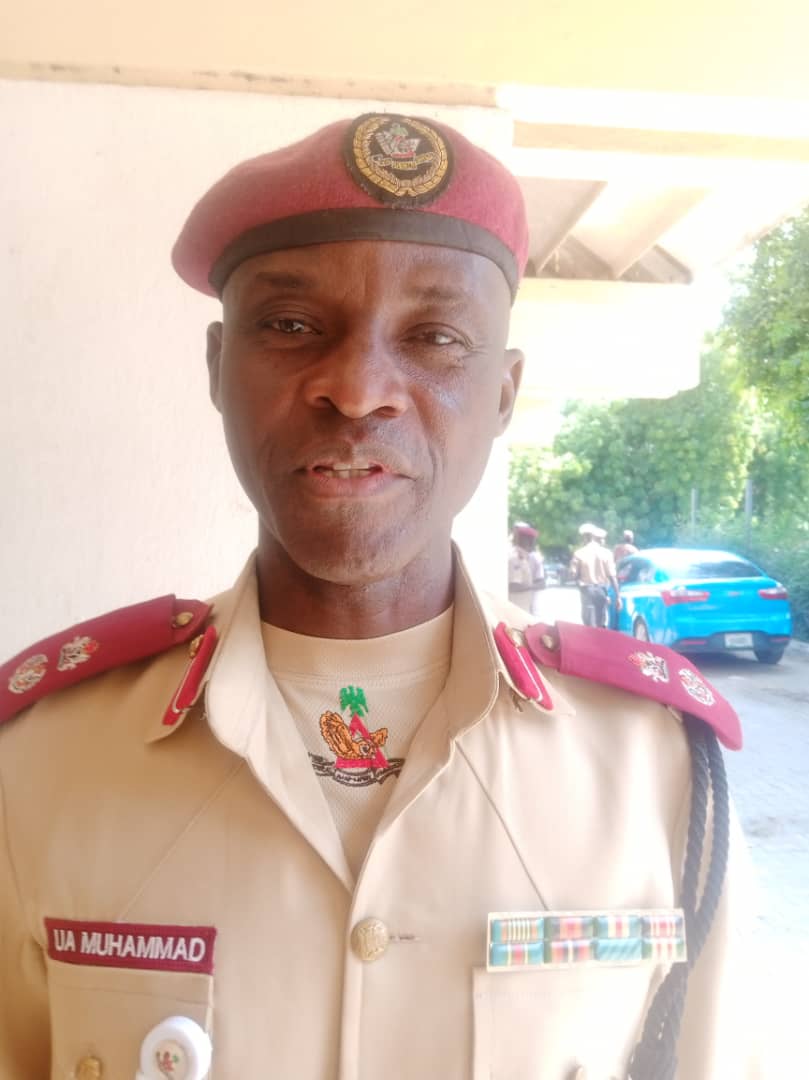
Also admonishing the gathering on the use of Borno roads, Sector Commander of the FRSC Usman Mohammed condemned the behavior of some of the keke napep riders in the state capital describing them as down right recalcitrant elements.
He regretted that in their obstinate posture towards any form of control, a lot of them have fallen under the hammer of stiff fines sometimes as high as N50,000 for offenses yet they continue to repeat the same charges even when driving passengers.
Mohammed told this reporter that with the increased security in the state capital, his team will continue to do their lawful best to reduce the unnecessary carnage on the major roads of the Maiduguri metropolis and even the adjoining highways to the zones.
He decried the lingering excesses of the Keke napep riders within the Maiduguri metropolis adding that most of them are just stubborn and would not take instant correction which is why he sometimes had to stop traffic himself, arrest erring ones and give them on the spot education and correction for their offenses.
The Sector Commander said that because of their high number in terms of population, his men are on high alert with other collaborating agencies to stem the tide of these numerous excesses of these riders with a view to reduce same to the barest minimum.
On the alleged sluggishness of the union leaders to control their erring members, he maintained that they have been doing their best because some of them even boy-cut registration to avoid being caught making it an endless litany of woes coupled with the burden of facing another new set of wrong doers mobilizing into the highways each new day which is really tedious.
He added that it was not true that the excesses of the riders was due to the unenlightened nature of the leaders as posited by road watchers adding that the leaders are enlightened, but its just that the riders are recalcitrant by the way they go about driving their tricycles recklessly in the town.
“Since we cant get all of them at the same time, what we do is to stop four or five of them at the same time. I have stopped many in that pattern to talk to them and they listen to my lectures on their wrong doings and some do repent.
“Without mincing words, just recently, we arrested over seven of them because of unnecessary over loading etc. We have brought out a time schedule to make them fall in line to see how we can correct some of these excesses. So we are doing a lot to sort out these challenges.
” As a matter of fact, some of their union officials have come to commend us that they are very happy with the way we are going about handling the recalcitrant ones among them.
On enlightenment of the officials,” you see they are home based, they have limits with which they can handle these keke napep members who are committing all these offenses on our roads, however, we have been having enlightenment campaigns on these riders and we do hope to get there one day.
Speaking during the opening ceremony of the workshop, the State Coordinator, special marshal RS12.2 Borno sector command, Mohammed Dahaya commended road users in the society for gracing the 2025 Special Marshals bi-annual Sectoral Workshop adding that their presence, despite the economic and security challenges coupled with their regular tight schedule is a testimony of their love for the FRSC as well as their commitment to safety of lives and properties on our roads.
He said that the Special Marshals were a group of Volunteers, established under section 10(1) of the FRSC statute, as defined in the FRSC establishment Act 2007 adding that the roles and constitutional responsibilities of Special Marshals include Advocacy and support, Patrol Operations, Enforcement and Education in all ramifications of human activities without any pecuniary interest, meaning they are not paid for the services rendered to the society.
Special Marshals he noted believe that the beauty of life doesn’t depend only on how happy you are but how happy you make others which is why, the most impactful thing to do in life is to help someone in need stressing that the worth of life is not in its duration but in its donations to humanity.
”we still need the support of all, morally and financially to be able to achieve our desired goals and objectives for efficient and effective services to humanity.
Your labour of love will not be in vain.” He concluded.
Present at the occasion were several dignitaries including the representatives of the Ministry of Transport And Energy, Aliyu Buba, The General manager, Borno Express Transport Corporation, Grema Kyari, The Vice Chancellor Kashim Ibrahim University, Prof. Babagana Gutti, Special Marshal Engr. Shettima Abdullahi and The Chairmen NARTO Borno State Council Jidda Bishara.
Stop rascally behavior and reckless driving on maiduguri roads…Gubio warns keke napep riders


ICPC Pushes Fresh Anti-Corruption Reforms in Health, Education, Warns Against Weak Governance
By: Michael Mike
The Independent Corrupt Practices and Other Related Offences Commission (ICPC) has intensified its preventive anti-corruption campaign, unveiling three follow-up assessment reports that expose lingering governance gaps in Nigeria’s health and education sectors while urging sweeping institutional reforms to strengthen accountability and service delivery.
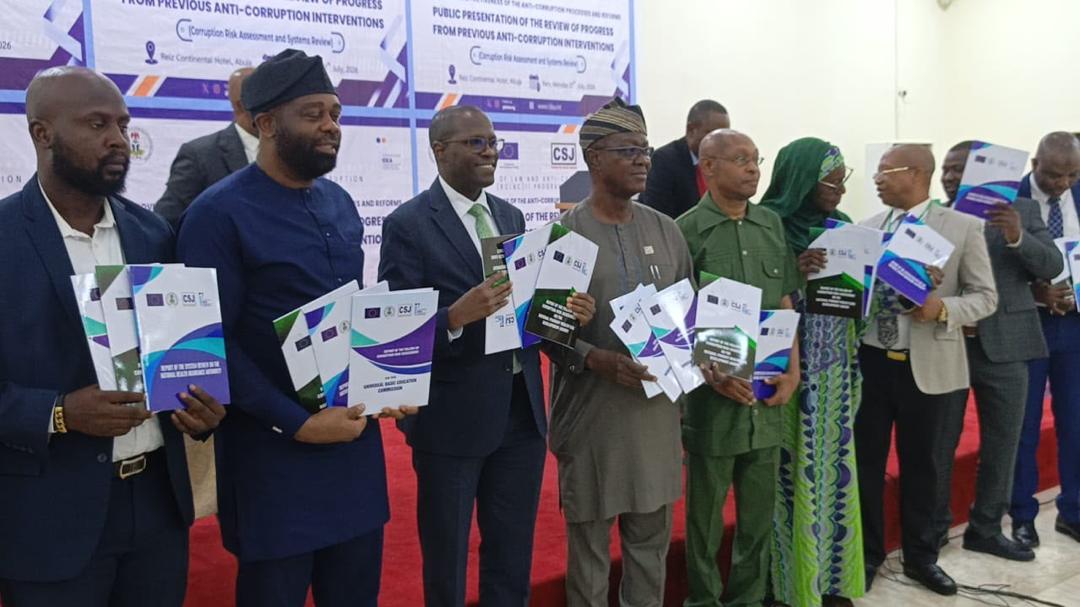
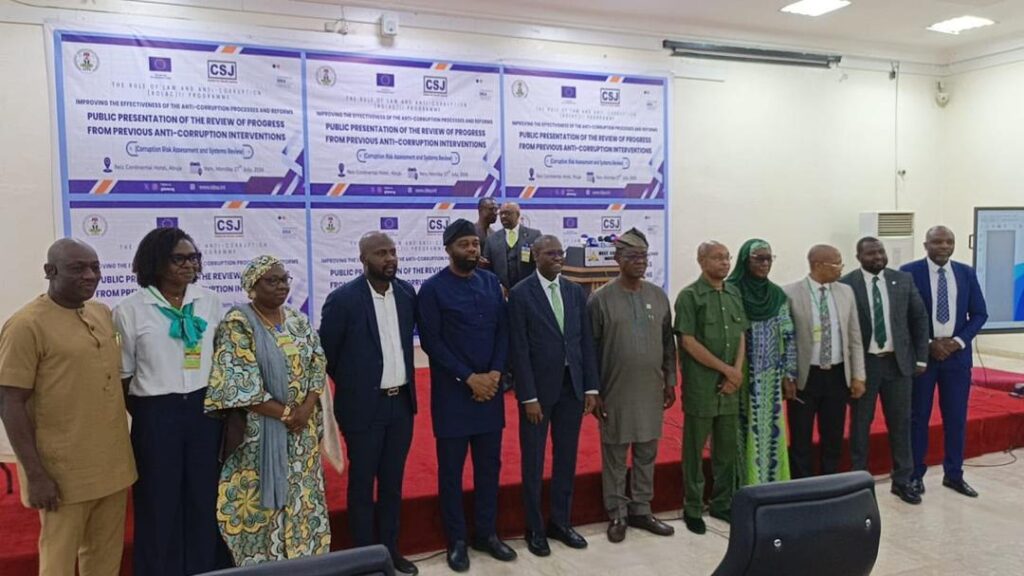
The reports, presented in Abuja on Monday, reviewed the implementation of earlier anti-corruption recommendations issued to the National Health Insurance Authority (NHIA), the National Primary Health Care Development Agency (NPHCDA), the Universal Basic Education Commission (UBEC) and selected State Universal Basic Education Boards (SUBEBs).
Speaking at the presentation, ICPC Chairman, Dr. Musa Aliyu (SAN), said the exercise underscored the Commission’s growing emphasis on preventing corruption by strengthening institutional systems rather than relying solely on prosecutions.
Aliyu explained that the Commission’s mandate under the Corrupt Practices and Other Related Offences Act empowers it to identify vulnerabilities within public institutions and recommend reforms capable of preventing corruption before it occurs.
He said the follow-up assessments measured the extent to which previous recommendations had been implemented, identified areas of progress, highlighted unresolved weaknesses and proposed further reforms to improve institutional performance.
“The value of system studies and corruption risk assessments lies not merely in producing reports but in implementing their recommendations. Their true impact is measured by improvements in governance, accountability, transparency, operational efficiency and service delivery,” he said.
According to him, the reviews were not designed to apportion blame but to encourage continuous institutional improvement and reinforce accountability across government agencies.
Aliyu noted that the NHIA, NPHCDA and UBEC were selected because of their strategic roles in delivering essential healthcare and education services to millions of Nigerians, stressing that stronger governance in the agencies would help safeguard public funds, improve service delivery and restore public confidence in government institutions.
While acknowledging that the institutions had implemented several recommendations from previous assessments, he maintained that significant reforms were still required.
He commended the leadership of the agencies for the progress recorded and urged them to sustain the reform momentum by implementing outstanding recommendations.
“The fight against corruption cannot be won through enforcement alone. Sustainable success depends on building resilient institutions with transparent systems, robust internal controls, effective oversight mechanisms and a culture of accountability,” Aliyu said.
He reaffirmed the Commission’s commitment to collaborating with Ministries, Departments and Agencies (MDAs), oversight institutions, development partners and civil society organisations to ensure effective implementation and monitoring of the recommendations.
Aliyu also acknowledged the support of the European Union-backed Rule of Law and Anti-Corruption (RoLAC II) Programme and the Centre for Social Justice (CSJ), which partnered with the Commission on the review process.
Earlier, the Lead Director of the Centre for Social Justice (CSJ), Eze Onyekpere, warned that corruption risk assessments would have little impact unless their recommendations translated into measurable institutional reforms.
He explained that the reviews formed part of the European Union-supported Rule of Law and Anti-Corruption Programme II aimed at strengthening Nigeria’s anti-corruption processes at both national and sub-national levels.
Onyekpere identified persistent corruption risks across the health and education sectors, including leakages in health insurance payments, diversion of medicines and vaccines, ghost workers in primary healthcare facilities, fraudulent enrolment practices, procurement irregularities, abandoned school projects and weak oversight of public funds.
He described corruption risk assessments as critical diagnostic tools that enable governments to detect and address systemic weaknesses before they undermine public service delivery.
“Our collective responsibility is to ensure that NHIA resources provide quality healthcare to beneficiaries, that medicines and vaccines reach intended patients, and that UBEC funds translate into better classrooms, improved learning outcomes and a brighter future for Nigerian children,” he said.
Onyekpere advocated wider deployment of digital governance systems, including integrated platforms that would allow citizens to monitor health insurance enrolment, primary healthcare services and education projects in real time.
He also recommended the institutionalisation of end-to-end electronic procurement, stronger whistleblower protection, improved staff welfare and capacity building, enhanced independent oversight mechanisms and greater deployment of technology to reduce human discretion in public administration.
Also speaking, Chairman of the Federal Civil Service Commission, Prof. Tunji Olaopa, said corruption prevention through institutional reforms offers a more sustainable solution than relying exclusively on law enforcement.
He commended the ICPC for prioritising system reviews and integrity plans, noting that transparent governance structures remain the strongest defence against corruption.
Olaopa urged public institutions to embrace technology-driven governance, transparent recruitment, conflict-of-interest declarations, stronger internal audit systems and ethical leadership, while challenging government agencies to move beyond mere compliance and institutionalise continuous reforms that promote prudent management of public resources.
The latest ICPC reports come amid increasing calls for public sector reforms as concerns grow over leakages, inefficiency and weak accountability in critical sectors responsible for healthcare and education delivery across the country.
ICPC Pushes Fresh Anti-Corruption Reforms in Health, Education, Warns Against Weak Governance

ECOWAS Sounds Alarm as 90% of West Africa’s Economy Remains Informal
…Parliament pushes sweeping reforms to unlock MSMEs, create jobs, tackle insecurity
By: Michael Mike
The Economic Community of West African States (ECOWAS) Parliament has raised concern over the dominance of the informal sector in West Africa, warning that nearly 90 per cent of economic activities and at least 60 per cent of the region’s workforce remain outside the formal economy, a situation lawmakers said is undermining economic growth, job creation and regional competitiveness.
The parliament on Monday called for far-reaching policy reforms to formalise and strengthen Micro, Small and Medium Enterprises (MSMEs), describing the sector as central to achieving economic transformation, reducing poverty and addressing insecurity across the sub-region.
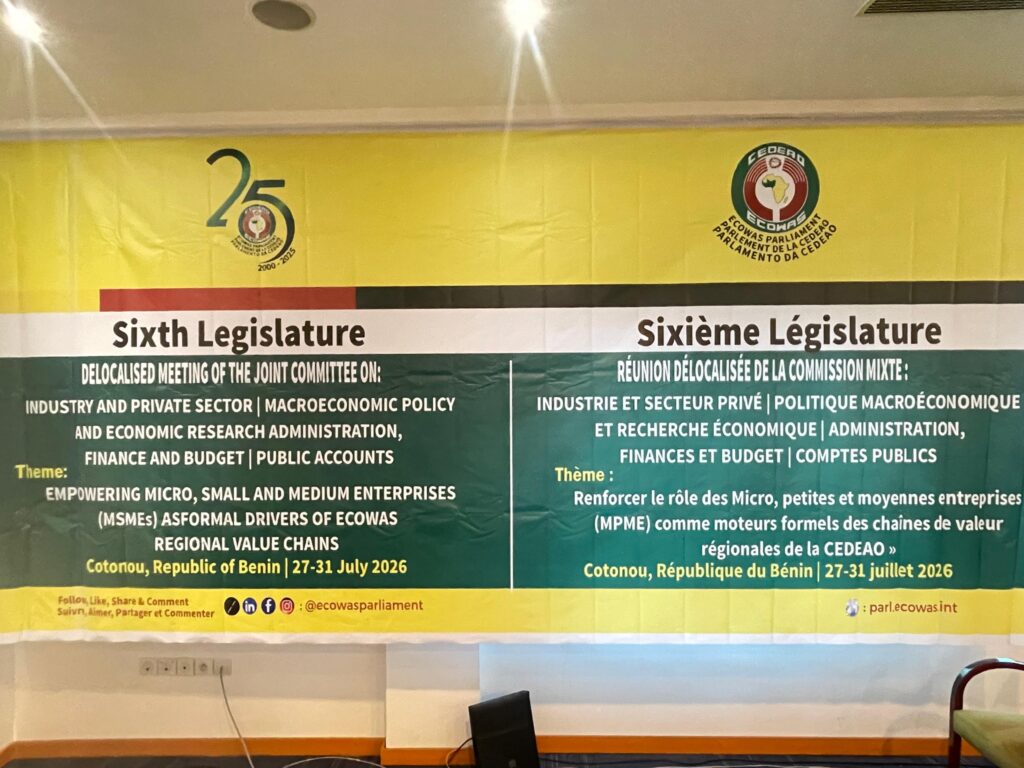
The warning came at the opening of a Joint Committee meeting of the ECOWAS Parliament in Cotonou, Republic of Benin, where lawmakers, policy experts, private sector operators and development partners began deliberations on strategies to integrate millions of informal businesses into the formal economy.
Delivering the opening remarks on behalf of the Joint Committee on Industry and Private Sector, Macroeconomic Policy and Economic Research, Administration, Finance and Budget, and Public Accounts, Co-Chairperson, Hon. Alhagie Darbo said the statistics reflected both the entrepreneurial resilience of West Africans and the failure of existing policies to support business growth.
According to him, while MSMEs remain the backbone of local economies by creating jobs, driving innovation, promoting entrepreneurship, empowering women and youths and facilitating cross-border trade, the overwhelming majority continue to operate informally, preventing them from accessing finance, technology, markets, business support services and legal protection.
“It is estimated that the informal sector accounts for nearly 90 per cent of economic activities and employs not less than 60 per cent of our labour force across member states,” Darbo said.
“While this demonstrates the entrepreneurial spirit of our people, it also highlights the urgent need to create enabling policies that encourage formalisation, improve productivity and integrate MSMEs into regional and continental value chains.”
He stressed that formalising small businesses was no longer just an economic objective but a strategic necessity for poverty reduction, sustainable development and regional integration.
Darbo urged ECOWAS member states to dismantle barriers limiting the growth of MSMEs through harmonised policies, improved access to finance, digital transformation, stronger productive capacity and greater participation in regional value chains under both the ECOWAS Trade Liberalisation Scheme (ETLS) and the African Continental Free Trade Area (AfCFTA).
He noted that the objectives align with ECOWAS Vision 2050, the regional bloc’s long-term development agenda aimed at building a peaceful, prosperous and fully integrated West Africa driven by inclusive economic growth.
Declaring the meeting open, Speaker of the ECOWAS Parliament, Hon. Hadja Memounatou Ibrahima, represented by Second Deputy Speaker Hon. Adjaratou Coulibaly, linked economic empowerment to the region’s growing security challenges.
She argued that expanding opportunities for women and young people through thriving MSMEs would help reduce unemployment and address some of the underlying drivers of insecurity confronting several ECOWAS member states.
According to her, empowering citizens to participate meaningfully in economic activities is one of the most effective long-term strategies for promoting peace and stability in the region.
The committee is expected to produce recommendations for consideration by ECOWAS institutions and member states, with the aim of creating a more business-friendly environment capable of accelerating industrialisation, boosting intra-African trade and making West African economies more globally competitive.
MSMEs account for more than 90 per cent of businesses in many African countries and are recognised as the largest source of employment outside government. Despite their importance, many operate in the informal economy because of burdensome regulations, multiple taxation, inadequate infrastructure, limited access to affordable finance and weak institutional support.
The challenge has become more pressing as ECOWAS intensifies efforts to deepen regional integration through the ECOWAS Trade Liberalisation Scheme and the African Continental Free Trade Area, both of which require competitive and formalised businesses capable of participating in cross-border commerce.
Economic experts have repeatedly argued that bringing more businesses into the formal sector would expand government revenues, improve access to credit, strengthen productivity and position West Africa to compete more effectively in the global economy.
ECOWAS Sounds Alarm as 90% of West Africa’s Economy Remains Informal
News
NDLEA Hunts Down Fugitive Drug Kingpin After 10 Years, Ex-International Footballer Jailed in Cocaine Bust
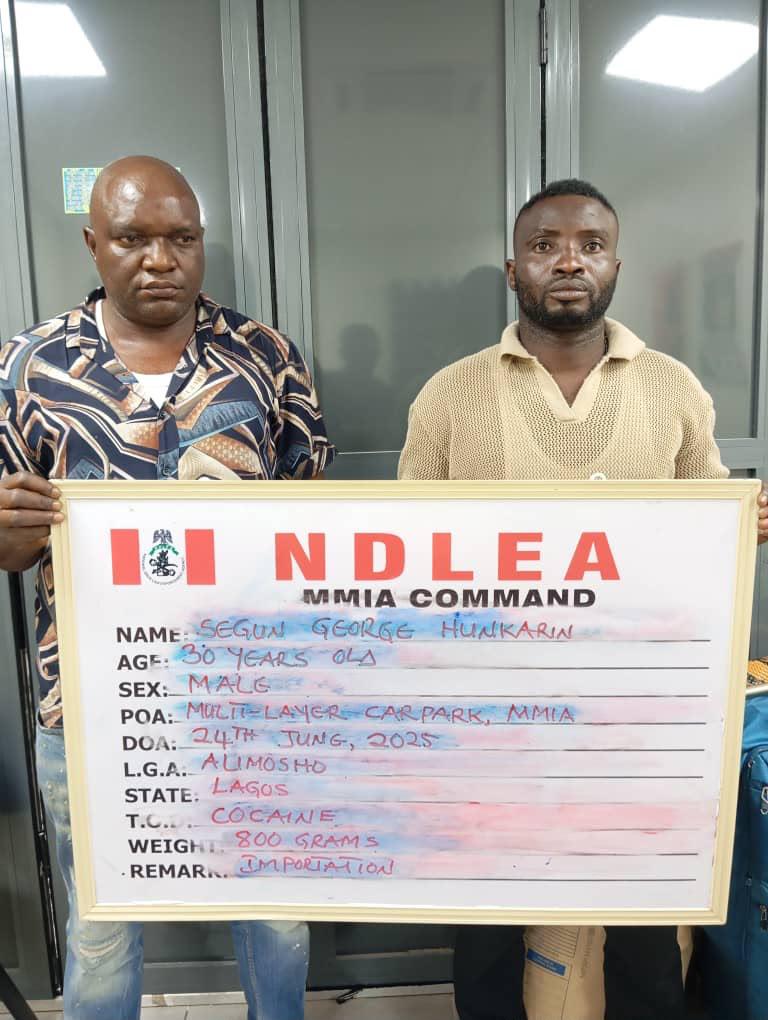
NDLEA Hunts Down Fugitive Drug Kingpin After 10 Years, Ex-International Footballer Jailed in Cocaine Bust
By: Michael Mike
In a dramatic conclusion to a decade-long manhunt, the National Drug Law Enforcement Agency (NDLEA) has secured a combined 24-year jail term against a fugitive drug kingpin who evaded justice for nearly 10 years and a former international footballer linked to a cocaine trafficking syndicate, in what the agency described as a strong message that no trafficker can outrun the law.
Justice Musa Kakaki of the Federal High Court in Lagos convicted and sentenced fugitive drug kingpin, Ntoruka Chinedu, to 22 years imprisonment, while former professional footballer Segun Hunkarin was sentenced to two years for their roles in the unlawful importation of cocaine into Nigeria.
The landmark judgment capped a case that began in 2015 when Chinedu was first arraigned for importing 6.250 kilogrammes of cocaine. After pleading not guilty and securing bail, he absconded midway through trial, disappearing for almost a decade before being tracked down by NDLEA operatives.
His arrest came on June 24, 2025, at the Murtala Muhammed International Airport, Lagos, as he attempted to smuggle another 800 grammes of cocaine into Nigeria aboard an Ethiopian Airlines flight from Addis Ababa.
The spokesman of the anti-narcotics agency, Femi Babafemi in a statement on Monday, said investigations revealed that Chinedu, a frequent traveller involved in the clothing trade between Turkey and Nigeria, had collected the drug consignment during a stopover in Ethiopia before heading to Lagos.
He noted that further surveillance led operatives to former professional footballer Segun Hunkarin, who was waiting in the airport car park to receive the illicit consignment. During interrogation, Hunkarin admitted he had trafficked drugs twice from Brazil to Ethiopia while pursuing his football career in South America.
Delivering judgment, Justice Kakaki sentenced Chinedu to 20 years imprisonment without an option of fine for the 2015 cocaine importation case and an additional two years for conspiring with Hunkarin to import the 800 grams of cocaine in 2025.
Hunkarin received a two-year prison sentence on the conspiracy charge, bringing the total jail terms handed down to both convicts to 24 years.
The court rejected appeals by defence lawyers seeking non-custodial punishment through fines, holding that the offences warranted custodial sentences after reviewing the evidence and legal authorities presented by the prosecution.
Reacting to the judgment, NDLEA Chairman and Chief Executive Officer, Brig. Gen. Buba Marwa (Rtd), hailed the verdict as proof that drug traffickers cannot permanently escape justice.
He said the successful re-arrest of Chinedu after nearly a decade underscored the agency’s determination, patience and intelligence-led operations in pursuing fugitives irrespective of how long they remain on the run.
Marwa also commended the judiciary for reinforcing Nigeria’s anti-drug campaign and praised the officers involved in the arrest, investigation and prosecution of the case.
mmitted to pursuing traffickers across borders and bringing them to justice, regardless of their social status, profession or the length of time spent in hiding.
NDLEA Hunts Down Fugitive Drug Kingpin After 10 Years, Ex-International Footballer Jailed in Cocaine Bust

ICPC Pushes Fresh Anti-Corruption Reforms in Health, Education, Warns Against Weak Governance

ECOWAS Sounds Alarm as 90% of West Africa’s Economy Remains Informal

NDLEA Hunts Down Fugitive Drug Kingpin After 10 Years, Ex-International Footballer Jailed in Cocaine Bust

Roger Federer’s Shock as DNA Results Reveal Myla and Charlene Are Not His Biological Children

THE PLIGHT OF FARIDA

FAILED COUP IN BURKINA FASO: HOW TRAORÉ NARROWLY ESCAPED ASSASSINATION PLOT AMID FOREIGN INTERFERENCE CLAIMS
-
 News2 years ago
Roger Federer’s Shock as DNA Results Reveal Myla and Charlene Are Not His Biological Children
-
Opinions4 years ago
THE PLIGHT OF FARIDA
-
 News1 year ago
FAILED COUP IN BURKINA FASO: HOW TRAORÉ NARROWLY ESCAPED ASSASSINATION PLOT AMID FOREIGN INTERFERENCE CLAIMS
-

 News2 years ago
EYN: Rev. Billi, Distortion of History, and The Living Tamarind Tree
-
 Opinions5 years ago
POLICE CHARGE ROOMS, A MINTING PRESS
-

 ACADEMICS2 years ago
A History of Biu” (2015) and The Lingering Bura-Pabir Question (1)
-

 Columns2 years ago
Army University Biu: There is certain interest, but certainly not from Borno.
-

 Politics1 year ago
2027: Why Hon. Midala Balami Must Go, as Youths in Hawul and Asikira/Uba Federal Constituency Reject ₦500,000 as Sallah Gift
