
News
Strike: Gombe tertiary institutions issue 14-Day ultimatum over unpaid entitlements

Strike: Gombe tertiary institutions issue 14-Day ultimatum over unpaid entitlements
By Hajara Usman
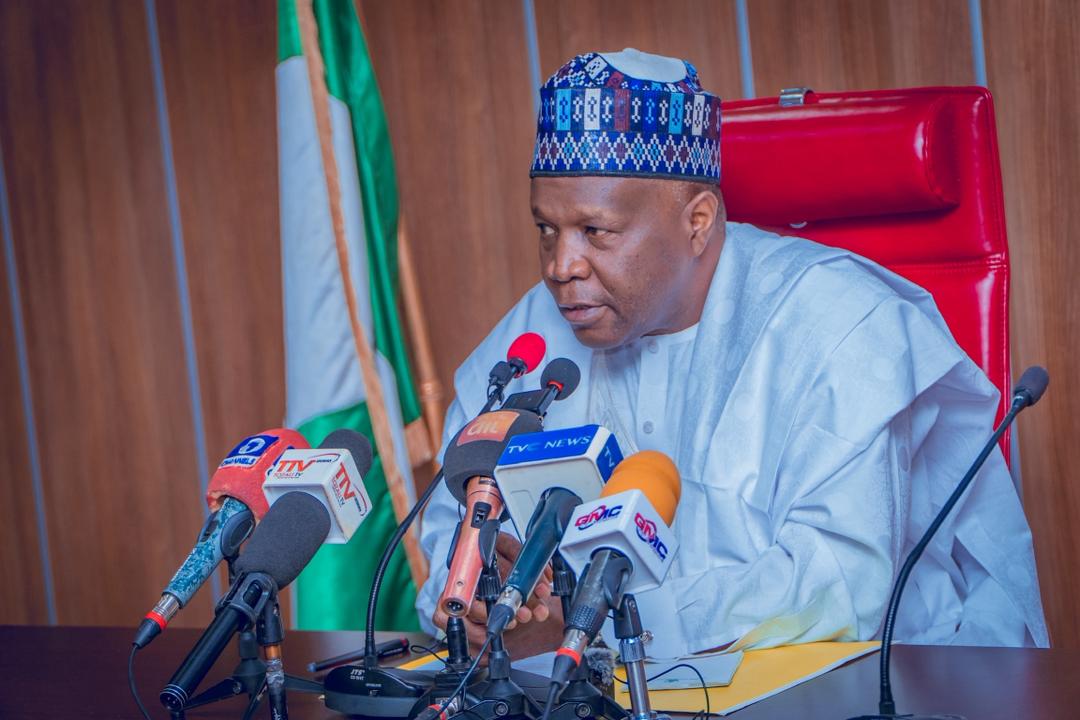
The Joint Union of Gombe State Tertiary Institutions (JOUGTIN) has issued a 14-day ultimatum to the Gombe State Government to address outstanding staff welfare entitlements and implement agreed conditions of service across public tertiary institutions in the state.
The union, comprising the Colleges of Education Academic Staff Union (COEASU), Academic Staff Union of Polytechnics (ASUP), Senior Staff Union of Colleges of Education in Nigeria (SSUCOEN), Senior Staff Association of Nigerian Polytechnics (SSANIP), and Non-Academic Staff Union of Educational and Associated Institutions (NASU), issued the ultimatum in a communiqué dated August 17, 2026.
According to the unions, the outstanding issues have persisted despite several engagements with relevant government authorities.
JOUGTIN acknowledged the efforts of Governor Muhammadu Inuwa Yahaya in supporting tertiary education in the state, but said several critical staff welfare matters remain unresolved.
Among the issues raised are the non-implementation of the consolidated ₦70,000 national minimum wage and its consequential adjustments for staff of public tertiary institutions.
The unions also demanded the implementation of approved 25 per cent and 35 per cent CONPCASS/CONTISS salary adjustments, payment of outstanding consequential adjustments arising from the ₦30,000 minimum wage, and payment of approved wage awards, palliatives and other relief measures introduced in response to economic hardship.
Other demands include the implementation of outstanding staff promotions, payment of promotion arrears, some of which the unions said date back several years, annual salary increments, and the implementation of approved CATA and CONTTA allowances.
JOUGTIN said the continued failure to address the issues had placed a heavy financial burden on workers and their families, while negatively affecting staff morale, productivity and industrial relations in the tertiary education sector.
The union said it had exhausted various avenues of dialogue and constructive engagement before resorting to the 14-day ultimatum.
It therefore called on the state government to take “concrete, verifiable and meaningful steps” towards resolving the outstanding demands within the stipulated period.
JOUGTIN warned that failure to secure satisfactory action within 14 days would compel the unions to commence further legitimate industrial action, including an indefinite strike, without further notice.
The unions, however, said they remained committed to dialogue, mutual respect and peaceful engagement, stressing that the ultimatum was not intended to undermine their relationship with the government.
They appealed to parents, students, traditional and community leaders, civil society organisations and members of the public to understand the circumstances behind their action and support efforts to achieve a lasting resolution.
The unions expressed hope that the government would respond positively to their demands in the interest of industrial harmony, staff welfare, uninterrupted academic activities and the sustainable development of tertiary education in Gombe State.
Strike: Gombe tertiary institutions issue 14-Day ultimatum over unpaid entitlements



Buni calls on emirs to lead peace missions in Yobe
By: Yahaya Wakili
The Executive Governor of Yobe State, Hon. Mai Mala Buni, CON, COMN, has called on the traditional rulers in the state to remain custodians of our heritage and to lead prayers for peace and unity among the citizens of the state.
He said our traditional institutions must continue to promote mutual respect, brotherhood, and peaceful coexistence, noting that the peace and stability we enjoy in Yobe State today must be protected by all of us.
The governor stated this today at Potiskum, the headquarters of the Fika emirate council, while attending a special prayer session marking the 70th birthday anniversary of the Emir of Fika and Chairman of the Yobe State Council of Traditional Rulers, HRH Alhaji Dr. Muhammadu Abali Ibn Muhammadu Idrissa, CON, CFR.
The Yobe State APC gubernatorial candidate, Alhaji Baba Mallam Wali MNI, FCAN, ably represented the governor. The emirate offered prayers for the continued peace, unity, and prosperity of Yobe State and the success of Governor Buni and the incoming governor, inshallah, Alhaji Baba Malam Wali MNI FCAN.
In his remarks, His Royal Father, the emir of Fika, Alhaji Dr. Muhammadu Abali Ibn Muhammadu Idrissa, CON, CFR, thanked His Excellency, Governor Mai Mala Buni, CON, COMN, for his support and called on citizens to be law-abiding, adding that there is no wealth greater than peace.
The emir also called on the people to pray for a bumper harvest this year’s farming season, as well as charged them to love one another and always promote peace in all their endeavors.
Buni calls on emirs to lead peace missions in Yobe

Buni urged youths in Yobe to actively participate in elections for competent candidates
By: Yahaya Wakili
Yobe State Governor Hon. Mai Mala Buni CON, COMN, has charged the youth in the state to participate actively in all the elections of competent persons for various political offices in the state and Nigeria.
He also assured the youth in the state that they have a prosperous future in their lives.
Governor Buni stated this at a two-day retreat organized by the Coalition of All Progressives Congress (APC) Political Organizations (COYAPO).
According to him, the youth constitute the larger population of the state; therefore, you must be actively involved to shape the politics and leadership of the state.
In his earlier address, the Director General of COYAPO, Alhaji Babagana Modu alias Bature Goniri, commended Governor Mai Mala Buni for the opportunity extended to youth in the state to participate in governance.
Buni urged youths in Yobe to actively participate in elections for competent candidates
Nigeria Launches National Strategy to Dismantle Organised Crime, Break Agency Silos
By: Michael Mike
Nigeria has launched a new National Strategy for Combating Organised Crime, signalling a major shift towards a coordinated, intelligence-led national response to criminal networks involved in cybercrime, drug trafficking, human trafficking, migrant smuggling and other transnational crimes.
The strategy, launched in Abuja with the participation of key government institutions, law enforcement agencies, international partners and civil society organisations, seeks to break down institutional silos and establish a unified framework for preventing, detecting, investigating, prosecuting and dismantling organised criminal groups operating within and across Nigeria’s borders.
The initiative was developed through extensive multi-agency consultations and technical collaboration with the United Nations Office on Drugs and Crime (UNODC).
Delivering the keynote address on behalf of the National Security Adviser, Major General Adamu Laka, National Coordinator of the National Counter Terrorism Centre, said a coordinated front against organised crime was essential to Nigeria’s national security and stability.
Laka stressed that inter-agency coordination could no longer be treated as optional, urging stakeholders to make concerted efforts to ensure that criminal networks are effectively disrupted.
He said building an effective response would require stronger collaboration and sustained commitment across institutions responsible for national security and criminal justice.
The strategy places particular emphasis on intelligence sharing, coordinated investigations, specialised operational capacity and stronger regional and international cooperation, reflecting the increasingly sophisticated nature of organised criminal networks.
It also provides for the protection of victims and witnesses, recognising that the fight against organised crime must extend beyond the disruption of criminal networks to protecting the people and communities affected by them.
The strategy comes amid growing concerns over the ability of criminal groups to exploit technology, cross-border mobility, economic vulnerabilities and illicit financial networks to expand their activities.
According to the UNODC World Drug Report 2025, an estimated 316 million people used drugs globally in 2023, while organised criminal groups have continued to adapt to global crises and expand illicit markets, including into Africa.
The UNODC Global Report on Trafficking in Persons 2024 also reported a global increase in identified trafficking victims following the COVID-19 pandemic, with children accounting for nearly 40 per cent of identified victims.
The reports underscore the increasingly transnational character of organised crime and the need for countries to strengthen cooperation among law enforcement, criminal justice institutions and other stakeholders.
Speaking at the launch, UNODC Country Representative Cheikh Toure welcomed Nigeria’s commitment to a whole-of-government and whole-of-society approach to tackling organised crime.
Toure, alongside Tolliver Derrick, Director of the United States Department of State’s Bureau of International Narcotics and Law Enforcement Affairs (US INL), expressed support for the strategy and its emphasis on coordinated, victim-centred and rights-based responses.
The approach is consistent with international best practices promoted by UNODC, including its Organised Crime Strategy Toolkit, which encourages countries to develop integrated responses that bring together government institutions, civil society, communities and international partners.
Participants at the Abuja launch identified stronger inter-agency and regional collaboration, operational readiness, specialised capacity and adherence to the rule of law as key pillars of the new framework.
They emphasised that no single institution could effectively confront the increasingly complex ecosystem of organised crime on its own.
According to participants, effective implementation would therefore depend on timely intelligence sharing, joint investigations, intelligence-led operations and sustained partnerships among security and law enforcement agencies, communities, civil society organisations and international partners.
The project coordinator from the National Counter Terrorism Centre and national consultants subsequently presented the strategy’s core objectives, implementation roadmap, assessment of organised crime in Nigeria and the Gulf of Guinea, as well as its monitoring and evaluation framework.
The presentations marked what stakeholders described as the beginning of the implementation phase, with emphasis now shifting from policy commitments to measurable results.
The strategy is expected to provide a common framework for confronting multiple forms of organised crime, including cybercrime, illicit drug markets, trafficking in persons, migrant smuggling and environmental crimes.
For communities affected by these crimes, the strategy represents an attempt to connect national security priorities with the protection of livelihoods, human rights and community safety.
The initiative received financial support from the United States Department of State’s Bureau of International Narcotics and Law Enforcement Affairs.
Nigeria Launches National Strategy to Dismantle Organised Crime, Break Agency Silos

Strike: Gombe tertiary institutions issue 14-Day ultimatum over unpaid entitlements

Buni calls on emirs to lead peace missions in Yobe

Buni urged youths in Yobe to actively participate in elections for competent candidates

Roger Federer’s Shock as DNA Results Reveal Myla and Charlene Are Not His Biological Children

THE PLIGHT OF FARIDA

FAILED COUP IN BURKINA FASO: HOW TRAORÉ NARROWLY ESCAPED ASSASSINATION PLOT AMID FOREIGN INTERFERENCE CLAIMS
-
 News2 years ago
Roger Federer’s Shock as DNA Results Reveal Myla and Charlene Are Not His Biological Children
-
Opinions5 years ago
THE PLIGHT OF FARIDA
-
 News1 year ago
FAILED COUP IN BURKINA FASO: HOW TRAORÉ NARROWLY ESCAPED ASSASSINATION PLOT AMID FOREIGN INTERFERENCE CLAIMS
-

 News2 years ago
EYN: Rev. Billi, Distortion of History, and The Living Tamarind Tree
-
 Opinions5 years ago
POLICE CHARGE ROOMS, A MINTING PRESS
-

 ACADEMICS2 years ago
A History of Biu” (2015) and The Lingering Bura-Pabir Question (1)
-

 Columns2 years ago
Army University Biu: There is certain interest, but certainly not from Borno.
-

 Politics1 year ago
2027: Why Hon. Midala Balami Must Go, as Youths in Hawul and Asikira/Uba Federal Constituency Reject ₦500,000 as Sallah Gift
