
News
Sudan seeks implementation of signed agreement in Jeddah

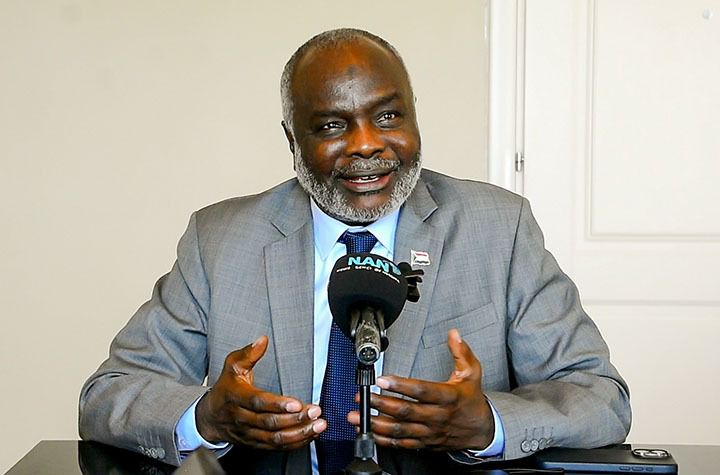
Sudan seeks implementation of signed agreement in Jeddah
By: Michael Mike
The Government of Sudan has reiterated the call for the implementation of a signed declaration between the Sudanese Armed Forces (SAF) and the Rapid Support Forces (RSF) which was held in Jeddah, to bolster peace.
Dr Gebriel Ibrahim, Minister of Finance and Economic Planning of Sudan, made the call on Wednesday in Abuja, while briefing newsmen on the war situation in the country.
Ibrahim spoke in view of the 2024 African Caucus Meeting of Governors of the International Monetary Fund (IMF) and World Bank Group (WBG) held between Aug. 1 and Aug. 3.
The Caucus was established in 1963 to strengthen Africa’s voice through Ministers of Finance and Governors of the Central Bank or officials designated as such by the governments of African countries.
The News Agency of Nigeria (NAN) reports that the signed declaration between SAF and RSF seeks to guide the conduct of SAF and RSF to ease humanitarian assistance and restore essential services such as electricity and water, among other things.
The declaration was requested by the SAF and RSF during pre-negotiation talks mediated by the U.S. and Saudi Arabia to emphasise the agreement reached to help civilians suffering in the war.
Ibrahim said, “The U.S. recently proposed a meeting between the SAF and RSF in Switzerland in September, but they forgot we already held one in Jeddah and signed the declaration on May 11, 2023.
“So, we are telling them that instead of calling for new talks, why not implement the Jeddah Declaration signed by both RSF and SAF?
“Then, we can start talking about peace if that is what the U.S. wants to do; not to give the RSF legitimacy to be part of the political and military scene in the future.”
The minister decried the effect of the war which had lingered for more than 15 months, noting that it had hindered trade operations and other economic activities across the country.
“Although the war has lingered, the country still possesses an agricultural potential that could provide food security in Africa through adequate investment.”
According to him, Sudan’s agricultural potential is one of the biggest in Africa, as the country is the first food basket of the continent with a large population and hybrid of religion.
Ibrahim said, “We have to plan for our food security, and if Africa wants to boost its food production, it has to invest in Sudan, among other countries.
“Of course, Sudan has a comparative advantage in food production. Sudan is also rich in solid minerals as the country is strategically positioned on the Red Sea.
“All of us know that international trade now moves from East to West, even for Nigeria importing goods from China, it is faster and cost-effective to import goods from the Red Sea.
“So, we need infrastructure, roads and railways that make the connection between the conduit of the Red Sea and African countries possible and fast,” he said.
He recounted Sudan’s trade ties with Nigeria, saying that plans were on to further strengthen the cooperation between both countries.
Ibrahim decried Sudan’s political instability as having resulted in the displacement of no fewer than 10 million people in Khartoum.
“Some have to find refuge in Nigeria,” he added.
He further said that strategic measures had been taken to revive the economic base of the country to restore what was lost during the war.
Sudan seeks implementation of signed agreement in Jeddah



The Armed Forces and Nigeria at 66: What Does History Say?
By Chidi Omeje
As Nigeria marks its 66th Independence Anniversary today, 1 October 2026, the Nigerian Armed Forces occupy a complicated but ultimately important place in the country’s national story. Their record cannot be reduced either to military heroism or to the darker history of military rule. Both are part of the historical record.
The incontrovertible truth, however, is that since independence, the Nigerian Armed Forces have been one of the principal institutions holding together the Nigerian state through periods of war, insurgency, communal violence, separatist agitation, banditry and other threats to territorial integrity.
Perhaps the most consequential chapter was the Nigerian Civil War (1967–1970). Whatever the controversies surrounding the war and its conduct, the Federal Military Government’s victory preserved Nigeria as one political entity. The subsequent challenges have been transforming that territorial unity into a deeper sense of national belonging.
The military’s contribution has also extended well beyond Nigeria’s borders. Since the 1960s, Nigeria has been a major contributor to international peacekeeping, including operations in Liberia, Sierra Leone and elsewhere. The United Nations notes that Nigerian forces formed the military backbone of the UN Mission in Liberia between 2003 and 2018, helping create the security conditions for Liberia’s democratic transition.
There is, therefore, a legitimate argument that Nigeria’s military tradition has always contained a strong peacekeeping dimension. Nigerian soldiers have not merely defended Nigeria; they have repeatedly been deployed to help stabilise other African countries.
However, history must also be honest about military rule It would therefore be historically incomplete to celebrate the Armed Forces without acknowledging their political interventions. From the coups of 1966 through successive periods of military government, the military suspended democratic institutions and governed Nigeria for prolonged periods. Those interventions left an enduring imprint on Nigeria’s political development and civil-military relations. That is why the most important transformation in the military’s historical role may be the transition from being an institution that once governed Nigeria to being an institution constitutionally subordinate to civilian democratic authority.
The return to civilian rule in 1999 was particularly significant. The current Fourth Republic has now lasted more than 27 years, the longest continuous period of civilian government in Nigeria’s history. President Bola Tinubu, in his June 2026 Democracy Day address, described this as Nigeria’s longest uninterrupted democratic era.
And there is an interesting historical irony here: the military itself eventually became part of the process that restored democracy. General Abdulsalami Abubakar’s transition programme culminated in the 1999 return to civilian government. President Tinubu recently described Abubakar’s role as instrumental in restoring democratic institutions and establishing the Fourth Republic.
The strongest evidence of the Armed Forces’ changed role is not simply what military leaders say about democracy; it is what the institution does within the constitutional order. Today, the Armed Forces operate under civilian political authority and are deployed by the elected government in accordance with constitutional and statutory responsibilities. The Ministry of Defence describes itself as the civilian face of Nigeria’s military authority and the apex policy organ of the defence establishment. That evolution matters enormously.
The Nigerian military today is simultaneously confronting Boko Haram and ISWAP in the North-East, banditry and terrorism in the North-West and North Central, oil theft and attacks on critical infrastructure in the Niger Delta, violent separatist agitation in the South East and other security challenges across the federation. Current operations include HADIN KAI, FANSAN YAMMA, ENDURING PEACE, WHIRL STROKE, SAFE HAVEN, DELTA SAFE and UDO KA, alongside Nigeria’s continuing contribution to multinational operations. This is a vastly different constitutional role from that of the military governments of the past.
So, what exactly is history’s verdict? History’s verdict on the Nigerian Armed Forces is neither an unqualified commendation nor an unqualified indictment. It is a record of sacrifice, national service, political intervention, institutional evolution and, ultimately, a significant return to constitutional professionalism.
The soldier who fought to preserve Nigeria’s territorial integrity, the peacekeeper who helped stabilise a neighbouring African country, and the service member currently risking his or her life against terrorists and criminals all belong to the military’s history. So too does the soldier who participated in a coup and helped suspend democratic government. One cannot erase the other.
However, there is another important point as Nigeria turns 66: the military should not be judged only by its history of fighting wars. It should also be judged by its relationship with democracy. The real measure of military professionalism in a democracy is not the capacity to seize political power, but the discipline to possess enormous coercive power and remain subordinate to constitutional civilian authority. That is perhaps the most important journey the Nigerian Armed Forces have made since independence.
And as the country confronts increasingly complex security threats, that democratic compact becomes even more important. The military needs public confidence, but public confidence is strengthened by professionalism, accountability, respect for constitutional authority and effective communication with the citizens it protects.
At 66, therefore, Nigeria’s Armed Forces deserve recognition for six decades of national and international service, while their history demands that the country remember both their sacrifices and their institutional mistakes.
Happy 66 Independence Anniversary to Nigeria and kudos to the Armed Forces of Nigeria for being there all the way!
*Chidi Omeje is the publisher of Security Digest magazine and member of Zagazola Media Network
The Armed Forces and Nigeria at 66: What Does History Say?
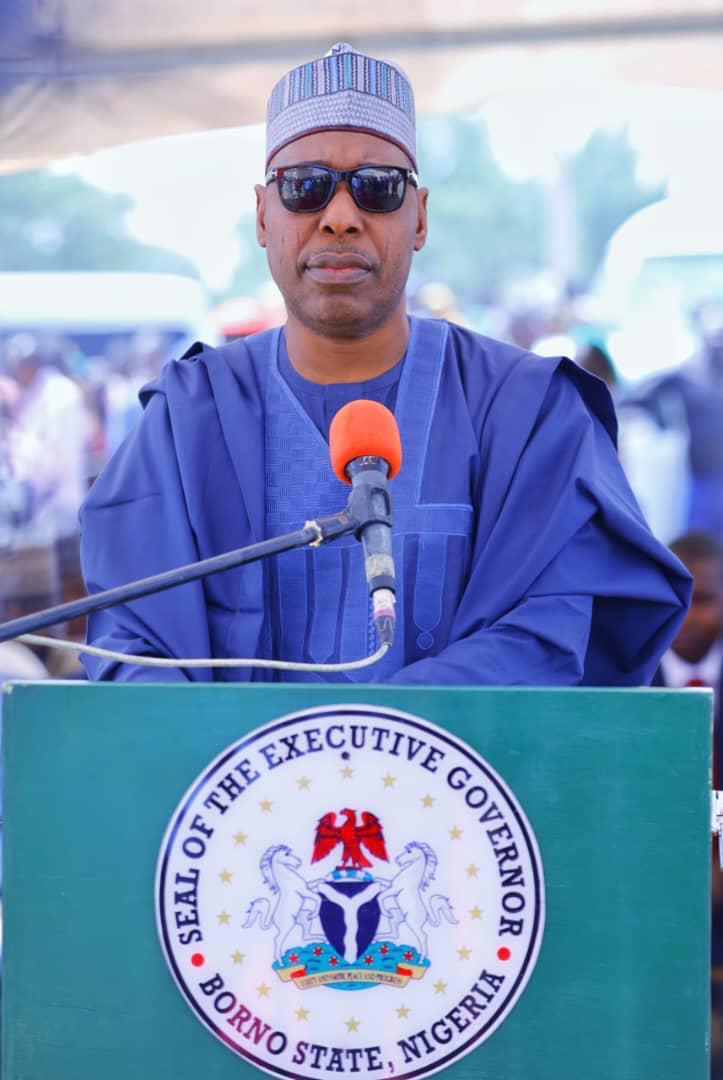
Zulum on Independence Day: “Don’t Let a Few Derail Borno’s Hard-Earned Peace”
…Highlights 1,500 Cluster-Projects, 2 Million Resettled Residents
By: Our Reporter
Borno State Governor, Professor Babagana Umara, has felicitated with the people of Borno State and Nigerians on the occasion of the nation’s 66th Independence Anniversary.
In his Independence Day message, the Governor paid tribute to Nigeria’s founding fathers and other leaders who made sacrifices for the country’s unity, growth and development through more than six decades of trials and tribulations.
“As we celebrate 66 years of nationhood, we honour our founding fathers and all the leaders who gave their lives for the unity, growth and development of Nigeria, despite the trials our country has endured,” Zulum stated.
Governor Zulum called on citizens to protect the peace Borno has worked so hard to regain and to keep campaigns free of rancour as the political season begins.
He restated his commitment to consolidating peace, protecting citizens’ rights, laying a sound foundation for younger generations, and ensuring the safe, voluntary and dignified resettlement of internally displaced persons (IDPs) and refugees.
“About two million of our people have returned to their communities, and we are working to resettle more. We must not allow a few unpatriotic people to derail this hard-earned peace.”
The Governor said his administration has invested heavily in restoring security, developing human capital, improving infrastructure, boosting agriculture, resettling displaced persons and rebuilding communities. He said the government has carried out more than 1,500 clusters of projects across the 27 local government areas over the past seven years.
Governor Babagana Zulum stressed that these projects have improved lives and livelihoods and strengthened security, stability and resettlement. He credited the improved security to the joint efforts of security personnel, volunteers, and traditional, community and religious leaders, and above all to the resilience of the people of Borno.
“The improved security we enjoy today is the result of the collective efforts of our gallant security personnel, volunteers, traditional, community and religious leaders and, above all, the resilient people of Borno,” he added.
The Governor said about two million people have returned to their communities so far, and efforts are under way to resettle more IDPs. He added that over 30,000 homes, schools, clinics and other public facilities destroyed during the insurgency have been rebuilt.
In education, he said the number of functional secondary schools grew from 34 in 2019 to 129 in 2026. Enrolment has increased to 1.8 million children, the number of teachers has also risen, and the government is prioritizing digital and vocational education.
Professor Zulum also pointed to major investments in agriculture to support year-round farming, a strengthened health system, and expanded access to healthcare for more vulnerable residents through the state contributory health scheme.
He said the administration is opening up business and economic opportunities to drive post-conflict recovery in sectors where Borno has a comparative advantage. He described the state as an emerging investment destination because of its strategic location, human capital, and natural resources.
“Borno is now an investment destination because of its strategic location and its human capital and natural resources. We are unlocking opportunities that will drive our post-conflict recovery.”
The Governor urged citizens to uphold unity and peaceful coexistence, reject violence, and respect the rule of law for sustainable development in the state and the country. “As the political season sets in, let us conduct our campaigns without rancour, so we do not undermine the relative peace and stability our state now enjoys.”
Zulum thanked the people of Borno for their continued support and promised to sustain his administration’s momentum until his last day in office.
Zulum on Independence Day: “Don’t Let a Few Derail Borno’s Hard-Earned Peace”
News
Operation FANSAN YAMMA troops rescue five abducted women in Katsina, recover rustled livestock in Sokoto

Operation FANSAN YAMMA troops rescue five abducted women in Katsina, recover rustled livestock in Sokoto
By: Zagazola Makama
Troops of Sector 2, Operation FANSAN YAMMA, have rescued five abducted female victims in Katsina State and recovered rustled livestock after repelling a terrorist attack in Sokoto State.
The operations, conducted separately and driven by intelligence and support from local communities, were carried out in Sabuwa Local Government Area of Katsina and Shagari Local Government Area of Sokoto.
In Katsina, troops acted on timely information about the movement of terrorists around the Madaci Forest area of Sabuwa LGA and swiftly mobilised to intercept the criminals.
The troops’ tactical manoeuvres disrupted the terrorists, leading to the successful rescue of five female victims, including a mother and her infant, as well as three other minors and young adults.
The victims, who are originally from Danja and Funtua LGAs, were subsequently handed over to the Chairman of Bakori LGA, Hon. Abubakar Musa, for reunification with their families.
Troops have continued aggressive patrols in the area to dominate the terrain and deny terrorists freedom of movement.
In a related development in Sokoto State, troops of 248 Reconnaissance Battalion repelled a terrorist attack in Badiya village, Shagari LGA.
The troops, acting on credible intelligence regarding suspicious movements, engaged the terrorists with superior firepower, forcing them to retreat into the surrounding terrain.
The fleeing terrorists abandoned a large herd of rustled livestock, which was subsequently recovered by the troops.
The recovered animals were returned to their rightful owners during a brief ceremony facilitated by the Chairman of Shagari LGA and the local District Head.
The development is expected to support ongoing efforts to restore normalcy and strengthen confidence among communities affected by terrorist activities and livestock rustling in the area.
Operation FANSAN YAMMA troops rescue five abducted women in Katsina, recover rustled livestock in Sokoto

The Armed Forces and Nigeria at 66: What Does History Say?

Zulum on Independence Day: “Don’t Let a Few Derail Borno’s Hard-Earned Peace”

Operation FANSAN YAMMA troops rescue five abducted women in Katsina, recover rustled livestock in Sokoto

Roger Federer’s Shock as DNA Results Reveal Myla and Charlene Are Not His Biological Children

THE PLIGHT OF FARIDA

FAILED COUP IN BURKINA FASO: HOW TRAORÉ NARROWLY ESCAPED ASSASSINATION PLOT AMID FOREIGN INTERFERENCE CLAIMS
-
 News3 years ago
Roger Federer’s Shock as DNA Results Reveal Myla and Charlene Are Not His Biological Children
-
Opinions5 years ago
THE PLIGHT OF FARIDA
-
 News1 year ago
FAILED COUP IN BURKINA FASO: HOW TRAORÉ NARROWLY ESCAPED ASSASSINATION PLOT AMID FOREIGN INTERFERENCE CLAIMS
-

 News3 years ago
EYN: Rev. Billi, Distortion of History, and The Living Tamarind Tree
-
 Opinions5 years ago
POLICE CHARGE ROOMS, A MINTING PRESS
-

 ACADEMICS3 years ago
A History of Biu” (2015) and The Lingering Bura-Pabir Question (1)
-

 Columns3 years ago
Army University Biu: There is certain interest, but certainly not from Borno.
-

 Politics1 year ago
2027: Why Hon. Midala Balami Must Go, as Youths in Hawul and Asikira/Uba Federal Constituency Reject ₦500,000 as Sallah Gift
