
News
Sudan war spills into Chad, Nigeria emerges as critical buffer against widening Sahel insecurity

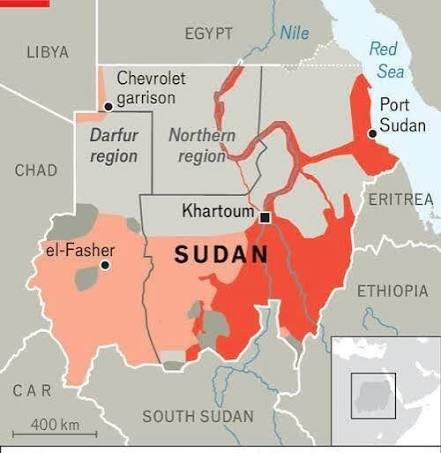
Sudan war spills into Chad, Nigeria emerges as critical buffer against widening Sahel insecurity
By Zagazola Makama
The war in Sudan is increasingly taking on a regional character, with its consequences extending beyond the immediate battlefield into neighbouring Chad and creating a widening security arc stretching from the Sahara and Central Africa toward Nigeria and the Gulf of Guinea.
The convergence of Sudan’s protracted conflict, the deepening instability across the Sahel and competition over strategic resources such as gold, uranium and oil is creating a volatile security environment in which Nigeria could increasingly find itself serving as the critical buffer between the conflict-ridden Sahel and the relatively more stable coastal West African states.
What is emerging is no longer a collection of isolated crises, but an interconnected security ecosystem involving armed groups, illicit trafficking networks, displaced populations, foreign interests, mercenary formations and competing external powers.
Sudan lies at the heart of this emerging crisis where fighting between the Sudanese Armed Forces and the Rapid Support Forces since April 2023 has increasingly affected neighbouring states.
Chad has borne one of the heaviest humanitarian consequences of the Sudan conflict, receiving a large population of Sudanese refugees, particularly in the eastern provinces of Ouaddaï, Wadi Fira and Ennedi-Est.
But the security dynamics are changing.
The eastern Chad is no longer merely a humanitarian rear area for the Sudan conflict. It is progressively becoming a frontline, transit and commercial zone where weapons, fighters, minerals and other illicit commodities can move across poorly controlled desert corridors. The Tiné axis, in particular, has become increasingly vulnerable to cross-border violence.
Recent assessment cites a series of reported incursions and attacks along the Chad-Sudan frontier, including clashes involving Chadian forces and civilians, as well as drone attacks around Tiné and Mourdi.
The situation has forced Chad to take increasingly stringent measures along its eastern frontier, including the closure of its border with Sudan following deadly incidents.
The danger, according to the assessment, is that continued fighting in Darfur could progressively transform eastern Chad from a buffer zone into an extension of Sudan’s battlefield. That development would have consequences far beyond Chad.
One of the most troubling dimensions of the emerging crisis is the alleged expansion of an illicit corridor linking Libya, Sudan and Chad, through which weapons, ammunition, fighters and valuable commodities can move across vast areas where state control remains limited.
Security sources identifies routes running from southern Libya through areas such as Kufra and Faya before extending toward Darfur and eastern Chad. Border towns and commercial centres, including Adré, Iriba and Tiné, are identified as important nodes in this expanding regional network.
From there, the illicit flows can connect with routes leading toward Niger, Cameroon and ultimately Nigeria. This is where the crisis becomes particularly important for Nigeria.
Nigeria does not share a border with Sudan, yet developments thousands of kilometres away could eventually affect its security environment through a chain of interconnected corridors.
The most serious concern is the southward movement of small arms and light weapons (SALW).
Sources warns that weapons originating from conflict zones and illicit markets in the Sahara could increasingly move through Niger and Cameroon before entering Nigeria. For Nigeria, the concern is not simply the quantity of weapons entering the country, but who eventually gains access to them.
The country is already confronting multiple armed threats, including Boko Haram and ISWAP terrorism in the North-East, large-scale banditry in parts of the North-West and other forms of organised criminal and separatist violence. An influx of additional weapons, explosives, drones and trained foreign fighters could therefore provide criminal and extremist organisations with new capabilities.
The danger is particularly acute because Nigeria’s northern and eastern borders are connected to a wider regional environment in which armed groups can exploit difficult terrain, informal crossings and established smuggling networks.
Cameroon represents another potential pathway for regional spillover. Sources identifies Kousséri, close to the Chadian border, as well as Garoua-Boulaï and Kentzou along the Central African Republic frontier, as important transit areas in the wider regional security architecture.
For Nigeria, the concern is especially significant in the Far North and along the Lake Chad Basin.
The porous nature of borders across the region means that the movement of weapons, criminals, extremist ideology and displaced populations cannot be treated as separate phenomena. What begins as a conflict in Sudan can therefore generate secondary effects in Chad, Niger and Cameroon before eventually reaching Nigerian territory. Beyond the movement of weapons and fighters lies another increasingly important factor: competition for natural resources. Gold in Darfur and eastern Chad, together with uranium and other strategic minerals in the wider Sahel, has acquired growing geopolitical significance.
It was argued that control of resource-rich areas is becoming intertwined with the financing of armed groups and the deployment of foreign security actors. Where valuable minerals are controlled by armed groups or criminal networks, proceeds from illicit extraction can potentially be converted into weapons, vehicles, communications equipment and other military capabilities.
This creates a dangerous cycle: conflict produces displacement; insecurity enables illicit mining; illicit mining generates revenue; revenue purchases weapons; and weapons prolong conflict. The result is a conflict economy that becomes increasingly difficult for governments to dismantle.
The emerging regional configuration presents both a security challenge and a strategic responsibility for Nigeria, Nigeria is geographically positioned between the troubled Sahel and the Atlantic-facing states of the Gulf of Guinea. Its territory therefore sits downstream of several potential routes for the movement of weapons, fighters, drugs, illicit minerals and extremist networks.
Nigeria is therefore a potential security buffer whose stability could have a decisive influence on whether the current crisis remains concentrated in the Sahel and Central Africa or gradually penetrates deeper into coastal West Africa. But Nigeria is itself under considerable internal security pressure.
In the North-East, troops continue to confront Boko Haram and ISWAP under Operation HADIN KAI. In the North-West, security forces are battling armed bandit networks, while other parts of the country face separate security challenges. This means Nigeria has limited room for complacency.
A major deterioration in Chad, Niger or Cameroon would not necessarily produce an immediate military threat to Nigeria. The more likely danger would be gradual: more illicit crossings, more weapons, more criminal networks, more displaced people and greater opportunities for extremist groups to establish relationships with existing local actors.
The humanitarian consequences could prove as significant as the military implications. Chad is already under substantial pressure from the large number of Sudanese refugees it hosts. Any major deterioration in Darfur or eastern Sudan could trigger another wave of displacement.
Should Chad’s capacity to absorb additional refugees become overwhelmed, displaced populations could seek alternative routes through Niger, Cameroon and potentially toward Nigeria. For the North-East, which continues to deal with the humanitarian consequences of years of Boko Haram and ISWAP violence, another major displacement crisis would place additional pressure on communities, local authorities and humanitarian organisations.
The risk is therefore not simply about where refugees settle. Large, sudden population movements can also create competition over land, water, food, employment and other scarce resources, potentially producing tensions that armed groups can exploit.
Perhaps the most consequential conclusion of the assessment is its characterisation of the emerging situation as the architecture of a possible “Second Africa War” not necessarily a conventional war involving clearly defined opposing armies, but a fragmented conflict system involving states, insurgent groups, criminal networks, mercenaries, foreign interests and resource competition. Such a conflict would be difficult to contain precisely because it would have no single battlefield.
Its frontlines would include desert routes, border communities, mining sites, refugee settlements, trafficking corridors and increasingly the digital and financial spaces used to facilitate illicit networks. The Sudan conflict would remain one of its principal drivers, while instability in the Sahel would provide an existing network through which the effects could travel southwards.
What Nigeria must watch
The immediate priority for Nigeria should therefore be early warning rather than waiting for spillover to become a domestic crisis.
Greater intelligence cooperation with Chad, Niger and Cameroon would be crucial, particularly concerning movements of weapons, foreign fighters, organised criminal groups and illicit commodities. Nigeria would also need stronger surveillance of vulnerable border areas, improved information sharing between security and intelligence agencies, and closer cooperation with regional institutions.
The objective should not be to militarise every border community, but to ensure that authorities can detect emerging trafficking and extremist networks before they acquire sufficient capacity to threaten Nigerian communities. The Lake Chad Basin remains particularly important because it already connects Nigeria, Niger, Chad and Cameroon through a security environment shaped by terrorism, displacement, trafficking and environmental pressures.
The warning for Abuja
Nigeria cannot afford to view the Sudan war as a distant conflict. The geographical distance between Sudan and Nigeria may create an illusion of strategic separation, but the region’s informal economies, porous borders and transnational armed networks have repeatedly demonstrated that distance is not necessarily protection. The greater danger may not be a dramatic invasion or a sudden mass movement of fighters.
It could instead be the gradual accumulation of seemingly disconnected developments a new weapons route here, an illicit mining network there, a foreign fighter entering through an informal crossing, a criminal group acquiring military-grade equipment, or displaced communities moving further south.
Individually, each development may appear manageable. Collectively, they could reshape Nigeria’s security environment. Therefore, the strategic objective should be to interdict the crisis upstream rather than fight its consequences downstream. That requires Nigeria to look beyond its immediate borders and treat developments in Sudan, Chad, Niger, Libya and Cameroon as interconnected components of one evolving regional security problem.
The ultimate test will be whether Nigeria can prevent the instability spreading southward while simultaneously strengthening the resilience of its own vulnerable communities.
If it succeeds, Nigeria could remain the buffer that prevents the Sahelian and Central African security crises from reaching the Gulf of Guinea.
If it fails, the country risks becoming not merely the downstream recipient of regional instability, but one of its principal theatres.
Zagazola is a Counter Insurgency Expert and Security Analyst in the Lake Chad Region
Sudan war spills into Chad, Nigeria emerges as critical buffer against widening Sahel insecurity



Troops gun down kidnapper, recover locally fabricated rifle made in Plateau
By: Zagazola Makama
Troops of Sector 6, Operation ENDURING PEACE (OPEP), have neutralised a suspected kidnapper during a gun battle with a group of kidnappers at Angwan Boka in Riyom Local Government Area of Plateau State.
The troops, who were deployed in the area, engaged the suspected kidnappers at about 4:30 p.m. on Wednesday, Sept. 9, 2026, following a report of their activities in the area.
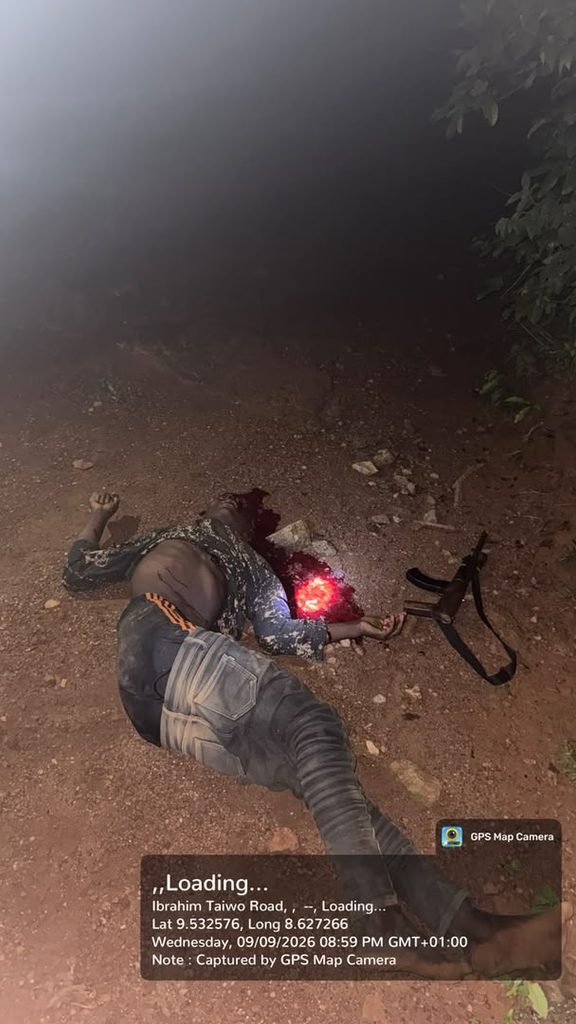
During the encounter, the troops brought their superior firepower to bear, neutralising one of the kidnappers, while others fled into the surrounding area.
The troops subsequently exploited the area and recovered one locally fabricated AK-47 rifle loaded with six rounds of 7.62mm special ammunition.
Security sources told Zagazola Makama that troops are currently conducting clearance operations in the area to track down and neutralise other fleeing members of the kidnapping gang.
The operation is part of ongoing efforts by troops of Operation ENDURING PEACE to disrupt criminal activities and improve security across Plateau State.
Troops gun down kidnapper, recover locally fabricated rifle made in Plateau

Mailantarki table tennis camp opens in Abuja
The highly anticipated high-performance table tennis training camp has officially commenced in Abuja, featuring six carefully selected young talents. The intensive program is being spearheaded by certified International Table Tennis Federation (ITTF) High-Performance Coach, Nasiru Bello, who has taken charge of preparing these rising stars for upcoming international championships.
This is contained in a press statement issued to journalists by Mr Adamu Usman Ahmed, Mailantarki’s media aide.
The highly organized camp, fully sponsored by the NTTF Vice President, Honourable Khamisu Ahmed Mailantarki, further underscores his unwavering commitment, passion, and continuous philanthropic gestures toward sports development in Northern Nigeria and the country at large.
Speaking on the opening day of the camp on Tuesday, Hon. Mailantarki expressed absolute confidence that the veteran coach will equip the players with the elite skills required to compete successfully on the global stage.
“I am deeply delighted to get this camping exercise underway in order to prepare our young talents to attain the highest level of the game,” Hon. Mailantarki stated.
“The choice of Coach Nasiru Bello, who happens to be the former NTTF Technical Director, will massively benefit these players. He has exactly what it takes to ensure they are fully prepared for international championships when the opportunity arises.”
The NTTF Vice President also hinted at massive plans for the future, adding; “We are just starting, we still have other developmental programs in the pipeline across various zones in the country.”
The high-performance camp which is well attended by young upcoming global stars Mathew Fabunmi, Mustapha mukhtar, Joseph Marvelous, Dominion Joseph, Joseph victor and Harison Jacob, is scheduled to run for one week, concluding with a grand closing and award ceremony on Monday, 14th September 2026.
Mailantarki table tennis camp opens in Abuja
Nigeria Condemns Fresh Houthi Attacks on Saudi Arabia
By: Michael Mike
The Federal Government has condemned the latest attacks by Houthi forces in Yemen on Saudi Arabia, warning that the renewed hostilities pose a grave threat to regional stability and could further endanger civilians and disrupt global energy supplies.
The Ministry of Foreign Affairs, in a statement signed by its spokesperson, Oluwafemi Adeniyi, said the attacks, which occurred on Monday, September 7, 2026, injured scores of civilians and damaged civil infrastructure in the Kingdom.
Nigeria described the development as a serious threat to the security and sovereignty of Saudi Arabia, as well as a potential source of wider instability across the Middle East.
The government urged all parties involved in the conflict to respect international law and exercise maximum restraint, stressing that further military actions could worsen the situation and place more civilian lives at risk.
Nigeria also warned against actions capable of disrupting the flow of global energy supplies, highlighting the wider economic consequences that prolonged instability in the Middle East could have on countries dependent on the region for energy.
The latest attacks come against the backdrop of the protracted conflict in Yemen involving the Iran-aligned Houthi movement and forces supporting Yemen’s internationally recognised government.
The Houthis, formally known as Ansar Allah, seized control of Yemen’s capital, Sanaa, in 2014, triggering a wider conflict that drew in Saudi Arabia and a coalition of Arab states. Saudi Arabia subsequently led a military intervention in Yemen in 2015 in support of the Yemeni government.
The conflict has since developed into one of the Middle East’s most complex security crises, with repeated missile and drone attacks by the Houthis targeting Saudi territory at various points during the conflict.
Although Saudi Arabia and the Houthis have pursued dialogue and de-escalation efforts in recent years, tensions in and around Yemen have remained closely linked to broader regional conflicts and security developments.
The Houthis have also emerged as a significant actor in regional maritime security, particularly following attacks launched against commercial shipping in the Red Sea amid the wider Middle East crisis. The developments have raised concerns over international trade, shipping routes and energy supplies.
Against this background, Nigeria urged all sides to avoid steps that could trigger further escalation.
The Federal Government said renewed violence could undermine ongoing efforts to promote peace and stability in the region while exposing more civilians and critical infrastructure to danger.
Nigeria expressed solidarity with the government and people of Saudi Arabia and wished those injured in the attacks a speedy recovery.
The government also reiterated its commitment to supporting peace processes and conciliatory frameworks capable of promoting regional peace, international security and stability.
It stressed that diplomatic efforts remain essential to preventing further escalation and creating conditions for lasting peace, shared prosperity and development in the Middle East.
Nigeria Condemns Fresh Houthi Attacks on Saudi Arabia

Troops gun down kidnapper, recover locally fabricated rifle made in Plateau

Mailantarki table tennis camp opens in Abuja

Nigeria Condemns Fresh Houthi Attacks on Saudi Arabia

Roger Federer’s Shock as DNA Results Reveal Myla and Charlene Are Not His Biological Children

THE PLIGHT OF FARIDA

FAILED COUP IN BURKINA FASO: HOW TRAORÉ NARROWLY ESCAPED ASSASSINATION PLOT AMID FOREIGN INTERFERENCE CLAIMS
-
 News2 years ago
Roger Federer’s Shock as DNA Results Reveal Myla and Charlene Are Not His Biological Children
-
Opinions5 years ago
THE PLIGHT OF FARIDA
-
 News1 year ago
FAILED COUP IN BURKINA FASO: HOW TRAORÉ NARROWLY ESCAPED ASSASSINATION PLOT AMID FOREIGN INTERFERENCE CLAIMS
-

 News2 years ago
EYN: Rev. Billi, Distortion of History, and The Living Tamarind Tree
-
 Opinions5 years ago
POLICE CHARGE ROOMS, A MINTING PRESS
-

 ACADEMICS3 years ago
A History of Biu” (2015) and The Lingering Bura-Pabir Question (1)
-

 Columns3 years ago
Army University Biu: There is certain interest, but certainly not from Borno.
-

 Politics1 year ago
2027: Why Hon. Midala Balami Must Go, as Youths in Hawul and Asikira/Uba Federal Constituency Reject ₦500,000 as Sallah Gift
