
Military
Sudanese War Could Spiral Across Africa, Envoy Warns Nigeria, Others

Sudanese War Could Spiral Across Africa, Envoy Warns Nigeria, Others
By: Michael Mike
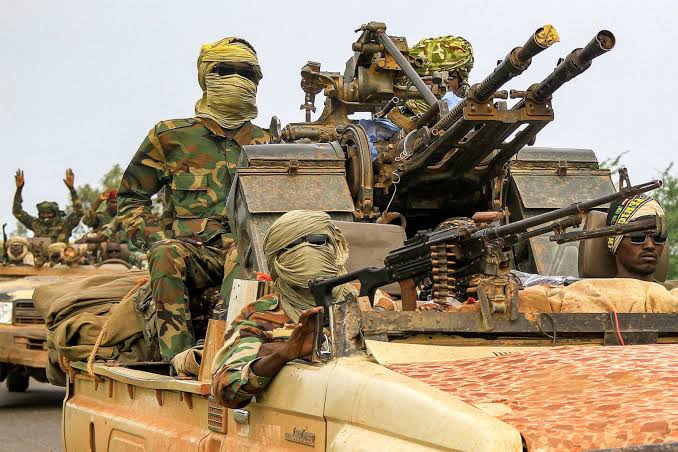
The Sudanese authorities have called on Nigeria and other African countries to support the ongoing efforts at ending the war in Sudan, warning that the war is a siege and could spiral across Africa if actions are not taken to halt it.
Addressing a press conference in Abuja, the Sudanese Charge d’ Affairs in Nigeria, Ambassador Ahmed Omer Taboul said no one should be deceived that the war is between two generals or among Sudanese ethic groups, but rather it is a proxy war for the resources of Sudan.
He appealed that there must be conscientious efforts by the international community to stop the onging Rapid Support Forces (RSF) genocide against the people, adding that the international community must pressure United Arab Emirates to end the war.
The envoy alleged that UAE are the major sponsor of the RSF, insisting that it is scramble for Sudan’s gold and rich mineral deposits.
Taboul, who was speaking ahead of the United Nations Security Council meeting on Sudan, said the war is about scavenging for resources by identified external forces.
He stressed that the war in Sudan is nothing but a proxy war, “It is a proxy war. This militia is fighting on behalf of others. On behalf of some Arab countries like UAE. On behalf of Israel. On behalf of some other Western countries.”
He said: “The main pressure the international committee can do is to stop the support and the feed of the United Arab Emirates. If they stop them, the war will stop in no time,” warning that it might affect the peace and security of the entire continent.
He stressed that “it will not stop only in very close neighbouring countries. This will go deep to the western part of Africa, through the Sahel and Sahara states.”
The envoy therefore urged Nigeria and other friendly countries to stand up for them.
He said the international community must endeavour to push for the implementations of resolutions of the UN Security Council.
“So what we need actually is full support from our brothers to be with us, to be very close to us. And to support the people of Sudan. They need a lot of things, we need a lot of things in Sudan.
“And we need the support of our brothers like Nigeria. We need the support of them in the international organisations, in the EU, in the United Nations. tomorrow or the day after tomorrow there will be a meeting for the Security Council on Sudan issues.
“We need the support there. Because I’m quite sure they are going, they are trying to adopt something against Sudan. They are trying to mandate themselves and others to come to Sudan”.
He said previous resolutions were never implemented by the RSF and that is why the war is still going on.
He said: “I have told you this just about the resolution adopted by the Security Council last year. Asking the militia to lift the siege on al-Fashir. But nobody imposed this, nobody pushed the militia to do so. Then after two years the militia invaded the city and killed within two days 3,000 women and children.”
He emphasised that the people of Sudan are not waiting for others to fight their battles but only needed their understanding and support.
He said: “Actually what we do, really, and this is very clear to everybody. We are fighting our own war. We don’t need anybody to fight with us. We don’t need any troops, we don’t need anything from anybody. We are able to do this ourselves. Our National Defence Army with the people of the Sudanese.
“Because now, if you see the news, the government of Sudan are mobilising the people. And now they are fighting with the National Defence Army. thousands of young Sudanese people are fighting and defending themselves, their families, their places, their entities, their everything. We are able to do this with ourselves.
“And we don’t want to involve any sisters or brothers or foreigners in our own war. What we need from our brother, for example, Nigeria is to know well what is going on in Sudan. And to accept our narrative. Because we are telling the truth. We are saying the truth, what is going on in Sudan. We told this to our brother in Nigeria, frankly.”
He also gave reason for the expulsion of two United Nations officials from Sudan. He said
the UN officials were given false report about happenings in Sudan.
“And yesterday (Wednesday) we expelled two of the United Nations officials from Sudan. Because unfortunately, they were reporting about the situation in Sudan. I mean, they were giving very, very false report and it was not real at all.
“So we expelled them out and we said, still, we have a good relation with the United Nations agencies. They are able to work, but these two people, we don’t like them in our country. They have to go bring any other instead of them.”
Sudanese War Could Spiral Across Africa, Envoy Warns Nigeria, Others


Military
Military Air Interdiction Neutralizes Scores, Decimates Terrorist Gathering and Destroy Gun Truck in Borno
Military Air Interdiction Neutralizes Scores, Decimates Terrorist Gathering and Destroy Gun Truck in Borno
By: Zagazola Makama
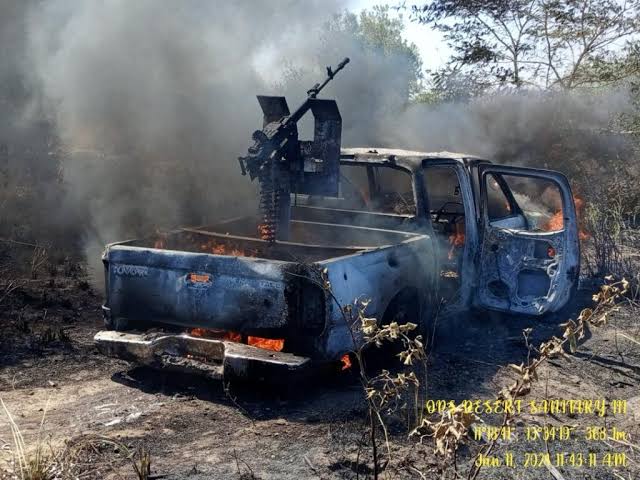
The Nigerian Military in Operation HADIN KAI has recorded another significant success against terrorist elements in Borno State, neutralising scores of insurgents and destroying a gun truck during a precision air interdiction mission.
Military sources disclosed that the operation was carried out on June 4 following credible intelligence and aerial surveillance over the Madamari general area in Magumeri Local Government Area of Borno State.
According to the sources, an Intelligence, Surveillance and Reconnaissance (ISR) platform, detected a group of about 15 terrorists who had dismounted from a gun truck and assembled under a tree within the target area.
Upon positive identification and confirmation of hostile activity, the platform designated the target and guided a strike aircraft onto the location.
“The strike aircraft executed a precise engagement on the terrorist gathering, resulting in the neutralisation of all the terrorists at the location,” the source said.
In a follow-up strike, the ISR platform tracked and designated the terrorists’ gun truck, which was subsequently destroyed by precision munitions. Four additional terrorists were neutralised in the process.
Battle Damage Assessment (BDA) conducted after the operation revealed that surviving terrorists in the vicinity were seen fleeing in different directions in an attempt to evade further air strikes, indicating the effectiveness of the engagement.
The sources said that the successful operation is part of sustained air offensives aimed at degrading terrorist capabilities, disrupting their freedom of movement and denying them safe havens across the North-East theatre.
Military high command at Operation HADIN KAI reiterated their commitment to maintaining relentless pressure on terrorist elements and their logistics networks, in its ongoing clearance operations across the region.
Military Air Interdiction Neutralizes Scores, Decimates Terrorist Gathering and Destroy Gun Truck in Borno
Military
Force Commander OPWS Visits Boundary Area Between Nasarawa and Kaduna States, Reviews Security Measures
Force Commander OPWS Visits Boundary Area Between Nasarawa and Kaduna States, Reviews Security Measures
By: Zagazola Makama
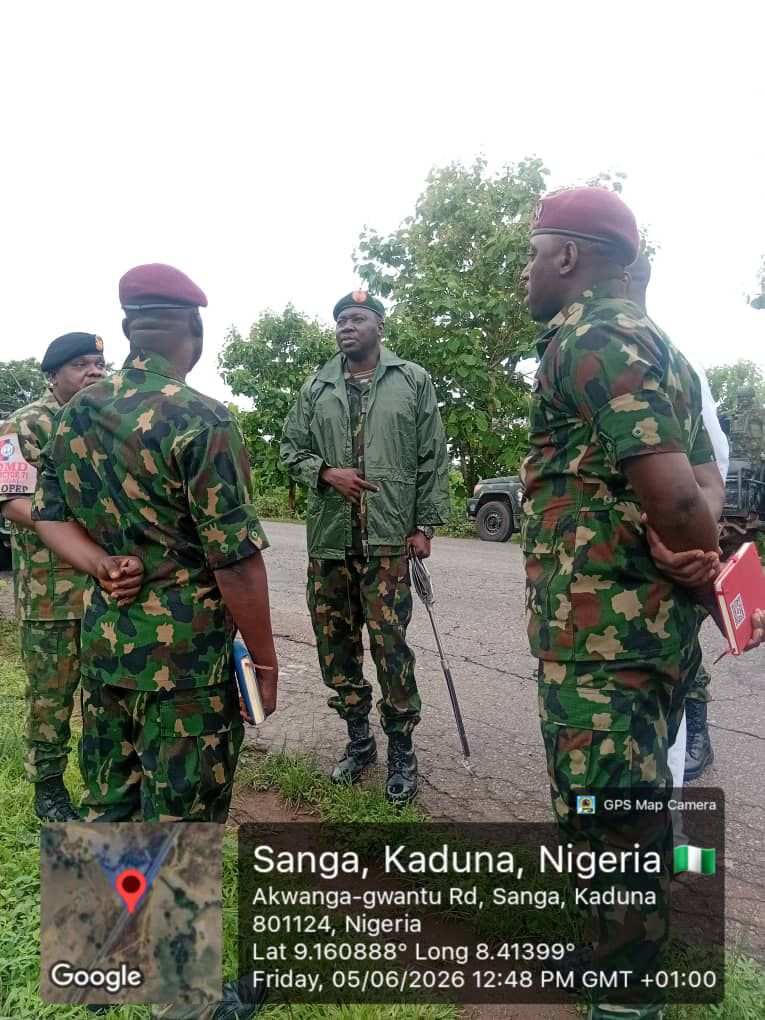
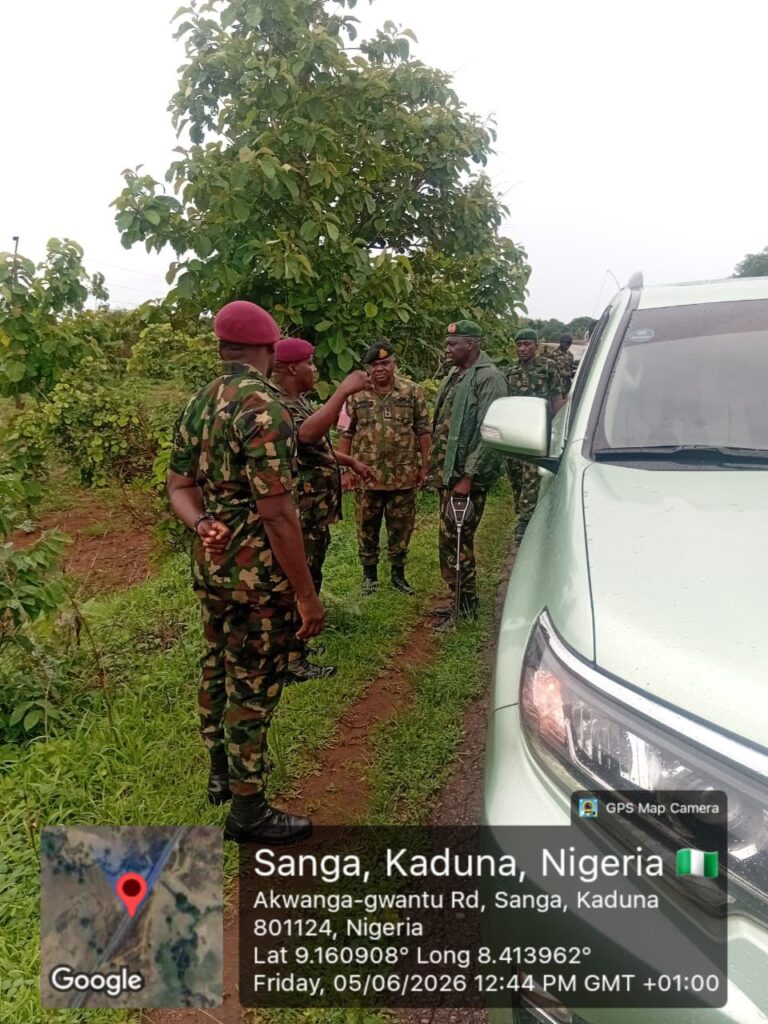
The Force Commander, Operation Whirl Stroke (OPWS), Maj.-Gen. K.M. Gara, on Friday visited the boundary area between Nasarawa and Kaduna States to assess the security situation and strengthen operational coordination along the Akwanga–Kaduna highway corridor.
Security sources said the visit, which took place at about 12:42 p.m. on June 5, also included the Commander of the Garrison, Brig.-Gen. D.C. Nwakonobi, and the Nasarawa State Police Area Commander, DCP S. Alli.
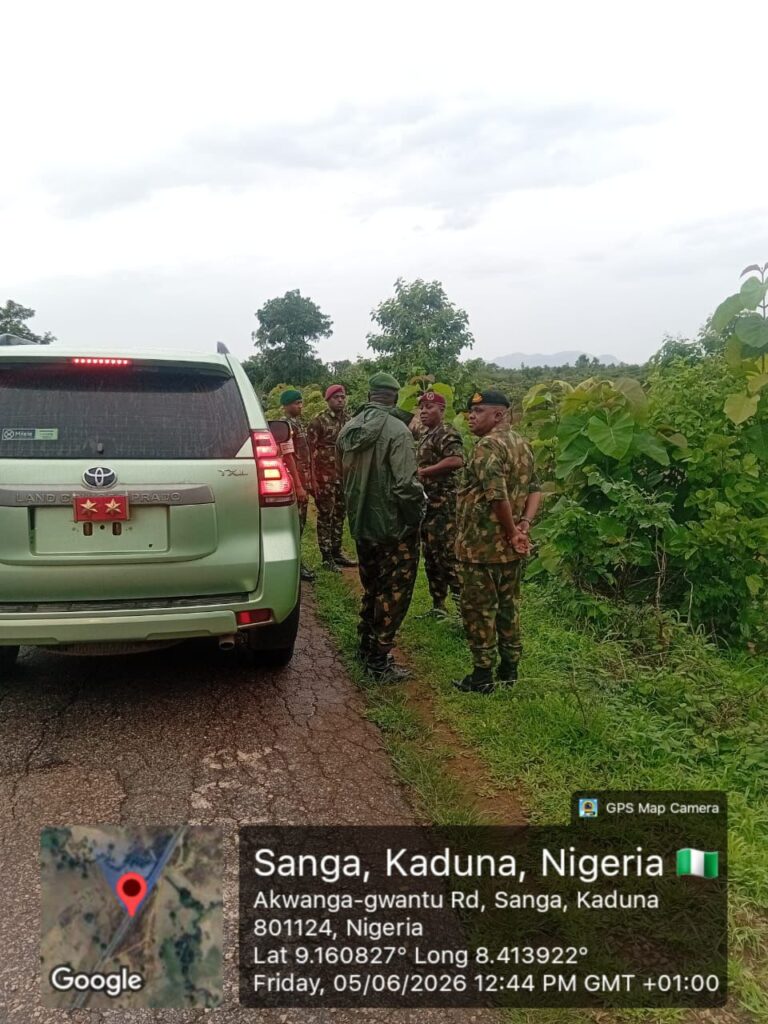
According to the sources, the team inspected operational deployments and received briefings on the security situation and combat readiness of troops from the Sub-Sector 71 Commander under Operation Safe Haven.
The sources added that the visit was aimed at assessing the highway axis between Akwanga and the boundary between Nasarawa and Kaduna States, with a view to strengthening measures against persistent kidnapping incidents along the route.
They noted that the exercise also sought to enhance synergy between Operation Safe Haven and Operation Whirl Stroke in addressing insecurity in the general area.
“The visit was part of ongoing efforts to curb kidnapping along major highways and improve inter-agency coordination,” the sources said.
The sources further confirmed that the visit was conducted peacefully without any security incident.
They added that routine patrols were ongoing across the Joint Operations Area to protect schools, churches and other critical national infrastructure.
Troops’ morale and operational efficiency, the sources said, remained satisfactory across the theatre.
Force Commander OPWS Visits Boundary Area Between Nasarawa and Kaduna States, Reviews Security Measures
Army Opens Combat Support Arms Training Week 2026 in Uyo
By: Zagazola Makama
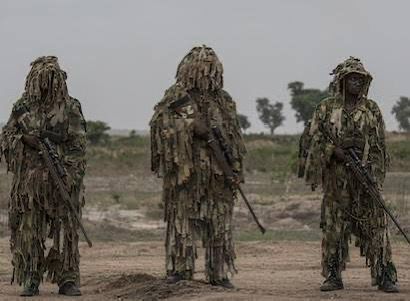
The Nigerian Army on Tuesday commenced the 2026 Combat Support Arms Training Week (COSAT) in Uyo, Akwa Ibom State, with a call for enhanced adaptability, resilience and indigenous innovation to strengthen operational effectiveness.
The event, hosted by the Headquarters Nigerian Army Intelligence Corps (NAIC), was held at the Ibom Hall in Uyo Local Government Area and brought together senior military officers, government officials and other stakeholders.
The theme of the training week is: “Strengthening Combat Support Arms Adaptability and Resilience Through Indigenous Innovation for Integrated Operational Support Within a Joint and Multi-agency Framework.”
Speaking at the opening ceremony, participants underscored the importance of leveraging local innovation and inter-agency collaboration to address evolving security challenges and enhance operational support capabilities.
The Governor of Akwa Ibom State, Pastor Umo Eno, who was represented by the State Commissioner for Trade and Investment, Capt. Iniobong Ekon (Rtd), attended the event alongside top military officials and invited guests.
Also present were the Chief of Army Staff (COAS), Lt.-Gen. W. Shaibu, represented by Maj.-Gen. A.A. Adekeye; the General Officer Commanding (GOC) 6 Division, Maj.-Gen. E.E. Emekah; and the Chief Host and Corps Commander, Nigerian Army Intelligence Corps, Maj.-Gen. R.E. Hedima.
Other attendees included corps commanders, senior serving and retired military officers, the Commander 2 Brigade/Sector 4 Operation Delta Safe, as well as representatives of various security agencies and organisations.
Activities conducted during the opening ceremony included professional lectures, static displays by combat support corps and the presentation of souvenirs.
The training week is expected to provide a platform for knowledge sharing, professional development and the exchange of ideas aimed at enhancing the Nigerian Army’s capacity to provide effective combat support within joint and multi-agency operations.
The event was conducted without any security or logistical incidents.
Army Opens Combat Support Arms Training Week 2026 in Uyo

Zulum Delivers Relief, Cash Support to 434 Ngoshe Residents Rescued from Boko Haram

DEMOCRACY AND THE COURAGE TO BELIEVE

Army Distributes Fertiliser to Farmers in Jigawa Under Civil-Military Cooperation Programme

Roger Federer’s Shock as DNA Results Reveal Myla and Charlene Are Not His Biological Children

THE PLIGHT OF FARIDA

FAILED COUP IN BURKINA FASO: HOW TRAORÉ NARROWLY ESCAPED ASSASSINATION PLOT AMID FOREIGN INTERFERENCE CLAIMS
-
 News2 years ago
Roger Federer’s Shock as DNA Results Reveal Myla and Charlene Are Not His Biological Children
-
Opinions4 years ago
THE PLIGHT OF FARIDA
-
 News1 year ago
FAILED COUP IN BURKINA FASO: HOW TRAORÉ NARROWLY ESCAPED ASSASSINATION PLOT AMID FOREIGN INTERFERENCE CLAIMS
-

 News2 years ago
EYN: Rev. Billi, Distortion of History, and The Living Tamarind Tree
-
 Opinions4 years ago
POLICE CHARGE ROOMS, A MINTING PRESS
-

 ACADEMICS2 years ago
A History of Biu” (2015) and The Lingering Bura-Pabir Question (1)
-

 Columns2 years ago
Army University Biu: There is certain interest, but certainly not from Borno.
-

 Politics1 year ago
2027: Why Hon. Midala Balami Must Go, as Youths in Hawul and Asikira/Uba Federal Constituency Reject ₦500,000 as Sallah Gift
