
News
Suspected Boko Haram insurgents kill Four Police Men after Midnight Attack at Gajiram Police division


Suspected Boko Haram insurgents kill Four Police Men after Midnight Attack at Gajiram Police division
By: Bodunrin Kayode
Four police men have been brutally killed in a near Friday midnight attack by suspected Boko Haram insurgents at Gajiram about 55km from Maiduguri.
Reliable Hadin Kai theatre sources told this reporter that the insurgents were said to have entered Gajiram police division obviously looking for ammunition, killing the four police men they could trap in the general area.
Others said to have been on duty escaped into the savannah before they could get them the way they trapped those three who were hiding inside.
“Incidentally three of them name withheld for now were taking a nap inside the station when the criminals came and attacked and killed them.
“Sadly, one of the men was hiding inside the APC on hearing their gun shots but they used a machine gun to shoot at the tank through the window and burnt the thing to be sure that the fellow died and his body was charred to ashes.
” It is sad that the abandoned APC was not mobile which is why they burnt it if not they would have taken it with them to the bush where they would have been making use of it” Said the source.
As at the time of filing this report, the entire commanders of Police headquarters Maiduguri led by the Commissioner of Police Naziru Abdulmajid had moved to Nganze council area to salvage the remains of the fallen officers.
The men of the Nigerian police Force have always been a primary target for elimination from the inception of this lingering insurgency in the north East war theatre.
Suspected Boko Haram insurgents kill Four Police Men after Midnight Attack at Gajiram Police division



SOJA Urges Madonna University to Reconsider Nursing Students’ Expulsion, Suspension
By: Michael Mike
The Speak Out for Justice Advocacy Ltd/Gte (SOJA) has appealed to the management of Madonna University, Elele Campus, Rivers State, to reconsider the expulsion of a final-year nursing student and the one-year suspension of 14 others over a viral social media video, warning that disciplinary measures should not unnecessarily destroy the academic and professional futures of young people.
The human rights advocacy organisation urged the university to embrace proportionality, fairness and compassion in resolving the controversy, while maintaining that students must be held accountable for breaches of professional ethics and institutional regulations.
In a press statement dated October 9, 2026, SOJA’s Founder and Executive Director, Hameed Ajibola Jimoh, said the university should consider less severe disciplinary measures where appropriate, including formal warnings, ethics training, counselling and supervised remediation.
The appeal comes amid growing public reactions to the university’s decision to expel one 500-level nursing student and suspend 14 others for one year over a video showing nursing students dancing within the institution’s teaching hospital.
The video, which circulated widely on social media, was associated with a trend featuring healthcare workers dancing in clinical environments and reportedly carried the caption, “No fall sick o, na Gen Z full hospital now.”
The incident has triggered calls from student organisations and human rights advocates for the university to review the sanctions, with concerns raised over the consequences for students who have invested years in their education and are approaching the completion of their nursing programmes.
SOJA acknowledged that professional discipline was essential, particularly in nursing, where patient dignity, privacy, confidentiality and welfare must remain paramount.
However, Jimoh argued that the severity of disciplinary measures should be assessed against the nature of the misconduct, the individual circumstances of the students, their academic records and the availability of alternative corrective measures.
“Discipline must correct misconduct without unnecessarily destroying the future of young people,” he said.
The organisation maintained that expulsion and lengthy suspension, especially at an advanced stage of a degree programme, could have consequences extending beyond the immediate disciplinary objective, including the loss of years of academic effort, financial investment and future professional opportunities.
Cites constitutional safeguards
SOJA also invoked Nigeria’s constitutional and international human rights obligations, arguing that disciplinary proceedings should respect human dignity and the principles of fair hearing.
It cited Section 34 of the 1999 Constitution, which protects human dignity, and Section 36, which guarantees fair hearing in the determination of civil rights and obligations.
The organisation further referenced Articles 5 and 17 of the African Charter on Human and Peoples’ Rights, concerning human dignity and the right to education, as well as Article 13 of the International Covenant on Economic, Social and Cultural Rights, which recognises the right to education.
SOJA, however, acknowledged that these protections do not exempt students from reasonable university regulations or automatically invalidate disciplinary sanctions.
Rather, it argued that the exercise of disciplinary authority should be guided by procedural fairness, proportionality and respect for the legitimate educational interests of affected students.
The organisation called on Madonna University to review the sanctions individually, ensure that the students had meaningful opportunities to be heard and pursue any available internal appeals, and consider alternative penalties where justified by the circumstances.
It also urged the institution to strengthen training on patient confidentiality, professional ethics, digital responsibility and respect for human dignity to prevent similar incidents.
Wider calls for clemency
SOJA’s intervention follows appeals by the National Association of Nigerian Students (NANS) and the Nigerian Universities Nursing Students’ Association (NUNSA) for the university to reconsider its decision.
NANS has urged the institution to replace the expulsion with a stern warning, arguing that the punishment could have lasting consequences for the affected students’ academic careers and professional aspirations.
NUNSA has also called for constructive engagement and a fair review of the disciplinary measures, disclosing that it had commenced discussions with relevant stakeholders to represent the interests of the affected students.
Amnesty International has similarly urged the university to reverse the sanctions, describing them as disproportionate and advocating dialogue and mediation.
The controversy has generated contrasting reactions, with some Nigerians arguing that nursing students must uphold the highest standards of professional conduct, particularly within hospital environments, while others believe the sanctions should be reconsidered in view of the students’ stage of academic progression.
SOJA stressed that its appeal should not be interpreted as an endorsement of misconduct but as a call for accountability that takes into consideration the consequences of punishment.
“A university should uphold standards while remaining an institution of learning, correction and human development,” the organisation said.
It added that protecting patients and maintaining professional discipline were compatible with offering students a second chance where the circumstances justified it.
SOJA urged the university management to exercise its discretion with wisdom and compassion, giving the affected students an opportunity to learn from the incident and rebuild their professional futures, subject to appropriate safeguards and accountability.
Editorial note: The background on the sanctions and interventions by NANS, NUNSA and Amnesty International is supported by published reports. Before publication, it would be advisable to seek Madonna University’s response to the latest appeal and verify the students’ individual disciplinary outcomes.
SOJA Urges Madonna University to Reconsider Nursing Students’ Expulsion, Suspension
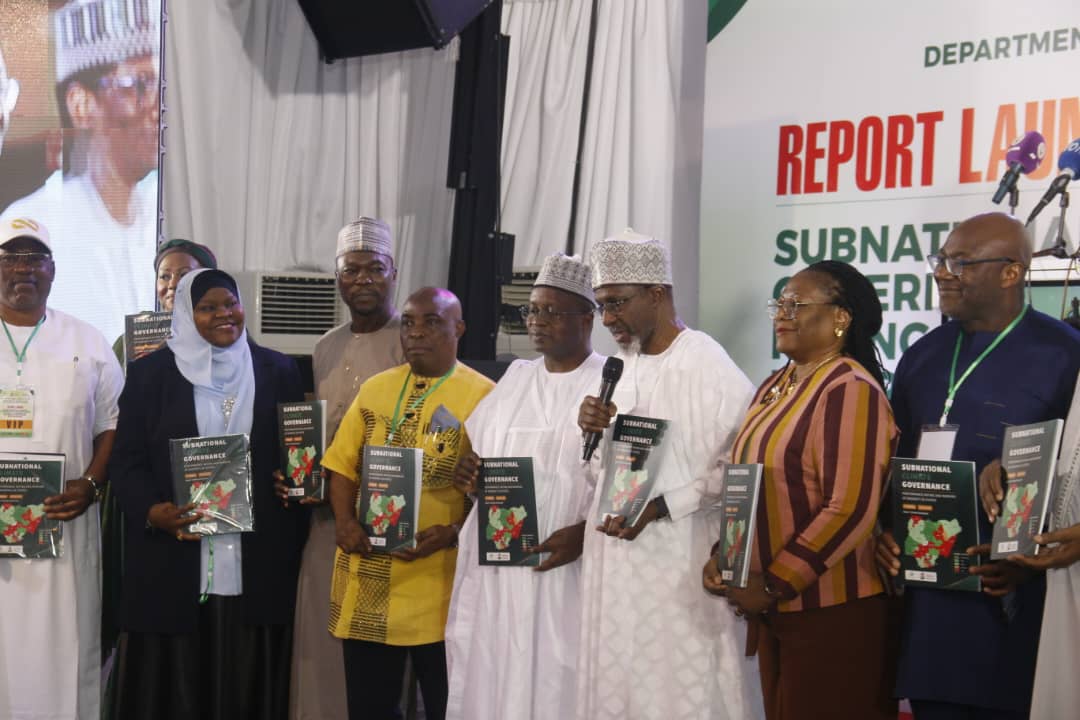
Katsina Tops Sub-national Climate Governance Ranking
By: Michael Mike
The Society for Planet & Prosperity (SPP), in collaboration with the Federal Ministry of Environment, has launched the third edition of the Sub-national Climate Governance Performance Rating and Ranking, with Katsina State emerging as the top-performing state.
The annual assessment evaluates how effectively Nigeria’s 36 states and the Federal Capital Territory (FCT) govern and implement climate action, environmental sustainability and related policies at the sub-national level.
Speaking at the launch in Abuja, the Minister of Environment, Balarabe Lawal, urged state governors to make climate action an integral part of their development and investment priorities.
Lawal said the Federal Government, under President Bola Tinubu’s Renewed Hope Agenda, remained committed to providing technical assistance, capacity development and collaboration to enable states strengthen their climate governance frameworks.
“Let us use this Third Edition to transform competition into constructive learning, rankings into accountability, and commitments into tangible outcomes,” he said.
The minister commended the 36 states and the FCT for participating in the assessment, urging them to use the initiative to strengthen climate governance, build resilience and promote sustainable development.
He added that with stronger commitment from state governments, Nigeria could build a resilient, low-carbon and prosperous nation while ensuring that no state or community was left behind.
Presenting the assessment, the President of SPP, Prof. Chukwumerije Okereke, said the ranking was not merely a measure of a state’s climate record or vulnerability to climate change, but an assessment of how effectively states were governing and implementing climate action.
He said the assessment covered five major areas: climate institutions and governance; climate policy and action plans; climate project implementation and monitoring; climate budget and finance; and online visibility of climate activities.
Okereke said states were required to provide evidence of five major climate projects, from which the three best-performing projects were selected for scoring.
He added that the assessment also considered budgeting, access to climate finance, stakeholder participation, monitoring and evaluation, and online visibility.
“The ranking was based on evidence submitted by the states, followed by verification, with strict emphasis on transparency and integrity,” he said.
According to him, the latest results showed substantial improvement in climate action at the sub-national level, while stronger collaboration, peer learning, improved implementation and better access to climate finance could further enhance Nigeria’s response to climate change.
The latest ranking represents a significant reshuffling of the leading states since the exercise began in 2024.
The first edition, launched in July 2024, was topped by Lagos State, followed by Gombe and Ebonyi states, while Borno and Ekiti shared the fourth position. At the bottom of the inaugural ranking were Oyo, Kano and Zamfara, which occupied 34th, 35th and 36th positions respectively.
Lagos retained the number-one position in the second edition released in October 2025, scoring 315 points out of 365. Katsina made one of the most dramatic improvements, jumping from 25th position in 2024 to second place with 310 points, while Kaduna moved from 16th to third.
Kano also recorded a particularly striking improvement in the second edition, moving from 35th position in 2024 to fourth in 2025. The state’s performance was attributed to improvements in climate institutions, policy, implementation and other areas covered by the assessment.
The second edition therefore saw Lagos, Katsina and Kaduna occupy the top three positions, while Kano and Enugu broke into the top five after significant improvements from their previous performances.
The third edition has now produced another major change, with Katsina displacing Lagos from the top position. Abia moved into second place, Kano climbed to third, Lagos dropped to fourth, while Kwara entered the top five in fifth position.
The result is particularly significant for Katsina, which has moved from 25th in the inaugural ranking, to second in the 2025 edition and now first in the latest assessment. SPP had previously described the state’s 23-place rise between the first and second editions as one of the most significant improvements recorded under the ranking initiative.
In his acceptance speech, Katsina State Commissioner of Environment and Special Adviser on Climate Change, Prof. Mohammed Alamin, said the state viewed climate action as both a development and security issue.
He said Katsina was particularly concerned about the effects of desertification, resource pressure and climate variability on agriculture, livelihoods and communities.
Alamin said the administration of Governor Dikko Radda had prioritised the participation of young people and women in climate action, alongside initiatives such as the Katsina One-Person-One-Tree programme.
He said the programme targets the planting of two million trees in 2026 and 11 million trees by 2030.
He added that Katsina was positioning its climate, agriculture, renewable energy and carbon-market opportunities for international engagement, describing the ranking as both recognition of the state’s climate governance efforts and an opportunity to showcase its broader green-development agenda.
The third edition thus marks a further evolution of the annual assessment, which SPP says has increasingly placed emphasis on evidence, verification and actual implementation rather than policy commitments alone. The second edition introduced stronger evidence requirements, including supporting.
Katsina Tops Sub-national Climate Governance Ranking
Nigeria, Bangladesh deepen strategic defence cooperation
By: Zagazola Makama
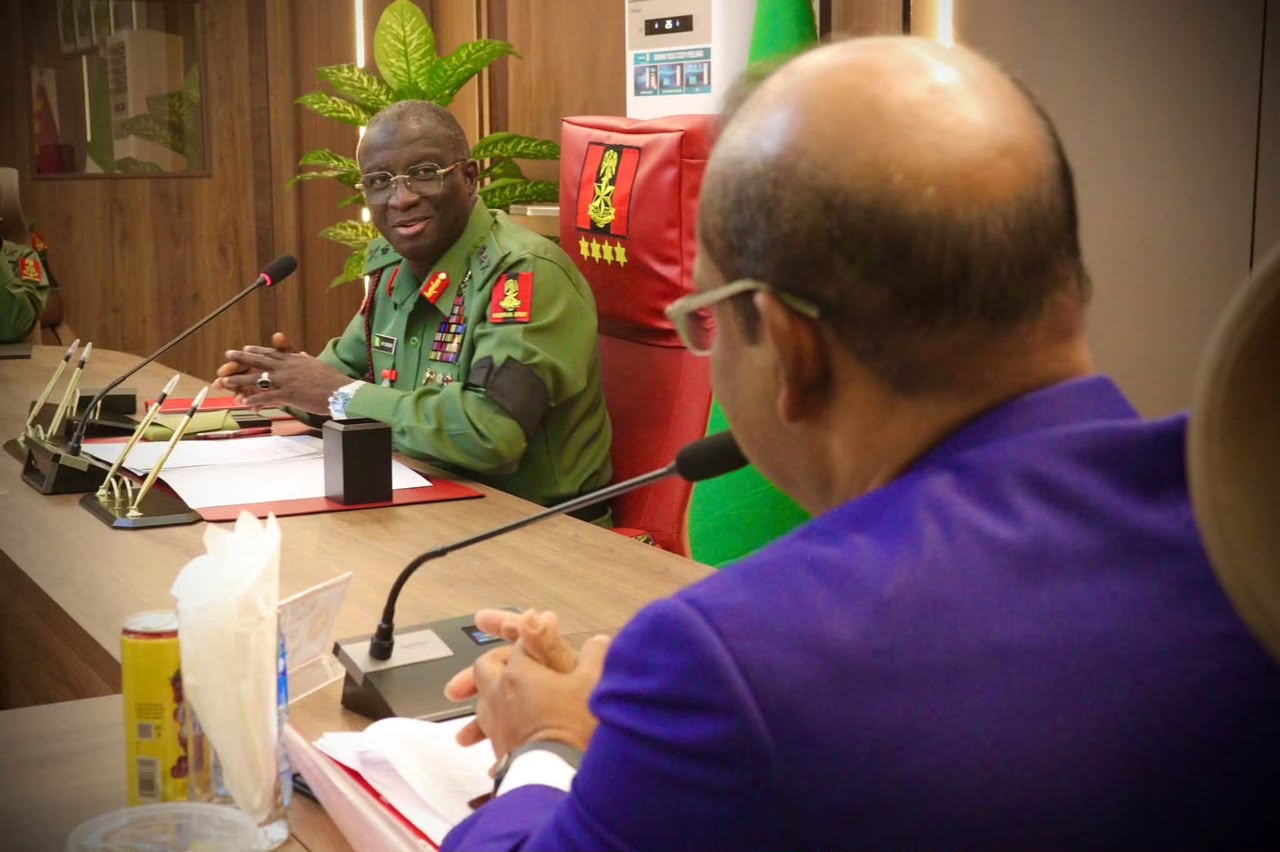
ABUJA — The Nigerian Army and Bangladesh are strengthening strategic defence cooperation focused on military capacity building, professional military education, operational effectiveness and institutional partnerships.
The Chief of Army Staff (COAS), Lieutenant General Waidi Shaibu, disclosed this on Thursday, October 8, 2026, when he received the Bangladesh High Commissioner to Nigeria, His Excellency Miah Md Mainul Kabir, on a courtesy visit to Army Headquarters, Abuja.

Shaibu said the Nigerian Army was ready to share its operational experiences in counter-terrorism, counter-insurgency and drone warfare, as well as its expertise in the humanitarian management of internally displaced persons.
He directed relevant departments at Army Headquarters to engage their counterparts in the defence sector to develop joint training programmes and strategic frameworks aimed at strengthening the operational capabilities of both countries.
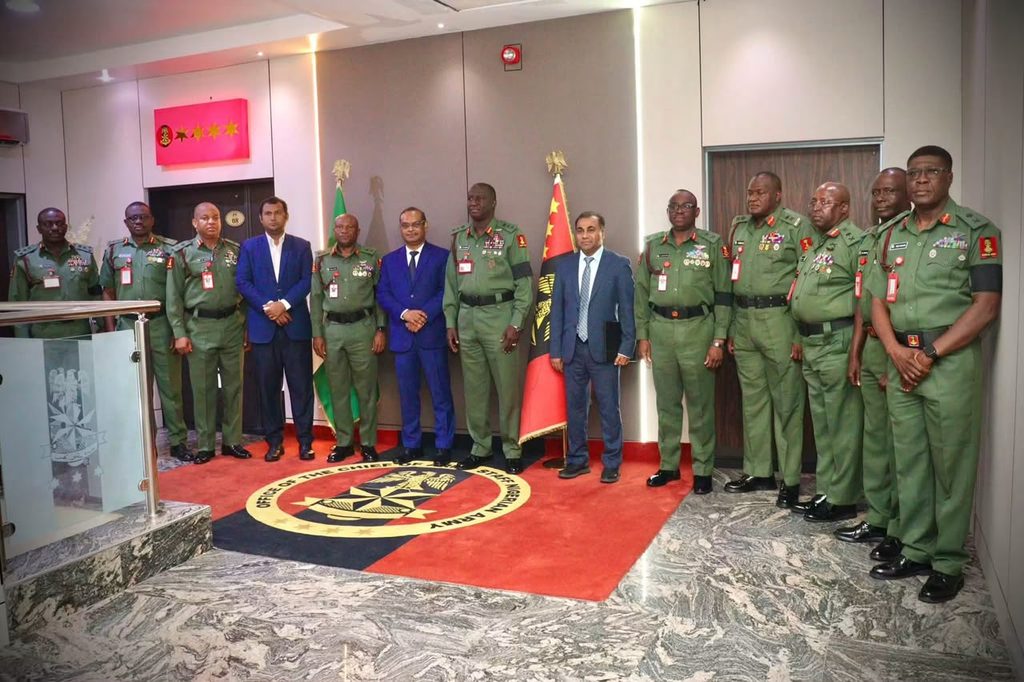
The COAS also approved the establishment of the National Defence College Bangladesh Alumni Association to bring together Nigerian military personnel who have completed strategic courses in Bangladesh.
He noted that the Chief of Military Intelligence (Army) and the General Officer Commanding 1 Division are among Nigerian military officers who have undergone training at Bangladeshi military institutions.
According to him, the alumni association would provide an institutional platform for sustained collaboration, training exchanges, technical cooperation and stronger military-to-military relations between Nigeria and Bangladesh.
Responding, the Bangladesh High Commissioner expressed condolences to the Nigerian Army over the recent military aircraft crash in Ondo State.
Kabir also commended Nigeria’s contributions to United Nations peacekeeping operations and disclosed that 154 Nigerian officers have participated in courses at the Bangladesh National Defence College.
He advocated expanded institutional exchanges involving foreign service academies and military training programmes to strengthen strategic leadership development and deepen bilateral cooperation.
The engagement is expected to provide a broader framework for professional military exchanges and the sharing of operational and institutional experiences between the two countries.
Nigeria, Bangladesh deepen strategic defence cooperation

SOJA Urges Madonna University to Reconsider Nursing Students’ Expulsion, Suspension

Israel Trains Nigerian Health Workers on Maternal Emergency Care

Troops recover cannabis, other illicit drugs huge out in Mangu market

Roger Federer’s Shock as DNA Results Reveal Myla and Charlene Are Not His Biological Children

THE PLIGHT OF FARIDA

FAILED COUP IN BURKINA FASO: HOW TRAORÉ NARROWLY ESCAPED ASSASSINATION PLOT AMID FOREIGN INTERFERENCE CLAIMS
-
 News3 years ago
Roger Federer’s Shock as DNA Results Reveal Myla and Charlene Are Not His Biological Children
-
Opinions5 years ago
THE PLIGHT OF FARIDA
-
 News1 year ago
FAILED COUP IN BURKINA FASO: HOW TRAORÉ NARROWLY ESCAPED ASSASSINATION PLOT AMID FOREIGN INTERFERENCE CLAIMS
-

 News3 years ago
EYN: Rev. Billi, Distortion of History, and The Living Tamarind Tree
-
 Opinions5 years ago
POLICE CHARGE ROOMS, A MINTING PRESS
-

 ACADEMICS3 years ago
A History of Biu” (2015) and The Lingering Bura-Pabir Question (1)
-

 Columns3 years ago
Army University Biu: There is certain interest, but certainly not from Borno.
-

 Politics1 year ago
2027: Why Hon. Midala Balami Must Go, as Youths in Hawul and Asikira/Uba Federal Constituency Reject ₦500,000 as Sallah Gift
