
News
Suspected Fulani bandits on reprisal killed 7, injure 2 in revenge to multiple attacks in Plateau

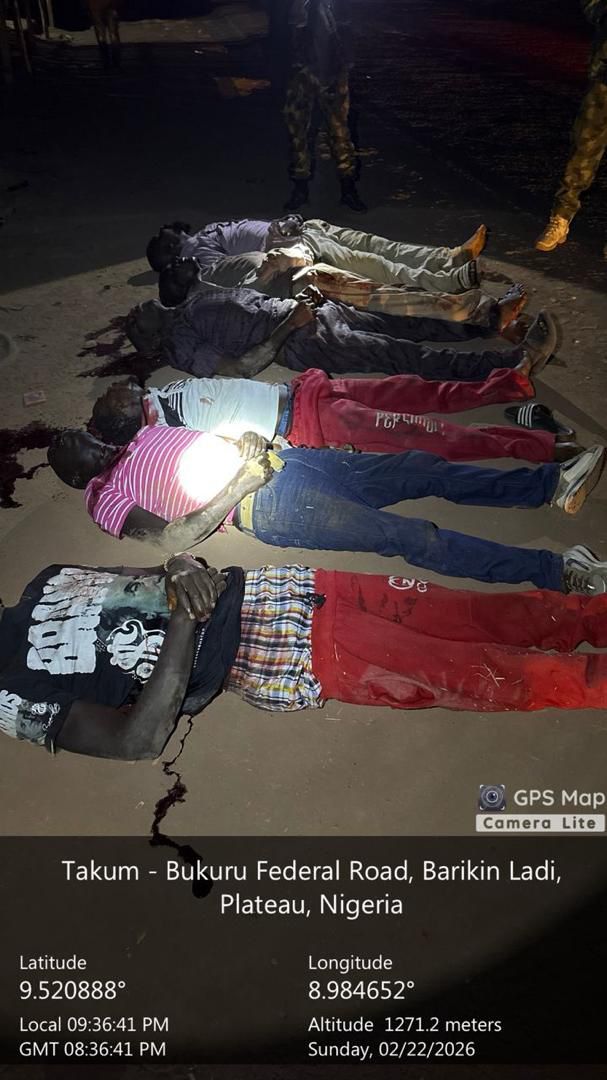
Suspected Fulani bandits on reprisal killed 7, injure 2 in revenge to multiple attacks in Plateau
By: Zagazola Makama
Seven persons have been killed in Dorowa Babuje village of Barkin Ladi Local Government Area following an attack by gunmen suspected to be Fulani militias, in what security sources describe as a reprisal linked to a series of earlier assaults on pastoralist communities across Plateau State.
Sources told Zagazola Makama that the incident occurred at about 7:30 p.m. on Feb. 22 when troops of Sector 4 under Operation Safe Haven responded to a distress call that armed men had stormed a local relaxation spot in Dorowa Babuje and opened fire on residents.
On arrival, troops discovered seven persons dead and two others critically injured. The corpses were evacuated to Barkin Ladi General Hospital mortuary, while the injured victims were rushed to the same facility for treatment.
Security forces had since launched aggressive patrols across Dorowa Babuje, Dong and Lugere villages to intercept the attackers and forestall further breakdown of law and order.
Military responders evacuated the deceased to Barkin Ladi General Hospital mortuary while the injured were rushed to the same facility for treatment. Troops subsequently launched aggressive patrols across Dorowa Babuje, Dong and Lugere communities to prevent escalation and track perpetrators.
Zagazola report that the Feb. 22 killings did not occur in isolation but were preceded by weeks
of sustained targeted attacks on pastoralists communities by Berom Militia and in some cases months of violent incidents triggered by attacks on both pastoral and agrarian communities in the state.
Less than 24 hours before the Barkin Ladi attack, armed men suspected to be Berom militia reportedly attacked herders in Jol community of Riyom, killing one Muhammed Sani and abducting another victim identified as Faruq Jamilu. Livestock belonging to the victims were also reportedly killed or injured.
In Feb. 19, three Fulani youths Tahiru Muhammad, Jibrin Salisu and Abdulmumin Isyak were ambushed and brutally killed by suspected Birom Militia while returning from Dorowa Babuje area near Jong community. The attackers cut off the head of one of the slain Fulani youth before fleeing the scene. Evidence reportedly recovered at the scene included spent cartridges, a motorcycle and empty bottle of alcohol. Community representatives described the attack as targeted and warned it could trigger retaliation.
Earlier in February 11, six cows belonging to two herders were reportedly poisoned at Tulus and Rwam villages in Bokkos. Two animals died instantly while four others had to be slaughtered after showing symptoms consistent with poisoning. Around the same period, two houses were set ablaze in Tulus village during a separate attack on a Fulani settlement.
Earlier, on Feb. 2, one cow was shot dead at Weren Camp in Riyom LGA, while three others were poisoned in Kwi village using toxic substances reportedly concealed inside fruits placed along grazing routes. Veterinary observers described the method as deliberate and premeditated.
December 2025 escalation pattern
Security assessments published by Zagazola traced the roots of the current escalation to a series of incidents recorded in December 2025 across several LGAs.
On Dec. 12, armed attackers reportedly stormed Nding community in Fan District of Barkin Ladi LGA and rustled about 137 cattle belonging to three herders.
Barely 24 hours later, on Dec. 13, another 34 cattle were rustled at Kukukah community in Jos East LGA. The same day, nine cows reportedly died from poisoning in Kwi village of Riyom LGA.
On Dec. 16, armed bandits suspected to be Fulani attacked an illegal mining site at Tosho community in Fan District, Barkin Ladi LGA, allegedly to recover previously rustled cattle. The incident reportedly resulted in multiple fatalities, injuries and abductions.
Between Dec. 18 and 19, retaliatory attacks were reported in Dorong village of Barkin Ladi LGA, where four children were killed, and in Gero village of Jos South LGA, where additional livestock were reportedly destroyed.
On Dec. 27, five youths travelling from Kara cattle market were ambushed along Bukuru Express Road near Angle D in Jos South LGA and evacuated to Jos University Teaching Hospital with gunshot wounds.
Zagazola Makama report that the Plateau’s recurring rural violence is increasingly driven by tit-for-tat reprisals tied to livelihood destruction, especially attacks on Fulani settlements, cattle rustling and poisoning, which often serve as immediate triggers for wider communal confrontations.
The Plateau State Government had refused to demonstrate sufficient political will to decisively addressing the root causes of the recurring violence across the state, particularly in rural flashpoints such as Barkin Ladi, Riyom and Bokkos.
The incidents reveal the same structured pattern of violence in which attacks on livestock or individuals are followed by retaliatory raids.
Zagazola has repeatedly warned of these reprisal ecosystem, where each attack becomes justification for another, yet investigations rarely lead to arrests, prosecutions or publicly communicated outcomes.
The absence of swift justice, weak deterrences delayed investigations and the proliferation of armed non-state actors are contributing to the persistence of the crisis and has remained a catalyst for further bloodshed.
Again, Zagazola warned that failure to decisively interrupt the cycle risks normalising reprisal attacks, expanding militia influence and eroding state authority in Plateau state.
Suspected Fulani bandits on reprisal killed 7, injure 2 in revenge to multiple attacks in Plateau


News
Operation Hadin Kai intensifies campaign against ISWAP, Boko Haram, records major gains in August
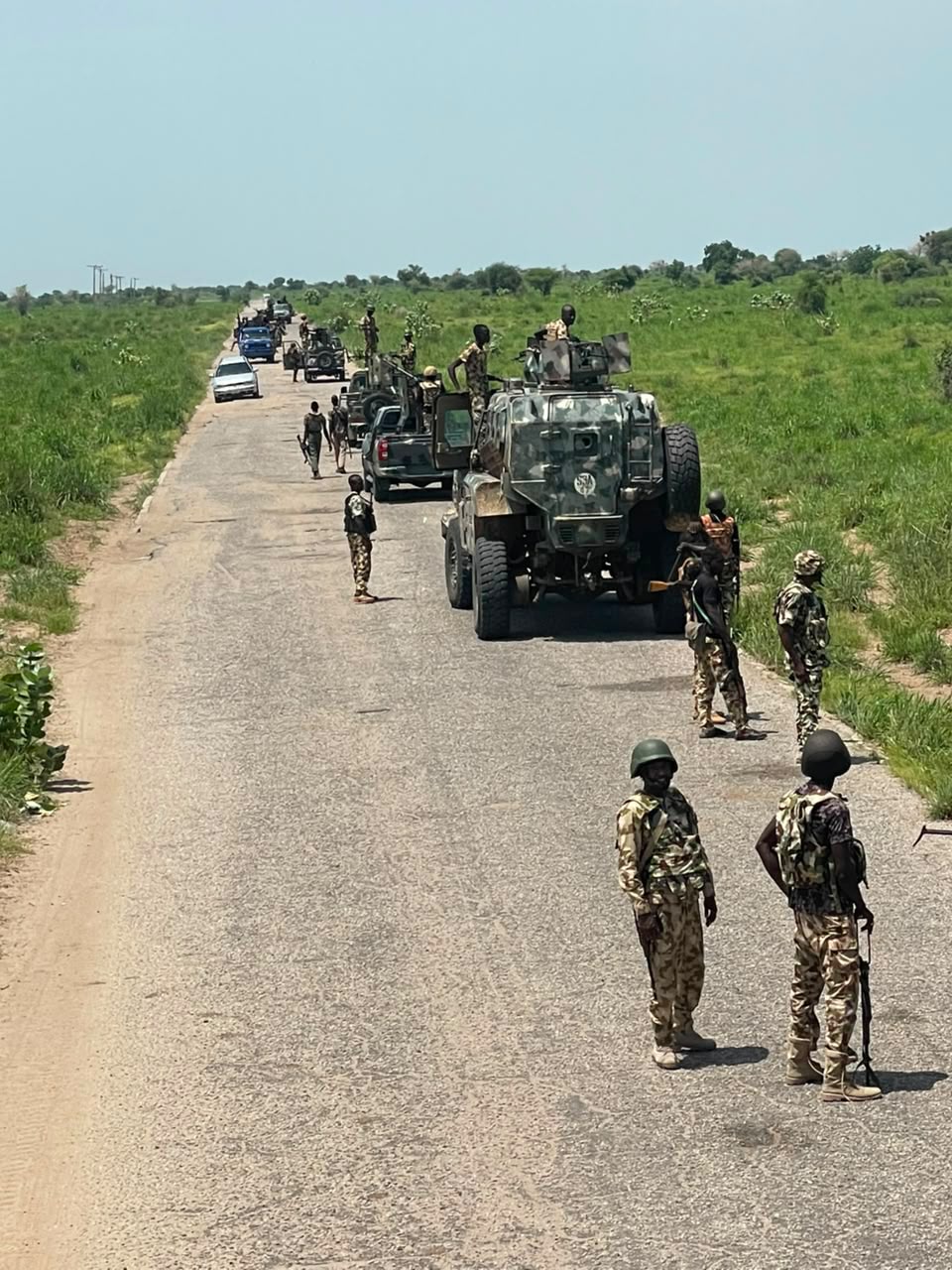
Operation Hadin Kai intensifies campaign against ISWAP, Boko Haram, records major gains in August
By Zagazola Makama
Troops of Operation Hadin Kai (OPHK) have intensified their campaign against Islamic State West Africa Province (ISWAP) and Boko Haram terrorists across the North-East, recording significant operational gains during sustained ground and air operations in August 2026.
The offensive operations resulted in the neutralisation of 152 terrorists, arrest of 142 suspects and surrender of 219 terrorists during the month, highlighting the increasing pressure being brought to bear on terrorist networks operating across the theatre.
The operations also disrupted terrorist movements and logistics through a combination of ground offensives, intelligence-led actions and air interdictions.
According to operational data obtained by Zagazola Makama, troops conducted 10 air interdictions during the period and successfully neutralised nine improvised explosive devices (IEDs), denying terrorists the opportunity to use the explosive devices against troops and civilians.
The destruction of the IEDs also helped to secure major routes and movement corridors frequently used by security forces and local communities.
The sustained offensive also yielded significant recoveries of weapons, ammunition and other items linked to terrorist operations. Troops recovered 58 weapons and explosive items, including AK-47 and AK-49 rifles, locally fabricated firearms, a hand grenade and an RPG bomb. A total of 1,184 rounds of ammunition were also recovered during the operations. Other items recovered included 16 mobility assets, 44 mobile phones, a Sony video camcorder and N1,794,910 in cash.
The recoveries are expected to further support ongoing intelligence efforts aimed at tracking terrorist logistics networks, identifying their collaborators and disrupting their ability to sustain attacks across the region.
The August operational figures reflect the multi-dimensional approach adopted by Operation Hadin Kai, combining offensive ground operations, air interdictions, intelligence gathering and community-supported security activities.
The surrender of 219 terrorists during the month also represents an important dimension of the campaign, as it reduces the manpower available to terrorist organisations while providing security agencies with opportunities to obtain valuable information on terrorist structures, movements and logistics.
The military’s continued pressure has increasingly forced terrorist elements to operate under more difficult conditions, with their freedom of movement and ability to sustain conventional attacks being progressively constrained.
The campaign is aimed at creating conditions for the safe return of displaced populations, reopening access routes, restoring economic activity and enabling communities to resume normal livelihoods.
The destruction of IEDs, in particular, remains critical to civilian safety, as the devices pose a persistent threat to troops, farmers, commuters and other residents using roads and rural pathways.
The military high command and local communities have commended the troops for their sacrifices, resilience and commitment to restoring peace across the North-East.
As Operation Hadin Kai enters subsequent phases of its counter-insurgency campaign, the August results demonstrate the continued emphasis on dismantling terrorist logistics, degrading their fighting capability and compelling members of the insurgent groups to abandon the battlefield.
The ultimate objective was to deny ISWAP and Boko Haram the ability to threaten communities, reclaim areas affected by insurgency and create a more secure environment for sustainable recovery across the North-East.
Operation Hadin Kai intensifies campaign against ISWAP, Boko Haram, records major gains in August

Niger: Fresh attacks in Tillabéri follow mutiny in Niamey
By Zagazola Makama
NIAMEY — Security challenges have continued to mount in western Niger following the recent mutiny at a strategic military base in the capital, with fresh attacks reported in several communities in the Tillabéri region.
On Sept. 2, armed assailants reportedly attacked the communities of Darbani, Diamballa and Namarigoungou in Tillabéri, according to local reports. The incidents resulted in civilian casualties and the loss of livestock.
At Diamballa, two young girls reportedly drowned in a pond while attempting to flee the attack, while another resident sustained gunshot injuries. In Namarigoungou, a man was reportedly killed during the assault.
The attacks were followed on Sept. 3 by another incursion at Zibane in the Anzourou commune, where further casualties were reported during the violence.
The latest incidents came only days after an attempted mutiny at Base 101 near Diori Hamani International Airport in Niamey. The unrest, involving soldiers reportedly frustrated by worsening security conditions and battlefield losses, was eventually suppressed with assistance from Russia-linked Africa Corps personnel.
The mutiny represented one of the most serious internal security challenges faced by the military authorities since they seized power in 2023. Reports indicate that the fighting around the airport and other strategic locations lasted for hours before loyalist forces regained control.
The developments have renewed concerns over the ability of Niger’s security forces to simultaneously contain internal tensions and respond effectively to persistent attacks by jihadist groups, particularly in the country’s western regions.
Tillabéri, which borders Mali and Burkina Faso, remains one of Niger’s most volatile security zones, with armed groups continuing to target rural communities and security personnel.
The latest violence also highlights the growing humanitarian cost of insecurity, as civilians face killings, injuries, livestock theft and disruption of livelihoods.
Meanwhile, the Nigerien authorities have continued to maintain that the security situation is under control. On Sept. 4, the government accused France of having a role in instigating the recent mutiny, although it did not publicly provide detailed evidence to support the allegation.
Niger: Fresh attacks in Tillabéri follow mutiny in Niamey

Troops dislodge terrorists, recover PKT machine gun, rifles, motorcycles in Sokoto
By Zagazola Makama
Troops of the Nigerian Army’s COAS Intervention Battalion 7, Sector 2, Operation Fansan Yamma, have dislodged terrorist elements and recovered a PKT machine gun, rifles, ammunition and motorcycles during offensive operations in Tangaza Local Government Area of Sokoto State.
Zagazola Makama gathered that the operation was conducted as part of sustained efforts by the troops to clear terrorist enclaves and deny armed groups freedom of movement in the North-West.
The troops advanced through identified terrorist threat areas, including Manu, Alkasim and Kandam villages, as well as the Magarya forest axis.
Sources said that upon making contact with the terrorists in the Magarya forest enclave, the troops engaged them with superior firepower, forcing the terrorists to abandon their positions and flee deeper into the forest.
During subsequent follow-up operations and a thorough search of the area, the troops recovered a PKT machine gun, AK-47 rifles, a large quantity of 7.62 x 54mm belted ammunition, motorcycles and assorted logistical and miscellaneous items.
The recovered weapons and mobility assets are believed to have been used by the terrorists to sustain their operations within the area.
The troops have continued to maintain a strong operational posture and dominate the general area to prevent the terrorists from regrouping and to ensure the security of surrounding communities.
The operation is part of the ongoing offensive efforts under Operation Fansan Yamma to dismantle terrorist enclaves and restore peace and stability across the North-West.
Troops dislodge terrorists, recover PKT machine gun, rifles, motorcycles in Sokoto

Operation Hadin Kai intensifies campaign against ISWAP, Boko Haram, records major gains in August

Niger: Fresh attacks in Tillabéri follow mutiny in Niamey

Troops dislodge terrorists, recover PKT machine gun, rifles, motorcycles in Sokoto

Roger Federer’s Shock as DNA Results Reveal Myla and Charlene Are Not His Biological Children

THE PLIGHT OF FARIDA

FAILED COUP IN BURKINA FASO: HOW TRAORÉ NARROWLY ESCAPED ASSASSINATION PLOT AMID FOREIGN INTERFERENCE CLAIMS
-
 News2 years ago
Roger Federer’s Shock as DNA Results Reveal Myla and Charlene Are Not His Biological Children
-
Opinions5 years ago
THE PLIGHT OF FARIDA
-
 News1 year ago
FAILED COUP IN BURKINA FASO: HOW TRAORÉ NARROWLY ESCAPED ASSASSINATION PLOT AMID FOREIGN INTERFERENCE CLAIMS
-

 News2 years ago
EYN: Rev. Billi, Distortion of History, and The Living Tamarind Tree
-
 Opinions5 years ago
POLICE CHARGE ROOMS, A MINTING PRESS
-

 ACADEMICS3 years ago
A History of Biu” (2015) and The Lingering Bura-Pabir Question (1)
-

 Columns3 years ago
Army University Biu: There is certain interest, but certainly not from Borno.
-

 Politics1 year ago
2027: Why Hon. Midala Balami Must Go, as Youths in Hawul and Asikira/Uba Federal Constituency Reject ₦500,000 as Sallah Gift
