
News
The DSS Operates within its Mandate

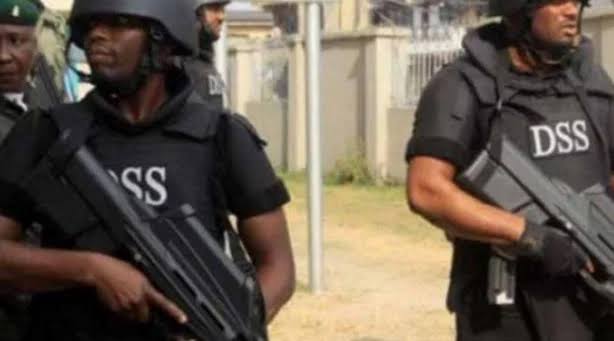
The DSS Operates within its Mandate
By: Peter Afunanya
Recently, about five major newspapers called out the DSS for bashing of sorts. The papers, which used their platforms to express varied views about the modus operandi of the Service include Vanguard, Daily Trust, The Sun, Tribune and Punch. While Vanguard’s piece on 2nd June 2023 was Dousing the DSS/EFCC Feud, Daily Trust, on 6th June 2023, published an editorial titled The DSS Must Conduct Its Duties as a Secret Service. The Sun, on 7th June, published The Needless DSS/EFCC Fracas while Tribune on 8th June 2023 wrote on The EFCC/DSS Confrontation. Similarly, on 14th June 2023, Punch featured DSS, Others Need Radical Reforms. It did not seem that the editorials which sought the reforms of the DSS or to criticise it for its public statements or actions on various subject matters of national security concern were, by any means, an accident or a coincidence. It looked every inch planted or organised. It is a hatchet job or so it seemed. The judgement that the Service is excessively public or ubiquitous missed the point. The papers manifested predictable bias and patterns.
Relatedly, some respected legal personalities namely, Olisa Agbakoba SAN, Mike Ozekhome SAN and Femi Falana SAN opined that the Service operates outside its mandate especially with regards to the investigation of Godwin Emefiele. The fact that this matter has become sub-judice constrains the Service from making further statements about it. The celebration of the news of a court order to allow his Lawyers and family access to him is quite unnecessary. He was never denied access. Ever since he was taken into custody, his family has continually accessed him. Same with medical officials. The impression that the Service is going to act on the prompting of the Court is not correct. This is by the way.
Back to the subject under discourse. While it may be fair to admit that the news media and aforementioned personalities are entitled to their opinions, measured ignorance predominantly played out in their arguments. First, they failed to recognise that security threats are evolving and so do the approaches to managing them. Instructively, the security landscape in Nigeria, like many other countries, has become increasingly complex and dynamic. The periodic issuance of press statements to educate or carry citizens and residents along has undoubtedly become part of strategies to manage national security challenges. Extensive research would have revealed to the critics that the Central Intelligence Agency (CIA), Federal Bureau of Investigation (FBI) and other world intelligence Services deploy similar tactics including occasional statements and advisories. The CIA includes demographic information on its website to provide the public with valuable insights and data about various populations so to enhance understanding of different regions and communities. Does it mean CIA is operating outside its mandate? Or will that be accepted because it’s CIA, a foreign body?
The need for the agencies to be responsive, transparent and apprise taxpayers has become the global norm in national security and intelligence management. It is called security/intelligence accountability. The tenets of security and intelligence governance expect that agencies remain transparent, accountable and compliant to democracy. World over, Intelligence Services operate in ways and means not too discernable to the uninitiate. But the institutionalisation of democracy as preferred political culture has nonetheless forced such agencies to communicate often with the Public. You can see why the public statements can never be out of place. Without public consciousness and support, countering threats may remain a herculean task for security agencies. Democratic subordination and legislative oversight are basic principles which make it an obligation for these agencies to operate openly even when some of their activities are secret. Ask the USA, UK, France, Canada and other advanced democracies. This level of openness does not vitiate the expected secrecy or in any way compromise their operations.
Regarding the matter concerning the DSS and EFCC, both agencies have refuted claims of a rivalry. It is important to note that comparing the 30th May, 2023 incident at 15 Awolowo Road, Lagos to the barricade of National Assembly in 2018 is inaccurate and unjust due to the substantial differences in the nature and context of the two events. While it is essential to emphasize inter-agency relations and cooperation, it would be unfair to generalise and imply that the Service is in rivalry and power struggle with the Commission. Each agency operates within its distinct mandate and context.
Meanwhile, the editorials accurately alluded to the constitutionality of the DSS as an intelligence organisation in detecting, preventing and neutralising threats against Nigeria. They commended the Service for its commitment to the security of the country as well as the many feats it had accomplished in the course of discharging its duties. Thank you indeed. It has to be understood that the Service is not only an intelligence organisation. It is also a law enforcement agency. It is a security and policy advisory organ. Its establishment law expects it to prevent. To prevent unarguably means to enforce. Should the Service seek media endorsement or permission before deploying operatives and equipment to conduct its job? Should it rather play to the gallery? Characteristic of intelligence operating systems, DSS’ activities may never be completely explained or understood particularly to those who do not need to know.
Even though some of its high officials and operations are known and their veils of secrecy uncovered, there are thousand undercover personnel and actions that have no business going public. It is expected to remain so. With its broad mandate and legal authority to investigate crimes of national security significance, the DSS is well within its rights to initiate an inquiry into any relevant matter. The DSS is primarily charged to detect and prevent crimes and threats against the internal security of Nigeria. More profoundly, it is to undertake such other responsibility as maybe assigned to it by the President and Commander-in-Chief. Appreciating this role of the DSS is instructive for some sections of the media, lawyers and other interested parties. The Service operates on the basis of rule of law. Its operations are rule governed. As required, it obtains arrest and detention warrants when and if needed. For the fact that such instruments are not advertised does not suggest otherwise. Critics should get conversant with the law and rules of engagement and desist from misinforming, misleading or inciting the public. Those seeking to weaken the Service through premeditated reforms may be on a wild goose chase. Consistent attack on it based on ignorance, unrealised interests and emotional assessments and judgements does the country no good. The DSS has stood so firmly for Nigeria. It will continue to.
Considering the warped mentality that has triggered these writeups, it will, no doubt, be unsurprising to witness an upsurge in malicious articles, criticisms and baseless attacks in the public space following the investigations of Messrs Godwin Emefiele and Abdulrasheed Bawa among other flimsy matters. Certain groups and people are bound to come up with frivolous allegations against the Service and its leadership. These entities may also exploit unpatriotic members of the Service to spread falsehoods, propaganda and hate in order to project the Organisation in a bad light. Given their reach and war chest to mobilise forces against Government and its key officials, the adversaries may intend to cause distractions to the on-going investigations as directed by the C-in-C. However, the Service will not depose its professionalism for cheap backlash nor discharge its duty with prejudice or fear.
For those who canvass the opinion that the DSS has no business in investigating the matters referred to it are obviously not taking seriously the omnibus powers of the President, as enshrined in the enabling Acts of the SSS and the NSA. As argued by a onetime Director of the DSS, Fubara Duke, “When a law confers on the President power to delegate ANY assignments he deems fit for a particular Agency to perform, I wonder how it falls outside the purview of (ANY) the stipulations of the President’s powers and by extension why the DSS is being faulted for carrying out the President’s directive”. Continuing, he added: “I have heard arguments of cases being thrown out by the courts over questionable prosecutorial powers of the DSS regarding some categories of cases including criminal cases. Without prejudice to the wisdom of the court on such judgements, they should not override the lawful investigative authority of the DSS. Should there be need for prosecution in due course, these determinations would be appropriately evaluated and where/if necessary, appropriate prosecutorial agencies which may include the Attorney General’s Office or other sister agencies may be deployed to prosecute. It is not the first time this has happened”.
Let it be clear, however, that the DSS will remain unshaken and professional in carrying out its duties. It recommits to diligently operate, as always, within the confines of the law and to uphold the fundamental rights of all Nigerians. The media must, as the fifth estate of the realm, remain balanced, accurate, impartial, and accountable. To sustain a deliberate misguidance of the public with any form of misconceptions is detrimental to nationhood. Therefore, to deepen the expected contributions, seeking veracity is not only ethical but obligatory. That should not be asking for too much.
The DSS Operates within its Mandate


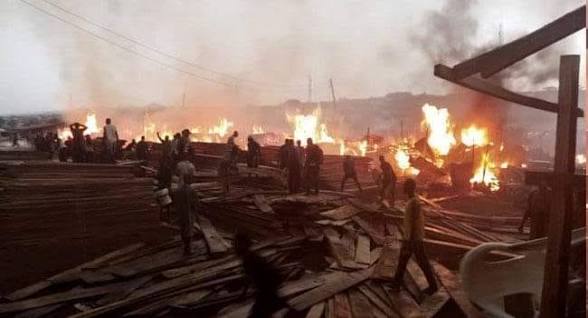
Fire razes about 50 shops at Ibadan market
By: Zagazola Makama
A fire outbreak has destroyed about 50 shops at the Bode Market area of Ibadan, Oyo State, with no casualties recorded.
Police sources said the incident occurred at about 2:00 a.m. on Friday following reports from members of the public.
A team of police operatives led by the Divisional Police Officer of Mapo Division responded to the scene, while firefighters were immediately contacted to contain the blaze.
The fire was eventually extinguished through the combined efforts of firefighters and residents.
Police cordoned off the area to prevent hoodlums from taking advantage of the situation to loot affected shops.
Although about 50 shops were completely destroyed by the fire, no lives were lost and no injuries were reported.
The cause of the fire has yet to be determined, while the value of the property destroyed is still being assessed.
Police said investigations into the incident have commenced.
Fire razes about 50 shops at Ibadan market
News
Late Community Leader Daniel Pulle Laid to Rest Amid Tears as Killing Continues to Stir Questions in Plateau
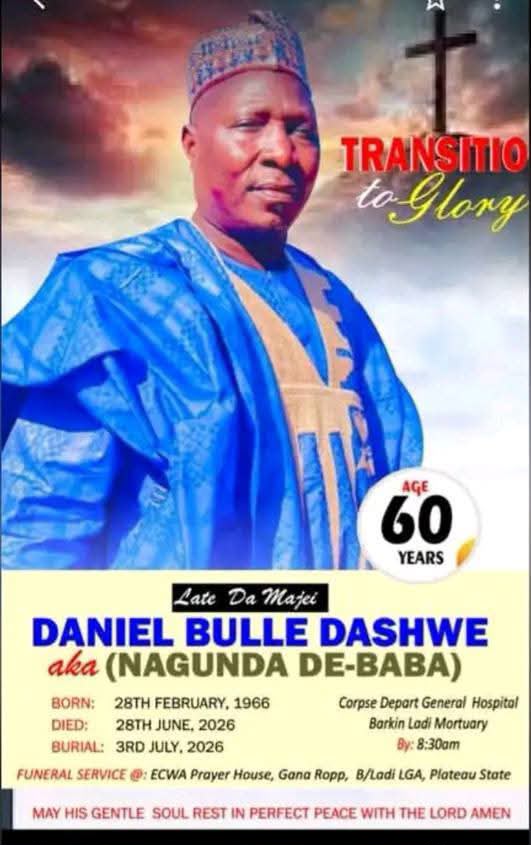
Late Community Leader Daniel Pulle Laid to Rest Amid Tears as Killing Continues to Stir Questions in Plateau
By: Zagazola Makama
Hundreds of mourners from different faiths and communities on Saturday gathered in Gana-Ropp, Ropp District of Barkin Ladi Local Government Area of Plateau State, to bid a final farewell to community leader, Mr. Daniel Pulle, popularly known as Nagunda, whose killing has continued to generate concern and controversy across the area.
Pulle, 60, was buried according to local customs amid emotional scenes as family members, traditional leaders, community elders, youths, women, and sympathisers paid glowing tributes to a man many described as a symbol of peace, unity and selfless service.
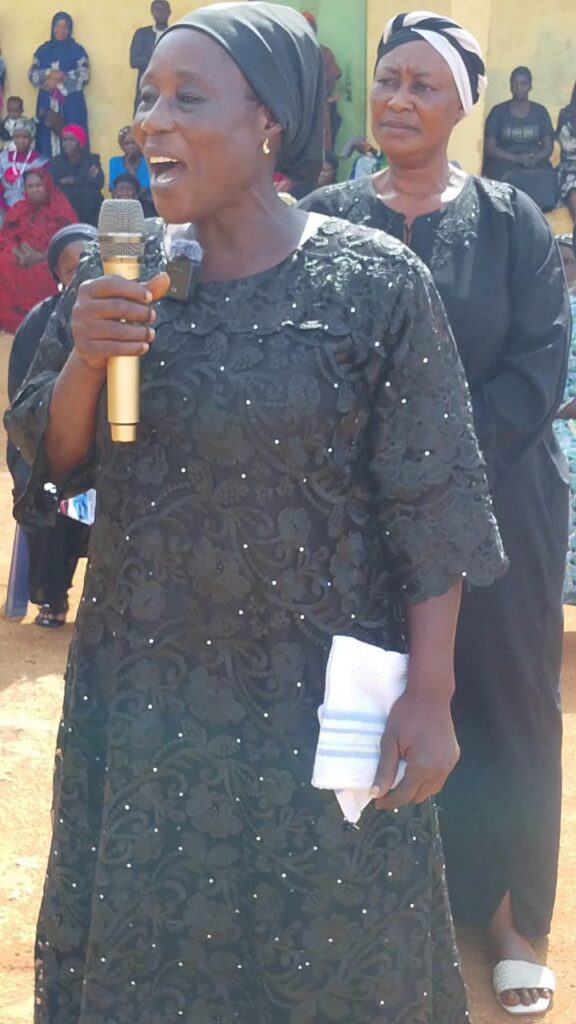
The late community leader was reportedly killed on the evening of June 28, 2026, in circumstances that remain unclear. His death has heightened concerns over networks of criminal militia groups operating in Barkin Ladi and renewed calls for a thorough investigation to identify and prosecute those responsible.
Throughout the funeral ceremony, grief-stricken residents remembered Pulle as a humble and accommodating leader whose influence extended beyond ethnic and religious boundaries.
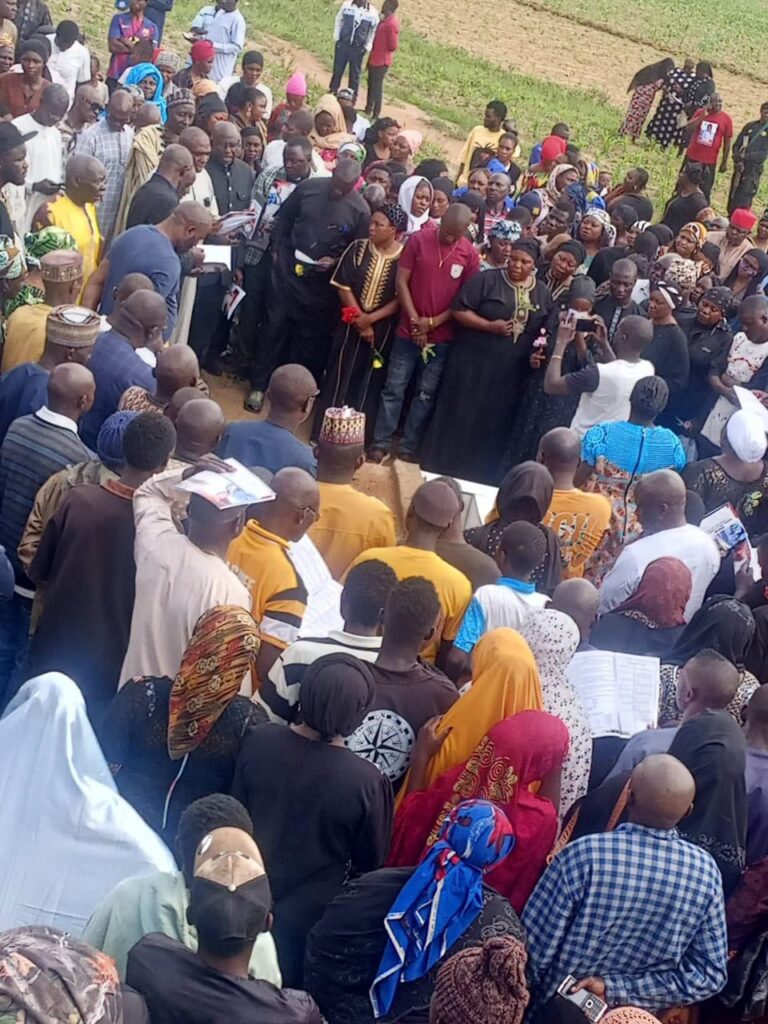
Many speakers described him as a bridge-builder who maintained cordial relationships with all segments of the community, including neighbouring Fulani settlements, despite the complex security challenges that have affected parts of Plateau State in recent years.
His reputation for peaceful coexistence was reflected in the large turnout at his burial, which drew hundreds of mourners comprising both Christians, Muslims and Fulani from within and outside Barkin Ladi Local Government Area.
As prayers and tributes filled the atmosphere, many mourners struggled to hold back tears while recalling his contributions to community development and conflict resolution.
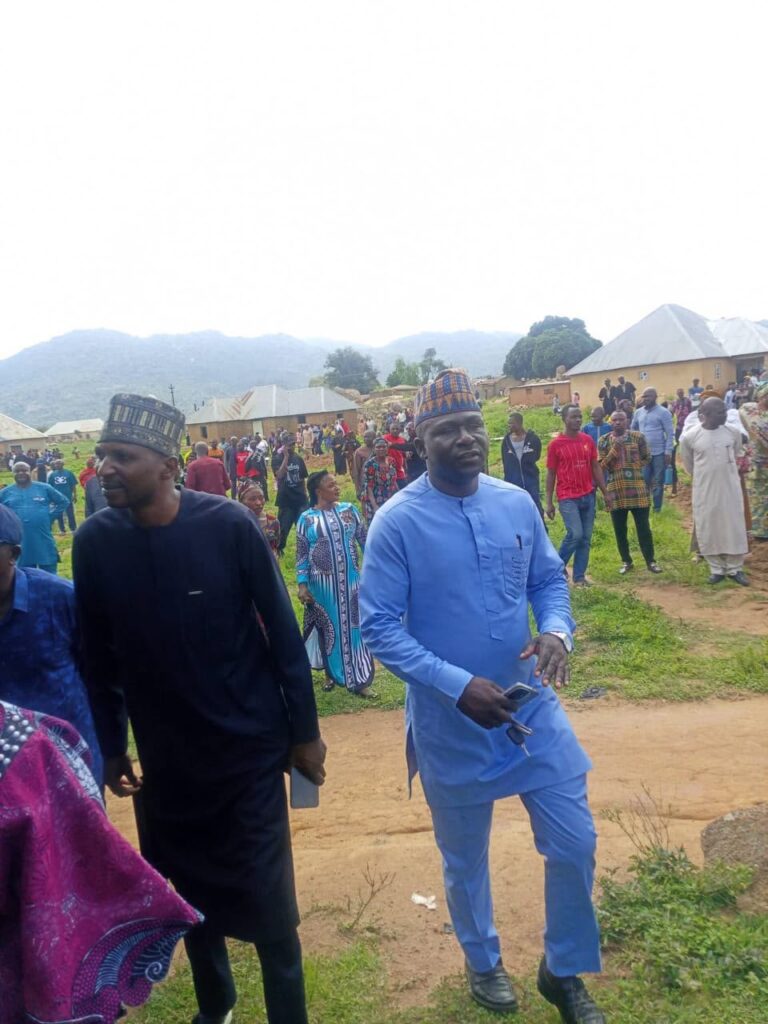
Residents said his death has left a vacuum in Gana-Ropp, where he was widely regarded as a respected voice of moderation and dialogue.
Although security agencies have yet to announce any arrest in connection with the killing, the incident has continued to generate widespread speculation among residents.
Community sources told Zagazola that one line of speculation centres on a prolonged leadership dispute involving Pulle and another member of the community. According to the sources, the disagreement had been the subject of litigation for an extended period before the court reportedly ruled in Pulle’s favour.
Other residents linked the incident to disagreements over land ownership and mining activities in the area.
According to community members, there had been disagreements between Pulle and some youths over parcels of land reportedly earmarked for mining activities involving Chinese investors.
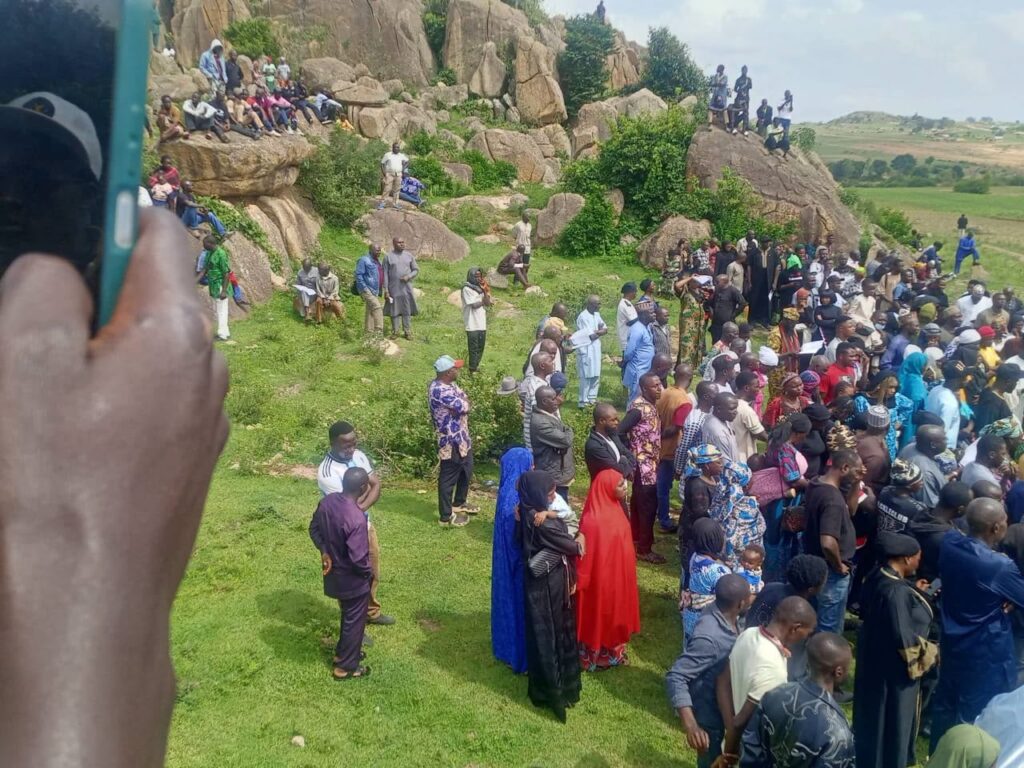
The sources explained that while similar mining-related land transactions had reportedly been carried out successfully in other parts of Barkin Ladi, including neighbouring communities, efforts to execute a comparable arrangement in Gana-Ropp were met with resistance from some local residents.
However, none of the claims regarding the motive behind the killing has been officially confirmed by security authorities, and investigators have yet to disclose any findings linking the incident to either the leadership dispute or the land-related disagreements.
Many appealed to the Plateau State Government and security agencies to ensure that those responsible are identified and brought to justice.
“This is not just the loss of a family; it is the loss of an entire community,” one elderly mourner said. “Nagunda believed in peace and lived for his people. We owe him justice.”
Others noted that despite differences that naturally arise within communities, Pulle consistently advocated dialogue rather than confrontation and remained accessible to people across religious and ethnic divides.
As the late community leader was lowered into the earth amid prayers and sobbing relatives, mourners said the greatest tribute to his memory would be the restoration of peace and justice in Gana-Ropp.
Residents expressed hope that a transparent investigation into the circumstances surrounding his death would not only bring closure to his family but also help prevent further tension within the community.
Late Community Leader Daniel Pulle Laid to Rest Amid Tears as Killing Continues to Stir Questions in Plateau
News
The Plateau Narrative War: Why Naming Criminals Should Not Be Mistaken for Profiling Communities

The Plateau Narrative War: Why Naming Criminals Should Not Be Mistaken for Profiling Communities
By: Zagazola Makama
The reactions that followed Zagazola Media Network’s report identifying the suspect killed during the attempted attack near the National Institute for Policy and Strategic Studies (NIPSS), Kuru, has again exposed a deeper challenge in Plateau’s long-running conflict, the battle over narratives is increasingly becoming as fierce as the violence itself.
At no point did our report describe the good people of Berom as a militia. We referred to a suspected Berom militia member, (Peter from Trade Center Community in Plateau) based on what is circulating on various local indigenes platforms as well as available information from multiple security and local sources.
A 17 minutes video shared by Zagazola showed a Whatsapp conversation where one Berom youth was speaking to another telling him that he recognized the attacker as one Peter who was from his area at Trade Center and that he is a BEROM. That automatically qualified him to be a Bandits, terrorists or any name we chose to call him. Because more disturbing was the fact that the gun that was used for the attack was traced to be a rifle used by the same Berom Militia to attack and kill a Nigerian Soldier in another Berom community.
So, there is a world of difference between identifying the background of a suspect and criminalising an entire ethnic group. Those who deliberately blur that distinction are only choosing to mischievously misrepresent it.
Therefore, our report did not describe the Berom people as a militia. It referred to a suspected criminal from the Berom extraction as the militia member. Conflating the actions of an individual or an armed group with an entire ethnic community is misleading, just as suggesting that identifying a suspect’s background automatically amounts to profiling an entire people is equally misguided, problematic and misleading.
Curiously, this distinction appears to matter only when it is politically convenient. For years, reports identifying Fulani bandits have circulated widely with little objection from many of those who now insist that ethnicity should never be mentioned in security reporting. In fact, many have argued that identifying armed Fulani groups was necessary for transparency and accountability.
“Everyday we hear the Berom Youth leader profiling the entire Fulani communities as terrorist groups. Miyetti Allah association has severally been called a terrorist organization. He will always come out to warn that supporters of terrorists will also be considered as terrorists. In his numerous emotional speeches, he always pointed at a peaceful Fulani community and told the world that it is through those communities that the terrorists are coming to attack the Berom Communities. Sometimes, he will name some of the communities as training grounds for terrorists. This is normal as it fits in the narratives because they are FULANI.
And when the Fulani’s are killed in any part of the Berom Communities, instead of condemnation, the Berom Leader will come out and say that the Fulani themselves were the ones who scheme the killings in order to have a reason to attack the Berom people. The man has used this same script in more than 10 different attacks against the Fulani by his people.
Now, a different standard appears to be emerging. When the identity of a suspect allegedly points elsewhere, the conversation suddenly shifts from the attack itself to the identity of the attacker, and eventually to the journalist who reported it.
The irony is difficult to ignore. Plateau’s conflict has never been a simple story of one community attacking another. Security operations over the years have led to the arrest of armed suspects from different ethnic backgrounds. Weapons have been recovered from various communities. Security personnel have repeatedly confronted armed groups operating under different identities. Innocent civilians have been killed across ethnic and religious lines. Infact, troops have come under heavy attack by Berom Militia leading to the killing of an Officer recently.
Pain does not recognise ethnicity. Neither should justice. That reality is uncomfortable because it refuses to fit neatly into a single narrative. (We are targeted for Genocide). The unfortunate consequence is that every security incident increasingly becomes a contest over perception rather than an opportunity to confront criminality.
Perhaps the hardest truth to accept is that many attacks on the Plateau today are reprisals for previous attacks. One killing produces another. One burnt settlement leads to another. Every side points to yesterday’s victims to justify today’s violence. That endless cycle has turned grief into an inheritance passed from one generation to another. This is what we find and we have all the documented stories with facts, time and coordinates.
Meanwhile, misinformation has become another weapon of war. False narratives spread faster than verified facts. Every incident is immediately reshaped to fit an existing political or ethnic storyline. Social media amplifies rumours. WhatsApp manufactures witnesses. Every community believes only its own version of events. Facts become secondary.
Every community readily acknowledges the crimes committed against it but often hesitates to openly confront violent actors operating from within its own ranks. The Berom communities have always defended these criminal networks describing them as the defenders of the Berom Land. This is why in many cases, they will come out to confront the military asking for the release of any perpetrator no matter the crime.
This pattern is not unique to one ethnic group.
Across Plateau’s troubled communities, violent individuals often find defenders long before investigators complete their work. Once arrests are made or suspects are neutralised, debates frequently shift from accountability to allegations of bias, while the original crime gradually fades into the background. Meanwhile, the victims remain dead.
For example, the so-called advocate of peace simply attempted to shift the conversation from the act of terrorism perpetrated by the militia from the Berom extraction to the naming of the Berom Militia. They are more concerned about the name attached to the criminal instead of the act. Worst still, they attempted to disown him because he was caught in the act.
One of the less discussed realities of the Plateau crisis is that many attacks are reprisals. A village is attacked; another community retaliates. Livestock are stolen; farms are destroyed in response. One funeral becomes the justification for another. This vicious cycle has continued for years, producing victims on every side while strengthening extremists who benefit from perpetual hostility.
Equally concerning is the growing role of misinformation. Competing narratives now spread almost instantly after every incident. Social media platforms become arenas where facts compete with rumours, and carefully crafted ethnic narratives often gain traction before investigators even arrive at crime scenes. Mainstream media are deliberately not reporting these issues. In such an environment, objective reporting inevitably becomes unpopular because facts rarely satisfy entrenched positions.
Yet journalism cannot become hostage to public sentiment. If armed Fulani bandits are identified where evidence supports that conclusion, the same standard should apply to any other armed group. Conversely, where evidence changes or proves insufficient, responsible journalism equally demands correction. That is how credibility is built not through selective silence but through consistency. In this case Zagazola was right. PETER was a Berom son. Does this criminalize every Berom, no. It only criminalised Mr Peter and his networks of Militia.
Now, the larger question is whether Plateau’s stakeholders are prepared to confront criminality wherever it exists. The overwhelming majority of Berom, Fulani and other ethnic communities in Plateau desire peace. Farmers want to cultivate their land. Herders want to graze their livestock. Traders want to move safely. Children want to attend school without fear. Unfortunately, these aspirations continue to be undermined by a relatively small number of violent actors whose actions often receive moral justification from competing ethnic narratives.
As a Fulani herder, you cannot passed through certain communities without being lynched. So also the Berom people, same fate are mated on them the same way. Both communities have no go areas and to prevent the killings, troops of Operation Enduring Peace, created buffer zones where cattle are prevented from encroaching farmlands.
Justice cannot operate with two different measuring sticks. One of the uncomfortable truths about the Plateau conflict is that violent actors exist on all sides. That reality has been documented repeatedly by security agencies, intelligence reports, court records, arrests and operational outcomes. Armed groups have emerged from different communities. Weapons have been recovered from different communities. Suspects have been arrested from different communities. Some have even been killed while attacking security forces.
Acknowledging that reality is not hatred. It is honesty. What has remained disappointingly absent over the years is consistent moral courage from community leaders across the divide. Whenever security agencies arrest armed Fulani criminals, many Fulani leaders dismiss the reports as collective persecution. Whenever armed youths from Berom communities are arrested or neutralised during violent incidents, some leaders respond with outright denial or insist that the victims somehow killed themselves. Every incident quickly becomes another battle of competing narratives instead of an opportunity to confront criminality.
That is precisely why independent journalism matters. Our responsibility is not to comfort one side or the other. Our responsibility is to document events as accurately as possible, correct mistakes where credible evidence demands it, and continue reporting without fear or favour.
Some have suggested that identifying armed groups from different communities somehow fuels division. We disagree. What fuels division is selective outrage. What fuels division is defending criminals because they speak your language or pray the same way you do. What fuels division is pretending that violence exists only on one side while ignoring atrocities committed on another. Criminals thrive where communities refuse to confront them.
The Plateau crisis will not end through propaganda. It will not end through denial. It will not end by blaming journalists for reporting uncomfortable realities. It will end only when every community accepts one principle: a criminal is a criminal, regardless of ethnicity. It will end when parents stop celebrating armed youths as defenders while condemning identical crimes committed by others.
It will end when political leaders find the courage to support genuine dialogue instead of allowing fear of public backlash or political correctness to dictate peace efforts. It will end when facts become more important than narratives.
Plateau remains one of Nigeria’s most beautiful states, and the overwhelming majority of its people Berom, Fulani, Anaguta, Afizere, Irigwe, Mwaghavul, Ron and many others want nothing more than to live in peace. The violence is concentrated in relatively few areas, yet its consequences stain the reputation of the entire state. That should concern all of us.
Zagazola Media Network has no quarrel with any ethnic group. We have no interest in promoting one narrative over another. Our only commitment is to the truth as established by credible evidence.
Those who disagree with our reports are free to challenge them with verifiable facts. Journalism welcomes scrutiny. But replacing evidence with outrage has never solved a single conflict.
Peace will remain elusive as long as communities measure justice by the identity of the suspect rather than the gravity of the offence.
Zagazola Media Network
The Plateau Narrative War: Why Naming Criminals Should Not Be Mistaken for Profiling Communities

Fire razes about 50 shops at Ibadan market

Amotekun operative arrested after accidental fatal shooting in Oyo

Late Community Leader Daniel Pulle Laid to Rest Amid Tears as Killing Continues to Stir Questions in Plateau

Roger Federer’s Shock as DNA Results Reveal Myla and Charlene Are Not His Biological Children

THE PLIGHT OF FARIDA

FAILED COUP IN BURKINA FASO: HOW TRAORÉ NARROWLY ESCAPED ASSASSINATION PLOT AMID FOREIGN INTERFERENCE CLAIMS
-
 News2 years ago
Roger Federer’s Shock as DNA Results Reveal Myla and Charlene Are Not His Biological Children
-
Opinions4 years ago
THE PLIGHT OF FARIDA
-
 News1 year ago
FAILED COUP IN BURKINA FASO: HOW TRAORÉ NARROWLY ESCAPED ASSASSINATION PLOT AMID FOREIGN INTERFERENCE CLAIMS
-

 News2 years ago
EYN: Rev. Billi, Distortion of History, and The Living Tamarind Tree
-
 Opinions5 years ago
POLICE CHARGE ROOMS, A MINTING PRESS
-

 ACADEMICS2 years ago
A History of Biu” (2015) and The Lingering Bura-Pabir Question (1)
-

 Columns2 years ago
Army University Biu: There is certain interest, but certainly not from Borno.
-

 Politics1 year ago
2027: Why Hon. Midala Balami Must Go, as Youths in Hawul and Asikira/Uba Federal Constituency Reject ₦500,000 as Sallah Gift
