
Crime
The Enemy Within: How Betrayal Led to the Murder of a Reverend Father in Kaduna

The Enemy Within: How Betrayal Led to the Murder of a Reverend Father in Kaduna
By Zagazola Makama
In times of crisis, the greatest threats are often believed to come from outside terrorists, kidnappers, or criminals lurking in the shadows. Yet, as the tragic murder of Reverend Father Sylvester Okechukwu in Kaduna State reveals, sometimes the most dangerous enemy is the one within.
Father Okechukwu was not just a clergyman; he was a man who dedicated his life to service and faith. But even within the sanctity of his home, danger lurked. The person who orchestrated his abduction and eventual murder was not a faceless criminal from a distant land, but someone who shared his living space.
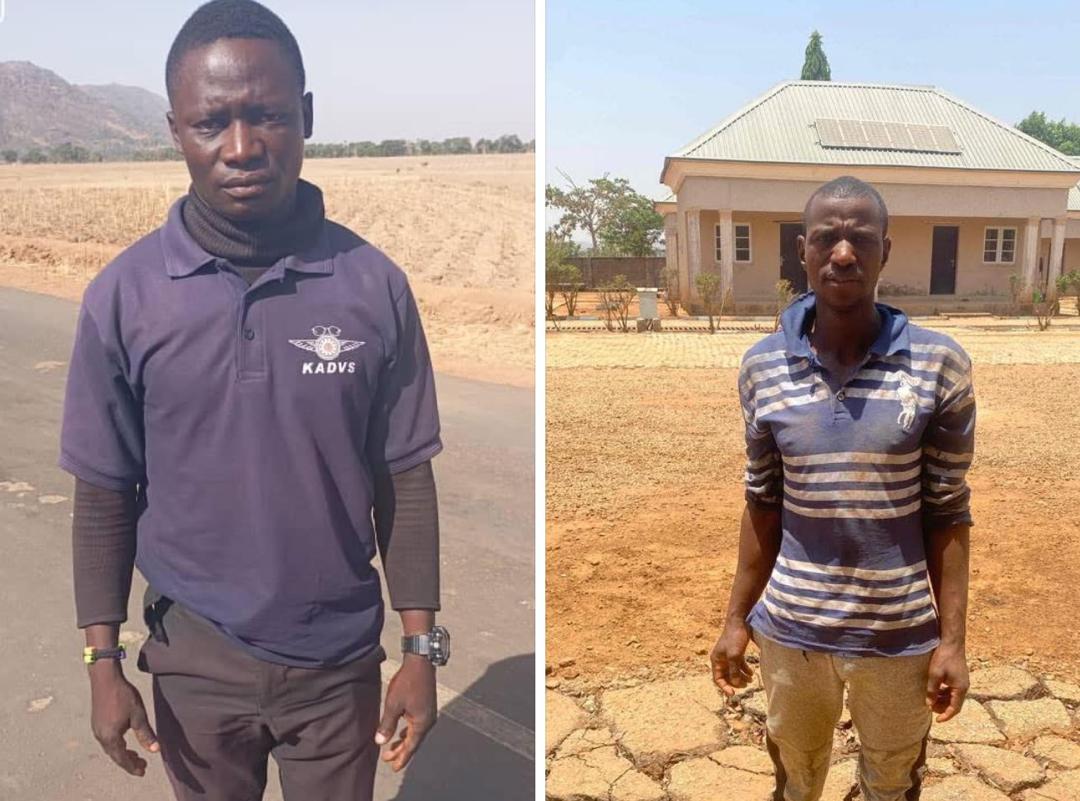
Troops of Operation SAFE HAVEN made a major breakthrough on March 25, 2025, when they arrested the killers of Father Okechukwu. Acting on intelligence, security forces raided the hideout of the prime suspect, 33-year-old Pate Yau, at a Ruga settlement in Warsa-Piti village, Lere Local Government Area (LGA). Under questioning, Yau confessed that he had been contracted to carry out the abduction by none other than Douglas Henry a man who lived under the same roof as the slain priest.
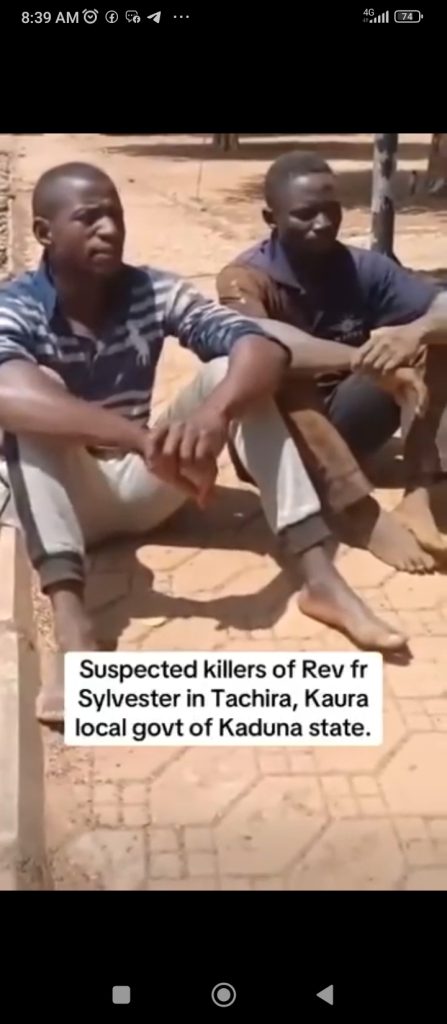
The revelation was as chilling as it was tragic. Douglas Henry, a man trusted enough to share a home with the priest, had allegedly masterminded the crime. Acting swiftly, troops proceeded to Agwan Sariki Tachira in Kaura LGA, where Henry was arrested. Both suspects are now in custody, undergoing further interrogation.
The brutal murder of Father Okechukwu forces us to confront an uncomfortable truth: sometimes, the greatest threats do not come from strangers but from those closest to us. The concept of the enemy within is not new, but it is one that continues to haunt societies worldwide. Whether it is betrayal within families, workplaces, or communities, the pain of being harmed by someone trusted cuts deeper than any wound inflicted by an outsider.
In this case, Father Okechukwu’s killers were not unknown bandits roaming the forests; they were people who knew his routines, his vulnerabilities, and, tragically, his kindness. It is a chilling reminder that while we often look outward for danger, we must also be vigilant about those within our circles.
The arrest of the suspects is a victory for security forces, but it also serves as a cautionary tale. Nigerians, particularly those in positions of service and leadership, must exercise caution in their interactions and associations. The rising cases of kidnappings and assassinations orchestrated by trusted associates are a stark warning loyalty is not always guaranteed, and familiarity does not always mean safety.
This case also point to the need for improved intelligence gathering and communal vigilance. Security forces can only do so much; communities must play their part by reporting suspicious activities and individuals. Trust is essential in any society, but blind trust can be dangerous.
The enemy within is often the hardest to detect, but it is also the most dangerous. As Nigeria grapples with insecurity, it is crucial that people remain vigilant not just against external threats, but also against those who might be hiding in plain sight.
The Enemy Within: How Betrayal Led to the Murder of a Reverend Father in Kaduna



Wanted Boko Haram spy arrested in Monguno over Cross Kauwa attack, kidnappings
By Zagazola Makama
Security operatives have arrested a wanted Boko Haram spy in Monguno, Borno State, in connection with the recent terrorist attack on Cross Kauwa, intelligence sources told Zagazola Makama.
The suspect, identified as Abulfatahi, was apprehended on July 27 during an intelligence-led operation following efforts to track members of a terrorist intelligence network operating in the area.
Sources disclosed that two other members of the same network had earlier been arrested and transferred to the Joint Intelligence Fusion Centre (JIFC) for further investigation.
During preliminary interrogation, Abulfatahi reportedly confessed to working for a Boko Haram commander identified as Akilu, who is said to control terrorist activities in Dabar Masara and Garin Mace.
According to the sources, the suspect admitted to collecting taxes on behalf of the terrorist leader and facilitating the selection of individuals for abduction around Monguno.
Investigators also recovered two telephone numbers allegedly linked to Akilu from the suspect’s mobile phone as part of ongoing efforts to dismantle the terrorist network.
The sources said security agencies are conducting further investigations to identify additional collaborators, establish the full extent of the network’s activities, and support ongoing counter-terrorism operations in the Lake Chad region.
A comprehensive investigation report is expected to be submitted upon the conclusion of the ongoing inquiry.
Wanted Boko Haram spy arrested in Monguno over Cross Kauwa attack, kidnappings
Crime
Three suspected ISWAP fighters surrender to troops in Damasak after fleeing sustained bombardment

Three suspected ISWAP fighters surrender to troops in Damasak after fleeing sustained bombardment
By Zagazola Makama
Three suspected Boko Haram/Islamic State West Africa Province (ISWAP) fighters have surrendered to troops of the Nigerian military in Damasak, Borno State, citing exhaustion and sustained military bombardment of their camps.
Intelligence sources told Zagazola Makama that the suspects surrendered at about 4:50 p.m. on July 28 to troops of Headquarters 5 Brigade in Damasak during ongoing counter-insurgency operations under Operation Hadin Kai.
The surrendered suspects were identified as Abba Musa Dogo, 24; Abubakar Bargaji, 28; and Ibrahim Abubakar, 16.
Preliminary interrogation revealed that they escaped from terrorist camps at Sabon Gari and Tunbun Mota, reportedly controlled by ISWAP commanders Abu Fatima and Abu Ayuba.
According to the sources, the suspects attributed their decision to surrender to fatigue and the sustained aerial and ground bombardment of their enclaves by Nigerian troops, which they said had made survival increasingly difficult.
The suspects also disclosed that they had been trained as gunboat operators and anti-aircraft gunners for operations in the Lake Chad region.
They further confessed that weapons were only issued to them before specific operations and were retrieved by their commanders immediately after the missions, suggesting a tightly controlled weapons management system within the terrorist group.
The sources said the three suspects expressed their readiness to renounce insurgency and embrace peace.
They are currently in military custody and are undergoing further profiling and investigation in line with established procedures.
The latest surrender adds to the growing number of terrorists abandoning the insurgency amid sustained military offensives targeting terrorist enclaves across the Lake Chad region under Operation Hadin Kai.
Three suspected ISWAP fighters surrender to troops in Damasak after fleeing sustained bombardment

Police arrest man for allegedly hacking father to death with axe in Benue
By Zagazola Makama
Operatives of the Benue State Police Command have arrested a man for allegedly hacking his father to death with an axe following a family dispute in Katsina-Ala Local Government Area of the state.
Police sources told Zagazola Makama that the incident was reported at about 8:00 a.m. on July 25 by the Clan Head of Turan-Tse Twar, Injorov Tongov, Zaki Akor Kpan.
According to the report, the tragic incident occurred at about 2:00 p.m. on July 24 after the suspect, identified as Terfa Nyikwagh, engaged in a heated argument with his father, Mr. Nyikwagh Abor, over the death of his brother, Ternenge Uwuh.
The sources said the disagreement escalated, during which the suspect allegedly attacked his father with an axe, inflicting fatal injuries.
Upon receiving the report, the Divisional Police Officer (DPO) in Katsina-Ala led a patrol team to the scene, where the suspect was arrested without resistance.
The body of the deceased was evacuated and deposited at the Gondozua Hospital Mortuary for a post-mortem examination.
The suspect remains in police custody, while investigations are ongoing to determine the full circumstances surrounding the incident before prosecution.
Police arrest man for allegedly hacking father to death with axe in Benue

Wanted Boko Haram spy arrested in Monguno over Cross Kauwa attack, kidnappings

Three suspected ISWAP fighters surrender to troops in Damasak after fleeing sustained bombardment

Troops foil IED threat on Dikwa–Gajibo road, safely detonate explosive

Roger Federer’s Shock as DNA Results Reveal Myla and Charlene Are Not His Biological Children

THE PLIGHT OF FARIDA

FAILED COUP IN BURKINA FASO: HOW TRAORÉ NARROWLY ESCAPED ASSASSINATION PLOT AMID FOREIGN INTERFERENCE CLAIMS
-
 News2 years ago
Roger Federer’s Shock as DNA Results Reveal Myla and Charlene Are Not His Biological Children
-
Opinions4 years ago
THE PLIGHT OF FARIDA
-
 News1 year ago
FAILED COUP IN BURKINA FASO: HOW TRAORÉ NARROWLY ESCAPED ASSASSINATION PLOT AMID FOREIGN INTERFERENCE CLAIMS
-

 News2 years ago
EYN: Rev. Billi, Distortion of History, and The Living Tamarind Tree
-
 Opinions5 years ago
POLICE CHARGE ROOMS, A MINTING PRESS
-

 ACADEMICS2 years ago
A History of Biu” (2015) and The Lingering Bura-Pabir Question (1)
-

 Columns2 years ago
Army University Biu: There is certain interest, but certainly not from Borno.
-

 Politics1 year ago
2027: Why Hon. Midala Balami Must Go, as Youths in Hawul and Asikira/Uba Federal Constituency Reject ₦500,000 as Sallah Gift
