
News
The growing role of local militias, criminal networks and possible external forces in the escalation of violence in Plateau State

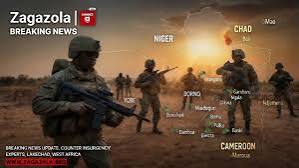
The growing role of local militias, criminal networks and possible external forces in the escalation of violence in Plateau State
By: Zagazola Makama
The security crisis in Plateau State is increasingly moving beyond the traditional description of a farmer-herder dispute. What is emerging is a multi-layered armed conflict in which communal grievances, local militia mobilisation, criminality, retaliatory violence and information manipulation are reinforcing one another.
The most important distinction for the Federal Government is this: ordinary Berom, Mwaghavul and Fulani citizens are not the enemy. The security threat is posed by identifiable individuals and armed group networks operating within or around these communities.
Available evidence shows that armed groups associated with both farming and pastoralist communities have been involved in violence. BBC, ACLED and Zagazola Media Network have documented attacks involving both farmer and pastoralist communities in Plateau and warned that attacks frequently trigger reprisal violence, producing a cycle of retaliation. The present danger is that this cycle is becoming institutionalised.
There are now repeated reports of armed groups dressed in black moving between communities, conducting mass attacks and withdrawing to hide in the same communities before security forces arrive.
On August 11, troops reportedly engaged an armed group identified by security sources as Berom militia after intelligence indicated that the group was moving from Barkin Ladi towards communities in Mangu. The same reporting also recorded an encounter with suspected Fulani militia in another part of Mangu.
The following day, three people one local resident and two Fulani herders were killed in a clash involving Mwaghavul youths and herders in Jwak Maitumbi, Mangu. Troops intervened and used surveillance to clear the area.
More recently, troops reportedly foiled an attempted attack by suspected local militias moving towards Manja in Mangu on September 17. The attackers reportedly exchanged fire with troops and, while withdrawing, set houses on the outskirts of the community ablaze.
These incidents demonstrate a serious reality that armed communal networks exist, possess firearms and are capable of moving offensively across community boundaries and should be treated as a national security problem. The same cycle is consuming both sides. The danger is particularly visible in the sequence of attacks recorded in September.
On September 12, three young Fulani herders were reportedly killed in Alohom, Mangu, while dozens of cattle were also shot. Community leaders alleged that the attackers were Mwaghavul militia members dressed in black. Some bullets were recovered at the scene.
Less than 24 hours later, six commuters were reportedly killed when the same gunmen dressed in black attacked a commercial vehicle at Dungus Kuru in Jos South, killing both Muslims and Christians. Suspicion is not evidence. But suspicion itself can become a weapon. Both groups traded blames on who was responsible for the attacks.
Once communities believe that one attack must have been retaliation for another, young men will just mobilise before investigators establish what actually happened and carry out a deadly attack on the other community. That is how a single criminal attack becomes a communal war.
Berom and Mwaghavul armed groups require the same scrutiny as armed Fulani groups. They are all criminals and have perpetrated terror. It would be dangerous and analytically dishonest to discuss Plateau insecurity while examining only one side, as many mediums domiciled in Plateau state are doing. There have been hundreds of documented reports of armed Berom militias, including the most recent August incident in which troops reportedly intercepted a group moving towards communities in Mangu.
There have also been clashes involving Mwaghavul youths and herders, as recorded in Jwak Maitumbi.
At the same time, there are repeated reports of attacks attributed by community members to armed Fulani bandits. For example, the Mwaghavul Youth Movement recently alleged that armed Fulani elements were responsible for attacks in Kikyau, Larkas, Ntul and Kinat in Mangu. While some of the reports were true, some of them were rejected by MACBAN.
The security principle should therefore be that if an armed Berom group attacks civilians, pursue it. If an armed Mwaghavul group attacks civilians, pursue it. If an armed Fulani group attacks civilians, pursue it. If a criminal gang exploits the conflict, pursue it. Use the same energy used to go after Fulani bandits to go after Berom and Mwaghavul militias. Their actions show that they are all part of the same security problem when they engage in organised violence against civilians.
The most dangerous development may be the emergence of conflict entrepreneurs, which deserves much greater attention.
Youth groups in Plateau are already turning communal fear into an economic and social enterprise. There is no gainsaying that some individuals are financially benefiting from inflammatory content, mobilisation or conflict-related activities. The underlying phenomenon is real enough to warrant investigation. An attack committed by criminals can be transformed into evidence of a national religious conspiracy. And once such a narrative takes hold, facts become almost irrelevant.
The algorithm rewards anger. The conflict entrepreneur monetises it. The community pays the price. Emotional mobilisation can become another weapon This is perhaps one of the most uncomfortable truths recently revealed by the BBC investigation in Plateau.
A 2026 Premium Times investigation documented how misinformation, old photographs and videos, inflammatory narratives and unverified claims circulated on social media during Plateau violence and helped intensify perceptions of impending reprisals. The investigation found that online narratives could move faster than official clarification and contribute to real-world tension.
This creates a new type of warfare: the person who does not carry a rifle but helps create the environment in which someone else picks one up. The people must begin to ask: Who benefits financially, politically or socially from keeping Plateau permanently in crises? That question deserves the same seriousness as the question of who pulled the trigger.
This is how communities become militarised:
Attack → fear → mobilisation → revenge → counter-revenge → displacement → arming of youths → media propaganda → another attack.
Eventually, young people who previously had no interest in violence begin to believe that joining an armed group is necessary for survival. At that point, the conflict develops its own recruitment mechanism. The state is then fighting not merely armed men, but an entire ecosystem of fear.
Perhaps the most disturbing allegation emerging from affected communities is that some of the worst attacks may involve non-local gunmen or hired fighters who enter a community, conduct mass attacks and disappear into areas where they are difficult to identify. If evidence confirms that mercenaries are being formed in Plateau to conduct attacks and then sheltered by local networks, the character of the conflict changes substantially.
It would mean that some attacks are not merely spontaneous communal reprisals. They could represent organised armed operations using local knowledge, local logistics and external manpower. That claim cannot be simply accepted, but neither should it be ignored.
One of the most persistent claims in Plateau is that local residents, youths groups and traditional authorities know the individuals responsible for carrying out attacks. While these individuals carry out terror, their host communities view them as heroes or defenders of the land. The communities always protect the criminals even when they genuinely possess information about perpetrators, making peace efforts difficult for security agencies.
The greatest obstacle is often fear and, in many cases, complicity from within. A resident who identifies an armed perpetrator may fear retaliation from that person’s relatives or associates, likewise, a traditional ruler may fear that publicly naming suspects could trigger another attack. A youth leader may possess information but fear being branded a traitor.
The Federal Ministry of Defence and the Armed Forces already recognise the need for a combination of military pressure, intelligence and peace-building. The Chief of Army Staff, Lt.-Gen. Waidi Shaibu, had during his visit to Plateau State directed troops to sustain pressure on criminal groups while supporting peace-building, stronger intelligence gathering and cooperation with traditional and community leaders.
The next step should be to turn that principle into a specific Plateau armed-group strategy, while a dedicated multi-agency cell should map:
armed Fulani networks, armed Berom networks, armed Mwaghavul networks, criminal or kidnapping gangs, weapons suppliers and gun runners,financiers, informants and logistics networks. suspected external actors; and online actors demonstrably linked to mobilisation or threats.The purpose should be individual identification and prosecution.
Develop an attack attribution system.Every major attack should generate a formal case file containing: location + time + victims + weapons + ammunition + direction of attack + escape route + witnesses + communications intelligence + previous incidents + suspects + evidence. This would make it harder for perpetrators to sometimes disappear behind the phrase “unknown gunmen.”
Treat weapons as evidence, not just recovered items.The recovery of an AK-47, locally fabricated rifle or ammunition should trigger ballistic and intelligence exploitation. The question should be: Where has this weapon appeared before? A weapon used in three attacks across different LGAs could provide a direct link between incidents that communities currently regard as separate.
The person who fires the weapon is only one part of an organised attack. Establish a rapid-reaction architecture around known flashpoints. Mangu, Barkin Ladi, Riyom, Bokkos and vulnerable approaches to Jos South require sustained intelligence-led patrols.
The message to Plateau’s communities must also change. The Federal Government should make one point unmistakable: No community has a licence to kill another community in the name of self-defence. A Fulani civilian must not be treated as a militia member or a terrorist simply because he is Fulani. The same goes for Berom and Mwaghavul.The state must pursue armed individuals based on evidence of conduct, not identity.
The greatest threat to Plateau is not simply the number of people killed in individual attacks.
The problem is that people are gradually normalising killings as if they were nothing. Once that continues to happen, every road becomes a potential frontline, every market becomes a potential target, every cattle route becomes a security corridor, and every social-media post can become an early-warning signal for revenge.
Identify the armed networks. Identify their financiers. Identify their weapons. Identify their logistics. Identify those who shelter them. Identify those who incite attacks. Build admissible evidence. Arrest suspects. Protect witnesses. Prosecute cases. And do this regardless of whether the perpetrator is associated with a Berom, Mwaghavul, Fulani or any other community.
Plateau’s conflict is no longer adequately understood as two communities simply fighting over land. It is increasingly a security ecosystem involving communal grievances, armed local networks, criminal opportunists, retaliatory mobilisation and information warfare.
The Federal Government therefore has an opportunity to change the trajectory of the crisis: move from responding to communities after they are attacked to dismantling the armed networks that repeatedly produce the attacks.
Zagazola Makama is a Counter Insurgency Expert and Security Analyst in the Lake Chad Region.
The growing role of local militias, criminal networks and possible external forces in the escalation of violence in Plateau State


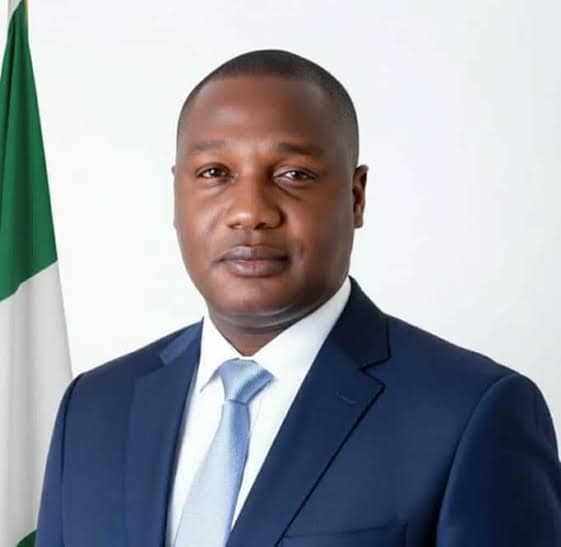
Gara-Gombe alleges threat to life, family, petitions IGP
The Peoples Democratic Party (PDP) 2027 Campaign Director of Media and Publicity, Ahmed Gara-Gombe, has petitioned the Inspector-General of Police over the alleged presence of suspected security operatives in plain clothes around his family residences in Gombe State.
Gara-Gombe disclosed this in a press statement issued to journalists in Gombe by his media aide, Mr Azubuike Nathaniel.
He said that the suspected operatives had been sighted around two family residences in the state which included the house his mother lives and another occupied by members of his immediate family.
He said the development had raised concerns about the safety of his family and himself which prompted him to petition the Inspector-General of Police as well as notify relevant security agencies in Gombe State.
The PDP chieftain said the party’s 2027 Campaign Council was aware of the development, noting that its legal and security committees were consulting on the matter and would advise the council on the appropriate course of action.
Gara-Gombe further stated that he might “reinforce his personal security arrangements if the situation warranted it”.
He, however, dismissed suggestions that he should avoid visiting Gombe State due to the security concerns, insisting that he would not be intimidated or prevented from exercising his political rights.
“Nobody will stop me from coming to Gombe. I will come. Some people have advised me not to come, but nobody will stop me from visiting my state,” he declared.
He called on the relevant security agencies to investigate the alleged surveillance and take necessary measures to guarantee the safety of his family and prevent any breach of peace.
Gara-Gombe reaffirmed his commitment to participating in legitimate political activities in Gombe State, stressing that security concerns would not hinder him from exercising his political rights.
Gara-Gombe alleges threat to life, family, petitions IGP
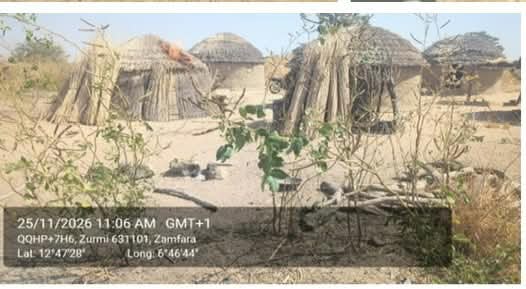
Troops Destroy Suspected Terrorist Hideout, Recover Motorcycle in Zamfara
By: Zagazola Makama
Troops of 1 Brigade, Joint Task Force, Operation Fasan Yamma (OPFY), have destroyed a suspected terrorist hideout in Zurmi Local Government Area of Zamfara State.
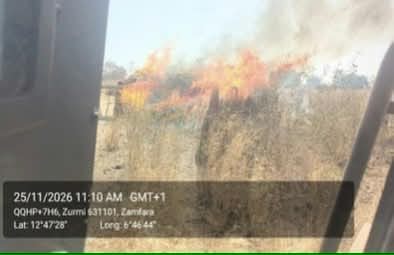
Security sources told Zagazola Makama that the operation was conducted at about 7:30 a.m. on Nov. 25, 2026, when troops discovered and destroyed the hideout.
The troops also recovered one motorcycle during the operation.
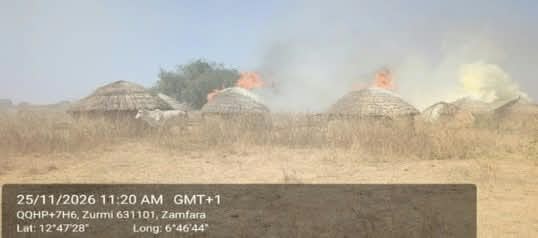
The recovery is expected to support ongoing efforts to disrupt the movement and activities of armed groups operating in the area.
Troops Destroy Suspected Terrorist Hideout, Recover Motorcycle in Zamfara
Tinubu fulfils forest guard promise as 2,000 graduate in Plateau, Zamfara – NCYP
By: Michael Mike
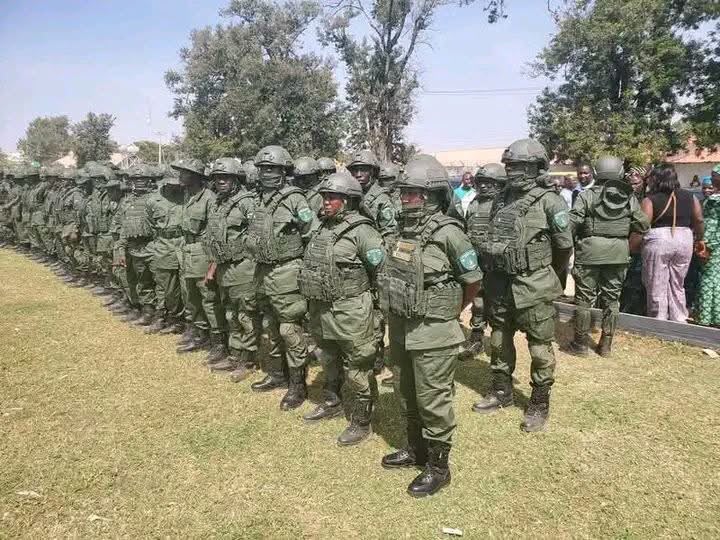
The Northern Christian Youth Professionals (NCYP) has commended President Bola Tinubu for fulfilling his campaign promise to establish Forest Guards, following the graduation of 2,000 personnel in Plateau and Zamfara States.
The group described the development as evidence of Tinubu’s commitment to translating campaign promises into concrete action, describing him as a “talk-and-do” leader.
In a statement on Saturday signed by NCYP National Chairman, Isaac Abrak, the group said the graduation and passing-out parades of 1,000 Forest Guards each in Plateau and Zamfara marked another step towards implementing the security commitments contained in the President’s Renewed Hope Manifesto.
It recalled that the establishment of Forest Guards was captured on page nine of the manifesto, which outlined plans to reclaim and secure Nigeria’s forests from terrorists, bandits, kidnappers and other violent criminal groups.
The group said the initiative was particularly important because criminal groups had continued to exploit forest hideouts to launch attacks on vulnerable communities.
“As one of the leading advocates for the establishment of Forest Guards, NCYP has consistently championed the initiative, recognising that securing Nigeria’s forests is fundamental to addressing the country’s security challenges,” the statement said.
It expressed optimism that deploying the newly trained personnel would strengthen the country’s capacity to deny criminal elements access to forest hideouts.
The organisation urged the graduates to discharge their responsibilities with courage, discipline, professionalism and patriotism, stressing that their assignment extended beyond protecting forests to safeguarding families, communities, farmlands and livelihoods.
NCYP, however, called on Tinubu to extend the initiative to Oyo State, where it said the President had also made a commitment to establish Forest Guards.
It also urged governors of other states yet to establish their Forest Guard units to collaborate with the Federal Government and take concrete steps towards implementing the programme.
The group maintained that establishing Forest Guard units across all states, including the Federal Capital Territory (FCT), would improve security coverage and deny terrorists, bandits and other criminal elements safe havens.
It also commended the governors of Plateau and Zamfara for collaborating with the Federal Government towards the successful establishment of the units in their respective states.
Reaffirming its confidence in the President’s commitment to the initiative, NCYP cited his 2026 Independence Day address, in which he said the next phase of the administration’s reforms would focus on translating economic adjustments into tangible improvements in Nigerians’ lives.
“We have made the difficult decisions, corrected the course of our economy and laid the foundations for lasting prosperity. The next phase is to translate these reforms into tangible improvements in the lives of Nigerians,” Tinubu was quoted as saying.
Tinubu fulfils forest guard promise as 2,000 graduate in Plateau, Zamfara – NCYP

Gara-Gombe alleges threat to life, family, petitions IGP

Campaign Train: Zulum Storms Mafa, Dikwa, Gamboru Ngala to Rousing Reception

Troops Destroy Suspected Terrorist Hideout, Recover Motorcycle in Zamfara

Roger Federer’s Shock as DNA Results Reveal Myla and Charlene Are Not His Biological Children

THE PLIGHT OF FARIDA

FAILED COUP IN BURKINA FASO: HOW TRAORÉ NARROWLY ESCAPED ASSASSINATION PLOT AMID FOREIGN INTERFERENCE CLAIMS
-
 News3 years ago
Roger Federer’s Shock as DNA Results Reveal Myla and Charlene Are Not His Biological Children
-
Opinions5 years ago
THE PLIGHT OF FARIDA
-
 News2 years ago
FAILED COUP IN BURKINA FASO: HOW TRAORÉ NARROWLY ESCAPED ASSASSINATION PLOT AMID FOREIGN INTERFERENCE CLAIMS
-
 Opinions5 years ago
POLICE CHARGE ROOMS, A MINTING PRESS
-

 News3 years ago
EYN: Rev. Billi, Distortion of History, and The Living Tamarind Tree
-

 ACADEMICS3 years ago
A History of Biu” (2015) and The Lingering Bura-Pabir Question (1)
-

 Columns3 years ago
Army University Biu: There is certain interest, but certainly not from Borno.
-

 Politics1 year ago
2027: Why Hon. Midala Balami Must Go, as Youths in Hawul and Asikira/Uba Federal Constituency Reject ₦500,000 as Sallah Gift
