
National News
THE NATIONAL STATEMENT OF HIS EXCELLENCY, PRESIDENT BOLA AHMED TINUBU GCFR

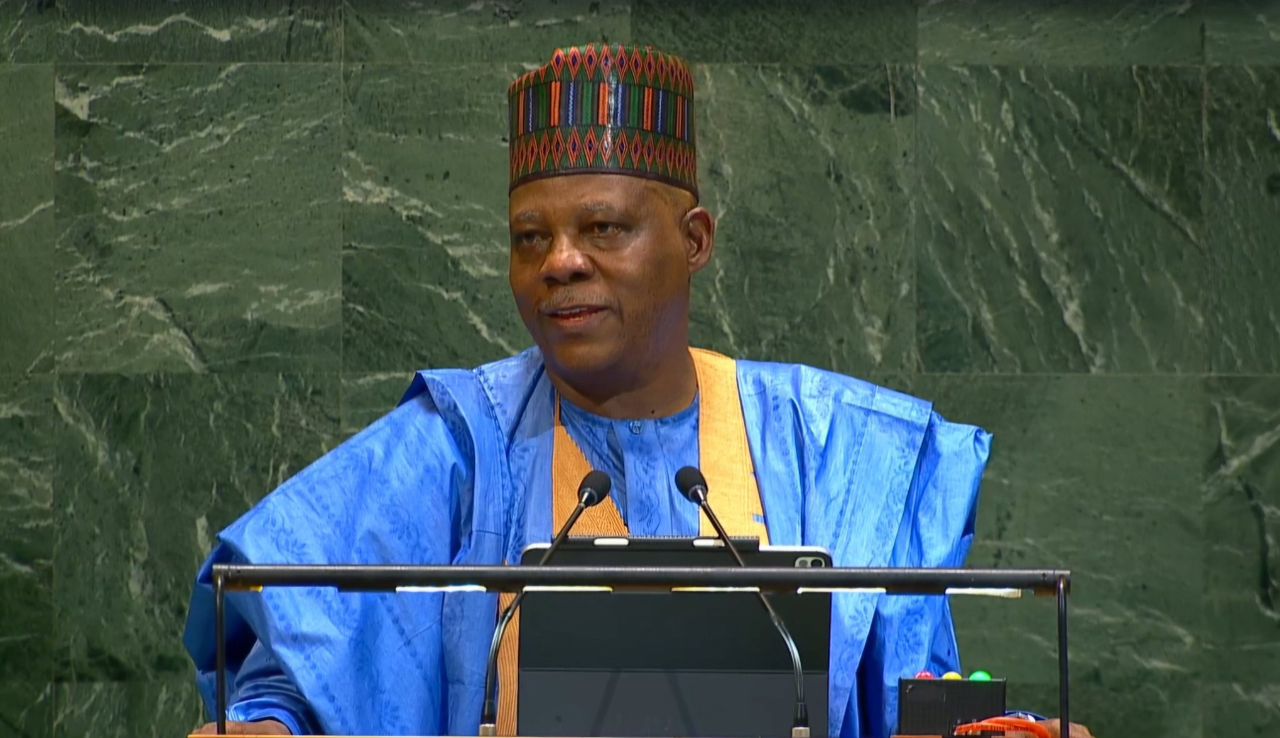
THE NATIONAL STATEMENT OF HIS EXCELLENCY, PRESIDENT BOLA AHMED TINUBU GCFR
DELIVERED BY
HIS EXCELLENCY, KASHIM SHETTIMA, GCON, VICE-PRESIDENT, FEDERAL REPUBLIC OF NIGERIA,
DURING THE GENERAL DEBATE OF THE 80TH SESSION OF THE UNITED NATIONS GENERAL ASSEMBLY, NEW YORK #UNGA80
THEME: BETTER TOGETHER: 80 YEARS AND MORE FOR PEACE, DEVELOPMENT, AND HUMAN RIGHTS
24th SEPTEMBER 2025
Madam President,
Mr. Secretary-General,
Excellencies, Heads of State and Government,
Distinguished Delegates,
The chaos that shadows our world is a reminder that we cannot afford the luxury of inaction. We would have been consumed by our differences had there been no community such as this to remind us that we are one human family. Even in our darkest hours, we have refused to be broken. This community was born from the ashes of despair, a vehicle for order and for the shared assurance that we could not afford to falter again. Our belief in this community is not a posture of moral superiority but an undying faith in the redemption of humanity. It is, therefore, with profound humility that I stand before you today, as Vice-President of the Federal Republic of Nigeria, to renew this pledge on behalf of my country.
Madam President,
1.Nigeria joins the comity of nations in congratulating you on your election as President of the General Assembly for the 80th Session and assures you of our unalloyed support during your tenure. I commend your predecessor, my brother, His Excellency, Philémon Yang, and the Secretary-General, His Excellency, António Guterres, for the outstanding stewardship and unifying leadership during these extraordinary times.
2.This anniversary must not be a sentimental retreat into nostalgia. It must be a moment of truth, a pause to measure where we have stumbled and how we might have done better in turning our values into action that meets the demands of today. We are here to deliver a world of peace and development, where the respect for human rights is paramount. We must recalibrate the delicate balance between our roles as sovereign governments and our duties as collective partners, to renew multilateralism in a world that has evolved far beyond what it was in 1945.

3.The pace of change across borders is a force without pause. It manifests in the tools of technology, in the movements of information and finance, in the corrosive ideologies that preach violence and division, in the gathering storm of the climate emergency, and in the tide of irregular migration. We must own this process of change. When we speak of nuclear disarmament, the proliferation of small weapons, Security Council reform, fair access to trade and finance, and the conflicts and human suffering across the world, we must recognize the truth. These are stains on our collective humanity.
4.For all our careful diplomatic language, the slow pace of progress on these hardy perennials of the UN General Assembly debate has led some to look away from the multilateral model. Some years ago, I noticed a shift at this gathering: key events were beginning to take place outside this hall, and the most sought-after voices were no longer heads of state. These are troubling signs. Nigeria remains firmly convinced of the merits of multilateralism, but to sustain that conviction, we must show that existing structures are not set in stone. We must make real change, change that works, and change that is seen to work. If we fail, the direction of travel is already predictable.
5.We are here to strengthen the prospects for peace, development and human rights. Madam President, I want to make four points today to outline how we can do this:
One: Nigeria must have a permanent seat at the UN Security Council. This should take place as part of a wider process of institutional reform.

Two: We need urgent action to promote sovereign debt relief and access to trade and financing.
Three: Countries that host minerals must benefit from those minerals.
Four: The digital divide must close. As our friend the Secretary General has said: ‘A.I.’ must stand for ‘Africa Included’.
6.On my first point: the United Nations will recover its relevance only when it reflects the world as it is, not as it was. Nigeria’s journey tells this story with clarity: when the UN was founded, we were a colony of 20 million people, absent from the tables where decisions about our fate were taken; today, we are a sovereign nation of over 236 million, projected to be the third most populous country in the world, with one of the youngest and most dynamic populations on earth. A stabilising force in regional security and a consistent partner in global peacekeeping, our case for permanent seat at the Security Council is a demand for fairness, for representation, and for reform that restores credibility to the very institution upon which the hope of multilateralism rests.
7.This is why Nigeria stands firmly behind the UN80 Initiative of the Secretary-General, and the resolution adopted by this Assembly on 18 July 2025, a bold step to reform the wider United Nations system for greater relevance, efficiency, and effectiveness in the face of unprecedented financial strain. We support the drive to rationalise structures and end the duplication of responsibilities and programmes, so that this institution may speak with one voice and act with greater coherence.
Madam President,
8.None of us can achieve a peaceful world in isolation. This is the heavy burden of sovereignty. Sovereignty is a covenant of shared responsibility, a recognition that our survival is bound to the survival of others. To live up to this charge, we must walk hand in hand with our neighbours and partners. We must follow the trails of weapons, of money, and of people. For these forces, too often driven by faceless non-state actors, ignite the fires of conflict across our region.
Madam President,
9.Nigeria’s soldiers and civilians carry a proud legacy. They have participated in 51 out of 60 United Nations peacekeeping operations since our independence in 1960. We have stood with our partners in Africa to resolve conflicts, and we continue that commitment today through the Multinational Joint Task Force. At home, we confront the scourge of insurgency with resolve. From this long and difficult struggle with violent extremism, one truth stands clear: military tactics may win battles measured in months and years, but in wars that span generations, it is values and ideas that deliver the ultimate victory.
- We are despised by terrorists because we choose tolerance over tyranny. Their ambition is to divide us and to poison our humanity with a toxic rhetoric of hate. Our difference is the distance between shadow and light, between despair and hope, between the ruin of anarchy and the promise of order. We do not only fight wars, we feed and shelter the innocent victims of war. This is why we are not indifferent to the devastations of our neighbours, near and distant. This is why we speak of the violence and aggression visited upon innocent civilians in Gaza, the illegal attack on Qatar, and the tensions that scar the wider region. It is not only because of the culture of impunity that makes such acts intolerable, but because our own bitter experience has taught us that such violence never ends where it begins.
11.We do not believe that the sanctity of human life should be trapped in the corridors of endless debate. That is why we say, without stuttering and without doubt, that a two-state solution remains the most dignified path to lasting peace for the people of Palestine. For too long, this community has borne the weight of moral conflict. For too long, we have been caught in the crossfire of violence that offends the conscience of humanity. We come not as partisans, but as peacemakers. We come as brothers and sisters of a shared world, a world that must never reduce the right to live into the currency of devious politics. The people of Palestine are not collateral damage in a civilisation searching for order. They are human beings, equal in worth, entitled to the same freedoms and dignities that the rest of us take for granted.
12.We want to make the choice crystal clear: civilised values over fear, civilised values over vengeance, civilised values over bloodshed. We show the opportunities that peace brings, just as the extremist hopes to drive apart rival communities and different religions. We work through multilateral platforms within the rule of law, to build the consensus and support that makes this immensely difficult and dangerous task that much easier. This is how we deny our enemies the space they crave to fuel tension and despair. It is our experience that this offers the best, perhaps only hope for peace, reconciliation and victory for the civilised values of a shared humanity. Nigeria, as a diverse country, also recognises the variable geometry of Democracy, its different forms and speeds. For this reason, we are working with the United Nations to strengthen Democratic institutions in our region and beyond, through the Regional Partnership for Democracy.
Madam President,
13.Point two: the price of peace is eternal vigilance. The increasingly difficult security outlook has prompted many Member States to count the cost of the emerging world order. We in Nigeria are already familiar with such difficult choices: infrastructure renewal or defence platforms? schools or tanks? Our view is that the path to sustainable peace lies in growth and prosperity. The government has taken difficult but necessary steps to restructure our economy and remove distortions, including subsidies and currency controls that benefited the few at the expense of the many.
14.I believe in the power of the market to transform. Our task is to enable and facilitate, and to trust in the ingenuity and enterprise of the people. But the process of transition is difficult and brings unavoidable hardship. This year, we held the inaugural West Africa Economic Summit in Abuja to bring investors and opportunities together. The results exceeded our expectations and are a clear indication of what innovation can deliver.
15.It is in that same spirit of dynamic review that I invite the United Nations to re-examine the best use of scarce resources. One critical area is climate change. It is not an abstract issue about an indeterminate fate, to be settled at some distant point in the future. It is not even solely an environmental issue. It is about national, regional, and international security. It is about irregular migration. Truly, this is an “everyone issue.” We are all stakeholders, and we are all beneficiaries of the best outcomes.
Madam President,
16.This is why relevant Ministers have been instructed to work with the UN to make the best use of climate funds. We believe there are huge, shared dividends to accrue from increased support for education, for resilient housing, for access to technology and financing to allow vulnerable communities to thrive: to become part of solutions, rather than problems.
17.Nigeria and Africa have made significant strides in recent years to put our affairs in order. We can take that progress to the next level, a level that presents new opportunities for trade, investment and profit, if we can access reforms to strengthen the international financial architecture. We need urgent action to promote debt relief – not as an act of charity but as a clear path to the peace and prosperity that benefits us all.
18.I am calling for new and binding mechanism to manage sovereign debt, a sort of International Court of Justice for money, that will allow emerging economies to escape the economic straitjacket of primary production of unprocessed exports.
19.It has been over for decades since the Lagos Action Plan outlined a route away from debt and dependence that highlighted opportunities, that today should still be explored for local added value for processing and manufacturing in everything from agriculture to solid minerals and petrochemicals. The African Continental Free Trade Area is a remarkable achievement of co-operation. We remain fully committed to the achievement of SDGs – and are convinced this can be best delivered by focusing principally on our primary mission of growth and prosperity.
Madam President,
20.Our third point. We welcome steps to move towards peace in the Democratic Republic of Congo. We agree that international investment and engagement offer a way out of the cycle of decay and violence. Access to strategic minerals, from Sierra Leone in the 1990s and Sudan today, has for too long been a source of conflict rather than prosperity. Africa – and I must include Nigeria – has in abundance the critical minerals that will drive the technologies of the future. Investment in exploration, development and processing of these minerals, in Africa, will diversify supply to the international market, reduce tensions between major economies and help shape the architecture for peace and prosperity, on a continent that too often in the past has been left behind by the rivalries and competition between different blocs.
21.We know in Nigeria, that we are more stable when those communities that have access to key resources are able to benefit from those resources. This has been our journey in the oil producing region of the Niger Delta. I believe that we will strengthen the international order, when those countries that produce strategic minerals benefit fairly from those minerals – in terms of investment, partnership, local processing and jobs. When we export raw materials, as we have been doing, tension, inequality and instability fester.
Madam President,
22.The fourth pillar for change that I am advocating, is a dedicated initiative, bringing together researchers, private sector, governments and communities, to close the digital divide. As we stand on the threshold of new and dramatic technological change, we are still absorbing the impact of the revolution in information and communication of the past 20 years. We understand better than we did, the opportunities technology offers as well as the safeguards we need to enable growth and mitigate the potential for corrosion. Some worry about fake news. We have plenty of that, with the potential of devastating real-world consequences in countries rich and poor. I am more worried about an emerging generation that grows ever more cynical, because it believes nothing and trusts less. As technology shakes up public administration, law, finance, conflict and so much of the human condition, I am calling for a new dialogue, to ensure we promote the best of the opportunities that are arising – and promote the level of access that allows emerging economies more quickly, to close a wealth and knowledge gap that is in no one’s interest.
23.I join you today to reassert that Nigeria’s commitment to peace, to development, to unity, to multilateralism, and to the defence of human rights is beyond compromise. For none of us is safe until all of us are safe. The road ahead will not be easy, and we know there are no quick fixes to the trials that test the human spirit. Yet history reminds us that bold action in pursuit of noble ideals has always defined the story of the United Nations. Time and again, we have found the wisdom to balance sovereign rights with collective responsibility. That balance is once again in question, but I believe that a renewed commitment to multilateralism, not as a slogan but as an article of faith, remains our surest path forward. Nigeria dedicates itself fully and without reservation to that noble cause.
- I thank you.



FG moves to operationalise 112 national emergency number
By Zagazola Makama
The Federal Government has commenced steps to operationalise the 112 national emergency number as a single, toll-free channel through which Nigerians can access emergency services across the country.
The move followed a directive by Vice-President Kashim Shettima during a stakeholders’ meeting on the National Emergency Number 112 Project in Abuja on Tuesday, Sept. 8, 2026.
Shettima directed relevant government agencies to develop a comprehensive operational roadmap and standard operating procedures for the nationwide rollout of the emergency number.
The Federal Government has consequently constituted a committee comprising the Nigeria Police Force (NPF), Nigerian Communications Commission (NCC), National Emergency Management Agency (NEMA), Federal Road Safety Corps (FRSC) and other relevant agencies to finalise the framework for consideration and formal endorsement by the National Economic Council (NEC).
The NEC had recently approved 112 as Nigeria’s single universal toll-free emergency number, replacing the fragmented emergency response lines currently operated by different agencies.
The initiative is aimed at eliminating delays and bureaucratic bottlenecks while providing citizens with easier access to rapid assistance during emergencies, including fires, road crashes, medical emergencies and security incidents.
Speaking at the meeting, Shettima urged members of the committee to draw from global best practices in developing the operational framework and ensure that the project moves from policy approval to practical implementation.
He charged the stakeholders to finalise the roadmap and standard operating procedures for presentation to the NEC, stressing the importance of making tangible progress.
“Let’s make progress so that whatever time we have spent here is worth spending,” the Vice-President said, while assuring stakeholders that the Federal Government would provide the resources required to drive the process.
He said adequate funding would be made available once the project progressed to the implementation stage.
The Inspector-General of Police, Olatunji Rilwan Disu, expressed the full support of the Nigeria Police Force for the adoption of 112 as the country’s unified national emergency number.
Disu described the initiative as a significant step towards providing Nigerians with a simple and reliable means of accessing emergency assistance.
He said that during emergencies such as armed attacks, road crashes, fire outbreaks, medical crises or kidnapping incidents, citizens often face the additional challenge of determining which agency to contact.
According to him, the 112 system would provide a single access point through which an emergency call could be directed to the appropriate response agency.
Earlier, the Personal Assistant to the President on e-Governance in the Office of the Vice-President, Mrs Lydia Aina, said Nigeria’s emergency response system currently operates across multiple agencies, platforms and jurisdictions.
She explained that the fragmented structure often affects how emergencies are received, coordinated and responded to.
Aina said the objective was to move from the existing fragmented system to a coordinated and eventually fully integrated national emergency response framework.
She stressed that the success of the 112 initiative would depend not only on the emergency number itself but also on the people, agencies, operational standards and systems required to make it functional when citizens place emergency calls.
“Our job now is to turn it into an actual working programme with milestones,” she said.
According to her, six immediate priorities have been identified, beginning with governance and a clear delineation of responsibilities among participating agencies.
Other stakeholders at the meeting pledged their support for the initiative, including the Director-General of NEMA, Mrs Zubaida Umar; Corps Marshal of FRSC, Shehu Mohammed; and Director-General of the National Orientation Agency (NOA), Mallam Lanre Issa-Onilu, among others.
The Federal Government’s move is expected to strengthen coordination among emergency response agencies, reduce response delays and provide Nigerians with a more accessible mechanism for seeking urgent assistance.
If successfully implemented nationwide, the 112 system could provide a unified gateway linking citizens to police, fire, medical, road safety, disaster management and other emergency response services.
The initiative is therefore being positioned as a major step towards building a faster, more coordinated and citizen-centred emergency response system in Nigeria.
FG moves to operationalise 112 national emergency number
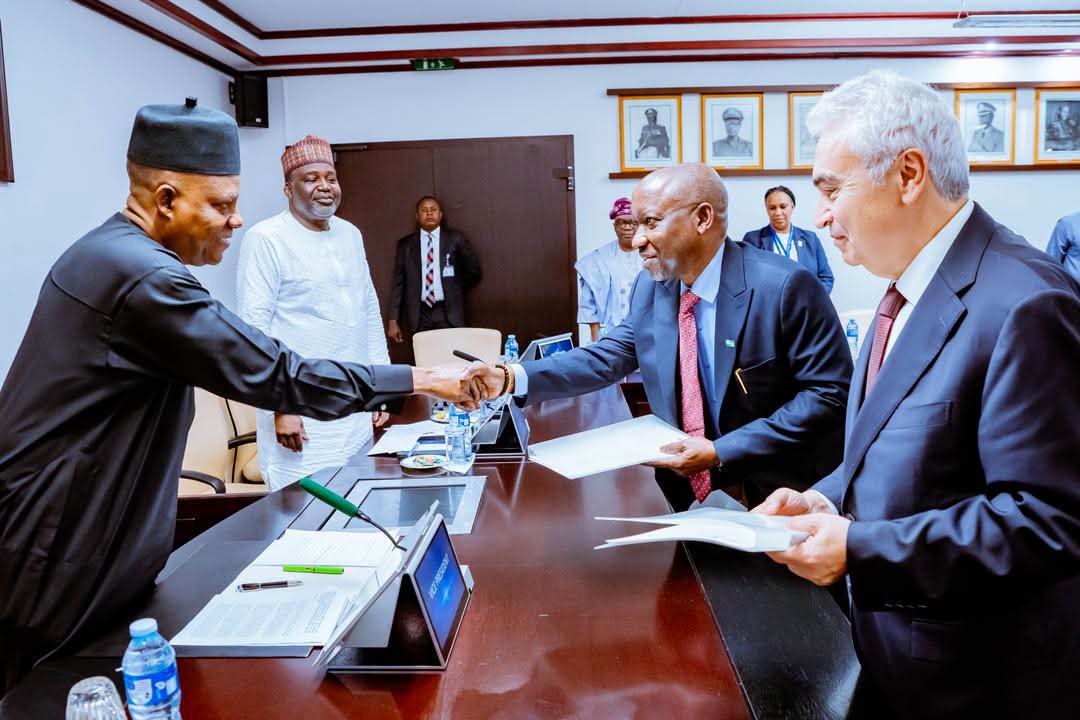
Nigeria, IEA Solidify Partnership, Sign Pact On Energy Policy, Security
**It’s a justification of President Tinubu’s policy choices, gains of his economic reforms – VP Shettima
By: Our Reporter
Nigeria and the International Energy Agency (IEA) have signed an agreement for a Joint Work Programme to strengthen strategic partnership in the development of data for energy policy and investment across the value chain for economic growth and energy security.
This is just as the Vice President, Senator Kashim Shettima, has said Nigeria’s formal admission into the IEA as an Association Country is a significant milestone for the country and another testament to the gains of the economic reforms of the administration of President Bola Ahmed Tinubu.
Senator Shettima stated this on Thursday during the signing of the agreement for the Joint Work Programme between Nigeria and IEA, signaling the formal commencement of the partnership.
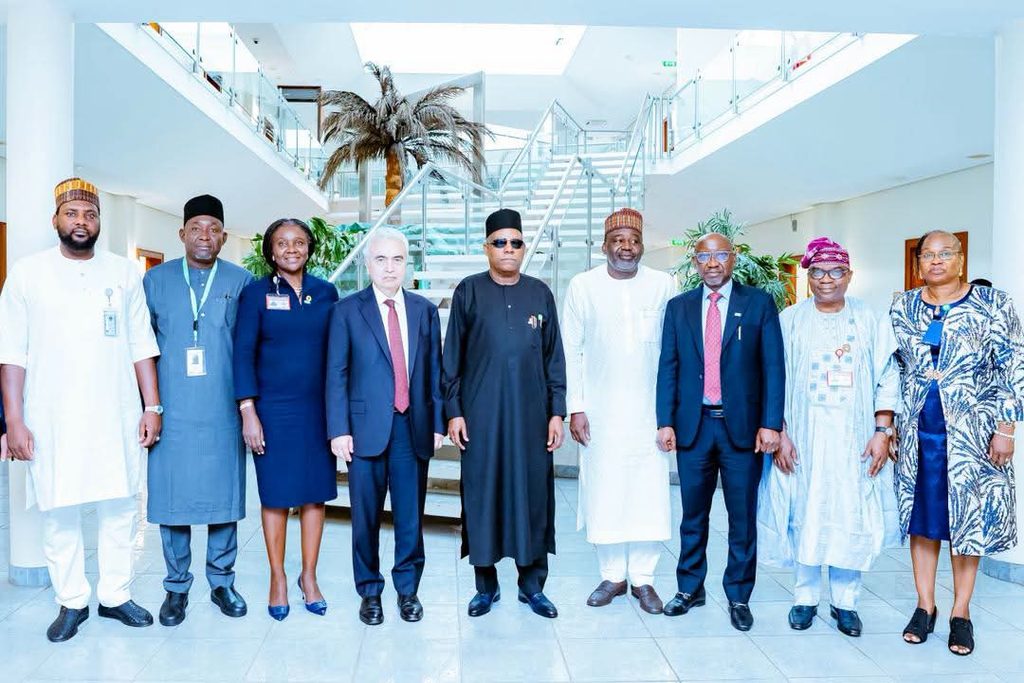
Speaking on behalf of President Tinubu, the Vice President noted that Nigeria’s formal entry into the fold of the Paris-based non-governmental organisation justifies his administration’s policy choices and efforts aimed at leveraging the country’s abundant energy resources scattered across the nation.
Commending the IEA for the important role it is playing in shaping global energy landscape, he said the effort of the agency in the global energy conversation and in supporting countries to navigate the challenges of energy security, affordability, sustainability and economic development, cannot be overstated.
His words: “Nigeria’s admission as an association country with the IEA is a significant milestone for our country and it reflects Nigeria’s strategic importance in the global energy landscape and the confidence that IEA has placed in our commitment to constructive international energy cooperation.”
VP Shettima added that given Nigeria’s potential, “the country will benefit from IEA’s institutional knowledge, the intellectual resources, the reach and expertise to support our nation’s ambitions in this sector.”
He acknowledged Nigeria’s abundant renewable energy resources and his commitment to repositioning the economy leveraging available resources which are already manifesting across different sectors of the economy.
The Vice President assured the IEA team of his administration’s commitment to continue to partner with other stakeholders within the setting to contribute to the global energy debate on a fair and just energy transition.
Earlier, leader of the IEA delegation, Dr. Fatih Birol explained that his organisation is an organisation of governments that covers all technological fields, including oil, gas, solar, nuclear power, artificial intelligence and electric cars based in Paris.
Working with top 500 energy experts of the world in terms of giving policy advice, sharing data and expertise, he said to be a member of the IEA family is not an easy task, as it requires a lot of considerations and tests.
According to Dr. Birol, after detailed discussions with the Minister of State for Petroleum and Gas, Mr. Ekperikpe Ekpo, the Board comprising the governments of the United States, Japan, Germany, Italy, and UK voted and accepted Nigeria unanimously as a member.
“The IEA will accompany the Nigerian energy sector for the next few years to come for a much better energy future. We will provide policy advice from clean cooking to gas markets, from gas markets to training Nigerian experts at the IEA on our own,” he assured.
Earlier, Minister of State Petroleum Resources (Gas), Mr Ekperikpe Ekpo, stressed that Nigeria’s admittance into the IEA was based on the performance of the Tinubu administration reflected in the reforms undertaken in the economy.
He said the signing of the Joint Work Programme, which portends the involvement of the technical team of the IEA with Nigeria in the development of data for energy policy and investment across the value chain and targeted for economic growth and energy security.
On his part, the Minister of State for Foreign Affairs, Ambassador Sola Enikanoaiye, described IEA’s partnership with Nigeria as strategically important, noting that the Nigerian Mission in Paris played a critical role in ensuring its success.
Pledging the commitment of the Minister of Foreign Affairs, Mrs. Bianca Odumegwu-Ojukwu, towards the process, “Our role is to ensure that whatever government does at home is projected effectively in advancing and promoting the interest of Nigeria.
“We take this as a critical component of our national interest and we will not fail in ensuring that we assist, as facilitators and coordinators, in ensuring that the maximum benefit of this endeavor is derived for the benefit of the Nigerian people.”
Also, the Director General of Energy Commission of Nigeria, Dr. Mustapha Abdullahi, said the Commission’s relationship with IEA led to the joint sponsorship of Nigeria’s last National Energy Master Plan, even though there was no structure to their relationship.
He expressed optimism that Nigeria’s formal joining of the IEA and the agreement will strengthen the Commission’s relationship with the organisation.
Nigeria, IEA Solidify Partnership, Sign Pact On Energy Policy, Security

60th Birthday: VP Shettima Opts For Low-Key Celebration
By: Our Reporter
As Vice President Kashim Shettima marks his 60th birthday on September 2, 2026, he has appealed to friends, associates and well-wishers to refrain from placing congratulatory advertisements in newspapers or airing celebratory messages on radio, television and digital platforms.
VP Shettima said his decision to keep the milestone low-key reflects his conviction that public attention should remain focused on the serious work of national development rather than on personal celebrations.
“To ensure absolute propriety, I respectfully appeal that there should be no public birthday celebrations, congratulatory gatherings or goodwill advertorials across print, broadcast and digital media platforms,” the Vice President said.
Rather than celebrate him through elaborate events or paid advertisements, VP Shettima urged well-wishers to channel their goodwill into prayers for Nigeria and for the administration of President Bola Ahmed Tinubu.
He specifically called for prayers for the success of the administration’s economic reforms, lasting solutions to the nation’s security challenges, greater national unity, and the peace and prosperity of all Nigerians.
For VP Shettima, the occasion should serve less as a celebration of a personal milestone and more as an opportunity for reflection, gratitude and renewed commitment to the service of the country.
60th Birthday: VP Shettima Opts For Low-Key Celebration

Troops arrest terrorist kingpin, ammunition courier, logistics supplier in Kaduna

U.S. Air Force C-17 delivers military equipment to Nigerian Air Force under FMS agreement

Troops repel terrorist infiltration attempt on Pulka base, kill one

Roger Federer’s Shock as DNA Results Reveal Myla and Charlene Are Not His Biological Children

THE PLIGHT OF FARIDA

FAILED COUP IN BURKINA FASO: HOW TRAORÉ NARROWLY ESCAPED ASSASSINATION PLOT AMID FOREIGN INTERFERENCE CLAIMS
-
 News2 years ago
Roger Federer’s Shock as DNA Results Reveal Myla and Charlene Are Not His Biological Children
-
Opinions5 years ago
THE PLIGHT OF FARIDA
-
 News1 year ago
FAILED COUP IN BURKINA FASO: HOW TRAORÉ NARROWLY ESCAPED ASSASSINATION PLOT AMID FOREIGN INTERFERENCE CLAIMS
-

 News2 years ago
EYN: Rev. Billi, Distortion of History, and The Living Tamarind Tree
-
 Opinions5 years ago
POLICE CHARGE ROOMS, A MINTING PRESS
-

 ACADEMICS3 years ago
A History of Biu” (2015) and The Lingering Bura-Pabir Question (1)
-

 Columns3 years ago
Army University Biu: There is certain interest, but certainly not from Borno.
-

 Politics1 year ago
2027: Why Hon. Midala Balami Must Go, as Youths in Hawul and Asikira/Uba Federal Constituency Reject ₦500,000 as Sallah Gift
