
News
The Origin and Expansion of the Lakurawa Militia in Niger and Northern Nigeria

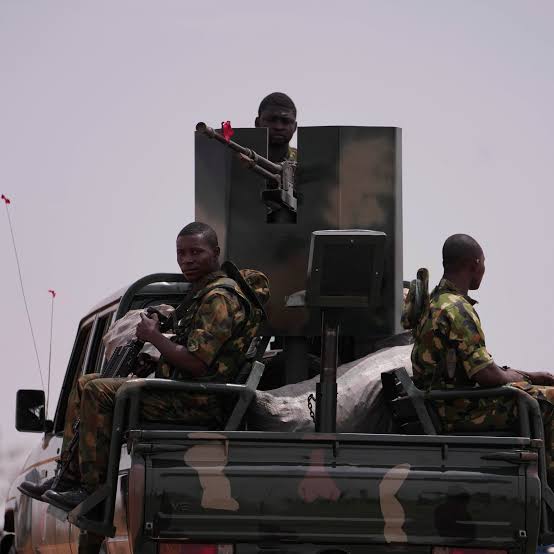
The Origin and Expansion of the Lakurawa Militia in Niger and Northern Nigeria
By: Our Reporter
The term Lakurawa originates from the Hausa word lakurawa, meaning “recruits.” It refers to young men undergoing military training for national service. The term itself challenges the theory that the group originated in an English-speaking country like Nigeria, as it is rooted in a French linguistic influence. The name also implies that these individuals were not just hastily trained militia members but had received structured training in formal state institutions.
The Lakurawa militia was formed in 1997 under the presidency of Ibrahim Baré Maïnassara in Niger. Its primary objective was to provide protection for pastoralist communities suffering from rampant cattle rustling, particularly in western Niger. At the time, armed bandits from Mali frequently crossed into Niger to raid livestock, leaving local herders vulnerable. Given the inability of the national army to provide security in remote areas, the government saw the need to create an auxiliary force.
To effectively combat the well-armed raiders, the Lakurawa militia underwent military training and received weapons to match their adversaries. The first training camp was established in Ekrafane, approximately 10 km from an official military detachment. The militia recruits quickly became known as Lakurawa.
Under Baré’s leadership, the Lakurawa successfully carried out several counteroffensives against the armed bandits. Their operations were so effective that the Malian raiders stopped crossing into Niger altogether. Those who did were relentlessly pursued and had their stolen livestock recovered. Encouraged by their success, President Baré expanded the militia program, establishing at least three additional Lakurawa training camps between Ekrafane and Banibangou.
Integration and Dismantling of the Lakurawa
Following Baré’s assassination in 1999, the Lakurawa faced an uncertain future. When Mamadou Tandja assumed power, he sought to integrate the Lakurawa into Niger’s National Guard. However, political disputes within his administration stalled the process. The then-Prime Minister, Hama Amadou, and the Minister of the Interior, Albadé Abouba, both members of the ruling party, disagreed on the fate of the militia.
Albadé reportedly ordered the disarmament and disbandment of the Lakurawa, despite opposition from Hama Amadou. Later, with the appointment of Mounkaila Modi as Minister of the Interior, Hama managed to halt the disarmament process. Instead, he established a second militia composed of recruits from Ouallam, using public funds.
The Lakurawa’s existence is well-known among military officers who served under both President Baré and Tandja. Many current members of Niger’s ruling junta, the CNSP (Conseil National pour la Sauvegarde de la Patrie), were involved in these militias between 1997 and 2012. Today, however, these officials remain silent, allowing the junta leader, General Abdourahamane Tiani, to shift blame while ignoring the militia’s long-standing impact.
The failure to properly integrate the Lakurawa into the national security structure had severe consequences. Many demobilized militia members disappeared with their weapons, forming independent armed groups. Some of these former Lakurawa later resurfaced in a more dangerous form.
From Government Militia to Jihadist Fighters
After the fall of Libya’s Muammar Gaddafi in 2011 and the subsequent rise of insecurity in the Sahel, some Lakurawa fighters found a new purpose. In 2012, several of them joined the Movement for Oneness and Jihad in West Africa (MUJAO), a jihadist faction that fought against the National Movement for the Liberation of Azawad (MNLA) in northern Mali. This marked a turning point, as former state-backed militiamen transitioned into extremist insurgents.
Expansion into Northern Nigeria
The Lakurawa’s trajectory changed again after France launched Operation Serval in 2013 to oust jihadist groups from northern Mali. Many MUJAO fighters, including former Lakurawa, were displaced and forced to relocate. Some of them moved further south, crossing into Niger’s border regions and eventually settling in northwestern Nigeria, particularly in Sokoto and Kebbi states.
Initially, these fighters were welcomed by local communities because of their strong stance against banditry and kidnapping. Their reputation as experienced fighters made them popular among rural populations suffering from insecurity. However, over time, their real intentions became clear. Their goal was not merely to fight crime but to establish an Islamic caliphate.
Unlike other militant groups, the Lakurawa avoided publicity. They did not claim responsibility for attacks or release propaganda. Instead, they blended into existing networks of transnational bandits operating across Nigeria and Niger. This strategy of concealment allowed them to expand undetected. However, as their influence grew, the Nigerian government took action.
In December 2024, Nigerian authorities launched a large-scale military offensive against Lakurawa strongholds. A combination of air and ground assaults led to hundreds of casualties among the group.
The Nigerien Junta’s Response
While Nigeria has deployed significant military resources to neutralize the Lakurawa, Niger’s ruling junta has taken a different approach. Instead of acknowledging the threat, General Tiani’s government has focused on political blame games, accusing Nigeria of interference while failing to confront the growing insurgency.
The Lakurawa are now linked to at least five sabotage attacks on Niger’s oil pipeline, as well as multiple incursions into villages in the Dosso and Tahoua regions. Despite these ongoing threats, the Nigerien leadership appears more interested in rhetoric than action, leaving the country increasingly vulnerable to further instability.
Conclusion
The Lakurawa militia’s history is a cautionary tale of how state-sponsored armed groups can evolve beyond their original purpose. Initially formed to protect pastoralists, they later fragmented into independent fighters, some of whom joined jihadist movements. Their expansion into northern Nigeria further complicated regional security, as they established a hidden presence among criminal networks.
Today, while Nigeria is actively working to dismantle the Lakurawa, Niger’s government remains passive, allowing the militia to continue operating freely. If left unchecked, the Lakurawa could further destabilize the entire Sahel and West African region, proving once again that militias created for short-term security solutions can become long-term threats.
The Origin and Expansion of the Lakurawa Militia in Niger and Northern Nigeria


Military
Residents Cheer Troops as Operation FANSAN YAMMA Returns with Captured Terrorists’ Logistics in Zamfara
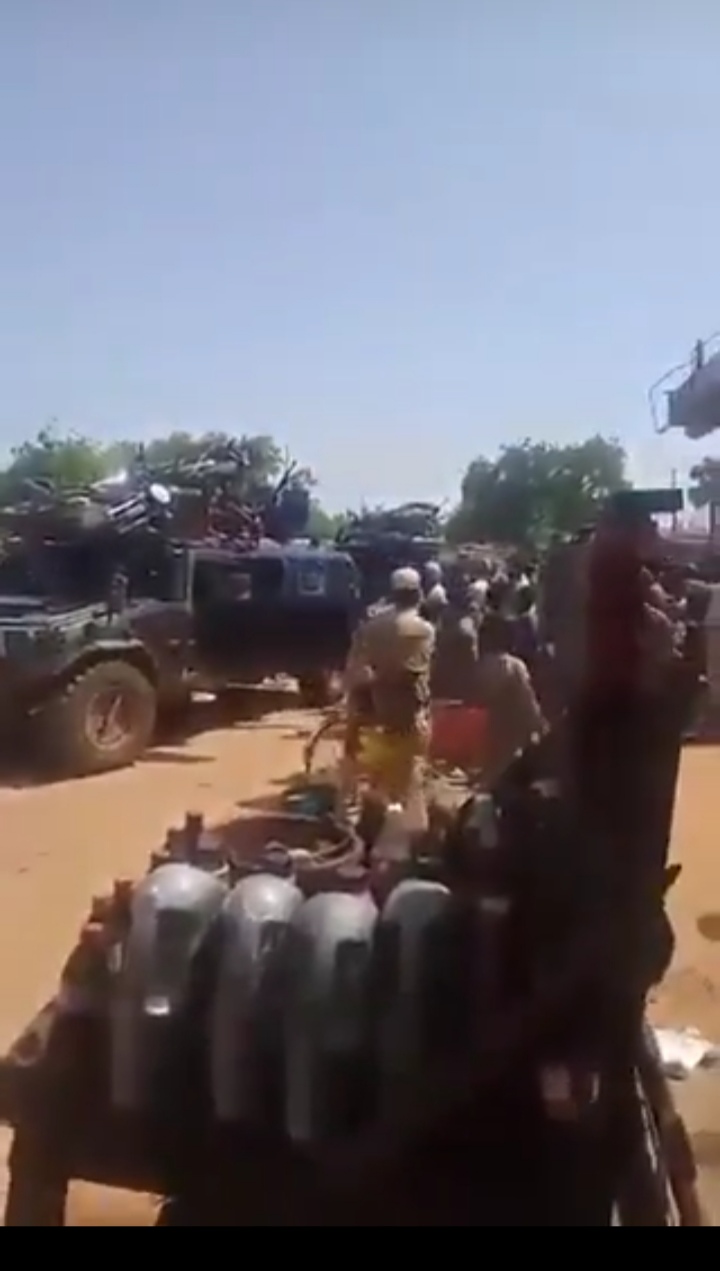
Residents Cheer Troops as Operation FANSAN YAMMA Returns with Captured Terrorists’ Logistics in Zamfara
By Zagazola Makama
Residents of Gummi town in Zamfara State on Thursday poured into the streets to celebrate troops of the Joint Task Force North West, Operation FANSAN YAMMA, following a major operational success against terrorists in the area.
Eyewitnesses said the jubilant crowd gathered as soldiers arrived in town with logistics recovered from terrorists after a successful counter-ambush operation that reportedly left more than 100 terrorists neutralised.
The recovered items, including eight motorcycles used by the armed groups for movement during attacks on communities, were transported on an Armoured Personnel Carrier (APC) to the Headquarters of Operation FANSAN YAMMA in Gummi.
Residents were seen cheering, waving at the troops and applauding their efforts as the convoy entered the military base, with many expressing appreciation for the soldiers’ courage and sacrifices in the ongoing fight against banditry in the North West.
Security sources told Zagazola Makama that the successful operation dealt a significant blow to the criminal networks operating in the area, disrupting their mobility and logistical capabilities.
The spontaneous celebration by residents is seen as a reflection of growing public confidence in the military’s sustained offensive against terrorists and bandits across Zamfara and neighbouring states.
Military authorities reaffirmed that Operation FANSAN YAMMA remains committed to sustaining offensive operations aimed at dismantling terrorist enclaves, denying criminal elements freedom of movement, and restoring lasting peace across the North West.
The Joint Task Force also acknowledged the continued support and actionable intelligence provided by residents, describing community cooperation as critical to the success of ongoing operations.
Residents Cheer Troops as Operation FANSAN YAMMA Returns with Captured Terrorists’ Logistics in Zamfara
News
WAHO, AfDB Hand Over 10 Ambulances, Medical Equipment to The Gambia in $3.4m Health System Boost
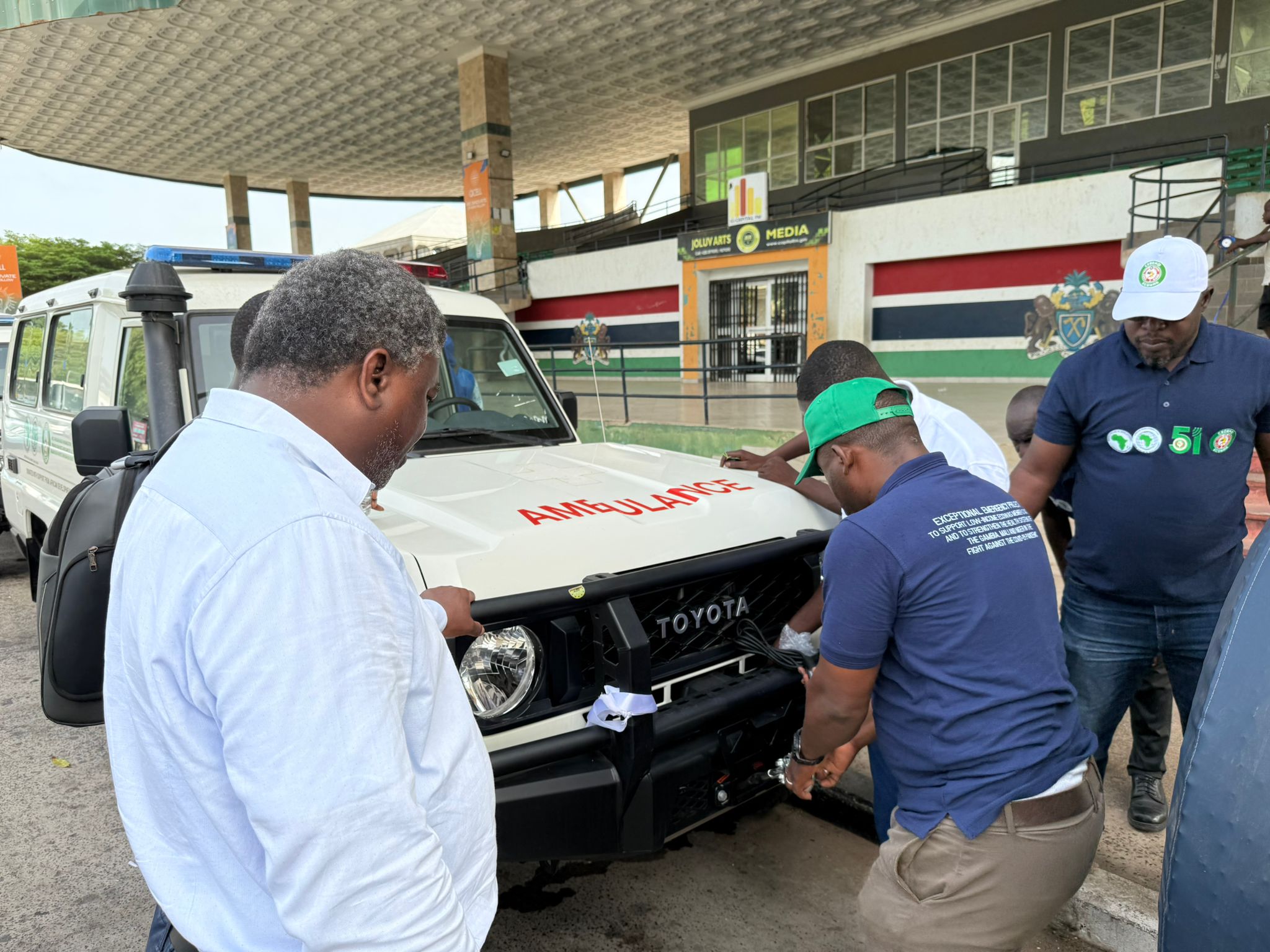
WAHO, AfDB Hand Over 10 Ambulances, Medical Equipment to The Gambia in $3.4m Health System Boost
By: Michael Mike
The Gambia – The Economic Community of West African States (ECOWAS), through the West African Health Organization (WAHO), on Friday handed over 10 fully equipped four-wheel-drive ambulances and critical medical equipment to The Gambia in a major effort to strengthen the country’s emergency response capacity and bolster regional health security.
The intervention, financed by the African Development Bank (AfDB) under the COVID-19 Exceptional Emergency Project for Low-Income ECOWAS Member States, represents an investment of approximately $3.4 million in The Gambia out of the project’s overall $22.3 million regional budget.
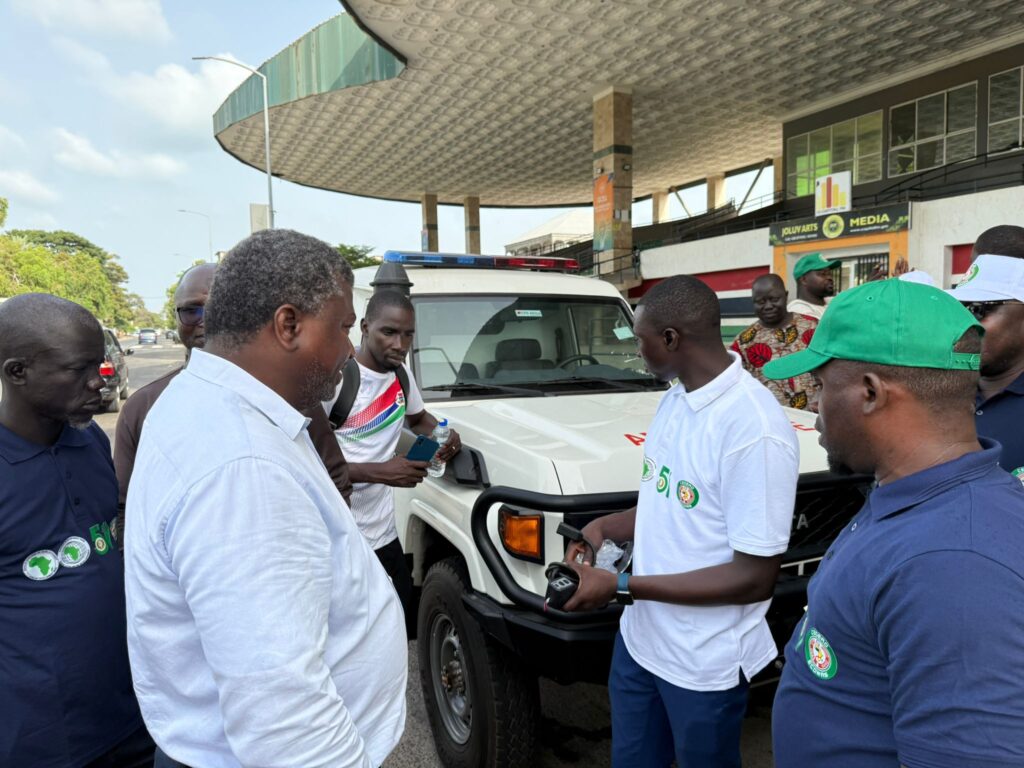
The medical equipment includes oxygen concentrators, haemodialysis machines, X-ray machines, anaesthetic machines, patient monitors, diagnostic tools, biomedical engineering equipment and other critical supplies aimed at improving emergency, diagnostic and specialised healthcare services.
Speaking at the handover ceremony in Banjul, President of the ECOWAS Commission, Dr. Omar Alieu Touray, described the intervention as a landmark demonstration of regional solidarity, stressing that the investment extends beyond the COVID-19 pandemic to building resilient health systems capable of responding to future public health emergencies.
Touray, a Gambian, said returning home to witness the delivery of the project carried deep personal significance.
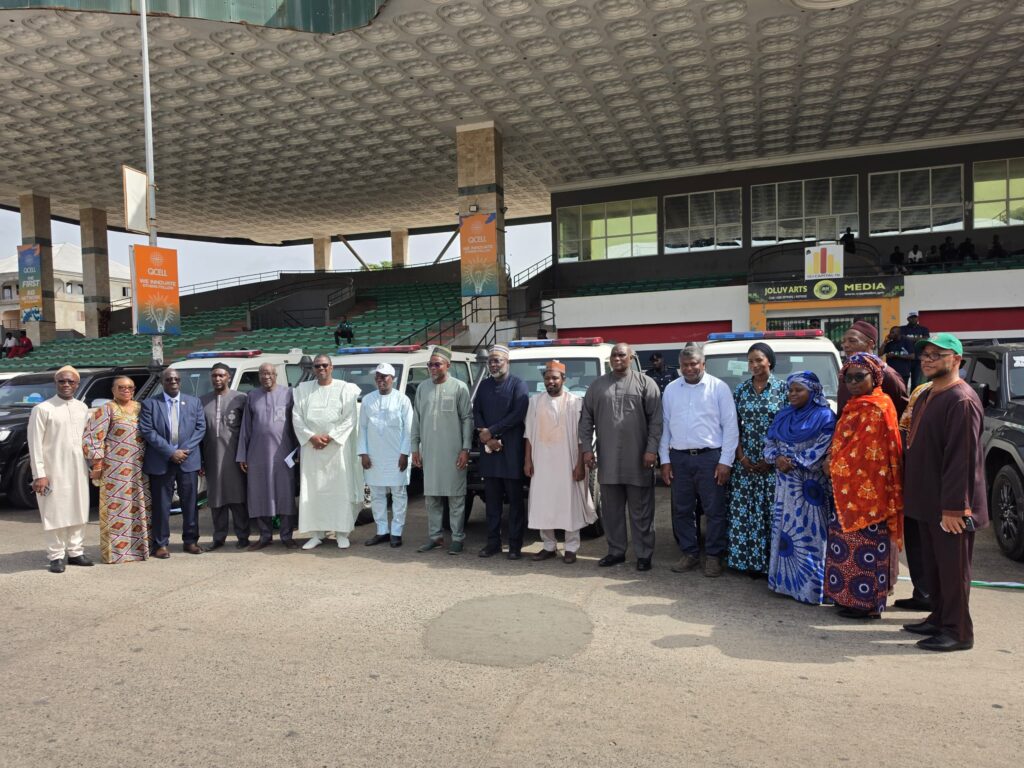
“It is with immense pride, profound emotion and a deep sense of honour that I stand before you today in my own home country. To return to my homeland and witness the tangible fruits of our regional cooperation is deeply humbling and inspiring,” he said.
He explained that WAHO, as a specialised institution of ECOWAS, was funded through the ECOWAS Community Levy paid by citizens across the region, adding that the project reflected what West African countries could achieve through collective action.
“When the COVID-19 pandemic struck, it exposed the vulnerabilities of our health systems, but it also ignited our collective resolve. We learned that we are indeed better and stronger together,” Touray stated.
According to him, the project has trained 1,427 health professionals, equipped 55 points of entry across participating countries and supplied thousands of sets of personal protective equipment.
He disclosed that The Gambia recorded a 100 per cent physical completion rate for all project interventions, while 852 health workers and stakeholders were trained between 2024 and 2025 in Integrated Disease Surveillance and Response (IDSR), Incident Management Systems, Infection Prevention and Control, among other critical areas.
The ECOWAS Commission President said the newly donated ambulances and equipment would significantly improve emergency medical services and expand access to life-saving healthcare, particularly for vulnerable communities.
“As we receive these materials today, let us remember that they represent more than just tools. They represent hope, resilience and our shared commitment to protecting the lives and dignity of every West African,” he said.
Receiving the equipment on behalf of President Adama Barrow, the Vice President of The Gambia, Mohammed Jallow described the donation as a direct response to critical gaps in healthcare delivery, especially in rural communities where transporting critically ill patients to health facilities remains a major challenge.
He said the ambulances would serve as “vehicles of hope” and improve responses to road traffic accidents, obstetric emergencies and infectious disease outbreaks.
The Vice President commended WAHO, the African Development Bank and the Government of Germany for their continued support to The Gambia’s health sector, noting that the intervention demonstrated the tangible benefits of regional cooperation.
“This support represents a significant investment in our health system and demonstrates that, through collective action, ECOWAS member states and their partners can deliver results that directly improve the lives of ordinary citizens,” he said.
He charged the Ministry of Health and healthcare workers to ensure proper maintenance and accountability in the management of the newly acquired assets.
“Please ensure that spare parts are available, maintenance schedules are strictly followed, and that these vehicles and medical equipment remain fully operational at all times,” he urged.
Earlier, The Gambia’s Minister of Health, Dr. Ahmadou Samateh. praised WAHO for what he described as years of unwavering support to the country’s health sector through capacity building, technical assistance and training programmes.
He noted that hardly a month passed without WAHO sponsoring Gambian health professionals for training within and outside the country, describing the organisation as one of the country’s most dependable health development partners.
The minister said the donation was unprecedented in the country’s history.
“To the best of my knowledge, we have never received such a donation of ambulances from any institution in this quantity at one time,” he said.
The ceremony, which also coincided with WAHO’s anniversary celebration, was attended by the Director-General of WAHO, Dr. Melchior Aïssi, representatives of the African Development Bank, the German Government, senior ECOWAS officials, members of the Gambian Cabinet, development partners and senior government officials.
The intervention is expected to strengthen The Gambia’s emergency medical response system while reinforcing ECOWAS’ broader strategy of building resilient regional health systems capable of responding to future disease outbreaks and other public health emergencies.
WAHO, AfDB Hand Over 10 Ambulances, Medical Equipment to The Gambia in $3.4m Health System Boost
Farmer killed by Fulani bandits in fresh Plateau attack as cycle of violence deepens
By Zagazola Makama
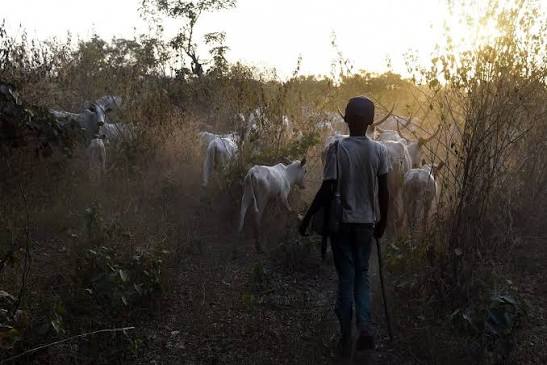
A farmer has been killed in a fresh attack by yet-to-be-identified gunmen in Butura Gida village, Bokkos Local Government Area of Plateau State, in the latest incident pointing to the persistent cycle of violence between farming and herding communities.
Security sources told Zagazola Makama that the attack occurred at about 7:47 p.m. on Tuesday, July 8, prompting troops of Sector 5 of Operation Enduring peace to mobilise to the community after receiving a distress call.
On arrival, the troops found the victim’s lifeless body. The attackers had fled the scene before security personnel arrived, and no contact was made.
A manhunt has since been launched to identify and apprehend those responsible for the killing.
The latest incident came less than 24 hours after a 13-year-old herder, Mustapha Abdul Kadir, was found dead alongside four cattle in Mangu Local Government Area in what authorities suspected was an attack by armed militia.
Earlier the same day, two residents were also killed in Torok community in Riyom Local Government Area in an attack blamed on suspected Fulani bandits.
The succession of attacks illustrates the entrenched and increasingly vicious pattern of retaliatory violence that has continued to plague Plateau State.
Killings of farmers are often followed by attacks on herders, while attacks on herders frequently trigger reprisals against farming communities, creating a dangerous cycle that has claimed hundreds of lives and destroyed livelihoods over the years.
Despite sustained military deployments, peace meetings and community engagements, mistrust between the two groups remains deep, with criminal elements exploiting the fragile security situation to perpetrate violence.
Zagazola warn that unless perpetrators on all sides are brought to justice and local grievances addressed, the state risks remaining trapped in an endless cycle of revenge attacks.
Farmer killed by Fulani bandits in fresh Plateau attack as cycle of violence deepens

Residents Cheer Troops as Operation FANSAN YAMMA Returns with Captured Terrorists’ Logistics in Zamfara

WAHO, AfDB Hand Over 10 Ambulances, Medical Equipment to The Gambia in $3.4m Health System Boost

Farmer killed by Fulani bandits in fresh Plateau attack as cycle of violence deepens

Roger Federer’s Shock as DNA Results Reveal Myla and Charlene Are Not His Biological Children

THE PLIGHT OF FARIDA

FAILED COUP IN BURKINA FASO: HOW TRAORÉ NARROWLY ESCAPED ASSASSINATION PLOT AMID FOREIGN INTERFERENCE CLAIMS
-
 News2 years ago
Roger Federer’s Shock as DNA Results Reveal Myla and Charlene Are Not His Biological Children
-
Opinions4 years ago
THE PLIGHT OF FARIDA
-
 News1 year ago
FAILED COUP IN BURKINA FASO: HOW TRAORÉ NARROWLY ESCAPED ASSASSINATION PLOT AMID FOREIGN INTERFERENCE CLAIMS
-

 News2 years ago
EYN: Rev. Billi, Distortion of History, and The Living Tamarind Tree
-
 Opinions5 years ago
POLICE CHARGE ROOMS, A MINTING PRESS
-

 ACADEMICS2 years ago
A History of Biu” (2015) and The Lingering Bura-Pabir Question (1)
-

 Columns2 years ago
Army University Biu: There is certain interest, but certainly not from Borno.
-

 Politics1 year ago
2027: Why Hon. Midala Balami Must Go, as Youths in Hawul and Asikira/Uba Federal Constituency Reject ₦500,000 as Sallah Gift
