
National News
Tinubu Asked to Stop Shell from Selling Remaining Shares

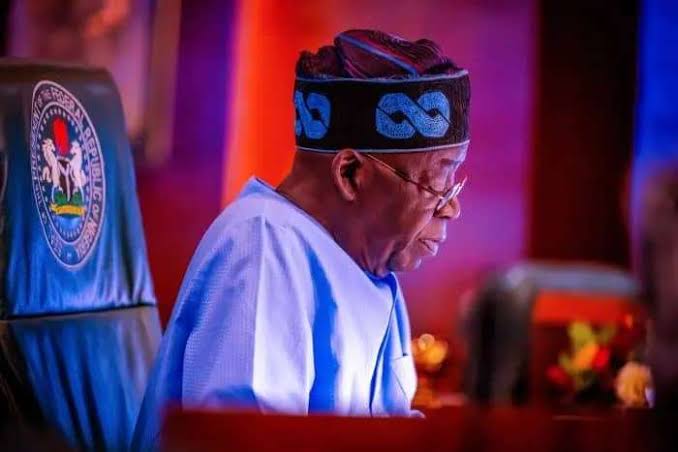
Tinubu Asked to Stop Shell from Selling Remaining Shares
By: Michael Mike
A conglomerate of Civil Society Organisations, community leaders, and concerned citizens have called on President Bola Tinubu to sustain the Nigeria Upstream Petroleum Regulatory Commission’s (NUPRC) rejection of Shell’s request to sell its remaining shares in the Shell Petroleum Development Company (SPDC) to the Renaissance consortium.
The group while alleging that other international oil corporations, such as TotalEnergies, are also attempting to sell their stakes in SPDC and other Nigerian onshore oil assets, stated that any approval of Shell’s and Total’s requests would weaken regulatory independence, ignore the interests of the Niger Delta communities, jeopardize the environmental and social well-being of the region for generations to come, and undermine Nigeria’s sovereignty.
Signatories to the request are Nnimmo Bassey (Health of Mother Earth Foundation (HOMEF)), Dr. Isaac ‘Asume’ Osuoka (Social Action Nigeria), Olanrewaju Suraju (HEDA Resource Centre), Emem Okon (Kebetkache Women Development and Resource Centre),
Akinbode Oluwafemi (Corporate Accountability and Public Participation Africa (CAPPA)), Idoreyin Bassey (League of Queens International Empowerment),
Tijah Bolton-Akpan (Policy Alert), Ken Henshaw (We the People), Rita Uwaka (Environmental Rights Action/Friends of the Earth Nigeria), David Ugolor (Africa Network for Environment and Economic Justice (ANEEJ)) Mfon Utin (Healthy Life Development initiative), Comr. Cynthia Buluebiere Bright (Gbolekekro Women Empowerment And Development Organization (GWEDO)), Auwal Musa Rafsanjani (Civil Society Legislative Advocacy Centre (CISLAC)), Cookey Tammy (Centre for Environment, Human Rights and Development (CEHRD)), Umo Isua-Ikoh (Peace Point Development Foundation),
Friday Nbani (Lekeh Development Foundation)
Others are Amanie Stella (Society for Women and Youths Affairs (SWAYA)), Martha Agbani (Lokiaka Community Development Centre), Akpobari Celestine (People’s Advancement Centre
Ogoni Solidarity Forum), Chido Onumah (Africa Centre for Media and Information Literacy (AFRICMIL)), Ibrahim Zikirullahi (Resource Centre for Human Rights & Civic Education (CHRICED)), Odey Friday (Accountability Lab International Peace and Civic Responsibility Centre (IPCRC)), Arochukwu Ogbonna (Civil Rights Council) and Josesphine Alabi (Keen and Care Initiative)
The group stated that: “We are, again, compelled to ask for a comprehensive halt to all divestment requests from oil corporations in the Niger Delta, including Shell, Total, and other IOCs with similar plans, until the issues of concerned are addressed.”
Among the issues include: It is critical to emphasize that the Nigerian Petroleum Industry Act (PIA) and the NUPRC’s responsibility to uphold this law were clearly outlined when Shell’s divestment request was initially rejected. NUPRC’s refusal was based on legitimate concerns, including Shell’s failure to adequately address the significant environmental and social liabilities associated with its operations in the Niger Delta, as was independently assessed and recommended by international assessors contracted by the country. Among the reasons for rejecting the sale, NUPRC cited the inability of the Renaissance consortium, a shady company with links to past Shell executives and Nigerian political actors, to demonstrate its financial and technical capacities to manage the assets and the pressing need for proper environmental remediation.
NUPRC’s rejection was in line with the responsibilities outlined under Nigerian law and global best practices for corporate accountability. It is a decision rooted in national interest — protecting the health, safety, and environment of the Niger Delta communities. Any attempt to approve Shell’s sale despite these valid concerns would risk undermining regulatory independence and signaling that Nigerian law can be bypassed to serve the interests of multinational corporations.
The Legacy of Pollution and Health Crisis
The environmental and health crises caused by Shell and other oil corporations operating in the Niger Delta are well documented. The United Nations Environment Programme’s (UNEP) report on Ogoniland describes an ecological disaster of immense proportions. UNEP’s findings revealed that:
- Drinking water sources are contaminated with dangerous levels of hydrocarbons, making them unsafe for human consumption.
- Oil spills have destroyed entire ecosystems, killing marine life and damaging the biodiversity that is crucial for the livelihood of local communities.
- The soil in Ogoniland has been contaminated with toxic substances, rendering it infertile and unsuitable for farming, exacerbating food insecurity in the region.
UNEP’s assessment concluded that the cost of remediating the “environmental catastrophe” in Ogoniland alone would exceed $1 billion over the initial five years, with the cleanup expected to last more than 30 years. Yet, these costs are still insufficient to cover the broader environmental impacts of oil extraction across the Niger Delta, where similar damages exist.
The Bayelsa State Oil and Environment Commission’s (BSOEC) report provides a detailed analysis of the severe pollution caused by Shell’s and other multinational companies’ operations, including health impacts on local populations. According to the BSOEC: - High levels of toxins from oil pollution, such as total petroleum hydrocarbons (TPHs) and heavy metals (HMs), have infiltrated the air, water, and soil across the region, contributing to a public health emergency.
- Communities are suffering from respiratory issues, skin diseases, and cancers linked to oil pollution, and these problems are worsening by the year.
- The economic cost of these health impacts and the degradation of natural resources is incalculable, leaving most of the people in poverty and unable to sustain themselves through traditional means like farming and fishing.
The BSOEC report also estimates that the cost of remediating the damage in Bayelsa State alone would exceed $12 billion over 12 years. Based on the UNEP and BSOEC reports, it would take about $100 billion to address the environmental damage in the entire Niger Delta comprehensively. Following the Deepwater Horizon oil spill in the United States, BP, the company responsible, paid over $60 billion to address the impacts of one oil spill incident alone. The environmental damage of the Niger Delta is much worse and has spanned decades. Therefore, to allow Shell, TotalEnergies, or any other company to walk away from their responsibilities would mean transferring these liabilities to the Nigerian state, the Niger Delta states, and the Nigerian people. This is an unjust and unsustainable burden that would further exacerbate the challenges faced by communities already suffering from the effects of pollution and environmental neglect.
Dangerous Lessons from Past Asset Sales
The experiences from past asset sales by Shell, ENI/AGIP, and ExxonMobil offer grave lessons. In the case of Shell’s divestment in Nembe to Aiteo, for instance, the local communities were left with unresolved pollution and no proper remedy for the environmental damage caused by decades of oil extraction. Environmental destruction has worsened in the area. Similarly, when ExxonMobil divested some of its assets, the responsibility for remediation was inadequately transferred to new operators, who were ill-prepared to manage the legacy of contamination. In ENI/AGIP’s case, the sale of assets to Oando continued to worsen the situation in the host communities as there were no comprehensive cleanup efforts undertaken.
These sales not only failed to address the critical environmental liabilities but also deepened the social tensions in the Niger Delta, as new operators took over without addressing the root causes of community unrest or the longstanding health and environmental challenges. This pattern of irresponsible divestment must not be repeated, and the Nigerian government has a responsibility to stop it.
The National Interest and the Urgency for Action
We ask Mr. President to ensure that the immediate financial interests of a few multinational corporations and local profiteers do not outweigh the health, future, and survival of millions of Nigerians who have suffered for decades. President Tinubu must safeguard the future of Nigeria, ensuring that all its people, especially those in the Niger Delta, are not sacrificed for the benefit of global capital and a few local profiteers.
An Approval of the Sale of Shell’s and Total’s Assets Would Be a Declaration of War with the Niger Delta
We want to make it absolutely clear: approving Shell’s or TotalEnergies’ divestment in its current form without addressing the profound environmental and social costs would be a grave injustice to the people of the Niger Delta and could lead to significant unrest in the region. It would be an affront to the generations of Niger Deltans who have fought and died for environmental justice, their homes, and their livelihoods.
Approving Shell’s SPDC share sale would send a dangerous message to all multinational corporations operating in Nigeria that they can extract our resources, leave devastation behind, and walk away without consequence. This is not just a question of corporate accountability; it is about Nigeria’s sovereignty, dignity, and the right of its people to live in a clean and safe environment.
They demanded that President Tinubu: “Immediately halt all divestment processes until a transparent, comprehensive, and inclusive review is undertaken that addresses Shell’s and TotalEnergies’ historical environmental and social liabilities.
“Ensure inclusive and transparent consultation with state governments and the people of the sites of oil and gas extraction in the Niger Delta before any further divestment of IOC assets.
“Hold Shell, TotalEnergies, and all other IOCs accountable for their past and ongoing environmental damage, and ensure they fund a full cleanup and remediation program across the Niger Delta.
“Uphold the regulatory independence of NUPRC and allow it to fulfill its statutory duties without political interference.
“Respect the resolution of the National Assembly, which has called for a halt to all divestments by international oil companies in Nigeria.
“Ensure that new operators are properly vetted and committed to responsible environmental management and community welfare.
“Create an Environmental Restoration Fund that is sufficiently funded to meet the full and complete costs of environmental cleanup and reparations based on credible estimates of independent international experts and contributed to by Shell, TotalEnergies, and other international oil companies and future operators to address the long-term damage caused by their operations.
“Provide community profit-sharing opportunities for host communities as part of any divestment agreement, ensuring that the local people benefit from the oil resources they have hosted for decades.
“Mandate full disclosure of all environmental liabilities before divestment, requiring Shell, TotalEnergies, and any future operators to publicly declare and address all damages.
“Include gas flaring cessation and decommissioning plans in any divestment agreement, with clear timelines for ending harmful practices.
“Account for carbon emissions related to the divested assets and propose mitigation plans that align with Nigeria’s climate commitments.”
They stated that: “This is a defining moment in Nigeria. We urge President Tinubu to stand with the people of the Niger Delta and uphold the values of justice, fairness, and environmental protection. By halting Shell’s, TotalEnergies’ and any other IOC divestment and demanding accountability,
“President Tinubu will send a powerful message that Nigeria’s sovereignty and the welfare of its citizens are paramount.
We ask President Tinubu not to undermine Nigeria’s national interest and the oversight of democratic institutions. We stand ready to continue our advocacy but need President Tinubu to show leadership to ensure a just, sustainable, and prosperous future for all Nigerians.”
Tinubu Asked to Stop Shell from Selling Remaining Shares


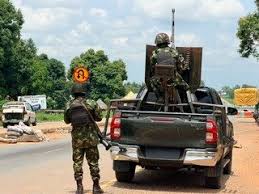
Troops Rescue Security Personnel, Recover Arms After Mob Attack in Oyo
By: Zagazola Makama
Troops of the 2 Division Garrison have intervened in a mob attack at Ojurin Mammy Market in Lagalu Local Government Area of Oyo State, rescuing three police personnel and a civilian driver who were assaulted by unknown individuals.
Military sources said the incident occurred at about 6:46 p.m. on June 18, when the victims were attacked by a mob who mistook them for armed robbers while they were dressed in plain clothes.
The victims were later identified as personnel attached to the Violent Crimes and Response Unit Annex, Iyana Church, Alakia, Ibadan.
Troops who responded swiftly to the distress situation succeeded in rescuing the victims from the mob and restoring order in the area.
The civilian driver involved in the incident reportedly sustained varying degrees of injury and was evacuated to the 2 Division Medical Services and Hospital for treatment.
During the operation, troops recovered one AK-47 rifle, one riot gun, and 25 rounds of 7.62mm special ammunition from the scene.
Authorities said the situation had been brought under control, while efforts were ongoing to prevent further escalation and ensure public safety in the area.
Troops Rescue Security Personnel, Recover Arms After Mob Attack in Oyo
National News
UN Envoy Blasts Nigeria’s Security Collapse, Warns Impunity Fuelling Cycle of Violence, Rights Breakdown
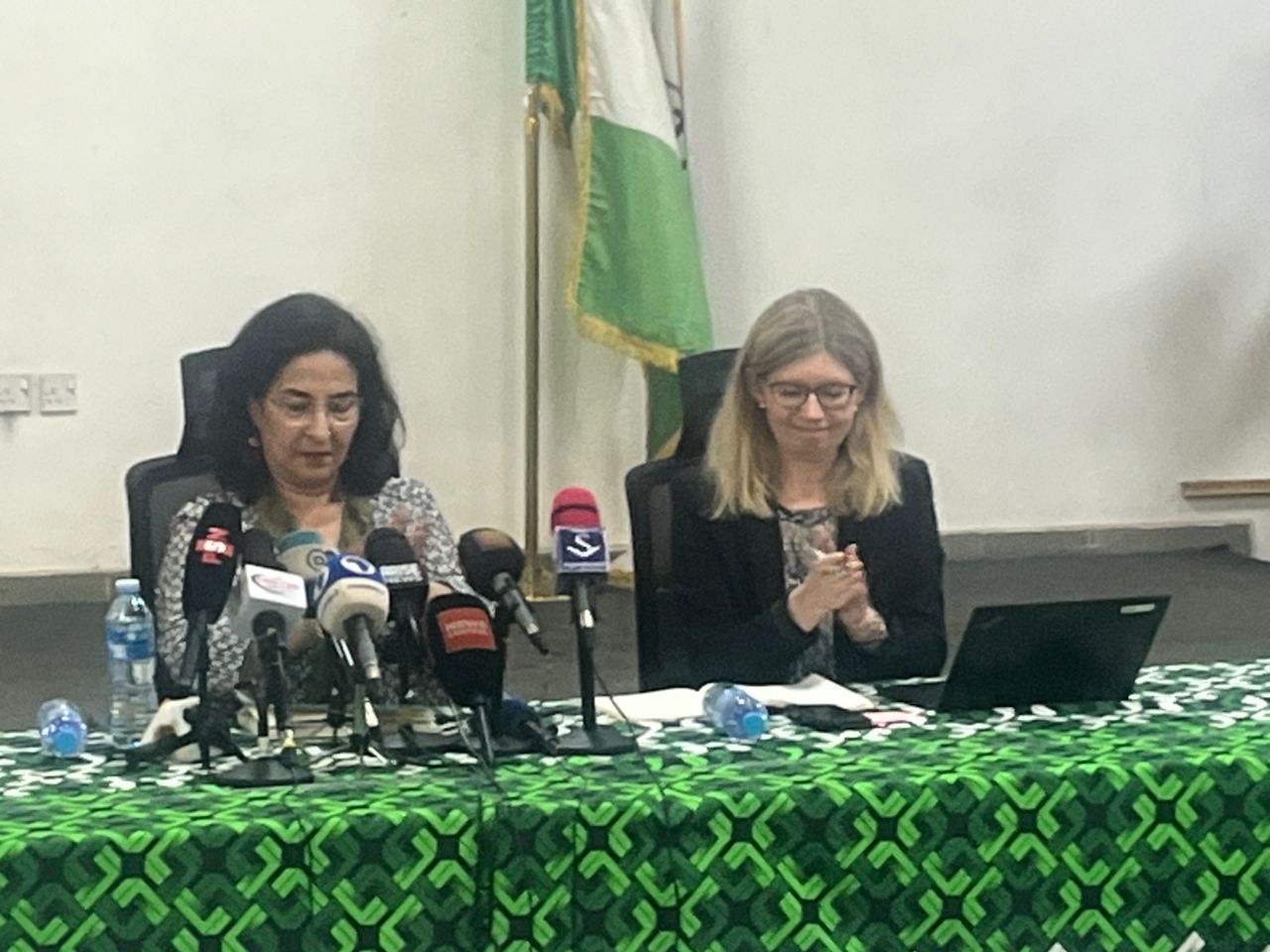
UN Envoy Blasts Nigeria’s Security Collapse, Warns Impunity Fuelling Cycle of Violence, Rights Breakdown
By: Michael Mike
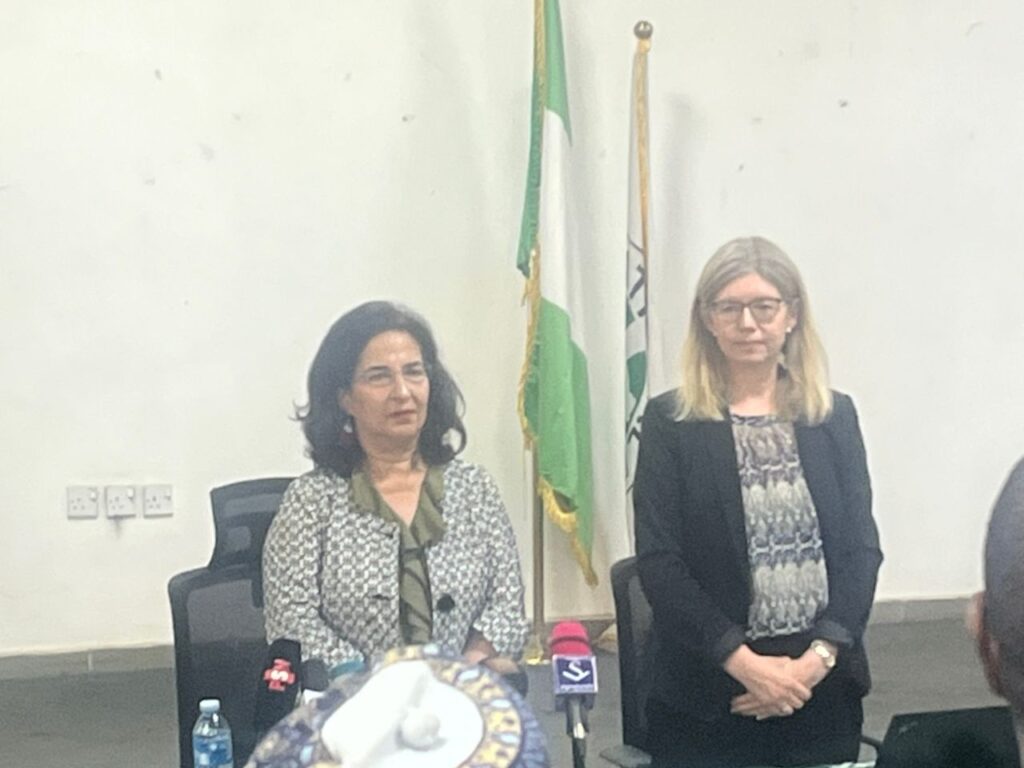
The United Nations Special Rapporteur on Freedom of Religion or Belief, Nazila Ghanea, has delivered one of the starkest international assessments yet of Nigeria’s security situation, warning that entrenched impunity and collapsing accountability systems are fuelling a self-perpetuating cycle of violence across the country.
Speaking at the end of an 11-day official visit, Ghanea said Nigeria’s insecurity has moved beyond episodic attacks to a structural crisis characterised by mass killings, repeated displacement of communities, destruction of livelihoods and widespread erosion of public trust in state institutions.
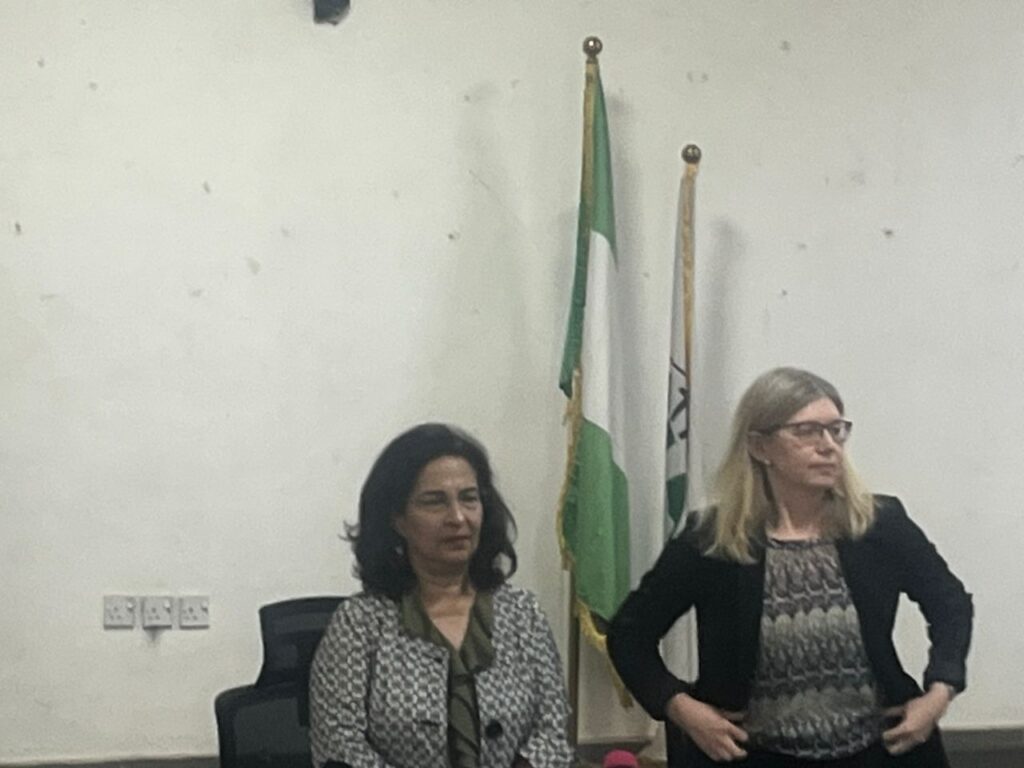
She said what emerged consistently from her engagements with over 200 stakeholders — including government officials, security agencies, victims, civil society organisations and religious leaders — was a country struggling to contain overlapping threats of terrorism, banditry, kidnapping, communal conflict and organised criminal networks.
According to her, the failure to ensure accountability for atrocities has created conditions in which violence is not only repeated but expands, leaving entire communities trapped in cycles of fear and survival.
“The absence of justice and accountability appears to be entrenching these cycles of violence and encouraging their spread,” she warned.
The UN envoy said victims across multiple regions described repeated attacks that destroyed entire villages, forced mass displacement and left survivors dependent on internally displaced persons’ camps with no clear path to return home.
She noted that many communities have suffered repeated assaults over the years, with some victims reporting displacement as many as six times, each time forced to rebuild their lives only to face renewed violence.
Ghanea also drew attention to disturbing accounts of armed groups allegedly imposing terms on rural communities, including arrangements in which residents surrender farmland and agricultural produce under coercion, deepening what she described as a breakdown of state protection in rural areas.
She warned that the scale and persistence of abductions — including kidnappings of children, clergy, traditional leaders, security personnel and political figures — has created a parallel economy of ransom and fear that further weakens state authority.
The Special Rapporteur said insecurity has also triggered the rise of vigilante groups, community defence networks and informal security structures, reflecting what she described as citizens’ growing loss of confidence in formal protection systems.
Ghanea further cautioned that the proliferation of arms and informal checkpoints risks blurring the line between community self-defence and criminal exploitation, warning that weak oversight could worsen insecurity.
Beyond violence, she raised concerns about structural issues affecting freedom of religion or belief, including the continued requirement in some administrative processes for citizens to declare their religion, saying such practices reinforce identity-based divisions and expose governance systems to political manipulation.
She also criticised the dominant framing of Nigeria as a rigid religious binary between a Muslim north and Christian south, describing it as an oversimplification that obscures the country’s internal diversity and fuels polarisation.
While acknowledging Nigeria’s constitutional guarantees of fundamental rights, Ghanea pointed to tensions arising from parallel legal and administrative systems in parts of the country, particularly around issues such as blasphemy, personal status laws and freedom of expression.
Despite her concerns, the UN envoy commended the resilience of affected communities, the efforts of civil society organisations and the work of interfaith initiatives aimed at promoting dialogue and coexistence.
She said Nigeria possesses the institutional capacity, human expertise and civic energy needed to reverse current trends, but stressed that urgent reforms are required to break what she described as the entrenched cycle of violence and impunity.
Ghanea confirmed that her full findings and recommendations will be submitted to the United Nations Human Rights Council in March 2027.
UN Envoy Blasts Nigeria’s Security Collapse, Warns Impunity Fuelling Cycle of Violence, Rights Breakdown
Ekiti Poll: NSCDC Deploys 10,000 Personnel
By: Michael Mike
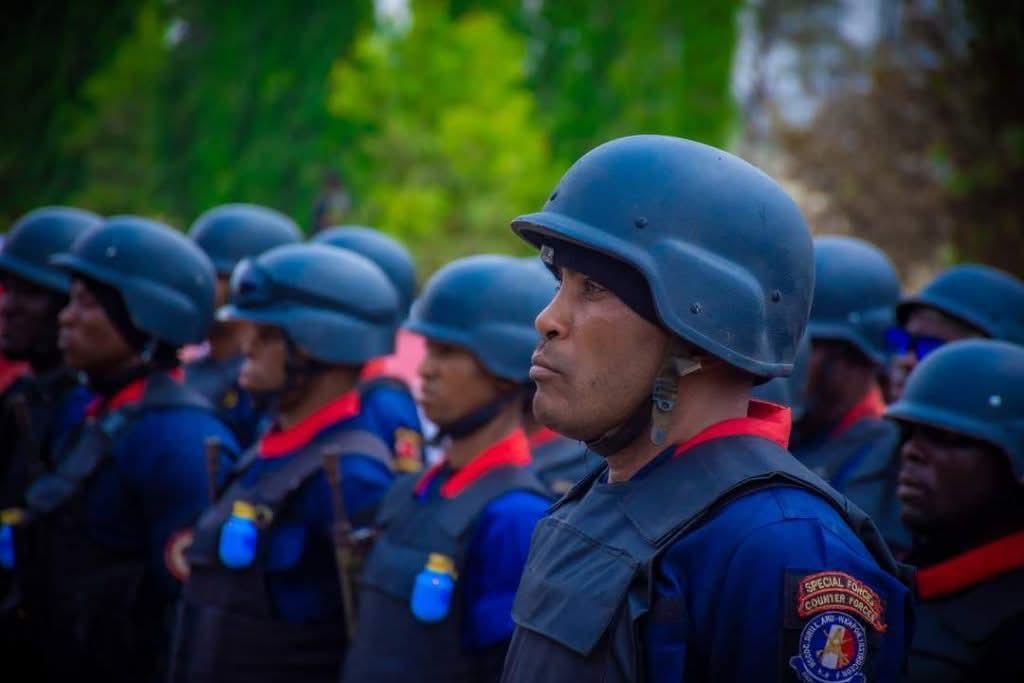
The Nigeria Security and Civil Defence Corps (NSCDC) has deployed 10,000 personnel, including elite tactical squads and K9 units, to Ekiti State ahead of the forthcoming governorship election, in a major security operation aimed at ensuring a peaceful and credible poll.
The deployment, announced on Wednesday by the NSCDC National Headquarters in Abuja, is part of the Corps’ efforts to guarantee a violence-free atmosphere and protect the integrity of the electoral process.
According to the NSCDC, personnel have been mobilised from several neighbouring states, including Ondo, Osun, Oyo, Lagos, Kwara, Edo, Ogun and Kogi, alongside operational reinforcements from Zones 11 and 6.
The Corps said its specialised units, including the Commandant General’s Special Intelligence Squad (SIS), Special Weapons and Tactics (SWAT) unit, Specialized Female Squad, Mining Marshals, Special Force and Crack Squad, as well as the K9 Unit, have been placed on high alert to detect and neutralise any security threats before, during and after the election.
To coordinate the operation, the Commandant General, Ahmed Audi has designated the Deputy Commandant General in charge of Operations, Ayuba Phillips, to personally lead the security exercise on the ground in Ekiti State.
Reaffirming the Corps’ readiness, the Commandant General said the security operation was designed to protect voters, election officials and other stakeholders and to prevent any form of electoral violence.
“Our mission in Ekiti State is definitive: to protect the integrity of the democratic process and guarantee the safety of every voter, election official, and citizen. We will tolerate no form of electoral violence, thuggery, or disruption. Our specialized squads and tactical forces are fully briefed and strategically positioned to maintain absolute law and order,” he said.
The NSCDC also disclosed that it is working closely with other security agencies to provide comprehensive security coverage throughout the election period, stressing that all personnel have been directed to maintain professionalism, neutrality and civility in line with the provisions of the Electoral Act.
The deployment comes amid heightened preparations for the governorship election, with security agencies under pressure to prevent voter intimidation, electoral violence and other disruptions that have occasionally marred elections in parts of the country.
The Corps urged residents of Ekiti State to conduct themselves peacefully, turn out to exercise their civic rights without fear and promptly report suspicious activities to security personnel.
Ekiti Poll: NSCDC Deploys 10,000 Personnel

Troops Recover Over 2,400 Rustled Livestock After Clash with Terrorists in Zamfara

Troops Intercept Arms Courier, Recover Weapons and Ammunition

COAS Joins Security Chiefs at Nigeria-UK Defence, Security Dialogue

Roger Federer’s Shock as DNA Results Reveal Myla and Charlene Are Not His Biological Children

THE PLIGHT OF FARIDA

FAILED COUP IN BURKINA FASO: HOW TRAORÉ NARROWLY ESCAPED ASSASSINATION PLOT AMID FOREIGN INTERFERENCE CLAIMS
-
 News2 years ago
Roger Federer’s Shock as DNA Results Reveal Myla and Charlene Are Not His Biological Children
-
Opinions4 years ago
THE PLIGHT OF FARIDA
-
 News1 year ago
FAILED COUP IN BURKINA FASO: HOW TRAORÉ NARROWLY ESCAPED ASSASSINATION PLOT AMID FOREIGN INTERFERENCE CLAIMS
-

 News2 years ago
EYN: Rev. Billi, Distortion of History, and The Living Tamarind Tree
-
 Opinions5 years ago
POLICE CHARGE ROOMS, A MINTING PRESS
-

 ACADEMICS2 years ago
A History of Biu” (2015) and The Lingering Bura-Pabir Question (1)
-

 Columns2 years ago
Army University Biu: There is certain interest, but certainly not from Borno.
-

 Politics1 year ago
2027: Why Hon. Midala Balami Must Go, as Youths in Hawul and Asikira/Uba Federal Constituency Reject ₦500,000 as Sallah Gift
