
News
Tinubu has sagacity in finding a lasting solution to Nigeria’s power problems. We need more patience, says Umar Abubakar

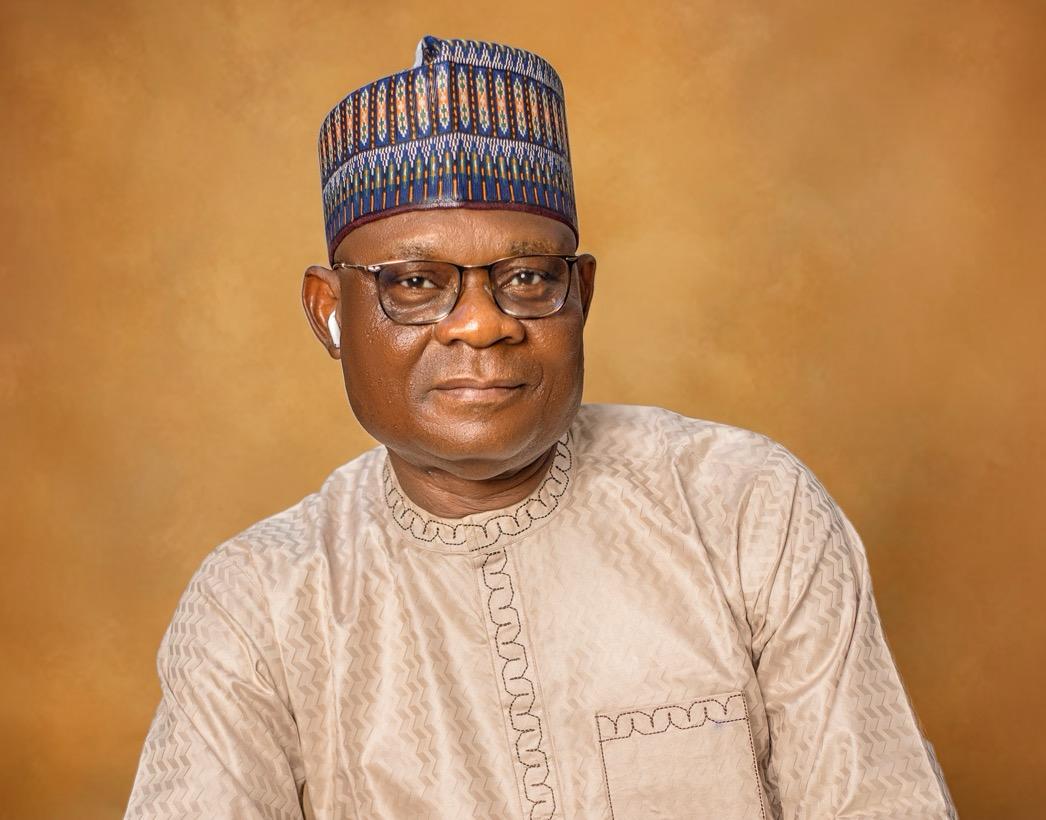
Tinubu has sagacity in finding a lasting solution to Nigeria’s power problems. We need more patience, says Umar Abubakar
By: Michael Mike
A Nigerian citizen, Engineer Umar Abubakar, whose heart is drawn towards President Bola Ahmed Tinubu’s capability to proffer needed solutions to Nigeria’s challenges, currently joins his voice to numerous lovers and die-hard believers of the All Progressives Congress political leader and declares support for the President’s sagacity in finding a lasting solution to Nigeria’s power problems.
In his words, Eng. Abubakar stated that the government has achieved significant milestones in improving the transmission network under the able leadership of Engineer Abdulazeez, a member of the Transmission Company of Nigeria.
Mr. Umar Abubakar, who started his primary school education in Kebbi State and proceeded to secondary school and polytechnic, where he was a distinction student, later completed his postgraduate studies and earned a Master’s degree at Ambrose Alli University in Edo State. He subsequently obtained a PhD in Accounting from Nasarawa State University.
To complement the competence of the present government, Eng. Abubakar also declared his vision and mission to work towards achieving the milestones and objectives set by this administration.
He said: “It is evident that the government started amidst turbulence, but by the grace of God, we are gradually achieving stability”. Initially, some people did not understand the government’s direction, but we are now witnessing improvements in the economy. For example, in the past two days, we have seen positive changes in the foreign exchange market and an improvement in balances daily. It has been a wonderful journey with significant foreign investments being realized.
Though we can say that Nigerians are always impatient, it is getting noticed now that the little patience we have extended to the government is yielding results. We have observed the naira appreciating, something we thought would not happen. Fuel is now readily available everywhere, and prices are gradually stabilizing.
The introduction of the CNG project has become one of the cornerstones of this administration. For instance, I recently visited a place where people were queuing to be part of the CNG arrangements. The government is doing well, and I believe 2025 will be a remarkable year with significant economic improvement. Every project encounters challenges at the beginning, but we are overcoming them gradually.
I appeal to my fellow Nigerians to remain patient and dedicated to their jobs to make these milestones achievable. I am confident that, with proper public support, this government will accomplish great things.
The President has good intentions. While the reforms he introduces are commendable, they should be discussed thoroughly to ensure proper understanding and inclusivity. I wish this government success, and I enjoy serving in this glorious administration.”
Working in the Federal Ministry of Power, Eng. Abubakar shared the numerous challenges encountered in the system, noting that these challenges have been identified and steps are being taken to address them.
He further highlighted his experience in finance administration under the Nigeria Deposit Insurance Corporation (NDIC) and other financially inclined agencies, adding that he is also a Chartered Accountant.
“Our administration has significant debts that need to be addressed, and we have introduced schemes to ensure these debts are paid off,” he stated.
According to Eng. Abubakar, the Honourable Minister of Power has taken the grid issue seriously. The solution lies in transitioning from a centralized grid to a mini-grid system, ensuring consistent electricity availability across states.
“The management is working hard to implement these solutions. With the current government initiatives, I believe power supply will be stable by 2025,” he said.
“It is impractical for everyone to have the same electricity band. The bands are designed to ensure fairness. For instance, Band A is for people with more consistent power supply, and naturally, they pay higher tariffs than those with less supply.
The introduction of these bands ensures payment fairness while incentivizing increased light hours. Each state now has the authority to manage its power supply, which aligns with government policies.”
Eng. Abubakar also addressed concerns about power distribution across states. “The Power Ministry is not rocket science; it requires effective administration. Whether the minister is an accountant or an engineer, the focus is on managerial capability. As an accountant, I can develop projections that ensure efficient power distribution.
Nigeria’s challenge is insufficient power generation—5,000 MW cannot meet the needs of over 200 million people. This shortfall must be addressed.”
He emphasized: “If given higher responsibility in the Ministry, with wisdom from the President and collaborative meetings, the power sector challenges can be resolved. Non-performing individuals should be replaced.
It should be noted that some believe Nigeria focuses excessively on hydropower. We need to diversify into other power sources like solar. No country survives solely on one power source. While hydro is cheaper, the government recognizes the need for diversification and is working on integrating other energy sources.
In terms of megawatts, distribution has been privatized, but some companies are not fully prepared for the task. The distribution companies must expand their capacity. It is the responsibility of the President and Minister of Power to ensure distribution is effective.
Until customers experience consistent electricity, the distribution reforms will have limited impact.”
Talking about an assessment of the President’s progress since May 29, 2023, especially in economic reforms, Eng. Abubakar said: “President Tinubu has been exceptional. Though misunderstood initially, he has made tough but necessary decisions. If asked to score him, I would give an 8/10. By the end of 2025, I believe Nigerians will have cause for celebration. The economic and tax reforms, particularly the consolidation of multiple taxes into one, are commendable.
I believe in President Tinubu’s capability to deliver results. With time, I saw the wisdom in his decisions. As an accountant, I recognize that progress requires patience. Prosperous nations have endured similar phases, and we must be willing to persevere.
While Mr. President continues to flourish in directing the affairs of the Nigerian economy, I wish President Tinubu prosperity and appreciate his vision and leadership. I wish him good health, wisdom, and continued success in making transformative decisions for Nigeria.”
Tinubu has sagacity in finding a lasting solution to Nigeria’s power problems. We need more patience, says Umar Abubakar


News
NEC Approves Refinancing Of $3.3bn Project Gazelle To Optimise Cost, Unlock Additional Liquidity

NEC Approves Refinancing Of $3.3bn Project Gazelle To Optimise Cost, Unlock Additional Liquidity
**As VP Shettima demands responsive social protection policy to end poverty in Nigeria
By: Our Reporter
The National Economic Council (NEC) has approved the refinancing of the US$3.3 billion Project Gazelle Pre-Export Finance Facility through a new US$4.5 billion facility named “Project Gazelle 2”.
The approval allows NNPC Limited to refinance the outstanding balance of approximately $1.5 billion under the original 2023 facility, while unlocking an additional $3 billion in liquidity to strengthen the country’s external reserves, support ongoing fiscal and infrastructure priorities of the government.
This was the outcome of the 159th meeting of the National Economic Council (NEC) held virtually on Monday.
NEC’s approval followed a presentation by the Minster of Finance, Dr Taiwo Oyedele, which was presented by Chairman of the Council, Vice President Kashim Shettima, underscoring the importance of the project.
NEC observed the significance of unlocking additional liquidity to the federation, among other benefits, pledging its support for the actualisation of the initiative.
Speaking at a press briefing after the meeting, the finance minister explained that the refinancing has been structured on more favourable terms than the original facility, including a reduction in the volume of pledged crude oil from 90,000 barrels of oil per day (bpd) to approximately 78,750 bpd – a 12.5 percent reduction.
He noted that under the new arrangement, an additional 11,250 bpd for the federation will be released, while there will be reduction in the pledged crude volumes by NNPC limited.
Dr Oyedele added that while accessing additional liquidity on improved terms, the arrangement is freeing up resources for strategic national priorities while strengthening the country’s financing structures.
Earlier in his opening remarks, Vice President Shettima called for a responsive, scalable, and data-driven social protection policy to tackle multidimensional poverty in Nigeria.
According to him, government policies are often heard before they are seen, speak through the price of food, condition of hospitals, records in schools, strain on families, the confidence of those who invest their labour in the nation’s future, and, very importantly, the ambitions of state governments.
He implored members of Council to ensure that every decision they make assure the citizens “that their government is paying attention to the pulse of the nation and is resolved to respond with competence, compassion and purpose.”
NEC Approves Refinancing Of $3.3bn Project Gazelle To Optimise Cost, Unlock Additional Liquidity
News
‘Another Nigeria is Possible’- ActionAid, Social Movement Leaders Demand New Social Order at Cotonou Forum

‘Another Nigeria is Possible’- ActionAid, Social Movement Leaders Demand New Social Order at Cotonou Forum
…Civil society groups rally West Africa against inequality, insecurity, poor governance, shrinking civic space
By: Michael Mike
A coalition of leading civil society actors in Nigeria has renewed calls for a people-centred transformation of the country, declaring that a new Nigeria built on justice, accountability and inclusion is possible.
The call was made as the Steering Committee of the Nigeria Social Forum (NSF) and ActionAid Nigeria extended solidarity to the ongoing World Social Forum (WSF) in Cotonou, Benin, urging activists, social movements and democratic forces across the globe to unite against rising inequality, economic injustice, climate crises and threats to civic freedoms.
In a strongly worded statement on Monday, the organisations said the gathering in Cotonou represented a critical moment for citizens and movements to forge stronger alliances and develop practical solutions to challenges confronting millions of people.
“Another World Is Possible,” the groups declared, reaffirming the historic slogan of the World Social Forum, which since 2001 has served as a global platform for communities, workers, women, young people, indigenous groups and civil society organisations to advance alternatives to systems they describe as unjust and exclusionary.
The statement, signed by ActionAid Nigeria Country Director, Comrade Andrew Mamedu, NSF Chairman, Comrade Jaye Gaskia, and other prominent civil society leaders, said the ideals of the World Social Forum remain relevant as nations struggle with deepening social and economic inequalities.
The groups warned that Nigeria continues to face a combination of challenges, including widespread unemployment, insecurity, climate-related shocks, gender inequality, declining civic space and concerns over accountable governance.
“Today, these values are more urgent than ever,” the statement said, stressing that millions of Nigerians continue to experience hardship despite the country’s vast human and natural resources.
However, the civil society leaders noted that grassroots organisations and social movements have remained resilient by defending human rights, organising communities and amplifying the voices of vulnerable groups.
They argued that the challenges facing workers, women, youths, rural communities and persons living with disabilities are interconnected and require collective action rather than isolated interventions.
“When one voice is silenced, democracy grows weaker. When one community is left behind, the nation falls short of its promise. That is why solidarity is not optional; it is necessary,” the groups stated.
The coalition urged participants at the Cotonou forum to move beyond discussions by building cross-border partnerships capable of influencing policy and driving social change.
Among the key priorities outlined were strengthening alliances across West Africa and beyond, defending civic freedoms, advancing climate justice and demanding greater transparency and accountability from governments.
The organisations also called on civil society actors to ensure that resolutions from the forum translate into concrete actions within communities.
“We believe that another Nigeria is possible — a Nigeria where public institutions serve the people, where young people can realise their potential, where women participate equally in leadership, and where development leaves no one behind,” they stated.
The Nigeria Social Forum and ActionAid Nigeria reaffirmed their commitment to the principles of the World Social Forum Charter, including openness, pluralism, non-violence, solidarity and participatory democracy.
The statement was also endorsed by other members of the Steering Committee, including Comrade Otive Igbuzor, Comrade Eze Nwangu, Comrade Priscilia Achakpa, Comrade Abiola Akiyode Afolabi and Comrade Ene Obi.
The World Social Forum in Cotonou is bringing together civil society organisations, activists, social movements and community leaders from across Africa and other regions to deliberate on pathways towards a fairer, more inclusive and sustainable world.
For Nigeria’s civil society movement, the message from Cotonou is clear: without justice, inclusion and accountable leadership, development cannot be truly meaningful.
‘Another Nigeria is Possible’- ActionAid, Social Movement Leaders Demand New Social Order at Cotonou Forum
News
APC Launches Statewide Medical, Surgical Outreach in Taraba to Celebrate Prof. Nentawe Yilwatda’s 58th Birthday
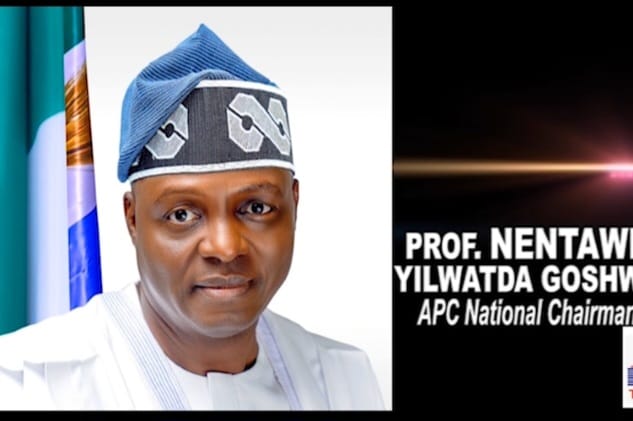
APC Launches Statewide Medical, Surgical Outreach in Taraba to Celebrate Prof. Nentawe Yilwatda’s 58th Birthday
By: Michael Mike
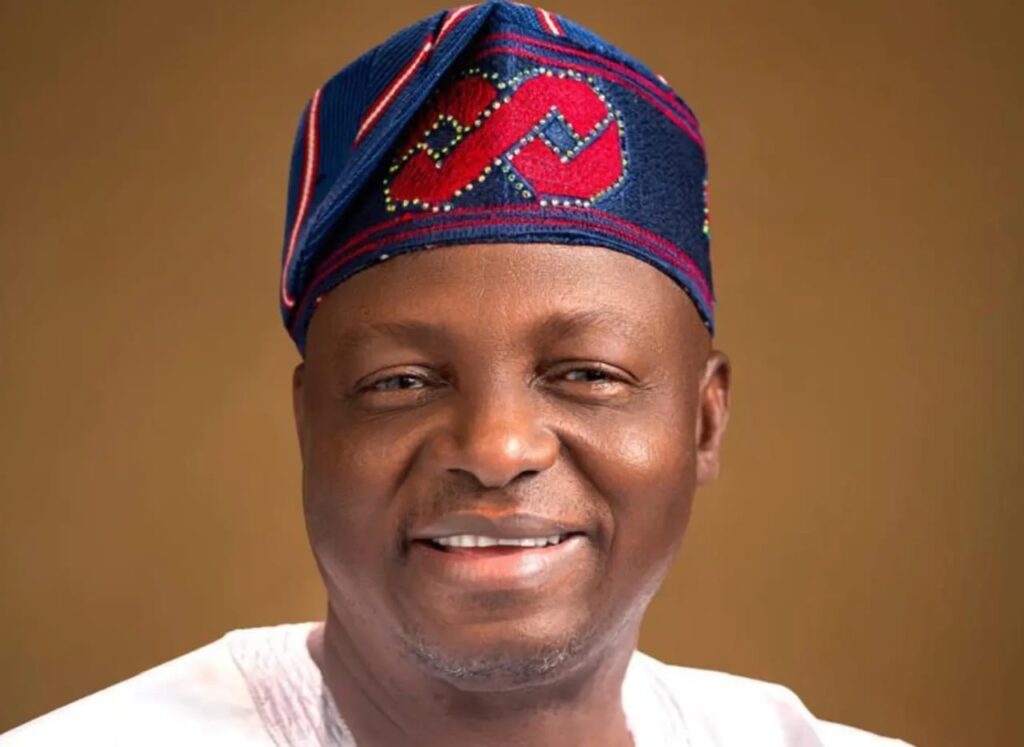
The All Progressives Congress (APC) has commenced a statewide medical and surgical outreach in Taraba State as part of activities marking the 58th birthday of its National Chairman, Professor Nentawe Yilwatda Goshwe.
The humanitarian initiative, organised under the party’s Renewed Hope agenda, is designed to provide free, quality healthcare services to thousands of residents across Taraba State’s three senatorial districts, with a focus on expanding access to medical care for vulnerable and underserved communities.
Paradigm News gathered at the First Referral Hospital, Sunkani, Ardo Kola Local Government Area in the Northern Senatorial District of Taraba State that the first phase of the outreach commenced at about 12:00 noon on August 3 and will run through August 7, 2026, offering five days of free, quality healthcare services. The official flag-off ceremony is scheduled for August 8, 2026, at the Federal Medical Centre (FMC), Jalingo, the state capital.
The outreach offers a comprehensive package of healthcare services, including free medical consultations and health screening, the provision of medicines and wound care, free and subsidised surgical procedures, emergency medical support, patient counselling, and health education aimed at promoting healthy living among residents.
To ensure equitable access across the state, healthcare teams have been deployed to designated medical facilities in the three senatorial districts.
In the Southern Senatorial District, services are being provided at the Federal University Teaching Hospital, Wukari, and General Hospital, Takum. In the Central Senatorial District, beneficiaries are receiving treatment at General Hospital, Bali, and General Hospital, Gembu. In the Northern Senatorial District, designated centres include General Hospital, Bambur, Karim Lamido Local Government Area, and the First Referral Hospital, Sunkani, Ardo Kola Local Government Area.
The medical outreach is being implemented in collaboration with the Taraba State Ministry of Health and the Libertad Health Foundation, reflecting a partnership aimed at improving healthcare delivery and reducing the burden of medical costs on citizens.
The initiative underscores the APC’s commitment to translating the Renewed Hope agenda into tangible social interventions that directly improve the lives of Nigerians through accessible healthcare services.
The campaign also carries the message, “Healing Lives, Restoring Hope, Building Healthier Communities,” while promoting the ideals of “Free Medical Services for All,” “Together We Celebrate Life and Service,” and “Renewed Hope, Better Health, Stronger Taraba.”
Residents across Taraba State are expected to benefit significantly from the programme, which seeks to improve health outcomes through preventive care, medical treatment, surgical interventions, and public health education.
The outreach forms part of activities marking Professor Nentawe Yilwatda Goshwe’s 58th birthday, with organisers describing the initiative as a demonstration of compassionate leadership and a commitment to improving the well-being of the people through quality healthcare services.
APC Launches Statewide Medical, Surgical Outreach in Taraba to Celebrate Prof. Nentawe Yilwatda’s 58th Birthday

NEC Approves Refinancing Of $3.3bn Project Gazelle To Optimise Cost, Unlock Additional Liquidity

Troops Arrest Two Suspected ISWAP Logistics Suppliers in Monguno, Recover Terrorists’ Gate Pass

‘Another Nigeria is Possible’- ActionAid, Social Movement Leaders Demand New Social Order at Cotonou Forum

Roger Federer’s Shock as DNA Results Reveal Myla and Charlene Are Not His Biological Children

THE PLIGHT OF FARIDA

FAILED COUP IN BURKINA FASO: HOW TRAORÉ NARROWLY ESCAPED ASSASSINATION PLOT AMID FOREIGN INTERFERENCE CLAIMS
-
 News2 years ago
Roger Federer’s Shock as DNA Results Reveal Myla and Charlene Are Not His Biological Children
-
Opinions4 years ago
THE PLIGHT OF FARIDA
-
 News1 year ago
FAILED COUP IN BURKINA FASO: HOW TRAORÉ NARROWLY ESCAPED ASSASSINATION PLOT AMID FOREIGN INTERFERENCE CLAIMS
-

 News2 years ago
EYN: Rev. Billi, Distortion of History, and The Living Tamarind Tree
-
 Opinions5 years ago
POLICE CHARGE ROOMS, A MINTING PRESS
-

 ACADEMICS2 years ago
A History of Biu” (2015) and The Lingering Bura-Pabir Question (1)
-

 Columns2 years ago
Army University Biu: There is certain interest, but certainly not from Borno.
-

 Politics1 year ago
2027: Why Hon. Midala Balami Must Go, as Youths in Hawul and Asikira/Uba Federal Constituency Reject ₦500,000 as Sallah Gift
