
News
Tinubu Launches Agric Empowerment Programme In Yobe

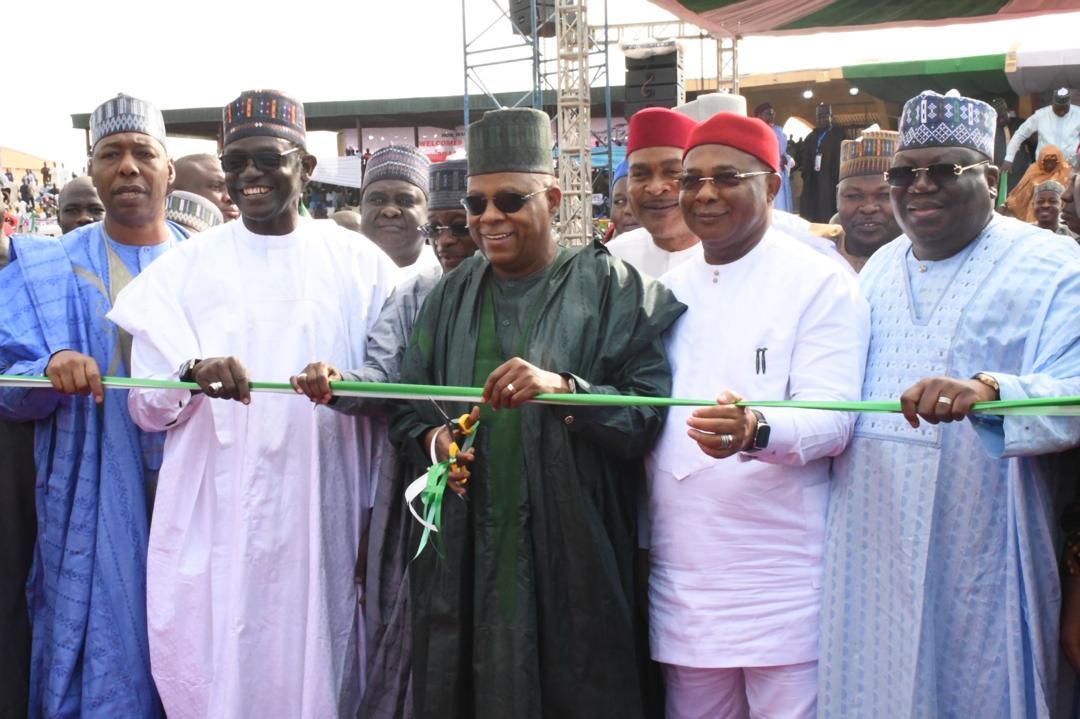
Tinubu Launches Agric Empowerment Programme In Yobe
…Restates firm resolve to create jobs, diversify Nigeria’s economy
By: Michael Mike
President Bola Tinubu has launched the Yobe State Agricultural Empowerment Programme in Damaturu, the state capital,
as part of efforts of his government to ensure food security and stimulate economic growth across Nigeria,
The initiative, which includes the provision of agricultural machinery and implements, is part of a broader national strategy to revolutionise Nigeria’s agricultural sector.
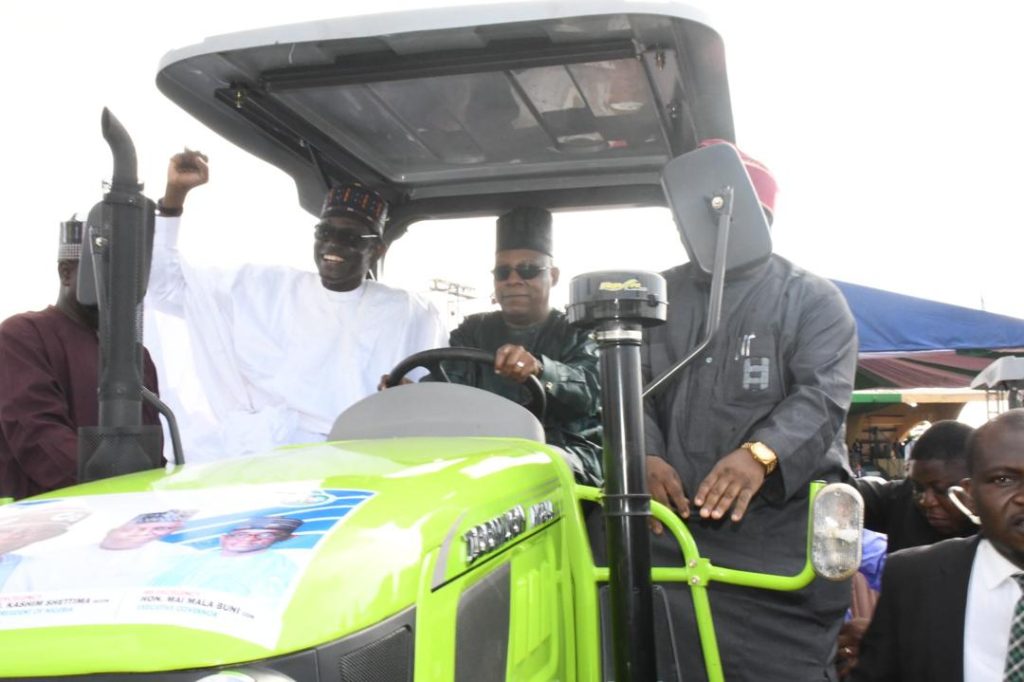
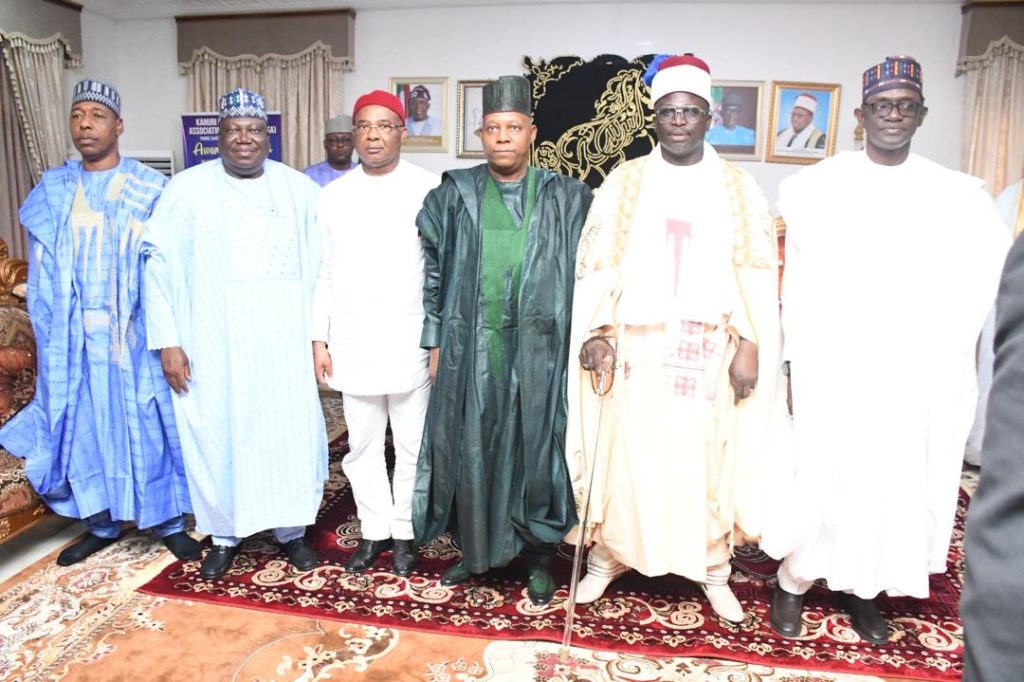
Speaking during the launch of the programme in Damaturu, Tinubu who was represented by Vice President Kashim Shettima, said the programme is at the heart of his administration’s ongoing efforts to enhance food security, create jobs, and diversify Nigeria’s economy through agriculture.
Tinubu stressed the critical role of agriculture in national development and security, saying “food is the heart of security in every society.”
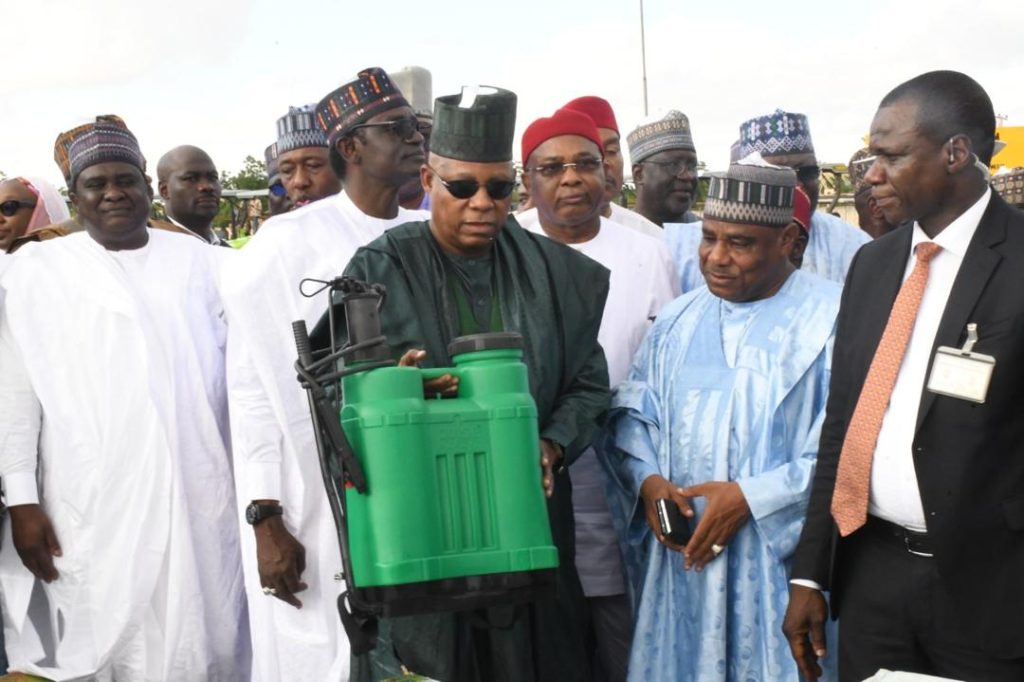
He said: “It is the foundation upon which we build our health, our well-being, and our economic stability. There’s no way we are going to achieve our grand goals as a government, whether at the state or national level, until we support and empower our farmers.”
The President noted that apart from boosting agricultural output, the initiative also aims to engage more Nigerians in the nation’s economic life.
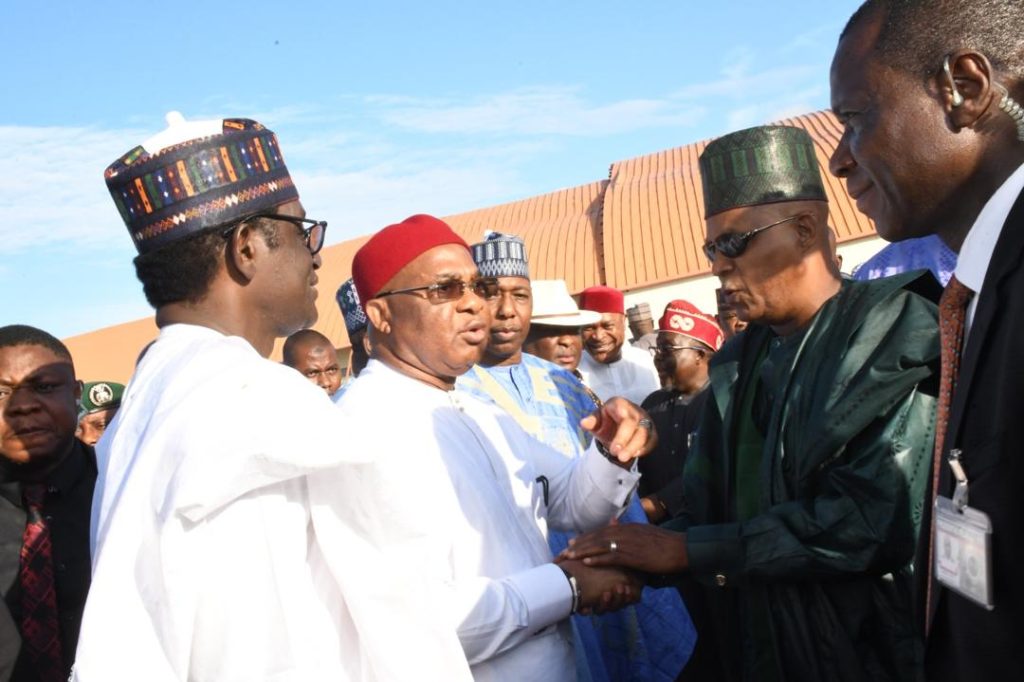
He reaffirmed government’s commitment to modernising the agricultural sector, including the livestock industry.
The President said the recently approved Ministry of Livestock Development is intended “to improve livestock production in the country and to change the destiny and narratives of our livestock production.”
On the shift towards modern farming techniques, the President said: “Each of us in this gathering must come to terms with the fact that the era of relying on rain-fed agriculture is gone. These machines are here to ease our practice of irrigation farming.”
The launch of the agric empowerment programme also saw the President approving Yobe State’s request for additional resources to support its agricultural ambitions.
These include “mini-rigs for tube wells, solar water pumps, agro-chemicals, power tillers, more fertilisers, and other farm implements to complement your irrigation scheme.”
Tinubu also addressed security concerns, assuring the audience that the government is “taking drastic measures to address the security challenges to make farmlands safe and accessible in every state of the federation.”
Shettima who represented the President at the event also visited the Emir of Damaturu, Alhaji Shehu Hashim II Ibn Umar Al-Amin El-Kanemi, to convey President Tinubu’s high regard for Yobe State and its people.
Shettima praised Governor Mai Mala Buni’s achievements, particularly in agricultural investments, emphasising the potential for agricultural mechanisation in the state.
Responding, the Emir of Damaturu expressed gratitude for President Tinubu’s support and appreciated the administration’s efforts towards national progress.
Earlier, Governor Buni of Yobe State reaffirmed the state’s support for the Tinubu administration, acknowledging the challenges faced by Yobe, particularly in the agricultural sector.
He said, “In spite of all the challenges, agriculture remains the major preoccupation of our people. With the improvement in security across the state, farmlands are now accessible in almost all the local government areas.”
The Governor mentioned several government initiatives to revitalize agriculture, including an Agricultural Summit, the constitution of a Steering Committee on Revitalization of Agriculture, and partnerships with organizations like the Bill and Melinda Gates Foundation.
He added that the state government, in collaboration with the federal government, has established Livestock Development Centres to address farmer-herdsmen clashes and boost meat and dairy production.
Buni also noted the revival of the 2000-hectare Lava Irrigation Scheme and the establishment of four Sesame Seeds processing factories across the state.
“This State Visit is no doubt a significant milestone as we launch the agricultural empowerment programme,” he added.
The items distributed include 100 Zoom Lion Tractors, 10 IMC Double Cabin 4-wheel drive vehicles for extension service supervision, 200 motorcycles for extension workers, 300 sets of ox-drawn ploughs, 5,349 small ruminants (goats), 1,349 hand-push planters, 889 hand-push plough machines, 590 hand-push tiller machines, 4,202 solar-powered irrigation water pumps, improved assorted seeds, and 72,000 bags of fertilizer.
Dignitaries present at the event include the Chairman of Progressive Governors Forum (PGF), Governor Hope Uzodinma of Imo State; APC Deputy National Chairman (North), Hon. Ali Bukar Dalori; APC Deputy National Chairman (South), Chief Emma Eneukwu; Senator Osita Izunaso; former President of the Senate, Senator Ahmed Lawan; Rep. Khadijah Bukar Abba Ibrahim; Deputy Governor of Yobe State, Alhaji Idi Barde Gubana; Speaker of the Yobe State House of Assembly, Hon. Buba Chiroma-Mashio, and his Deputy, Hon. Ya’u Usman Dachia.
Also in attendance were the Yobe State Chairman of the All Progressives Congress (APC), Alhaji Mohammed Gadaka; Yobe State Commissioner for Budget and Economic Planning, Hon. Mohammed Gagiyo; former Special Adviser on Budget, Alhaji Sulieman Jamo; Emir Jajeri, Mai Hamza ibn Buba Mashio; Emir of Bade, Alhaji Abubakar Umar Sulaiman; Chief Judge of Yobe, Gumna Kashim Kaigama; Yobe State Commissioner of Police, Mr. Ahmed Garba; members of the House of Representatives, Lawan Shettima, Fatima Talba and Tijjani Zanna Zakariyya, among others.
Tinubu Launches Agric Empowerment Programme In Yobe


Troops Arrest Suspected Military Impostor in Katsina
By Zagazola Makama
Troops of 17 Brigade have arrested a suspected military impostor during a fighting patrol in Malumfashi Local Government Area.
Security sources told Zagazola Makama that the suspect was apprehended at about 1:30 p.m. on July 4 by troops deployed at the Forward Operating Base (FOB) Malumfashi while conducting routine patrols within Malumfashi town.

According to the sources, the suspect was intercepted while wearing a woodland camouflage three-quarter short, raising suspicion among the troops.
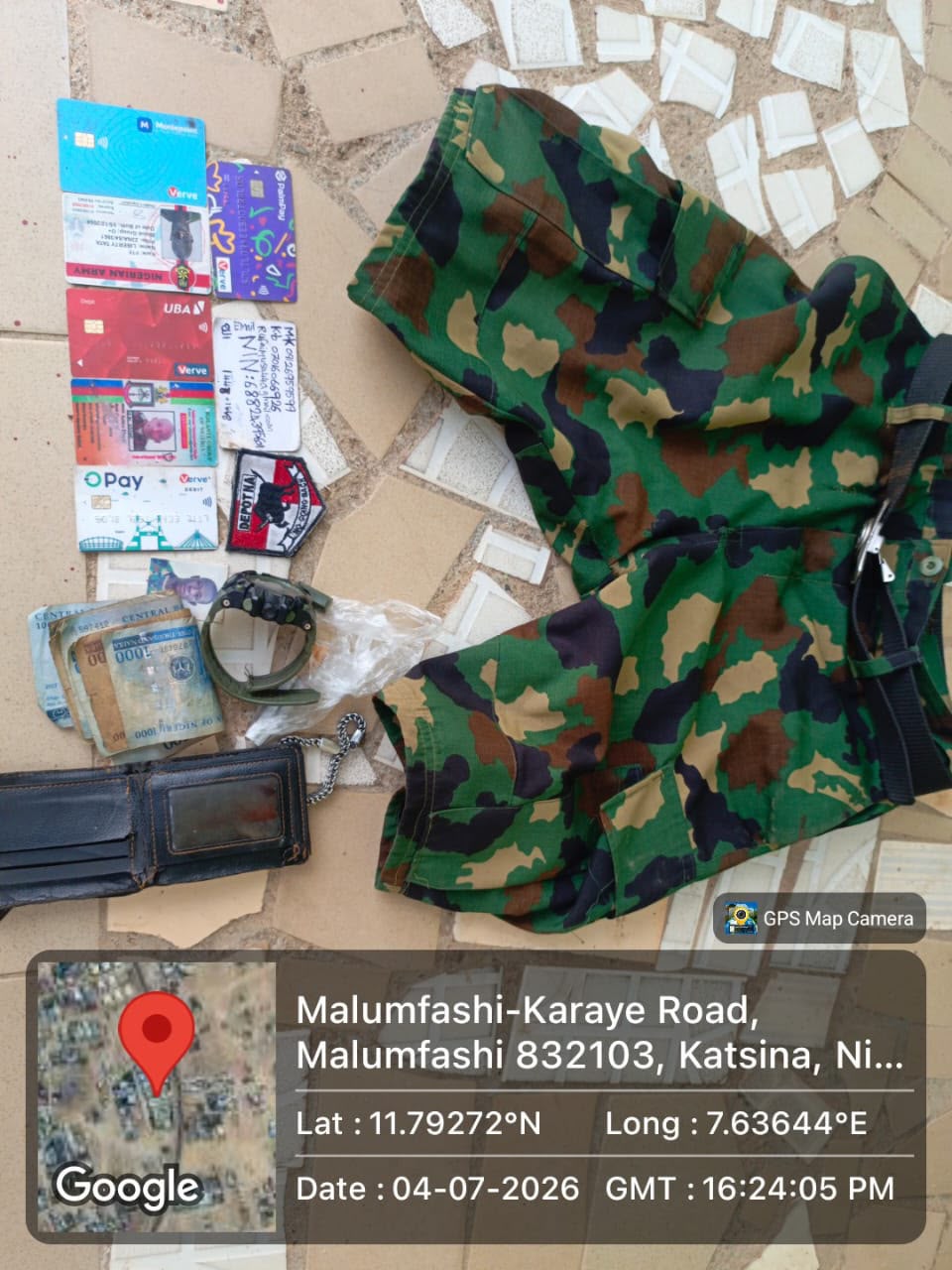
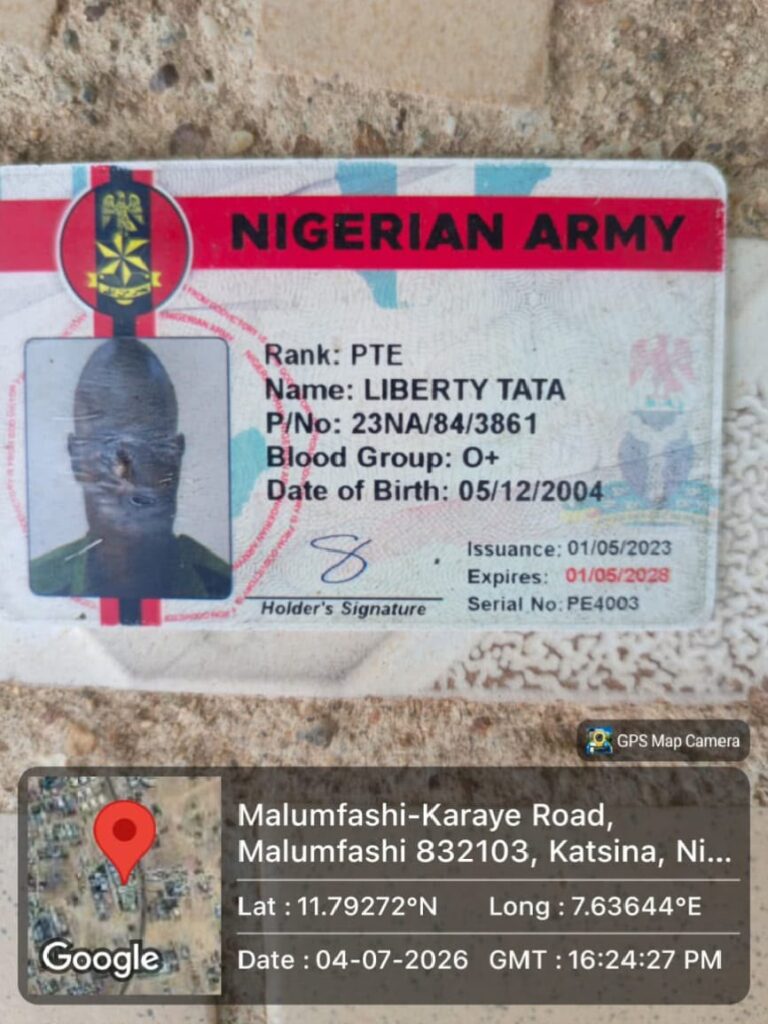
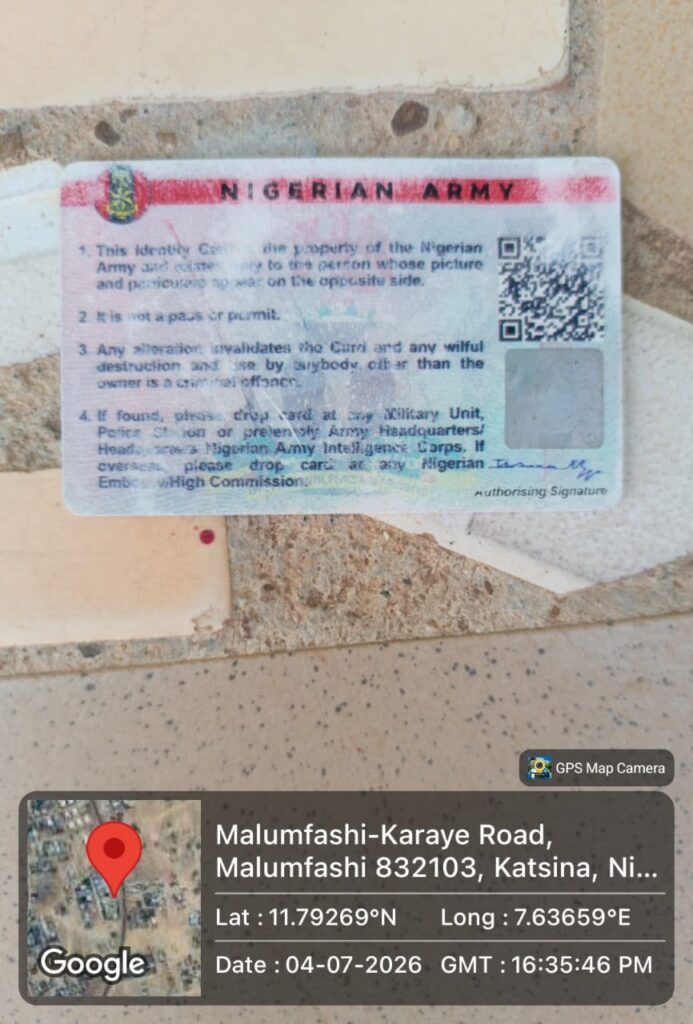
A search conducted on the suspect led to the recovery of a fake Nigerian Army identity card, four Automated Teller Machine (ATM) cards, one woodland camouflage three-quarter short, a wristwatch and the sum of ₦17,000.
The suspect and the recovered exhibits are currently in military custody pending further investigation.
Military sources said the arrest forms part of ongoing efforts to curb impersonation of security personnel and other criminal activities within the area.
Troops Arrest Suspected Military Impostor in Katsina
Troops Recover 50 Rustled Cattle, Repel Suspected Rustlers in Kaduna
By Zagazola Makama
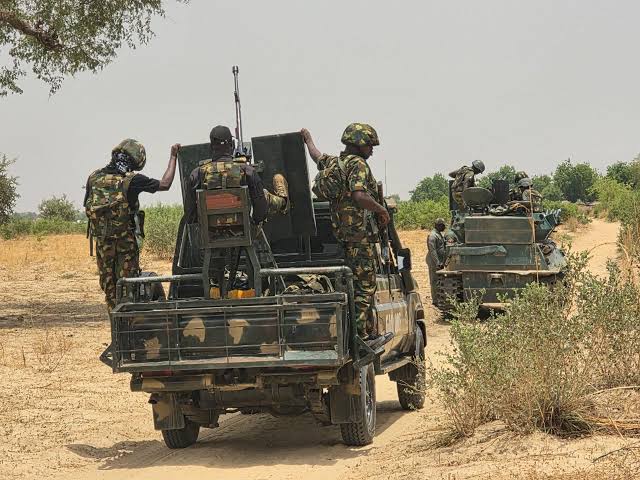
Troops deployed at the Forward Operating Base (FOB) Kankomi have recovered 50 rustled cattle after repelling suspected cattle rustlers during an ambush operation in Chikun Local Government Area.
Security sources told Zagazola Makama that the troops responded to a distress call at about 9:55 a.m. on July 4 over the activities of suspected rustlers at Ungwan Gontu community.
According to the sources, the troops swiftly laid an ambush and made contact with the fleeing suspects, forcing them to abandon the stolen livestock and escape into the surrounding area.
During the operation, the troops recovered 50 rustled cattle, which were subsequently identified and handed over to their rightful owner.
Military sources said efforts are ongoing to track down the fleeing suspects as security operations continue to combat cattle rustling and other criminal activities across Kaduna State.
Troops Recover 50 Rustled Cattle, Repel Suspected Rustlers in Kaduna
Troops Arrest Suspected Terrorist in Kogi, Suspect Confesses to Group Membership
By Zagazola Makama
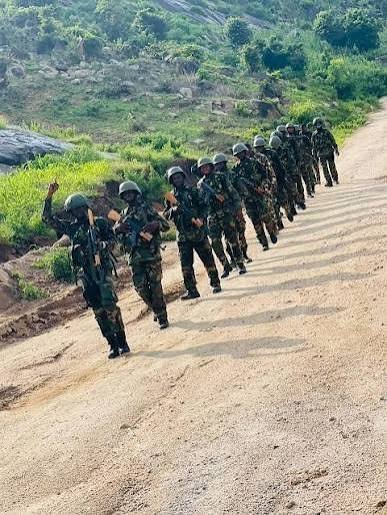
Troops of 12 Brigade, in collaboration with Office of the National Security Adviser (ONSA) Hybrid Forces, have arrested a suspected terrorist during an operation in Lokoja Local Government Area.
Security sources told Zagazola Makama that the troops responded at about 1:00 p.m. on July 4 to reports of a confrontation between local residents and a suspected terrorist at a Ruga settlement behind Obajana community.
According to the sources, the troops swiftly intervened and arrested one suspect at the scene.
During preliminary interrogation, the suspect reportedly confessed to being a member of a terrorist group led by an individual identified as Haruna, which allegedly operates within the Okene general area.
The suspect is currently in military custody and is undergoing further investigation to establish the extent of his involvement and identify other members of the group.
Military sources said the arrest forms part of ongoing security operations aimed at dismantling terrorist and criminal networks across Kogi State.
Troops Arrest Suspected Terrorist in Kogi, Suspect Confesses to Group Membership

Troops Arrest Suspected Military Impostor in Katsina

Troops Recover 50 Rustled Cattle, Repel Suspected Rustlers in Kaduna

Troops Arrest Suspected Terrorist in Kogi, Suspect Confesses to Group Membership

Roger Federer’s Shock as DNA Results Reveal Myla and Charlene Are Not His Biological Children

THE PLIGHT OF FARIDA

FAILED COUP IN BURKINA FASO: HOW TRAORÉ NARROWLY ESCAPED ASSASSINATION PLOT AMID FOREIGN INTERFERENCE CLAIMS
-
 News2 years ago
Roger Federer’s Shock as DNA Results Reveal Myla and Charlene Are Not His Biological Children
-
Opinions4 years ago
THE PLIGHT OF FARIDA
-
 News1 year ago
FAILED COUP IN BURKINA FASO: HOW TRAORÉ NARROWLY ESCAPED ASSASSINATION PLOT AMID FOREIGN INTERFERENCE CLAIMS
-

 News2 years ago
EYN: Rev. Billi, Distortion of History, and The Living Tamarind Tree
-
 Opinions5 years ago
POLICE CHARGE ROOMS, A MINTING PRESS
-

 ACADEMICS2 years ago
A History of Biu” (2015) and The Lingering Bura-Pabir Question (1)
-

 Columns2 years ago
Army University Biu: There is certain interest, but certainly not from Borno.
-

 Politics1 year ago
2027: Why Hon. Midala Balami Must Go, as Youths in Hawul and Asikira/Uba Federal Constituency Reject ₦500,000 as Sallah Gift
