
Uncategorized
Tinubu’s Diplomatic Offensive, Foreign Trips, and Strategic Gains

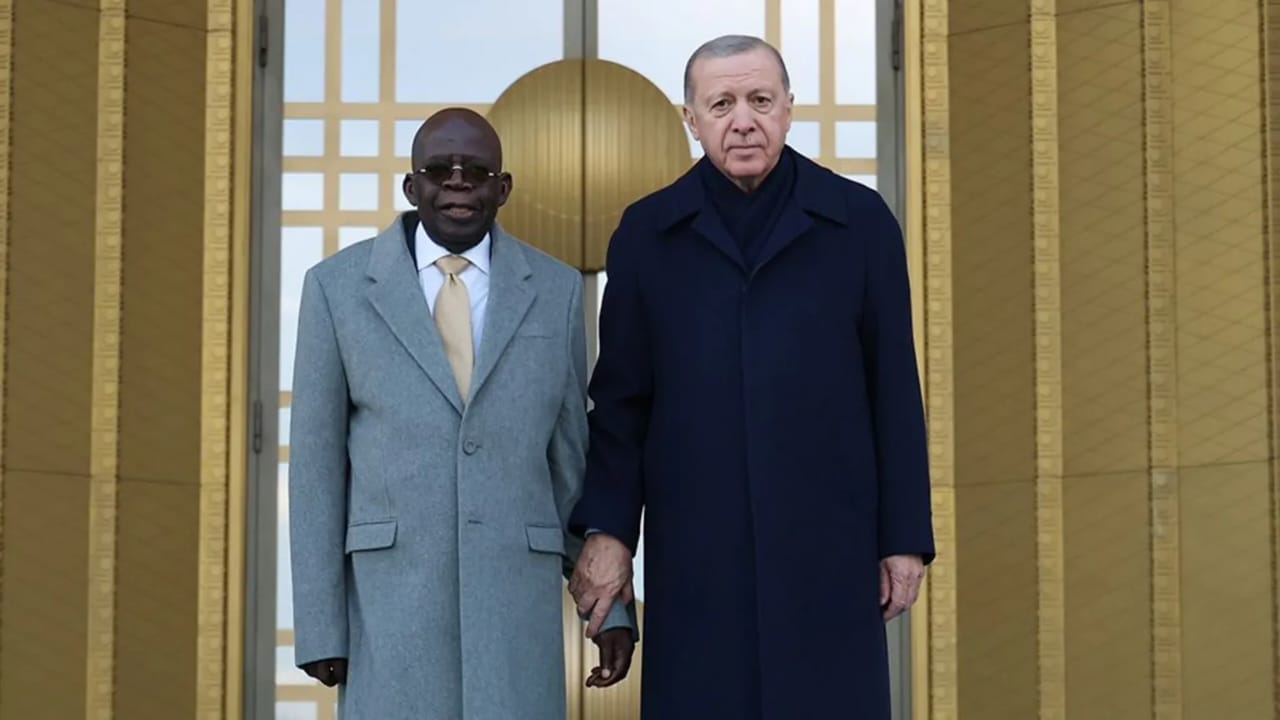
Tinubu’s Diplomatic Offensive, Foreign Trips, and Strategic Gains
•A harvest Nigeria cannot ignore
By Jude Obioha
In Nigerian politics, perception often travels faster than facts. Few issues illustrate this better than the chorus of criticism surrounding President Bola Ahmed Tinubu’s foreign trips. For months, critics have framed his diplomatic engagements as excessive travel, as political optics over substance. But that narrative is increasingly collapsing under the weight of tangible outcomes. The truth is that Tinubu’s foreign engagements are not leisurely excursions; they are deliberate economic and geopolitical missions, and Nigeria is already harvesting the dividends.
Democracy indeed demands scrutiny, and no president should be immune from public questioning. Yet accountability must be grounded in evidence. After nearly three years in office, the President’s diplomatic drive has begun to reshape Nigeria’s global standing, unlock investments, deepen security cooperation, and reposition the country as a confident actor on the international stage. What critics dismiss as frequent travel is, in reality, a recalibration of Nigeria’s foreign policy, moving from its hitherto passive diplomacy to assertive economic statecraft.
Consider the administration’s approach to global partnerships. Tinubu has revived Nigeria’s relevance as a strategic player across multiple power blocs by working simultaneously with the United States, China, the European Union, Türkiye, Brazil, and the Gulf states, amongst others, without surrendering national autonomy. For decades, Nigeria oscillated between dependence and isolation. Under Tinubu, engagement is now transactional but mutually beneficial and balanced, guided by national interest rather than old master–servant dynamics. The renewed geopolitical confidence is evident in security cooperation, intelligence sharing, and the willingness of global partners to treat Nigeria as a regional anchor in West Africa’s fragile security landscape.
The economic dividends are equally compelling. The President’s visit to China delivered more than ceremonial handshakes; it secured billions in investments aimed at industrialisation and job creation. The $3.3 billion Brass Industrial Park and Methanol Complex alone has the potential to reduce petrochemical imports and strengthen local manufacturing capacity. Agreements with automotive and technology giants are advancing local vehicle assembly, smart city development, and digital infrastructure, which are practical steps toward modernising Nigeria’s urban economy. Added to this are currency cooperation initiatives designed to ease pressure on the naira, making the picture clear: diplomacy is being weaponised for economic stabilisation.
In the United Arab Emirates (UAE), Tinubu’s diplomacy resolved a tense standoff that had grounded flights and restricted visas for Nigerians. The restoration of travel ties was only the beginning. A sweeping economic partnership now offers the UAE duty-free access to thousands of Nigerian products as well as new infrastructure financing and investment frameworks across defence, agriculture, and logistics. The symbolism was powerful: Nigeria negotiated from a position of strength, securing concessions without immediate conditions for debt repayment; an outcome that restored confidence among investors and citizens alike.
Brazil provided another strategic breakthrough. The $1.1 billion Green Imperative Project promises agricultural mechanisation on a scale Nigeria has long struggled to achieve. At the same time, direct Lagos–São Paulo flights under a renewed aviation agreement could unlock billions of dollars in investment. At the same time, by the end of the decade. Meanwhile, partnerships in renewable energy, biotechnology, and local drug manufacturing position Nigeria to reduce import dependence and expand its technological capacity.
Türkiye, often overlooked in public discourse, represents one of the most consequential security partnerships. Agreements covering advanced drone technology, intelligence cooperation, and specialised military training directly strengthen Nigeria’s counter-terrorism operations. Trade relations are also projected to more than double, reflecting a pragmatic blend of defence and economic diplomacy.
Beyond the numbers, Tinubu’s diplomatic posture has demonstrated crisis management. When tensions escalated with the United States over Nigeria’s “Country of Particular Concern” designation, the administration chose dialogue over confrontation. Through structured engagement coordinated by the National Security Adviser (NSA), Mallam Nuhu Ribadu, Nigeria secured deeper defence collaboration and access to much-needed security equipment, as well as training, logistics, and intelligence sharing. It was diplomacy with measurable outcomes.
None of this suggests that criticism should cease. Nigerians are right to demand transparency, cost-efficiency, and clear metrics for every foreign trip. But fairness requires acknowledging results. The administration’s travels have delivered investments, restored diplomatic bridges, opened markets for Nigerian products, and strengthened security alliances at a time when global competition for capital and influence is intense.
The gloves may be off in Nigeria’s political discourse, but facts must remain the referee. Tinubu’s foreign trips are not a distraction from governance; they are a core instrument of his diplomatic, economic and security strategy. In a rapidly shifting global order, a president who stays home risks leaving his country behind. By contrast, Nigeria’s current diplomatic offensive is gradually yielding a bounty, one that could define the nation’s economic and geopolitical trajectory for years to come.
Obioha is the Director of Strategy, Hope Alive Initiative (HAI), a group dedicated to good governance in Nigeria


Uncategorized
ECOWAS, Africa Agenda Network Deepen Partnership to Showcase Regional Bloc’s 50-Year Legacy
ECOWAS, Africa Agenda Network Deepen Partnership to Showcase Regional Bloc’s 50-Year Legacy
By: Michael Mike
The Economic Community of West African States (ECOWAS) has reaffirmed its commitment to strengthening collaboration with the Africa Agenda Network (AAN) as part of efforts to document, promote and deepen public understanding of the regional bloc’s five decades of achievements and contributions to West African integration.
The renewed commitment was made on Tuesday when the President of the ECOWAS Commission, Dr. Omar Alieu Touray, received the Chief Executive Officer of the Africa Agenda Network, Ms. Muna Jallow, during a working visit to the Commission’s headquarters in Abuja.
The meeting focused on the progress of the Africa Agenda Network–ECOWAS Strategic Partnership Initiative, a three-phase programme designed to commemorate ECOWAS’ 50th anniversary while strengthening citizens’ appreciation of the organisation’s role in advancing regional cooperation.
Briefing the Commission President, Jallow said the initiative’s first phase had been successfully implemented through the ECOWAS@50 Trade, Investment and Exhibition Forum held in Lagos, Nigeria.
She disclosed that attention has now shifted to the second phase—the production of a commemorative publication documenting the history of ECOWAS over the past 50 years, highlighting its major milestones, achievements and contributions to regional integration.
According to her, the final phase of the initiative will see the production of a high-quality documentary series that will tell the ECOWAS story through the voices and experiences of citizens from across the organisation’s member states.
Responding, Touray welcomed the initiative and reaffirmed the ECOWAS Commission’s commitment to sustaining and expanding its partnership with the Africa Agenda Network.
He said the collaboration would play a vital role in increasing public awareness of ECOWAS, preserving its institutional history and projecting the organisation’s achievements and impact across West Africa and the international community.
The partnership comes as ECOWAS marks 50 years since its establishment in 1975, a period during which the regional body has played leading roles in promoting economic integration, facilitating free movement across member states, supporting democratic governance and peacekeeping efforts, and advancing regional development initiatives despite persistent political and security challenges.
The commemorative publication and documentary are expected to serve as enduring records of the bloc’s evolution while helping a new generation of West Africans better understand the relevance of regional integration to the future of the sub-region.
ECOWAS, Africa Agenda Network Deepen Partnership to Showcase Regional Bloc’s 50-Year Legacy
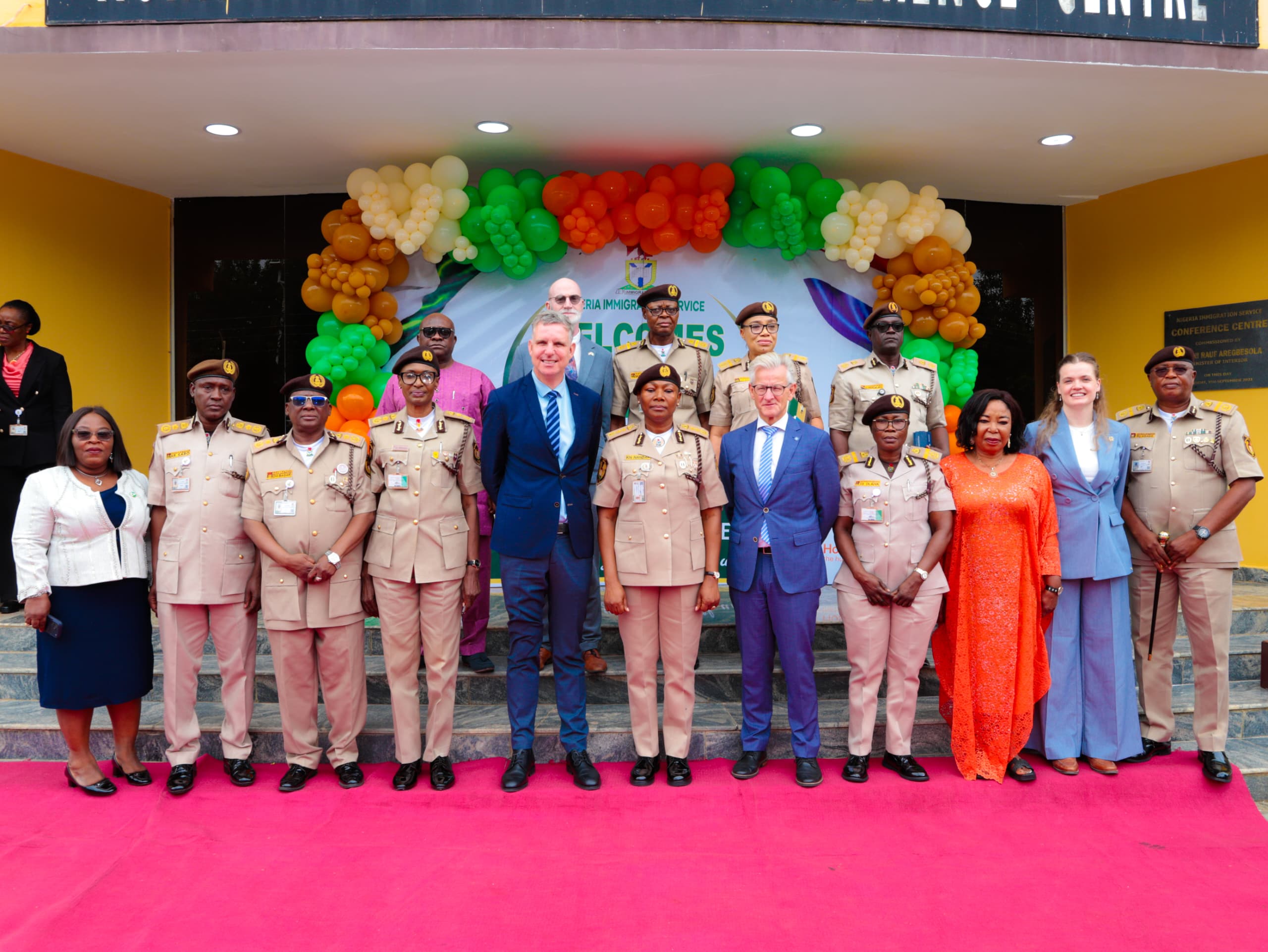
Netherlands Donates Equipment to Boost Nigeria Immigration’s Hostmanship Programme
By: Michael Mike
The Kingdom of the Netherlands has donated specialised equipment to the Nigeria Immigration Service (NIS) to strengthen its Hostmanship Unit, deepening more than two decades of bilateral cooperation aimed at improving migration management and customer service delivery.
The equipment was presented by the Repatriation and Departure Service (R&DS) of the Dutch Ministry of Justice and Security during a ceremony at the NIS Headquarters in Abuja on Monday.

Receiving the donation, the Comptroller-General of Immigration, Kemi Nandap, described the gesture as a significant milestone in the long-standing partnership between the Nigeria Immigration Service and the Netherlands, noting that it would bolster institutional professionalism and improve service delivery.
Nandap said the equipment represents a strategic investment in institutional excellence and would enhance the Hostmanship Unit’s training capacity and operational efficiency.
She explained that the initiative is designed to entrench the philosophy of hostmanship across the Service, encouraging immigration officers to ensure that members of the public are treated with courtesy, empathy and professionalism at every point of contact.
“The equipment will further strengthen our capacity to institutionalise the Hostmanship philosophy, where every officer is inspired to make people feel welcomed, respected and valued,” she said.
The Chargé d’Affaires of the Embassy of the Kingdom of the Netherlands in Abuja, Mr. Ronald Sonnemans, described the collaboration with the Nigeria Immigration Service as a model of sustained international partnership.
He reaffirmed the Dutch government’s commitment to supporting initiatives that enhance migration management, institutional capacity and public service delivery in Nigeria.
The Nigeria Immigration Service disclosed that the partnership has already produced tangible results, including the training of hundreds of immigration officers, the establishment of a dedicated Hostmanship Unit and sustained capacity-building programmes under the European Union-funded Capacity Building and Relationship Management (CBR) Project.
According to the Service, the latest donation underscores the commitment of both countries to strengthening migration governance through innovation, knowledge sharing and institutional reforms that enhance public confidence in immigration services.
The Service expressed appreciation to the Government of the Kingdom of the Netherlands and the Repatriation and Departure Service for their continued support, pledging to ensure the donated equipment is effectively utilised in advancing ongoing reforms.
The Nigeria Immigration Service has in recent years intensified reforms aimed at modernising border management, improving service delivery and enhancing the professionalism of its personnel. A key component of these reforms is the Hostmanship programme, a customer service philosophy developed in Sweden that focuses on creating positive service experiences by treating every individual with respect, courtesy and empathy.
The Netherlands has remained one of Nigeria’s key international partners in migration governance, supporting capacity-building initiatives through bilateral cooperation and European Union-funded programmes. The collaboration has focused on improving migration management, combating irregular migration, strengthening institutional capacity and promoting international best practices in public service delivery.
The latest donation is expected to further consolidate these reforms as the Nigeria Immigration Service seeks to build a more citizen-focused and globally competitive immigration system.
Netherlands Donates Equipment to Boost Nigeria Immigration’s Hostmanship Programme
Uncategorized
Troops neutralised key bandit leaders, restored confidence along Gusau- Funtua highway
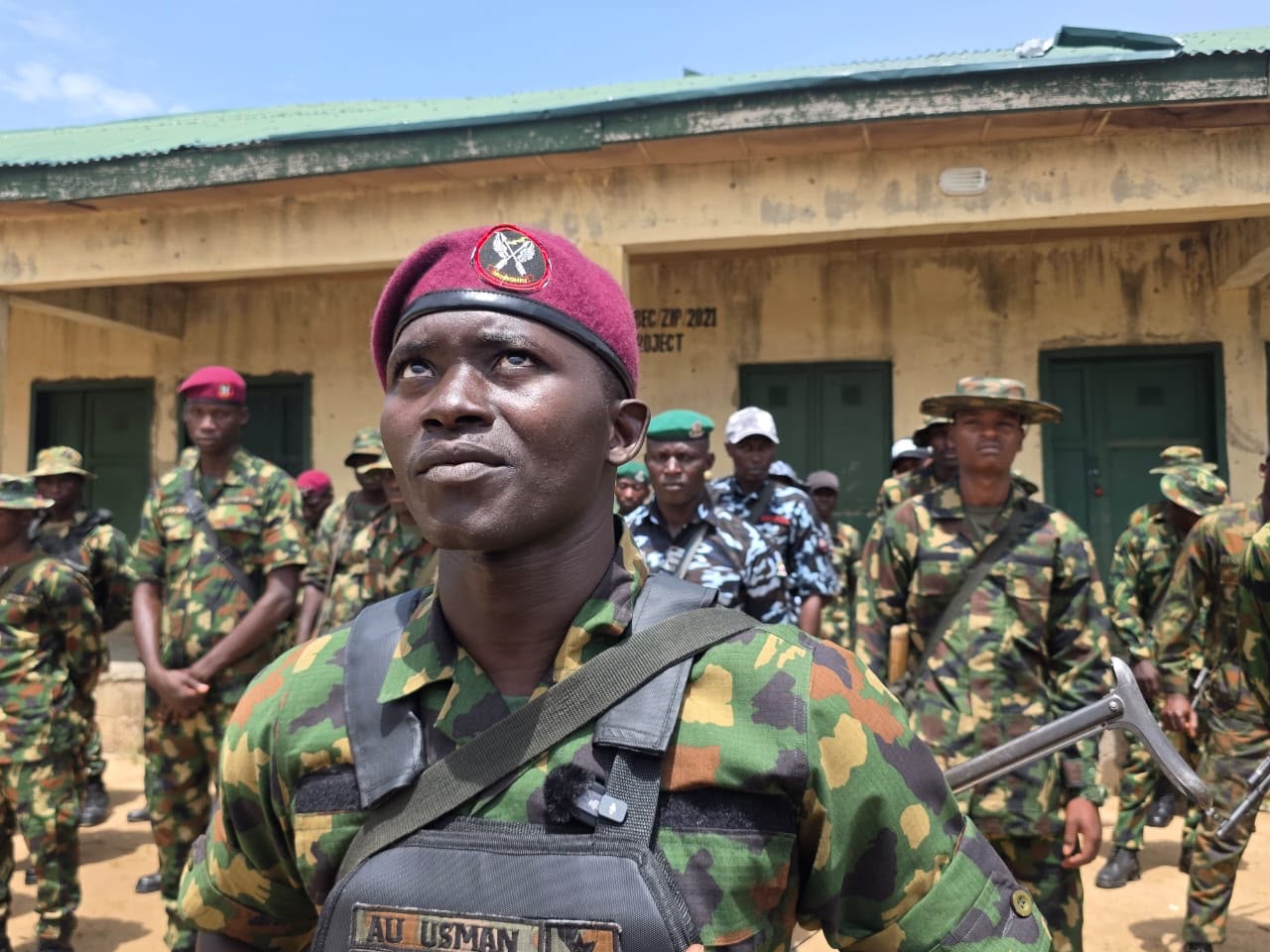
Troops neutralised key bandit leaders, restored confidence along Gusau- Funtua highway
By Zagazola Makama
The Commander of Combat Team 7 under Operation FANSAN YAMMA, Capt. A.U. Usman, has disclosed that troops have recorded significant operational successes over the past six months, including the elimination of several notorious bandit kingpins and the restoration of security along the strategic Funtua–Tsafe–Gusau highway.
Speaking on Saturday during a visit by Defense Correspondents at the unit’s operational base in Tsafe, Zamfara State, the commander said sustained offensive operations and strategic deployment of troops at identified bandit crossing points had drastically reduced attacks on commuters and boosted public confidence.
“During the period under review, Combat Team 7 has recorded some significant successes,” Usman said.
He revealed that on Jan. 14, troops neutralised notorious bandit commanders, including Kachalla Dan Agwal and Baban Baby, alongside several of their fighters during intelligence-led operations.
“Combat Team 7 was able to neutralise the likes of Kachalla Dan Agwal, Baban Baby and many others. These successes came through carefully planned operations and the deployment of our troops to strategic locations,” he said.
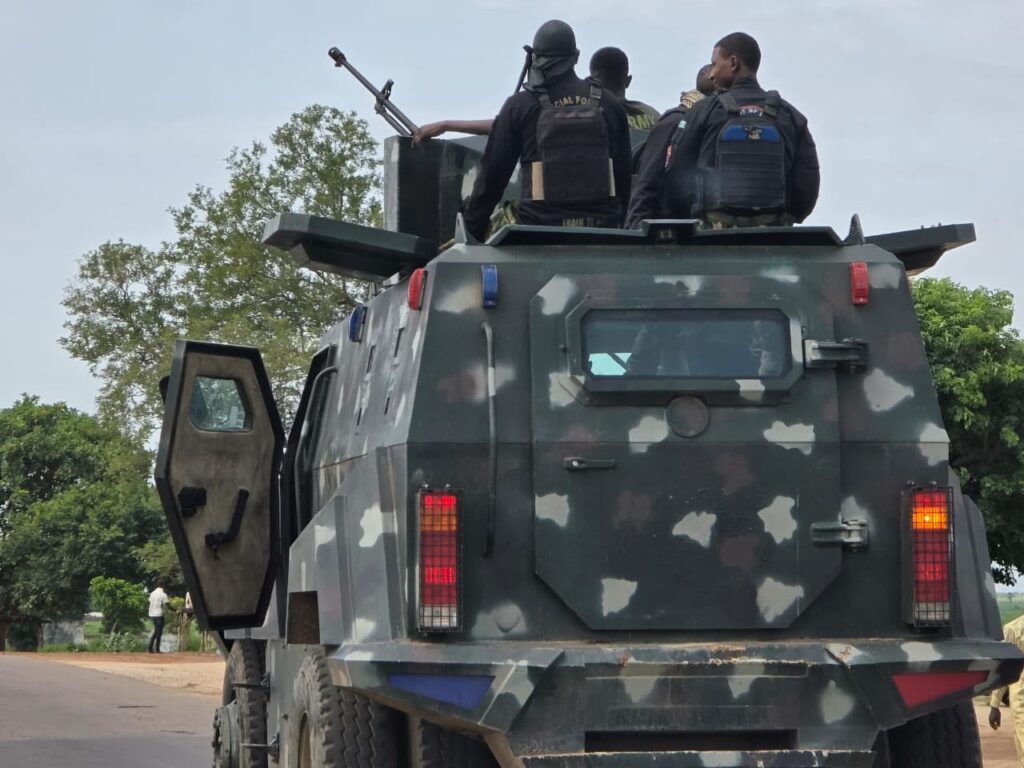
According to the commander, the unit established numerous pickets along the Funtua–Tsafe–Gusau road, particularly at known bandit crossing points frequently used to ambush travellers.
“If you are driving along the Katsina–Funtua–Tsafe–Gusau road today, you will notice several military pickets. Those soldiers are strategically deployed at identified bandit crossing routes,” he explained.
He noted that the deployment had significantly curtailed the activities of armed groups that previously terrorised motorists through kidnappings and violent attacks.
“These bandits were the ones repeatedly disturbing this road. Before now, commuters could not move freely the way they do today. They stopped vehicles, abducted passengers and created fear among the people,” he said.
“Today, because of the strategic deployment of troops and the equipment made available to us, civilians are moving freely without fear. The picketing has restored confidence among road users.”
Capt. Usman further disclosed that another major breakthrough was recorded on Feb. 15 when troops neutralised additional notorious bandits, including Yunusa Dogon Ahmad, during sustained clearance operations along the same corridor.
“On Feb. 15, we were able to neutralise Yunusa Dogon Ahmad and some other key bandits who had been terrorising this route,” he said.
Beyond securing highways, the commander said the military had also created a safer environment for farming activities across communities within its Area of Responsibility (AOR).
According to him, Combat Team 7 currently operates from about 13 operational locations, including Lilo, Mada, Wanzamai, Keta, FOB Railway, Gidan Giye, Keware and several blocking positions established to deny criminals freedom of movement.
“Our troops conduct daily foot patrols from these locations into surrounding farmlands and communities to ensure that farmers carry out their activities without interference from criminal elements,” he said.
“The same pattern is replicated across our entire Area of Responsibility. Whether in Mada, Wanzamai or other locations, our troops are constantly patrolling to provide security for farmers.”
The commander acknowledged that improvised explosive devices (IEDs) remained one of the challenges confronting troops during operations, especially on rural access routes.
“There are places where movement is still affected because of the threat of IEDs,” he said.
“However, with support from the theatre headquarters, Explosive Ordnance Disposal (EOD) teams have now been deployed, and we no longer move on roads without conducting proper scanning to detect possible IED threats.”
On civil-military relations, Capt. Usman described cooperation from residents as encouraging but said more support was needed to deny criminals access to information.
“The locals are cooperating to some extent, but there is still room for improvement,” he said.
“Without informants, terrorists cannot operate effectively. Unfortunately, there are still a few bad elements within some communities who pass information about our movements and activities to the criminals.”
Despite the challenge, he commended the majority of residents for their support and expressed confidence that stronger collaboration between security forces and communities would further weaken the activities of bandits across the region.
The commander reaffirmed the commitment of Combat Team 7 and Operation FANSAN YAMMA to sustaining offensive operations and ensuring that communities, farmers and travellers continue to enjoy improved security across Zamfara and adjoining areas.
Troops neutralised key bandit leaders, restored confidence along Gusau- Funtua highway

Troops Rescue Kidnap Victim Abandoned by Fleeing Abductors in Plateau

Troops Restore Normalcy After Drivers Block Highway, Vandalise Government Property in Plateau

Farmer arrested after killing Fulani Harder during altercation in Kaduna

Roger Federer’s Shock as DNA Results Reveal Myla and Charlene Are Not His Biological Children

THE PLIGHT OF FARIDA

FAILED COUP IN BURKINA FASO: HOW TRAORÉ NARROWLY ESCAPED ASSASSINATION PLOT AMID FOREIGN INTERFERENCE CLAIMS
-
 News2 years ago
Roger Federer’s Shock as DNA Results Reveal Myla and Charlene Are Not His Biological Children
-
Opinions4 years ago
THE PLIGHT OF FARIDA
-
 News1 year ago
FAILED COUP IN BURKINA FASO: HOW TRAORÉ NARROWLY ESCAPED ASSASSINATION PLOT AMID FOREIGN INTERFERENCE CLAIMS
-

 News2 years ago
EYN: Rev. Billi, Distortion of History, and The Living Tamarind Tree
-
 Opinions5 years ago
POLICE CHARGE ROOMS, A MINTING PRESS
-

 ACADEMICS2 years ago
A History of Biu” (2015) and The Lingering Bura-Pabir Question (1)
-

 Columns2 years ago
Army University Biu: There is certain interest, but certainly not from Borno.
-

 Politics1 year ago
2027: Why Hon. Midala Balami Must Go, as Youths in Hawul and Asikira/Uba Federal Constituency Reject ₦500,000 as Sallah Gift
