
Politics
Tinuke Davies-Kesington decries women marginalization in politics

Tinuke Davies-Kesington decries women marginalization in politics
By: Michael Mike
Diaspora Woman leader, Tinubu Support Organisation and Matron, Asiwaju Volunteers Groups, Baroness Tinuke Davies-Kesington on Friday complained about the perceived marginalization of women in Nigeria, saying the women are not having a fair deal in the country’s politics.
‘’ I will say first, that women, being the majority in the population, are not adequately represented in Politics in Nigeria, especially when we look at the important roles that women fulfill in society at large. Yet women have significant influence in politics, as the electorate, as well as in areas such as campaigning and fundraising. Nigerian women, regardless of ethnic and tribal background, are for the most part entrepreneurs. From the woman in the market, to the multi million naira event planner, entrepreneurialism is what defines the Nigerian woman’’.
Speaking to journalists in Lagos, Davies Kessington stated that the cry of marginalization of women in Nigeria’s politics underscored the imperative of women seeing politics as a calling and service to nation and the people.
‘’To be direct, Women in Nigeria have not involved themselves more fully in politics. It is seen as a game for men, seeking power, which of course is a wrong perspective to have, but nevertheless, this is how politics is viewed. Nigerian women focus their energies on being entrepreneurs rather than politics. This is purely a pragmatic choice, as survival and providing for one’s family comes first. Women in Nigeria must see politics as a calling for those who wish to serve their fellow citizens and make life better’’.
Davies-Kessington, a strong supporter of Asiwaju Bola Ahmed Tinubu, maintained that no matter the setback suffered by the pro-gender bill aimed at increasing women’s participation in governance and representation, the future of women in Nigeria is bright.
‘’I know that a large number of women, who have interest in Politics, would have been discouraged, and disheartened by what happened with the bill in March 2022. Those who voted against increased representation of women in politics, probably even hoped for women to be discouraged. However, I want women in Nigeria to really think. We do not need permission to engage in politics in Nigeria. The goal of politics is to solve existential problems. Women have a large population, and we therefore constitute a large proportion of the electorate. We are the ones that vote politicians into power. We already have the numbers. We just need to organise. We do not need permission. In fact, I think that if we engage in politics, with true enthusiasm, and actively seek to solve the numerous problems in Nigeria that affect us as women, and consequently families, then more qualified and capable women will become an integral part of politics. That would be a good thing’’
She spoke on culture, religion and the need to balance the scheme of things in Nigeria
‘’Women, in Nigeria can equate the balance. Nigerian women function in very high pressure environments. We are mothers, business owners, wives, home managers. We take care of family, and extended family, we negotiate, we teach, we counsel. There is so much that we do as women. And yet, we are able to function at the highest levels, and this is done through balancing all that we do. We do this naturally, and in the field of politics, women can bring a healthy balance. Women are able to see the best way to manage details, and see how to resolve issues through collaboration. Nigerian women will always bring balance, as we naturally collaborate, and seek synergy, rather than think in terms of competition, or power. That is how many men see things, and that is what works for them. The balance will come in the grand scheme of things in Nigeria, when women move forward with confidence, and show the attributes we have that will benefit the political system in Nigeria’’.
Also Read: Cleric urges religious leaders to preach love, positive…
The Bola Tinubu’s campaigner stated that the women should not be taken for granted any longer.
‘’Nigeria is a democratic country. Protest and dissenting voices have a right to be heard, especially where there is hurt, anger, or discontent. It must be encouraged. Women in Nigeria need to think deeply. We have numbers and influence over the electorate. We only need to organize, aggregate our numbers, and put forward or support those representatives for electoral positions that support women, and the issues that are important to them. There is no rule that says that these representatives have to be men. The political field is also open to women. Political positions are open to Nigerian women. All it takes is proper organisation’’.
She suggested that current moves to increase women participation in politics should include strategy and collaboration.
‘’I am working with capable women, who are actively involved in politics in Nigeria. I am mentoring young women who are interested in engaging in politics. I am working directly with very competent men, in Nigeria, politicians who advocate and support increased women’s participation in the political system in Nigeria. I am working with a number of organizations who are devising procedures and policies that will encourage more female engagement in politics at both the local and national levels in Nigeria. There is a lot of work I am doing, but I am not doing it alone. It is only through strategy, and collaboration, that Nigerian women can get more involved, and actually do the real work that politics entails’’.
She harped on the need for appropriate organization.
‘’A large majority of Nigerian women are entrepreneurs. We are natural capitalists. The most important thing that Nigerian women can do, in the field of politics, is to organise. Once organised, we as women, can then focus directly on the issues at hand. Money in politics is just one aspect of the electoral process, as countless aspirants and would be politicians in Nigeria have found out. There is more to it, and Nigerian women know this. Money is just one aspect. Women being organised in Nigeria, is more powerful than money, or a political process that has been monetised’’.
She stated that the main challenges before the current administration were economy and insecurity.
‘’Security is a core issue for Nigeria. Everyone is affected, and the very viability of Nigeria as a country and a functional democracy, hangs in the balance because of security, or rather the lack of it. Terrorism, robbery and murder have no place in a country that boasts such deep, ancient cultures, and highly intelligent and educated people. The lack of security in Nigeria, the loss of life, rampant kidnappings, is destroying the image of Nigeria on the World stage. Nigeria lacks a real tourism industry, because there is a lack of security. Direct foreign investment, outside of the oil and gas industry, is severely limited because of the perceived risk that Nigeria has become. Insecurity is not a new thing in Nigeria. Homes in Nigeria are built like prisons, complete with high walls, steel doors and metal bars on the windows. No one in Ghana or Togo has to live like prisoners in their own homes the way Nigerians do. People in Nigeria are used to living in fear and insecurity. They are so used to it, that they no longer realize just how much fear they have’’
The Diaspora APC leader also made fresh case for proper intelligence gathering, outreach in the communities, where criminals and terrorists come from, in order to prevent further recruitment and social policy to help support young people and put them into positive alternative activities.
‘’The so-called “Giant of Africa”, is now being laughed at, and being described as a pig, wallowing in its own dirt and filth. This is unacceptable, and it has led to Nigerians that live abroad openly insulting the home country in front of outsiders. No Nigerian that lives abroad, no matter what tribe they are from, generally has anything good to say about Nigeria. It has become the norm to curse Nigeria. This is shameful for a Country with so much potential, to become a leading nation in the world. This has to do with insecurity, and the economy. For Nigeria to move ahead, in a world that is becoming ever more technologically advanced, Security has to be at the forefront of every Nigeria’s mind, both at home, and in the diaspora. It is the volatile security in Nigeria that acts as an impediment for people to return to Nigeria and contribute. All too often, we hear of victims, and it keeps getting worse. Just look at the full scale military attacks, killings and kidnappings of women and girls in the North of the Country. Look at the murder, kidnapping and robbery in the South of the country. This is unacceptable. But sadly, Nigerians are used to living with, and adapting to unacceptable conditions’’
She also tasked the security agencies on information sharing.
‘’There is a need for better information sharing between different agencies such as the Police and the military, and between different regions. There must be a network of correct information gathering, so that we know who the enemy is, how they are financed, who supports them, where they live, who they are related to, who they associate with. To destroy an enemy, you must know the enemy. There must be a shift in the mindset of security agents in Nigeria. The Police, military and others must become more motivated, and undertake more training in intelligence gathering, investigation and counter terrorism, so that they can perform their duties more effectively’’
She emphasized severe penalties for high level criminals, and terrorists, as well as those associated with them.
‘’There is need for punitive and financial penalties for anyone that supports any form of criminality and terrorism. Government must be bold and robust in labeling terrorists, armed robbers and kidnappers as what they are: They are enemies of every tribe and every person in Nigeria. They are enemies and need to be seen as such. The communities need to ostracize them. If the country’s economy is to grow, Nigeria needs security, if the population is to live freely. Nigeria needs security, if it is to be taken seriously as a leading nation in Africa, Nigeria needs security. If Nigeria’s security situation gets worse, while politicians look on, our country will not only be laughed at, but every Nigerian, of every tribe, will be looked down upon, as incompetent human beings, who cannot even live safely within our borders. Robust strategies must be employed to keep citizens safe. Anything less, will be failure, and spell doom for the nation and the citizens’’.
The All Progressives Congress (APC) chieftain advised those aspiring for political positions in 2023 to focus on the country’s security challenges.
‘’The agenda for any new administration must be robust and strategic. There must be competent information gathering and outreach for the disaffected communities that terrorists, kidnappers, and armed robbers come from. There must be stronger legislation to punish offenders and willingness by the government to boldly assert that groups that advocate violence against people or the state, through actions, words or symbols, are terrorists and criminals and they must be punished as such. Armed robbers and kidnappers must be targeted relentlessly’’
She also appealed to the electorate not to elect ineffective representatives in 2023
‘’Nigeria can win the battle of insecurity when the mindset shifts from it being a battle, to it being a war. There must be a war waged against insecurity and Nigerians must hold every single politician, police officer, and military officer accountable. The politicians must lead, and be held accountable for keeping citizens safe. If they fail to do this, then Nigerian citizens must be brave enough to ensure that they no longer elect ineffective representatives. Nigerians will continue to live like prisoners, if security is not made a core issue by the incoming government’’.
Tinuke Davies-Kesington decries women marginalization in politics



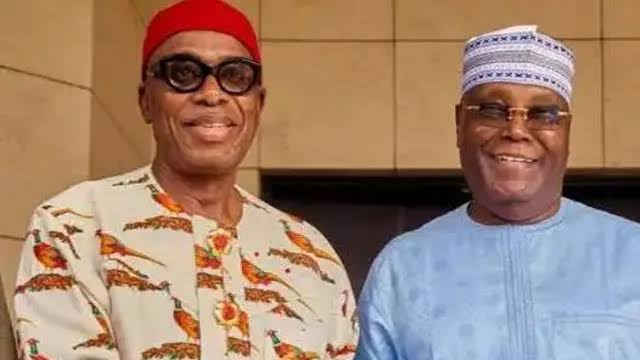
ADC PICKS RT. HON. CHIBUIKE ROTIMI AMAECHI AS ATIKU’S RUNNING MATE
By: Michael Mike
The African Democratic Congress (ADC) has picked former Rivers State Governor and former Minister of Transportation, Rt. Hon. Rotimi Amaechi, as its vice-presidential candidate for the 2027 general election, pairing him with former Vice President Atiku Abubakar on what party leaders describe as a “unity and rescue ticket.”
Announcing the decision, ADC National Publicity Secretary, Mallam Bolaji Abdullahi, said Amaechi’s emergence followed broad consultations within the party and reflected his strong performance as runner-up in the party’s presidential primaries as well as his track records of service to his State and the country.
According to the ADC, Amaechi’s extensive experience across both the legislative and executive arms of government, as former Speaker of the Rivers State House of Assembly, two-term Governor of Rivers State, and former Minister of Transportation, makes him uniquely qualified to complement Atiku’s leadership, strengthen the party’s national appeal, and bolster its campaign to offer Nigerians an experienced and credible alternative ahead of the 2027 presidential election.
The full statement read:
The National Leadership of the African Democratic Congress (ADC), after extensive consultations with party leaders, coalition partners, youth and women stakeholders, and representatives of all geopolitical zones, is proud to announce that the Rt. Hon. Chibuike Rotimi Amaechi has been selected as the Vice-Presidential Candidate of our great party for the 2027 Presidential Election.
This recommendation follows the successful conclusion of the ADC Presidential Primaries, in which Rt. Hon. Amaechi emerged as the runner-up, earning widespread support from party members across the federation and demonstrating his enduring appeal as one of Nigeria’s most experienced and respected political leaders.
The proposed partnership between His Excellency Atiku Abubakar and Rt. Hon. Rotimi Amaechi represents more than a political alliance; it is the coming together of two tested statesmen with the experience, national reach, and leadership capacity required to rescue Nigeria from its current challenges and reposition the country for a new era of prosperity, security, and inclusive development.
Rt. Hon. Amaechi brings to this ticket one of the most comprehensive public service records in contemporary Nigerian politics. His experience spans all major pillars of democratic governance. He served with distinction as Speaker of the Rivers State House of Assembly, making him one of the longest-serving legislative leaders in Nigeria’s Fourth Republic. He subsequently served two terms as Governor of Rivers State, where he oversaw significant investments in infrastructure, education, healthcare, and public sector reforms. At the national level, he served as Minister of Transportation, leading some of the most ambitious transportation and rail modernization initiatives in Nigeria’s history.
Few political leaders in Nigeria today possess such extensive and balanced experience across both the legislative and executive arms of government. This depth of experience will be invaluable in supporting the next ADC administration from day one.
Beyond his impressive credentials, Rt. Hon. Amaechi strengthens the ticket strategically. His political influence across the South-South and wider Southern Nigeria, his reputation as a reform-minded administrator, and his proven ability to build coalitions across political, ethnic, and regional lines make him uniquely positioned to complement the candidacy of Atiku Abubakar.
Together, Atiku Abubakar and Rotimi Amaechi embody a truly national ticket—one that bridges regions, generations, and political traditions. Their combined experience in governance, economic management, public administration, party organization, and nation-building offers Nigerians a credible and compelling alternative capable of restoring confidence in government and accelerating national development.
At a time when millions of Nigerians are demanding competent leadership, economic revival, job creation, security, and national unity, the Atiku-Amaechi ticket sends a clear message: the ADC is prepared to govern, prepared to unite the nation, and prepared to deliver results.
The leadership of the ADC is confident that this partnership will energize our growing coalition, inspire hope among Nigerians, and provide the leadership necessary to build a stronger, safer, and more prosperous Federal Republic of Nigeria.
The ADC therefore calls on all party members, coalition partners, civil society organizations, youth groups, women leaders, and Nigerians of goodwill to join us as we embark on this historic journey to renew our nation and secure a better future for generations to come.
Signed:
Mallam Bolaji Abdullahi
National Publicity Secretary
African Democratic Congress (ADC)
ADC PICKS RT. HON. CHIBUIKE ROTIMI AMAECHI AS ATIKU’S RUNNING MATE
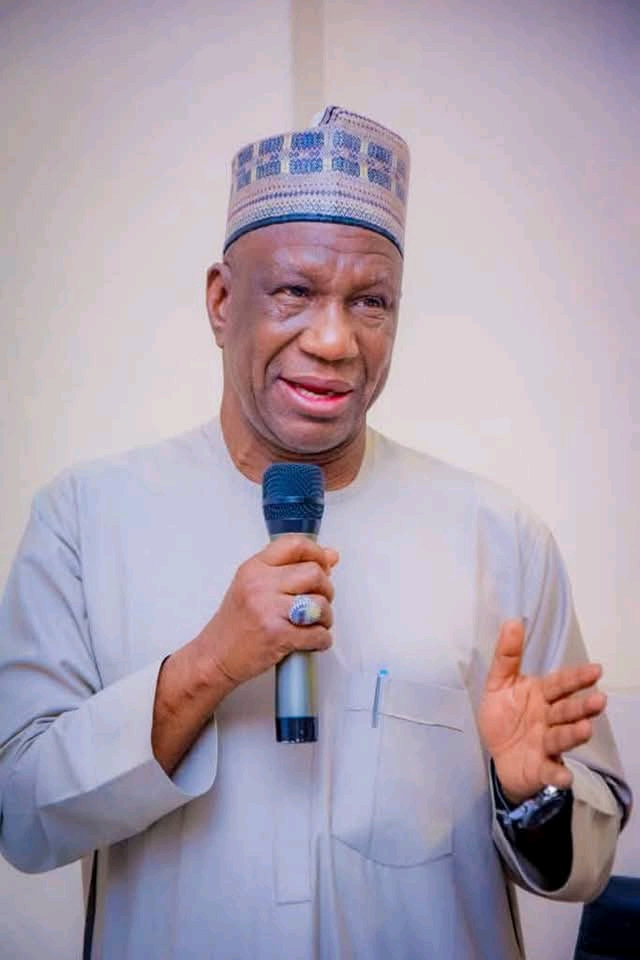
Yobe: APC guber candidate speaks on Buni’s confidence in him
By: Yahaya Wakili
The Yobe State All Progressives Congress (APC) gubernatorial candidate, Alhaji Baba Mallam Wali Fcan, mni, has revealed that His Excellency Governor Mai Mala Buni CON’s confidence in him over the years had afforded him the opportunity to serve the state as secretary to the state government for seven years.
Baba Mallam Wali mni disclosed this today when a delegation of critical stakeholders of the All Progressives Congress (APC) from the Gujba local government area paid him a congratulatory visit in Damaturu, the state capital.
He expressed profound appreciation for the visit, adding that this overwhelming visit shows solidarity and confidence in his candidacy.
According to Mallam Wali, Governor Mai Mala Buni’s confidence in him over the years had afforded him the opportunity to serve the state as secretary to the state government for seven years.
He assured the stakeholders that he would provide inclusive and participatory leadership by carrying every citizen along irrespective of political, social, or regional affiliations.
The acting secretary to the state government, who is also the son of the soil, Dr. Mohammed Goje, leading the delegation, described Alhaji Baba Mallam Wali as a seasoned administrator and accomplished public servant.
“The emergence of Mallam Wali was a well-deserved recognition of his competence, integrity, and commitment to the development of Yobe State to a greater height,” Dr. Goje said.
He assured the candidate of the continued support, loyalty, and commitment of the people of the Gujba local government area, noting that we would remain steadfast in our support for the APC and its candidate in the 2027 general elections.
Yobe: APC guber candidate speaks on Buni’s confidence in him
Politics
VP Shettima’s Invest Lagos Summit: A contest of narratives on both the Dangote and Abdulsamad empires.
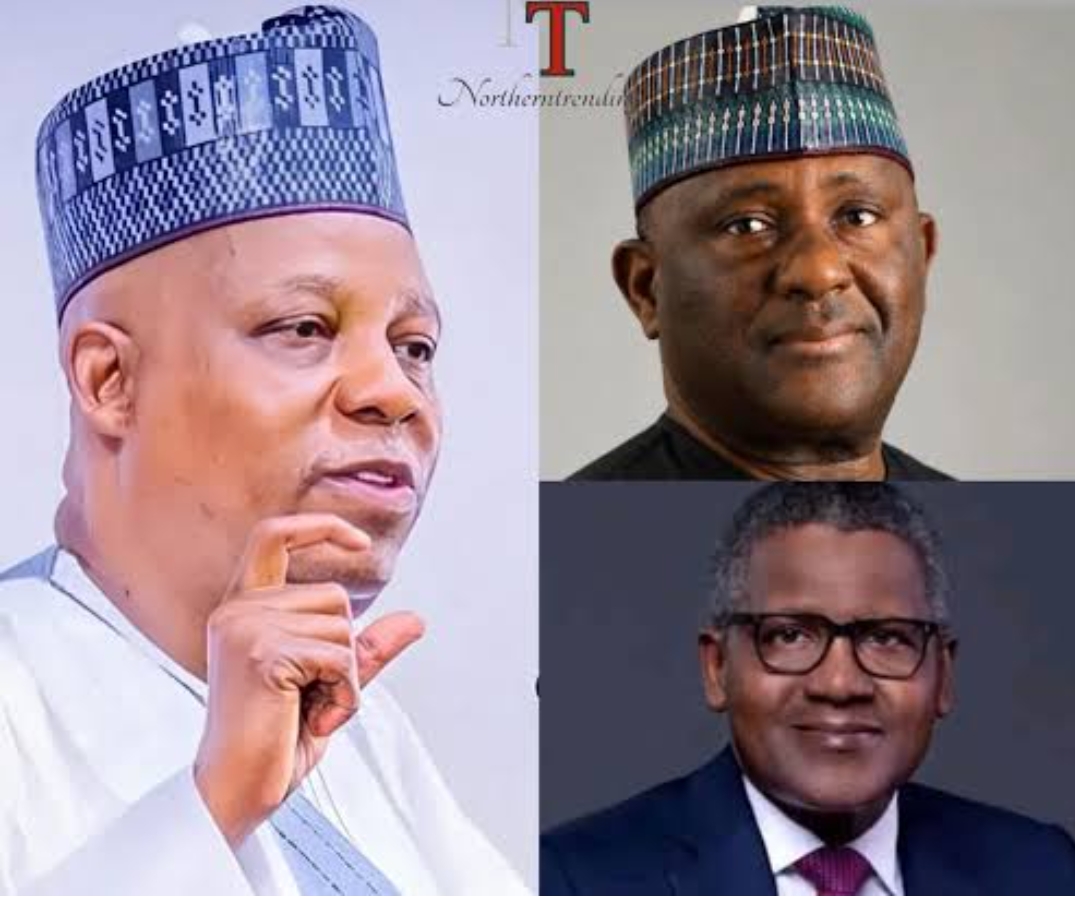
VP Shettima’s Invest Lagos Summit: A contest of narratives on both the Dangote and Abdulsamad empires.
By: Dr James Bwala
Vice President Kashim Shettima’s recent statement at the Invest Lagos Summit, which sparked significant controversy and backlash from various quarters, particularly regarding his remarks about Africa’s richest men, Aliko Dangote and Abdul Samad Rabiu. The vice president asserted that Lagos, not Kano, produced these business magnates, a comment that many interpreted as dismissive of Kano’s historical commercial significance. However, this reaction stems largely from a misinterpretation of Shettima’s words and an overlooking of the broader context in which his remarks were made. It is crucial to understand and defend the vice president’s statement, recognising the economic dynamics at play and the positive intent behind his message.
Vice President Shettima’s assertion that Lagos produced Africa’s richest men was not intended as an erasure of Kano’s rich commercial heritage or an undervaluing of the northern roots of these business icons. Instead, it was a contextual observation highlighting Lagos as the continent’s economic powerhouse and a pivotal hub where business ideas are scaled and transformed into thriving enterprises. Lagos is Africa’s largest sub-national economy, characterised by its vibrant market activities, infrastructural advantages, business-friendly policies, and an environment conducive to private sector growth. This city has historically served as a furnace where entrepreneurial ambitions find fertile ground to flourish and expand. Shettima’s point was that while the initial entrepreneurial instincts and businesses may have originated elsewhere, including Kano, it is within Lagos that these ventures matured into the colossal economic entities they are today.
READ ALSO: https://newsng.ng/radical-approach-ways-of-ending-the-menace-of-insecurity-in-nigeria/
The backlash, particularly from northern commentators and traditional leaders like Emir Muhammadu Sanusi II of Kano, reflects a common regional sensitivity towards identity and recognition. The Emir’s response centred on Kano’s longstanding reputation as a “centre of commerce”, emphasising the city’s role in shaping fundamental entrepreneurial skills and traditions inherited by figures like Dangote and Rabiu. While this perspective honours Kano’s historic significance, it inadvertently overlooks the nuance in Shettima’s statement—that the vice president did not deny Kano’s foundational influence but instead underscored Lagos’s role in providing a strategic platform for growth and scaling operations. The criticism arises from conflating birthplace or origin with the locus of economic success. Recognising Lagos as the city where these businesses “came to the limelight” is not a negation of their roots but an acknowledgement of pragmatic economic realities.
Shettima’s remarks must be viewed through the lens of economic pragmatism rather than political rivalry or regional contestation. Lagos has been, and remains, Nigeria’s commercial nerve centre and a critical node in Africa’s trade and investment networks. Its infrastructure, regulatory frameworks, access to ports, financial markets, and international connectivity create unique advantages that entrepreneurs can leverage to multiply their wealth and impact. Both Aliko Dangote and Abdul Samad Rabiu have attested to the enabling environment provided by Lagos State governments, which implemented policies fostering private-sector investments surpassing $30 billion. These acknowledgements underscore the integral role Lagos played in their skyrocketing success, validating Shettima’s emphasis on Lagos’s contributions without negating Kano’s entrepreneurial legacy.
READ ALSO: https://newsng.ng/radical-approach-ways-of-ending-the-menace-of-insecurity-in-nigeria/
It is also imperative to contextualise the timing and nature of the criticism directed at the vice president. Notably, some individuals and groups who vociferously objected to Shettima’s Lagos-centric remarks had remained conspicuously silent during other contentious moments, such as when the vice president defended the Dangote Refinery amid an industrial dispute with the Petroleum and Natural Gas Senior Staff Association of Nigeria (PENGASSAN) in late 2025. During that dispute, Shettima described Dangote as an “institution” deserving protection, a stance that drew criticism from labour unions but highlighted his consistent recognition of the vital role played by business leaders in Nigeria’s economic fabric. This selective outrage suggests that the current backlash is less about objective critique and more about entrenched regional loyalties or political manoeuvring as learnt in political communications.
The misrepresentation of Kashim Shettima’s position reveals a broader challenge in Nigerian public discourse—a tendency to pre-emptively judge and politicise statements without engaging with their substance or intent. The eagerness to attack the vice president before fully understanding the context exemplifies a mindset that undermines balanced evaluation and constructive debate. Instead of appreciating the VP’s highlighting of Lagos as an epicentre of enterprise and resilience, detractors have chosen to ignite divisive sentiments that distract from economic cooperation and national unity. This pattern of reaction fuels unnecessary regional tensions, which ultimately hinder the country’s collective progress.
READ ALSO: https://newsng.ng/radical-approach-ways-of-ending-the-menace-of-insecurity-in-nigeria/
From a professional standpoint, it is essential to champion nuanced communication and responsible leadership. Vice President Shettima’s remarks align with an economic truth that transcends parochial interests: that success in business often requires not just ingenuity and grit but access to supportive environments where ideas can scale. Nurturing such hubs—like Lagos—is vital for Nigeria’s sustained development and global competitiveness. Recognising and celebrating Lagos’s role, therefore, should not be viewed as an affront to other regions but as a call to replicate such enabling conditions nationwide. Every region, including Kano, must strive to provide similar platforms to nurture and propel their homegrown talents and enterprises.
Vice President Kashim Shettima’s comments at the Invest Lagos Summit were a factual, context-driven affirmation of Lagos’s status as Africa’s premier economic hub, where entrepreneurial ventures achieve their full potential. His statement was neither dismissive of Kano’s historic commercial contributions nor an attempt to diminish the foundational roles played by northern business traditions. Instead, it was a candid recognition of Lagos’s unique capacity to nurture and elevate business successes on an unprecedented scale. The vehement backlash—fueled by misinterpretation and regional sensitivities—serves as a reminder of the need for careful listening, thoughtful analysis, and avoidance of partisan attacks in national conversations. As Nigerians, we can foster unity and propel the country towards inclusive prosperity by embracing diverse pathways to success and acknowledging the layered realities of economic growth. Future critiques should engage constructively with leaders’ insights, considering both intent and context before passing judgements. Only through such mature discourse can Nigeria harness its full economic potential and build a harmonious, thriving society.
* James Bwala, PhD, writes from Abuja.
VP Shettima’s Invest Lagos Summit: A contest of narratives on both the Dangote and Abdulsamad empires.

Terrorism: DSS Secures Another Death Sentence, As Katsina Court Convicts Female Courier Arrested With Large Arms Cache

Senate to Enact Stronger Laws to Tackle Rising Drug Abuse

How dialogue, military intervention prevented fresh bloodshed in Benue communities

Roger Federer’s Shock as DNA Results Reveal Myla and Charlene Are Not His Biological Children

THE PLIGHT OF FARIDA

FAILED COUP IN BURKINA FASO: HOW TRAORÉ NARROWLY ESCAPED ASSASSINATION PLOT AMID FOREIGN INTERFERENCE CLAIMS
-
 News2 years ago
Roger Federer’s Shock as DNA Results Reveal Myla and Charlene Are Not His Biological Children
-
Opinions4 years ago
THE PLIGHT OF FARIDA
-
 News1 year ago
FAILED COUP IN BURKINA FASO: HOW TRAORÉ NARROWLY ESCAPED ASSASSINATION PLOT AMID FOREIGN INTERFERENCE CLAIMS
-

 News2 years ago
EYN: Rev. Billi, Distortion of History, and The Living Tamarind Tree
-
 Opinions5 years ago
POLICE CHARGE ROOMS, A MINTING PRESS
-

 ACADEMICS2 years ago
A History of Biu” (2015) and The Lingering Bura-Pabir Question (1)
-

 Columns2 years ago
Army University Biu: There is certain interest, but certainly not from Borno.
-

 Politics1 year ago
2027: Why Hon. Midala Balami Must Go, as Youths in Hawul and Asikira/Uba Federal Constituency Reject ₦500,000 as Sallah Gift
