
News
Tonlagha: Forged in the Creeks, Bridging Nigeria to the World

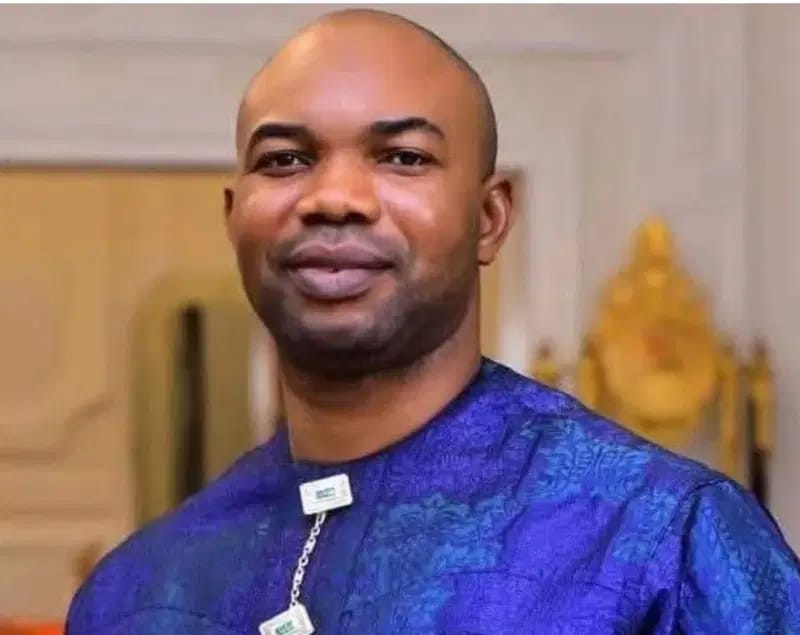
Tonlagha: Forged in the Creeks, Bridging Nigeria to the World
•Quiet Power, Citizen Diplomacy and the Promise of Nigeria
By Jude Obioha
In a country where activism often clashes with national cohesion and where loud voices frequently overshadow steady hands, Matthew Tonlagha represents a rare Nigerian archetype. This bridge builder fights fiercely for his people while working tirelessly for the peace, stability and economic future of Nigeria. His journey from the creeks of the Niger Delta to global engagement is not merely a personal success story. It is a powerful narrative of resilience, citizen diplomacy and quiet nation-building.
Tonlagha’s story begins not with privilege but with adversity. Born into a disciplined military family in Delta State, his early life was marked by profound physical challenges after complications from an ill-administered polio vaccine impaired his mobility. For nearly a decade, he depended on his mother’s strength to attend school and navigate daily life. Social stigma, financial hardship and the early loss of his father could have silenced his ambitions. Instead, these experiences forged in him a deep empathy for the vulnerable and an unyielding commitment to service. His eventual recovery and rise stand today as a testament to resilience; a personal struggle transformed into a lifelong mission for collective empowerment.
From his earliest activism in the Benikrukru community in the Gbaramatu Kingdom of Delta State, Tonlagha distinguished himself not only as a protester but also as an intellectual force behind the Niger Delta emancipation struggle. He confronted exploitation and neglect with courage, yet consistently advocated peaceful engagement, negotiation and constructive dialogue. Like many iconic leaders who understood that lasting change requires both firmness and foresight, he pursued justice for the Niger Delta without undermining Nigeria’s unity. This duality—fighting for regional equity while championing national stability—has defined his leadership philosophy.
His grassroots activism evolved into entrepreneurship and indigenous industrial growth through MATON Engineering Nigeria Limited, a company that has become a major employer and a driver of local capacity development. But Tonlagha’s influence extends far beyond boardrooms. As Vice Chairman of Tantita Security Services Nigeria Limited, he emerged as a critical private-sector partner in Nigeria’s oil security architecture. The success of efforts to curb oil theft, protect pipelines and restore production levels has had direct implications for national revenue, economic recovery and investor confidence. In a sector long plagued by instability, his role has been central to fostering sustained economic growth.
Yet perhaps the most compelling aspect of Tonlagha’s legacy is his understated philanthropy. He is a quiet humanitarian who has been funding scholarships, supporting widows and orphans, empowering youth through vocational training, and sustaining free feeding programmes without fanfare. His giving is not performative; it is rooted in lived experience and a belief that dignity must accompany assistance. This approach reflects a leader who remembers the pain of exclusion and seeks to build systems that offer opportunity rather than dependence.
Beyond Nigeria’s borders, Tonlagha has emerged as an informal yet effective citizen diplomat. Through international engagements and policy advocacy, he contributes to shaping Nigeria’s global image, strengthening bilateral conversations and promoting economic diplomacy. In an era when official channels alone cannot capture the full spectrum of global influence, individuals like Tonlagha help bridge gaps by advancing national interests while fostering international goodwill. His work underscores a new model of diplomacy in which private citizens complement formal statecraft, thereby reinforcing Nigeria’s strategic standing on the global stage.
What sets Tonlagha apart is not only the breadth of his engagements but the philosophy underpinning them. He embodies a generation of Nigerian leaders who believe that peace in the Niger Delta is complementary to Nigeria’s prosperity and that local development should align with national progress. His early activism against exploitation, including dramatic acts of defiance that drew attention to neglected communities, gradually evolved into a more nuanced strategy; one that combines dialogue, economic empowerment and security collaboration.
As he marked his golden jubilee in 2026, the outpouring of recognition from community leaders, national figures and global stakeholders revealed a man whose impact has long been felt but rarely publicised. Friends and admirers describe him as a peacemaker, a unifier and a patriot whose influence transcends ethnic and political boundaries. Indeed, his ability to convene diverse actors—from grassroots leaders to international partners—demonstrates a rare gift for consensus-building in a nation often divided by competing interests.
Nigeria’s future will depend not only on official institutions but also on citizens willing to shoulder responsibility beyond personal ambition. Tonlagha’s life offers a compelling blueprint: resilience forged through hardship, advocacy grounded in intellect and peace, economic empowerment anchored in indigenous enterprise, and diplomacy driven by patriotism rather than self-promotion. From the creeks of the Niger Delta to the corridors of international engagement, he has quietly shaped conversations on development, security and national cohesion.
In an age hungry for loud heroes, Tonlagha reminds us that the most enduring influence often operates in silence; building bridges where others see barriers, lifting communities where others see divisions, and proving that one individual, driven by empathy and vision, can help align regional emancipation with national unity. His story is not only a tribute to personal triumph but a reflection of the Nigeria that is possible when courage meets compassion and service meets strategy.
Obioha is the Director of Strategy at the Hope Alive Initiative (HAI), a group dedicated to good governance in Nigeria.
Tonlagha: Forged in the Creeks, Bridging Nigeria to the World


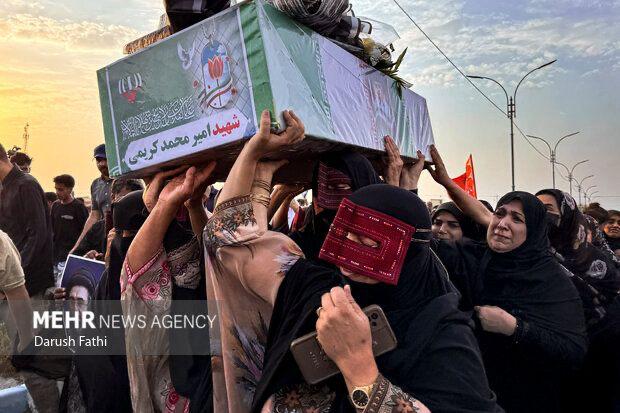
Iran Condemns Alleged US Strike on Wedding Ceremony, Says 68 Civilians Killed or Injured
By: Michael Mike
The Embassy of the Islamic Republic of Iran has condemned an alleged United States military strike on a wedding ceremony in southern Iran, saying the attack killed or injured 68 civilians and turned a family celebration into a scene of tragedy.
In a statement issued by its Press Department, the embassy said the incident occurred on September 1 at a wedding ceremony in Bandar Kuhestak, Sirik County, southern Iran.
It alleged that U.S. munitions directly struck the site where families had gathered for the private ceremony, resulting in deaths and injuries among civilians, including women and children.
The embassy described the victims as ordinary people who had no involvement in military decision-making and posed no threat to the United States.
It questioned the justification for what it described as a U.S. military attack on a residential location where a wedding was taking place, urging the international community to examine the circumstances surrounding the incident.
The Iranian government also linked the reported incident to an earlier U.S. attack on Shajareh Tayyebeh School in Minab, which it said resulted in the deaths of a large number of Iranian children and other civilians.
According to the embassy, reports concerning the Minab attack had similarly pointed to the use of U.S. missiles.
“From the school in Minab to the wedding ceremony in Kuhestak,” the embassy said, “ordinary Iranian people are paying the price of U.S. military aggression.”
The statement also raised questions about the distinction between civilian and military targets, asking what military connection a school or a wedding ceremony could have and what threat children, women and families could pose to U.S. national security.
The embassy’s condemnation comes against the backdrop of heightened tensions and military confrontation between Iran and the United States, with both sides facing international scrutiny over attacks and their impact on civilians.
Invoking international law, the Iranian embassy maintained that Iran did not initiate what it described as the latest aggression and argued that the United States had attacked the territory of a sovereign state.
It cited Article 51 of the United Nations Charter, which recognises the inherent right of states to individual or collective self-defence in the event of an armed attack.
The embassy argued that a country subjected to military attack should not subsequently have its defensive actions automatically characterised as a threat or destabilising conduct.
It nevertheless stressed that the protection of civilians remained a fundamental principle of international humanitarian law and should be applied without discrimination.
“The life of an Iranian child, an Iranian woman, or an ordinary Iranian citizen is no less valuable than the life of any other human being,” the statement said.
The embassy urged the international community not to allow civilian deaths in Iran to become normalised, warning that silence over attacks on civilians could encourage further tragedies.
It said the reported deaths and injuries at the wedding should not be treated merely as another headline in the cycle of war, but should prompt scrutiny of the circumstances and legality of attacks affecting civilian populations.
“A wedding ceremony should never become a battlefield,” the embassy declared, adding that civilians should not bear the cost of military ambitions.
The statement did not include a response from the U.S. government to the allegations.
Iran Condemns Alleged US Strike on Wedding Ceremony, Says 68 Civilians Killed or Injured

UN Women Disowns GADA Fundraising for Women Candidates, Warns Against Misuse of Logo
By: Michael Mike
UN Women Nigeria has disassociated itself from fundraising materials circulated by Gender & Development Action (GADA) in connection with preparations for Nigeria’s forthcoming general elections, saying it neither authorised nor supports the initiative.
The organisation, in a statement issued in Abuja yesterday, said it became aware of materials associated with GADA that used the UN Women name and the branding and logo of the Women Political Participation (WPP) Working Group while soliciting financial contributions for individual female political candidates.
UN Women Nigeria said it was concerned that the use of its name and WPP Working Group branding alongside the fundraising appeals could create the misleading impression that the United Nations agency or the working group endorsed, sponsored or supported the fundraising initiative and the candidates involved.
“As part of the United Nations system, UN Women is bound by the principles of impartiality, independence and political neutrality,” it said, stressing that the UN and its entities do not endorse, campaign for, support or oppose political parties or individual candidates.
The organisation clarified that neither UN Women nor the WPP Working Group had authorised the use of its name, logo, branding or visual identity for fundraising intended to benefit individual political candidates or electoral campaigns.
It also stated categorically that it does not endorse any political candidate or party, nor does it solicit, sponsor or facilitate fundraising for political candidates or electoral campaigns.
According to the statement, the WPP Working Group similarly does not authorise the use of its branding for political fundraising, while GADA’s fundraising activities in question were neither endorsed, sponsored nor supported by UN Women or the working group.
UN Women Nigeria said it had formally communicated its concerns to GADA and requested the organisation to cease and desist from using the UN Women name, logo, branding or WPP-associated visual identity in connection with political fundraising.
It further requested GADA to remove the relevant materials from its online and offline platforms and issue a clarification stating that neither UN Women nor the WPP Working Group endorsed, sponsored or supported the fundraising initiative.
The agency, however, said it valued its partnerships with organisations working to promote women’s political participation in Nigeria, including GADA and other civil society organisations.
It stressed that such partnerships must operate within the principles of impartiality, independence and political neutrality governing the work of the United Nations.
UN Women said its commitment to women’s political participation remained strong, explaining that its programmes were designed to promote women’s leadership and equal representation in governance through non-partisan and inclusive initiatives that support women across political affiliations.
It added that its work did not constitute an endorsement or support for any individual candidate, political party or electoral campaign.
The organisation said it would continue to work with the government, civil society, women leaders, political stakeholders and other partners to create an enabling environment for all women, regardless of political affiliation, to participate meaningfully and equally in political and public life.
It therefore urged stakeholders to ensure that the UN Women name, logo and WPP Working Group branding were not used in any manner that could imply UN endorsement of political fundraising or electoral campaigning.
UN Women Disowns GADA Fundraising for Women Candidates, Warns Against Misuse of Logo
News
NSCDC Rescues 15 Trafficked Children, Recovers Stolen Rifles, Busts Telecom Vandalism Syndicate
NSCDC Rescues 15 Trafficked Children, Recovers Stolen Rifles, Busts Telecom Vandalism Syndicate
By: Michael Mike
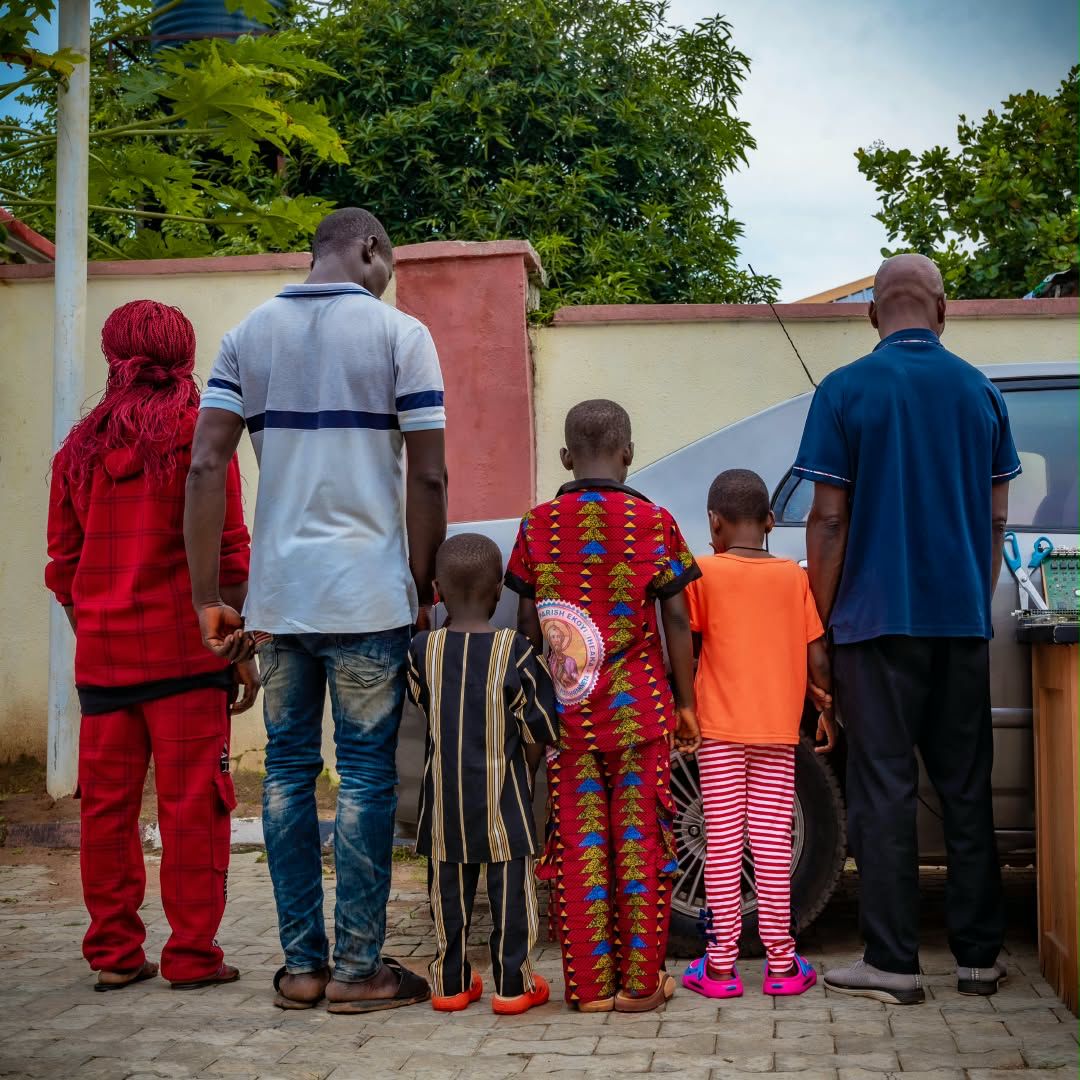
The Nigeria Security and Civil Defence Corps (NSCDC) has rescued 15 trafficked children, recovered three stolen service rifles and dismantled an inter-state syndicate involved in the vandalism and theft of telecommunications infrastructure across Delta and Kano States.
The breakthroughs were recorded by the Commandant General’s Special Intelligence Squad (CG’s SIS) in a series of intelligence-led operations targeting child trafficking, illegal arms diversion, internal corruption and critical infrastructure vandalism.
The National Public Relations Officer of the Corps, Assistant Commandant of Corps Babawale Afolabi, disclosed this in a statement issued on Friday.
He said the operations were conducted in line with the zero-tolerance policy of the Commandant General, Prof. Ahmed Audi, towards crime, corruption and the destruction of national assets.
On child trafficking, Afolabi said the squad commenced investigation following a petition over missing children in Kokona Local Government Area of Nasarawa State.
Investigations, he said, uncovered a syndicate allegedly led by one Anderson Archibong, who posed as an official of an organisation operating a purported “Back to School Project” under the National Council of Child Rights Advocate.
According to him, Archibong allegedly exploited low-income parents before trafficking their children to buyers across the country.
He said 16 children were fraudulently taken in January 2026 and allegedly sold for ₦2 million each.
“Through intelligence-led operations across transit routes, 15 of the 16 children were successfully rescued in Anambra, Imo, Enugu and other eastern transit corridors,” he said.
Afolabi added that three alleged buyers—Joy Julius, Ngozi and Eze Lazarus—were arrested and had confessed to their involvement, while efforts were ongoing to locate the remaining child.
In a separate investigation into illegal arms diversion, CG’s SIS operatives traced a missing AK-47 rifle to a serving NSCDC officer attached to the CG’s Crack Squad.
The officer, CAII Igah Ameh James, was allegedly found to have stolen an assigned AK-47 rifle, with breach number 02028, abandoned his duty post and transported the weapon to Otukpo, Benue State.
Investigators established that James allegedly sold the rifle to a middleman, Abakpa Simon Anthony, for ₦700,000, while Anthony subsequently sold it to an alleged illicit arms buyer, Sunday Akor, also known as IBB, for ₦800,000.
The rifle and two empty magazines were recovered following the arrest of the suspects.
The Corps also uncovered another arms diversion case at its Adamawa State Command following an armoury inventory audit.
Afolabi said the investigation led to the arrest of ASCI Peter Ardo, a former Head of Armoury, and CCA Boniface Lawyer.
He said investigations revealed that between 2018 and 2024, Ardo allegedly removed two unserviceable G3 service rifles, with breach numbers 10S838 and 69112944, from the armoury and sold them to Lawyer for ₦210,000 and ₦220,000 respectively.
The weapons were subsequently resold to a civilian, while Ardo allegedly altered physical inventory registers to conceal the removals and evade detection during routine checks.
Both officers, he said, were in custody after allegedly making full confessions.
Meanwhile, the CG’s SIS has also dismantled a network allegedly responsible for vandalising telecommunications infrastructure in Delta and Kano States.
Afolabi said operatives arrested Henry Dennis while allegedly vandalising an IHS telecommunications tower site in Uvwie Local Government Area of Delta State, where 12 vandalised telecom panels were recovered.
Further investigation reportedly exposed a wider network allegedly involving a scrap-market owner and financier, Yusuf Musa, who is accused of financing the theft operations and facilitating the resale of stolen telecommunications components.
The Corps said financial tracing uncovered suspicious transactions conducted through digital payment platforms, while efforts were underway to obtain search and arrest warrants for other members of the syndicate who remained at large.
The Commandant General commended the CG’s SIS for what he described as its tactical coordination and operational efficiency.
The NSCDC said internal administrative and disciplinary proceedings against implicated personnel had been concluded, while its Directorate of Legal Services had been directed to commence prosecution of the arrested suspects before courts of competent jurisdiction.
The Corps reaffirmed its commitment to protecting vulnerable citizens, safeguarding critical national infrastructure and maintaining integrity and accountability within its ranks.
NSCDC Rescues 15 Trafficked Children, Recovers Stolen Rifles, Busts Telecom Vandalism Syndicate

Iran Condemns Alleged US Strike on Wedding Ceremony, Says 68 Civilians Killed or Injured

UN Women Disowns GADA Fundraising for Women Candidates, Warns Against Misuse of Logo

APC received 5000 decampees in Yobe

Roger Federer’s Shock as DNA Results Reveal Myla and Charlene Are Not His Biological Children

THE PLIGHT OF FARIDA

FAILED COUP IN BURKINA FASO: HOW TRAORÉ NARROWLY ESCAPED ASSASSINATION PLOT AMID FOREIGN INTERFERENCE CLAIMS
-
 News2 years ago
Roger Federer’s Shock as DNA Results Reveal Myla and Charlene Are Not His Biological Children
-
Opinions5 years ago
THE PLIGHT OF FARIDA
-
 News1 year ago
FAILED COUP IN BURKINA FASO: HOW TRAORÉ NARROWLY ESCAPED ASSASSINATION PLOT AMID FOREIGN INTERFERENCE CLAIMS
-

 News2 years ago
EYN: Rev. Billi, Distortion of History, and The Living Tamarind Tree
-
 Opinions5 years ago
POLICE CHARGE ROOMS, A MINTING PRESS
-

 ACADEMICS3 years ago
A History of Biu” (2015) and The Lingering Bura-Pabir Question (1)
-

 Columns3 years ago
Army University Biu: There is certain interest, but certainly not from Borno.
-

 Politics1 year ago
2027: Why Hon. Midala Balami Must Go, as Youths in Hawul and Asikira/Uba Federal Constituency Reject ₦500,000 as Sallah Gift
