
News
Tribute to the late flight Sergeant Temitope Beckley

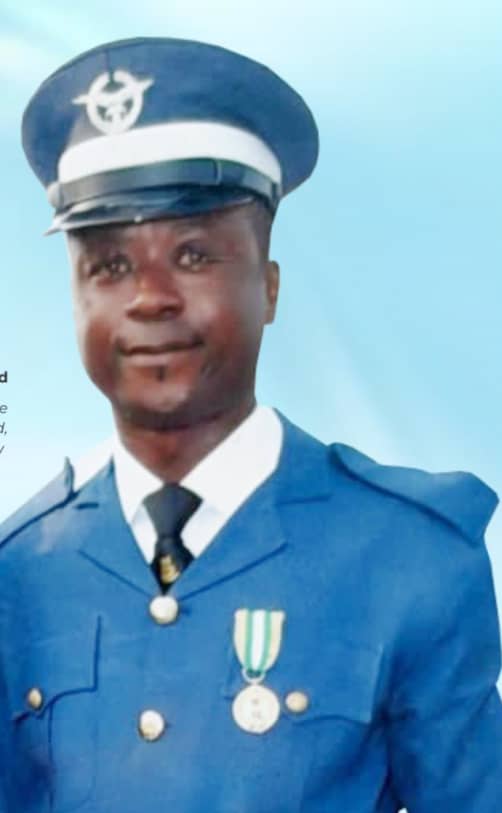
Tribute to the late flight Sergeant Temitope Beckley
By: Bodunrin Kayode
Dear Tope, I am still in shock that you had to leave so early at just 50. Seven years before your father our dear uncle Alaba left at 57. And my own father your uncle too same 57, all of the Akinlawon stock of the Beckleys in Lagos.
Sad you had to leave us so early. I am sad because of the bond we shared as special cousins or what people of your generation call besties. You were a jolly good fellow to me in particular whenever our paths crossed. Aburo (little brother), as I used to call you, family may share the same names sometimes and blood but very few are real friends within a particular family. If there are friends within our family, you are definitely one of them. A very jovial fellow who looks out for the others. A friend indeed among brothers and cousins. Your eyes always glittered when you were around me. And of recent you became more concerned about me when you heard that I was in the North East Nigerian war theatre of operation Hadin Kai. I assured you that because He lives i will always face tomorrow.
How we built our friendship
I remember my brief stay with you guys at the family house in folarin street, Mushin. Trying to rediscover myself as Uncle Alaba would call it anytime he asked me to escort him to EMPLAN consult were he was working then. Each time we returned, you were always close by asking the right questions the little ones always asked their older brothers. I enjoyed your restlessness at that young tender age, wanting to know a lot of things out there especially when we watched TV together and you did not understand what was going on. With the kinds of questions your probing mind used to ask, I always knew that you were going to become one of the shining lights of the family. I even dreamt of you joining me in serving God and country as a media practitioner one day. But you had other plans and ended up at the Nigerian Air Force as you did till your last breath on Sunday March 1st 2026 due to a protracted illness.
When I later started my studies to train as a journalist and found myself staying at Akobi crescent with Uncle Akobi, you never forget to stop by and check on me. You kept the flame burning. Your appearances were always remarkable with that glitter in your eyes which used to lighten up my weekend whenever you showed up. Brother Akin was always at hand to host us. Whenever he wasn’t around, we would go out to hang out as young people to have fun. You were always with the older ones hardly having time for your generation. Distance would now separate us when I was posted to Taraba state by the then daily times as its maiden correspondent. But we always met along the way until you joined the air force.
Your worries about Nigeria
Tope, at your level in the service in the military, you already knew the difference between right and wrong and you were very methodical and meticulous in the way you conducted your affairs. You asked more questions as always but this time as a seasoned personnel of the Nigerian Air Force. You knew where you were coming from and were you wanted to be in the nearest future. I encouraged you that in all things we should give thanks to our Creator. The one who is and is to come. You were on course in your relationship with him.
I remember our last discussion, about the insurgency challenge the military is dealing with at our backyard in Borno. Your perception about the Nigerian Air Force which you served till your natural passing. And your projection for the future in terms of security for the country. I asked for your family and you updated me that they were fine. I was worried about the fact that I am yet to meet your loving family but you assured me that we would surely meet someday even though your spouse was in Canada pursuing her dream. The telephone chat zeroed down to why I called. I actually chatted you because I remembered your father the great Uncle Alaba who had gone to the great beyond. And I wanted to honour his memory with a tribute 29 years after his demise. You promised feeding me with the extra details I wanted to add to what I got from your big sis Tosin. But that never happened. I never got the pictures of Uncle or the details I wanted. That has been rested for his 30th anniversary now.
Rather what I got was a rude shock of your sudden collapse and departure from this world. Tope, you suddenly joined your father in the great beyond at the untimely age of 50. We can’t question God Almighty our Creator over this decision. We would rather give thanks to him for the life you lived because He said we must give thanks to Him in all things.
Aburo, all I can say now is permission granted because you never sort for anyone’s permission to bow out. This was the command of your creator, the All knowing I Am who decides when it is time to come or to leave this world. Tope, be rest assured that some of us will never forget coming across your path in this short life. Enjoy your sleep great soldier until we meet to part no more.
Broda Sam.
Tribute to the late flight Sergeant Temitope Beckley



DSS Trails, Nabs Man Impersonating Personnel in Abuja
By: Zagazola Makama
*Arrested in tactical uniform, with fake pistol, allegedly extorting motorists
The Department of State Services (DSS) late on Wednesday in Abuja arrested a man identified as Moferewa Maiye, discovered to be impersonating a personnel of the Service.
Maiye, who claimed to hail from Agbajojun Village, Mopamuro Local Government Area of Kogi State, was trailed and arrested by DSS officers in his hideout around the NITEL Junction, along Adetokunbo Ademola Way, Wuse II, Abuja.
At the time of his arrest, Maiye was in DSS tactical uniform and armed with a fake pistol.
According to a security source, the Secret police acted on credible intelligence that Maiye was using the uniform and the fake weapon to intimidate commuters and motorists, extorting money from them.
During interrogation, added the source, the suspect reportedly claimed that his brother was a DSS personnel who died years ago.
He identified the brother as Monday Maiye, stressing that the DSS kit in his possession was his late brother’s.
The suspect is currently being interrogated as security operatives, the source stated, adding that the Service was investigating how he came about the DSS uniform and kit.
“Investigators are also trying to establish how long the suspect has been involved in similar acts of impersonation and extortion.
“The arrest underscores growing concerns by the Service over the activities of individuals who impersonate security personnel to intimidate members of the public and commit criminality,” the source declared.
DSS Trails, Nabs Man Impersonating Personnel in Abuja
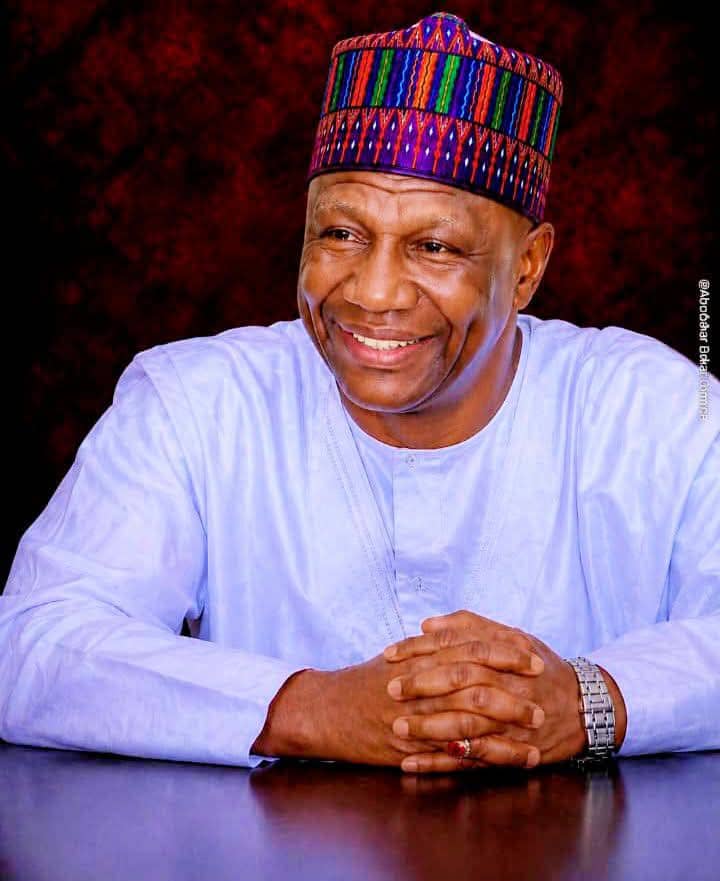
Yobe: Wali visits Emir of Damaturu
By: Yahaya Wakili
Yobe State All Progressives Congress (APC), 2027 gubernatorial candidate Alhaji Baba Malam Wali MNI, FCAN, has paid a courtesy visit to His Royal Highness, the Emir of Damaturu, Alhaji Shehu Hashimi II Ibn Umar Al-Amin El-Kanemi, at his palace in Damaturu.
During the visit, the APC governorship candidate, Alhaji Baba Malam Wali MNI, said they were at the emir’s palace to solicit the prayers and blessings of the emir.
According to Baba Wali, “We are in the race; therefore, the visit was very significant. We need the prayers of the royal fathers and leaders because they were very vital and important at this crucial time.
Responding, His Royal Highness, the emir of Damaturu, Alhaji Shehu Hashimi II Ibn Al-Amin El-Kanemi, thanked the governorship candidate for the visit and prayed Almighty Allah (SWT) would guide and protect him throughout his struggle in his life.
Those accompanying the incoming governor, Inshallah, in 2027 during the visit are his deputy, Barrister Saleh Samanja; APC State chairman, Alhaji Mohammed Gadaka; and Madakin Gudi.
Others are Alhaji Aji Yarima Bularafa, Hon. Commissioner of the Ministry of Wealth Creation, Empowerment, and Employment Generation; Hon. Nasiru Hassan Yusuf, candidate for the Federal House of Representatives, representing Damaturu, Gujba, Gulani, and Tarmuwa local government areas; and others.
The emir conferred the traditional title of Mukaddam of the Damaturu emirate council on Alhaji Baba Malam Wali, mni, and fcan, respectively.
Yobe: Wali visits Emir of Damaturu
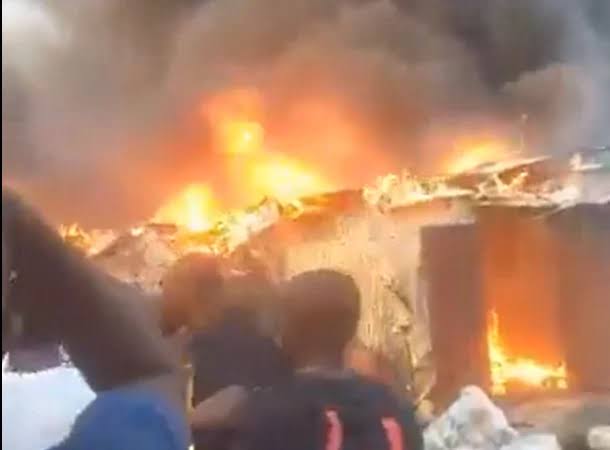
Fire Razes Building Material Shops in Satellite Town, Lagos
By Zagazola Makama
LAGOS — A fire outbreak has destroyed several building material shops along Fin-Niger, Satellite Town, Lagos State.
The incident occurred at about 6:10 a.m. on Aug. 18, when a distress call was received reporting a fire outbreak in the area.
Following the alert, a team of policemen and firefighters was swiftly mobilised to the scene.
The fire affected building material shops located at 58/196 Old Ojo Road, along Fin-Niger, Satellite Town.
The emergency responders successfully contained and extinguished the fire, preventing it from spreading further.
No casualty or loss of life was recorded in the incident.
The cause of the fire and the estimated value of property destroyed have not yet been established.
The police said investigation into the incident is ongoing to determine the circumstances surrounding the outbreak.
Fire Razes Building Material Shops in Satellite Town, Lagos

When Official Directives Become More Powerful Than the Law

DSS Trails, Nabs Man Impersonating Personnel in Abuja

Ogwashi-Uku Palace: Izediunor Faction Has Lost At Every Court Level, Including Supreme Court

Roger Federer’s Shock as DNA Results Reveal Myla and Charlene Are Not His Biological Children

THE PLIGHT OF FARIDA

FAILED COUP IN BURKINA FASO: HOW TRAORÉ NARROWLY ESCAPED ASSASSINATION PLOT AMID FOREIGN INTERFERENCE CLAIMS
-
 News2 years ago
Roger Federer’s Shock as DNA Results Reveal Myla and Charlene Are Not His Biological Children
-
Opinions5 years ago
THE PLIGHT OF FARIDA
-
 News1 year ago
FAILED COUP IN BURKINA FASO: HOW TRAORÉ NARROWLY ESCAPED ASSASSINATION PLOT AMID FOREIGN INTERFERENCE CLAIMS
-

 News2 years ago
EYN: Rev. Billi, Distortion of History, and The Living Tamarind Tree
-
 Opinions5 years ago
POLICE CHARGE ROOMS, A MINTING PRESS
-

 ACADEMICS2 years ago
A History of Biu” (2015) and The Lingering Bura-Pabir Question (1)
-

 Columns2 years ago
Army University Biu: There is certain interest, but certainly not from Borno.
-

 Politics1 year ago
2027: Why Hon. Midala Balami Must Go, as Youths in Hawul and Asikira/Uba Federal Constituency Reject ₦500,000 as Sallah Gift
