
News
Troops arrest suspected terrorist, recover motorcycle in Benue

Troops arrest suspected terrorist, recover motorcycle in Benue
By: Zagazola Makama
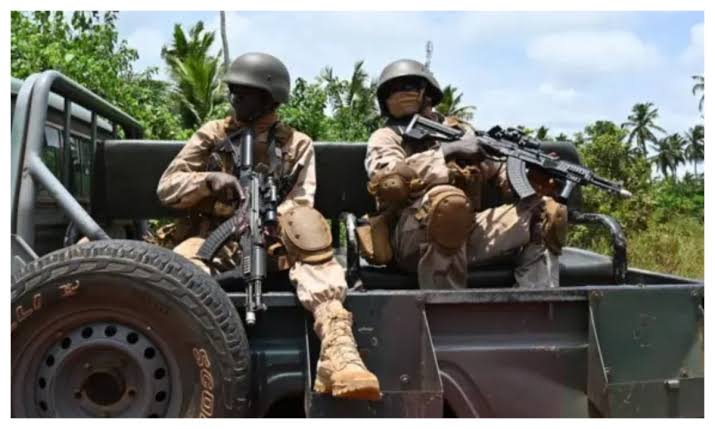
Troops under Operation Whirl Stroke (OPWS) have arrested a suspected terrorist during an operation in Gwer West Local Government Area of Benue State.
Security sources said the operation was carried out at about 5:19 p.m. on April 15, 2026, following intelligence on the presence of a suspected criminal hiding in Tse Atu community.
According to the sources, troops of Sector 1 OPWS deployed at Anguhah and Umbagbo swiftly responded and conducted a targeted operation in the area.
During the operation, one suspect was apprehended, while a motorcycle believed to be linked to the suspect was also recovered.
The suspect and the recovered item are currently in custody, while further investigation is ongoing to ascertain the suspect’s involvement in criminal activities.
Troops arrest suspected terrorist, recover motorcycle in Benue


News
Nigeria Busts Ivory Trafficking Ring, Seizes 130kg Elephant Tusks in Major Wildlife Crime Crackdown
Nigeria Busts Ivory Trafficking Ring, Seizes 130kg Elephant Tusks in Major Wildlife Crime Crackdown
By: Michael Mike
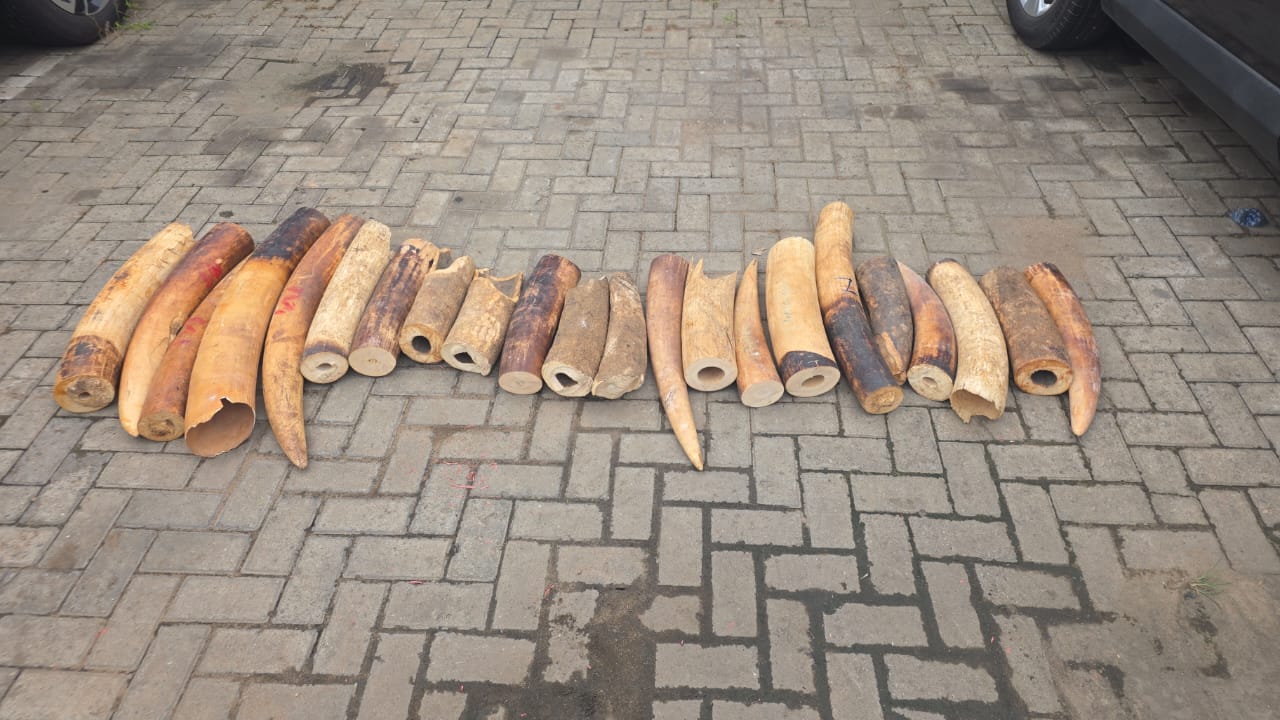
Nigeria has recorded another significant breakthrough in its intensifying war against wildlife trafficking, with security and environmental enforcement agencies arresting four suspected members of an ivory trafficking network and recovering elephant tusks weighing more than 130 kilogrammes in a coordinated operation spanning Lagos and Ogun states.
A statement on Monday by the spokesperson of the National Environmental Standards and Regulations Enforcement Agency (NESREA), Nwamaka Ejiofor, noted that the operation, which was driven by intelligence gathering and surveillance, was carried out jointly by the National Environmental Standards and Regulations Enforcement Agency (NESREA), the Nigeria Customs Service and the Wildlife Justice Commission (WJC), and led to a major disruption of an illegal wildlife trafficking syndicate.
Ejiofor said the suspects were apprehended on Saturday following days of covert monitoring in Ofada, Mowe and parts of Lagos, areas believed to have been used by the network to facilitate the movement and trade of prohibited wildlife products.
She said the enforcement team also intercepted 22 pieces of elephant tusks with a combined weight of 130.84 kilogrammes and impounded a vehicle allegedly linked to the operation.
The latest seizure comes amid growing international concern over the illegal wildlife trade, a multibillion-dollar criminal enterprise that has continued to threaten endangered species across Africa while funding organised transnational criminal networks.
Elephants remain among the most targeted animals by poachers because of the high value of ivory in illegal international markets, particularly in parts of Asia. Conservation groups have repeatedly warned that continued poaching poses a serious threat to the survival of African elephant populations despite global efforts to curb the trade.
Reacting to the operation, Director-General of NESREA, Prof. Innocent Barikor, described the arrests and seizure as a clear demonstration of Nigeria’s determination to combat wildlife crime and prevent the country from being used as a transit point for illicit wildlife products.
According to him, the success of the operation reinforces Nigeria’s commitment to enforcing national and international laws protecting endangered species.
“This is further proof of Nigeria’s zero-tolerance stance on wildlife crimes. Nigeria will not be used as a hub for wildlife trafficking. NESREA and our partners are resolute on this,” he said.
Barikor noted that investigations were continuing to identify and apprehend other members of the criminal network, stressing that authorities were determined to dismantle the entire syndicate and ensure that everyone connected to the illegal trade faces prosecution.
The seizure is particularly significant because elephants are classified under Appendix I of the Convention on International Trade in Endangered Species of Wild Fauna and Flora (CITES), the highest level of international protection accorded to endangered species threatened with extinction.
Under Nigeria’s Endangered Species legislation and the National Environmental (Protection of Endangered Species in Domestic and International Trade) Regulations 2024, the possession, trafficking, sale or export of elephant ivory constitutes a serious criminal offence.
Nigeria has in recent years faced intense scrutiny from conservation bodies and international partners over its role as a transit route for illegal wildlife products moving from Central and West Africa to overseas markets.
However, sustained collaboration between Nigerian authorities and international partners has resulted in a series of high-profile interceptions, arrests and prosecutions aimed at dismantling trafficking networks operating across the region.
Wildlife experts say the latest operation represents another important step in strengthening Nigeria’s reputation as a country increasingly committed to combating environmental crimes and fulfilling its international obligations in the protection of endangered species.
With investigations still underway, officials say more arrests may follow as law enforcement agencies intensify efforts to track the source and intended destination of the seized ivory.
The latest bust is expected to send a strong warning to wildlife traffickers that Nigeria’s enforcement agencies are tightening the net around criminal networks profiting from the destruction of some of the world’s most endangered species.
Nigeria Busts Ivory Trafficking Ring, Seizes 130kg Elephant Tusks in Major Wildlife Crime Crackdown
Russia’s African Expendables?
•As another Nigerian is buried in Ukraine, Russia’s denials collapse under the weight of the dead
By Oumarou Sanou
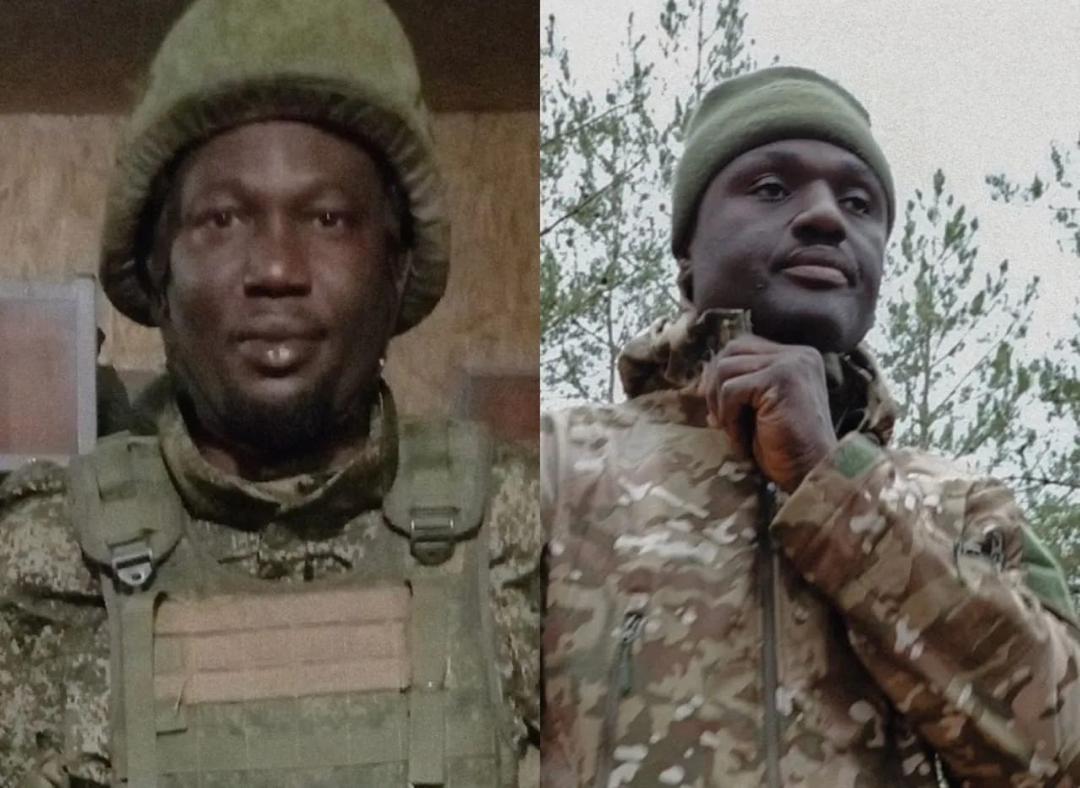
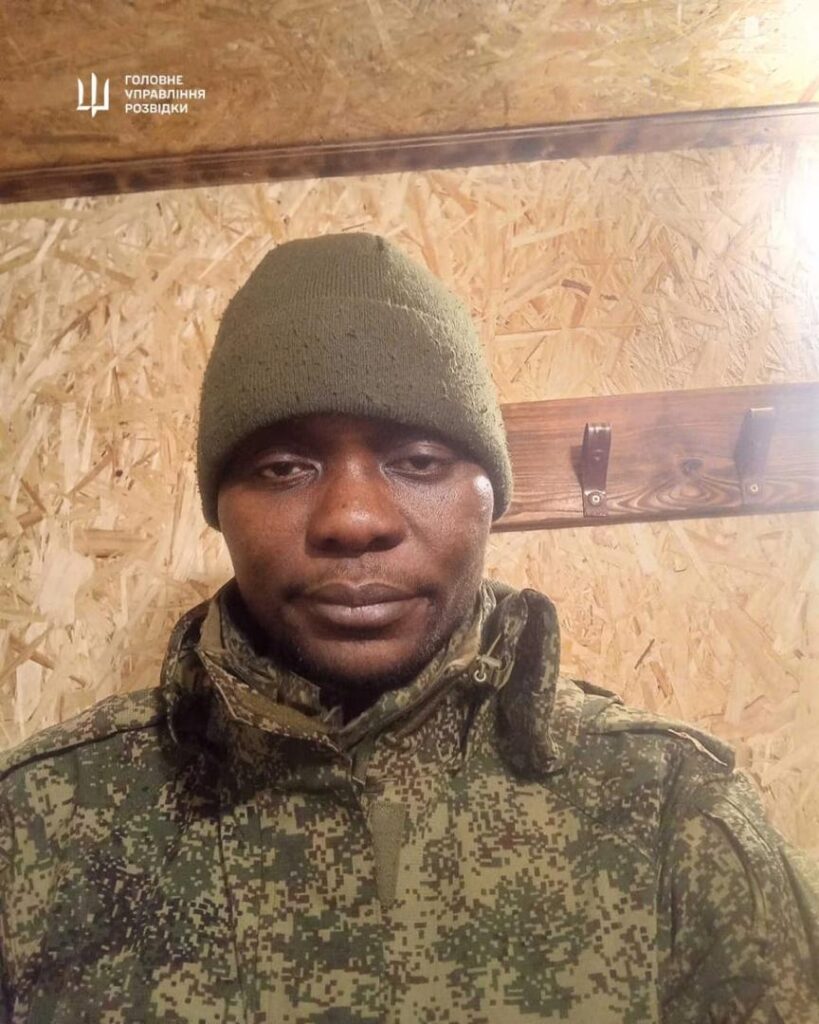
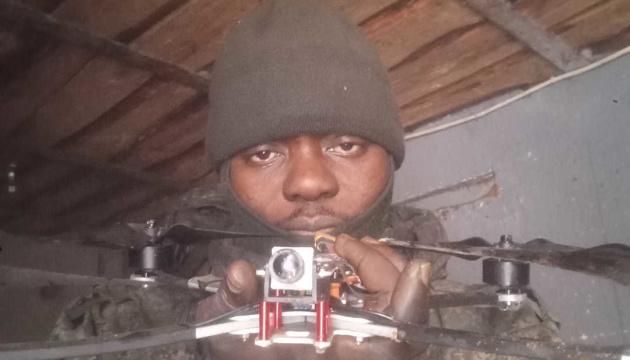
Another Nigerian has been killed in Ukraine, fighting for Russia. Ukraine’s Defence Intelligence identified him as Ayebusiwa Olabode Victor, born in 1992, a son of Ilutitun in Ondo State, who was killed near the settlement of Hrafske in the Kharkiv region. He had signed his mercenary contract in late February, barely a week after Nigeria’s Ministry of Foreign Affairs warned citizens against being lured into foreign wars. He did not heed the warning, or perhaps never saw it. Either way, he is now a statistic in a war he had no business dying in.
The death of any African abroad is a tragedy. This one is worse, because it comes amid Moscow’s flat insistence that no such thing is happening. And Victor is neither the first nor, sadly, the last. Before him, the bodies of two Nigerians were recovered in Luhansk. By Ukraine’s count, at least 215 Nigerians have signed contracts with the Russian Ministry of Defence, with no fewer than 25 already killed or missing. A wider investigation by INPACT, a group that tracks Russian disinformation in Africa, puts the figure at more than 1,400 Africans recruited between 2023 and 2025; Nigerians, Ghanaians, Kenyans, Ugandans and South Africans, of whom at least 316 have died on Ukrainian soil. These are not abstractions. They are sons, brothers and breadwinners.
All of this unfolds against the Kremlin’s denial that it recruits Africans at all. In December, in Accra, a Russian official insisted African students were “safe.” On February 10 this year, the Russian Ambassador to Nigeria, Andrey Podyelyshev, dismissed reports of recruitment as “misleading” and unrelated to his government. Yet casualties do not lie, and Moscow’s own propagandists tell a different story. Mikhail Zvinchuk, a pro-war commentator tied to the Russian defence ministry, has openly described the scheme on Kremlin-aligned television: fake job adverts on Facebook and WhatsApp, easy visas, one-way tickets, and employment that evaporates on arrival. Passports are confiscated “for processing.” Within days, the victim is broke, his visa cancelled, and offered a grim menu: deportation with debt, prison, or a contract with the army written in a language he cannot read.
The testimonies make the machinery horrifyingly concrete. Bankole Manchi, a 36-year-old mechanic from Lagos, says he was promised the equivalent of ₦500,000 a month and signed papers he did not understand. Routed through Addis Ababa to Moscow and handed to two strangers, he woke to a military camp filled with men from Nigeria, Ghana, Brazil and China, most of whom were unable to speak to one another. “Once you enter the camp, there is no going back,” he recalled. He left with a gunshot wound to the leg. A Ugandan, promised work in a supermarket, was marched to the front under armed guard before escaping toward Ukrainian lines. Here at home, the names accumulate: Adekunle Adaramola, a former Air Force man; Adam Anas; Akinlawon Tunde Quyuum; Abugu Stanley Onyeka; Balogun Ridwan Adisa, all baited with “security jobs,” all conscripted after three weeks of training, all dead. The details vary; the pattern never does.
This is not migration gone wrong. It is trafficking by design, and it wears the respectable mask of culture and cooperation. Investigators point to the so-called Russian Houses — cultural centres run under the state agency Rossotrudnichestvo — as nodes in this ecosystem. Cultural diplomacy is legitimate; every major power teaches its language and offers scholarships. But unlike the British Council or the Goethe-Institut, the Russian Houses operate under an opaque franchise model that allows private actors, some linked to Russia’s mercenary networks, to act in Moscow’s name while granting Moscow deniability. In Ghana, university partnerships allegedly accompanied the enlistment of 272 nationals, 55 of them now dead. When language classes and scholarships double as recruitment funnels, education itself has been weaponised.
Here lies the deeper hypocrisy. Russia has sold itself across Africa as the anti-imperial alternative to a West weighed down by colonial guilt, and its disinformation ecosystem — the same apparatus that pushed “For eight years they bombed Donbas!” and branded Ukraine’s leaders Nazis — has won real disciples here. But a power that grinds African boys into front-line fodder forfeits any claim to anti-imperialism. It is practising the oldest imperialism of all: treating other men’s lives as cheap and expendable. That the workforce sustaining Russia’s faltering offensive is increasingly African, even as North Korean troops withdraw and casualties mount, is no coincidence. It is procurement.
Yet the deepest vulnerability is ours, and it is not military. It is economic desperation. When legitimate pathways to a decent life are scarce, a promise of overseas work becomes almost impossible to refuse; what looks like hope to a family looks like opportunity to a recruiter. Russia, like every state, pursues its interests, international politics was never charity. The scandal is not that Moscow has interests, but that African lives are treated as expendable within them, and that African governments have largely met the dying with silence. The few official responses have been feeble, mixed and muted.
The lesson is larger than Russia. No external power: not Russia, not China, not Europe, not the United States, courts Africa out of altruism; each must be judged on transparency, reciprocity and tangible benefit. African states are entitled, indeed obliged, to pursue their own interests, beginning with the lives of their citizens. That means auditing these cultural centres, dismantling the recruitment pipelines, summoning Russian envoys to account, warning every job-seeker that Moscow’s “lucrative” offer is too often a death sentence, and, above all, building enough opportunity at home that the bait stops working. To keep looking away as the bodies return is to consent to a second slave trade conducted under a diplomatic flag. By the time we admit it, the denials will no longer matter.
Oumarou Sanou is a social critic, Pan-African observer and researcher focusing on governance, security and political transitions in the Sahel. He writes on geopolitics, regional stability, and African leadership dynamics. Contact: sanououmarou386@gmail.com
Russia’s African Expendables?
Zulum Emerges BusinessDay’s Best Performing Governor SCIRA Award of the Year
By: Our Reporter
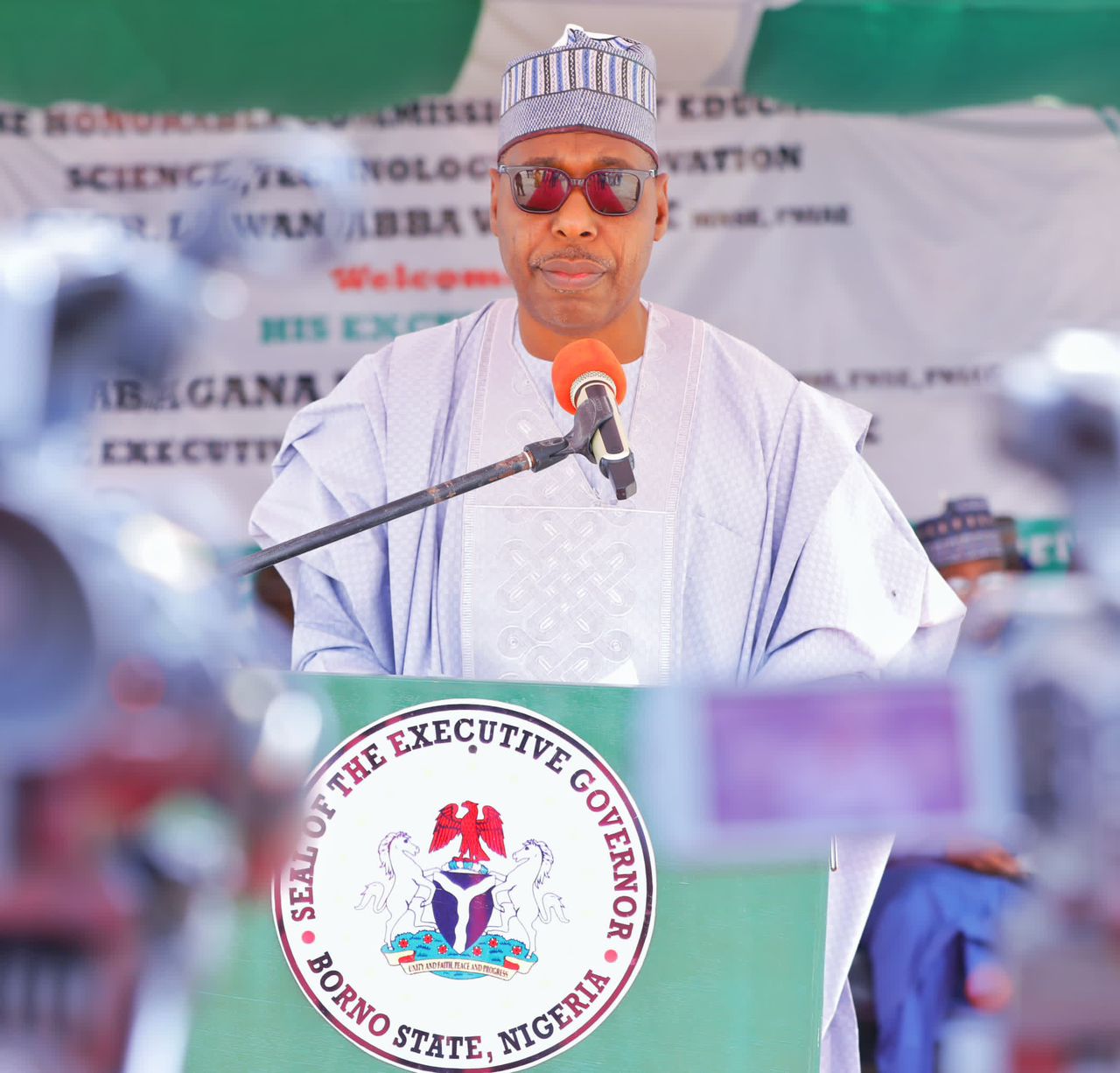
Borno State Governor, Professor Babagana Umara Zulum, has emerged as BusinessDay’s 2025 Governor of the Year on Competitiveness and Investment Readiness Awards (SCIRA) under the category of Infrastructure Competitiveness Category Awards.
The award ceremony is scheduled to be held on Thursday, June 18, 2026, at NAF Conference Center & Suites, Jabi, Abuja.
Zulum’s nomination was contained in a letter by the Publisher/CEO of BusinessDay, Frank Aigbogun, addressed to the Governor.
“On behalf of BusinessDay Media Limited, Nigeria’s foremost business and economic intelligence platform, we are honoured to inform you that Borno State has been nominated for ‘Best Performing Governor’ under the Infrastructure Competitiveness Category for the 2025 States Competitiveness/Investment Readiness Awards (SCIRA),” Aigbogun said.
According to him, Governor Zulum’s nomination acknowledges his administration’s extraordinary strides in rebuilding infrastructure, reviving moribund industries, and restoring livelihoods as part of Borno’s long-term post-conflict recovery.
“Your Excellency, few states embody the spirit of renewal as Borno does. Against the backdrop of a decade-long insurgency, your government has delivered one of Nigeria’s most ambitious reconstruction and reintegration programmes, with infrastructure as its anchor,” he added.
Highlights of this transformation include:
Revival of Industrial Assets: The Borno Plastic Industry and Borno Meat Processing Company, once abandoned, have been progressively rehabilitated, signaling a return of productive capacity and investor confidence.
Industrial Hub Redevelopment: Through the Borno State Industrial Park and Enterprise Centre (BIP), over 2,000 SMEs now operate in structured facilities that provide power, workspace, and logistics support.
Infrastructure-led Recovery: Over 10,000 houses have been reconstructed across local government areas, enabling market access and trade linkages among Maiduguri, Biu, Monguno, and Gwoza.
Energy & Industrial Power Supply: The Maiduguri 50MW Gas Plant and collaboration with the Rural Electrification Agency (REA) have significantly enhanced industrial energy reliability.
Mr Aigbogun said these efforts have repositioned Borno as a credible destination for post-conflict
industrial reinvestment that combines human development with economic diversification.
“Borno’s shortlisting was derived from the BusinessDay Research & Intelligence Unit (BRIU) and BudgIT State Competitiveness Model (2025), using a Composite Infrastructure Competitiveness Index (CICI) based on three weighted dimensions,”
“Across these parameters, Borno ranked among the top five northern states, with its infrastructure recovery index improving by over 41% between 2020 and 2024.
“In the education and health sectors, construction of over 100 secondary schools, Kashim Ibrahim University Teaching Hospital and Staff quarters, doctors’ quarters, as well as take-off support for Federal Polytechnic Monguno, Federal College Gwoza, School of Nursing and Midwifery in Gwoza and Monguno, and the Orthopedic Hospital Azare, amongst others,” he remarked.
The Publisher acknowledged that Governor Zulum’s administration has rebuilt confidence, reconstruct
and resettled communities, revived industries, education, and healthcare, noting that today Borno stands as a model of post-conflict competitiveness in Africa.
Zulum Emerges BusinessDay’s Best Performing Governor SCIRA Award of the Year

Nigeria Busts Ivory Trafficking Ring, Seizes 130kg Elephant Tusks in Major Wildlife Crime Crackdown

Russia’s African Expendables?

Tegbe Woos Investors to Power 35,000 Health Facilities, Says Healthcare Electrification Biggest Energy Opportunity in Africa

Roger Federer’s Shock as DNA Results Reveal Myla and Charlene Are Not His Biological Children

THE PLIGHT OF FARIDA

FAILED COUP IN BURKINA FASO: HOW TRAORÉ NARROWLY ESCAPED ASSASSINATION PLOT AMID FOREIGN INTERFERENCE CLAIMS
-
 News2 years ago
Roger Federer’s Shock as DNA Results Reveal Myla and Charlene Are Not His Biological Children
-
Opinions4 years ago
THE PLIGHT OF FARIDA
-
 News1 year ago
FAILED COUP IN BURKINA FASO: HOW TRAORÉ NARROWLY ESCAPED ASSASSINATION PLOT AMID FOREIGN INTERFERENCE CLAIMS
-

 News2 years ago
EYN: Rev. Billi, Distortion of History, and The Living Tamarind Tree
-
 Opinions4 years ago
POLICE CHARGE ROOMS, A MINTING PRESS
-

 ACADEMICS2 years ago
A History of Biu” (2015) and The Lingering Bura-Pabir Question (1)
-

 Columns2 years ago
Army University Biu: There is certain interest, but certainly not from Borno.
-

 Politics1 year ago
2027: Why Hon. Midala Balami Must Go, as Youths in Hawul and Asikira/Uba Federal Constituency Reject ₦500,000 as Sallah Gift
