
News
Troops Record Major Breakthroughs as 1 Division Neutralises 24 Bandits, Rescues194 Hostages, in Kaduna Theatre

Troops Record Major Breakthroughs as 1 Division Neutralises 24 Bandits, Rescues
194 Hostages, in Kaduna Theatre
By Zagazola Makama
In a security environment marked by persistent threats from banditry, kidnapping, attacks on rural communities and attempts to sabotage critical national infrastructure, the Nigerian Army’s 1 Division and Sector 1 of Operation FANSAN YAMMA have continued to assert their operational dominance across parts of the North-West and North-Central regions.
The achievements of the formation during the first quarter of 2026 paint a picture of an aggressive, intelligence-driven and multidimensional military campaign aimed at denying criminal elements freedom of action while simultaneously building public confidence through non-kinetic engagements.
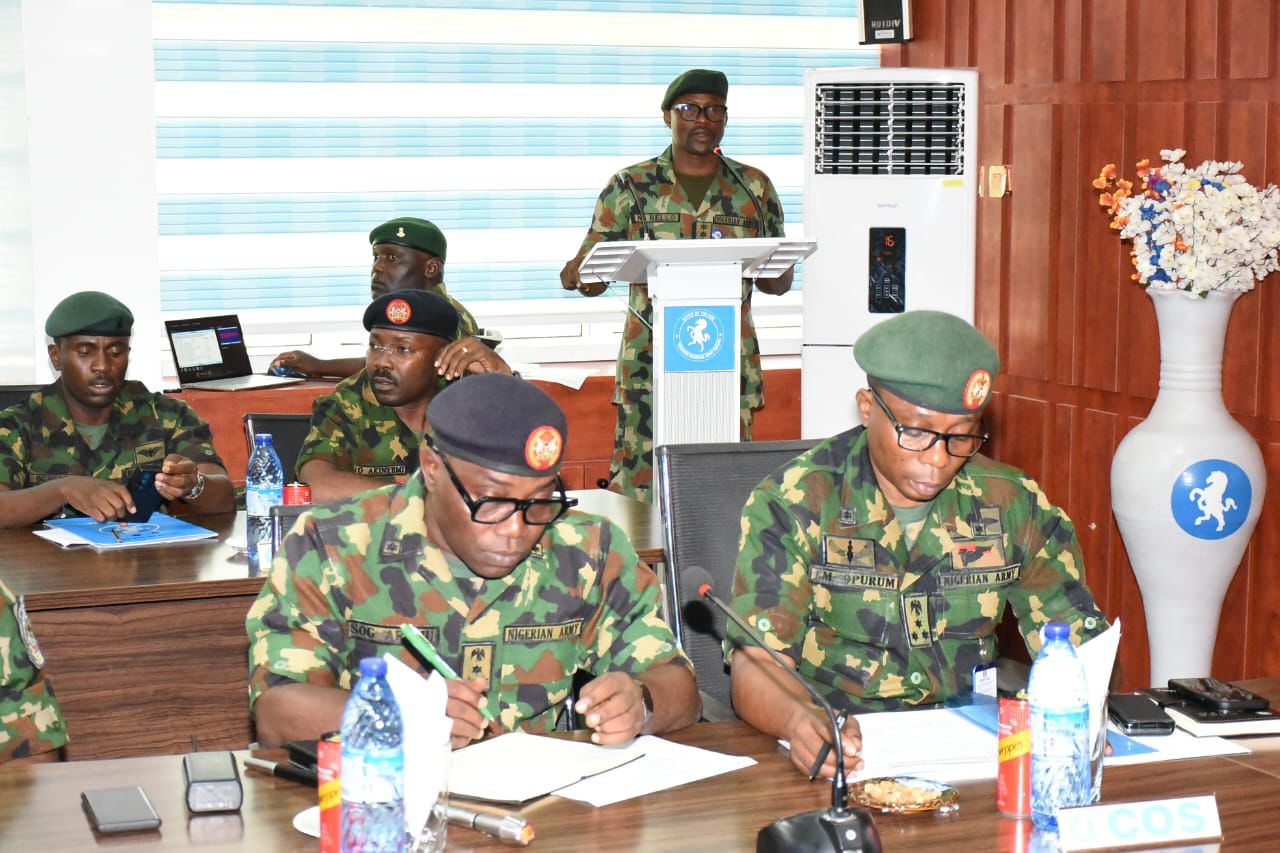
These successes were highlighted during an interaction with defence correspondents by the Chief of Staff, 1 Division Nigerian Army and Operation FANSAN YAMMA, Brig.-Gen. Timothy Opurum, who represented the General Officer Commanding (GOC) 1 Division and Commander Sector 1 Operation FANSAN YAMMA, Major General Muhammed Wase,
According to the military hierarchy, the Division remains one of the most strategically significant formations of the Nigerian Army, overseeing a vast operational area that cuts across Kaduna, Kano and Niger States. The formation commands several combat and support units, including formations in Kano and Niger States, the 26 Armoured Brigade and the 24 Reconnaissance Battalion, while coordinating security operations through six operational subsectors.
At the forefront of the Division’s operational strategy is the sustained deployment of ground and air assets in coordinated operations against armed bandits and terrorist elements operating within its area of responsibility.
Throughout the period under review, troops of the Division maintained a high operational tempo through a combination of offensive and defensive actions designed to disrupt criminal activities and dismantle terrorist infrastructure.
These operations included fighting patrols, ambushes, raids, clearance operations and targeted offensives against identified criminal enclaves.
The GOC noted that the primary objective was to deny bandits and terrorists freedom of movement, cut off their logistics routes, destroy their camps and prevent attacks against communities and strategic infrastructure.
The results, according to operational records presented during the briefing, were significant.
A total of 194 kidnapped victims were rescued through various military operations conducted across the Division’s area of responsibility. The rescued victims were freed from captivity following coordinated intelligence-led missions carried out by troops operating in difficult terrains and remote locations.
The successful rescue operations not only deprived criminal networks of financial gains but also restored hope to affected families and communities.
Beyond the rescue operations, troops arrested 36 suspected bandits and criminal collaborators, many of whom are believed to have provided logistics, intelligence and other forms of support to criminal groups operating within the region.
Wase explained that targeting support networks remains a critical component of ongoing counter-banditry operations, as criminal groups often rely heavily on informants, suppliers and local facilitators to sustain their activities.
The offensive operations also led to the neutralisation of 24 terrorists and violent extremists during engagements with troops. The elimination of these combatants was achieved during various combat encounters, ambushes and clearance operations conducted by units deployed across the operational theatre.
The neutralisation of these elements, military authorities noted, has significantly weakened the operational capabilities of criminal groups in several flashpoints within the Division’s area of responsibility.An equally important aspect of the Division’s achievements was the recovery of a substantial cache of weapons, ammunition and military-related equipment.
During the period under review, troops recovered more than 1,200 rounds of ammunition, alongside 1,212 assorted ammunition cartridges and 28 magazines from criminal elements.
He noted that every weapon or ammunition recovered from the battlefield translates into reduced firepower available to criminal groups and potentially fewer attacks on innocent civilians.
The recoveries also illustrated the effectiveness of intelligence gathering and follow-up operations conducted after military engagements.
Military authorities believe that disrupting access to weapons and ammunition remains one of the most effective ways of degrading the combat capabilities of armed groups operating in the North-West and North-Central regions.
Beyond kinetic operations, the Division also achieved notable successes in disrupting the economic foundations of criminal enterprises.
Troops recovered livestock estimated at over 2,000 animals, many of which had been rustled from rural communities by bandits.
Cattle rustling has long remained a major driver of insecurity in parts of Northern Nigeria, providing criminal groups with a lucrative source of revenue. By recovering stolen livestock and returning them to their rightful owners, the military not only inflicted financial losses on criminal networks but also restored livelihoods to affected communities.
The Division also recovered N874,625 believed to be proceeds linked to criminal activities.
The military high command noted that attacking the financial lifelines of criminal organisations remains essential in reducing their operational capacity and limiting their ability to recruit, procure weapons and sustain their operations.
In addition, troops recovered numerous communication devices, motorcycles and other operational equipment used by criminal groups for coordination, mobility and logistics.
One of the most critical aspects of the Division’s mandate is the protection of strategic national infrastructure. The operational environment under 1 Division includes assets of immense national importance such as the Kainji Hydroelectric Dam, power generation facilities and the Abuja-Kaduna railway corridor.
They revealed that troops maintained robust security coverage around these installations to prevent sabotage attempts by criminal and terrorist groups.
The protection of these assets remains vital not only for national security but also for economic stability, energy generation and transportation across the country.
Beyond kinetic operations, the Division has increasingly embraced non-kinetic approaches as part of a broader strategy to address the root causes of insecurity and build stronger relationships with local communities.
He explained that in line with the Chief of Army Staff’s command philosophy, which emphasises strategic partnerships and cooperation, the Division has strengthened collaboration with sister services, intelligence agencies and other security stakeholders.
This approach has facilitated improved intelligence gathering, information sharing, joint planning and coordinated execution of operations.
A key component of these efforts was the organisation of the Second Edition of the Security Stakeholders Engagement Forum in Kaduna State, which brought together security agencies, traditional leaders, community representatives and other critical stakeholders to discuss emerging security threats and collective responses.
Military authorities believe such engagements have enhanced public trust and encouraged communities to provide actionable intelligence that has contributed significantly to operational successes.
Troops Record Major Breakthroughs as 1 Division Neutralises 24 Bandits, Rescues
194 Hostages, in Kaduna Theatre


Farmer Injured in Machete Attack by Herder in Plateau
By Zagazola Makama
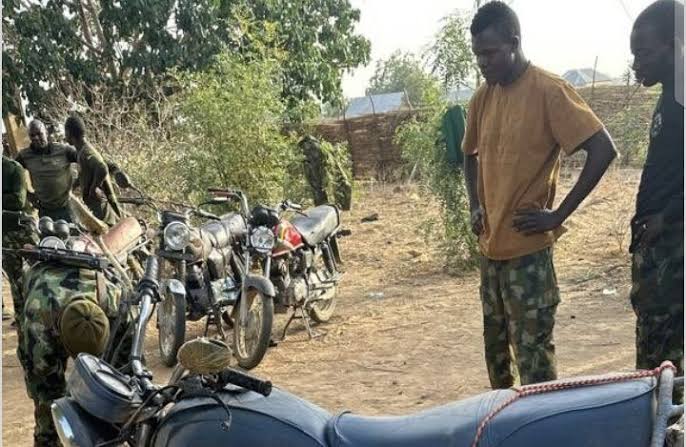
A farmer, Mr Charles Tuwan, has sustained machete injuries following an alleged attack by a herder during a dispute over grazing on farmland in Pankshin Local Government Area of Plateau State.
The incident occurred at about 6:53 p.m. on August 23, 2026, at Tekas Community, where troops of Sector 8, Operation ENDURING PEACE, operating under Operation HARD KNOCK, responded to a report of an assault.
Security sources said the dispute reportedly started after the farmer refused to allow the herder to graze cattle on his farmland.
On arrival at the scene, the troops found Tuwan with machete cuts sustained during the attack.
The alleged attacker, identified as Abdullahi Saleh, had reportedly fled the area with his cattle before the arrival of the troops.
The injured farmer was evacuated to Pankshin General Hospital for medical attention.
Troops are currently intensifying efforts to locate and arrest the suspect for investigation and possible prosecution.
The incident comes amid heightened tensions between farming and herding communities in parts of Plateau State, underscoring the need for early intervention in disputes over farmland and grazing to prevent isolated incidents from escalating into wider communal violence.
Farmer Injured in Machete Attack by Herder in Plateau
Unidentified Corpse with Gunshot Wound Found Along Road in Plateau
By Zagazola Makama
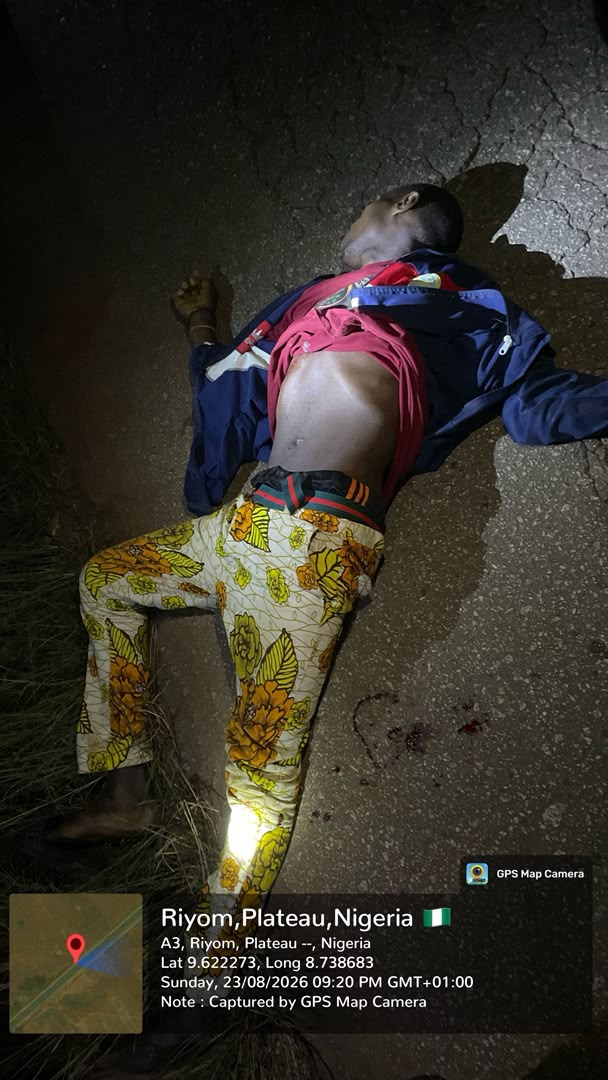
Troops of Operation ENDURING PEACE have recovered the corpse of an unidentified person bearing a gunshot wound along a roadside in Riyom Local Government Area of Plateau State.
The corpse was discovered at about 9:30 p.m. on August 23, 2026, along the Farin Lamba axis, close to the Primary Health Centre in Riyom.
Troops of Sector 6, Operation ENDURING PEACE, responded to the report and found the body with an apparent gunshot wound to the stomach.
However, security personnel observed that there were no visible traces of blood or spent ammunition casings around the scene.
The circumstances led investigators to suspect that the body may have been transported from another location and dumped at the scene.
The corpse was evacuated to the Primary Health Centre mortuary in Riyom, while the youth leader of Tahoss Community was contacted to assist in identifying the deceased.
Troops have continued to dominate the general area as investigation into the circumstances surrounding the death and possible identity of the victim continues.
Unidentified Corpse with Gunshot Wound Found Along Road in Plateau
Troops Rescue Kidnap Victim, Recover AK-47 Rifle After Gun Battle in Kogi
By Zagazola Makama
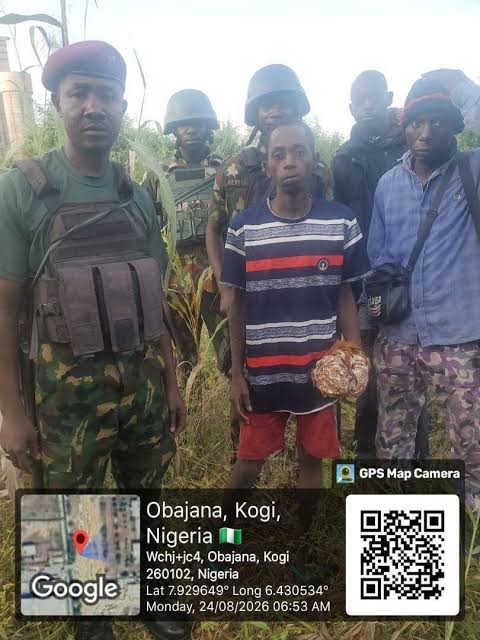
Troops operating under the Joint Security operation in the 2 Division Area of Responsibility have rescued a 28-year-old kidnap victim and recovered an AK-47 rifle following a gun battle with suspected kidnappers in Kogi State.
The operation, according to security sources, took place at about 0300 hours on August 24, 2026, when troops from Patrol Base Obajana intercepted the victim, identified as Hussaini Shehu.
Preliminary questioning revealed that Shehu had allegedly been abducted from the Abaji general area of the Federal Capital Territory about five days earlier.
The rescued victim subsequently led the troops to the location where he had been held captive.
Security sources said the troops made contact with the suspected kidnappers and engaged them in a firefight, forcing the criminals to abandon an AK-47 rifle and flee into the surrounding area.
The weapon was recovered by the troops, while the victim was evacuated to the military medical centre for medical attention.
Security forces have continued operations in the area to track the fleeing kidnappers and prevent them from regrouping.
The latest operation underscores the importance of intelligence-led patrols and rapid exploitation of information obtained from rescued victims in disrupting kidnapping networks operating across the FCT-Kogi corridor.
Troops Rescue Kidnap Victim, Recover AK-47 Rifle After Gun Battle in Kogi

Farmer Injured in Machete Attack by Herder in Plateau

Unidentified Corpse with Gunshot Wound Found Along Road in Plateau

Troops Rescue Kidnap Victim, Recover AK-47 Rifle After Gun Battle in Kogi

Roger Federer’s Shock as DNA Results Reveal Myla and Charlene Are Not His Biological Children

THE PLIGHT OF FARIDA

FAILED COUP IN BURKINA FASO: HOW TRAORÉ NARROWLY ESCAPED ASSASSINATION PLOT AMID FOREIGN INTERFERENCE CLAIMS
-
 News2 years ago
Roger Federer’s Shock as DNA Results Reveal Myla and Charlene Are Not His Biological Children
-
Opinions5 years ago
THE PLIGHT OF FARIDA
-
 News1 year ago
FAILED COUP IN BURKINA FASO: HOW TRAORÉ NARROWLY ESCAPED ASSASSINATION PLOT AMID FOREIGN INTERFERENCE CLAIMS
-

 News2 years ago
EYN: Rev. Billi, Distortion of History, and The Living Tamarind Tree
-
 Opinions5 years ago
POLICE CHARGE ROOMS, A MINTING PRESS
-

 ACADEMICS2 years ago
A History of Biu” (2015) and The Lingering Bura-Pabir Question (1)
-

 Columns2 years ago
Army University Biu: There is certain interest, but certainly not from Borno.
-

 Politics1 year ago
2027: Why Hon. Midala Balami Must Go, as Youths in Hawul and Asikira/Uba Federal Constituency Reject ₦500,000 as Sallah Gift
