
News
Tunji-Ojo Says Over 52,000 Officers of NIS, NCoS, FFS, NSCDC Promoted in Two Years


Tunji-Ojo Says Over 52,000 Officers of NIS, NCoS, FFS, NSCDC Promoted in Two Years
… Promises Continued Consistent Promotion
By: Michael Mike
The Minister of Interior, Hon. Olubunmi Tunji-Ojo has said as part of the ongoing efforts of the current administration at combating insecurity in the country, President Bola Tinubu ensured that agelong career stagnation of officers in the nation’s paramilitary services was stopped.
Speaking at the decoration of newly appointed Deputy Comptroller/Controller/Commandant General of the four Paramilitary agencies under the Ministry of Interior, Nigeria Immigration Service (NIS), Nigeria Correctional Service (NCoS), Nigeria Security and Civil Defence Corps (NSCDC), and Federal Fire Service (FFS), the minister said the decorated officers were direct beneficiaries of the reforms put in place to prioritise merit, welfare and rapid promotions.
Tunji-Ojo who said since the coming into office of President Tinubu over two years ago over 52,000 officers have been promoted across all paramilitary services, noting that the elevation of the new DCGs was more than a promotion, but a presidential appointment anchored on merit, competence and transparent processes.
He told the newly decorated officers that: “Your appointment came as a result of presidential approval. It is not just promotion but appointment.
“None of you is here on courtesy, whether you deserve it or not. If you are good enough to be DCG, then you are good enough to be CG.”
The minister while noting that the officers’ examinations were independently conducted and marked by the National Army Resource Centre, and later ratified by the board, stressed that federal character was however applied to ensure inclusiveness across all geopolitical zones, but that seniority and merit remained the sole basis of the appointments.
He commended the President for reforms that have restored dignity to the services, saying that stagnation had long deprived competent officers of deserved career progression.
He said: “Many officers retired without attaining positions they merited, not because they lacked competence but because promotions were irregular. Today, this administration has promoted over 52,000 officers in just two years,”he said.
He recalled that vacancies for DCGs had in the past remained unfilled for 10 to 12 months, but said that the Tinubu administration had broken the jinx by consistently filling such positions.
Tunji-Ojo said more than 80 per cent of those decorated as DCGs were promoted to ACG under the current government.
He further listed welfare interventions, including increased salaries, peculiar allowances, eradication of career stagnation, and approval of life pensions for retired DCGs and CGs.
“This government has shown more support than any other in the history of the country. It believes that to whom much is given, much is expected,”he said.
The minister charged the officers to give their best to the nation, noting that Nigeria deserved their loyalty, innovation, and commitment to excellence.
He further charged all the paramilitary officers to be up and doing as appreciation to their improved welfare.
He said: “To the Immigration Service, you must secure borders and strengthen border governance. To the Correctional Service, transform centres from mere incarceration facilities into hubs of rehabilitation and restoration of hope,”he said.
“Fire service should go beyond fire response by establishing itself as a leading rescue agency, NSCDC need to protect every inch of Nigeria’s critical assets by its mandate.
“The time to rise to your responsibility is not tomorrow. It began yesterday. Let us be catalysts of change and show that government did not make a mistake in entrusting us with these mandates,”he said.
The minister also recalled that during the last set of examinations, a female officer missed promotion by just 0.25 marks, underscoring the rigour and fairness of the process.
He said he is however overjoy that she was among those celebrated this time while urging the new DCGs to cooperate with their CGs, show discipline, and resist lobbying.
“The higher you go, the more disciplined you need to be. You are now role models. Let your actions speak louder than words. Leave legacies for those coming behind you,” he advised.
The minister assured that the ministry would continue to innovate in line with global best practices, and encouraged the DCGs to contribute fresh ideas.
He said, “we do not have a monopoly of knowledge. We want to listen, collaborate and work with you. Great leaders are those who leave greater legacies.
Citing ongoing reforms, he highlighted the passport revolution and centralised processing in immigration, infrastructure at the Federal Fire Academy.
This, he said included innovations in correctional centres such as the Kuje Abuja facility now operating beyond hospital standards, and the NSCDC’s work in critical asset protection.
He emphasised that the ministry was giving its best and expected the same from officers to build paramilitary services that could compete globally.
“Show loyalty to Nigeria above anything else. Let the love of this country extinguish any flame of disloyalty. Be mentors, be role models, be catalysts of change,” he charged.
Tunji-Ojo Says Over 52,000 Officers of NIS, NCoS, FFS, NSCDC Promoted in Two Years



N101m defamation judgment debt: A/Court begins hearing SERAP’s appeal Friday
The Court of Appeal in Abuja has scheduled hearing for Friday in the appeal filed by the Incorporated Trustees of the Socio-economic Rights and Accountability Project (SERAP) in relation to the May 5 judgment given against the group by a High Court of the Federal Capital Territory (FCT).
Information about the planned hearing date is contained in a notice sent on Wednesday by the appellate court’s Registry to parties in the appeal marked: CA/ABJ/CV/1114/2026.
Justice Halilu Yusuf of the High Court of the FCT had, in the May 5 judgment, awarded N101million in damages and cost against SERAP and its Deputy Director, Kolawole Oluwadare upon holding that they defamed two officials of the Department of State Services (DSS) through a false publication it made on September 10, 2024.
The judgment was on the suit marked: CV/4547/2024 filed by the DSS officials – Sarah John and Gabriel Ogundele – who accused SERAP and Oluwadare of making false claims in publications on the group’s website and social media platforms that the claimants invaded their Abuja office on September 9, 2024 and subjected them to harassment.
Justice Halilu Yusuf held among others that claimants led sufficient evidence that effectively established all the ingredients of defamation.
Justice Yusuf rejected that defence of justification raised by SERAP and Oluwadare on the grounds that they failed to provide evidence that their publications were not based on falsehood.
The judge noted that the words like invasion, forceful entry and harassment were used inaccurately, the defendants having admitted at trial that the DSS officials did not forcefully enter into SERAP’s premises and did not brandish any weapon
He held that the publications made by the defendants injured the reputation of the claimants in their professional capacity and standing in the society.
Justice Yusuf said: “Having been unable to establish invasion and harassment, the defence of justification fails. There is no doubt that the publication affected the claimants mentally and psychologically.”
The judge said, going forward, it was necessary for care and due diligence on the part of SERAP and its officials before releasing information to the public.
He added that in the exercise of their right to tweet and send information out, the defendants should be aware of the rights of others, particularly as it relates to government agencies and their officials.
The judge dismissed the objection raised by the defendants against the competence of the suit and held that the claimants possessed the requisite locus standi to file the suit over which the court has the jurisdiction to entertain.
He held that as against the defendants’ argument, the claimants must not be named in the publication complained about for defamation to be established.
Justice Yusuf noted that from when the claimants complained about the inaccuracy of the publications, the defendants failed to take any steps to pull down the injurious publication.
He proceeded to adjudge the publications as defamatory and awarded damages of N100million against the defendants in addition to N1m as cost of prosecuting the suit.
The judge also ordered the defendants to publish a public apology on SERAP’s website, X handle, two national daily newspapers and two television stations.
He held that the judgment sum shall attract 10 percent interest per annum from the date of the judgment until the sum is fully paid by the defendants.
N101m defamation judgment debt: A/Court begins hearing SERAP’s appeal Friday

NCYP Backs Tinubu’s 2027 Bid, Says Economic Reforms Must Translate Into Jobs
By: Michael Mike
The Northern Christian Youth Professionals (NCYP) has thrown its weight behind President Bola Ahmed Tinubu’s re-election bid in 2027, arguing that continuity in economic policy is necessary to consolidate ongoing reforms and translate Nigeria’s improving macroeconomic performance into jobs, investment and higher living standards.
The group’s position came as the World Bank reported that economic growth in sub-Saharan Africa is gaining momentum, with Nigeria among the countries whose growth forecasts have been upgraded, while warning that the next challenge is to convert growth into more jobs and better opportunities.
In a statement signed by its National Chairman, Isaac Abrak, on Tuesday, NCYP said Nigeria had reached a critical stage in its economic reform journey where the emphasis should shift from stabilisation to inclusive prosperity.
The group was reacting to President Tinubu’s Independence Day address on October 1, in which the President declared: “The emergency treatment is over. The foundation has been repaired,” and said the government’s economic priority had moved from correcting the country’s economic course to achieving “shared and widespread prosperity.”
According to NCYP, the latest World Bank assessment reinforces the argument that Nigeria must sustain the reforms rather than reverse course.
The World Bank said on October 6 that growth in sub-Saharan Africa was being supported by improved macroeconomic resilience, stronger domestic demand and investment, while noting that years of reforms and improved economic management had contributed to improved forecasts for countries including Nigeria. It nevertheless warned that growth remained insufficient to substantially reduce extreme poverty or create enough jobs for the region’s rapidly expanding labour force.
The World Bank’s latest country assessment similarly said Nigeria’s macroeconomic performance had improved further in 2026, with real GDP growth of 4.2 per cent in the first half of the year, compared with 3.9 per cent a year earlier.
It, however, cautioned that growth was still insufficient to generate enough productive jobs and materially reduce poverty, stressing the need for greater private investment, productivity, human capital development and job creation.
NCYP said this was precisely the challenge facing the Tinubu administration in the next phase of its economic programme.
“Nigeria must now move from reform to prosperity, from growth to jobs, and from jobs to poverty reduction,” the group said.
It noted that the country’s real GDP grew by 4.43 per cent in the second quarter of 2026, compared with 3.89 per cent in the first quarter, citing the National Bureau of Statistics’ latest GDP report. The NBS has published its Q2 2026 GDP report dated August 31, 2026.
While describing the improving growth trajectory as encouraging, NCYP maintained that headline economic figures would only become meaningful when ordinary Nigerians experienced improvements in employment, income and living conditions.
The group said youth development should therefore remain central to the next phase of the economic programme, particularly given Nigeria’s large young population.
It cited the Nigeria Education Loan Fund (NELFUND), saying more than 1.1 million students had gained access to tertiary education financing.
NELFUND’s current data shows that more than 1.08 million students have been supported across 37 states, with over ₦191 billion in loans disbursed, while its broader student-loan platform records more than 1.4 million registered students.
NCYP also backed proposed reforms to the National Youth Service Corps, saying a more productive national service scheme could equip graduates with specialised skills in agriculture, medicine, education, technology, digital innovation, infrastructure, the green economy, enterprise and the creative sector.
The organisation argued that Nigeria’s youthful population should be treated as an economic asset rather than merely a demographic challenge.
“With education, skills, financing and the right economic environment, our young people can become entrepreneurs, skilled professionals, job creators and drivers of industrialisation,” it said.
The group outlined what it described as the economic pathway to prosperity: reforms should create stability; stability should encourage investment; education and skills should create opportunities; enterprise should create businesses and jobs; while industrialisation should deliver sustainable prosperity.
It said the agenda was particularly important for Northern Nigeria, where it called for an economy capable of converting skills into enterprise, enterprise into jobs and jobs into sustainable livelihoods.
The World Bank has similarly identified the creation of more and better private-sector jobs as central to Nigeria’s long-term prosperity, with its 2026–2032 Country Partnership Framework focusing on competitiveness, private capital, human capital and resilience.
The Bank has also acknowledged that Nigeria’s recent reforms have strengthened macroeconomic stability, but warned that household incomes have not fully recovered and poverty remains high. It has called for the stabilisation gains to be consolidated while accelerating inclusive growth.
Against this backdrop, NCYP said it had decided to support President Tinubu’s re-election in 2027, framing the decision around continuity of economic policy.
“It is against this background that NCYP supports the re-election of President Bola Ahmed Tinubu in 2027, with our position anchored on policy continuity and the need to consolidate the economic reforms while moving decisively into the next phase of job creation, human-capital development and industrialisation,” Abrak said.
NCYP Backs Tinubu’s 2027 Bid, Says Economic Reforms Must Translate Into Jobs
37 Minna Deaths: Panel Flags Institutional Breakdown, Overzealousness in NSCDC Operation
…Committee seeks two-week extension, awaits forensic, pathology reports
By: Michael Mike
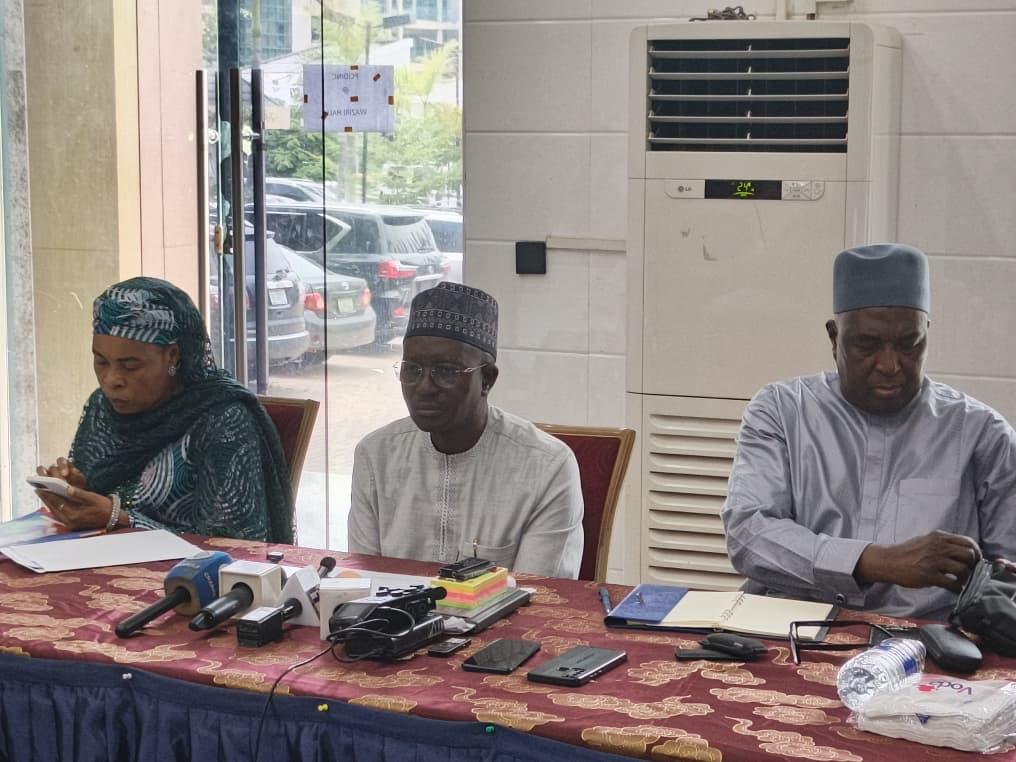
The Federal Government’s investigative committee probing the reported deaths of 37 persons in the custody of the Nigeria Security and Civil Defence Corps (NSCDC) in Minna, Niger State, has uncovered indications of possible institutional breakdown, overzealousness and inadequate training among personnel involved in the incident.
The committee, however, said it would not rush to a final conclusion, announcing that it had sought a two-week extension to complete its investigation and submit a “thorough and credible” report.
Chairman of the Independent Investigative Committee, Jonathan Kure (retd.), disclosed this on Tuesday during a press briefing in Abuja, saying the committee was yet to conclude its assignment because of the volume of evidence gathered and the need to obtain forensic and pathology reports.
The committee was originally expected to submit its report on October 7, but has requested an extension until October 21, 2026.
Kure said the committee had made appreciable progress since its inauguration, including inspection of the custody facility, conduct of autopsies, interviews with survivors and bereaved families, and the taking of statements from NSCDC personnel and other witnesses.
He said the panel had also visited the mining site and the Niger State Command headquarters of the NSCDC, where members examined the scene connected with the incident.
According to him, the committee had interacted with officers and men of the Civil Defence Corps who were involved either directly or indirectly, but was still engaging some of them as part of the investigation.
“Because of the peculiar nature of this investigation, it involves a large volume of testimonies and evidence which require our meticulous review and collation,” Kure said.
He added that the committee was still awaiting forensic and pathology reports considered critical to determining the causes of death.
The chairman stressed that the panel was determined to ensure that its eventual findings would withstand scrutiny and command public confidence.
He said persons implicated in the incident, including officers who had already been suspended, must be given an opportunity to respond before the committee reaches its final conclusions.
Beyond the immediate circumstances surrounding the deaths, Kure said the investigation had begun to point to broader institutional issues that would require attention.
“There are elements of institutional breakdown. There are elements of overzealousness. Some elements that will require more training for personnel,” he said.
The disclosure potentially broadens the scope of the investigation from establishing how the 37 persons died to examining whether weaknesses within the security and civil defence system contributed to the incident.
The reported deaths had triggered public concern and prompted the Federal Government to constitute the independent committee to investigate the circumstances surrounding the incident.
Kure said the committee had visited the affected communities, met the families of all the deceased and interacted with survivors in an effort to reconstruct what happened.
He said the panel was conscious of the grief suffered by the affected families and would ensure that its findings were based on evidence rather than speculation.
“We promised Nigerians a thorough job,” he said, adding that members of the committee would work throughout the additional two-week period to ensure that the final report did justice to the matter.
Kure said the extension would enable the committee to complete the review of documentary and forensic evidence, receive outstanding medical reports and hear from all persons whose conduct or actions might be relevant to the investigation.
He assured Nigerians that the panel would return with its report at the end of the extended period.
The committee’s request for additional time comes amid heightened scrutiny of security agencies and growing demands for accountability whenever deaths occur in official custody.
The final report is expected to determine the circumstances surrounding the deaths, establish responsibility where applicable and make recommendations aimed at preventing a recurrence.
37 Minna Deaths: Panel Flags Institutional Breakdown, Overzealousness in NSCDC Operation

N101m defamation judgment debt: A/Court begins hearing SERAP’s appeal Friday

Suspected cattle rustlers injure youth in isolated attack in Plateau

Troops arrest three suspected kidnappers in Kaduna

Roger Federer’s Shock as DNA Results Reveal Myla and Charlene Are Not His Biological Children

THE PLIGHT OF FARIDA

FAILED COUP IN BURKINA FASO: HOW TRAORÉ NARROWLY ESCAPED ASSASSINATION PLOT AMID FOREIGN INTERFERENCE CLAIMS
-
 News3 years ago
Roger Federer’s Shock as DNA Results Reveal Myla and Charlene Are Not His Biological Children
-
Opinions5 years ago
THE PLIGHT OF FARIDA
-
 News1 year ago
FAILED COUP IN BURKINA FASO: HOW TRAORÉ NARROWLY ESCAPED ASSASSINATION PLOT AMID FOREIGN INTERFERENCE CLAIMS
-

 News3 years ago
EYN: Rev. Billi, Distortion of History, and The Living Tamarind Tree
-
 Opinions5 years ago
POLICE CHARGE ROOMS, A MINTING PRESS
-

 ACADEMICS3 years ago
A History of Biu” (2015) and The Lingering Bura-Pabir Question (1)
-

 Columns3 years ago
Army University Biu: There is certain interest, but certainly not from Borno.
-

 Politics1 year ago
2027: Why Hon. Midala Balami Must Go, as Youths in Hawul and Asikira/Uba Federal Constituency Reject ₦500,000 as Sallah Gift
