
News
Two killed, two injured as bandits attack Katsina communities

Two killed, two injured as bandits attack Katsina communities
By: Zagazola Makama
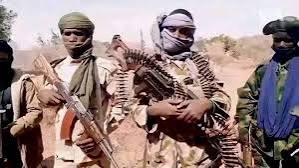
Suspected armed bandits have attacked Gidan Alhaji Barau and Gidan Hazo villages in Malumfashi Local Government Area of Katsina State, leaving two persons dead and two others injured.
Zagazola Makama report that the incident occurred in the early hours of Jan. 6 at about 1:10 a.m.
According to the sources, the Divisional Police Officer (DPO) in Malumfashi received a distress call that armed bandits had invaded the two communities.
“The DPO swiftly mobilised a joint security team to the area, blocked exit routes and engaged the hoodlums in an exchange of gunfire,” the source said.
After the encounter, four victims were discovered to have sustained gunshot injuries.
They were identified as Lawal Tanimu, 30; Umaima Sale, 25; Sani Umar, 30; and Harisu Salisu, 29, all residents of Gidan Alhaji Barau village.
The victims were evacuated to the General Hospital in Malumfashi for medical attention.
However, police said two of the victims were certified dead by a medical doctor on arrival, while the remaining two were admitted and were receiving treatment.
The police said efforts were being sustained to track down and arrest the perpetrators of the attack.
They reassured residents of its commitment to protecting lives and property and urged the public to continue to support security agencies with timely information.
Two killed, two injured as bandits attack Katsina communities


President Tinubu Takes Fight Against Xenophobic, Afrophobic Attacks In S’Africa To AU
Says enough is enough, demands urgent action to sustain Africa’s solidarity, unity at 21st Extraordinary AU Summit
Urges continent’s leaders to recommit to home-grown solutions, stronger cooperation against insecurity
By: Our Reporter
President Bola Ahmed Tinubu has formally reported the recurring xenophobic and Afrophobic attacks against Africans and other nationals in South Africa to the African Union, warning that the incidents undermine the continent’s solidarity, unity and peaceful coexistence.
Specifically, he requested prompt collective action from the continent’s leaders, including the placement of this matter on the agenda for the 40th Ordinary Session of the Assembly.
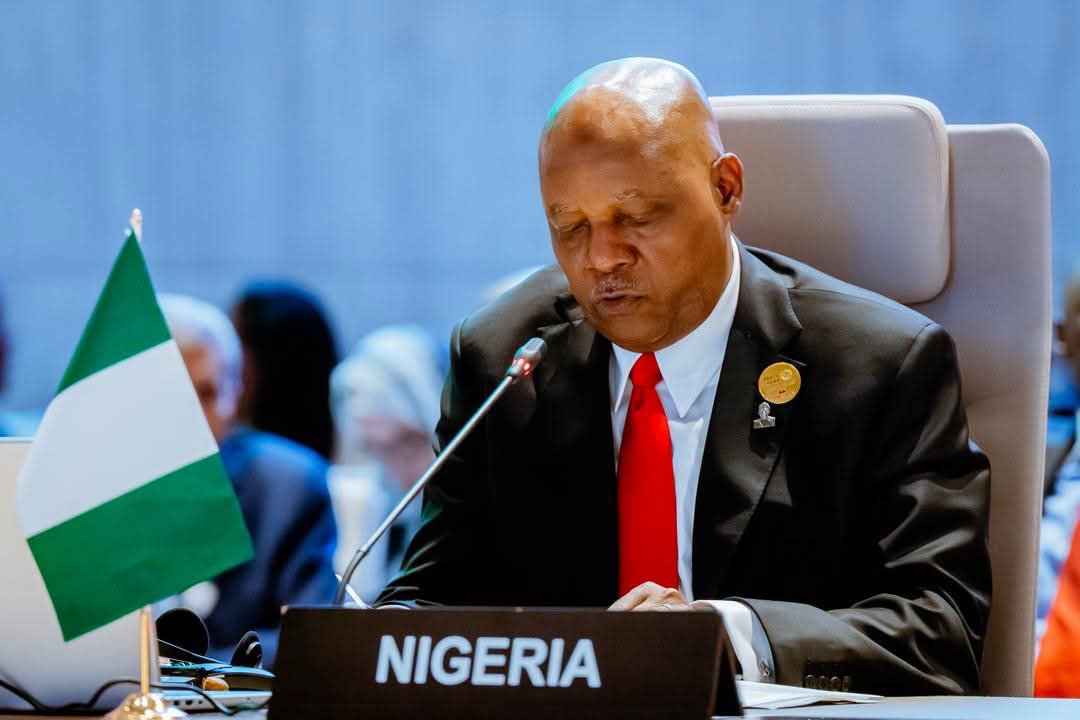
The Nigerian leader made the nation’s position known in a message delivered by his deputy, Vice President Kashim Shettima, at the 21st Extraordinary Session of the Assembly of the African Union (AU) in Luanda, Angola.
Represented at the annual continental event by Vice President Shettima, the President called on the AU to place the matter on the agenda of the 40th Ordinary Session of the Assembly scheduled for January 2027, while urging African leaders to reaffirm their commitment to the safety, protection and dignity of all African nationals.
“Nigeria wishes to express its concern over the recurring xenophobic and Afrophobic attacks against Africans and other nationals in South Africa.
“While recognising South Africa’s sovereign right to enforce its immigration laws and acknowledging its contributions to the continent, Nigeria stresses that such attacks undermine African solidarity, unity and peaceful coexistence, and require urgent collective attention.
“It is on this note that Nigeria calls on this august Assembly to place the matter on the agenda of the upcoming 40th Ordinary Session of the AU Assembly, scheduled for January 2027, for consideration and appropriate action,” he declared.
President Tinubu called for stronger continental efforts to combat xenophobia and Afrophobia, stressing that dialogue, preventive diplomacy, and collective action remained essential to preserving African unity.
On the wider security situation across the continent, Nigeria backed the adoption of the Luanda Action Plan as a practical roadmap for strengthening conflict prevention, arguing that preventing conflicts was cheaper and more sustainable than managing them after they erupt.
“For Nigeria, conflict prevention remains more cost-effective and sustainable than conflict management,” President Tinubu said.
The Nigerian leader warned that fragmented peace initiatives and increasing external interference through foreign military forces, mercenaries, and private defence contractors risk weakening the AU’s conflict prevention mechanisms and the principle of African ownership.
He further called on arms-producing and exporting countries to strengthen cooperation with African states and prevent weapons and ammunition produced within their jurisdictions from being diverted to terrorists and other non-state armed groups.
The Nigerian leader maintained that while the AU has robust mechanisms for preventing and resolving conflicts, limited trust and inconsistent implementation continue to undermine their effectiveness.
“The growing reliance on external actors risks weakening African institutions and the principle of African ownership,” he said, calling on member states to renew their commitment to collective responsibility for Africa’s peace and security.
Nigeria also backed sustainable and predictable financing for AU peace operations and the full operationalisation of UN Security Council Resolution 2719 to strengthen the continental body’s capacity to respond effectively to conflicts and crises.
President Tinubu urged African leaders to recommit themselves to home-grown solutions, stronger cooperation, and shared responsibility in tackling the continent’s security challenges.
“Let us therefore renew our collective commitment to solidarity, cooperation, and shared responsibility as we build the Africa we want,” the President said.
President Tinubu Takes Fight Against Xenophobic, Afrophobic Attacks In S’Africa To AU
Tree planting a collective effort in Yobe – Emir of Tikau
By: Yahaya Wakili
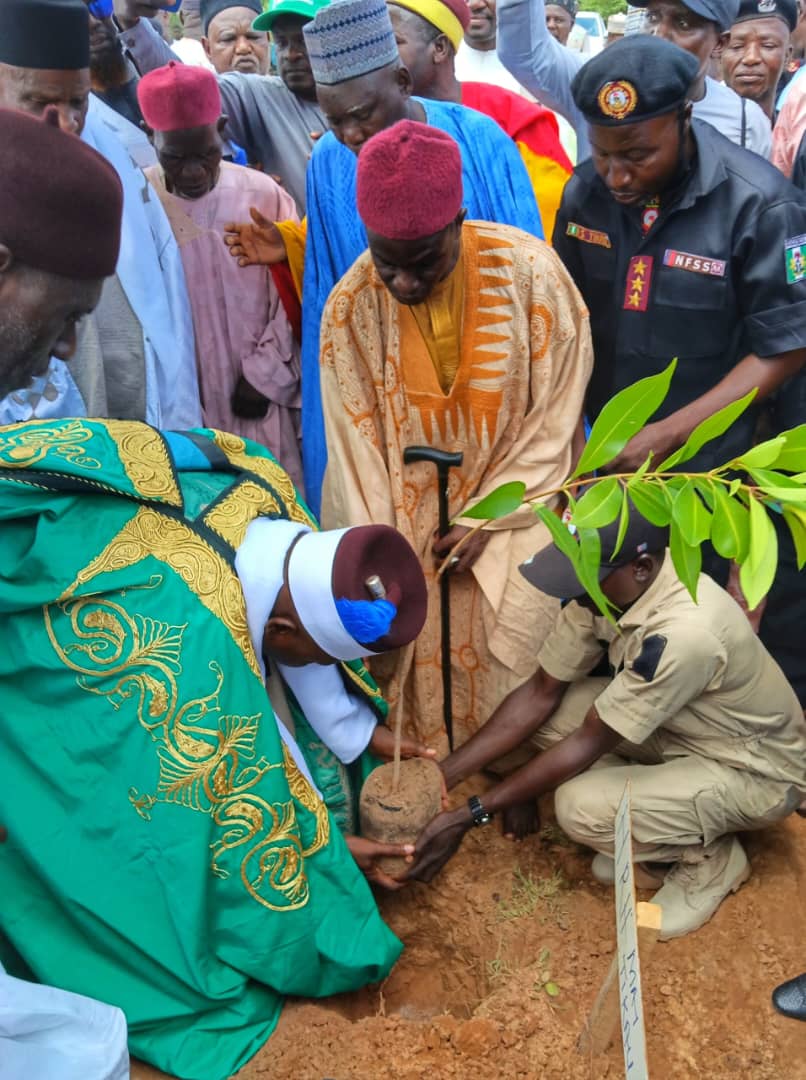
The Emir of Tikau in Yobe State, His Royal Highness Alhaji Abubakar Muhammadu Ibn Grema II, PhD, has described the tree planting campaign as a collective responsibility to protect our land, restore degraded areas, and secure a sustainable future for the next generation.
The royal father revealed this today at the official launch of the Tikau Emirate Council in collaboration with the Nangere Local Government Council, the 2026 tree planting campaign at Garin Chiroma, Pakarau village, Nangere district, in the Nangere local government area of Yobe State.
“The Yobe state government has provided 2,000 seedlings for the Nangere local government area this year, and the seedlings include indigenous and economic tree species suitable for our environment, such as baobab (kuka), mahogany (madaci), pankia (dorawa), tamarind (tsamiya), mansonia (aduwa), moringa (zogale), and others.
The monarch commended Governor Mai Mala Buni, CON, COMN, for his foresight and commitment to environmental protection.
He further calls on community leaders, youth groups, and residents of the area to take responsibility for ownership of the trees and ensure their survival throughout their lives.
Tree planting a collective effort in Yobe – Emir of Tikau
ECOWAS AT A CROSSROADS AS TOURAY ENDS FOUR-YEAR ERA
By Michael Olukayode
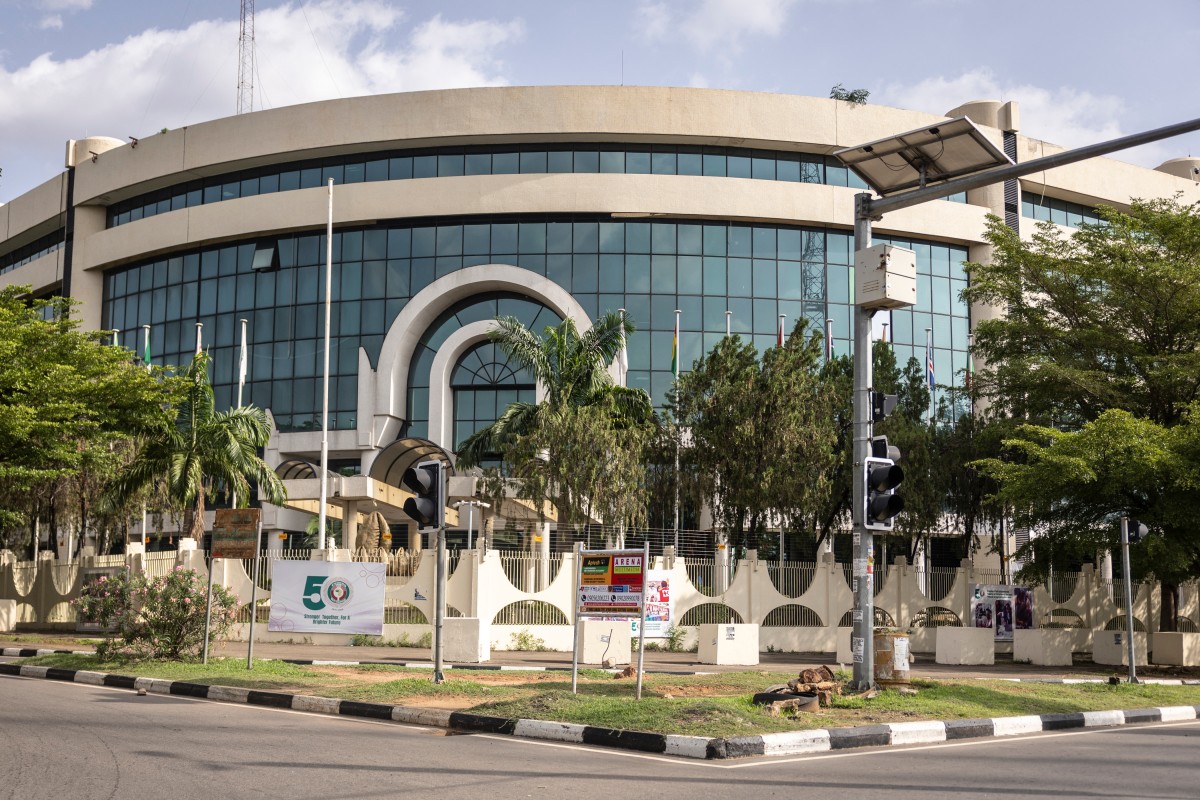
The departure of Dr Omar Alieu Touray as President of the ECOWAS Commission closes a four-year chapter in the history of West Africa’s foremost regional organisation, but it also opens one of its most uncertain.
Touray, a Gambian diplomat who took charge of the Commission in 2022, leaves office after presiding over a period in which the Economic Community of West African States (ECOWAS) was tested by military coups, worsening insecurity, economic pressures and, most significantly, the withdrawal of Burkina Faso, Mali and Niger from the regional bloc.
The formal handover of the Commission’s statutory leadership is scheduled for Monday, August 31, in Abuja, bringing the Touray era to a close and ushering in a new leadership at a defining moment for the 51-year-old organisation.
His exit is therefore more than a routine change of guard. It provides an opportunity to assess not only the record of his administration but also the direction of an organisation that has been fundamentally altered during his tenure.
Created in Lagos on May 28, 1975, ECOWAS was conceived principally as an instrument for economic integration. Over five decades, however, it developed into much more than a trading bloc, assuming responsibilities in peacekeeping, conflict resolution, democratic governance, humanitarian intervention, health, infrastructure and regional security.
Touray inherited this expansive institution in 2022 at a time when many of its traditional assumptions were already under strain.
His four years in office would subsequently be dominated by a succession of political and security crises that tested the limits of ECOWAS’s authority and its ability to hold its members together.
A presidency defined by turbulence
The most consequential development of the Touray years was the rupture with the Sahelian states.
Following military takeovers, Burkina Faso, Mali and Niger increasingly came into confrontation with ECOWAS over the restoration of constitutional government, sanctions and the bloc’s approach to regional security.
The crisis eventually resulted in the three countries withdrawing from ECOWAS and strengthening their alternative regional arrangement under the Alliance of Sahel States.
For an organisation whose central philosophy has been regional integration, the departure of three member states represented perhaps the most serious institutional setback in its history.
It also exposed the limits of ECOWAS’s traditional approach to political crises.
The organisation had established itself as one of Africa’s strongest regional defenders of constitutional government, using diplomatic pressure and sanctions to discourage military takeovers.
But the recent coups demonstrated that the authority of regional institutions could not be taken for granted.
The sanctions imposed on military regimes generated criticism in some quarters, with concerns that the economic consequences were being felt by ordinary citizens. At the same time, ECOWAS faced the difficult argument that failing to respond to unconstitutional changes of government could encourage further military interventions.
Touray’s administration was consequently forced to navigate a difficult balance between defending regional democratic principles and preserving the cohesion of the community.
What ECOWAS built before Touray
Yet the difficulties of the past four years should not obscure the broader record of ECOWAS.
Since 1975, the organisation has achieved considerable progress in bringing West African countries closer together.
The free movement regime remains one of its most visible achievements. Millions of citizens across the region have benefited from arrangements that facilitate travel, residence and economic activity across national borders.
The ECOWAS Trade Liberalisation Scheme and the Common External Tariff have similarly provided a framework for expanding intra-regional commerce and moving the region towards a common market.
The organisation has also played a historic role in peace and security.
Through ECOMOG, ECOWAS intervened in devastating conflicts in Liberia and Sierra Leone, demonstrating that the regional bloc could mobilise collectively when national crises threatened wider regional stability.
Its responsibilities later expanded to mediation, conflict prevention, peacebuilding and the defence of constitutional order.
In infrastructure and energy, ECOWAS has promoted regional projects aimed at connecting economies that were separated by colonial-era boundaries. The West African Power Pool, for instance, represents an attempt to make electricity a regional rather than purely national resource.
The organisation has also developed regional cooperation in agriculture, health and humanitarian affairs.
Under Touray, these areas remained part of the Commission’s agenda.
The implementation of the ECOWAS Vision 2050 continued, with emphasis on regional integration, trade, mobility, youth employment, agriculture, healthcare and development.
The West African Health Organisation also continued regional cooperation in disease surveillance and emergency preparedness. The distribution of 30 medical ambulances to member states was among the practical interventions highlighted during the period.
These initiatives underline an important point: the Touray presidency cannot be measured only by the political crises that dominated headlines.
The unfinished business
But ECOWAS’s long history also contains a catalogue of unfinished ambitions.
The proposed single currency, the Eco, remains unrealised despite decades of planning.
Intra-regional trade remains below its potential, while traders and travellers continue to face cumbersome border procedures, non-tariff barriers, delays and other obstacles.
Regional agreements are frequently undermined by weak implementation at the national level, reflecting the continuing tension between national sovereignty and regional integration.
Security is perhaps the most pressing unresolved challenge.
Despite years of cooperation, terrorism and violent extremism have continued to devastate parts of the Sahel and threaten to spread towards coastal West Africa.
The emergence of the Alliance of Sahel States has added another layer to the security equation, with countries that once operated within ECOWAS now pursuing a separate political and security path.
What Touray leaves behind
It is against this background that Touray’s departure acquires significance.
He leaves behind an ECOWAS that is still one of Africa’s most important regional institutions, but one that is no longer the same organisation he inherited in 2022.
The region has become more politically fragmented. Trust between some member states and the regional institution has weakened. The security environment has deteriorated, while the organisation’s traditional mechanisms for responding to political crises have been subjected to unprecedented scrutiny.
Yet the institution itself has survived.
Touray’s final months in office were marked by farewell engagements with regional leaders, including Côte d’Ivoire’s President Alassane Ouattara, as he prepared to hand over after four years at the helm.
His departure thus offers a moment for both reflection and recalibration.
The incoming leadership will inherit the responsibility of protecting the achievements accumulated since 1975 while addressing the weaknesses that have become increasingly apparent.
It will have to restore confidence in ECOWAS as an institution that delivers tangible benefits to ordinary West Africans, rather than one perceived principally through the lens of sanctions and political disputes.
It will also face the delicate question of relations with Burkina Faso, Mali and Niger and whether the fractures created during the Touray years can eventually be narrowed.
A new test for an old institution
The central question confronting ECOWAS after Touray is no longer simply how to deepen .
It is how to keep West Africa together in an era of growing political fragmentation.
The organisation has demonstrated over the past five decades that regional cooperation is possible. It has made movement across borders easier, established mechanisms for trade and created a regional framework for responding to conflict and political instability.
But the events of the past four years have shown that institutions alone cannot guarantee unity.
The next leadership will therefore be judged not merely by the number of protocols it adopts or summits it convenes, but by whether it can rebuild trust, improve regional security, remove barriers to commerce and make integration meaningful to citizens.
Touray leaves at a crossroads.
His four-year tenure will be remembered for an ECOWAS that confronted some of its deepest crises since its creation—and for an organisation that emerged from those crises smaller in membership, more politically divided and facing a fundamental question about its future.
The end of the Touray era is, therefore, not simply the end of one administration. It is the beginning of a new test of whether ECOWAS can turn its historic achievements into a renewed project of West African unity.
ECOWAS AT A CROSSROADS AS TOURAY ENDS FOUR-YEAR ERA

President Tinubu Takes Fight Against Xenophobic, Afrophobic Attacks In S’Africa To AU

Nigeria Spends $600m Importing Palm Oil Despite Vast Production Potential

Tree planting a collective effort in Yobe – Emir of Tikau

Roger Federer’s Shock as DNA Results Reveal Myla and Charlene Are Not His Biological Children

THE PLIGHT OF FARIDA

FAILED COUP IN BURKINA FASO: HOW TRAORÉ NARROWLY ESCAPED ASSASSINATION PLOT AMID FOREIGN INTERFERENCE CLAIMS
-
 News2 years ago
Roger Federer’s Shock as DNA Results Reveal Myla and Charlene Are Not His Biological Children
-
Opinions5 years ago
THE PLIGHT OF FARIDA
-
 News1 year ago
FAILED COUP IN BURKINA FASO: HOW TRAORÉ NARROWLY ESCAPED ASSASSINATION PLOT AMID FOREIGN INTERFERENCE CLAIMS
-

 News2 years ago
EYN: Rev. Billi, Distortion of History, and The Living Tamarind Tree
-
 Opinions5 years ago
POLICE CHARGE ROOMS, A MINTING PRESS
-

 ACADEMICS3 years ago
A History of Biu” (2015) and The Lingering Bura-Pabir Question (1)
-

 Columns3 years ago
Army University Biu: There is certain interest, but certainly not from Borno.
-

 Politics1 year ago
2027: Why Hon. Midala Balami Must Go, as Youths in Hawul and Asikira/Uba Federal Constituency Reject ₦500,000 as Sallah Gift
