
News
U.S. House still in turmoil with no speaker elected on 2nd day of voting

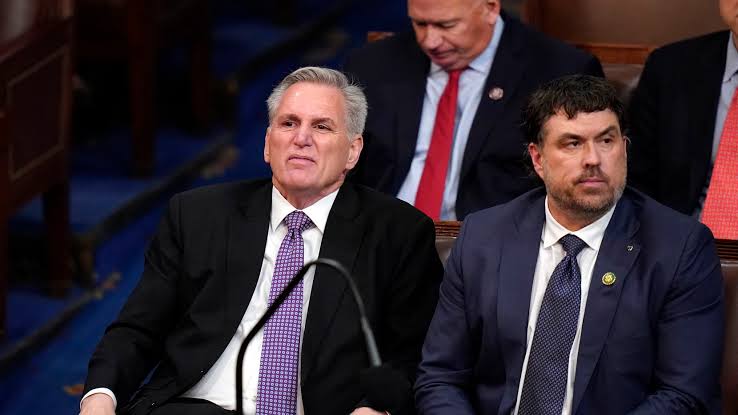
U.S. House still in turmoil with no speaker elected on 2nd day of voting
The U.S. House of Representatives remained in turmoil with no speaker elected on the second day of voting.
House members voted on Wednesday night to adjourn until noon Thursday, prolonging a historical political stalemate that has paralysed the lower chamber.
U.S. Congressman, Kevin McCarthy, a Republican from California, failed to secure enough votes three times earlier in the day due to intra-party division.
House members voted three times on Tuesday the opening day of the divided 118th Congress, but McCarthy fell short of the necessary votes to be the next speaker.
It was the first time a House speaker who maintained order, managed its proceedings, and governed the administration of its business on the lower chamber’s floor hadn’t been elected on the first ballot in 100 years.
The 435-seat House will have to vote until a speaker is elected with a majority of votes.
Before that, members cannot be sworn in and committees cannot be formed with the rest of the business stalled.
U.S. Congresswoman, Elissa Slotkin, a Michigan Democrat, tweeted that the infighting “isn’t just a shame for Republicans, it’s bad for the entire country.”
U.S. President, Joe Biden, a Democrat, reacted to the political drama surrounding the House speakership vote on Wednesday morning.
According to him, it’s embarrassing the way it’s taking so long.
“How do you think this looks to the rest of the world?
“It’s not a good look. It’s not a good thing,” Biden told reporters at the White House before leaving for Hebron, Kentucky.
McCarthy has the support of most House Republicans and former U.S. President, Donald Trump.
But a handful of hardliners have opposed his bid to lead the conference by arguing that he is insufficiently conservative while refusing to decentralise the speaker’s power.
The House has elected a speaker 127 times since 1789.
There have been 14 instances of speaker elections requiring multiple ballots.
Thirteen of 14 multiple-ballot elections occurred before the Civil War, when party divisions were more nebulous, according to Congressional historians.
The last time a speaker election required two or more votes on the floor happened in 1923.
Harvard legal scholar, Laurence Tribe, tweeted on Wednesday that the House of Representatives, unlike the Senate, was not a continuing body.
“It must reassemble itself without full constitutional authority every two years, like someone rebuilding a ship on the open seas.
“But when the voyage is this rough, that’s a sign of dysfunction,” Tribe said.
All House Democrats have voted for Congressman Hakeem Jeffries, a New York Democrat, to be the speaker.
Though it’s unlikely for Jeffries to attain the position, he is set to become the first African American lawmaker to lead a party in either chamber of the U.S. Congress.
Republicans flipped the House in the 2022 midterm elections while Democrats held onto their majority in the Senate.
The new Congress convened for the first time on Tuesday, with U.S. Vice President, Kamala Harris, presiding over the opening of the 100-people upper chamber in which Democrats control 51 seats versus 49 for Republicans.
Chuck Schumer from New York and Mitch McConnell from Kentucky remain the Senate majority leader and minority leader, respectively.
U.S. House still in turmoil with no speaker elected on 2nd day of voting



Four Killed, Three Injured in Attack on Illegal Mining Site in Plateau
By Zagazola Makama
Four persons have been killed and three others injured following an attack by unknown gunmen at an illegal mining site in Barkin-Ladi Local Government Area of Plateau State.
Security sources said the incident occurred at about 1:30 p.m. on May 2 at Mazat mining site, where the victims were reportedly engaged in unauthorised mining activities.
The sources disclosed that the assailants opened fire on the victims, killing four on the spot while three others sustained varying degrees of gunshot injuries.
According to the sources, the injured victims—two females and one male—were rushed to a nearby hospital for medical attention and are currently receiving treatment.
They added that the corpses of the deceased have been deposited at the hospital morgue for autopsy.
The sources further noted that security operatives were mobilised to the scene, while additional deployments have been made to track down the perpetrators.
They reiterated that night mining activities remain prohibited in the state, stressing that investigations into the incident are ongoing.
Four Killed, Three Injured in Attack on Illegal Mining Site in Plateau
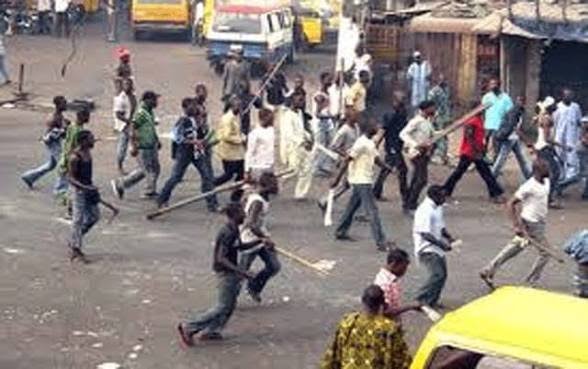
Security Operatives Repel Attack in Benue Community Over Land Dispute
By Zagazola Makama
Security operatives have repelled an attack on Okpute Ainuette community in Oju Local Government Area of Benue State following a renewed land dispute with a neighbouring community.
Security sources said the incident occurred at about 9:15 a.m. on May 2 when armed men, suspected to be from a community in Obi Local Government Area, invaded the area.
The sources disclosed that operatives swiftly responded to a distress call and mobilised to the scene, where they engaged the attackers in a gun duel.
According to the sources, the assailants fled into nearby bushes after being overpowered by superior firepower.
They added that no casualty was recorded during the encounter.
The sources further said security teams have commenced combing operations in surrounding bushes to track down and arrest the fleeing suspects.
They noted that additional deployments have been made to reinforce ongoing operations in the area, with efforts focused on restoring calm and preventing further clashes between the communities.
Security Operatives Repel Attack in Benue Community Over Land Dispute

“Act Now or Lose the North”: KACRAN Issues Stark Warning as Insecurity Spirals Out of Control
By: Michael Mike
The Kulen Allah Cattle Rearers Association of Nigeria (KACRAN) has called on Northern leaders to set aside political differences and take decisive, collective action to address the worsening insecurity in Nigeria’s North-West and North-Central regions.
In a strongly worded press statement at the weekend signed by its National President, Hon. Khalil Mohammed Bello, the association expressed deep concern over the prolonged crisis, which it said has led to the deaths of thousands of innocent citizens, the destruction of property worth trillions of naira, and the widespread rustling of livestock—the primary source of livelihood for millions of families.
KACRAN described the situation as both tragic and avoidable, warning that continued inaction could inflict irreversible economic and political damage on the region.
The association particularly highlighted a disturbing report by Amnesty International concerning an incident in Kwara State, where several pastoralists—including women and children—were allegedly detained at a National Youth Service Corps (NYSC) orientation camp. According to the report, more than 150 detainees reportedly died due to disease and poor living conditions.
KACRAN called for a full, transparent investigation into the incident and demanded the immediate release of innocent individuals still in detention.
Central to KACRAN’s message is the assertion that Northern Nigeria possesses the resources and leadership required to end insecurity if there is genuine commitment. The group pointed to the region’s pool of experienced leaders—including former Heads of State, military officers, traditional rulers, and business figures—as critical assets that must be mobilized.
“The solution lies with us,” the statement emphasized, urging Northern stakeholders to take ownership of the crisis rather than shifting blame.
While calling for regional responsibility, KACRAN acknowledged efforts by President Bola Tinubu noting key security appointments and significant budgetary allocations—reportedly exceeding ₦5 trillion—to the defence sector as evidence of federal commitment.
However, the group cautioned that relying solely on the Federal Government without complementary local action would delay meaningful progress.
KACRAN also underscored the importance of dialogue, citing relative peace achieved in areas such as Birnin Gwari in Kaduna State and parts of Katsina State as proof that collaborative engagement among leaders can yield results.
Despite the reported incident, the association praised the Kwara State Government for its efforts in livestock development, particularly the creation of a dedicated ministry. It said these initiatives demonstrate goodwill toward pastoral communities, while urging authorities to ensure justice and prevent future occurrences.
KACRAN stressed the enduring unity of Northern Nigeria, warning against allowing political divisions to undermine shared heritage and coexistence.
“The North must not allow politics to destroy a house we all inhabit,” the statement read, calling for urgent action to restore peace, mutual respect, and stability across the region.
The association expressed hope that its appeal would galvanize leaders into coordinated action capable of ending the cycle of violence and rebuilding trust among communities.
“Act Now or Lose the North”: KACRAN Issues Stark Warning as Insecurity Spirals Out of Control

Four Killed, Three Injured in Attack on Illegal Mining Site in Plateau

Security Operatives Repel Attack in Benue Community Over Land Dispute

“Act Now or Lose the North”: KACRAN Issues Stark Warning as Insecurity Spirals Out of Control

Roger Federer’s Shock as DNA Results Reveal Myla and Charlene Are Not His Biological Children

THE PLIGHT OF FARIDA

FAILED COUP IN BURKINA FASO: HOW TRAORÉ NARROWLY ESCAPED ASSASSINATION PLOT AMID FOREIGN INTERFERENCE CLAIMS
-
 News2 years ago
Roger Federer’s Shock as DNA Results Reveal Myla and Charlene Are Not His Biological Children
-
Opinions4 years ago
THE PLIGHT OF FARIDA
-
 News1 year ago
FAILED COUP IN BURKINA FASO: HOW TRAORÉ NARROWLY ESCAPED ASSASSINATION PLOT AMID FOREIGN INTERFERENCE CLAIMS
-

 News2 years ago
EYN: Rev. Billi, Distortion of History, and The Living Tamarind Tree
-
 Opinions4 years ago
POLICE CHARGE ROOMS, A MINTING PRESS
-

 ACADEMICS2 years ago
A History of Biu” (2015) and The Lingering Bura-Pabir Question (1)
-

 Columns2 years ago
Army University Biu: There is certain interest, but certainly not from Borno.
-

 Opinions2 years ago
Tinubu,Shettima: The epidemic of economic, insecurity in Nigeria
