
News
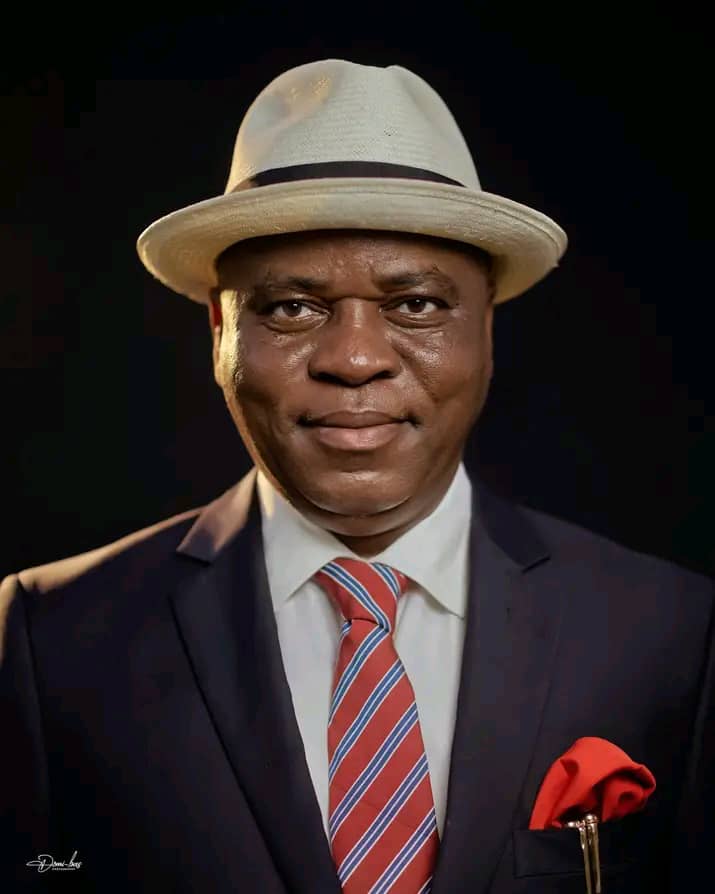
Ughelli North: Egbo Responds To Transparency Call, Showcases Projects Across Council

Ughelli North: Egbo Responds To Transparency Call, Showcases Projects Across Council
The Executive Chairman of Ughelli North Local Government Area, Olorogun (Barr.) Jaro Movudu Egbo, KSC, has responded to the transparency demands raised by the New Order Movement (NOM), highlighting a number of infrastructure and development projects executed or ongoing under his administration across the local government.
NOM had called on the council chairman to provide greater transparency and accountability on the utilisation of funds allocated to Ughelli North in 2026, particularly against the backdrop of the local government’s reported ₦18.29 billion budget.
The group had also demanded a detailed account of allocations received by the council, an update on projects being executed and greater engagement with stakeholders, insisting that residents deserved to see tangible benefits from public resources.
Responding to the concerns, Egbo pointed to what his administration described as “visible and measurable” achievements in infrastructure, healthcare, security, education, electricity, environmental sanitation and staff welfare.
According to him, the interventions are being implemented in line with the M.O.R.E. Agenda of Delta State Governor, Rt. Hon. Sheriff Oborevwori.
One of the major projects highlighted by the chairman is the ongoing construction of an ultra-modern Ughelli North Local Government Secretariat Complex, designed to improve administrative efficiency and provide a conducive working environment for council workers.
He also noted that the construction of a modern gatehouse for the secretariat was nearing completion, while the Legislative Assembly Complex had been rehabilitated with executive furniture, modern cooling systems and dedicated electricity supply.
In the health sector, Egbo’s administration highlighted the ongoing construction of the Tobore Oborevwori Cottage Hospital and Maternal Health Centre, which is expected to include doctors’ and nurses’ quarters.
The council said the facility was part of efforts to improve access to quality healthcare services within the local government.
The administration also cited the development of organised multi-storey market stalls for traders and the construction of the Ughelli Court dual-court complex as part of its interventions to support commerce and strengthen access to justice.
On road infrastructure, the council disclosed that rehabilitation of the long-neglected Post Office Road was ongoing, involving concrete and asphalt overlay as well as improved drainage around the Ughelli High Court.
The chairman also highlighted interventions in the power sector, saying three 11/33 KVA transformers had been procured and installed in strategic communities to improve electricity supply.
Power was also restored to the council secretariat through extensive electrical rewiring, while solar energy systems, including daytime solar panels and solar-powered streetlights, were deployed, according to the council.
On security, Egbo said collaboration with security agencies had helped improve safety along previously troubled sections of the East-West Highway.
The council stated that security operations around the Ogor, Evwreni and Ohoror axis had significantly reduced incidents of kidnapping and armed robbery along the Evwreni-Uwheru and Uvwiamuge-Agbarho corridors.
The administration further disclosed that it donated a fully equipped patrol vehicle to the Police Mobile Force and constructed a new police post to strengthen security operations.
In education, the council said more than 300 school desks, uniforms, textbooks and writing materials had been distributed to pupils in public primary schools.
It added that the administration had partnered with the Delta State Universal Basic Education Board (SUBEB) to support teacher retraining and classroom rehabilitation.
On environmental sanitation, the council said it carried out extensive desilting and clearing of drainage channels along the East-West Road in Agbarho to reduce flooding, while also reviving the monthly environmental sanitation exercise.
The administration further pointed to improvements in staff welfare, including the settlement of outstanding financial claims and regular welfare incentives for members of the Nigeria Union of Local Government Employees (NULGE).
Several key offices within the council secretariat have also been renovated and furnished, while the council expanded its operational fleet with official vehicles for principal officers, a Toyota Hilux for the Chief Security Officer and an 18-seater bus for the council’s Press Unit.
Assembly Committee, Auditor-General Commend Council
Egbo further stated that the council’s financial records had been subjected to scrutiny by the Delta State House of Assembly Public Accounts Committee and the Auditor-General for Local Governments in the state.
According to him, following the scrutiny of the council’s accounts and financial activities, both the Public Accounts Committee and the Auditor-General for Local Governments commended the council for what they described as prudence and transparency in the management of its finances.
He said the commendations from the statutory oversight bodies further demonstrated his administration’s commitment to accountability and responsible management of public resources.
Egbo said the council had nothing to hide and remained prepared to subject its financial records and activities to appropriate oversight in accordance with the law.
Egbo Alleges NDC-Sponsored Negative Campaign
Egbo also alleged that the New Order Movement’s campaign against his administration was politically motivated, describing it as a negative campaign allegedly sponsored by Omoragbege, the National Democratic Congress (NDC) senatorial candidate for Delta Central.
According to Egbo, the objective of the alleged campaign was to discredit his administration and weaken the political standing of the All Progressives Congress (APC) in Ughelli North ahead of the next general election.
He alleged that those behind the campaign believe that sustained attacks on his administration would erode public support for the APC and create an advantage for the NDC at the polls.
The council chairman, however, said he would not be distracted by what he described as politically motivated attacks, insisting that his administration would continue to focus on projects and programmes capable of improving the lives of residents.
He maintained that the achievements recorded by his administration were visible across various sectors and should speak for themselves, rather than being overshadowed by political campaigns.
The projects and interventions listed by the administration constitute its response to concerns over development and the utilisation of public resources in Ughelli North, with Egbo maintaining that his administration has continued to channel resources into projects and services with direct impact on residents.
Meanwhile, he reaffirmed his commitment to consolidating the achievements recorded so far through sustained investment in infrastructure, healthcare, education, security, youth empowerment and economic development.
Egbo pledged to continue providing transparent, responsive and people-centred governance, with the objective of positioning Ughelli North as a model of grassroots development in Delta State.
Ughelli North: Egbo Responds To Transparency Call, Showcases Projects Across Council


70 Years After Shell Abandoned Oil Wells, Akwa Ibom Communities Demand Justice, Cleanup
By: Michael Mike
Farmers, fishers report poisoned streams, dying crops, lost livelihoods as HOMEF demands decommissioning, compensation
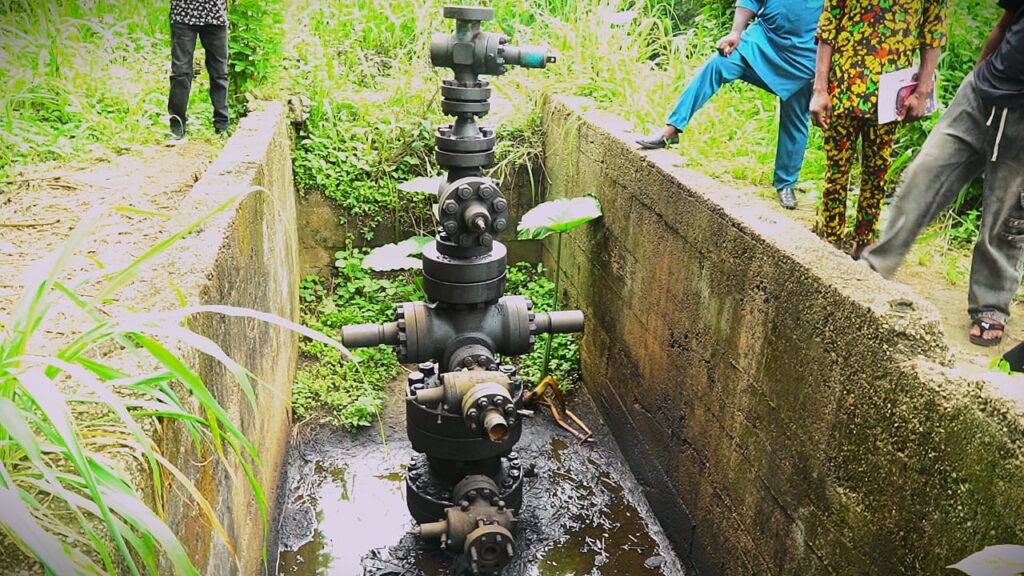
Nearly seven decades after Shell drilled and abandoned oil wells in parts of Akwa Ibom State, communities in Ikono and Ibiono Ibom Local Government Areas are demanding that the company and government authorities account for the environmental damage and livelihoods they say have been left behind.
The communities say the wells may have ceased to have commercial value for the oil company after being declared unviable, but their environmental consequences have remained a daily reality for residents.
They reported declining agricultural yields, dying economic trees, disappearing fish and snails, polluted streams, deteriorating property, insecurity and loss of livelihoods linked to the abandoned oil infrastructure.
The demands came at a capacity-sharing dialogue organised by the Health of Mother Earth Foundation (HOMEF) under its Fossil Politics project at Ikot Enua on September 9, where traditional rulers, women, youths and other residents presented accounts of the impact of decades-old petroleum activities on their communities.
At the centre of the dispute is a question with implications beyond Akwa Ibom: when an oil company abandons a commercially unviable well, who bears responsibility for the environmental consequences left behind?
For HOMEF, abandoning the wells cannot mean abandoning responsibility.
The organisation said the affected territories should not remain burdened with hazardous infrastructure and degraded ecosystems simply because petroleum extraction is no longer commercially attractive.
HOMEF Executive Director, Dr Nnimmo Bassey, said affected communities must be central to decisions concerning abandoned wells and the future of their territories.
“Communities must speak for themselves. They live here and understand the issues better than outsiders.”
Bassey drew attention to continuing petroleum-related hazards elsewhere in the Niger Delta, including gas bubbling and fire incidents reported in Bille, Rivers State, as evidence of the risks communities can continue to face around oil infrastructure.
The Executive Director of Peace Point Development Foundation, Mr Umo Isua Ikoh, also criticised what he described as an unequal distribution of the benefits and burdens of oil extraction.
“Oil can be a blessing to Abuja but never to the host communities,”
he said, citing Ikot Ebidang in Onna Local Government Area, where he said an ongoing flare had displaced members of the host community.
‘We can’t plant in our farms anymore’
The strongest evidence presented at the dialogue came from residents who described changes in their environment and livelihoods over the years.
Chief Felix Vincent Udoh of Ikot Enua reported declining agricultural productivity and the death of oil palm seedlings, while cocoyam, snails and fish species that were once part of the community’s ecological and economic life were said to have disappeared.
He also raised concerns about insecurity around abandoned oil infrastructure and declining soil fertility.
According to Udoh, corrugated roofing sheets in the community now rust and deteriorate unusually quickly, with some reportedly lasting less than five years.
He further alleged that Ikot Enua won its case against Shell at the High Court and Court of Appeal in 2013 but said the company had yet to comply with the judgment.
In Adara Abom, Mr Moses Udo said oil pollution had severely affected fishing, depriving residents of an important source of food and income.
Barrister Trust Udoh of Uyo Afaha Nkan gave another account of the impact, saying oil spills had contaminated water sources and affected farming.
“We can’t plant in our farms anymore,”
he said, while calling for the removal of the oil installation.
Residents of Ikot Idaha, Edem Udua and Ediene Atai similarly reported destruction of economic trees and declining agricultural yields.
In Ntan Mbat, residents said crops such as okra and cocoyam no longer yielded properly and sometimes died prematurely. They also complained about an abandoned road project reportedly initiated by the Niger Delta Development Commission.
Nkara Obio residents reported polluted streams and declining crop yields.
The individual testimonies, HOMEF said, pointed to a broader pattern across the affected communities: declining production of yam, cassava, cocoyam, okra and other crops; destruction of economic trees; disappearance of fish, snails and other species; polluted water sources; insecurity and inadequate infrastructure.
Seven decades of an unfinished oil story
The grievances revive a long-running problem in the Niger Delta, where oil extraction has generated substantial national revenue while producing persistent disputes over pollution, compensation, land degradation and community rights.
The region became the centre of Nigeria’s petroleum economy following the discovery and commercial exploitation of crude oil in the Niger Delta. Over subsequent decades, extensive networks of oil wells, pipelines, flow stations and other infrastructure were established across communities.
But when wells become commercially unattractive, the physical infrastructure and environmental liabilities do not necessarily disappear with the end of production.
For communities such as those in Ikono and Ibiono Ibom, the issue is therefore no longer simply whether oil remains beneath their land. It is whether decades-old installations can be safely decommissioned and whether land and water affected by petroleum activities can be restored.
HOMEF said the answer should not be another cycle of extraction.
The organisation rejected the argument that renewed exploitation of abandoned wells should automatically be treated as the solution to the communities’ economic difficulties, insisting that restoration and sustainable livelihoods must take priority.
Focus turns to Ikono 1
HOMEF specifically called on the Federal Government, Shell, regulatory agencies and the Akwa Ibom State Government to address outstanding claims relating to the abandoned Ikono 1 oil well.
It cited the 2013 Court of Appeal decision in Eteidung Raymond F. Obot & Ors. v. Shell Petroleum Development Company Nigeria Limited (CA/C/70/2011), which allowed environmental claims from 2006 onward to proceed.
The organisation called for proper assessment of abandoned wells and hazardous infrastructure, permanent decommissioning where extraction has ceased, removal of dangerous installations and comprehensive environmental cleanup.
It also demanded investigation of reported health concerns, long-term environmental monitoring and compensation for losses involving farmland, crops, economic trees, fishing grounds, property and livelihoods.
The communities want improved security, employment opportunities and skills development, alongside support for sustainable agriculture, fishing and other non-extractive livelihoods.
Beyond the abandoned wells
The controversy raises a larger issue about the legacy of extraction in Nigeria’s oil-producing communities.
For decades, oil has been presented as a major engine of national development. Yet residents living closest to extraction sites often measure its legacy differently — through the condition of their farms, streams, fishing grounds, homes and sources of income.
In Ikono and Ibiono Ibom, residents are now demanding that the end of commercial interest in an oil well should not mark the end of corporate and governmental responsibility.
HOMEF said restoration must go beyond simply closing a well or removing equipment.
It wants polluted land and water restored, damaged ecosystems rehabilitated, affected livelihoods addressed and communities involved in decisions about their territories.
The organisation also warned against turning environmental restoration into a pretext for renewed extraction, arguing that communities should be supported to build sustainable livelihoods that do not depend on continued degradation of their ecological resources.
The message from the communities is therefore not simply about abandoned oil wells.
It is about what happens after the oil is gone — who pays for the damage, who restores the land and whether communities that have carried the environmental costs of extraction for generations can finally reclaim their farms, waters and livelihoods.
The wells may have been abandoned decades ago. The communities insist that responsibility must not be abandoned with them.
70 Years After Shell Abandoned Oil Wells, Akwa Ibom Communities Demand Justice, Cleanup
Tinubu, Kashim Shettima and Nigeria’s Call for a More Representative United Nations
By: Dr James Bwala
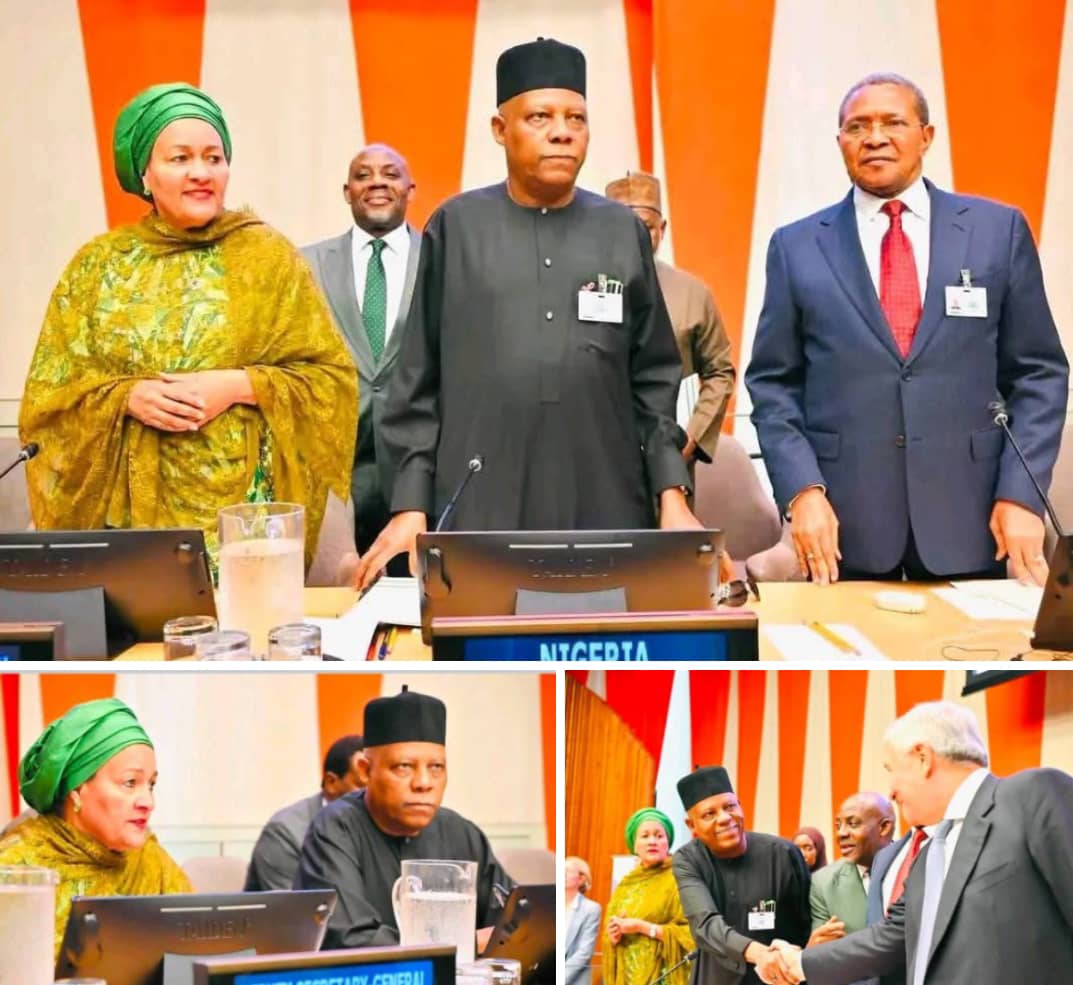
At the 81st Session of the United Nations General Assembly, President Bola Ahmed Tinubu delivered a powerful appeal for the transformation of the international system. Represented at the General Debate by Vice President Kashim Shettima, the Nigerian leader argued that the United Nations can no longer operate according to a structure designed for the world of 1945. At the centre of his address was a demand for the radical reform of the Security Council, including permanent African representation with full rights and veto powers.
Nigeria’s position is both justified and urgent. Africa is central to many of the security, humanitarian, economic and environmental challenges confronting the world, yet the continent remains excluded from permanent membership of the body responsible for making some of the most consequential decisions on international peace and security. The existing arrangement is not merely outdated; it weakens the legitimacy, fairness and effectiveness of the United Nations. Reform must therefore begin with the reconstitution of the Security Council, while also extending to global finance, climate governance, conflict prevention and technological development.
The Security Council’s present structure reflects the distribution of power after the Second World War, not the political and economic realities of the twenty-first century. The five permanent members—the United States, Russia, China, France and the United Kingdom—retain veto powers that enable them to block substantive decisions, even when those decisions command broad support among the wider membership. Meanwhile, an entire continent of more than 1.4 billion people remains without a permanent voice in the Council.
As Vice President Shettima stated on behalf of President Tinubu, “the world of 2026 cannot remain captive to the distribution of power in 1945.” This observation captures the central weakness of the current system. The international order has changed dramatically since the founding of the UN. Decolonisation created dozens of new states, Africa emerged as a significant diplomatic bloc, and global challenges became increasingly interconnected. However, the institutional arrangement for international security has largely remained unchanged.
Nigeria’s demand is specific. In accordance with the Ezulwini Consensus and the Sirte Declaration, it seeks at least two permanent seats for Africa, with all the rights and responsibilities attached to permanent membership, including veto power for as long as the veto exists. It also calls for a total of five non-permanent seats for the continent. This proposal is not an attempt to privilege Africa. Rather, it seeks to correct a profound imbalance and ensure that those most affected by international decisions participate meaningfully in making them.
Africa cannot continue to supply peacekeepers, host displaced populations, suffer the consequences of foreign interventions and carry the burden of conflicts while remaining absent from the Council’s permanent membership. Many of the crises discussed at the Security Council occur on African soil or have direct consequences for African societies. Conflicts in Sudan, the Sahel, the Democratic Republic of Congo and other regions demonstrate the importance of African perspectives in conflict resolution. Permanent representation would improve the Council’s understanding of regional realities and make its decisions more credible.
Critics may argue that expanding the permanent membership would make the Council less efficient. However, efficiency without legitimacy is not a sustainable basis for international governance. Decisions that exclude large parts of the world are likely to face resistance, weak implementation and declining public trust. A more representative Council may require more negotiation, but it would also produce decisions with greater moral authority and broader international support. In global governance, legitimacy is not an obstacle to effectiveness; it is one of its foundations.
President Tinubu’s call for Security Council reform was part of a broader warning about the danger of war, unilateral aggression and rising nationalism. He urged world leaders to reject the assumption that conflicts in distant countries have no consequences elsewhere. In an interconnected world, warfare disrupts food supplies, energy markets, migration patterns, investment and global security. Domestic conflicts can become international crises, while regional instability can create conditions for terrorism, organised crime and humanitarian disaster.
The President therefore called for a return to the founding principles of the UN Charter: dialogue, mutual respect, collective responsibility and the peaceful settlement of disputes. These principles are not empty diplomatic slogans. They represent a practical framework for preventing escalation and preserving a rules-based international system. Diplomacy should prevail over coercion, cooperation over isolation and international law over the arbitrary exercise of power.
Nigeria’s own record strengthens this argument. The country has repeatedly accepted significant responsibilities in support of peace and stability across Africa. Through its contributions to operations in Liberia, Sierra Leone, Darfur, Mali and The Gambia, Nigeria has demonstrated a willingness to commit personnel, resources and political capital when regional peace is threatened. Its role through ECOWAS, the African Union and Gulf of Guinea partnerships has also included mediation, democratic governance, counter-terrorism and maritime security.
These efforts show that Nigeria is not demanding influence without responsibility. On the contrary, the country’s claim to stronger representation is supported by its history of service. Africa has made significant sacrifices for international peace, frequently facing challenging economic and logistical circumstances. It is therefore reasonable that African states should have a permanent role in determining how global peace and security are protected.
The same principle applies to international economic governance. President Tinubu highlighted inadequate financing as one of the greatest obstacles to sustainable development. Many developing countries devote a large share of their national resources to debt servicing, leaving insufficient funds for education, healthcare, infrastructure and social protection. This situation limits economic growth and makes it more difficult for governments to respond to crises.
A reformed international system must therefore address the unfairness of global financial structures. Developing countries need wider access to concessional financing, responsible debt restructuring and financial arrangements that recognise their developmental needs. It is unreasonable to demand ambitious progress from countries while denying them the resources required to achieve it. International financial institutions must become more responsive, transparent and inclusive, particularly in relation to the needs of African economies.
Nigeria’s economic reforms, according to President Tinubu, are based on disciplined macroeconomic management, strong institutions, private-sector growth and strategic public investment. These domestic efforts are important, but national reforms cannot succeed in isolation from global conditions. High interest rates, unstable commodity prices, debt burdens and limited access to capital can undermine even well-designed economic policies. Nigeria’s development, like that of other African countries, depends partly on a global system that does not systematically disadvantage developing economies.
Climate change provides another compelling reason for greater African representation. Africa contributes less than four per cent of global greenhouse-gas emissions, yet it experiences some of the most severe consequences of a warming planet. Droughts, floods, desertification, food insecurity and climate-related displacement are already affecting communities across the continent. These consequences create economic and security pressures that extend beyond national borders.
President Tinubu rightly rejected the false choice between development and climate action. Developing countries must industrialise, eradicate poverty and expand energy access, but they should be enabled to do so through low-carbon pathways. This requires technology transfer, climate finance and a fair energy transition. It is unjust to expect African countries to remain poor in order to compensate for emissions largely produced by industrialised nations.
Nigeria’s commitment to the Paris Agreement and its goal of achieving net-zero emissions by 2060 demonstrate that climate responsibility and economic development can be pursued together. But international cooperation is needed to back up commitments. Climate finance should not be delivered primarily as loans that increase debt burdens. It must include accessible and predictable funding, technology sharing and support for renewable energy, resilient infrastructure and sustainable agriculture.
The President also addressed emerging technologies, particularly artificial intelligence. Nigeria, he said, will not allow fear to dictate its technological future. AI is a tool shaped by human choices, and its effects will depend on how governments and societies regulate and deploy it. Nigeria’s efforts to expand digital public infrastructure, broadband access and technology entrepreneurship are therefore important not only for economic growth but also for national resilience.
Africa should not be treated merely as a consumer of technology developed elsewhere. African countries must participate in innovation, data governance, digital regulation and the development of emerging industries. At the same time, technological advancement must be accompanied by attention to privacy, inequality, cybersecurity and employment. A human-centred approach can ensure that AI promotes education, healthcare, productivity and public services rather than deepening existing divisions.
Security remains a central concern in Nigeria’s foreign policy. Drawing on the country’s prolonged struggle against Boko Haram, ISWAP and other armed groups, President Tinubu observed that no nation can fully secure itself against threats sustained beyond its borders. Terrorist networks, cybercriminals, arms traffickers and organised criminal groups exploit gaps in international cooperation. Military force may be necessary, but it cannot provide a lasting solution on its own.
Sustainable security requires education, economic opportunity, accountable governance and respect for human rights. Young people who lack meaningful opportunities are more vulnerable to recruitment by extremist organisations. Communities that distrust government institutions may be less willing to cooperate with security agencies. Where justice is absent, grievances can become fuel for instability. International security strategies must therefore address the political and socioeconomic conditions that allow violence to persist.
The conflicts in Sudan and other war-torn countries further demonstrate the need for urgent diplomacy. The international community must not become desensitised to prolonged crises or permit propaganda to obscure the distinction between victims and aggressors. As President Tinubu warned, a world in which truth becomes a crime and perpetrators are protected from justice represents a betrayal of the UN’s founding promise.
Ultimately, Nigeria’s message at the UN General Assembly is a call to restore credibility to multilateralism. The world cannot effectively confront war, terrorism, climate change, debt, poverty and technological disruption through institutions that exclude major regions from meaningful decision-making. Africa’s permanent inclusion in the Security Council is therefore not a symbolic concession. It is a practical requirement for a more representative and capable international order.
A reformed United Nations must reflect the world as it exists today, not as it existed eight decades ago. It must give Africa all the support to participate in the decision that also affects Africa is so many ways.
- James Bwala, PhD, writes from Abuja
- Tinubu, Kashim Shettima and Nigeria’s Call for a More Representative United Nations
President Tinubu To UN: We Can’t Rule 2026 World With 1945 Distribution of Power
** *Warns Africa can’t continue to fill UN agenda without permanent membership at Security Council
** *Calls for immediate end to global warfare, respect for UN Charter
** *Demands radical shakeup of global financial system, equitable participation in economic decision-making
** *Says Africa deserves fairness in climate financing, reaffirms commitment to Paris Agreement, fair energy transition
By: Our Reporter
President Bola Ahmed Tinubu has renewed calls for a radical shake-up of the United Nations (UN), insisting that reforms must start with reconstituting the Security Council to grant Africa permanent seats.
He warned that the continent can no longer afford to fill the Council’s agenda from the margins, pointing out that the world of 2026 cannot remain captive to the distribution of power in 1945.
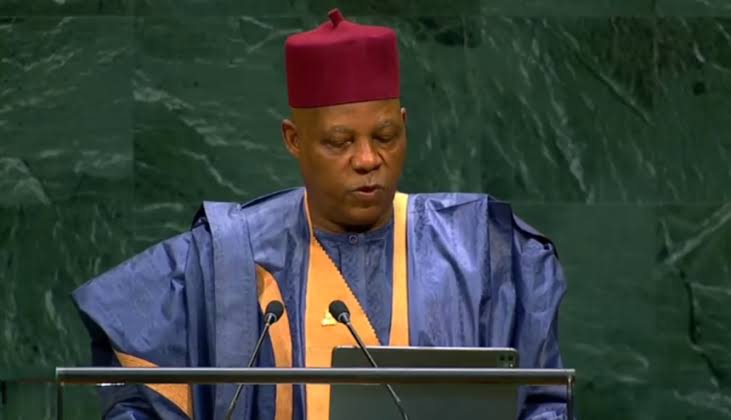
The Nigerian leader made the position in his address delivered by his deputy, Vice President Kashim Shettima, during the General Debate at the ongoing 81st Session of the United Nations General Assembly in New York, United States.
Specifically, he demanded at least two permanent seats for the continent—including full rights, responsibilities, and veto power—along with a total of five non-permanent seats.
“The reform of this institution must begin with the reconstitution of the Security Council, for the world of 2026 cannot remain captive to the distribution of power in 1945. Africa cannot continue to fill the Council’s agenda while remaining absent from its permanent membership.
“Nigeria demands, in accordance with the Ezulwini Consensus and the Sirte Declaration, at least two permanent seats for Africa, with all the rights and responsibilities of permanent membership, including the veto for as long as it exists, and five non-permanent seats in total. The authority to speak for humanity carries an obligation to represent it,” he stated.
President Tinubu also issued a wake-up call to world leaders, demanding an immediate end to global warfare and a total rejection of the rising tide of nationalism.
With urgent moral clarity, he warned that the global order hangs in the balance, while fiercely rallying the international community to dismantle unilateral aggression, resurrect the foundational principles of the United Nations Charter, and forge an unyielding, unified front through a recommitted era of global multilateralism.
The Nigerian leader categorically told the global leaders not to pretend that distant or domestic conflicts do not exact a price from other nations, underscoring the UN’s urgent duty to restore trust in institutions built to reconcile differences and advance global common interests.
“The persistence of conflict across the world recalls the purpose for which the United Nations was founded: to spare succeeding generations the devastation of war. We must therefore return to the founding principles of dialogue, mutual respect and collective responsibility.
“Nigeria stands by the Charter and its promise of a world in which diplomacy prevails over coercion, cooperation over isolation and international law over the arbitrary exercise of power,” he declared.
The President framed Nigeria’s peacekeeping efforts in Africa as a model, noting that the nation stands ready to take on greater responsibility and sacrifice to restore peace across the continent—just as it did in Liberia, Sierra Leone, Darfur, Mali, and The Gambia, where it committed personnel and resources when global solidarity demanded action.
“Through ECOWAS, the African Union and our Gulf of Guinea partnerships, we continue to advance mediation, democratic governance, counter-terrorism and maritime security,” he said, adding that Nigeria’s foreign policy depends on the same conviction that guides its economic reforms.
President Tinubu stated that Nigeria is actioning its sustainable development commitments through disciplined macroeconomic management, robust institutions, private-sector growth, and strategic public investment.
Emphasising that the mission directly links Nigeria’s national advancement to Africa’s progress and a global duty to foster peace, equity, and prosperity, he observed that internal achievements mean nothing if the nation ignores gathering external threats, declaring that geography offers no exemption from the consequences of a fractured world.
Government trust, according to him, is earned only when decisions improve lives, stressing, however, that since no nation is insulated from global conflicts, leaders must face security and climate realities head-on rather than pretending borders offer safety.
The President urged global action on climate change, rejecting the false choice between development and climate action, even as he emphasized that developing countries must industrialize, eradicate poverty, and expand energy access using low-carbon pathways backed by technology transfer and climate finance.
He reaffirmed Nigeria’s commitment to the Paris Agreement and a fair energy transition, stressing that Africa bears a heavy climate burden despite contributing under 4% of global emissions.
Under the Energy Transition Plan, he hinted that the nation is working towards net-zero emissions by 2060 while expanding access to affordable, reliable and sustainable energy.
President Tinubu declared that Nigeria will not let fear dictate its technological future, affirming that AI is a tool driven by human intent, and to harness the tool for human advancement, the nation is aggressively expanding its digital public infrastructure, accelerating broadband deployment, and driving tech entrepreneurship.
He reiterated Nigeria’s call for reform of the international financial architecture, wider access to concessional financing and debt sustainability structure that recognise developmental needs, pointing out that “one of the greatest obstacles to sustainable development is inadequate financing,” as most developing nations spends a good part of their resources on debt servicing at the expense of education, healthcare and infrastructure.
Drawing lessons from Nigeria’s prolonged struggle against Boko Haram, ISWAP and other armed groups, the President said “no nation, however formidable its defences, can secure itself completely against dangers sustained beyond its borders.”
He noted that while modern threats like terrorism and cyberattacks exploit gaps in global action, lasting military victory requires a foundation of education, economic opportunity, accountable governance, and human rights.
As a founding member of ECOWAS, President Tinubu said Nigeria remains ready to uphold regional solidarity and African leadership in resolving security challenges, “reinforced by principled international partnerships.”
The Nigerian leader maintained that Nigeria is committed to the peaceful settlement of disputes under the United Nations Charter, as “the conflicts in Sudan and other war-torn countries demand urgent diplomacy to address their humanitarian, economic and geopolitical consequences.”
“We should all be afraid of a world in which we can no longer tell the victim from the aggressor. When our investment in propaganda shields perpetrators from justice to the point that telling the truth becomes a crime, the promise of this institution stands betrayed,” he stated.
On the expectations from the UN general debate the Nigerian leader noted that “a reformed, inclusive and effective United Nations is indispensable to the peaceful, just and sustainable world that future generations deserve.
“Whatever our differences, we must remember that humanity is our oldest citizenship, and peace is the inheritance we owe every child,” he further stated.
President Tinubu To UN: We Can’t Rule 2026 World With 1945 Distribution of Power

70 Years After Shell Abandoned Oil Wells, Akwa Ibom Communities Demand Justice, Cleanup

Tinubu, Kashim Shettima and Nigeria’s Call for a More Representative United Nations

President Tinubu To UN: We Can’t Rule 2026 World With 1945 Distribution of Power

Roger Federer’s Shock as DNA Results Reveal Myla and Charlene Are Not His Biological Children

THE PLIGHT OF FARIDA

FAILED COUP IN BURKINA FASO: HOW TRAORÉ NARROWLY ESCAPED ASSASSINATION PLOT AMID FOREIGN INTERFERENCE CLAIMS
-
 News3 years ago
Roger Federer’s Shock as DNA Results Reveal Myla and Charlene Are Not His Biological Children
-
Opinions5 years ago
THE PLIGHT OF FARIDA
-
 News1 year ago
FAILED COUP IN BURKINA FASO: HOW TRAORÉ NARROWLY ESCAPED ASSASSINATION PLOT AMID FOREIGN INTERFERENCE CLAIMS
-

 News3 years ago
EYN: Rev. Billi, Distortion of History, and The Living Tamarind Tree
-
 Opinions5 years ago
POLICE CHARGE ROOMS, A MINTING PRESS
-

 ACADEMICS3 years ago
A History of Biu” (2015) and The Lingering Bura-Pabir Question (1)
-

 Columns3 years ago
Army University Biu: There is certain interest, but certainly not from Borno.
-

 Politics1 year ago
2027: Why Hon. Midala Balami Must Go, as Youths in Hawul and Asikira/Uba Federal Constituency Reject ₦500,000 as Sallah Gift
