
News
UK Announces $5 million investment in first battery recycling facility in Nigeria


UK Announces $5 million investment in first battery recycling facility in Nigeria
By: Michael Mike
United Kingdom has announced an investment of $5 million to establish first battery recycling facility in Nigeria
A press statement on Friday said the British High Commissioner visited Ogun and Lagos States, and announced a new $5m investment to establish first battery recycling facility in Nigeria
The statement read: “The British High Commissioner, Dr. Richard Montgomery, has concluded a productive visit to Lagos and Ogun States, underscoring the United Kingdom’s commitment to strengthening bilateral relations and supporting development initiatives in these key regions.
“During the four-day visit, the High Commissioner met with Governor Dapo Abiodun of Ogun State and Governor Babajide Sanwo-Olu of Lagos State, engaging in discussions focused on enhancing economic ties, driving investments, prosperity opportunities and future priorities that could be beneficial to the states and the UK.
A key highlight of the visit to Ogun State was the announcement by UK company, Hinckley Recycling, that they are establishing a new battery recycling facility in the state, using UK-patented technology. Hinckley’s $5m investment will create Africa’s first lithium-ion and lead acid battery recycling and treatment plant.
In Lagos, Dr. Montgomery met with Chief Emeka Anyaoku, and some business leaders in Nigeria including the CEOs of Airtel Nigeria, Standard Chartered, Nigeria Helios Investment Partners, Afrinvest and KPMG West Africa.
At the end of the visit, the British High Commissioner, Dr. Richard Montgomery, said: “My visit to Lagos and Ogun States has reinforced the strong ties between our two great countries.
“Both states are key to boosting Nigeria’s economic prosperity and the UK is committed to driving that growth, promoting trade and supporting their developments.”
On the $5 million investment to establish Nigeria’s first battery recycling facility in Ogun State, he said:“It is fantastic that Hinckley Recycling is establishing the first lithium-ion and lead-acid battery recycling facility in Nigeria, creating a new high-value export industry in Ogun State and 100 new direct jobs. Congratulations to the Commissioners and to OgunInvest who worked with Hinckley to make this ground-breaking project a reality.
“The UK fully supports His Excellency Governor Abiodun’s mission to bring new investment and new jobs into Ogun State. The UK Government’s development finance bank British International Investment invested $15 million into Valency International in Ogun State last year, and the UK’s Manufacturing Africa programme is supporting four other companies in Ogun to raise capital and expand their production facilities.”
0Hinckley Recycling became the first government approved E-Waste recycler in Nigeria in 2016. Hinckley is expanding its E-Waste business to create a lithium-ion battery and lead acid battery recycling and treatment plant in Nigeria using patented recycling technology; the local treatment and manufacturing plant will be the first of its kind in Africa.
UK Announces $5 million investment in first battery recycling facility in Nigeria


News
China, Nigeria Target Billion-Dollar Opportunities as Filmmakers Push Co-production, Market Access
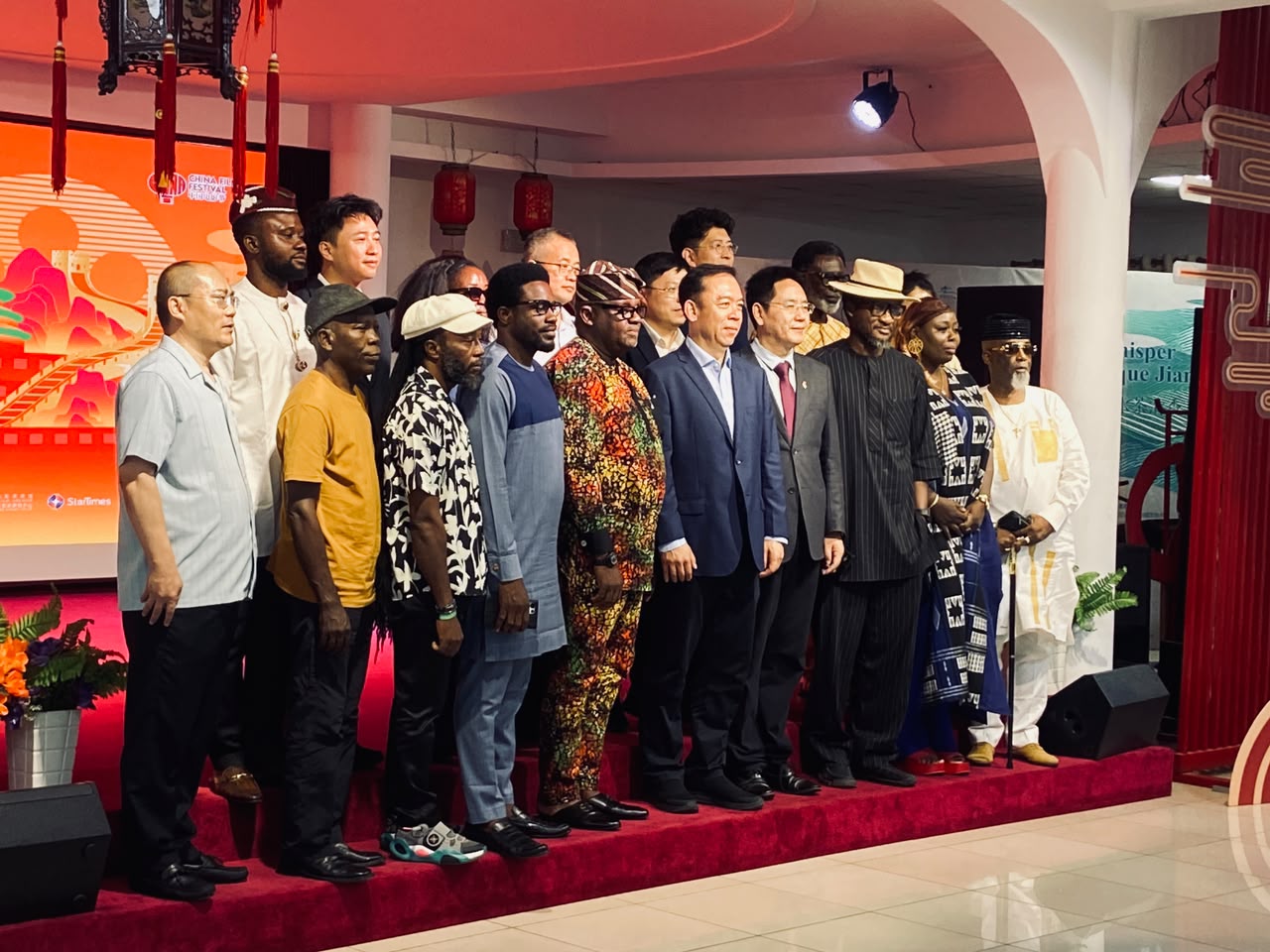
China, Nigeria Target Billion-Dollar Opportunities as Filmmakers Push Co-production, Market Access
By: Michael Mike
Nigeria and China are seeking to turn their growing cultural relationship into a stronger commercial partnership in film, with filmmakers from both countries exploring co-production, technology transfer and distribution opportunities that could open up two major audiences to each other’s creative industries.
The push gained momentum at the Chinese Film Screening in Nigeria 2026 in Abuja, where industry stakeholders identified the combination of Nigeria’s storytelling strength and China’s cinema infrastructure, capital and distribution expertise as a potential pathway to expanding the global reach of their productions.
The discussions also highlighted a major challenge facing the proposed partnership: translating cultural exchanges and diplomatic goodwill into concrete business arrangements that enable filmmakers to secure investment, distribute their works across borders and earn sustainable returns.
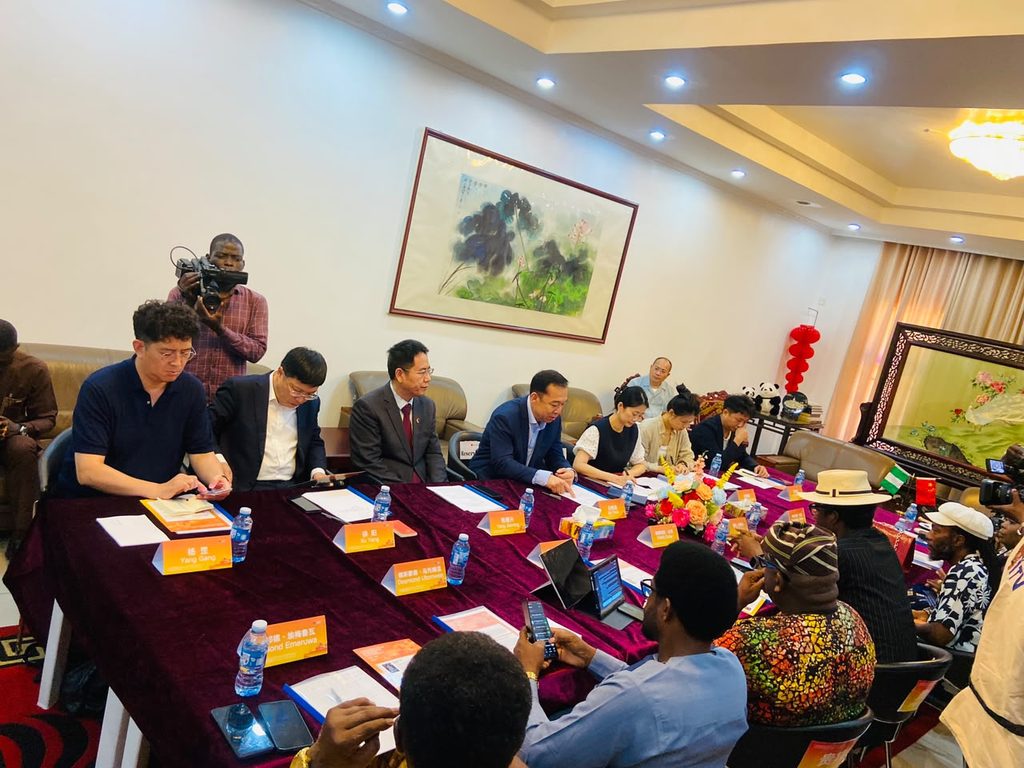
The Director of the China Cultural Centre in Nigeria, Mr Yang Jianxing, said film remained an important bridge for strengthening understanding between the two countries, whose creative industries offered considerable scope for collaboration.
“China and Nigeria share a deep-rooted traditional friendship and close people-to-people exchanges, and film serves as an important bridge for fostering mutual understanding between our peoples,” he said.
Jianxing said cooperation had expanded through reciprocal film screenings, professional exchanges, festivals and the distribution of productions across national borders.
The partnership involving the Chinese Embassy, the China Cultural Centre and StarTimes Nigeria has helped bring Chinese film and television productions to Nigerian audiences through initiatives including a month-long showcase, the Chinese Women’s Film Festival and screenings of works dubbed or subtitled in local languages, including Hausa.
“StarTimes has successfully brought outstanding Chinese productions and knowledge series to a broader audience,” he said.
He added that Nigerian films had also reached mainstream Chinese digital media platforms, exposing audiences there to Nigerian stories, characters and experiences.
The commercial potential of the relationship was underscored by Fidelis Duker, founder of the Abuja International Film Festival, who said discussions with the Chinese delegation had focused on production, distribution and co-production opportunities, including engagements with Nigerian film institutions and plans to meet distributors and cinema operators in Lagos.
Duker argued that the population sizes of the two countries presented an opportunity to expand the reach of their film industries, provided that investment, technology and distribution networks were developed to support the exchange of content.
“What we found out today, or what we’ve known over the years, is that China has technology,” he said, adding that the Chinese delegation had told participants that China sold 1.3 billion cinema tickets in the previous year.
China’s film market provides an indication of the scale of the opportunity. According to figures released by the China Film Administration, the country generated 51.832 billion yuan in box-office revenue in 2025, while cinema attendance reached 1.238 billion. Domestic productions accounted for nearly 80 per cent of total box-office receipts, and the country ended the year with 93,187 cinema screens.
The figures illustrate the scale of China’s production and exhibition ecosystem, offering Nigerian filmmakers potential access to a market where locally produced content commands a substantial share of cinema revenue.
For Nigeria, the opportunity extends beyond exporting completed films. Collaboration could also create avenues for joint productions, technical training, improved post-production capacity and the development of distribution arrangements that give Nigerian stories a wider international audience.
Duker said the combination of Nigerian creativity and Chinese industrial capacity could be particularly valuable to both sides.
“When you marry Nigerian narrative vitality with China’s technical infrastructure, capital, and unparalleled distribution expertise, you can imagine” the possibilities, he said.
The Chinese delegation, led by Bai Yimin, chairman of Huaxia Film Distribution Company Limited, also emphasised the contribution of cinema to bilateral relations.
Bai said cooperation between the countries had produced results through reciprocal film festivals, professional exchanges, and the translation and broadcasting of films.
“In recent years, cooperation in the film industry has become a brilliant chapter in China-Nigerian cultural and people-to-people exchanges,” he said.
He added that the Chinese Embassy and the China Cultural Centre would continue to support initiatives using cinema to connect audiences and strengthen relations between the two countries.
The screening coincided with the 23rd Abuja International Film Festival, which received 10 Chinese film entries this year, five of which were nominated for awards. Duker said Chinese films had featured in 22 of the festival’s 23 editions, reflecting a longstanding relationship between the event and China’s film industry.
He also credited StarTimes with supporting the festival over the years, saying the relationship had contributed to its growth.
Three films were screened at the event: The Shadow’s Edge, Blades of the Guardians: Wind Rises in the Desert and The Lychee Road.
The screening comes against the backdrop of broader efforts to deepen Nigeria-China cooperation in the creative sector. In August 2026, the Nigerian Television Authority and China Movie Channel signed a strategic cooperation agreement aimed at promoting film co-production, technology transfer, professional training and wider distribution of creative content.
The agreement, announced at the China-Nigeria Film and Literature Symposium in Abuja, signalled an interest in moving cultural relations beyond the exchange of finished productions towards more structured industry collaboration.
The latest engagements at the film festival could build on that momentum by bringing filmmakers, distributors, cinema operators and production institutions into discussions about the practical requirements of cross-border business.
However, access to a large audience does not automatically translate into commercial success. Nigerian and Chinese productions seeking to enter each other’s markets will need effective distribution partners, appropriate subtitling and dubbing, marketing support, clear licensing arrangements and investment structures that protect the interests of participating filmmakers.
Differences in audience preferences, language, production practices and market regulations will also need to be addressed if joint projects are to attract viewers and generate revenue.
For Nigeria, the immediate priority is to ensure that its creative talent benefits commercially from international partnerships rather than limiting participation to festival appearances and cultural showcases. For China, deeper engagement with Nollywood offers an avenue to broaden the international reach of its productions while building relationships with one of Africa’s most prominent film industries.
The success of the partnership will ultimately depend on whether the two countries can turn screenings and professional exchanges into financed co-productions, regular content distribution and lasting commercial relationships.
With both sides signalling interest in closer collaboration, the emerging challenge is to build an industry-to-industry framework capable of converting shared cultural interests and large populations into tangible opportunities for filmmakers, distributors and audiences.
China, Nigeria Target Billion-Dollar Opportunities as Filmmakers Push Co-production, Market Access
Borno Scrap Dealers Split with National Body, Back Zulum’s Scavenging Policy
By: Michael Mike
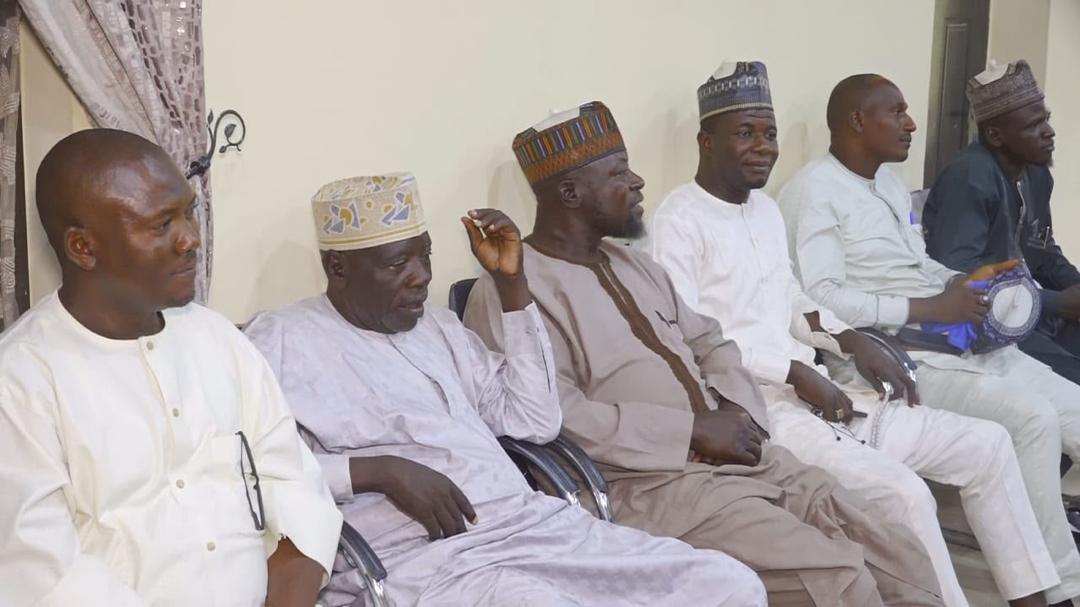
A rift has emerged within the National Association of Scrap and Waste Dealers Employers of Nigeria, popularly known as Ajakuta, over Borno State’s handling of metal scavenging, with the state chapter openly disowning claims by its national leadership and declaring support for Governor Babagana Umara Zulum’s reform measures.
The state chapter said it welcomed the governor’s decision in good faith, signalling its willingness to work with the government to regulate the scrap trade as authorities seek to reopen the sector under a proposed roadmap.
The State Chairman of the association, Umar Usman, disclosed the position on Wednesday when he led members of the state executive on a courtesy visit to the Chairman of the Committee to Review the Ban on Metal Scavenging in Borno State, Hon. Nasiru Ali Surundi, in Maiduguri.
“We welcome the Governor’s decision in good faith and dissociate ourselves from the claims made by our national body and some individuals. As law-abiding citizens, we support the state government’s efforts to regulate our activities,” Usman said.
The declaration places the Borno chapter at odds with statements attributed to the association’s national body and some individuals, although the specific claims being disputed were not detailed in the state chapter’s statement.
Usman thanked Zulum for his intervention, saying the association was prepared to cooperate with the committee to ensure that the government’s reforms benefited scrap dealers and other residents affected by the restrictions.
The development comes as the Borno government reviews restrictions on metal scavenging, an activity that provides livelihoods for dealers and collectors but can also raise security and public infrastructure concerns when stolen metals and vandalised public assets enter the scrap market.
Responding, Surundi commended the state chapter for clarifying its position and defended the government’s approach, saying the measures were intended to sanitise the business rather than undermine legitimate operators.
“The measures introduced by Governor Babagana Umara Zulum are aimed at sanitising the scrap business for the benefit of our people. We urge the association’s national leadership to verify its facts before making public claims,” he said.
Other members of the delegation backed Usman’s position and pledged to support the government’s decision.
The visit followed Zulum’s announcement barely a week earlier of a temporary lifting of the ban on scrap scavenging, alongside the development of a proposed roadmap towards lifting the restrictions more broadly.
The policy shift places the government under pressure to balance the economic interests of scrap dealers with the need to prevent the theft and vandalism of metal infrastructure, which can impose substantial costs on public institutions and disrupt essential services.
For dealers, a clear regulatory framework could provide a pathway back to legitimate business after restrictions disrupted their activities. For the government, the challenge is to ensure that any reopening does not create opportunities for criminals to profit from stolen materials.
The proposed roadmap is therefore central to the next phase of the policy, although details of the planned regulatory arrangements were not provided in the statement.
With the state chapter pledging cooperation, the immediate test for the government and industry stakeholders will be whether the review produces workable rules that protect livelihoods, distinguish legitimate dealers from illicit operators and safeguard public infrastructure.
Borno Scrap Dealers Split with National Body, Back Zulum’s Scavenging Policy
News
NIS Raises Alarm Over Human Trafficking, Travel Fraud, Says Border Controls Alone Cannot Stop Irregular Migration

NIS Raises Alarm Over Human Trafficking, Travel Fraud, Says Border Controls Alone Cannot Stop Irregular Migration
By: Michael Mike
The Nigeria Immigration Service (NIS) has warned that misinformation, false promises and inadequate access to reliable migration information are exposing Nigerians to human trafficking, migrant smuggling and travel fraud, declaring that border controls alone cannot address the growing challenges of irregular migration.
The Service called for coordinated action by government agencies, security institutions, development partners, community leaders, civil society organisations and the media to close information gaps and ensure that prospective migrants can make informed decisions about travelling abroad.
The Comptroller-General of the NIS, Kemi Nandap, gave the warning in a speech delivered by the Deputy Comptroller-General in charge of Visa and Residency Directorate, Franca Nwanneka, at a Stakeholder Sensitisation and Engagement Seminar in Abuja on Wednesday.
The seminar was themed, “Bridging the Information Gap: Promoting Informed, Safe and Regular Migration.”
Nandap said although people migrated in pursuit of education, employment, safety and better opportunities, decisions influenced by misinformation, deceptive promises and limited awareness of lawful migration pathways could expose them to serious risks and devastating consequences.
“Human trafficking, migrant smuggling, travel fraud, and irregular migration highlight the risk of inadequate information and intelligence sharing among operational stakeholders,” she said.
The Comptroller-General stressed that tackling the problem required more than enforcement at the nation’s borders, insisting that prospective migrants must have access to accurate, timely and reliable information before making decisions that could affect their safety and future.
“Preventing these risks requires more than border control. It begins with equipping prospective migrants with accurate, timely, and reliable information to make informed decisions and pursue safe, lawful migration pathways,” she said.
The warning places public awareness and access to trustworthy information at the centre of Nigeria’s migration management efforts, with the Service seeking stronger collaboration among institutions responsible for border security, migration governance and public sensitisation.
Nandap said the NIS was strengthening its operational capacity through institutional reforms, modern border management technologies, intelligence gathering and improved service delivery.
She cited the recent deployment of the border control and immigration management system and other technology-driven platforms as part of efforts to build a modern, responsive and intelligence-led immigration service.
However, she acknowledged that technology and stronger border controls could not independently resolve the factors driving irregular migration.
“Nevertheless, we recognise that even the most sophisticated border management systems cannot on their own address the underlying factors that encourage irregular migration,” she said.
The Comptroller-General therefore urged stakeholders to move beyond discussions and adopt coordinated, practical measures to counter misinformation and ensure that reliable migration information reaches communities, particularly those most vulnerable to exploitation.
She specifically called on government agencies, security institutions, development partners, traditional and community leaders, civil society organisations, educational institutions, transport operators and the media to take greater responsibility for public sensitisation.
“Migration sensitisation is a shared responsibility that cannot be left to the Nigeria Immigration Service alone,” she said.
According to her, the seminar was designed to help stakeholders examine existing approaches, identify institutional gaps and explore how innovation, community participation and inter-agency cooperation could improve migration management.
She expressed confidence that the presentations, roundtable discussions and technical sessions would generate practical recommendations towards a safer and more coordinated migration management system.
The NIS chief also commended partner institutions, development partners, resource persons and participants for their contributions to strengthening migration governance in Nigeria.
Also speaking at the seminar, the International Organization for Migration (IOM) reaffirmed its commitment to strengthening its partnership with the NIS to promote regular migration and address migration-related challenges.
Nnenna Onuoha, Senior Programme Associate of IOM Nigeria, who represented the organisation’s Chief of Mission, Sharon Dimanche, said the partnership between the two institutions had continued to grow stronger and produce tangible results.
“The relationship and the partnership between IOM and NIS have been and have continued to grow stronger and have produced tangible results,” Onuoha said.
She described the engagement as an opportunity for stakeholders to deliberate on how collective action could make regular migration more accessible and commonplace in Nigeria.
Onuoha conveyed Dimanche’s goodwill to the participants and expressed the IOM’s hope that the discussions would lead to fruitful deliberations and actionable outcomes.
The collaboration reflects a shared emphasis on stakeholder engagement and better-informed migration decisions, with the NIS focusing on its statutory responsibilities for immigration control and migration management and the IOM supporting cooperation on migration-related issues.
The challenge ahead, however, is to translate the commitments made at the seminar into sustained public education, improved access to reliable migration information and effective coordination among relevant institutions.
For the NIS, the objective is to ensure that prospective migrants can distinguish legitimate migration opportunities from deceptive offers and understand the lawful pathways available to them before embarking on potentially dangerous journeys.
The seminar brought together representatives of security and law enforcement agencies, regional and international organisations, border management institutions, civil society groups, non-governmental organisations, community-based organisations, academic institutions and other stakeholders.
Nwanneka formally declared the seminar open on behalf of Nandap, expressing the Service’s expectation that the deliberations would advance a safer, smarter and more coordinated migration management system in Nigeria.
NIS Raises Alarm Over Human Trafficking, Travel Fraud, Says Border Controls Alone Cannot Stop Irregular Migration

China, Nigeria Target Billion-Dollar Opportunities as Filmmakers Push Co-production, Market Access

Borno Scrap Dealers Split with National Body, Back Zulum’s Scavenging Policy

The Quiet Architect: Dambazau’s Legacy of Institutional Reform

Roger Federer’s Shock as DNA Results Reveal Myla and Charlene Are Not His Biological Children

THE PLIGHT OF FARIDA

FAILED COUP IN BURKINA FASO: HOW TRAORÉ NARROWLY ESCAPED ASSASSINATION PLOT AMID FOREIGN INTERFERENCE CLAIMS
-
 News3 years ago
Roger Federer’s Shock as DNA Results Reveal Myla and Charlene Are Not His Biological Children
-
Opinions5 years ago
THE PLIGHT OF FARIDA
-
 News2 years ago
FAILED COUP IN BURKINA FASO: HOW TRAORÉ NARROWLY ESCAPED ASSASSINATION PLOT AMID FOREIGN INTERFERENCE CLAIMS
-
 Opinions5 years ago
POLICE CHARGE ROOMS, A MINTING PRESS
-

 News3 years ago
EYN: Rev. Billi, Distortion of History, and The Living Tamarind Tree
-

 ACADEMICS3 years ago
A History of Biu” (2015) and The Lingering Bura-Pabir Question (1)
-

 Columns3 years ago
Army University Biu: There is certain interest, but certainly not from Borno.
-

 Politics1 year ago
2027: Why Hon. Midala Balami Must Go, as Youths in Hawul and Asikira/Uba Federal Constituency Reject ₦500,000 as Sallah Gift
