
International
UK Signs Enhanced Trade and Investment Partnership Agreement with Nigeria

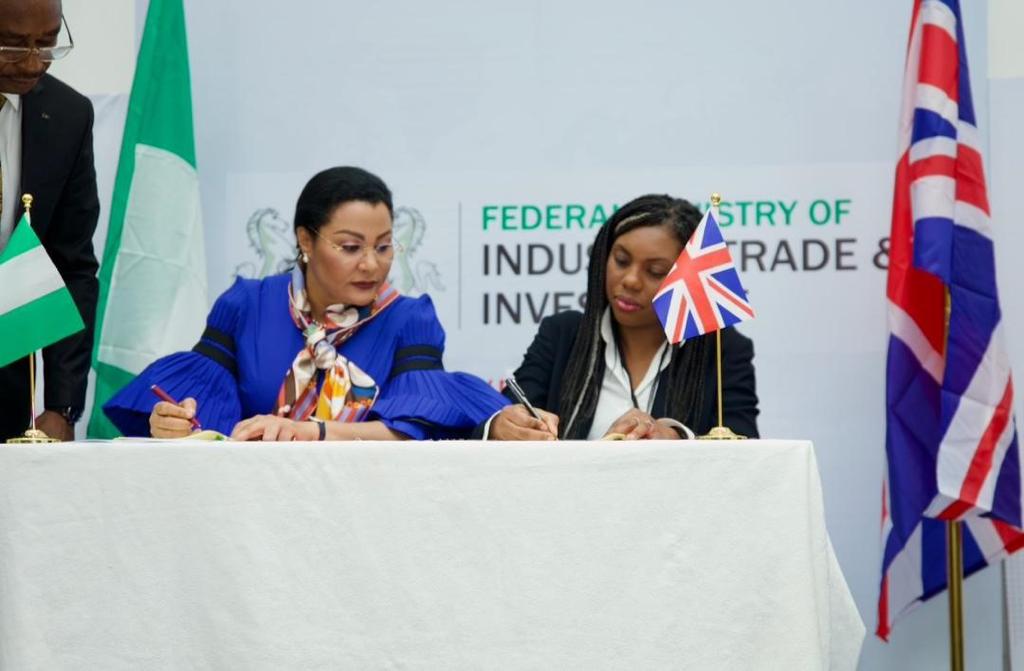
UK Signs Enhanced Trade and Investment Partnership Agreement with Nigeria
By: Michael Mike
The United Kingdom has signed an Enhanced Trade and Investment Partnership (ETIP) with Nigeria to boost trade and investment between the two countries and unlock new opportunities for UK and Nigerian businesses.
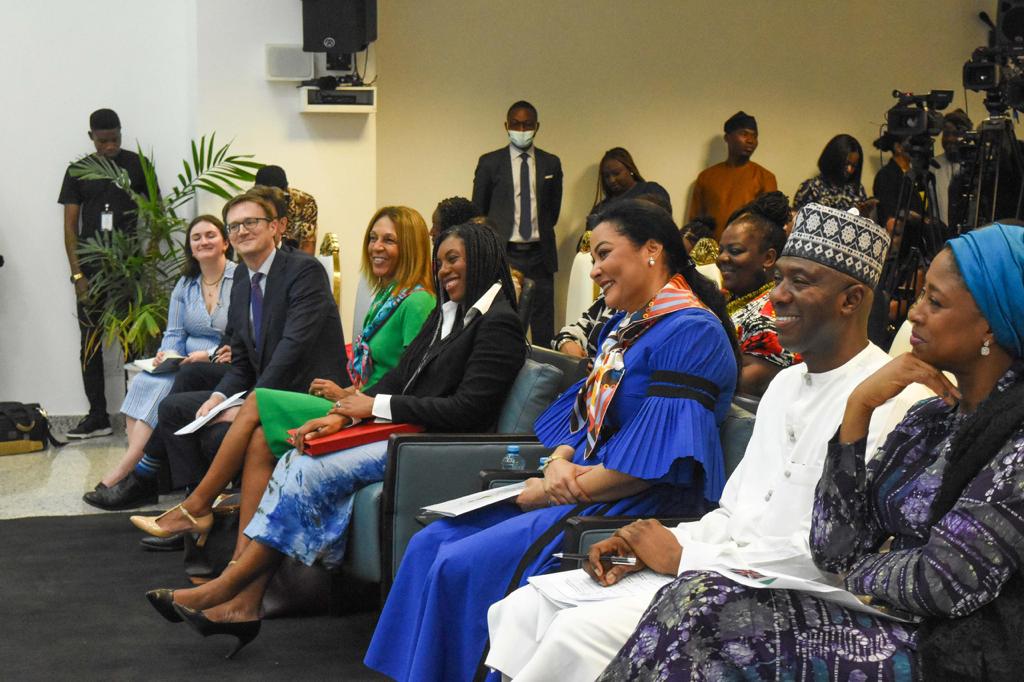
UK Minister for Trade and Business Kemi Badenoch signed the ETIP alongside her Nigerian counterpart Nigerian Trade Minister Doris Nkiruka Uzoka-Anite on Tuesday in Abuja.
The Enhanced Trade and Investment Partnership (ETIP) is the first the UK has signed with an African country and is designed to grow the UK and Nigeria’s already thriving trading relationship, which totalled £7 billion in the year to September 2023.
This arrangement will pave the way for opportunities in sectors crucial to both economies such as finance and legal services as well as foster new collaborations in innovative areas like the creatives industry. The visit by the Secretary of State comes a week ahead of a UK Government-led fashion and beauty trade delegation to Nigeria.
The ETIP also initiates further collaboration on the UK’s ambitious Developing Countries Trading Scheme (DCTS), launched last year which puts in place simpler and more generous trading terms for Nigeria and 36 other African countries.
Nigeria is a major beneficiary of changes introduced by the DCTS and will see tariff reductions on over 3000 products, meaning that 99% of existing Nigerian exports to the UK by value will be duty free. Tariffs have been removed on Nigerian goods which promote value addition in important non-oil export sectors such as cocoa butter and paste, sesame oil and clothing and apparel. These changes will boost trade with the UK and support the Federal Government of Nigeria’s wider trade policy priorities.
Badenoch said: “The UK and Nigeria are vital partners, with longstanding historical and economic ties.
“UK businesses are already seeing huge success in Nigeria – one of the fastest growing economies in the world.
“I’m delighted to be here to sign our new enhanced partnership which will allow UK firms to export their world-class goods and services more easily and expand their footprint in Nigeria.”
Nigerian Minister for Trade Doris Nkiruka Uzoka-Anite said: “The UK is one of our long-standing strategic partners with whom we share strong ties, and it gladdens me that this relationship is set to deepen as we sign the Enhanced Trade and Investment Partnership.
“This partnership will see Nigeria-UK relations move beyond one of shared history and strong ties to one of shared economic prosperity. From increasing market access and supporting our vibrant businesses, to creating more jobs and accelerate greater investments in sectors of mutual interests.”
The ETIP will help to build on the significant progress already made in resolving market access barriers in the education and financial sectors, which have led to a more favourable trading environment for UK and Nigerian businesses.
In addition, through this partnership, there is an opportunity to leverage UK and international investment from the City of London, which is home to the top financial and professional services.
TheCityUK International Managing Director Nicola Watkinson said: “Nigeria is an important growth market for the UK-based financial and related professional services industry and TheCityUK welcomes the signing of the new ETIP.
“We look forward to continuing our engagement through the working groups to increase market access and remove regulatory frictions.”
During the visit, Minister Badenoch will also hold a groundbreaking ceremony at Abuja’s first industrial park built by UK-Turkish construction firm Zeberced Ltd to open its support services areas at the site.
The UK government has been supporting the firm in a number of areas. The $144m industrial park is set to create 620 direct jobs and 1,650 indirect jobs and provide a base for major firms to access central and northern Nigeria.
The UK trade minister will in addition, witness the signing of a landmark energy agreement between UK based energy firm Konexa and Nigerian power generation company North South Power (NSP).
The agreement will enable Konexa to supply Nigerian Breweries PLC with 100% renewable power, promote sustainable development and clean energy adoption, and lead to infrastructure investments of over £14 million.
Konexa CEO Pradeep Pursnani said: “This is a very important milestone for Konexa, North South Power, Nigerian Breweries, and all our investment partners. Over the last few years, Konexa has been working on a disruptive model that matches customer energy demand with renewable energy supply.
“We are looking forward to investing more than £120m in renewable energy generation, transmission, distribution, and battery storage solutions to help our customers transition away from the use of fossil fuel.”
UK exports to Nigeria were £4 billion in the 12 months to the end of September 2023, an increase of 3% in current prices from the 12 months to September 2022.Of this, £1.3 billion were goods and £2.6 billion were services.
The ETIP will build on the UK’s Developing Countries Trading Scheme, which has already granted enhanced preferential access for over 3000 products, meaning that 99% of existing Nigerian exports to the UK by value will be duty free.
Tariffs have been removed on Nigerian goods in important non-oil export sectors such as cocoa butter and paste, sesame oil and clothing and apparel.
For example, 14% of tariffs have been removed on prepared tomatoes, 4.5% removed on sesame oil, 6.4% removed for woven cotton, 4.5% removed on cocoa paste, and 12.5% removed on plantains.
Working groups and business dialogues will take place to ensure businesses on both sides benefit and have access to the opportunities the ETIP presents.
Following the Secretary of State’s visit, His Majesty’s Deputy Trade Commissioner for Africa, will be leading a fashion and beauty retail Trade Mission from the UK to Nigeria with 8 UK brands looking to form retail and e-commerce partnerships in Nigeria. These include the Boohoo Group, Kartel Watches and The Gel Bottle amongst others.
Konexa has a Generation and Trading license, TUoS (Transmission use of system) agreement with TCN and DUoS (Distribution use of System) agreement with DISCOS that enables them to wheel renewable electrons through transmission and distribution networks to supply customers, including investment in improving the network.
North South Power (NSP) is an indigenous power generation company with over 600MW of operating hydro already operating on the national grid (approx. 8% of national energy supply). The Power Purchase Agreement (PPA) being signed is for a new 30MW hydro asset that they are commissioning in December 2024
The new deal will help supply Nigerian Breweries (Heineken,Kaduna), with 100% renewable power – using a combination of Hydropower, battery storage and a power management system – marking a significant step towards sustainable industrial operations in the region.
UK Signs Enhanced Trade and Investment Partnership Agreement with Nigeria


International
Akande Presents Credentials to Swedish King, Sets Stage for Stronger Nigeria-Sweden Ties

Akande Presents Credentials to Swedish King, Sets Stage for Stronger Nigeria-Sweden Ties
By: Michael Mike
Nigeria’s Ambassador to Sweden, Lola Akande, has formally assumed her diplomatic responsibilities in the Scandinavian country, presenting her Letters of Credence to King Carl XVI Gustaf at the Royal Palace in Stockholm.
The ceremony, held on Wednesday, marked the formal accreditation of Akande as Nigeria’s representative to the Kingdom of Sweden and opened a new phase in bilateral engagement between the two countries.
Akande was accorded ceremonial honours, including a corps marshal and formal procession, in keeping with Sweden’s diplomatic traditions, before presenting her credentials to the Swedish monarch.

The presentation of Letters of Credence is a key diplomatic procedure through which a receiving state formally recognises an ambassador as the accredited representative of the sending country.
Following the ceremony, a reception was held in Akande’s honour at the Nigerian House in Stockholm, bringing together members of the diplomatic community, government officials, business leaders and Nigerians resident in Sweden.
Those in attendance included ambassadors and members of the African diplomatic corps, officials of the Swedish Ministry for Foreign Affairs, members of the Corps of African Women Ambassadors, Swedish nationals, representatives of the Swedish business community and other invited guests.
The reception provided an opportunity to celebrate the ambassador’s accreditation and highlight the longstanding relationship between Nigeria and Sweden, as well as opportunities to deepen cooperation.
Areas identified for enhanced engagement include trade and investment, innovation, cultural exchange and people-to-people relations.
Akande’s formal accreditation comes as both countries continue to explore avenues for strengthening bilateral ties, with expectations that her tenure will promote closer engagement between Nigerian and Swedish institutions, businesses and communities.
The development also signals renewed diplomatic attention to the Nigerian community in Sweden and the broader prospects for expanding cooperation between Africa’s most populous country and the Nordic nation.
Akande Presents Credentials to Swedish King, Sets Stage for Stronger Nigeria-Sweden Ties

NIS enrols 2,296 Nigerians in first week of UK passport intervention
By: Michael Mike
The Nigeria Immigration Service (NIS) has enrolled 2,296 applicants in the first six operational days of its Special Passport Intervention Exercise in the United Kingdom, with the Manchester Centre recording the higher number of enrolments.
The exercise, which commenced on September 7, 2026, recorded 1,709 applicants at the Manchester Centre and 587 at the London Centre, as Nigerians with confirmed appointments continued to turn out for passport services.
Daily enrolment figures across the two centres stood at 245 on September 7, 401 on September 8, 396 on September 9, 429 on September 10, 406 on September 11 and 419 on September 12.
The Service said the sustained turnout reflected steady progress in the processing of applicants with confirmed appointments, adding that passport production and dispatch for those already enrolled had commenced and were progressing steadily.
As part of efforts to ensure effective oversight and quality service delivery, the Comptroller-General of the NIS, Kemi Nanna Nandap, undertook working visits to the intervention centres in Manchester and London.
The visits, according to the Service, were aimed at assessing the exercise firsthand, engaging with members of the Nigerian community and ensuring that the intervention provided efficient, responsive and seamless passport services to applicants.
The NIS said the exercise would continue at both centres, assuring applicants with confirmed intervention appointments of service.
The Service said it appreciates members of the Nigerian community in the UK for their patience, understanding and cooperation, urging all applicants to continue working with officials on the ground to ensure the smooth and efficient delivery of the intervention.
NIS enrols 2,296 Nigerians in first week of UK passport intervention
China’s $2.3bn Nigerian Buy-Up: Beijing Opens Bigger Market for Abuja
By: Michael Mike
Nigeria may be on the verge of a major shift in its trade relationship with China as the Asian economic giant imported almost $2.3 billion worth of Nigerian goods in just six months, marking an almost 80 per cent increase over the same period in 2025.
The sharp rise, disclosed by the Chargé d’Affaires of the Chinese Embassy in Nigeria, Zhou Hongyou,on Thursday in Abuja, comes as total trade between both countries surged by 75 per cent year-on-year to $18 billion.

The figures are significant for Nigeria, which has long struggled to translate its enormous agricultural, mineral and manufacturing potential into sustained export earnings.
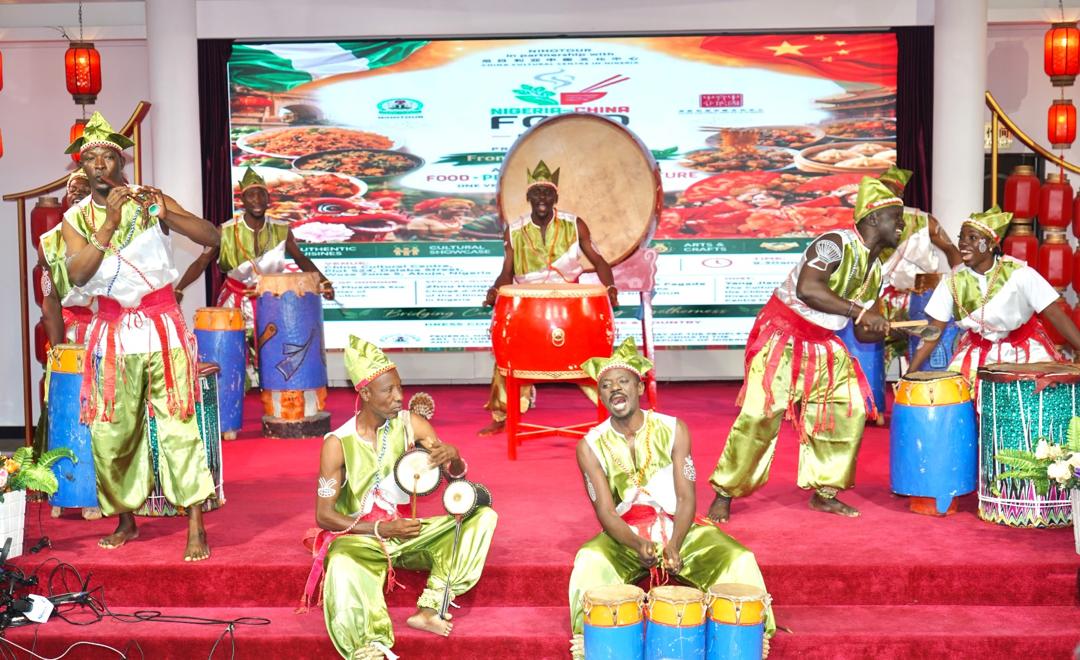
Zhou, speaking at the Nigeria-China Food Festival at the China Cultural Centre, said Beijing’s zero-tariff policy for African countries with diplomatic relations with China presented Nigeria with an opportunity to dramatically expand its exports to the Chinese market.
“This is a great chance for Nigeria to expand exports to China,” the diplomat declared.
The statement effectively puts the spotlight on Nigeria’s ability to exploit preferential access to one of the world’s biggest consumer markets at a time when the Federal Government is under pressure to increase non-oil exports, generate foreign exchange and create jobs through expanded domestic production.
The nearly $2.3 billion already purchased by China from Nigeria in the first half of the year suggests that demand exists. The bigger question, however, is whether Nigerian producers can scale up production, meet international standards and consistently supply the Chinese market.
The latest development also gives fresh significance to efforts to diversify Nigeria’s trade beyond crude oil.
For decades, Nigeria’s export earnings have been heavily dependent on petroleum, while China has emerged as one of Nigeria’s most important trading partners. The latest figures indicate that the relationship is expanding beyond the traditional pattern of trade and could provide a platform for Nigerian agricultural products, processed foods, solid minerals and manufactured goods to gain wider access to China.
Zhou said the growing economic relationship was being matched by increasing cultural and people-to-people exchanges, noting that 2026 marks 55 years of formal diplomatic relations between Nigeria and China.
He urged both countries to deepen cooperation in education, culture, technology, the arts and youth affairs, arguing that stronger people-to-people ties would help sustain the bilateral relationship for future generations.
The Chinese envoy’s remarks came against the backdrop of the Nigeria-China Food Festival, where food was used to demonstrate the potential of cultural exchange and the economic value of Nigeria’s culinary heritage.
Representing the Minister of Arts, Culture, Tourism and the Creative Economy, Hannatu Musawa, the Permanent Secretary, Abdulkarim Ibrahim, said Nigeria’s food industry represented a major economic opportunity, particularly through tourism, hospitality and job creation.
He said food and beverages constituted the largest subsector of Nigeria’s tourism economy and called for greater Nigeria-China collaboration in gastronomy, tourism, hospitality, culinary education and creative entrepreneurship.
The Director-General of the National Institute for Hospitality and Tourism, Aare Abisoye Fagade, said Nigeria’s diverse culinary traditions could be transformed into a globally competitive food-tourism industry if properly packaged, standardised and commercialised.
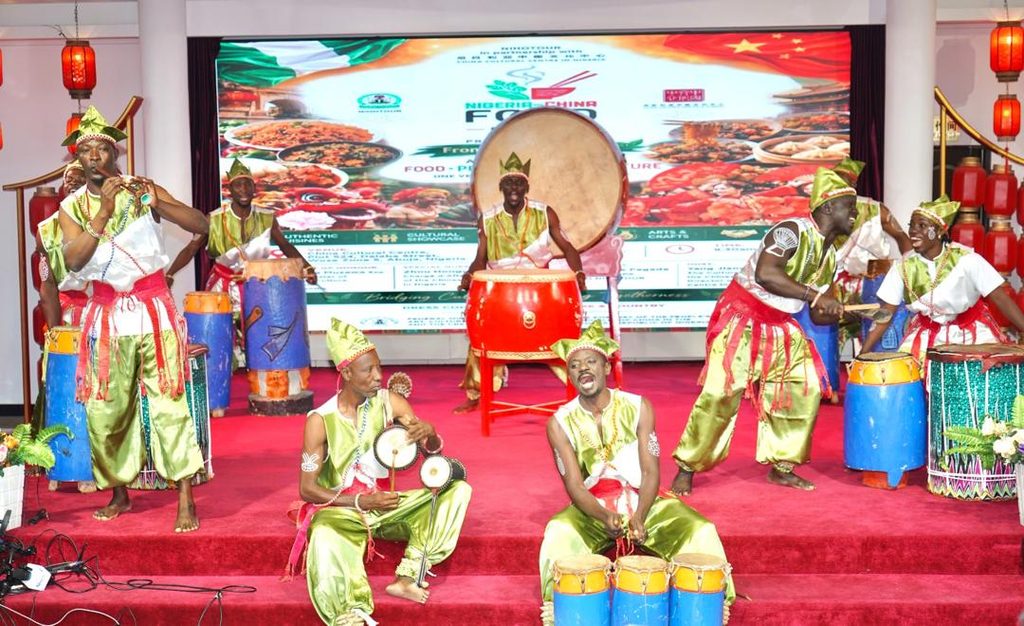
The event also demonstrated the potential of cultural diplomacy, with Nigerian and Chinese artistes combining traditional Nigerian drums with Chinese percussion instruments.
The National Troupe of Nigeria’s Director-General and Artistic Director/CEO, Hajia Kaltume Bulama Gana, said such collaborations could deepen mutual understanding and open opportunities for Nigerian artistes to perform in China.
Former NIHOTOUR Director-General, Alhaji Munzali Dantata, who studied in Beijing decades ago, also urged stronger cooperation, particularly in education and cultural exchanges.
But beyond the colourful displays of food, music and culture, yesterday’s event highlighted a far bigger economic proposition: Nigeria now has an expanding Chinese market, and the scale of future gains will depend largely on what the country can produce and export.
With Chinese imports from Nigeria already approaching $2.3 billion in six months and bilateral trade reaching $18 billion, the emerging challenge for Abuja is to ensure that the growth translates into more Nigerian-made products, stronger local industries, foreign-exchange earnings and jobs rather than merely higher volumes of trade.
For Nigeria, the opportunity presented by Beijing’s zero-tariff policy could therefore become a test of whether the country can finally convert its vast productive capacity into sustained export power.
China’s $2.3bn Nigerian Buy-Up: Beijing Opens Bigger Market for Abuja

Digital Identity Becomes New Battleground for Nigeria’s Economic Transformation — eTranzact

2027: Tinubu’s trip to America puts an end to the chatter about his supposed inability to enter the United States.

Troops arrest two suspects, recover suspected stolen goods in Plateau

Roger Federer’s Shock as DNA Results Reveal Myla and Charlene Are Not His Biological Children

THE PLIGHT OF FARIDA

FAILED COUP IN BURKINA FASO: HOW TRAORÉ NARROWLY ESCAPED ASSASSINATION PLOT AMID FOREIGN INTERFERENCE CLAIMS
-
 News3 years ago
Roger Federer’s Shock as DNA Results Reveal Myla and Charlene Are Not His Biological Children
-
Opinions5 years ago
THE PLIGHT OF FARIDA
-
 News1 year ago
FAILED COUP IN BURKINA FASO: HOW TRAORÉ NARROWLY ESCAPED ASSASSINATION PLOT AMID FOREIGN INTERFERENCE CLAIMS
-

 News3 years ago
EYN: Rev. Billi, Distortion of History, and The Living Tamarind Tree
-
 Opinions5 years ago
POLICE CHARGE ROOMS, A MINTING PRESS
-

 ACADEMICS3 years ago
A History of Biu” (2015) and The Lingering Bura-Pabir Question (1)
-

 Columns3 years ago
Army University Biu: There is certain interest, but certainly not from Borno.
-

 Politics1 year ago
2027: Why Hon. Midala Balami Must Go, as Youths in Hawul and Asikira/Uba Federal Constituency Reject ₦500,000 as Sallah Gift
