
National News
UN Agency Gives USD 395,000 to 39 Land Restoration Projects Worldwide

UN Agency Gives USD 395,000 to 39 Land Restoration Projects Worldwide
By: Michael Mike
In a decisive step to reverse land degradation, 39 land restoration projects led by grassroots organisations have been awarded USD 395,000 through the inaugural Small Grants Programme of the G20 Global Land Initiative (GLI), a flagship initiative of the United Nations Convention to Combat Desertification (UNCCD).
Drawn from 22 countries, the winning projects were selected for their innovation, impact and sustainability. Over 650 organisations from more than 100 countries applied for the award. The winners were selected following three rounds of review by separate UNCCD staff teams, with varied expertise in land management and restoration.
Awardees will receive between US$5,000 and US$15,000 to fund grassroots efforts that boost local economies, improve food and water security and strengthen ecosystem resilience.
The announcement was livestreamed at an event showcasing the grant winners.
The Small Grants Programme is an important tool for achieving the G20 GLI’s mission of reducing degraded land by 50 percent by 2040.
Speaking during the award ceremony, Director of the G20 Global Land Initiative,Dr. Muralee Thummarukudy, said: “We are aware that these big numbers, cannot be achieved by small initiatives alone. Yet, we feel, it is important that tens of thousands of small actors, engaged in land restoration around the world, be supported, promoted and recognized,”
Special priority was given to organisations accredited to UNCCD and to projects empowering Indigenous Peoples, youth, women and the elderly.
The programme was set up in 2024 to support community-level non-profit organisations worldwide. According to a statement, by directly supporting civil society and grassroot actors, these grants will generate measurable progress across global aided restoration priorities, such as soil fertility enhancement, forest regeneration, sustainable agriculture, agroecology and ecosystem-based adaptation.
The statement added that beyond reclaiming land, the projects are enhancing livelihoods, strengthening community climate resilience, and fostering social enterprise and eco-preneurship.
“When we do these small grants program, it is not just about the grant. It’s about the network which we create and the visibility it provides — both for those within it and those outside who can benefit from their knowledge and experience,” Thummarukudy added.
Three of the highest-scoring projects were showcased at the UNCCD Conference of the Parties held in Riyadh, Saudi Arabia, in December 2024, to highlight their potential for scaling and replication across regions.
The statement also revealed that winners will also be showcased at select high-level events in the future, stating that the G20 GLI is committed to inclusive and continuous engagement, and is exploring future
collaboration opportunities for the applicants not selected in this round.
Stressing that “this is just the beginning, this will be an annual process, the next cohort is about to start,” Dr Thummarukudy invited community organisations doing land restoration to apply to join the network because both “big and small” [efforts] are important.
He noted that the second call for applications will open in 2025 with increased funding and expanded
support for grassroots restoration efforts worldwide.
Innovative community-led restoration initiatives are essential for creating green jobs, especially for youth and women..The awards provide support that can transform restoration into a catalyst for economic opportunity and sustainable environmental management.
Examples of selected 2024 grantees include: Legacy of War Foundation (Rwanda), which will restore six hectares of degraded soil while empowering 90 women as landowners of fully organic cooperative farms. By integrating climate-smart and artisanal farming methods, the project aims to improve soil fertility and agricultural resilience in post-conflict rural communities.
Up2Green Foundation (India) is restoring mangroves and riverbanks in Tamil Nadu, India. The project is reforesting 60 hectares and planting 15,000 fruit trees, enhancing biodiversity, strengthening coastal resilience for flood prevention, and training local communities in sustainable agroforestry practices.
Sustainability and Environmental Studies Endeavor (Nepal) is working to restore
ecological balance along the mythological Nagaraj Trail. By revitalizing degraded farms, wetlands and forests using nature-based solutions, the project promotes nature-inclusive agriculture and convivial conservation approaches.
The G20 Global Land Initiative was launched in 2020 under the Saudi G20 Presidency. Hosted by the UNCCD, its ambition is to reduce degraded land by 50 percent by 2040. By showcasing
land restoration, empowering civil society, engaging the private sector and building capacity, G20 GLI is driving restoration to scale and energizing a restoration economy. The Small Grants Programme is a key component of this vision, empowering civil society to restore degraded lands and promote sustainable land management at scale.
UN Agency Gives USD 395,000 to 39 Land Restoration Projects Worldwide



NAF personnel arrested for alleged killing in Port Harcourt
By: Zagazola Makama
A Nigerian Air Force officer has been arrested following the death of a man during an incident at NAF Harmony Estate along Eliozu Road in Port Harcourt, Rivers State, sources confirmed on Monday.
According to sources, at about 11:00 p.m. on March 14, LCPL Oton Uba Eli of the Nigerian Air Force, attached to the 115 Special Operations Group, apprehended David Ebuka, a 28-year-old dispatch rider, over possession of suspected hard drugs.
While at the scene, a man believed to be Ebuka’s superior, Joseph Iche Johnson, arrived, prompting a confrontation. During the argument, the Air Force officer reportedly discharged his firearm, fatally wounding Johnson.
The victim was taken to a military hospital, where he was pronounced dead. His body was later deposited at the University of Port Harcourt Teaching Hospital Mortuary for autopsy.
Both the dispatch rider and the Air Force officer have been taken into custody by the police as investigations continue.
Police said inquiries are ongoing to establish the full circumstances surrounding the incident.
NAF personnel arrested for alleged killing in Port Harcourt
EU Parliament calls for release of Niger’s ousted president Bazoum
By: Zagazola Makama
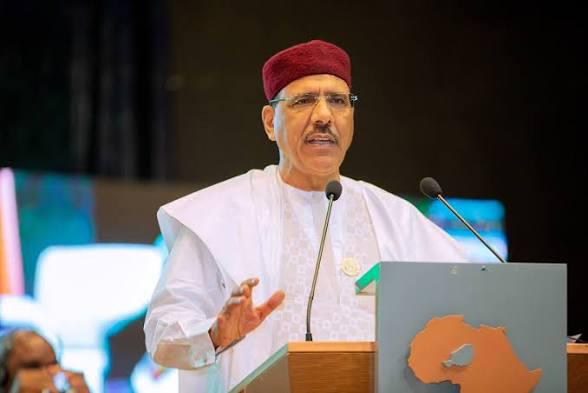
The European Parliament has adopted a resolution calling for the immediate and unconditional release of Niger’s ousted president, Mohamed Bazoum, and his wife, who have remained in detention since the 2023 Niger coup d’état.
Bazoum, who was democratically elected in Niger’s historic transfer of power in 2021, would have completed his first five-year term in April 2026 if he had not been overthrown by members of his presidential guard.
In a resolution adopted almost unanimously on Friday, the European Parliament condemned the continued detention of Bazoum and his wife by the military authorities currently ruling Niger, describing their detention as arbitrary.
The lawmakers urged the military junta to release the former president immediately and restore constitutional order in the country.
The resolution warned that the international community could consider further sanctions and legal measures against members of the military leadership if the situation persists.
Bazoum and his wife have been held in confinement since July 2023 when soldiers led by Abdourahamane Tiani, the former head of the presidential guard, overthrew the government and suspended the constitution.
The coup drew widespread condemnation from the international community, including ECOWAS, which initially threatened military intervention to restore democratic governance.
However, the proposed intervention was never carried out, and Bazoum has remained in detention while the military authorities consolidated power.
Political observers say the failure of regional and international efforts to secure Bazoum’s release has raised concerns about the weakening of democratic norms in parts of the Sahel.
The European Parliament said the continued detention of the former president represents a violation of democratic principles and human rights, warning that silence or indifference toward such actions could encourage unconstitutional changes of government elsewhere.
The resolution also highlighted the deteriorating political and security situation in Niger since the coup, noting that democratic gains and human rights protections have been undermined under military rule.
Meanwhile, critics have also raised questions about the silence of Mahamadou Issoufou, Bazoum’s long-time political ally and predecessor, who some analysts say has not publicly pressed strongly enough for Bazoum’s release despite their decades-long political relationship.
The European Parliament’s move could revive international attention on Bazoum’s detention and increase diplomatic pressure on the junta to release him and return Niger to constitutional governance.
They also urged African governments and institutions to play a more active role in defending democratic norms and supporting the restoration of civilian rule in Niger.
Bazoum’s supporters continue to call for stronger international mobilisation to secure his freedom and restore the democratic mandate given to him by the Nigerien electorate.
EU Parliament calls for release of Niger’s ousted president Bazoum
National News
Northern Nigeria Faces Environmental Crisis as FG Unveils Plans to Revive Dying Rivers, Farmlands
Northern Nigeria Faces Environmental Crisis as FG Unveils Plans to Revive Dying Rivers, Farmlands
By: Michael Mike
Alarm over worsening desertification and environmental degradation across Northern Nigeria has prompted the Federal Government to move ahead with new strategic plans aimed at restoring damaged ecosystems and safeguarding the livelihoods of millions of rural residents.
The initiative, supported by the World Bank and implemented under the Agro-Climatic Resilience in Semi-Arid Landscapes (ACReSAL) Project, focuses on the development and validation of nine Strategic Catchment Management Plans intended to tackle land degradation, water scarcity and declining agricultural productivity in vulnerable communities.
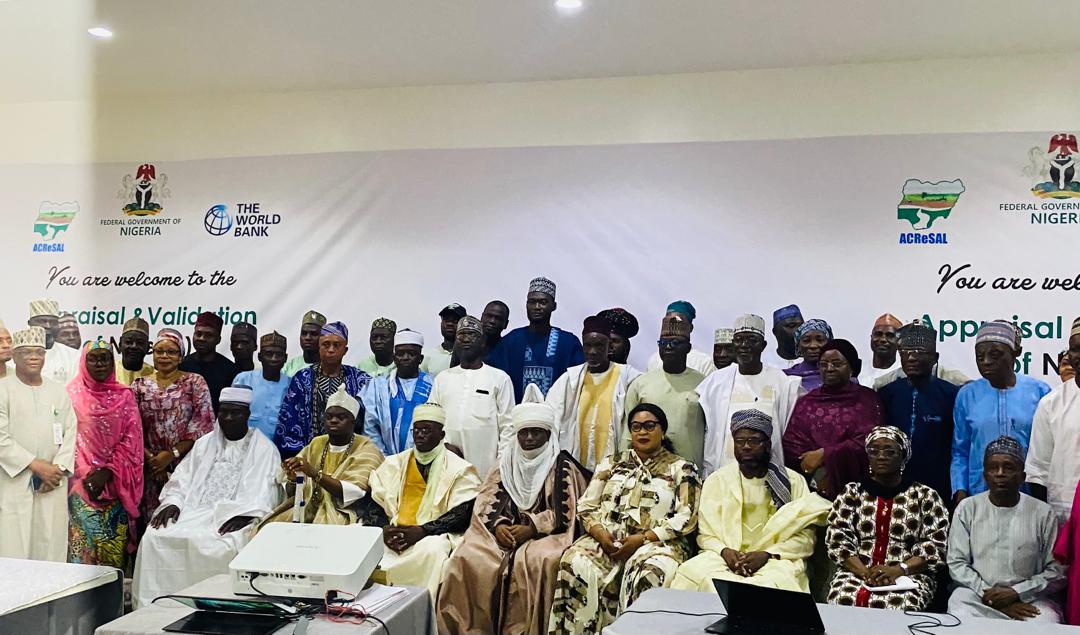
The plans are currently being reviewed at a multi-stakeholder workshop in Abuja, where government officials, development partners, environmental experts and community representatives are examining strategies to restore critical watersheds and strengthen climate resilience across the region.
Officials said the intervention has become urgent as environmental pressures continue to threaten food production, water supply and the stability of rural communities in the country’s northern belt.
Director of Hydrology at the Federal Ministry of Water Resources and Sanitation, Engr. Abohwo Ngozi, who represented the Minister, Joseph Terlumun Utsev, warned that desert encroachment, erratic rainfall and shrinking water bodies are already affecting livelihoods across the 19 northern states and the Federal Capital Territory.
She noted that degraded farmlands and drying rivers have become daily realities for farmers and pastoralists who depend on the region’s fragile ecosystems for survival.
According to Ngozi, the catchment management plans will provide a comprehensive framework for coordinating environmental restoration efforts while improving water and land management practices.
She explained that the strategies would help identify priority intervention areas, mobilise resources and guide long-term investments aimed at reversing environmental decline.
National Coordinator of the ACReSAL Project, Abdulhamid Umar, represented by Shettima Adams, said the nine catchment plans were developed after extensive consultations with communities directly affected by environmental degradation.
He said the catchments include Malenda, Oshin-Oyi, Gurara-Gbako, Aloma-Konshisha, Benue-Mada, Sarkin-Pawa-Kaduna, Zungur-Gongola, Gaji-Lamurde and Hawul-Kilange.
Umar noted that the plans would guide practical interventions such as tree planting, soil conservation, climate-smart agriculture and improved water management aimed at restoring ecosystems and boosting rural livelihoods.
“These plans reflect the voices of communities that are already living with the realities of desertification, shrinking water sources and degraded farmlands. They offer practical solutions designed to rebuild the landscapes and support sustainable livelihoods,” he said.
The catchment areas span several states including Adamawa, Bauchi, Benue, Borno, Gombe, Kaduna, Kano, Katsina, Kebbi, Kogi, Kwara, Nasarawa, Niger, Plateau, Taraba, Yobe and Zamfara, as well as the Federal Capital Territory.
Beyond environmental restoration, experts say improved catchment management could also help reduce tensions linked to competition for land and water resources among farmers, herders and rural communities in parts of Northern Nigeria.
Representing the World Bank Task Team Leader, Joy Iganya Agene, Henrietta Alhassan said the validation process marks an important step toward strengthening sustainable water resource management and climate adaptation efforts in the region.
She stressed that protecting catchment ecosystems is critical not only for environmental sustainability but also for ensuring long-term economic development and the resilience of communities that rely on these natural resources.
Officials involved in the programme said the workshop will complete the validation of the final batch of catchment plans, bringing the total number developed under the ACReSAL project to 20 and paving the way for large-scale environmental restoration and climate resilience interventions across Northern Nigeria.
Northern Nigeria Faces Environmental Crisis as FG Unveils Plans to Revive Dying Rivers, Farmlands

2027: Recalibration in Adamawa as Political Gladiators Return to the Drawing Board Over Dr. Namdas’s announcements to join the guber race

Troops nutrialised several Boko Haram terrorists in Yobe

Zulum Condemns Maiduguri Explosion, Calls for Calm, Vigilance in Worship, Public Places

Roger Federer’s Shock as DNA Results Reveal Myla and Charlene Are Not His Biological Children

THE PLIGHT OF FARIDA

FAILED COUP IN BURKINA FASO: HOW TRAORÉ NARROWLY ESCAPED ASSASSINATION PLOT AMID FOREIGN INTERFERENCE CLAIMS
-
 News2 years ago
Roger Federer’s Shock as DNA Results Reveal Myla and Charlene Are Not His Biological Children
-
Opinions4 years ago
THE PLIGHT OF FARIDA
-
 News11 months ago
FAILED COUP IN BURKINA FASO: HOW TRAORÉ NARROWLY ESCAPED ASSASSINATION PLOT AMID FOREIGN INTERFERENCE CLAIMS
-

 News2 years ago
EYN: Rev. Billi, Distortion of History, and The Living Tamarind Tree
-
 Opinions4 years ago
POLICE CHARGE ROOMS, A MINTING PRESS
-

 ACADEMICS2 years ago
A History of Biu” (2015) and The Lingering Bura-Pabir Question (1)
-

 Columns2 years ago
Army University Biu: There is certain interest, but certainly not from Borno.
-

 Opinions2 years ago
Tinubu,Shettima: The epidemic of economic, insecurity in Nigeria
