
News
UN Envoy, IPCR DG Warn Against Weaponising Hunger, Misinformation Ahead of 2027 Elections

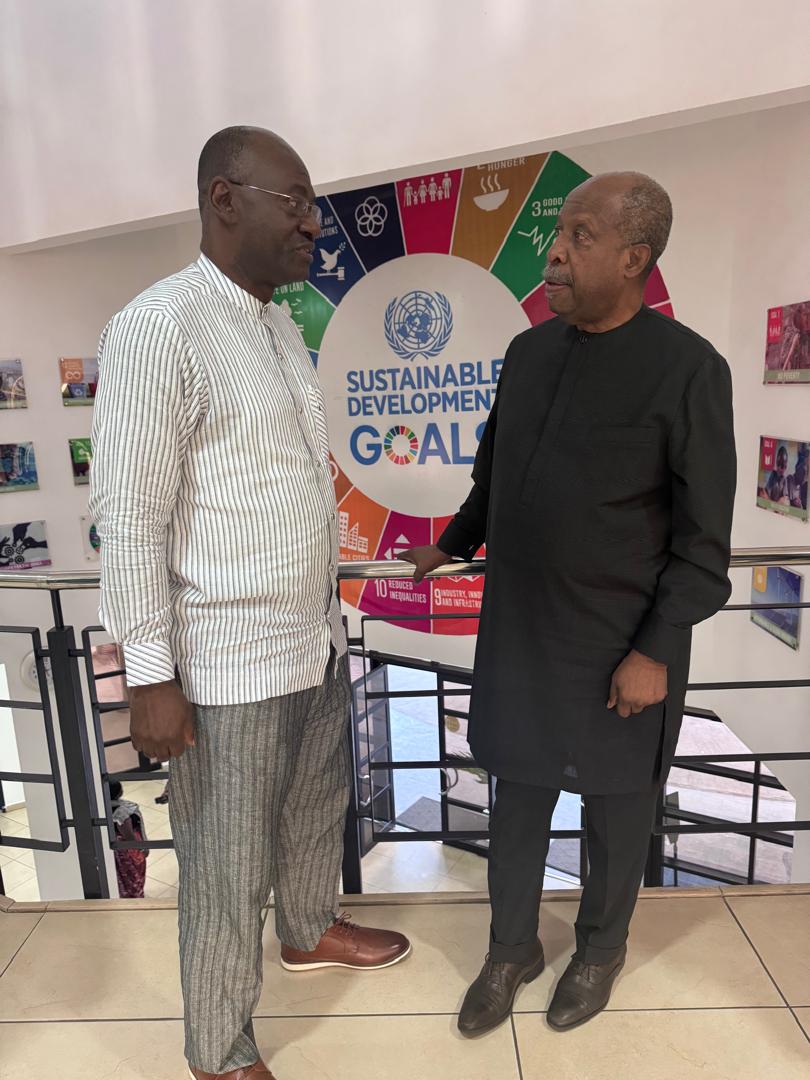
UN Envoy, IPCR DG Warn Against Weaponising Hunger, Misinformation Ahead of 2027 Elections
By: Michael Mike
A United Nations envoy and the Director-General of the Institute for Peace and Conflict Resolution (IPCR), Dr Joseph Ochogwu, have called for stronger measures to prevent electoral violence in Nigeria, warning against the exploitation of economic hardship, misinformation and disinformation to destabilise the 2027 general elections.
The call was made during a meeting between the UN Special Representative of the Secretary-General, Leonardo Santos Simão, and Ochogwu in Abuja, where they discussed Nigeria’s preparedness for the forthcoming elections and strategies for ensuring peaceful political participation before, during and after the polls.
Simão, who is in Nigeria on a working visit as part of a pre-election assessment, engaged critical stakeholders on emerging threats to electoral stability and the need to strengthen early warning, prevention and response mechanisms.
The discussions focused on political violence, election-related tensions, misinformation, disinformation and the growing influence of technology in shaping political narratives.
Ochogwu expressed confidence in Nigeria’s institutional capacity to prevent and manage election-related violence, noting that the country’s law enforcement agencies, military and intelligence services had the capacity to contain threats and prevent isolated incidents from escalating into widespread violence.
He, however, stressed the need to strengthen existing preventive mechanisms rather than allow political tensions to degenerate into violence.
A major concern raised by the IPCR boss was what he described as the need for the “de-weaponisation of hunger”, warning against attempts by political actors to exploit the economic difficulties confronting Nigerians for partisan mobilisation.
He noted that opposition parties could exploit inflation and the rising cost of living to mobilise public anger against the government, while urging the government to acknowledge the hardship faced by citizens and sustain interventions to cushion its effects.
According to him, the politicisation of economic hardship could deepen social tensions and transform legitimate public grievances into instruments of political conflict.
Ochogwu also warned against the growing use of misinformation, disinformation and malinformation in the electoral process, particularly through social media and emerging technologies.
He said technological advancement had created new opportunities for manipulating public opinion through false information, misleading narratives and potentially foreign-influenced content capable of heightening political tensions.
He therefore called for greater vigilance among political parties, security agencies, civil society organisations and technology platforms to prevent digital spaces from becoming instruments of electoral destabilisation.
The IPCR director-general further highlighted tensions between established authority, traditional political structures and democratic values, cautioning that political actors could exploit such divisions to undermine public confidence in democratic institutions.
He urged political parties to embrace conciliatory politics, restraint and greater accommodation of competing interests, warning against rhetoric that portrays political competition as a zero-sum contest in which opponents must be destroyed.
Ochogwu said both the ruling and opposition parties had responsibilities to maintain a peaceful political environment and ensure that their supporters refrained from inflammatory statements and violence.
He emphasised that the responsibility for sustaining democratic stability extended beyond election day, noting that political competition should give way to governance, reconciliation and national development after the polls.
The engagement forms part of broader consultations by the UN representative with Nigerian stakeholders to assess the country’s preparedness for the 2027 general elections and identify measures to strengthen peaceful political participation.
The discussions underscored the importance of early intervention, responsible political communication and collaboration among government institutions, political parties, security agencies, civil society and international partners in safeguarding Nigeria’s democratic process.
UN Envoy, IPCR DG Warn Against Weaponising Hunger, Misinformation Ahead of 2027 Elections


NSCDC Begins Construction of New Gate, Quarter Guard Post, Access Road
By: Michael Mike
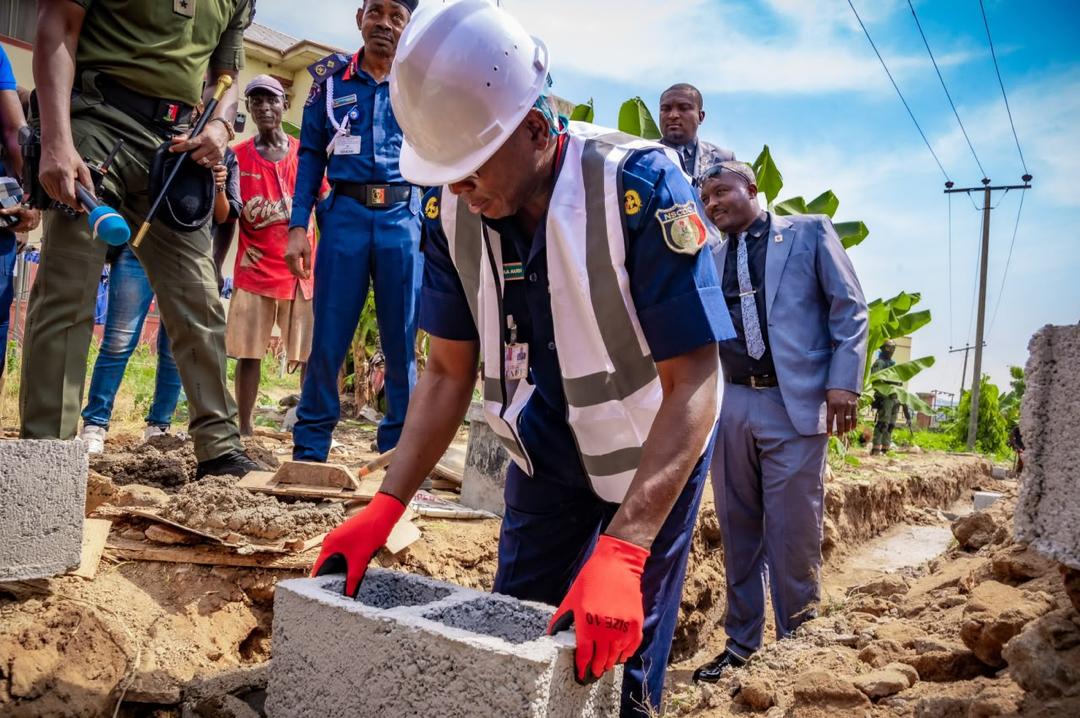
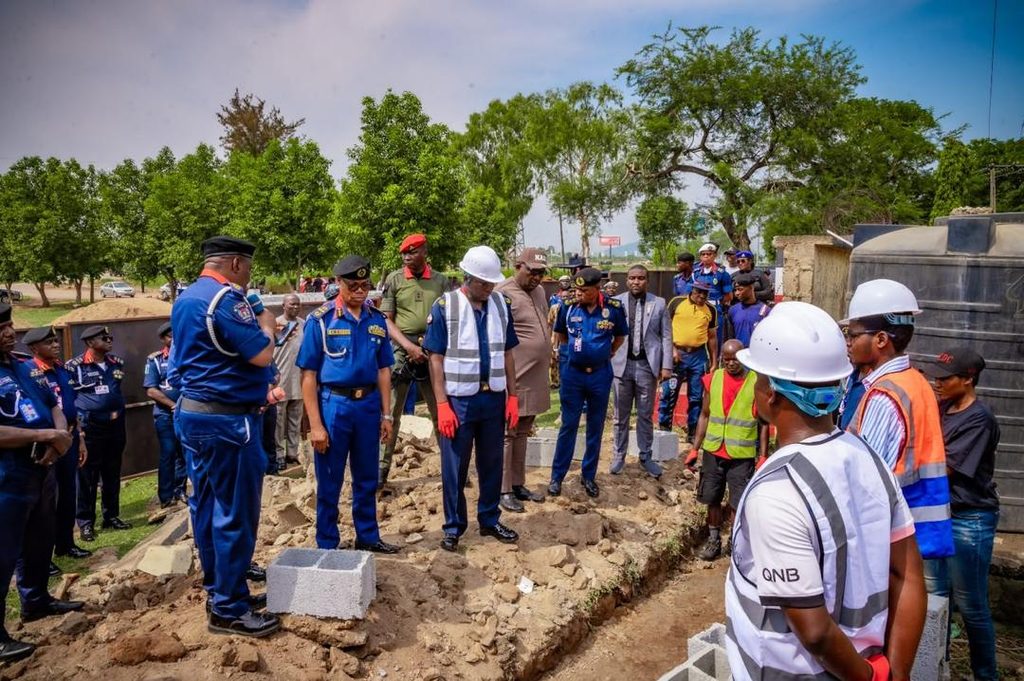
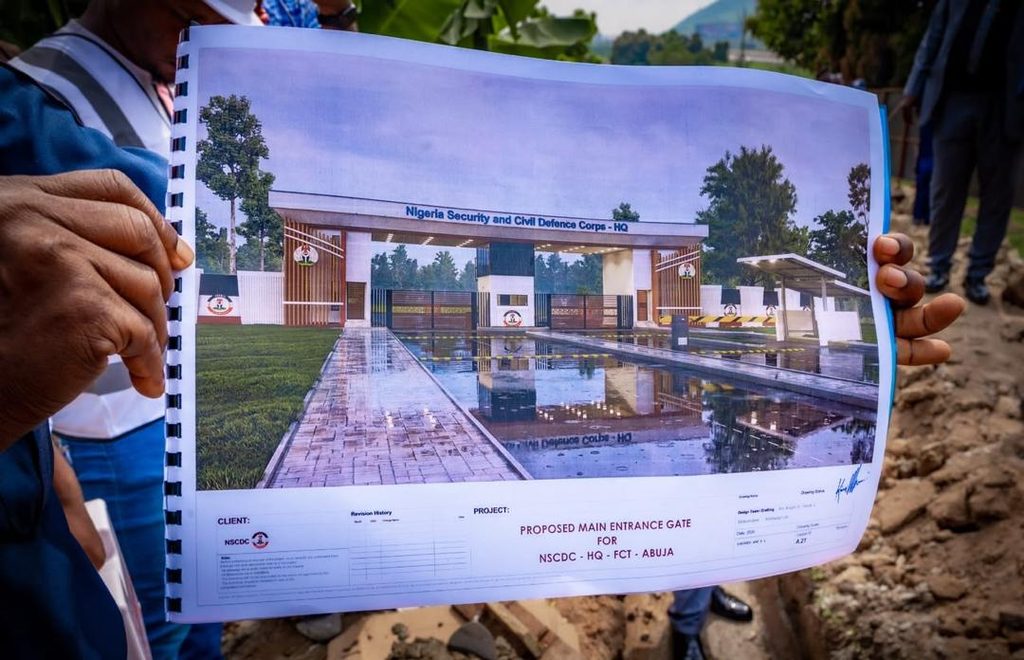
The Nigeria Security and Civil Defence Corps (NSCDC) has commenced the construction of a new entrance gate, modern Quarter Guard Post, access road and solar illumination project to strengthen security and improve its operational environment.
The Commandant-General of the Corps, Prof. Ahmed Audi, performed the groundbreaking ceremony for the infrastructure project on Thursday.
A statement issued by the Corps’ National Public Relations Officer, Assistant Commandant of Corps Babawale Afolabi, said the project was designed to strengthen facility security, improve access control and provide a more conducive working environment for personnel.
According to the statement, the project is expected to be completed within eight weeks.
Audi expressed appreciation to President Bola Tinubu and the Minister of Interior, Dr Olubunmi Tunji-Ojo, for their interventions and continued support for the infrastructural development and operational capacity of the Corps.
The Commandant-General said the infrastructure upgrade would support the Corps in discharging its statutory responsibilities more effectively.
The project forms part of efforts to improve the Corps’ facilities and strengthen its operational readiness.
NSCDC Begins Construction of New Gate, Quarter Guard Post, Access Road

Borno Woos Investors, Seeks 90-Day Deal Pipeline to Drive Economic Recovery
By: Michael Mike
The Borno State Government has challenged investors, financial institutions and corporate organisations to move beyond humanitarian interventions and partner with the state to build a productive economy, unveiling a proposed 90-day framework for converting investment interests into bankable projects.
The government said the next phase of Borno’s recovery must be driven by private capital, agricultural and livestock value addition, industrial development, renewable energy, housing, logistics and sustainable employment opportunities.
Dr Babagana Malumbe, the Chief of Staff to Governor Babagana Zulum, who represented his principal at the Private Sector Engagement and Investment Roundtable held in Abuja on Thursday, delivered the opening address, calling on investors to take advantage of the state’s economic opportunities.
Malumbe said Borno was moving away from emergency humanitarian dependence towards private sector-led economic growth, job creation and market-driven development.
He said the state had made significant progress in restoring stability and rebuilding its economy through the efforts of the Armed Forces, security agencies and deliberate government investments in peacebuilding.
According to him, Borno’s development priorities were centred on institutional reforms, economic revival and creating an enabling environment for private investment.
He identified agriculture, livestock and fisheries, industries and manufacturing, finance, trade, MSMEs, and services and urban infrastructure as priority sectors for investment.
Malumbe said the government was strengthening the investment promotion framework through the Borno State Investment Promotion Agency (BOSIPA), streamlining administrative procedures and improving the ease of doing business.
He added that the state’s land administration processes, public-private partnership arrangements and fiscal incentives were designed to protect investments and provide a predictable business environment.
He also announced that sector-specific Investment Clinics would bring investors together with government representatives and technical teams to examine opportunities, structure projects and secure investment commitments.
Also speaking at the roundtable, the Chief Adviser and Coordinator, Sustainable Development, Partnership and Humanitarian Response, Dr Mairo Mandara called on investors, financial institutions and Borno indigenes in the diaspora to move beyond expressions of interest and commit to building sustainable businesses and industries in the state.
Mandara said the success of the investment roundtable should not be measured by the number of speeches delivered or expressions of interest received, but by partnerships established, projects advanced, capital mobilised and jobs created.
She said the next phase of Borno’s recovery required a transition from humanitarian assistance to a productive economy capable of sustaining livelihoods and creating opportunities for its people.
“Government has invested significantly in reconstruction, infrastructure, education, healthcare and agriculture. This is not the destination. It is the foundation for businesses,” she said.
Mandara maintained that sustainable recovery required more than humanitarian assistance, explaining that education, healthcare, security, economic trust and commercial opportunities were interconnected components of the same development agenda.
She identified agriculture as one of Borno’s strongest investment opportunities, noting that more than 60 per cent of the population depended on the sector.
She said the state had significant potential in rice, cowpeas, groundnuts, onions, vegetables and other agricultural produce, but needed to move beyond primary production to processing, packaging, storage, transportation and export.
According to her, the ambition was to establish integrated agricultural value chains that would enable farmers to earn more from their produce while creating opportunities for aggregators, processors, transporters, equipment suppliers, buyers and financial institutions.
She said agricultural development should not be limited to producing raw commodities for sale, but should involve cleaning, processing, certification, packaging and connecting products to local and international markets.
She added that such an approach would create opportunities for large investors, women-led enterprises, young entrepreneurs and small businesses across the agricultural supply chain.
On livestock, Mandara described Borno as one of Nigeria’s major livestock-producing states, urging investors to explore the industries that could be developed around its animal resources rather than concentrating only on transporting livestock from one location to another.
She identified opportunities in animal feed production, veterinary services, dairy production, meat processing, cold storage, transportation, leather and hide processing, insurance and related services.
She also called for the development of an integrated livestock industry, noting that Borno’s strategic location and proximity to Chad, Cameroon and Niger offered access to wider regional markets.
According to her, the state had the potential to become a regional trade and logistics hub connecting Nigeria with markets across neighbouring countries.
She said investment opportunities also existed in warehousing, commodity aggregation, cold-chain facilities, transport services, trade finance, digital payments and insurance.
Mandara further highlighted the potential of housing and hospitality, explaining that ongoing reconstruction and resettlement were creating demand for residential properties, shops, workshops, schools and other commercial services.
She urged private developers and financial institutions to explore affordable housing, mixed-income developments and building materials production, while partnering with government to establish economically viable communities.
She said resettlement should be viewed not only as a humanitarian responsibility but also as an economic opportunity capable of stimulating construction, employment, commerce and service delivery.
On renewable energy, she drew attention to Borno’s considerable solar potential, describing it as an opportunity to support commercial activities, agricultural processing, irrigation, cold storage and industrial development.
She said investments in decentralised solar power systems could help businesses overcome electricity constraints while supporting economic activities in communities and emerging industrial clusters.
Addressing the financing gap facing businesses, Mandara urged financial institutions to develop innovative financing arrangements suited to the realities of small enterprises and agricultural value chains.
She observed that many businesses struggled to access credit because conventional lending arrangements were designed around established companies and traditional collateral requirements.
She called for the development of financing instruments, including guarantees, insurance and other risk-sharing arrangements, to make viable businesses more attractive to lenders.
“We are not asking financial institutions to lend blindly. We are asking you to help make our businesses bankable,” she said.
She acknowledged that security challenges, uneven infrastructure and the viability of some projects remained legitimate concerns for investors.
However, she urged them to adopt a risk-based approach, explaining that investments could begin in relatively stable locations and expand as opportunities improved.
Mandara said the government was prepared to work with investors to understand and manage risks rather than expect private capital to operate without safeguards.
She also appealed to Borno indigenes in the diaspora and those who had established successful careers and businesses outside the state to contribute their expertise, networks and financial resources to its economic recovery.
She said their involvement would help build investor confidence and encourage other private sector players to consider opportunities in the state.
She urged them to support vocational training, mentorship, skills transfer and enterprise development, stressing that their contribution should go beyond sending financial assistance to relatives.
On corporate social responsibility (CSR), Mandara called for a shift from conventional humanitarian donations towards interventions that build skills, strengthen local businesses and enable communities to become economically self-reliant.
She acknowledged the contributions of humanitarian organisations and development partners in saving lives and supporting displaced communities but said such assistance should create pathways towards sustainable livelihoods.
According to her, CSR programmes should prioritise local employment, vocational training, technology transfer and the development of businesses that can continue operating after donor-funded projects end.
She urged companies and development organisations to deliberately train and employ local residents, ensuring that expertise brought into the state was transferred to indigenous workers before external professionals completed their assignments.
“We must measure CSR not only by what companies give, but by what communities can continue to achieve after the support ends,” she said.
To ensure that the roundtable produced tangible outcomes, Mandara proposed a 90-day investment follow-up framework.
Under the arrangement, the first 30 days would be devoted to identifying specific investment opportunities, available assets and potential partners.
The following 30 days would involve commercial, technical, security and social assessments of the identified projects, while the final 30 days would be used to develop decision-ready proposals for investors to determine whether to proceed.
She stressed that the process should produce clear investment decisions rather than allow another engagement to end with unfulfilled expressions of interest.
Mandara urged participants to approach Borno’s investment opportunities with both commercial discipline and social responsibility, insisting that economic returns and positive development impact were not mutually exclusive.
She called on investors to partner with the state in moving from humanitarian dependence to productive enterprise and a competitive economy.
The roundtable featured sector-specific Investment Clinics designed to bring investors together with state officials and technical teams to examine opportunities, structure projects and secure investment commitments.
Borno Woos Investors, Seeks 90-Day Deal Pipeline to Drive Economic Recovery
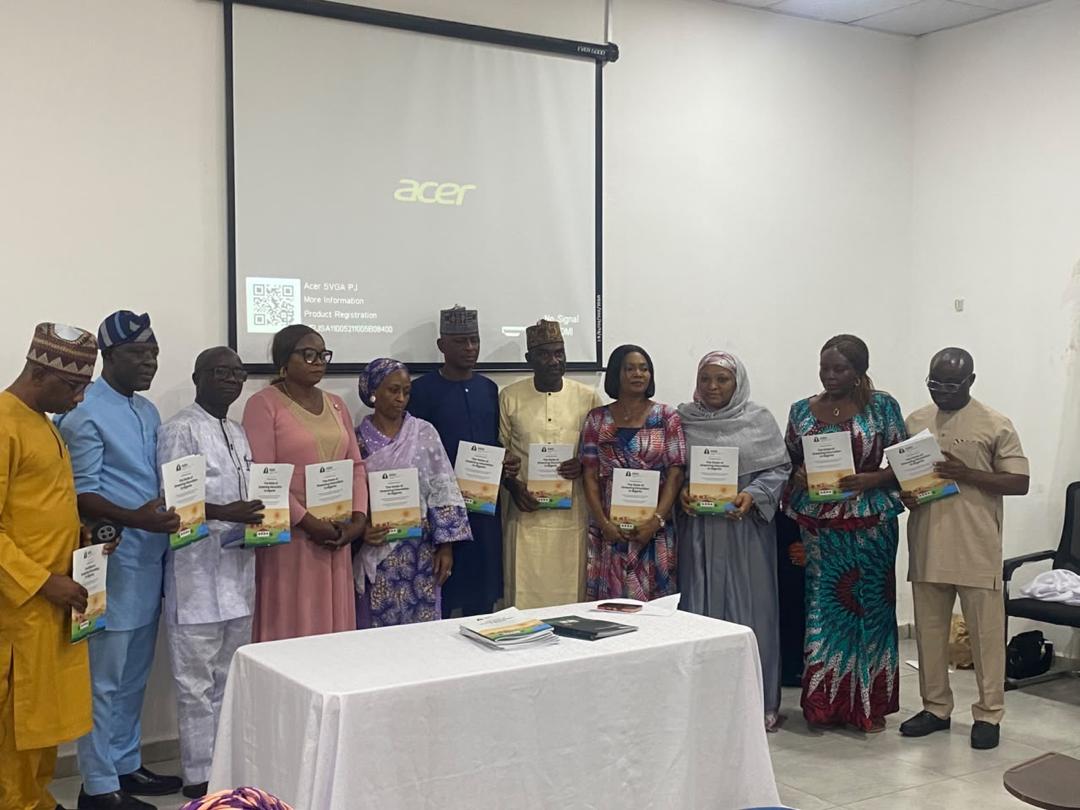
UBEC, IGEN Seek Integration of Climate Education, Green Skills in Nigerian Schools
By: Michael Mike
The Universal Basic Education Commission (UBEC) and the Institute for Greening Education in Nigeria (IGEN) have called for urgent integration of climate change education, environmental sustainability and green skills development into Nigeria’s education system, warning that schools must be repositioned to prepare young people for the growing challenges of climate change.
The institutions made the call on Thursday in Abuja at the Technical Working Group Meeting on the Greening Schools and Climate Change Education Intervention (GSCCEI), which also featured the launch of the State of Greening Education in Nigeria Report and Policy Brief.
They stressed that Nigeria’s response to climate change and environmental degradation must go beyond government policies and environmental campaigns to embed sustainability in school curricula, infrastructure, teacher training and practical skills development.
Speaking at the event, Deputy Director, Academic Services, UBEC, Dr Lydia Gbagi, who represented the Director of the Department, Mrs. Blessing Obinatu, said the commission was committed to transforming Nigerian schools into environmentally responsible, climate-resilient and sustainable learning environments.
She said the GSCCEI was designed to equip learners not only with academic knowledge but also with the values, competencies and practical skills needed to respond effectively to environmental challenges.
Providing an update on the programme, Gbagi disclosed that 33 states, including the Federal Capital Territory (FCT), had benefited from capacity development and step-down training through their State Universal Basic Education Boards (SUBEBs).
She said the training covered climate change education, integration of environmental sustainability into teaching and learning, establishment of Climate Change and Green Champions Clubs, practical greening activities, as well as improved monitoring and reporting mechanisms.
According to her, the intervention has also facilitated the development of state-level master trainers who would extend the training to local government areas and schools to ensure wider implementation.
Gbagi said UBEC had developed implementation guidelines and training materials to institutionalise the programme across the states.
The materials include the GSCCEI Implementation Guidelines, Handbook for Climate Change and Green Champions Clubs, and guidelines for Green School and Climate Change Interventions.
She further disclosed that the National Greening Schools Programme (NGSP) had been developed as a broader framework for advancing greening education in Nigeria, with seven strategic pillars guiding its implementation.
She said the initiative aligned with the Federal Government’s education reform agenda, the Nigeria Education Sector Renewal Initiative, Climate Change Act 2021, Nigeria’s Nationally Determined Contributions and UNESCO’s Greening Education Partnership.
On the newly launched report and policy brief, Gbagi said the publications would help assess the state of greening education in Nigeria, identify implementation gaps and provide evidence-based recommendations for strengthening climate change education.
She described the policy brief as particularly important in translating research findings into practical recommendations for policy formulation, institutional coordination, resource mobilisation and programme implementation.
In her remarks, Deputy Director, Academic Services, UBEC, Dr Lydia Gbagi, described the publications as an important milestone in efforts to make education a strategic instrument for tackling climate change, protecting the environment and building a sustainable future.
She warned that climate change, environmental degradation, biodiversity loss and unsustainable consumption were increasingly affecting communities, livelihoods and education systems, requiring coordinated and sustained responses.
On his part, Robinson said educational institutions, including primary and secondary schools, universities and technical and vocational institutions, must become centres of environmental responsibility, climate awareness, innovation and sustainable development.
He stressed that greening education should not be limited to teaching learners about climate change but must involve integrating sustainability into education policies, curricula, school infrastructure, institutional management, teacher development and practical skills acquisition.
According to him, IGEN was established to promote the integration of environmental sustainability, climate change education and green skills across Nigeria’s education system.
He said the report provided a foundation for advancing that mission by documenting existing progress, identifying challenges and proposing measures to strengthen policy, institutional coordination, implementation and accountability.
However, Robinson warned that the impact of the publications would depend on the willingness of governments and other stakeholders to translate their recommendations into concrete action.
“The real value of this report lies not merely in its publication, but in the actions that follow,” he said, urging stakeholders to prioritise interventions that would directly benefit schools, teachers, learners and communities.
He called for sustained collaboration among federal and state governments, education agencies, development partners, civil society organisations and the private sector to advance the initiative.
The IGEN executive secretary also advocated increased investment in teacher development and the capacity of education administrators, alongside the promotion of climate-smart schools and green skills acquisition among young Nigerians.
He said equipping learners with relevant green skills would prepare them for emerging employment and enterprise opportunities in the green economy while enabling them to contribute to national environmental sustainability efforts.
Robinson urged stakeholders to adopt the report as a shared national resource and practical guide for strengthening greening education.
He commended the African Centre for Environment, Agriculture and Rural Development, the Green Schools International Foundation, researchers and other partners for their contributions to the publications, while acknowledging the support of IGEN’s Governing Council.
The report and policy brief are expected to provide a reference point for strengthening environmental sustainability in Nigeria’s education sector through improved policies, institutional collaboration, teacher capacity development and practical climate action in schools.
Both institutions maintained that integrating sustainability and green skills into education would be critical to preparing Nigerian children and young people for the demands of a changing environment and emerging opportunities in a greener economy.
UBEC, IGEN Seek Integration of Climate Education, Green Skills in Nigerian Schools

NSCDC Begins Construction of New Gate, Quarter Guard Post, Access Road

Borno Woos Investors, Seeks 90-Day Deal Pipeline to Drive Economic Recovery

UN Envoy, IPCR DG Warn Against Weaponising Hunger, Misinformation Ahead of 2027 Elections

Roger Federer’s Shock as DNA Results Reveal Myla and Charlene Are Not His Biological Children

THE PLIGHT OF FARIDA

FAILED COUP IN BURKINA FASO: HOW TRAORÉ NARROWLY ESCAPED ASSASSINATION PLOT AMID FOREIGN INTERFERENCE CLAIMS
-
 News3 years ago
Roger Federer’s Shock as DNA Results Reveal Myla and Charlene Are Not His Biological Children
-
Opinions5 years ago
THE PLIGHT OF FARIDA
-
 News2 years ago
FAILED COUP IN BURKINA FASO: HOW TRAORÉ NARROWLY ESCAPED ASSASSINATION PLOT AMID FOREIGN INTERFERENCE CLAIMS
-
 Opinions5 years ago
POLICE CHARGE ROOMS, A MINTING PRESS
-

 News3 years ago
EYN: Rev. Billi, Distortion of History, and The Living Tamarind Tree
-

 ACADEMICS3 years ago
A History of Biu” (2015) and The Lingering Bura-Pabir Question (1)
-

 Columns3 years ago
Army University Biu: There is certain interest, but certainly not from Borno.
-

 Politics1 year ago
2027: Why Hon. Midala Balami Must Go, as Youths in Hawul and Asikira/Uba Federal Constituency Reject ₦500,000 as Sallah Gift
