
News
UN Expresses Deep Pains Over Schoolgirls Abduction in Nigeria


UN Expresses Deep Pains Over Schoolgirls Abduction in Nigeria
…Calls for Gender Equality and Empowerment
By: Michael Mike
The United Nations (UN) has expressed deep pain over school girls abductions in Nigeria.
UN Women Deputy Executive Director, Nyaradzayi Gumbonzvanda who was in Nigeria on official visit at the weekend while expressing the concern of the international body over the continued kidnappings in schools in the country, also called for gender equality, the empowerment and rights for all women and girls in Nigeria.
Gumbonzvanda said she personally feels the pains as a mother of what the abducted children are going through.
She said: “And at the outset, to also express as a mother, as a leader, my deep pain with the abductions that we still continue to see of our daughters. I needed to express that at the outset.
“I therefore join my voice to call for the release of the abducted daughters of this nation. As a mother, I even feel my stomach churning when I wonder, what did she eat today? Where did she sleep tonight? Was she inappropriately touched? What are her fears and her traumas? And I also think of her community, their communities, and their families. And therefore reaffirm that every girl must have a right and does have a right to security and to education.”
She added: “Violence against women and girls remains pervasive in this country, Nigeria, with the abductions that I have mentioned and the attacks on schoolgirls highlighting the urgent need for safety in schools, safety in our homes, in our communities, and online.”
She explained that “This is critical because globally, nearly one in three women experience physical or sexual violence in their lifetime.”
Gumbonzvanda also decried the alarming rate of Technology-Facilitated Gender Based Violence, calling for proper protections for the girl child.
She said: “A critical area of concern remains technology-facilitated gender-based violence, which is rising globally and nationally. Between 16 percent and 58 percent of women worldwide experience some form of online or technology-facilitated gender-based violence, depending on the region.
“Globally, one in three women experience physical or sexual violence. And technology-facilitated abuse affects up to 58 percent of women, according to our UN Women data of 2022.”
The UN Women official also noted that UN Women is supporting the governments and stakeholders in strengthening the policy frameworks, enhancing digital safety, and promoting accountability for online harms.
She however stressed the importance of a legal framework to address the menace.
According to her: “Effective legal frameworks and inclusive governance are essential to reversing this trend. My discussion with ambassadors accredited to Nigeria also underscored the importance of enhanced regional cooperation and particularly across the Sahel and West Africa, where women’s leadership and peace-building efforts are indispensable for stability and for sustainable development.”
Gumbonzvanda commended the Nigeria’s National Assembly’s strong commitment to strengthening legislation that protects women and girls in advancing measures that expand women’s participation in governance.
She also commented on women’s representation at the National Assembly which stood at 3.8 percent, far way below the global average of 27.2 percent according to the Inter-Parliamentary Union data of 2025.
She urged the country to adopt the “Legislative reforms such as affirmative action, such as quotas, and the proposed special seats which are globally recognised to accelerate women’s participation.
She said: “These measures are not just there to strengthen democracy, but also to ensure rule of law in that budget reflects the needs of half of the population.”
She therefore sees the ongoing debate on the special bill as positive, stating that: “Therefore, I am really excited to be here in this country, as the country engages deeply and boldly and confidently on the special seats bill. And I’m looking forward to the day when it will be passed. I do, in every country, because also as the UN, special measures are part of standards, are part of international standards.
“And equally, we have SDG 5 on women in decision making, which aims for gender parity by 2030. So the efforts in Nigeria are a good progressive approach towards that goal. Economic empowerment is vital for sustainable development.”
On the need to empower women, Gumbonzvanda stressed that women make up over 70 percent of Nigeria’s agricultural labour force, yet face barriers to land, to credit, to markets.
She noted that: “Gender responsive budgeting and investments in women farmers and entrepreneurs can unlock growth and resilience. Closing gender gaps in labour participation could add up to 12 million to global GDP by 2025, according to the data from McKinsey, proving that empowering women is smart economics.
“Empowering women economically is not charity. It is innovation, it is development, it is a benefit that extends the entire community. Some of us are sitting here because our mothers in the rural areas were empowered to be able to send their goats to market and be able to pay school fees, that we’re able to give soap and sugar, because our mothers were able to get a little bit of income in the family.
“So economic empowerment is not just about the national economic data. It’s about life, everyday life in our communities. To sustain and scale progress, predictable and innovative financing is essential.”
Speaking on her visit, which is the first to Nigeria, the UN official said it was to deepen partnership, reinforce national leadership, and accelerate collective action to advance gender equality, the empowerment and rights for all women and girls in Nigeria.
She noted that the visit has allowed her to witness the tangible impact of UN Women’s Working Communities.
Gumbonzvanda said: “ Over the past days, I have engaged with various stakeholders and partners. I’ve engaged with the members of the National Assembly, the diplomatic partners, the United Nations country team, civil society organisations, and community women who are driving progress at the very, very grassroots level.”
She also narrated her experience in Kwali, a community in the Federal Capital Territory, where she joined the women to peel cassava and also to partake in processing it into flour (food), saying “ and how we enjoy it with Ogusi soup. It was a very important experience for us to see how we can actually do agro-processing in communities, but to understand what it takes and what is needed to provide that transformation that is needed.”
She also revealed that the targeted investments to improve women’s lives in agro-processing is very important.
“It was also very clear that the investments to improve economic empowerment at community level would reduce the time burdens, would expand income-generating opportunities, and would also unleash the potential of women,” she said.
She explained that: “Globally, access to safe water and sanitation reduces the time women spend on unpaid care work. This is so important for us that we invest in water and sanitation.
“And that when women have greater access to water and sanitation, it enables them greater participation in economic activities.
“These are practical examples of how empowering women strengthens communities and enhances resilience as we turn policy into lived experiences in our communities.
“At the UN system, I have interacted with our colleagues in the UN system and have reiterated UN Women’s commitment to coordinated multi-sectoral action, particularly on gender-based violence prevention, on women’s economic empowerment, and on advancing the women’s peace and security agenda in Nigeria.”
She assured Nigeria women that the “UN Women will continue to mobilise partnership across governments, development partners in the private sector, to ensure that front-line organisations and national institutions have the resources required to deliver lasting change. Nigeria has demonstrated strong leadership and a clear commitment to advancing the rights of women and girls. UN Women stands ready to continue to support these national efforts, working with all partners in translating commitments to measurable transformation results.”
UN Expresses Deep Pains Over Schoolgirls Abduction in Nigeria


Zulum Donates ₦50m to Family of Fallen Officer, Reaffirms Support for Military Heroes
By: Michael Mike
Borno State Governor, Babagana Zulum has donated ₦50 million to the family of late Lieutenant Colonel OC Okolo, who was killed during a Boko Haram attack in Mandaragirau, Biu Local Government Area of Borno State, on February 16, 2026.
The gesture comes amid a series of similar interventions by the governor, including a recent ₦150 million donation to families of three military officers who lost their lives in separate attacks across the state.
Zulum reiterated his administration’s unwavering commitment to supporting families of fallen soldiers, describing their sacrifices as invaluable to Nigeria’s security and unity. He assured that his government would continue to identify with and assist families of personnel killed or declared missing in action in the ongoing counter-insurgency operations.
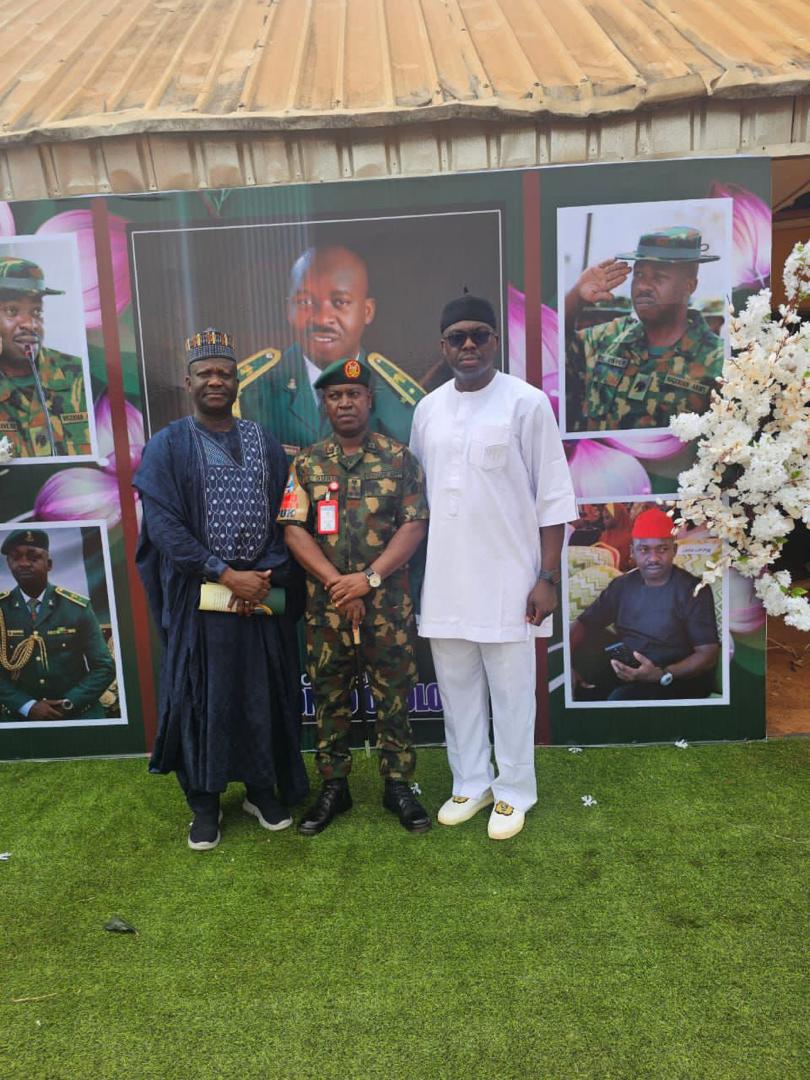
The donation was delivered at a funeral service held in Obinofia Ndiuno, Ezeagu Local Government Area of Enugu State on Firiday. The governor was represented by his Special Adviser on Security, Brigadier General Abdullahi Sabi Ishaq (Rtd), who presented the cash on behalf of the Borno State Government.
Speaking through his representative, Zulum expressed deep sorrow over the officer’s death.

He said: “Lt. Col OC Okolo was a gallant, dedicated and committed officer of the nation whose contributions will not be forgotten,” while extending condolences to the family, friends, and colleagues of the deceased.
He also prayed for the repose of the late officer’s soul and for strength for the bereaved family.
Responding on behalf of the family, Stanley Okolo expressed profound gratitude to the governor for the support and solidarity shown during their time of grief.
@The family members were particularly touched by the cash donation and the delegation sent from Maiduguri to attend the funeral service despite the short notice,” he said.
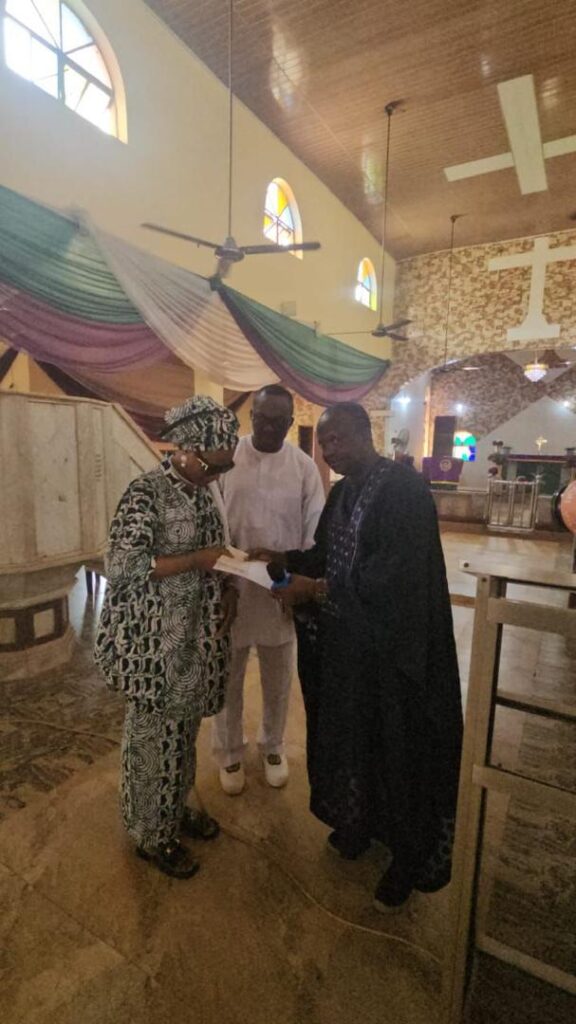
He further commended the Chief of Army Staff and the General Officer Commanding, 82 Division, for sending representatives to honour the late officer.
The funeral was attended by senior military representatives, including Brigadier General G.A. Suru, representing the Chief of Army Staff, and Brigadier General I.P. Omoke, who represented the Theatre Commander of Operation HADIN KAI, alongside members of the Nigerian Army Officers’ Wives Association (NAOWA) and the host community.
The donation underscores ongoing efforts by the Borno State Government to recognise and support the families of those who have made the ultimate sacrifice in Nigeria’s fight against insurgency.
Zulum Donates ₦50m to Family of Fallen Officer, Reaffirms Support for Military Heroes
MSF Ramps Up Emergency Response as Lassa Fever Outbreak Deepens in Benue
By: Michael Mike
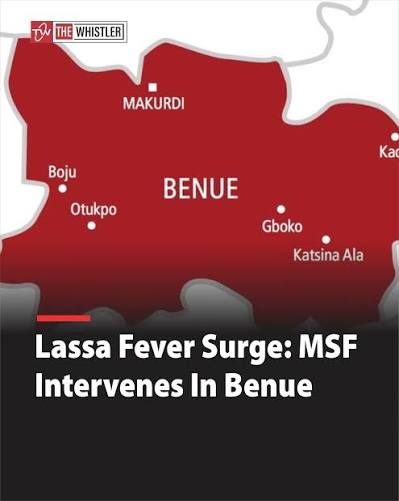
A worsening Lassa fever outbreak in Benue State has triggered an urgent intervention by international medical humanitarian organisation Médecins Sans Frontières (MSF), as rising infections and deaths place severe pressure on already stretched health facilities.
Working in collaboration with the Benue State Ministry of Health, MSF has deployed emergency teams to reinforce infection prevention and control (IPC) measures, following a surge in cases that has exposed critical gaps in healthcare safety systems—particularly affecting frontline workers.
Official data indicate that as of mid-March, the state recorded 410 suspected cases of Lassa fever, with 60 confirmed infections and 14 deaths. Disturbingly, 14 healthcare workers are among those infected, raising serious concerns about inadequate protective measures within treatment centres.
The situation reflects a broader national crisis. The Nigeria Centre for Disease Control and Prevention (NCDC) reports that Nigeria has recorded 167 deaths from Lassa fever in the first 13 weeks of 2026 alone, with a case fatality rate of 25.2 per cent—significantly higher than the 18.5 per cent recorded during the same period in 2025.
Benue State formally declared the outbreak on February 3, 2026, as infections escalated across communities in what is already recognised as one of Nigeria’s high-risk zones for the disease.
Lassa fever, an acute viral haemorrhagic illness endemic in Nigeria, typically peaks between November and April. It is primarily transmitted through contact with food or household items contaminated by infected rodents, but can also spread through direct contact with the bodily fluids of infected persons—making healthcare settings particularly vulnerable when safety protocols are weak.
Responding to the emergency, MSF launched a three-month intervention in March aimed at containing the outbreak and preventing further transmission. The mission was initiated at the request of state authorities, especially in light of rising infections among health workers and persistent shortages of personal protective equipment (PPE).
“Healthcare workers and patients are at significant risk when infection prevention measures are not fully in place,” said MSF Emergency Coordinator, Juniper Gordon. “Strengthening IPC and improving the organisation of care are critical to reducing transmission in health facilities.”
MSF teams are now providing hands-on support in selected facilities, focusing on strengthening clinical practices and improving patient management systems. This includes training healthcare workers on IPC protocols, reorganising triage processes, and establishing clearly defined high-risk and low-risk zones to limit cross-infection.
The organisation is also supplying essential materials, including PPE, hygiene kits, and sanitation supplies, while reinforcing waste management systems and infection control procedures. Handwashing stations are being installed across supported facilities, and surveillance efforts are being strengthened through improved data collection and monitoring.
In a move to support patient welfare, MSF is also providing food assistance to individuals in isolation centres, helping to ease the burden on affected families.
MSF said it is coordinating closely with global and national partners, including the World Health Organization, UNICEF, and the NCDC, to scale up response efforts and curb the spread of the disease.
Despite these interventions, public health experts warn that the outbreak underscores deeper systemic challenges in Nigeria’s healthcare system, particularly in infection control preparedness and rapid response capacity.
MSF Ramps Up Emergency Response as Lassa Fever Outbreak Deepens in Benue
Troops arrest 20 suspects, recover cash, electronics in Adamawa raid
By: Zagazola Makama
Troops of 232 Battalion (Tactical) have arrested 20 suspects and recovered cash and electronics during a raid on suspected criminal hideouts in Mubi North Local Government Area of Adamawa State.
Security sources said the operation was conducted at about 5:00 a.m. on April 10 in Agwan Rami and Agwan Mallam areas, following credible intelligence.
The sources disclosed that troops, in collaboration with local hunters, stormed the identified hideouts and apprehended the suspects.
“During the operation, 20 suspects were arrested in criminal hideouts, while others were picked up for loitering during curfew hours,” the source said.
Items recovered include seven mobile phones, eight touch lights, one ThinkPad laptop and the sum of ₦2,137,285, among other items.
The suspects are currently in custody for further investigation and necessary action.
The operation is part of ongoing efforts to curb criminal activities and enforce law and order in Adamawa State.
Troops arrest 20 suspects, recover cash, electronics in Adamawa raid

Zulum Donates ₦50m to Family of Fallen Officer, Reaffirms Support for Military Heroes

MSF Ramps Up Emergency Response as Lassa Fever Outbreak Deepens in Benue

Troops foil motorcycle snatching attempt, rescue victims in Kaduna

Roger Federer’s Shock as DNA Results Reveal Myla and Charlene Are Not His Biological Children

THE PLIGHT OF FARIDA

FAILED COUP IN BURKINA FASO: HOW TRAORÉ NARROWLY ESCAPED ASSASSINATION PLOT AMID FOREIGN INTERFERENCE CLAIMS
-
 News2 years ago
Roger Federer’s Shock as DNA Results Reveal Myla and Charlene Are Not His Biological Children
-
Opinions4 years ago
THE PLIGHT OF FARIDA
-
 News12 months ago
FAILED COUP IN BURKINA FASO: HOW TRAORÉ NARROWLY ESCAPED ASSASSINATION PLOT AMID FOREIGN INTERFERENCE CLAIMS
-

 News2 years ago
EYN: Rev. Billi, Distortion of History, and The Living Tamarind Tree
-
 Opinions4 years ago
POLICE CHARGE ROOMS, A MINTING PRESS
-

 ACADEMICS2 years ago
A History of Biu” (2015) and The Lingering Bura-Pabir Question (1)
-

 Columns2 years ago
Army University Biu: There is certain interest, but certainly not from Borno.
-

 Opinions2 years ago
Tinubu,Shettima: The epidemic of economic, insecurity in Nigeria
