
News
Kanu lists Wike, Buratai, Danjuma, Umahi, others as witnesses as defence begins amid failed protest

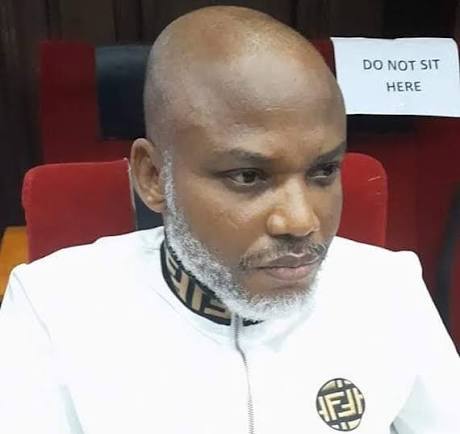
Kanu lists Wike, Buratai, Danjuma, Umahi, others as witnesses as defence begins amid failed protest
By: Zagazola Makama
Hours after a poorly attended nationwide protest demanding his release, detained leader of the outlawed Indigenous People of Biafra (IPOB), Nnamdi Kanu, made a dramatic turn on Tuesday, declaring readiness to open his defence in the ongoing terrorism trial at the Federal High Court, Abuja.
The protest, which was led in parts of Abuja by the presidential candidate of the African Action Congress (AAC) in the 2023 elections, Omoyele Sowore, recorded low turnout across the country as residents largely shunned the call for mass action.
In many cities, including Enugu, Owerri, Onitsha, Port Harcourt, Aba, and Umuahia, residents said they chose to stay away from the demonstration because the matter was already before the court and feared it could be hijacked by miscreants to unleash violence.
In Abuja, where Sowore led a small group of demonstrators to the Federal High Court complex, police dispersed the gathering and arrested 13 persons, including Kanu’s special counsel, Aloy Ejimakor, and his brother, Emmanuel Kanu.
However, the detained IPOB leader filed a motion of preliminary objection challenging the jurisdiction of the court to continue with his trial. He filed the objection the same day a team of medical experts enpanelled by the court to determine his health status, turned in a report that he was medically fit to stand trial.
In a fresh motion he personally filed on Tuesday, October 21, Kanu assured the court that he was prepared to begin his defence “pursuant to the order of this honourable court made on the 16th day of October 2015, directing the defendant to commence his defence on the 24th day of October 2025.”
Kanu informed the court, presided by Justice James Omotosho, of his plan to call a total of 23 witnesses divided into two categories. The first category, he said, would be those he called “ordinary but material witnesses”.
He further informed the court that his second category of witnesses would be “vital and compellable” and shall be “summoned under Section 232 of the Evidence Act, 2011.”
In the notice Kanu personally signed, suggesting that he may have fired his team of lawyers led by Kanu Agabi, SAN, the IPOB leader told the court that, in view of the number of witnesses he intends to call, the court should consider granting a 90-day timeframe to enable him conclude his defence.
He told the court that he would “testify on his own behalf, providing a sworn account of the facts, denying the allegations, and explaining the political context of his statements and actions.”
Among those Kanu listed as “compellable witnesses” are a former Minister of Defence, Gen. Theophilus Danjuma (rtd), a former Chief of Army Staff, Gen Tukur Buratai (rtd), as well as Babajide Sanwo-Olu and Hope Uzodinma, Governors of Lagos and Imo States respectively.
He further listed current Minister of the Federal Capital Territory Administration (FCTA), Nyesom Nwike, his Works’ counterpart, Dave Umahi, and the immediate past governor of Abia State, Dr. Okezie Ikpeazu. He also listed the immediate past Minister of Justice, Abubakar Malami, SAN, the immediate past Director General of the National Intelligence Agency, NIA, Ahmed Rufai Abubakar, his then-collegue at the State Security Service, SSS, Yusuf Magaji Bichi, and several withnesses whose identities he didn’t reveal.
Kanu, in the notice, promised to “provide the sworn statements of all voluntary witnesses to this honourable court, and to notify the prosecution within a reasonable time.”
He assured that “no precious time of the honourable court would be delayed,” stressing, “and it would interest the honourable court that and the general public that justice is not only done but manifestly seen to have been done.”
Kanu’s motion offering to open his defence came on the same day a magistrate court in Abuja ordered the remand of his special counsel, Aloy Ejimakor and 12 others who were among those protesting against Kanu’s continued trial.
The police charged the 13 persons with various offences, including criminal conspiracy, disobedience of a lawful order, inciting disturbance, and disturbance of public peace, contravening sections 152, 114, and 113 of the Penal Code Law.
The 13 defendants named in two separate first information reports (FIRs) are Ejimakor, Kanu’s brother, Emmanuel, Joshua Emmanuel, Wilson Anyalewechi, Okere Kingdom Nnamdi, Clinton Chimeneze, Gabriel Joshua, Isiaka Husseini, Onyekachi Ferdinand, Amadi Prince, Edison Ojisom, Godwill Obioma, and Chima Onuchukwu.
The magistrate, who stood down the case, later ordered that the defendants be remanded in Kuje Correctional Centre and adjourned the case until October 24 for arraignment.
As the court resumes on Thursday, observers say Kanu’s decision to represent himself and summon high-profile witnesses marks a new phase in a case that has tested Nigeria’s judicial system, national security, and political tolerance.
Meanwhile, security has been intensified in and around the Federal High Court complex, as authorities brace for possible crowd movements when the trial resumes.
Kanu lists Wike, Buratai, Danjuma, Umahi, others as witnesses as defence begins amid failed protest


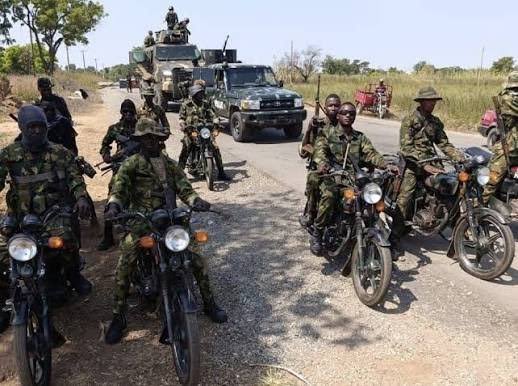
Troops foil attack by Criminal Youths, rescue victims, arrest suspects in plateau
By: Zagazola Makama
Troops of Sector 1, Operation Enduring Peace (OPEP), have foiled an attack on residents at Dutse Uku in Jos North Local Government Area of Plateau State.
A security source said the troops responded swiftly to a report of sporadic gunshots in the area at about 11:50 p.m. on April 2.
According to the source, upon arrival at the scene, the suspected criminals fled, abandoning their operation due to the prompt intervention of the troops.
He said the troops rescued two victims who sustained gunshot wounds during the incident and immediately evacuated them to a hospital for medical attention.
The source further disclosed that two suspects, dressed in black attire, were arrested at the scene.
Items recovered from the suspects include a cutlass and a knife.
He added that the suspects are currently in military custody and undergoing preliminary investigation, while efforts are ongoing to track down other fleeing members of the group.
Zagazola report that despite heightened security, there has been report of pocket of attacks in some communities.
The source reassured residents of the military’s commitment to protecting lives and property and urged the public to continue providing timely information to security agencies.
Troops foil attack by Criminal Youths, rescue victims, arrest suspects in plateau
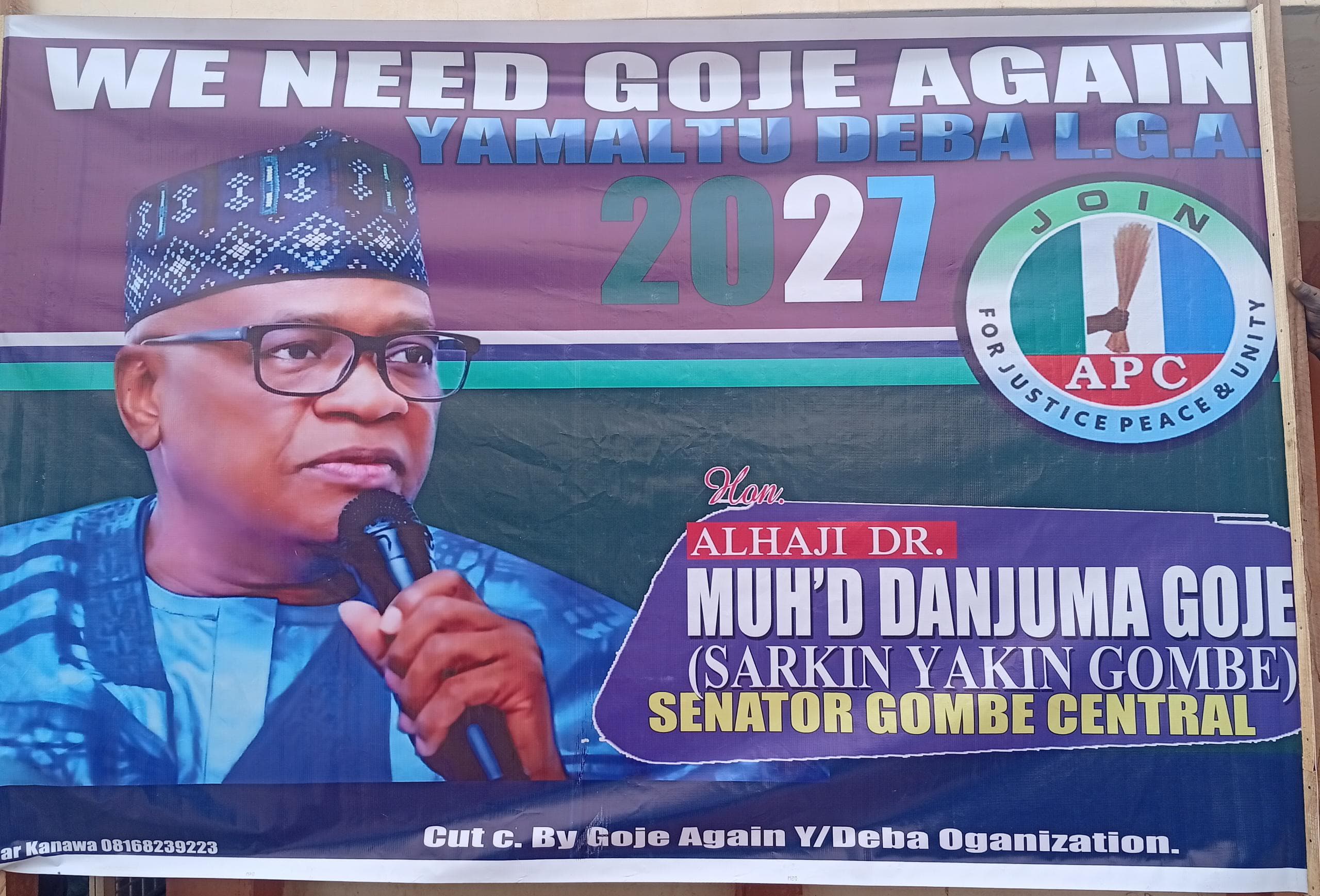
2027: Constituents declare support for Tinubu, Goje’s re-election
Yamaltu/Deba constituents have declared support for President Bola Tinubu and Senator Danjuma Goje’s re-election ahead of the 2027 General Elections.
Dr Newton Moses, declared the support in a statement read on behalf of the people of Yamaltu/Deba Local Government Area of Gombe State on Friday in Gombe.
Moses said voting for experienced leaders in 2027 remained key to addressing Nigeria’s challenges and delivering dividends of democracy to Nigerians.
He said the group’s decision to support Tinubu and Goje was guided by patriotism, and a sincere desire to see competent, and result-driven leadership that would benefit their constituents and the country.
He said that Goje’s leadership in the past 16 years at the Senate has benefitted the constituents and given effective representation to the people of Akko and Yamaltu/Deba LGAs that make up the district.
He dismissed allegations that the people of Yamaltu/Deba have been marginalised and were demanding the seat to be zoned to Yamaltu/Deba and not Akko where Goje is from.
He said that the constitution did not impose any zoning limitation or tenure restriction on membership in the National Assembly, hence urged those seeking the seat to test their popularity through election.
“We are not part of that group saying Goje should not return to the senate in 2027; that is not the voice of the grassroots from Yamaltu Deba.
“ Goje has, over the years, built invaluable networks and acquired the experience necessary to effectively advocate for the interests of his constituency and contribute meaningfully to national development.
“ By returning Goje to the Senate, Gombe Central stands to gain even more.
“ His established influence will ensure greater access to federal opportunities, increased developmental projects, and stronger representation in critical national decisions,” he said.
The group further advised President Tinubu to stay away from those working to tarnish the good name of Goje, stating that Goje’s influence in Gombe was important for the success of the All Progressives Congress in 2027.
Moses said at a time when Nigeria is focused on economic recovery, institutional strengthening, and inclusive growth under Tinubu, it was imperative that proven leaders like Goje to continue contributing his expertise toward national progress.
2027: Constituents declare support for Tinubu, Goje’s re-election

Hope in the Hard Times: Ashlee Momoh Foundation Spreads Easter Joy to Military Widows
By Comrade Philip O. Ikodor
The Ashlee Momoh Foundation (AMF), a non-profit organization dedicated to supporting the families of fallen officers, marked the Easter season with a heartwarming outreach to military widows at different locations in Abuja and Nasarawa state, respectively on April 2nd, 2026. This thoughtful initiative was designed to bring joy, hope, and support to the widows of our fallen Military Officers, who have made immense sacrifices for their country.

“Easter is the season of renewal, hope, and the triumph of light over darkness,” Princess Ashlee said. “It reminds us that even after the longest winter, spring arrives and even after the deepest sorrow, there is the possibility of a new dawn.” The outreach was designed to show support and encouragement to the military widows, and to felicitate with them on the occasion of Easter.
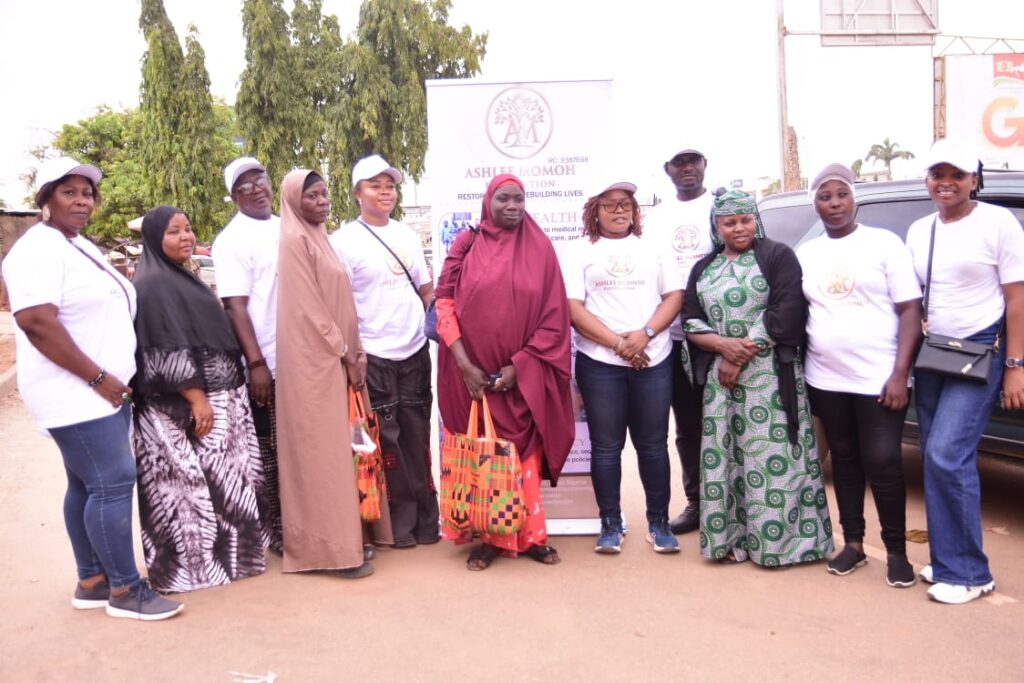
Princess Ashlee Momoh reassured the widows that while their loved ones are no longer physically present, their legacy lives on, and AMF is committed to standing with them, supporting them, and celebrating their strength. “Today, we celebrate you, our heroes’ widows, and the sacrifices you’ve made,” she said.
The event was filled with moments of joy and fulfilment, as beneficiaries received gift items, cash gifts, and scholarship opportunities. The Foundation also announced enlistment for skill acquisition and empowerment programs, aimed at equipping the widows with the tools they need to rebuild their lives.

The outreach was a testament to AMF’s unwavering commitment to supporting the families of fallen officers, and its dedication to making a positive impact in the lives of those who have made immense sacrifices for their country. As one beneficiary put it, “This Easter, we’ve received more than just gifts – we’ve received hope, love, and a sense of belonging.”

The Ashlee Momoh Foundation’s Easter outreach was a powerful reminder that even in the darkest moments, there is always hope, and that together, we can overcome any challenge.
Hope in the Hard Times: Ashlee Momoh Foundation Spreads Easter Joy to Military Widows

Troops foil attack by Criminal Youths, rescue victims, arrest suspects in plateau

2027: Constituents declare support for Tinubu, Goje’s re-election

Hope in the Hard Times: Ashlee Momoh Foundation Spreads Easter Joy to Military Widows

Roger Federer’s Shock as DNA Results Reveal Myla and Charlene Are Not His Biological Children

THE PLIGHT OF FARIDA

FAILED COUP IN BURKINA FASO: HOW TRAORÉ NARROWLY ESCAPED ASSASSINATION PLOT AMID FOREIGN INTERFERENCE CLAIMS
-
 News2 years ago
Roger Federer’s Shock as DNA Results Reveal Myla and Charlene Are Not His Biological Children
-
Opinions4 years ago
THE PLIGHT OF FARIDA
-
 News12 months ago
FAILED COUP IN BURKINA FASO: HOW TRAORÉ NARROWLY ESCAPED ASSASSINATION PLOT AMID FOREIGN INTERFERENCE CLAIMS
-

 News2 years ago
EYN: Rev. Billi, Distortion of History, and The Living Tamarind Tree
-
 Opinions4 years ago
POLICE CHARGE ROOMS, A MINTING PRESS
-

 ACADEMICS2 years ago
A History of Biu” (2015) and The Lingering Bura-Pabir Question (1)
-

 Columns2 years ago
Army University Biu: There is certain interest, but certainly not from Borno.
-

 Opinions2 years ago
Tinubu,Shettima: The epidemic of economic, insecurity in Nigeria
