
News
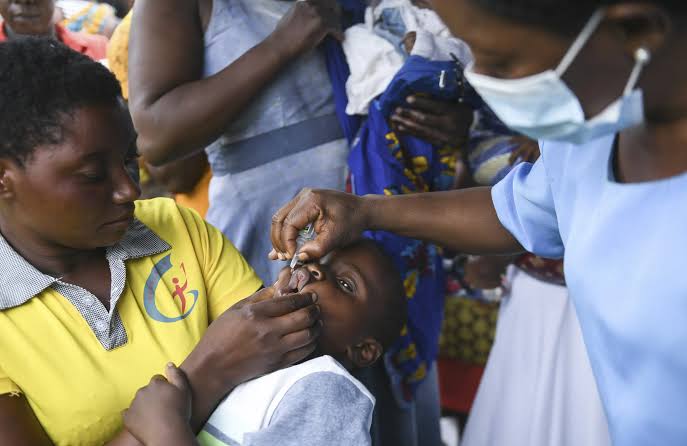
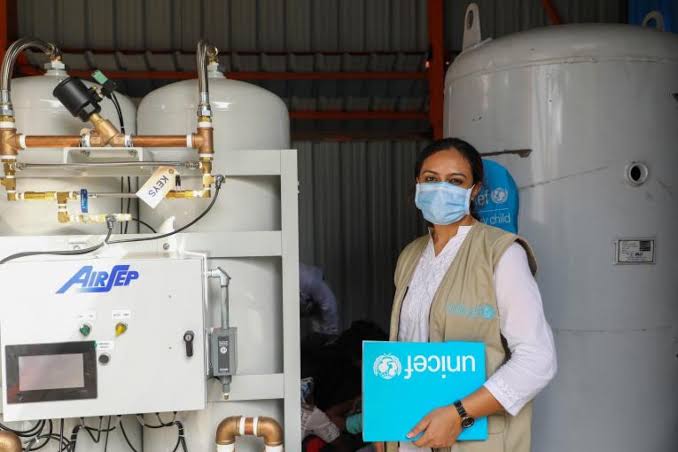
UNICEF urges Bauchi Govt. to establish WASH units in LGAs


UNICEF urges Bauchi Govt. to establish WASH units in LGAs
The UN Children’s Fund (UNICEF), has on Tuesday, urged the Bauchi State Government
to establish Water Sanitation And Hygiene (WASH) units in the 20 local government areas of the state.
The Chief of WASH, UNICEF Nigeria Country Office, Mrs Jane Bevan, made the call in Bauchi when she led officials of
the organisation on an advocacy visit to the state’s Deputy Governor, Alhaji Baba Tela.
According to her, the units will assist UNICEF to properly curtail the menace of open defecation and improve sanitation and hygiene in communities.
READ ALSO: PMB Approves New NBC Board
Bevan, who applauded the Bauchi State Government for the progress made so far in the implementation of WASH programmes,
added that with the achievements recorded, UNICEF would sustain partnership and support to the state to increase coverage.
She explained that UNICEF programmes were to assist in ensuring the attainment of the Sustainable Development Goals, which were key
to make Nigeria an Open Defecation-Free country by the year 2030.
She said “it is a great pleasure to be in Bauchi and we are currently visiting states where UNICEF is implementing its programmes, especially on water sanitation and hygiene.
“We are here to see the progress so far made in Bauchi and to see how we can support further to increase coverage.
“We want to congratulate the state on the fantastic progress made so far and reaffirm that UNICEF will continue to partner with the state government.”
The deputy governor appreciated UNICEF and other donor organisations for their interventions in the state and assured the state government’s commitment
toward the timely release of counterpart funds.
He said “we need UNICEF interventions in Bauchi State; UNICEF and other donor organisations have always been there for us in the provision of funds and
technical care on how to implement programmes for the benefit to our people, especially the younger ones.
“What we have discussed so far basically centered on what we have done and what we are going to do particularly on water, sanitation and open defecation.
“On our part, we will continue to support MDAs working on the implementation of the project to ensure proper coordination.”
(NAN)




News
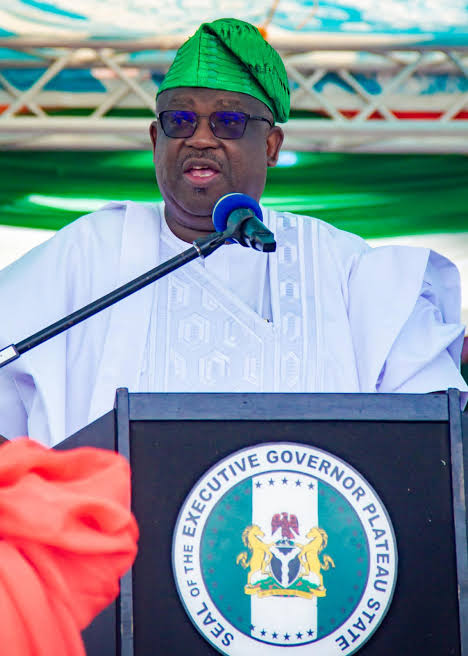
Plateau government finally admits attack on Fulani traders when suddenly silence is no longer an option
Plateau government finally admits attack on Fulani traders when suddenly silence is no longer an option
By: Zagazola Makama
Something rather unusual happened in Plateau today. The Plateau State Government actually condemned an attack on Fulani traders.
Yes, Fulani traders, although the official statement carefully introduced them as simply “traders,” perhaps because mentioning the word Fulani might make the incident slightly more uncomfortable for some people.
The attack on traders returning from the Kara Livestock Market in Bukuru left one person dead and seven others injured after their vehicle came under gunfire.
The government’s reaction is welcome. But it also leaves one wondering: Why does the government seem to become more interested in an attack only after it has become impossible to pretend it did not happen?
For years, the public has watched a familiar script unfold. An attack happens. Nobody wants to talk too much about it. Then there is a reprisal. Suddenly, the state becomes extremely concerned, press statements appear. Condolences are issued. The Governor personally visits the scene and tells them, “Nobody can take over your land,” while security agencies are urged to act. And the reprisal becomes the headline.
The government’s statement referred to the victims as “traders.” Nothing wrong with that, technically. But everyone knows who these particular traders were. They were peaceful Fulani pastoralists returning from a livestock market. So why the linguistic gymnastics? Is “Fulani” now one of those dangerous words that must be handled with protective gloves? If the victims had been identified as members of the Berom or Mwaghavul community, would their identity have been equally inconvenient?
And there’s this funny thing about the information ecosystem and propaganda platforms in Plateau. When the incident occurred, many Plateau-based platforms were quick to circulate claims pointing accusing fingers at Fulani militia attacking locals, with some calling for quick intervention. Then the narrative was convenient.
But when subsequent information reportedly pointed in another direction, including allegations involving suspected Berom militia, the same enthusiasm disappeared. The microphones became silent. And, rather mysteriously, the internet developed a severe case of selective mutism. The same platforms that had been shouting suddenly discovered the beauty of silence. The headlines vanished. The outrage suddenly lost its urgency. They pretended not to see the attack again. Why? Because the victims are Fulani.
Apparently, when the suspected attacker is Fulani, everyone becomes an investigative journalist. When the allegation points elsewhere, everyone suddenly remembers the importance of waiting for security agencies to investigate.
It is almost as if somebody is waiting for the second half of the tragedy because it fits the preferred narrative better.
Of course, there is another subject that nobody seems particularly enthusiastic about discussing: “cattle rustling”. And somehow, the subject continues to receive considerably less attention from government of Plateau state. On a daily basis, hundreds of livestock are allegedly stolen from Fulani herders in Plateau by militia groups. Hundreds of others are killed on a daily basis.
And here is the script: “You attack a pastoralist, steal his cattle, destroy his livelihood and then act surprised when the community becomes angry and carries out a reprisal. You then subsequently use the anger generated by that crime as proof that the original victim was the aggressor.” You will even hear some of the youth leaders always saying, “Just because they kill their cows, does that give him the right to attack us?” Let’s simply rearrange the chronology of the crimes in Plateau. If a Fulani person commits a crime today, he must face the law and pay heavy compensation. Infact, the Governor had issued a directive that any herder caught destroying farmland should be nutrialised.
But on the contrary, If a Berom person or any plateau local commits a crime by attacking a Fulani and killing their livestock, the next day, women will protest his arrest and demand that he must be released. In fact, the new name for criminals in Berom communities is “Defenders of the Land.”
At the same time, if a Mwaghavul person commits a crime, he must not face the law. And if any journalist should carry the report like Zagazola, ahh, that one is the spokesperson of the bandits. In this context, who are the bandits?
The innocent people that suffered the initial attack that led to the arrest of the Mwaghavul militia. In many Plateau communities, criminality means patriotism because the criminal belongs to the Berom ethnic group.
The government’s condemnation of the Bukuru attack is therefore welcome. But condemnation alone is not enough. If they really want to end this madness, they must also identify the attackers and take them out. They must expose anyone financing violence through stolen livestock or other criminal proceeds.
Most importantly, the government must resist the temptation to treat justice as a popularity contest. The question should never be, “Which community do we want to defend?”
Because if the state continues to condemn only the violence that fits its preferred narrative, then everybody will eventually become an expert at playing victim while the criminals quietly continue doing business.
Plateau government finally admits attack on Fulani traders when suddenly silence is no longer an option

Police invite NDC candidate over alleged display of firearm at political gathering
By: Zagazola Makama
KANO — The Kano State Police Command has invited the New Nigeria Democratic Congress (NDC) candidate, Hon. Aminu Abdullahi Warkal, for questioning over an alleged display of a firearm during a political gathering.
The command disclosed this in a statement issued by its spokesperson, CSP Abdullahi Haruna Kiyawa, on Monday, Oct. 5, 2026.
According to the statement, the command came across a video circulating on social media during its routine cyber patrol, in which Warkal was allegedly seen displaying what appeared to be a pump-action firearm.
The police said the allegation, if established, could constitute a violation of the Firearms Act and raise public-safety concerns, particularly in the context of political activities.

The command said Warkal was invited to its headquarters in Bompai, Kano, on the directive of the Commissioner of Police, CP Ibrahim Adamu Bakori.
The candidate is currently with the command’s State Intelligence Department (SID), where questioning and investigation into the circumstances surrounding the alleged display are ongoing.
The Commissioner of Police warned that the command would not tolerate unlawful conduct, violence or the display of weapons in ways capable of causing fear or threatening public peace, irrespective of the status of the person involved.
He urged political candidates, supporters and other stakeholders to conduct their activities peacefully and in accordance with the Electoral Act, firearms laws and other applicable legislation.
The command also reiterated its commitment to protecting lives and property and maintaining peace in Kano State before, during and after the political season.
The police have not indicated the outcome of the investigation, and the allegation against Warkal remains subject to the ongoing inquiry.
Police invite NDC candidate over alleged display of firearm at political gathering
Suspected Mwaghavul Militia Attack on Herders Reported in Mangu, Cattle Shot in Plateau
By: Zagazola Makama
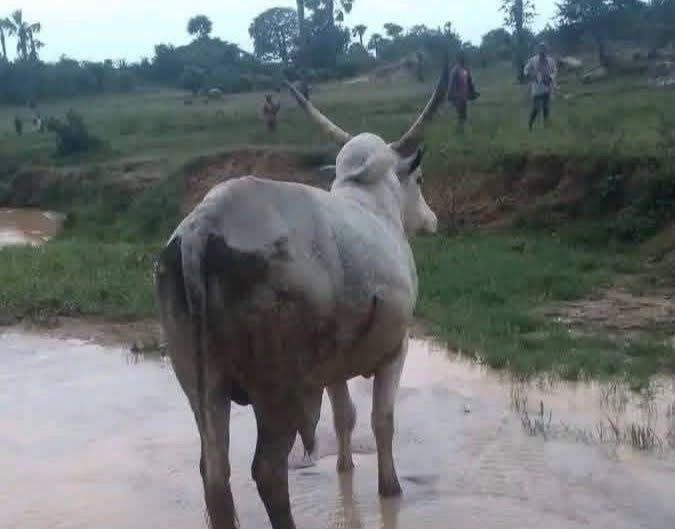
Suspected armed Mwaghavul militia members have reportedly attacked herders around Kombilin in Panyam District of Mangu Local Government Area of Plateau State, shooting an unspecified number of cattle.
Security sources told Zagazola Makama that the incident occurred at about 4:30 p.m. on Sunday, Oct. 4, 2026.
Preliminary reports indicated that the assailants, suspected to be members of a Mwaghavul militia group, targeted herders in the area and opened fire on their cattle.
The exact number of cattle killed or injured in the incident had yet to be established as details were still emerging.
The circumstances surrounding the attack, including whether any persons were injured or killed, remained unclear at the time of reporting.
Further details are being awaited as efforts continue to establish the full circumstances of the incident.
Suspected Mwaghavul Militia Attack on Herders Reported in Mangu, Cattle Shot in Plateau

Plateau government finally admits attack on Fulani traders when suddenly silence is no longer an option

Police invite NDC candidate over alleged display of firearm at political gathering

Nasari urges support for the new district head in Yobe

Roger Federer’s Shock as DNA Results Reveal Myla and Charlene Are Not His Biological Children

THE PLIGHT OF FARIDA

FAILED COUP IN BURKINA FASO: HOW TRAORÉ NARROWLY ESCAPED ASSASSINATION PLOT AMID FOREIGN INTERFERENCE CLAIMS
-
 News3 years ago
Roger Federer’s Shock as DNA Results Reveal Myla and Charlene Are Not His Biological Children
-
Opinions5 years ago
THE PLIGHT OF FARIDA
-
 News1 year ago
FAILED COUP IN BURKINA FASO: HOW TRAORÉ NARROWLY ESCAPED ASSASSINATION PLOT AMID FOREIGN INTERFERENCE CLAIMS
-

 News3 years ago
EYN: Rev. Billi, Distortion of History, and The Living Tamarind Tree
-
 Opinions5 years ago
POLICE CHARGE ROOMS, A MINTING PRESS
-

 ACADEMICS3 years ago
A History of Biu” (2015) and The Lingering Bura-Pabir Question (1)
-

 Columns3 years ago
Army University Biu: There is certain interest, but certainly not from Borno.
-

 Politics1 year ago
2027: Why Hon. Midala Balami Must Go, as Youths in Hawul and Asikira/Uba Federal Constituency Reject ₦500,000 as Sallah Gift
