
News
UNIFEMGA Urges Positive Mindset, National Unity as Key to Nigeria’s Growth


UNIFEMGA Urges Positive Mindset, National Unity as Key to Nigeria’s Growth
By: Michael Mike
Members of the Obafemi Awolowo University Muslim Graduates’ Association (UNIFEMGA) have called on Nigerians to embrace positive thinking, patriotism and collective responsibility as essential ingredients for national transformation and sustainable development.
The association made the call in a communiqué issued at the end of its 2026 Annual National Re-union held at Obafemi Awolowo University, Ile-Ife, Osun State, between May 8 and May 10.
The conference, themed “The Potential Within Nigeria: Positive Mindset and Communication for Success,” brought together Muslim professionals, academics, business leaders and alumni from across the country to deliberate on issues affecting national development, education, governance and economic growth.
The communiqué, signed by the National President of the association, Mohamed Buari, and the National Secretary, Sefiu Ikudaisi, stressed that Nigeria possesses abundant human and material resources capable of transforming the country into a global economic and political force if citizens adopt the right mindset and attitudes.
According to the association, negative narratives, disunity and poor value orientation have continued to undermine the country’s enormous potential.
It noted that Islam encourages development, innovation and the pursuit of knowledge capable of improving the quality of life, provided such advancements remain within the ethical boundaries prescribed by the religion.
The conference commenced with a special Jumat service at the OAU Central Mosque of Unity and a courtesy visit to the Vice-Chancellor of the university, Adebayo Simeon Bamire, and other principal officers of the institution.
During the visit, discussions centred on issues of mutual interest, with the university management reportedly commending the association for its contributions to the growth and development of the institution.
A major highlight of the reunion was the presentation of scholarships worth N14.6 million to 140 students of the university as part of the association’s welfare and educational support programme.
UNIFEMGA disclosed that since the introduction of the scholarship initiative in the 2009/2010 academic session, it has disbursed over N103.4 million to 1,148 students of the institution.
The association also launched a N200 million endowment fund targeted at supporting widows and orphans of members under its welfare scheme.
The event featured a networking dinner sponsored by the Chairman of the Board of Trustees of the association, Rafiu Ebiti, focusing on value-driven entrepreneurship and investment opportunities.
The reunion lecture was delivered by the Director-General of the National Orientation Agency, Lanre Issa-Onilu, while the Managing Director and Chief Executive Officer of Matrix Energy Group, Abdulkabir Adisa Aliu, chaired the occasion.
Also in attendance were representatives of the Osun State Government, including Governor Ademola Adeleke, represented by his Senior Special Assistant on Religious Affairs, Bello Adeniyi, as well as the Pro-Chancellor of the university, Adejare Bello.
The association expressed concern over the growing challenges confronting tertiary education in Nigeria, including brain drain, obsolete learning equipment, unstable academic calendars and outdated curricula.
It urged the government to urgently address the problems and transform the current “japa” trend into an opportunity for “brain gain” capable of enhancing national productivity and innovation.
UNIFEMGA further called for stronger collaboration between universities and the private sector to ensure sustainable research, innovation and technological advancement.
On the economy, the association urged governments at all levels to create an enabling business environment through improved electricity supply, infrastructure development and investment in human capital.
It also stressed the need to tackle unemployment, warning that many jobless youths are vulnerable to manipulation by individuals promoting violence and instability.
The association said that a positive national mindset remains the foundation for building a prosperous and united Nigeria, urging citizens to embrace values that promote peace, productivity, discipline and national cohesion.
UNIFEMGA Urges Positive Mindset, National Unity as Key to Nigeria’s Growth


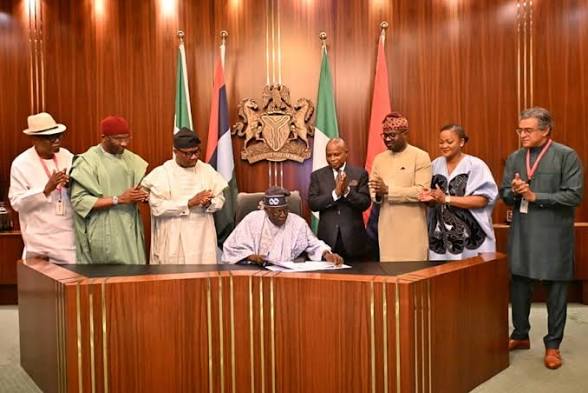
Tinubu Signs New NIMC Law, Gives Nigeria Single Digital Identity Framework
…Commission Named Root Authority for National Digital Infrastructure as FG Targets Secure Digital Economy
By: Michael Mike
President Bola Tinubu has signed the National Identity Management Commission (NIMC) Act, 2026 into law, repealing the 2007 legislation and ushering in a new legal framework aimed at creating a secure, interoperable and inclusive digital identity ecosystem for Nigeria.
The landmark legislation significantly expands the powers of the National Identity Management Commission by designating it as the Root Certification Authority for Nigeria’s National Public Key Infrastructure (PKI) and Digital Public Infrastructure (DPI), effectively placing the Commission at the centre of the country’s digital identity, authentication and electronic trust architecture.
The new law also reinforces the National Identification Number (NIN) as Nigeria’s foundational identity credential under the principle of “One Person, One Identity,” while empowering NIMC to facilitate secure and seamless data exchange among government institutions, financial organisations and private-sector entities.
The reforms are expected to strengthen digital governance, improve public service delivery, enhance cybersecurity and support the federal government’s ambition of building a one-trillion-dollar economy through technology-driven growth.
In a statement on Friday, NIMC described the legislation as the most significant overhaul of Nigeria’s identity management framework since the Commission was established nearly two decades ago.
According to the Commission, the rapid expansion of digital services, e-governance, electronic commerce, data protection requirements and evolving cyber threats made it imperative to replace the old law with a more robust and future-oriented legal framework aligned with international best practices.
Under the new Act, NIMC will be responsible for establishing and maintaining Nigeria’s National Public Key Infrastructure and Digital Public Infrastructure, providing trusted authentication systems, digital signatures, digital certificates, encryption services and identity verification frameworks designed to improve confidence in digital transactions and online services.
The legislation also introduces stronger safeguards for personal data and privacy in alignment with the Nigeria Data Protection Act and global standards, while prescribing stringent penalties for multiple registrations, identity theft, impersonation and other identity-related offences.
In a major inclusion initiative, the law introduces an innovative identifier system for vulnerable persons and mandates special measures to facilitate the enrolment of underserved populations, including individuals without permanent residences.
The Act further recognises both physical and digital identity credentials, all securely linked to an individual’s National Identification Number, thereby expanding opportunities for digital transactions and service delivery.
NIMC said the implementation of the new framework would enable faster and more secure identity verification, greater financial and digital inclusion, improved interoperability across government and private-sector platforms, and enhanced ease of doing business.
The Commission expressed gratitude to President Tinubu for what it described as his visionary leadership in signing the legislation, noting that the reform would strengthen the protection of citizens’ data, improve cybersecurity, expand access to essential services and provide a robust foundation for Nigeria’s digital economy and long-term national development.
It also commended the leadership and members of the National Assembly, the Ministry of Interior, development partners and stakeholders whose contributions facilitated the passage of the legislation.
NIMC said it would subsequently issue regulations and guidelines necessary for the full implementation of the Act while engaging government institutions, the private sector and development partners to ensure a seamless transition to the new legal framework.
Tinubu Signs New NIMC Law, Gives Nigeria Single Digital Identity Framework
News
Nigeria Reopening States to Foreign Investors as Regions Regain Economic Powers, Says Ajomale-McWord
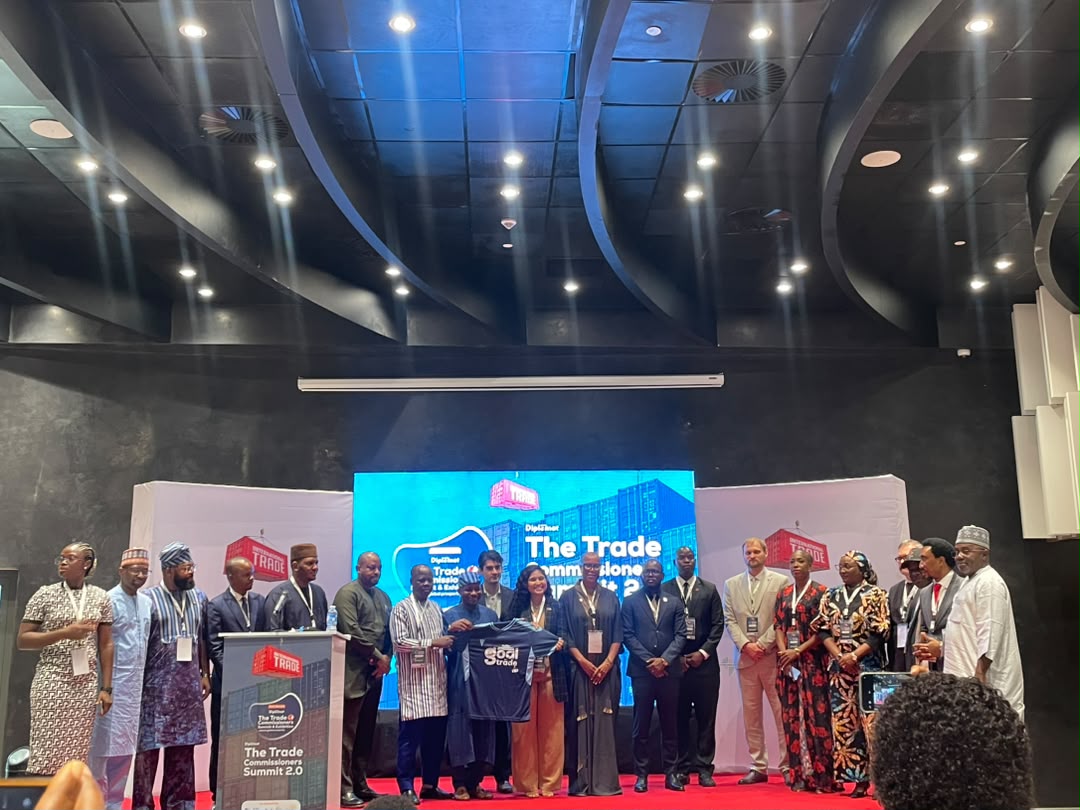
Nigeria Reopening States to Foreign Investors as Regions Regain Economic Powers, Says Ajomale-McWord
…Customs backs subnational trade diplomacy, says reforms will position country as regional commerce hub
By: Michael Mike
Nigeria is gradually returning to an era of stronger regional economies and greater state autonomy, creating unprecedented opportunities for direct foreign investment and economic partnerships with subnational governments, Founder of Global AfriDiplomats, Deji Ajomale-McWord, declared on Friday.
He said recent reforms in electricity, taxation and local government finances are reversing decades of over-centralisation and empowering states to emerge as independent engines of economic growth, industrialisation and international commerce.
Speaking at the Trade Commissioners’ Summit attended by diplomats, development partners, state officials and business leaders, Ajomale-McWord urged foreign governments, diplomatic missions and international investors to broaden their engagement beyond Abuja and establish direct partnerships with Nigerian states and regions.
According to him, Nigeria’s highly centralised governance structure was rooted in the Unification Decree, Decree No. 34 of May 24, 1966, which abolished the country’s regional system and concentrated legislative powers at the federal level.
Although the military administration that enacted the decree was short-lived, he noted that its legacy still dominates governance structures, with the Constitution assigning 68 items to the Exclusive Legislative List and only 12 to the Concurrent Legislative List, thereby limiting the capacity of states to legislate on strategic sectors such as security, electricity and regional integration.
He argued that the arrangement also fostered a culture in which many Nigerians looked almost exclusively to the Federal Government for solutions, even in areas where state governments have constitutional responsibilities.
Ajomale-McWord recalled how the former Western Region’s cocoa industry, popularly known as “Brown Gold”, and the Northern Region’s famous groundnut pyramids once made the regions powerful centres of economic production and prosperity.
He, however, maintained that recent policy and legal reforms indicate that Nigeria is steadily returning to a development model in which states and regions become stronger economic drivers.
Among the reforms he highlighted were the National Regional Development Policy (2026-2030), the establishment of additional regional development commissions, the Electricity Act 2023, the proposed Electricity Amendment Bill 2025, tax reforms that improve state revenues and the Supreme Court’s landmark judgment granting financial autonomy to the country’s 774 local government councils.
Describing reliable electricity as indispensable to industrialisation, he said new legal provisions empowering states to generate, transmit and distribute electricity would significantly improve their ability to attract industries and investments.
“Our states are open. Our regions are open,” he declared, adding that commissioners from different states were presenting investment opportunities and development priorities in their jurisdictions to the international community.
He described the initiative as the beginning of sustained engagement between Nigeria’s subnational governments and global partners.
“This is a marathon, not a sprint. We will continue this dialogue and strengthen collaboration in advancing development across Nigerian states,” he said.
Meanwhile, the Nigeria Customs Service threw its weight behind the push for subnational trade diplomacy, saying stronger collaboration among customs administrations, state governments, trade commissioners and development partners was essential to unlocking Nigeria’s economic potential.
Delivering a goodwill message on behalf of the Comptroller-General of Customs, Bashir Adewale Adeniyi, represented by Nuhu Mustapha, the Service described trade as a critical driver of national development, industrialisation, job creation and regional integration.
The Service reaffirmed its commitment to facilitating legitimate trade while safeguarding national interests through reforms aimed at simplifying customs procedures, reducing transaction costs and improving the ease of doing business.
It also highlighted its digital transformation initiatives, including the deployment of the Unified Customs Management System, known as B’Odogwu, implementation of Advance Rulings, the Authorised Economic Operator Programme and the National Single Window initiative.
The Customs Service said it would continue to align its operations with international best practices and the objectives of the African Continental Free Trade Area (AfCFTA), positioning Nigeria to become a leading hub for regional and global commerce.
It further urged stakeholders to forge stronger partnerships that would enhance export competitiveness, facilitate cross-border trade and promote inclusive economic development across Nigeria’s states and regions.
Nigeria Reopening States to Foreign Investors as Regions Regain Economic Powers, Says Ajomale-McWord
NHRC Raises Alarm Over Rising Drug Abuse, Demands Human Rights-Based Response
By: Michael Mike
The National Human Rights Commission (NHRC) has expressed grave concern over the rising incidence of drug abuse and illicit drug trafficking in Nigeria, warning that the growing menace poses serious threats to public health, national security, human dignity and sustainable development.
The Executive Secretary of the Commission, Tony Ojukwu, made the remarks in a message marking the 2026 International Day Against Drug Abuse and Illicit Trafficking, describing substance abuse, particularly among young Nigerians, as an alarming crisis requiring urgent and coordinated intervention from all sectors of society.
According to Ojukwu, while the fight against drug abuse and illicit trafficking remains imperative, responses must be firmly rooted in human rights principles and the rule of law. He stressed that efforts to tackle the menace should be guided by the provisions of the 1999 Constitution, which guarantees citizens’ rights to life, dignity, liberty and fair hearing, as well as the provisions of the Mental Health Act 2021 and the National Health Act 2022.
He further noted that Nigeria’s response must also align with its international obligations under instruments such as the International Covenant on Civil and Political Rights, the International Covenant on Economic, Social and Cultural Rights, the African Charter on Human and Peoples’ Rights and the UN Drug Control Conventions.
The NHRC boss emphasised that individuals battling drug dependence should not be subjected to stigma, discrimination or degrading treatment. Rather, he said they should be guaranteed access to quality healthcare services, rehabilitation programmes, psychosocial support and opportunities for social reintegration.
Ojukwu observed that drug abuse has become a catalyst for numerous human rights violations, including domestic violence, criminality, human trafficking, exploitation and growing insecurity across communities, thereby undermining the enjoyment of fundamental rights and freedoms.
He stated that the Commission has consistently championed a public health approach to drug use and harm reduction in Nigeria, organising national legislative forums and other engagements aimed at stimulating public discourse and shaping evidence-based policies on drug use and addiction management.
The Executive Secretary called on the National Assembly to incorporate human rights safeguards into the proposed national policy on drug-use quantification thresholds. He urged lawmakers to clearly distinguish between individuals who use controlled substances for medicinal or therapeutic purposes and those engaged in drug trafficking and peddling, warning that people seeking treatment should not be criminalised.
He also called on government institutions, civil society groups, families, educational establishments, faith-based organisations and community leaders to intensify public awareness campaigns aimed at preventing drug abuse, especially among children and young people who are increasingly vulnerable to substance dependence.
Ojukwu further urged law enforcement agencies to strengthen the fight against illicit drug trafficking while ensuring full compliance with national and international human rights standards in the execution of their duties.
Reaffirming the Commission’s commitment to addressing the crisis, he said the NHRC would continue collaborating with relevant stakeholders to promote policies and programmes that tackle the underlying drivers of drug abuse, including poverty, unemployment, social exclusion and inadequate access to education and mental health services.
He called on Nigerians to collectively work towards building a society free from drug abuse, where the rights, dignity and well-being of every individual are protected and upheld.
NHRC Raises Alarm Over Rising Drug Abuse, Demands Human Rights-Based Response

Tinubu Signs New NIMC Law, Gives Nigeria Single Digital Identity Framework

Nigeria Reopening States to Foreign Investors as Regions Regain Economic Powers, Says Ajomale-McWord

NHRC Raises Alarm Over Rising Drug Abuse, Demands Human Rights-Based Response

Roger Federer’s Shock as DNA Results Reveal Myla and Charlene Are Not His Biological Children

THE PLIGHT OF FARIDA

FAILED COUP IN BURKINA FASO: HOW TRAORÉ NARROWLY ESCAPED ASSASSINATION PLOT AMID FOREIGN INTERFERENCE CLAIMS
-
 News2 years ago
Roger Federer’s Shock as DNA Results Reveal Myla and Charlene Are Not His Biological Children
-
Opinions4 years ago
THE PLIGHT OF FARIDA
-
 News1 year ago
FAILED COUP IN BURKINA FASO: HOW TRAORÉ NARROWLY ESCAPED ASSASSINATION PLOT AMID FOREIGN INTERFERENCE CLAIMS
-

 News2 years ago
EYN: Rev. Billi, Distortion of History, and The Living Tamarind Tree
-
 Opinions5 years ago
POLICE CHARGE ROOMS, A MINTING PRESS
-

 ACADEMICS2 years ago
A History of Biu” (2015) and The Lingering Bura-Pabir Question (1)
-

 Columns2 years ago
Army University Biu: There is certain interest, but certainly not from Borno.
-

 Politics1 year ago
2027: Why Hon. Midala Balami Must Go, as Youths in Hawul and Asikira/Uba Federal Constituency Reject ₦500,000 as Sallah Gift
