
News
UNODC Advocates Inclusion of PWDs in Crime Prevention and Security Strategies

UNODC Advocates Inclusion of PWDs in Crime Prevention and Security Strategies
By: Michael Mike
The United Nations Office on Drugs and Crime (UNODC) has called for stronger inclusion of persons with disabilities in Nigeria’s crime prevention and security strategies, warning that exclusion weakens national responses to transnational organised crime.
This call was made during a Stakeholder Dialogue on Crime Prevention and Transnational Threats, held at the UN House in Abuja as part of activities marking the 2025 International Day of Persons with Disabilities (IDPD).
In his opening remarks, the UNODC Deputy Representative, Danilo Campisi emphasized that disability inclusion must move beyond symbolic recognition to become a core component of policy design, data collection, and implementation.
He noted that inclusive governance is a human right and a prerequisite for sustainable development and effective security frameworks.
The dialogue brought together representatives from government ministries, disability-focused institutions, civil society organisations, international partners and the UN system. Participants included officials from the National Commission for Persons with Disabilities, the Office of the Senior Special Assistant to the President on Special Needs and Equal Opportunities, disability rights groups, and associations representing persons with hearing and visual impairments.
Campisi highlighted UNODC’s ongoing efforts to promote disability inclusion in Nigeria, including a disability inclusion workshop held in December 2024 for UN staff and national partners, as well as outreach engagements with disability organisations to improve awareness on drugs and crime-related issues.
Addressing the growing threat of transnational organised crime, the Deputy Representative noted that Nigeria continues to face risks from drug trafficking, human trafficking, cybercrime, arms smuggling and other illicit activities that undermine national security and social cohesion. However, the impact of these crimes, he said, is not evenly distributed.
Citing data from the UN Disability and Development Report 2024, the UNODC disclosed that about 87 per cent of persons with disabilities in Nigeria live in multidimensional poverty, making them particularly vulnerable to exploitation, recruitment and victimisation by organised criminal networks. Despite this vulnerability, their experiences are often missing from crime prevention policies and national security discussions.
The dialogue was described as a critical step toward closing this gap. Campisi explained that through UNODC’s Global Programme on Implementing the Organized Crime Convention (GLOTOC), it supports countries in developing inclusive national strategies against organised crime in line with the United Nations Convention against Transnational Organized Crime (UNTOC).
He noted that UNODC has also developed a toolkit to help governments mainstream gender and human rights, including disability inclusion, into crime prevention strategies.
Participants were informed that insights from persons with disabilities and their representative organisations would directly inform Nigeria’s emerging national strategy against organised crime, including its objectives, implementation framework and monitoring mechanisms.
The UNODC Deputy Representative stressed that effective security strategies require listening to those most affected by crime. HE urged policymakers and institutions to ensure that the voices of persons with disabilities are embedded in national responses—not as a formality, but as a necessity for justice and effectiveness.
The UNODC reaffirmed its commitment to disability-inclusive justice and security systems, aligned with the UN Disability Inclusion Strategy, Nigeria’s Disability Act of 2018, and the Sustainable Development Goals, particularly SDG 16 on peace, justice and strong institutions.
On his part, the Senior Special Assistant to the President on Special Needs and Equal Opportunities, Hon. Mohammed Abba Isa noted that: “This dialogue could not have come at a more appropriate time. It aligns with the commemoration of the 2025 International Day of Persons with Disabilities, with the theme: “Fostering disability-inclusive societies for advancing social progress.” This theme reminds us that true social progress is impossible without deliberately protecting the most vulnerable and ensuring that no one is left behind.”
He charged that: “We must never forget that PWDs are disproportionately affected by organized crime. They already face multiple barriers- physical, attitudinal, cultural, and institutional. Many experience social exclusion, unemployment, and limited financial opportunities. These conditions create vulnerability, making them more likely to be targeted or manipulated by criminal networks.”
He noted that PWDs particularly women, girls and children with special needs are often the worst-affected victims of organized crime and transnational threats, lamenting that their vulnerabilities expose them to exploitation, manipulation, and violence in ways that are deeply troubling.
Stakeholders at the meeting expressed optimism that sustained engagement and inclusive policymaking would strengthen Nigeria’s response to organised crime while protecting the rights and dignity of persons with disabilities.
UNODC Advocates Inclusion of PWDs in Crime Prevention and Security Strategies


Troops intercept 11 youths with donkeys during patrol in Borno
By: Zagazola Makama
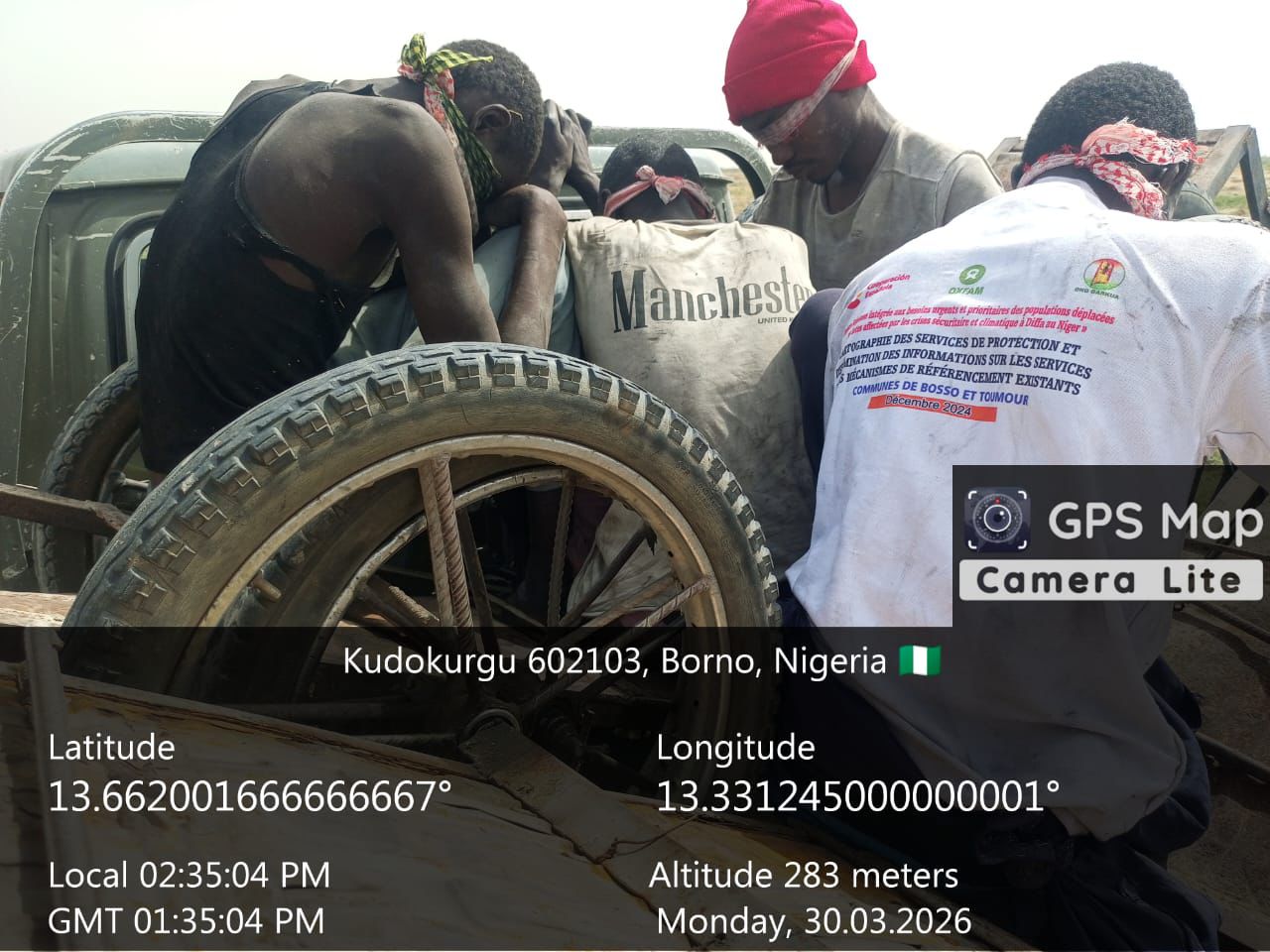
Troops of 68 Battalion have intercepted 11 youths during a routine patrol in Mallam Fatori area of Abadam Local Government Area of Borno State.
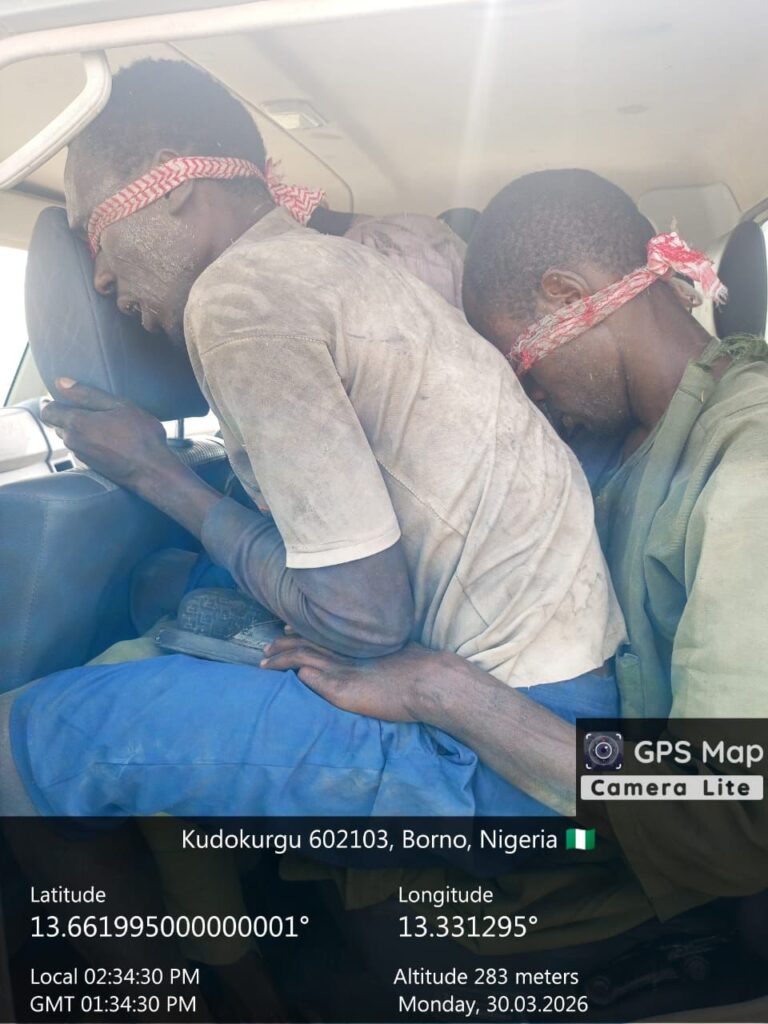
Security sources said the interception occurred along the Bulagana–Cheisa axis on April 2 during ongoing clearance operations in the area.
According to the sources, the individuals were found moving in the area with 12 donkeys when they were stopped and briefly interrogated by troops.
The sources added that the youths were later handed over, alongside the animals, to relevant authorities in a neighbouring country for further necessary action.
The military said the patrol was part of sustained efforts to maintain security dominance and prevent exploitation of border communities by criminal elements.
Troops intercept 11 youths with donkeys during patrol in Borno
Troops recover ammunition, logistics items in Kwara patrol operation
By: Zagazola Makama
Troops of the Nigerian Army under the 22 Brigade have recovered ammunition and other logistics items during a fighting patrol in Ifelodun Local Government Area of Kwara State.
A security source disclosed that the operation was conducted at about 4:00 p.m. on April 2 at Daban Lema, where troops of the brigade, operating from the Patrol Base, encountered signs of suspected terrorist activities in a deserted location.
According to the source, the troops immediately carried out exploitation of the area, leading to the recovery of four rounds of 7.62mm special ammunition and one empty PKT ammunition belt link.
Other items recovered include four mobile phones, two head warmers, two small solar panels, and assorted repair tools believed to have been used by the suspected terrorists.
The source added that the recovery indicates the presence and movement of suspected criminal elements within the area, noting that troops have intensified surveillance and patrols to deny them freedom of action.
Troops recover ammunition, logistics items in Kwara patrol operation
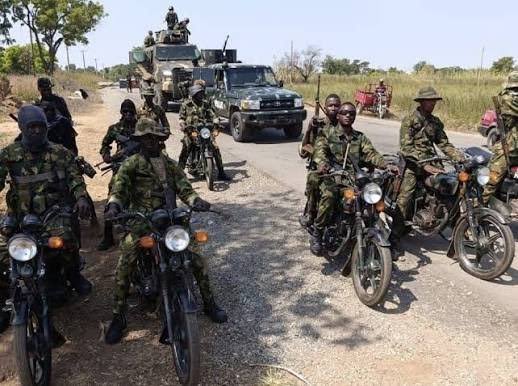
Troops foil attack by Criminal Youths, rescue victims, arrest suspects in plateau
By: Zagazola Makama
Troops of Sector 1, Operation Enduring Peace (OPEP), have foiled an attack on residents at Dutse Uku in Jos North Local Government Area of Plateau State.
A security source said the troops responded swiftly to a report of sporadic gunshots in the area at about 11:50 p.m. on April 2.
According to the source, upon arrival at the scene, the suspected criminals fled, abandoning their operation due to the prompt intervention of the troops.
He said the troops rescued two victims who sustained gunshot wounds during the incident and immediately evacuated them to a hospital for medical attention.
The source further disclosed that two suspects, dressed in black attire, were arrested at the scene.
Items recovered from the suspects include a cutlass and a knife.
He added that the suspects are currently in military custody and undergoing preliminary investigation, while efforts are ongoing to track down other fleeing members of the group.
Zagazola report that despite heightened security, there has been report of pocket of attacks in some communities.
The source reassured residents of the military’s commitment to protecting lives and property and urged the public to continue providing timely information to security agencies.
Troops foil attack by Criminal Youths, rescue victims, arrest suspects in plateau

Troops intercept suspected Boko Haram logistics convoy conveying 13 persons in Borno

Troops intercept 11 youths with donkeys during patrol in Borno

Troops, CJTF arrest three suspected Boko Haram logistics suppliers in Borno

Roger Federer’s Shock as DNA Results Reveal Myla and Charlene Are Not His Biological Children

THE PLIGHT OF FARIDA

FAILED COUP IN BURKINA FASO: HOW TRAORÉ NARROWLY ESCAPED ASSASSINATION PLOT AMID FOREIGN INTERFERENCE CLAIMS
-
 News2 years ago
Roger Federer’s Shock as DNA Results Reveal Myla and Charlene Are Not His Biological Children
-
Opinions4 years ago
THE PLIGHT OF FARIDA
-
 News12 months ago
FAILED COUP IN BURKINA FASO: HOW TRAORÉ NARROWLY ESCAPED ASSASSINATION PLOT AMID FOREIGN INTERFERENCE CLAIMS
-

 News2 years ago
EYN: Rev. Billi, Distortion of History, and The Living Tamarind Tree
-
 Opinions4 years ago
POLICE CHARGE ROOMS, A MINTING PRESS
-

 ACADEMICS2 years ago
A History of Biu” (2015) and The Lingering Bura-Pabir Question (1)
-

 Columns2 years ago
Army University Biu: There is certain interest, but certainly not from Borno.
-

 Opinions2 years ago
Tinubu,Shettima: The epidemic of economic, insecurity in Nigeria
