
News
UNODC Country Representative Calls for African-led Counter-Terrorism Cooperation and Intelligence Sharing

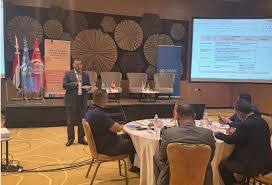
UNODC Country Representative Calls for African-led Counter-Terrorism Cooperation and Intelligence Sharing
By: Michael Mike
Africa must strengthen cooperation, intelligence sharing and the responsible use of emerging technologies to confront terrorism and related crimes, the Country Representative of the United Nations Office on Drugs and Crime (UNODC), Mr Cheikh Toure, has said.
Toure made the call at the opening ceremony of the High-level African Lessons Learned Forum on Counter Terrorism Cooperation, Intelligence Sharing and Emerging Technologies, organised by the National Counter Terrorism Centre (NCTC) in Abuja on Monday.
He said the forum should remain focused on the people affected by terrorism, including farmers unable to access their fields, children whose education had been disrupted and security personnel working under difficult conditions.
“We are here for them, and we owe them honesty,” he said.
Toure said terrorism had gained a foothold in Africa at a scale that few had anticipated, with the Sahel now accounting for more than half of terrorism-related deaths worldwide.
He noted that four African countries—Burkina Faso, Nigeria, Niger and the Democratic Republic of the Congo—were among the five countries responsible for almost 70 per cent of the global death toll recorded in the previous year.
He described the counter-terrorism practitioners gathered at the forum as among the most experienced in the world because of the realities they had been forced to confront.
According to him, the threat continues to evolve, with foreign terrorist fighters moving across regions, terrorist groups cooperating with organised criminal networks, improvised explosive devices spreading and drones, digital content and artificial intelligence being used against vulnerable communities.
“The groups we confront cross borders with a fluency that too often exceeds our own. Our response must be equally fluent and it must be African-led,” he said.
The UNODC representative cautioned against applying international counter-terrorism practices without adapting them to local institutional realities.
He said procedures developed for well-resourced systems could become burdensome when transferred uncritically to countries with different capacities and operational environments.
He urged African institutions to treat international good practice as a reference point rather than a rigid template.
Toure commended the National Counter Terrorism Centre under the leadership of its National Coordinator, Major General Adamu Garba Laka, for adapting international guidance to Nigeria’s operational needs.
He said the NCTC’s Strategic Plan 2025–2030 provided a framework for translating guidance on evidence management, intelligence analysis, rehabilitation and reintegration into practical procedures that frontline officers could use.
“That is not imitation. That is authorship,” he said.
Toure also called for institutions to document lessons from investigations, cases and community engagement and use them to improve training, standard operating procedures and technology choices.
He described this process as the creation of a “living knowledge bank”, adding that Nigeria had made significant contributions to it.
He cited Nigeria’s National Strategy for Combating Organised Crime 2027–2031, launched by the National Security Adviser in August and developed under the Office of the National Security Adviser with UNODC technical support.
The strategy, he said, recognised the links between terrorism, trafficking and illicit finance and treated them as part of a connected criminal ecosystem.
He added that UNODC was working with the NCTC on a fusion-cell architecture intended to make inter-agency intelligence sharing routine rather than exceptional.
On terrorist financing, Toure said the NCTC and UNODC had inaugurated a working group on criminal and terrorist finance in the mineral sector.
He said the initiative was designed to address the channels through which terrorism could obtain financial support.
He also cited Nigeria’s exit from the Financial Action Task Force grey list as evidence of what disciplined, evidence-led cooperation could achieve, adding that Nigeria had offered to share its experience with other African countries.
Toure further highlighted cooperation between NCTC and UNODC experts to refine a toolkit for first responders dealing with sexual and gender-based violence linked to terrorism.
He said the work demonstrated that effective partnership was often built through sustained technical engagement rather than public ceremonies.
Addressing participants from the Sahel and Francophone Africa in French, Toure said the threat affected communities across linguistic and national boundaries and that cooperation must reflect the same reality.
He assured them that UNODC would continue to support their efforts with humility and consistency.
Toure said UNODC would work within African frameworks, including the African Union, ECOWAS and the Abuja Process, rather than operating alongside or outside them.
He also pledged continued support for institutions such as the NCTC so that they could develop into regional centres of reference.
He stressed that counter-terrorism measures rooted in human rights were not a weaker option but the most sustainable approach.
“Africa has much to teach the world about this threat. For the next two days, we are all here to learn,” he said.
The forum was attended by the National Security Adviser, Mallam Nuhu Ribadu; the National Coordinator of the NCTC, Major General Adamu Garba Laka; members of the diplomatic community; representatives of partner institutions; the European Union; and the United Nations Office of Counter-Terrorism.
Toure thanked the National Security Adviser and the NCTC leadership for convening the forum, as well as the European Union and the UN Office of Counter-Terrorism for supporting the Federal Government of Nigeria.
He said the shared objective of the participants was to contribute to a safer Africa for all its people.
UNODC Country Representative Calls for African-led Counter-Terrorism Cooperation and Intelligence Sharing


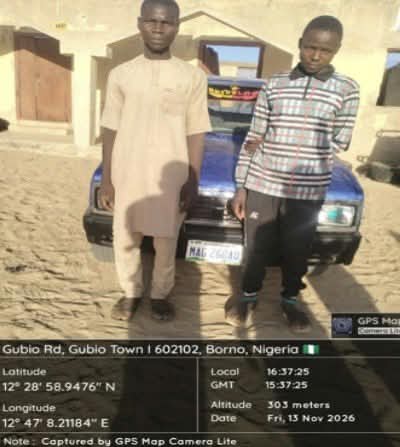
Troops arrest two suspected terrorist logistics suppliers in Borno
By: Zagazola Makama
Troops of the Nigerian Army’s 149 Battalion, in collaboration with members of the Civilian Joint Task Force (CJTF), have arrested two suspected terrorist logistics suppliers at Gubio town in Gubio Local Government Area of Borno State.
Security sources said the suspects were apprehended at about 4:00 p.m. on November 13, 2026, after troops intercepted a vehicle conveying the two men.
The suspects reportedly claimed that they had transported firewood and building materials to Damasak.
However, preliminary investigations allegedly revealed that the materials had been offloaded around the Binduldul general area, raising suspicions about the actual destination and intended recipients of the supplies.
The two suspects are currently in military custody for further investigation and necessary action.
The arrest forms part of ongoing intelligence-led operations by troops of Sector 3 to dismantle terrorist logistics networks, disrupt the supply of essential materials to insurgents and identify individuals suspected of facilitating their activities across the North-East.
Troops arrest two suspected terrorist logistics suppliers in Borno
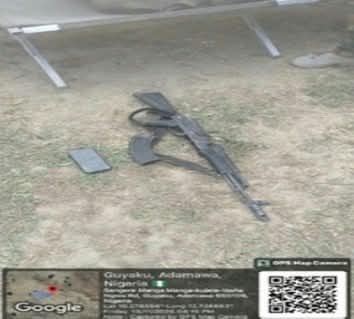
Troops recover additional terrorist corpse, AK-47 rifle after ISWAP attack in Adamawa
By: Zagazola Makama
Troops of the Nigerian Army’s 226 Battalion have recovered an additional corpse of a suspected Islamic State West Africa Province (ISWAP) fighter, alongside an AK-47 rifle and ammunition, following a repelled terrorist attack on their Forward Operating Base in Adamawa State.
Security sources said the recovery was made at about 3:20 p.m. on November 13, during a foot patrol approximately four kilometres from the troops’ location at FOB Zangula Kilba Junction in Gombi Local Government Area.
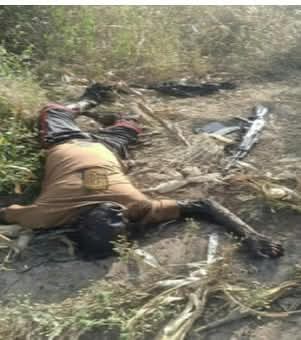
The patrol was conducted following an earlier ISWAP attack on the military position on November 10, which was successfully repelled by the troops.
During the operation, the soldiers discovered an additional terrorist corpse believed to have been left behind during the failed assault.
Items recovered from the area included one AK-47 rifle, nine rounds of 7.62mm special ammunition and one mobile phone.
The recovery brings further evidence of the casualties and equipment losses suffered by the attackers during the foiled assault.
Troops have continued patrols and exploitation operations around the area to identify possible threats and prevent further terrorist activities.
Troops recover additional terrorist corpse, AK-47 rifle after ISWAP attack in Adamawa
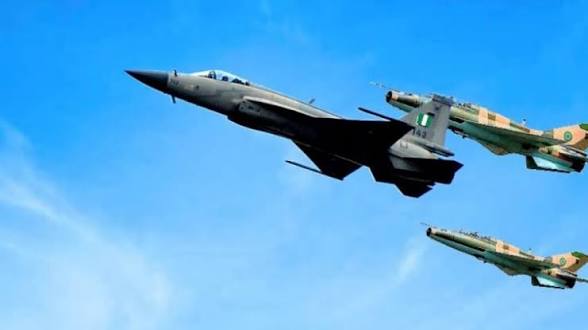
Air strikes destroy ISWAP hideout, neutralise 10 fighters in Marte, Borno
By: Zagazola Makama
An intelligence-led air operation by the troops of Operation HADIN KAI has destroyed a suspected Islamic State West Africa Province (ISWAP) hideout and neutralised 10 fighters in Kerenoa, Marte Local Government Area of Borno State.
Security sources said the operation was conducted at about 8:10 p.m. on November 12, following human intelligence indicating that terrorists were converging for a possible meeting addressed by senior ISWAP commanders, including Abu Nazir.
The sources said the Guardian surveillance platform was deployed overhead Garin Abu Nazir in Kerenoa, where it identified three suspected terrorists entering a building.
A precision air strike was subsequently conducted on the structure, with battle damage assessment indicating that the building was completely destroyed, while nearby terrorists were seen fleeing for safety.
The military platform later identified and tracked another group of 10 suspected terrorists taking cover under a tree.
The targets were subsequently engaged with a precision strike, neutralising all 10 fighters.
A secondary explosion was also observed following the strike, suggesting the possible presence of explosive materials at the location.
The operation represents another intelligence-driven effort to disrupt ISWAP command activities, eliminate its fighters and degrade terrorist infrastructure in the Lake Chad region.
Troops and surveillance assets are expected to sustain pressure on terrorist elements and monitor possible movements around the affected locations.
Air strikes destroy ISWAP hideout, neutralise 10 fighters in Marte, Borno

Troops intercept two fleeing terrorists attempting to surrender in Borno

Troops arrest two suspected terrorist logistics suppliers in Borno

Troops recover additional terrorist corpse, AK-47 rifle after ISWAP attack in Adamawa

Roger Federer’s Shock as DNA Results Reveal Myla and Charlene Are Not His Biological Children

THE PLIGHT OF FARIDA

FAILED COUP IN BURKINA FASO: HOW TRAORÉ NARROWLY ESCAPED ASSASSINATION PLOT AMID FOREIGN INTERFERENCE CLAIMS
-
 News3 years ago
Roger Federer’s Shock as DNA Results Reveal Myla and Charlene Are Not His Biological Children
-
Opinions5 years ago
THE PLIGHT OF FARIDA
-
 News2 years ago
FAILED COUP IN BURKINA FASO: HOW TRAORÉ NARROWLY ESCAPED ASSASSINATION PLOT AMID FOREIGN INTERFERENCE CLAIMS
-
 Opinions5 years ago
POLICE CHARGE ROOMS, A MINTING PRESS
-

 News3 years ago
EYN: Rev. Billi, Distortion of History, and The Living Tamarind Tree
-

 ACADEMICS3 years ago
A History of Biu” (2015) and The Lingering Bura-Pabir Question (1)
-

 Columns3 years ago
Army University Biu: There is certain interest, but certainly not from Borno.
-

 Politics1 year ago
2027: Why Hon. Midala Balami Must Go, as Youths in Hawul and Asikira/Uba Federal Constituency Reject ₦500,000 as Sallah Gift
